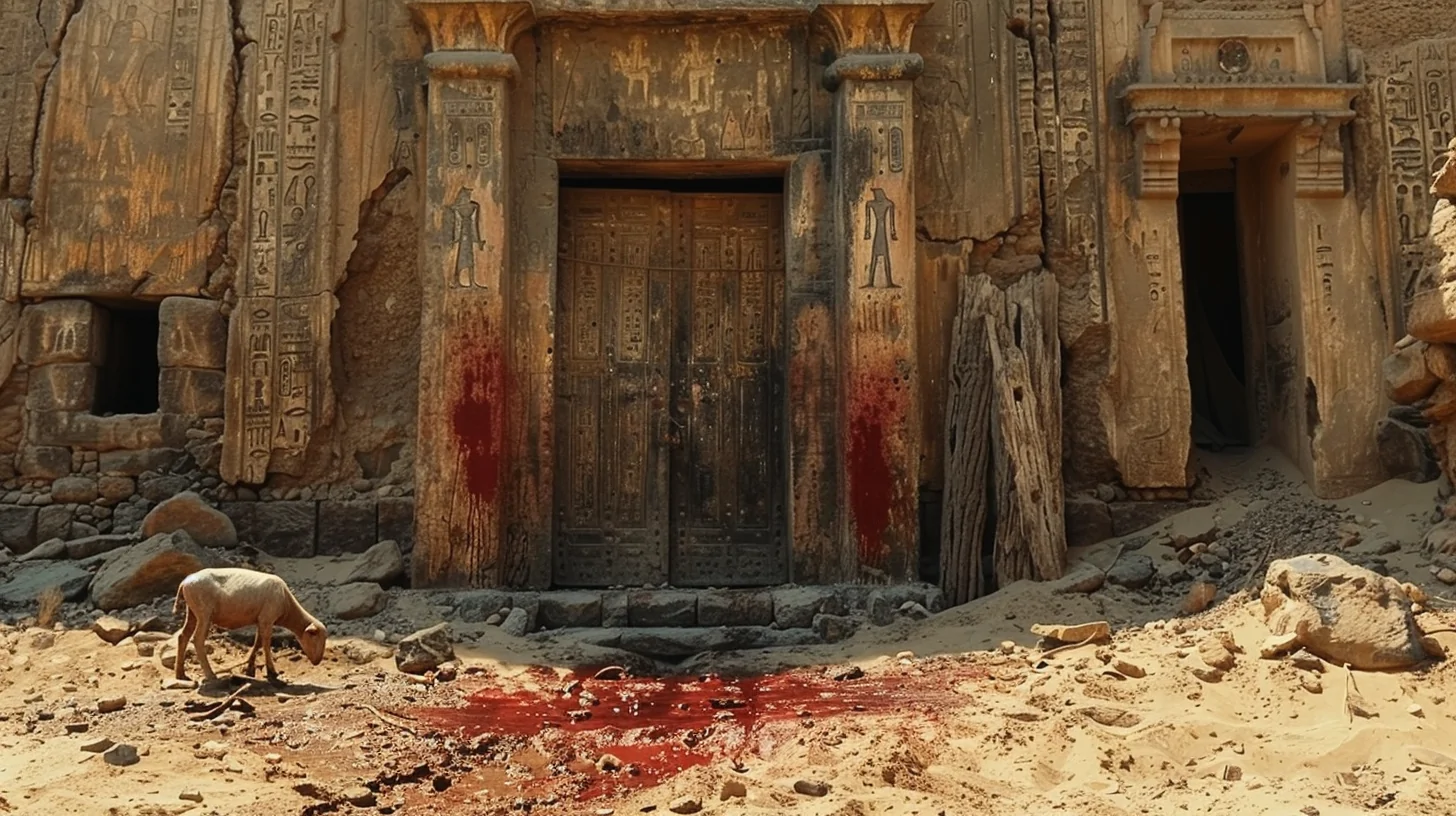
[Lesson 41] Figurative Flesh and Blood of the Lamb Part Two

by ichthus

The Passover in the Old Testament with the lamb’s blood foreshadowed Jesus as the true Passover lamb whose blood/words bring salvation. At his first coming, Jesus’ teachings were the spiritual “flesh and blood” people needed to be freed from the Pharisees/teachers of the law. Jesus instituted a new covenant, saying the Passover meal wouldn’t be eaten again until his second coming and the kingdom of God. In Revelation, Jesus as the Lamb opens the scroll containing end times prophecies that must be fulfilled. An angel gives this open scroll to one like John, who must reveal its meaning to help God’s people “come out of Babylon” and gather to the Lamb at Mount Zion. The 144,000 and a great multitude will partake of the Passover meal at Mount Zion by receiving the opened prophecies from the one like John, allowing them to be purified by the Lamb’s blood. Just as there was deliverance at the Exodus and Jesus’ first coming, there will be another spiritual Passover at the second coming when God’s people receive the opened revelations.


Study Guide SCJ Bible Study

Shincheonji holds distinct theological views that differ from mainstream Christian denominations, yet it also shares some common teachings. This overlap can sometimes blur the lines between their beliefs and those of traditional Christianity. Therefore, it is essential to exercise critical thinking and discernment to differentiate between these shared elements and the unique doctrines they present.

While their interpretations warrant careful examination through a critical and biblical lens, it is equally important to approach these matters with an open yet discerning mindset.

The following notes were documented in person during Shincheonji’s 9-month Bible Study Seminar. They provide insight into the organization’s approach to introducing and explaining its beliefs to potential new members, often referred to as the ‘harvesting and sealing.’ This process is described as being ‘born again’ or ‘born of God’s seed,’ which involves uprooting the old beliefs and replanting new ones. This uprooting and replanting must occur continuously. By examining this process, we can gain a better understanding of the mindset and beliefs held by Shincheonji members.

Figurative meanings:


Review with the Evangelist

Yeast of Heaven

The Passover meal of salvation at the time of Moses was the blood and flesh of a lamb. The Passover meal of salvation at the time of the first coming was the blood and flesh of the Lamb Jesus, that is, the revealed word of the Old Testament’s fulfillment. The Passover meal of salvation that one must eat at the time of the second coming, which is the time of Revelation’s fulfillment, is the blood and flesh of the Lamb Jesus, that is, the revealed word of the New Testament’s fulfillment.

Our Hope: To passover to God’s Kingdom at the Second Coming!


I pray this will be a wonderful time as we dive deeper into today’s content. It is going to be very deep and very eye-opening for our time.


Secrets of Heaven: Figurative Flesh and Blood of the Lamb Part 2

Review


Last time, we looked at the flesh and blood being, or the Lamb being, which is, of course, Jesus, as mentioned in John 1:29.

And then, His flesh and His blood are His words of life, as stated in John 6:63 and John 1:29.

We talked about how, in every era, there was a Passover that was required of God’s people, who did not realize that they were in captivity and needed to come out or be freed from that captivity.

And we know that there is a Passover mentioned in Revelation now.

And then, to pass over to God’s kingdom at the second coming. That is our hope, a very important and significant hope that seems so vast now, but as we study, it will make more and more sense, and we will become increasingly excited for what is to come. So, part of this lesson will be a review of what we learned in the previous lesson, but we’ll also be filling in a little more detail.

And then, we will spend a significant amount of time discussing the second coming, which will be really important for this lesson.

Remember:

1.- Lamb —–> Jesus 1:29

           Flesh and Blood    ——> Word’s of Life (John 6:63)

2.- Passover  ——> COME OUT!
3.- There is a Passover in Revelation!


1.- Passover at the Old Testament


Exodus 12: 1-14

The Lord said to Moses and Aaron in Egypt, 2 “This month is to be for you the first month, the first month of your year. 3 Tell the whole community of Israel that on the tenth day of this month each man is to take a lamb[a] for his family, one for each household. 4 If any household is too small for a whole lamb, they must share one with their nearest neighbor, having taken into account the number of people there are. You are to determine the amount of lamb needed in accordance with what each person will eat. 5 The animals you choose must be year-old males without defect, and you may take them from the sheep or the goats. 6 Take care of them until the fourteenth day of the month, when all the members of the community of Israel must slaughter them at twilight. 7 Then they are to take some of the blood and put it on the sides and tops of the doorframes of the houses where they eat the lambs. 8 That same night they are to eat the meat roasted over the fire, along with bitter herbs, and bread made without yeast. 9 Do not eat the meat raw or boiled in water, but roast it over a fire—with the head, legs and internal organs. 10 Do not leave any of it till morning; if some is left till morning, you must burn it. 11 This is how you are to eat it: with your cloak tucked into your belt, your sandals on your feet and your staff in your hand. Eat it in haste; it is the Lord’s Passover.

12 “On that same night I will pass through Egypt and strike down every firstborn of both people and animals, and I will bring judgment on all the gods of Egypt. I am the Lord. 13 The blood will be a sign for you on the houses where you are, and when I see the blood, I will pass over you. No destructive plague will touch you when I strike Egypt.

14 “This is a day you are to commemorate; for the generations to come you shall celebrate it as a festival to the Lord—a lasting ordinance.


Let’s break this down once more so we can understand all the important things mentioned in this passage.

Exodus 12: God is preparing to free His people from captivity in Egypt. In the previous class, we discussed how God first prophesied that He would do this. This prophecy was fulfilled during the time of Moses. God’s trademark or overarching principle is that He promises and fulfills. He has never broken a promise, and He never will. Here, God is giving specific instructions to His people on how to escape captivity in Egypt.

He said, “Take a lamb, a year old, without blemish. Roast the lamb; do not eat it raw, and put its blood on your door frames.” There were many different instructions they had to follow.

How were they supposed to eat the lamb? What were some of the strange things they had to do while eating the lamb?

They were instructed to eat it with “your belt on, your staff in your hand, and your sandals ready.”

Why? What were they supposed to do shortly after eating it?

“Leave.”

Their goal, their task, was to come out after eating the lamb. After the angel of death had passed over, it was time to depart.

So, the goal was to come out of the place that held them in captivity.

The process of coming out was the Passover.

The angel of death passed over their houses and did not affect their firstborn, and then they passed over from Egypt.

Who was the one giving them these instructions? Who was the one God was using as His mouthpiece to the people?

What was his name? Moses.

Moses was God’s messenger, the one God was using to deliver His word to the people, and later given the Ten Commandments, the law.

Moses gave instructions to the people, and they were to follow Moses’ instructions to be saved from captivity in Egypt. But God was saying all these things to the people.

Initially, they might have thought, “Okay, this is strange, but I don’t want my firstborn to die.”

“I hate being in this place. So I’m ready to go, right? I’m going to keep this command of God.”

“So that I and my family can come out and have freedom finally.” And many completed the commands that God gave.

Let’s go back to verse 14 and read it one more time because something important was mentioned there.

Verse 14 says, “This is a day you are to commemorate for the generations to come.”

“You shall celebrate it as a festival to the Lord—a lasting ordinance.” So, every year since that point, the Israelites celebrated the Passover to commemorate how God delivered their ancestors out of captivity.

Keep that in mind because it’s going to be important. Exodus 12:14 is a remembrance.

A festival was held every year after the Passover to remember what God had done for the people.

But there’s a reason why God does everything that He does. God does nothing by accident. Everything is intentional. Everything has a future goal. So, the reason why God asked them to do all these things was not by accident.


Hebrews 10:1.

The law is only a shadow of the good things that are coming—not the realities themselves. For this reason it can never, by the same sacrifices repeated endlessly year after year, make perfect those who draw near to worship.


The law is only a shadow, not the reality itself. In other words, as the writer of Hebrews states, the law is a prophecy, foreshadowing what is to come. The reality is the fulfillment of the law.

This is the reason why, in Matthew 5, Jesus declared, “I am the fulfillment of the law. I am the reality of the things that God asked you and your ancestors to do all those years ago.” The law was fulfilled through Jesus.

Let’s examine this in more detail to understand why this event pointed to Christ at His first coming. Why is it the case that the law is merely a shadow, a prophecy of the reality that was to come in the form of Jesus as the fulfillment?


Colossians 2:16-17

16 Therefore do not let anyone judge you by what you eat or drink, or with regard to a religious festival, a New Moon celebration or a Sabbath day. 17 These are a shadow of the things that were to come; the reality, however, is found in Christ.


What did Paul say to the people in Colossae?

Don’t let people deceive you with these festivals or put you down. Whether or not you eat or drink because of the festival or even the Sabbath day, these are a shadow. The reality of these events, these rituals, these traditions, is Christ.

Christ is the reality of these things. So, if someone comes at you and says, “Why don’t you do this?” You should answer, “Because of Christ. Because Jesus is the answer.”

So, when God said all of these things are to be done as a lasting ordinance, God had in mind, “Do until my son comes.” How silly would it be for someone to say to Jesus, “Well, I need to keep this, so I’m not going to follow you.” And then, the festival you’re celebrating is right here. Following me is keeping the festival.

Following me is keeping the law. That was a hard distinction for people to make, that the law was standing right in front of them. And now, they no longer had to keep the traditions of old but had to follow the one that God was using at that time.

It was very difficult for many people to do. Let’s not be those who make the same mistake.

Let’s see, one more passage about this, about how Christ was the reality.


1 Corinthians 5:7

7 Get rid of the old yeast, so that you may be a new unleavened batch—as you really are. For Christ, our Passover lamb, has been sacrificed.


Christ is our Passover Lamb who has been sacrificed. Therefore, we should get rid of the old yeast, the old traditions, as they have been invalidated by Christ’s sacrifice. Instead, we ought to follow Him, for He is our Passover. Do you all understand? Are we all following this?

Now, let us examine how the spiritual Passover unfolded during the time of Christ’s First Coming.


2.- Passover at the First Coming


At the time of the first coming, who was the entity that held people in captivity, akin to slavery? Can someone provide an answer? During the first coming, who played the role of the slaver, keeping people subjugated? It was the Pharisees, Sadducees, and teachers of the law who were the oppressors. And whom did they keep in this state of bondage? Just as in the past, it was God’s people, the Israelites, who were held captive.


Matthew 23:1-4

Then Jesus said to the crowds and to his disciples: 2 “The teachers of the law and the Pharisees sit in Moses’ seat. 3 So you must be careful to do everything they tell you. But do not do what they do, for they do not practice what they preach. 4 They tie up heavy, cumbersome loads and put them on other people’s shoulders, but they themselves are not willing to lift a finger to move them.


In verse 4, what did Jesus call them? He said, They tie up heavy burdens, hard to bear, and lay them on people’s shoulders, but they themselves are not willing to move them with their finger.”

What does that sound like? A slaver, one who enslaves others. That’s who they were, and Jesus had to call them out. This is the call-out in Matthew 23.

Jesus is calling out these Pharisees. It’s time to judge them. And what does he call them in verse 33? “You brood of vipers, you, those like the first viper, the first serpent.” In Genesis. Why? Because Satan was using them to enslave the Israelites.

Consider it like this: The war between God and Satan has been the same for the last 6,000 years. God establishes a people; Satan attacks that people. It’s been the same battle forever. But thankfully, by God’s grace, it will come to an end.

However, when God establishes a people, somehow, someway, they find themselves enslaved. And so then, God has to go through the process again of calling his people out.

The people who enslaved them changed every time. Initially, it was physical enslavement; they were literal slaves subjected to heavy labor. But then, they became spiritual slaves. By this time, they didn’t realize it. This is why, when Jesus said in John 8:32, “One who accepts my words will be set free,” the people began to protest, “What do you mean be set free? We have never been slaves,” meaning the people of that generation, to be clear.

“What do you mean be set free?” They didn’t realize that they were in captivity by the one who enslaved them – Satan, of course.


John 8:32,44

32 Then you will know the truth, and the truth will set you free.”

44 You belong to your father, the devil, and you want to carry out your father’s desires. He was a murderer from the beginning, not holding to the truth, for there is no truth in him. When he lies, he speaks his native language, for he is a liar and the father of lies.


Jesus told them, “You belong to your father, the devil.” He was saying that they were enslaved, though they didn’t realize it. That’s why the words Jesus preached were so valuable for them – so important to set them free. To liberate them not only from Satan but also from the tedious rituals they had been keeping, which were no longer effective because they were not with God anymore.

How did Jesus provide freedom for the people? Of course, there must be a Passover. Let’s see how Jesus did so.


Matthew 15:14

14 Leave them; they are blind guides.[a] If the blind lead the blind, both will fall into a pit.”


Jesus said, “Leave them.” This means you cannot continue to stay with the blind guides and claim that you’re following Jesus. It does not work that way. You have to make a decision, a choice. Do I stick with what I’ve always known, which has kept me in slavery? Or do I come and follow the one who is bringing freedom? You cannot have one foot here and the other foot there. That’s not how this works. You have to fully come out.

Let’s see, Jesus reiterates this once more in…


John 5:24

“Very truly I tell you, whoever hears my word and believes him who sent me has eternal life and will not be judged but has crossed over from death to life.


Whoever hears My words and believes has crossed over from death to life. So, who did God use to deliver the message that brings salvation for the first time? Jesus. We have God using the Son, Jesus. And Jesus spoke the words of life to the people. But what words of life did Jesus speak? A word that had never been heard before. A new word. The open word of the Old Testament prophecy and fulfillment. “The words that you have been reading every Sabbath have been fulfilled through Me.”

This is what God did here through Me. This was a new teaching. Like Mark 1:27 states, “What is this? A new teaching and with authority.” The people were surprised. “Who is this man, and where did these teachings come from?” And when they heard these words from Jesus, those who truly had the heart to understand were compelled to leave the place of death and come to the place where they realized that they could no longer receive what they needed from there. But not everyone was able to make that decision. Not everyone was able to come out. And those who did not come out were judged with the rest of the Pharisees and the Sadducees by Jesus’ words.

But what are the characteristics of those who came out with Jesus?


John 1:45.

Philip found Nathanael and told him, “We have found the one Moses wrote about in the Law, and about whom the prophets also wrote—Jesus of Nazareth, the son of Joseph.”


We have found the one about whom Moses and the prophets wrote. That’s why the disciples followed Jesus. That’s why they were so ready to drop everything and follow the one they had been waiting for, the one who appeared to them, a legend.

Ever since they were little, they had been hearing about the Messiah. And then the Messiah appeared. He proved He was the Messiah, not just by performing miraculous signs, which is often how people explain why they call Him the Messiah. But because Scripture was being fulfilled. That was the real reason. The miracles were only the icing on the cake.

The real substance, the main meat and potatoes, was prophecy and fulfillment. Miracles were the icing. But most people only received the icing, and they got like a sugar high and then left Jesus. Right?

They didn’t actually eat the real cake. Like, “Wow, He healed someone’s eyes, that’s cool.” The Pharisees were like that. Does that make sense?

So, really consider this because the time of the second coming looks just like the Old Testament and just like the first coming.

Just one more thing to mention about this right here. This is, of course, the Old Testament prophecy and fulfillment. Is Jesus flesh and blood? So, His flesh and blood is the word of life.

And that’s what the people needed to eat and drink in order to receive salvation, as stated in John 6:45 and 54.

And so, when the people heard this, many of them struggled, saying, “What does He mean by this? What does He mean by that?”

But know that when Jesus was explaining this, He expected people to ask Him those questions and then decide to come to Him.

However, they really struggled with this because it was a strange teaching, and they weren’t making those figurative connections at the time.

But only His disciples, who decided to cross over from death to life, made that connection. So it was with Jesus’ disciples that He decided to establish a new covenant.


3.- Jesus’ New Covenant


Luke 22:14-20

14 When the hour came, Jesus and his apostles reclined at the table. 15 And he said to them, “I have eagerly desired to eat this Passover with you before I suffer. 16 For I tell you, I will not eat it again until it finds fulfillment in the kingdom of God.”

17 After taking the cup, he gave thanks and said, “Take this and divide it among you. 18 For I tell you I will not drink again from the fruit of the vine until the kingdom of God comes.”

19 And he took bread, gave thanks and broke it, and gave it to them, saying, “This is my body given for you; do this in remembrance of me.”

20 In the same way, after the supper he took the cup, saying, “This cup is the new covenant in my blood, which is poured out for you.


Hopefully, everyone is familiar with the Last Supper, and you’ve seen the painting where Jesus’ 12 disciples are surrounding him. That’s the event we just read about. Before Jesus knew he had to suffer on the night of Passover, knowing he would be arrested and crucified the next day, he decided to establish some key things with his disciples. Let’s pay attention to the things Jesus said because they’re so critical for the time we are living in.

Keep this in mind: The disciples are the reason why we have the Bible today. They’re the reason why we know about Jesus today. If it wasn’t for their sacrifice, we would not have this word today. When they agreed to this new covenant with Jesus, they are the reason why we have faith in Jesus in the first place. When they agreed to this new covenant, every believer after them also made the same agreement. Just like those who were born to the Israelites of the Old Testament were automatically born into the covenant of old, we too, as spiritual children of the disciples, are also part of this new covenant. This applies to us.

We’ll understand how it applies to us even more at the time of revelation. So, let’s break this down. Let’s go back to verse 14. When the hour came, Jesus and his apostles reclined at the table, and he said to them, “I have eagerly desired to eat this Passover with you before I suffer.” This is the traditional yearly Passover celebration that has been going on since Exodus 12, right?

Let’s keep going. Now, in verse 16, this is key. Pay attention to verse 16: For I tell you, I will not eat it again until it finds fulfillment in the kingdom of God.Do we often read over this passage without truly understanding the gravity of what Jesus just said?

So, let’s understand the gravity. First of all, Jesus is sharing the Passover meal with his disciples, with the bread and the wine that have symbolic meaning. But in verse 16, Jesus said this Passover meal, and he says the same thing in verse 18: “For I tell you, I will not drink again of the fruit of the vine until the kingdom of God comes.” He’s saying he will not be able to participate in this Passover meal, and really, no one knows until the Kingdom of God comes when he will eat and drink again.

This is critically important. When is the kingdom of God coming, everyone? What time period? During the second coming.

What were you supposed to do until that time? Prepare for them and understand their word.

Certainly. And what did Jesus ask his disciples to do? In verse 19, “And he took bread, gave thanks and broke it, and gave it to them, saying, ‘This is my body given for you. Do this in remembrance of me.'”

Sound familiar, everybody? It should because God asked the people to do the same thing all those years ago: “Do this in remembrance of me.” But what tends to happen when people are told to do a ritual in remembrance? They forget! What a paradox! They forget the reason why they are doing the remembrance, thinking that the power is in the ritual when the power is in what the ritual represents: the promise that Jesus will come and eat and drink again at the time of the second coming.

Everyone, the power is not in the ritual. The power is in what the ritual represents: that Jesus will come again and establish the kingdom of God, where we will then again be able to eat and drink of the flesh and blood of the lamb. But this time, the flesh and blood of the lamb is not the Old Testament prophecy and fulfillment but the New Testament prophecy and fulfillment, which is fulfilled when the kingdom of God comes. Are we understanding? Are we putting two and two together? Are we making that link? So, communion is great, but we forgot why.

That’s the problem. So, let’s understand the why now. And who are those who get to partake in the Passover meal of our time?


4.- Passover at the Second Coming


It’s going to follow three categories: when, where, and who.

When does it take place? Who are those who partake in that Passover meal, and where do they do so?

When: At the second coming, when Revelation is fulfilled. Then the kingdom of God can come. The Passover meal can be eaten again.

But where will it take place, and who are the ones that participate?

The flow of the opening of Revelation is going to be very important. So, how does this flow begin? How does the opening of Revelation begin? How does it start being fulfilled? Where do all things begin?

With God.

God is the creator.

So, the opening of the word begins with God. Oh, how?


Revelation 5:1-3

Then I saw in the right hand of him who sat on the throne a scroll with writing on both sides and sealed with seven seals. 2 And I saw a mighty angel proclaiming in a loud voice, “Who is worthy to break the seals and open the scroll?” 3 But no one in heaven or on earth or under the earth could open the scroll or even look inside it.


There is a scroll, sealed with seven seals, held in the hand of the One who is seated on the throne, who is God. For the past 2,000 years, God has possessed this sealed scroll in His hand. However, no one in heaven, on earth, or under the earth was able to open it or look inside. Only one being was capable of accomplishing this task. And who was that one?


Revelation 5:4-7

4 I wept and wept because no one was found who was worthy to open the scroll or look inside. 5 Then one of the elders said to me, “Do not weep! See, the Lion of the tribe of Judah, the Root of David, has triumphed. He is able to open the scroll and its seven seals.”

6 Then I saw a Lamb, looking as if it had been slain, standing at the center of the throne, encircled by the four living creatures and the elders. The Lamb had seven horns and seven eyes, which are the seven spirits of God sent out into all the earth. 7 He went and took the scroll from the right hand of him who sat on the throne.


The Lamb comes and takes the scroll from Him who sat on the throne, as the only one who was able to do this. Why? Because He was slain. And when Jesus opens the seals, events begin to unfold.

Things start happening. In the next chapter, verse one states, “I watched as the Lamb opened the first of the seven seals.” Verse 3 says, “I watched as the Lamb opened the second seal.” Verse 5 mentions, “I watched as the Lamb opened the third seal.” Verse 7 states, “I watched as the Lamb opened the fourth seal.” Verse 9 reads, “I watched as the Lamb opened the fifth seal.” Verse 12 declares, “I watched as the Lamb opened the sixth seal.” That concludes Revelation 6.

And the last seal is opened. Revelation 8:1 says, “When He opened the seventh seal, there was silence in heaven.” We’ll delve into these details much more later, but understand that Jesus was the one who opened the scroll.

The little scroll is the Book of Revelation. Here’s the explanation: By this point, the rest of the Bible had already been unveiled. From Genesis to Malachi had been opened. And we know that history and moral teachings don’t need to be unveiled. That’s straightforward. “This person was at this location at this time and date, did this thing.” That’s history, simple. “Treat others how you want to be treated.” Straightforward.

That part of the scripture, that part of the Bible, is not sealed. What is sealed is when you see “the abomination that causes desolation,” spoken of through the prophet Daniel—let the reader understand—and let those who are in Judea flee to the mountains.

That’s what is sealed. And that is what Jesus had to unveil when this was revealed.

Does that make sense? So, just the Book of Revelation. It’s directly addressing the Book of Revelation.

That’s what needed to be unveiled at the time of the second coming. So Jesus does the work of opening the seal, but it doesn’t just stop with Jesus.

It continues on.


Revelation 10:1-2

Then I saw another mighty angel coming down from heaven. He was robed in a cloud, with a rainbow above his head; his face was like the sun, and his legs were like fiery pillars. 2 He was holding a little scroll, which lay open in his hand. He planted his right foot on the sea and his left foot on the land,


John then sees a glorious, mighty angel, and this angel is holding a little scroll in his hand. Where did that little scroll come from? Jesus had just opened it. So, Jesus gives it to the angel. Remember, Revelation 1:1-3 states: “The revelation of Jesus Christ, which God gave him.” Why is it called Jesus’s revelation? Because he opened it. Jesus opened it, which means it is fulfilled. And it makes it Jesus’ revelation because he has opened it. Jesus is the revelation. “The revelation of Jesus Christ, which God gave him to show his servants what must soon take place.” He made it known by sending his angel to whom? This is the next key in the puzzle.


John 10:8-11

8 All who have come before me are thieves and robbers, but the sheep have not listened to them. 9 I am the gate; whoever enters through me will be saved.[a] They will come in and go out, and find pasture. 10 The thief comes only to steal and kill and destroy; I have come that they may have life, and have it to the full.

11 “I am the good shepherd. The good shepherd lays down his life for the sheep.


Let’s understand what is being recorded here because it is very important. We see that we’re reading the book of Revelation from the perspective of Apostle John, who, if you remember, was seeing this in a vision. He didn’t live out these events; he only saw them while he was in the spirit, the events of Revelation, and he recorded what he saw. But we know that Revelation is a book of prophecy, which means it must be fulfilled.

And just like the Old Testament, when prophets like Isaiah and Ezekiel said things like, “I saw,” “I heard,” “It was shown to me,” it wasn’t Isaiah who healed the sick and gave the good news. It wasn’t Ezekiel who spoke to the valley of the dry bones. It was the one who came later and lived out the events that Isaiah, Ezekiel, Daniel, and Hosea saw.

Guess what? The same thing must happen at the time of the second coming. Every chapter of Revelation has a testimony of one who saw and heard. Every chapter states, “Then I saw this. Then I saw this. Then I saw this. Then I heard this, I heard the voice of this.” So there was a person who was living out these events of Revelation and seeing and hearing. And his testimony must be one that we hear so that we understand what has been fulfilled, rather than guessing, “Is this event on the news a fulfillment? Is that event on the news a fulfillment?” Instead, we will be hearing, “This is what happened here. This is what happened there. This is when it happened like that.” So someone must come, like John.

Someone like John must appear, or you can say a “New John.” Someone like John must appear and live out the events of Apostle John. And then give the testimony to what he saw.

What we see in Revelation 10:8-11: “Then the voice I heard from heaven spoke to me once more. ‘Go take the scroll that lies open in the hand of the angel who is standing on the sea and on the land.’ So I went to the angel and asked him to give me the little scroll. He said to me, ‘Take it. And eat it. It will turn your stomach sour, but in your mouth it will be as sweet as honey.’ I took the little scroll from the angel’s hand and ate it. It tasted as sweet as honey in my mouth, but when I had eaten it, my stomach turned sour.” Then I was told, “You must prophesy again to many peoples, nations, languages, and kings.”

Where are the peoples, nations, languages, and kings now? Trapped where? In Babylon.

And just like the people at the time of the first coming, they did not know they needed deliverance.

Let’s now go to Revelation 18 to read about the state of Babylon.


Revelation 18:1-4

After this I saw another angel coming down from heaven. He had great authority, and the earth was illuminated by his splendor. 2 With a mighty voice he shouted:

“‘Fallen! Fallen is Babylon the Great!’ 

    She has become a dwelling for demons

and a haunt for every impure spirit,

    a haunt for every unclean bird,

    a haunt for every unclean and detestable animal.

3 For all the nations have drunk

    the maddening wine of her adulteries.

The kings of the earth committed adultery with her,

    and the merchants of the earth grew rich from her excessive luxuries.”

Warning to Escape Babylon’s Judgment

4 Then I heard another voice from heaven say:

“‘Come out of her, my people,’

    so that you will not share in her sins,

    so that you will not receive any of her plagues;


We see here God and Jesus’ desperate cry for their people. What does it say? “My people, come out of her, my people.” Come out from her, for you are enslaved in a place that is a home for demons, a haunt for every unclean and detestable bird, every evil spirit. That’s where you currently are, my people.

So, when we need to be extracted from this place, there needs to be a Passover meal that we must eat and then come out, following the pattern of old. What is the Passover meal? The meal that comes from the place where the Lamb is. Revelation 14:1 says, “Then I looked, and behold, the Lamb was standing on Mount Zion.”

Where is the Lamb today? It is Jesus.

And where is His revelation being taught from?


Revelation 14:1

Then I looked, and there before me was the Lamb, standing on Mount Zion, and with him 144,000 who had his name and his Father’s name written on their foreheads.


Let’s understand this a little more now. Then I saw the Lamb standing where? On Mount Zion. And with Him, 144,000 were sealed with His name and His Father’s name on their foreheads. We’ll have a whole lesson on the figurative seal in a few weeks to come.

But let’s take a step back. Remember what Jesus promised in Luke 22? He said, “Do this in remembrance of Me because I will not eat of this again until the Kingdom of God comes.”

Where will the Kingdom of God come to? Mount Zion, the place where the Lamb is. God’s Kingdom.

So, who are the ones that will partake? The first group we know about, based on Revelation, is the 144,000. But they’re not the only ones, as some might teach in a different denomination. Who are the others that will take part in the Passover meal?


Revelation 7:14

I answered, “Sir, you know.”

And he said, “These are they who have come out of the great tribulation; they have washed their robes and made them white in the blood of the Lamb.


We observe that the 144,000 are mentioned in Revelation 7:4, and a great multitude will also be present at Mount Zion to partake in this wedding banquet, this Passover meal. A vast number of people will gather at Mount Zion; this is God’s objective and God’s will. Do not be concerned, as we will have ample time over the next few months to explore this in greater depth. This is merely our initial introduction. So, keep these aspects in mind: how Revelation must be fulfilled.

The 144,000 and an innumerable multitude from every tribe, people, language, and nation will be present, and they will cleanse their robes. Recall, the figurative clothes symbolizes our hearts, actions, and doctrines, which will be purified by what? The blood of the Lamb.

Here is how Jesus’ blood is applied at the second coming. How it is consumed and imbibed once more at the second coming.


Revelation 1:5-6

5 and from Jesus Christ, who is the faithful witness, the firstborn from the dead, and the ruler of the kings of the earth.

To him who loves us and has freed us from our sins by his blood, 6 and has made us to be a kingdom and priests to serve his God and Father—to him be glory and power for ever and ever! Amen.


Jesus’ blood has a significant impact at the time of His second coming, just as it had a profound effect during His first coming on the cross. However, His blood also plays a crucial role at the time of the second coming. The book of Revelation frequently mentions Jesus’ blood, as seen in Revelation 5:9-10, Revelation 7:14, Revelation 12:11, and Revelation 19. His blood is prominently featured throughout the book. As we continue to study, we will gain a deeper understanding of the significance of Jesus’ blood.


Memorization


Revelation 18:4

Then I heard another voice from heaven say:

“‘Come out of her, my people,’ so that you will not share in her sins, so that you will not receive any of her plagues;


Instructor Review

SUMMARY


We have covered part 2 of the flesh and blood of the lamb.

Jesus’s flesh and his blood represent his words of life.

As Jesus is the Lamb, the Passover at his first coming set the standard for how things will be done in the time after.

God instructed them to eat the flesh of a real lamb and put its blood on their door frames. Then, the angel of death would pass over their houses, sparing their firstborn, and they would come out of Egypt.

The same thing happened spiritually at the time of Jesus’s first coming, through his flesh and blood.

The fulfillment of Old Testament prophecy with his words of life was used to bring people out of the slavery of the Pharisees and Sadducees.

By listening to his words, they would cross over or Passover from death to life. Then, Jesus established a new covenant in his blood, detailing what we are to expect in our time. He said this will not be eaten or drunk again until the kingdom of God comes at the second coming.

Until then, we should do the remembrance. However, the power does not come from the remembrance itself but from what needs to be remembered, which is Jesus’s promise about what will happen at the end times.

So, how does this take place? At the time of the second coming, when Revelation is fulfilled, the Lamb will be at Mount Zion. He will give the open scroll to one who is like John, who will deliver the flesh and blood of the Lamb to the people in Babylon, prophesied about many peoples, nations, languages, and kings. The very word that God had sealed, which Jesus opened and the angel delivered to John, telling him to eat, for these things must take place as they were prophesied.

Why have I heard this before? Well, that’s the point. The word is now spreading.

But just like the time of the first coming, people had to meet someone who received the word, like Philip and the Ethiopian eunuch.

Those who are drunk with the maddening wine, consuming food from all kinds of places (we’ll study the maddening wine next), need to receive this new word and come out of Babylon to gather at Mount Zion.

So, let us be those who pass over in our time.

Review with the Evangelist

REVIEW

We learned about the secrets of heaven, the fugitive flesh, and blood of the Lamb Part 2. We learned that there was a Passover that happened in the Old Testament, where the Israelites had to come out from Egypt. This was the fulfillment of God’s promise to Abraham. During that time, the flesh and the blood of a physical lamb were needed for the Israelites to be saved.

However, God commanded them to celebrate it as a festival for generations to come. We also learned that this was just a copy and shadow of what was to come, as mentioned in Colossians 2. The reality of this is Jesus, the reality is in Christ. So, during His first coming, they needed to eat the flesh and blood of Jesus.

Who is the Lamb of God to cross over to life, right? So, what is the flesh and blood of the lamb?

Is it Jesus’s word of life or the opened word, right? It is the explanation of the prophecy and the fulfillment of the Old Testament prophecy at that time.

That is why in John 1:45, the disciples say, “We have found the one whom Moses and the prophets wrote about.”

So, those who accepted His words would be able to come out from the Pharisees, Sadducees, and teachers of the law.

Because Satan was using them at that time. Now, what about today? In Luke 22, Jesus said that He would not eat the Passover meal again until the fulfillment of the kingdom of God comes.

And in Revelation 18:1-4, it says, “Come out of her, my people.”

We are God’s people, right? So, how can we eat the flesh and the blood of the lamb today?

For us to come out, what do we need to receive? What do we need to understand?

We have to understand the word, right? But specifically, the open word.

So, the explanation of the prophecy reaches in parables and the fulfillment of the New Testament prophecies, right?

So, do I completely believe in the open word that I am receiving right now? How crucial is this in my life?

If we truly value it, then we must come out, right? And focus on the open word.

Let’s Us Discern

A Refutation Using “Testing Shincheonji’s Claims: Two Lenses, One Story”

SCJ Lesson 41 Analysis: “Secrets of Heaven: Figurative Flesh and Blood of the Lamb Part 2” (Yeast of Heaven)


Introduction: The Recipe That Changes Everything

Imagine you’re learning to bake bread from a master baker. For weeks, he’s taught you the fundamentals—how to measure flour, knead dough, and understand fermentation. He’s explained that yeast is what makes bread rise, transforming simple ingredients into something nourishing and life-giving. You’ve learned the traditional recipes passed down through generations, and you’re becoming confident in your skills.

Then one day, he introduces a new lesson: “Everything I’ve taught you about yeast is true,” he says, “but there’s a deeper understanding. The yeast our ancestors used was just a shadow. The yeast used in my grandfather’s bakery was just a symbol. Now, in our generation, there’s a new yeast—the real yeast that gives true life. And I’m the only one who has access to it.”

He shows you what looks like yeast. It smells like yeast. He uses all the familiar terminology. But as he continues teaching, you realize he’s not just adding to what you learned—he’s replacing it. The traditional recipes aren’t wrong, he explains, they’re just incomplete. They were meant to point to this moment, to this bakery, to this new yeast that only he can provide.

“My grandfather’s bread kept people alive for a season,” he says, “but my bread gives eternal life. You must eat my bread to truly live. The old recipes were just preparation for this.”

At first, this sounds profound—like you’re being initiated into a deeper mystery. But gradually, a troubling question emerges: If his bread is the only bread that gives life, what happens to everyone who ate the traditional bread and thought they were nourished? Were they deceived? And if you leave this bakery, will you starve?

This is what happens in SCJ Lesson 41.

The lesson appears to be a continuation of biblical teaching about the Passover—tracing God’s pattern of deliverance from Egypt through Jesus’ sacrifice to the present day. The instructor, Nate, walks students through Exodus 12, explains how the Old Testament Passover foreshadowed Christ, and discusses the relationship between shadow and reality. Everything seems biblical, Christ-centered, and theologically sound.

But beneath the surface, something dangerous is happening. The lesson is completing a redefinition that began in Lesson 40: that “flesh and blood” means “words of life,” and that just as there was a Passover in the Old Testament and a Passover at Jesus’ first coming, there is now a third Passover at the second coming—and this Passover requires eating “the revealed word of the New Testament’s fulfillment,” which SCJ claims to exclusively provide.

By the end of this lesson, students will have accepted a framework that makes eternal life dependent on consuming SCJ’s interpretation of Revelation. They won’t realize it yet—the full implications won’t be revealed until the Advanced Level—but the foundation is being laid. The equation is being established: Old Testament Passover = physical lamb’s blood and flesh. First Coming Passover = Jesus’ blood and flesh (interpreted as His revealed word). Second Coming Passover = the revealed word of Revelation’s fulfillment (which only SCJ possesses).

This lesson is particularly strategic because it uses legitimate biblical typology (the Old Testament pointing to Christ) to create an illegitimate third layer (Christ pointing to SCJ). It takes the beautiful biblical truth that Jesus fulfilled the Old Testament and perverts it into a claim that SCJ fulfills the New Testament. It transforms the finished work of Christ into an incomplete work that requires SCJ’s mediation.

The lesson sits at a critical juncture—Lesson 41 of the Introductory Level. Students have now invested months of study. They’ve absorbed the foundational concepts: sealed Bible, parables requiring interpretation, prophets as parables, God’s pattern, the need for fulfillment to reveal reality. They’ve been taught to see themselves as the faithful remnant (like Caleb) who accept revealed truth. They’ve begun to distance themselves from their home churches and to distrust traditional Christian teaching.

Now, they’re being given the recipe that will eventually lead them to believe that eternal life comes not through faith in Jesus’ finished work, but through consuming SCJ’s teachings. They’re being taught that just as the Israelites had to eat the Passover lamb to be saved from Egypt, and just as believers must receive Jesus’ sacrifice to be saved from sin, people today must eat SCJ’s “revealed word” to be saved at the second coming.

The tragic irony is that the lesson uses Scripture extensively. It quotes Exodus, Hebrews, Colossians, and other passages. It speaks about Jesus as the fulfillment of the law. It emphasizes God’s faithfulness to His promises. But it takes these biblical truths and twists them into a framework that ultimately leads people away from Christ and into dependence on a human organization.

Let’s examine how this happens, using the frameworks from “Testing Shincheonji’s Claims: Two Lenses, One Story.”


Part 1: The Opening Framework—Three Passovers

What SCJ Teaches in This Lesson

The lesson opens with a critical statement that establishes the entire framework:

“The Passover meal of salvation at the time of Moses was the blood and flesh of a lamb. The Passover meal of salvation at the time of the first coming was the blood and flesh of the Lamb Jesus, that is, the revealed word of the Old Testament’s fulfillment. The Passover meal of salvation that one must eat at the time of the second coming, which is the time of Revelation’s fulfillment, is the blood and flesh of the Lamb Jesus, that is, the revealed word of the New Testament’s fulfillment.”

This statement presents a three-part parallel:

  1. Old Testament Passover = physical lamb’s blood and flesh
  2. First Coming Passover = Jesus’ blood and flesh = “revealed word of the Old Testament’s fulfillment”
  3. Second Coming Passover = Jesus’ blood and flesh = “revealed word of the New Testament’s fulfillment”

The lesson then states the goal: “Our Hope: To passover to God’s Kingdom at the Second Coming!”

Why This Framework Is Dangerous

This opening statement appears to be drawing biblical parallels, but it’s actually doing something far more subtle and dangerous: it’s creating a false equivalency that will eventually make SCJ’s teachings necessary for salvation.

Let’s break down what’s happening:

First, notice the redefinition of “blood and flesh.” In the Old Testament, the Passover lamb’s blood and flesh were literal—physical blood applied to doorframes and physical meat eaten by the Israelites. But SCJ immediately redefines Jesus’ blood and flesh as “the revealed word of the Old Testament’s fulfillment.” This is the redefinition that began in Lesson 40, where students were told that communion is “only a symbol” and the true meaning of flesh and blood is “Jesus’ Words of Life.”

Second, notice the creation of a third Passover. The Bible clearly teaches two Passovers: the Old Testament Passover (Exodus 12) which foreshadowed Christ, and the fulfillment in Jesus’ sacrifice (1 Corinthians 5:7). But SCJ adds a third Passover—”at the time of the second coming”—which requires eating “the revealed word of the New Testament’s fulfillment.”

Third, notice the implication about who provides this “revealed word.” The lesson doesn’t explicitly say it yet, but the framework is clear: if there’s a Passover meal that “one must eat at the time of the second coming,” someone must be providing that meal. Just as Moses provided instructions for the Old Testament Passover, and just as Jesus provided His sacrifice for the first coming Passover, someone must be providing “the revealed word of the New Testament’s fulfillment” for the second coming Passover. Students will eventually learn that SCJ claims to be that provider.

Chapter 20 of “Testing Shincheonji’s Claims: Two Lenses, One Story,” titled “The Danger of Creative Fulfillment,” addresses this exact technique. The chapter explains: “SCJ has a pattern of taking legitimate biblical typology and extending it beyond what Scripture teaches. They take the true pattern of Old Testament shadow pointing to New Testament reality, and they add a third layer: New Testament prophecy pointing to SCJ reality. But this third layer has no biblical warrant. It’s a human invention designed to insert SCJ into the biblical narrative.”

Biblical Context: What Scripture Actually Teaches About Passover

To understand what’s wrong with SCJ’s three-Passover framework, we need to examine what Scripture actually teaches about the Passover and its fulfillment.

The Old Testament Passover (Exodus 12)

The Passover was instituted in Exodus 12 as God prepared to deliver Israel from slavery in Egypt. God commanded each household to take a year-old male lamb without defect, slaughter it at twilight, and apply its blood to the doorframes of their houses. That night, they were to eat the lamb’s roasted flesh along with unleavened bread and bitter herbs. They were to eat it dressed and ready to leave, because after the angel of death passed over Egypt, they would depart from captivity.

The Passover had several key elements:

  1. A substitutionary sacrifice – The lamb died in place of the firstborn
  2. Applied blood – The blood on the doorframes protected the household
  3. Consumed flesh – The people ate the lamb’s meat
  4. Deliverance – They were freed from slavery in Egypt
  5. A memorial – They were to commemorate this event annually (Exodus 12:14)

This was a real, historical event. Real lambs were slaughtered. Real blood was applied. Real flesh was eaten. Real deliverance occurred.

The Fulfillment in Jesus Christ

The New Testament clearly teaches that Jesus fulfilled the Passover. He is “the Lamb of God, who takes away the sin of the world” (John 1:29). Paul explicitly states: “For Christ, our Passover lamb, has been sacrificed” (1 Corinthians 5:7).

Jesus fulfilled the Passover in multiple ways:

  1. He was the substitutionary sacrifice – He died in our place, bearing the penalty for our sins (Isaiah 53:5-6; 2 Corinthians 5:21; 1 Peter 2:24)
  2. His blood provides protection – His blood cleanses us from sin and protects us from God’s judgment (Romans 3:25; Hebrews 9:14; 1 John 1:7)
  3. We receive Him by faith – Just as the Israelites ate the lamb’s flesh, we receive Christ’s sacrifice by faith (John 6:53-58)
  4. He delivers us from slavery – Jesus frees us from slavery to sin and death (Romans 6:6-7, 22; Hebrews 2:14-15)
  5. We remember His sacrifice – Communion commemorates Jesus’ death until He returns (Luke 22:19; 1 Corinthians 11:24-26)

The fulfillment is complete and perfect. Jesus didn’t partially fulfill the Passover—He completely fulfilled it. His sacrifice was “once for all” (Hebrews 7:27; 9:12, 26, 28; 10:10). There is no need for another sacrifice, another Passover, or another mediator.

The Book of Hebrews: Christ’s Complete and Final Sacrifice

The book of Hebrews was written specifically to explain how Jesus fulfilled the Old Testament sacrificial system and why no further sacrifice is needed. Consider these key passages:

Hebrews 7:27: “Unlike the other high priests, he does not need to offer sacrifices day after day, first for his own sins, and then for the sins of the people. He sacrificed for their sins once for all when he offered himself.”

Hebrews 9:12: “He did not enter by means of the blood of goats and calves; but he entered the Most Holy Place once for all by his own blood, thus obtaining eternal redemption.”

Hebrews 9:26: “Otherwise Christ would have had to suffer many times since the creation of the world. But he has appeared once for all at the culmination of the ages to do away with sin by the sacrifice of himself.”

Hebrews 9:28: “So Christ was sacrificed once to take away the sins of many; and he will appear a second time, not to bear sin, but to bring salvation to those who are waiting for him.”

Hebrews 10:10: “And by that will, we have been made holy through the sacrifice of the body of Jesus Christ once for all.”

Hebrews 10:14: “For by one sacrifice he has made perfect forever those who are being made holy.”

The repeated emphasis on “once for all” is critical. Jesus’ sacrifice was complete, final, and sufficient. There is no need for another Passover, another sacrifice, or another means of salvation. When Jesus said “It is finished” on the cross (John 19:30), He meant it. The work of redemption was complete.

What About the Second Coming?

SCJ’s framework requires a third Passover “at the time of the second coming.” But what does Scripture actually teach about Christ’s second coming?

Hebrews 9:28 is clear: “Christ was sacrificed once to take away the sins of many; and he will appear a second time, not to bear sin, but to bring salvation to those who are waiting for him.”

Notice what this verse says: When Christ returns, He will NOT bear sin again. He will not offer another sacrifice. He will not provide another means of salvation. Instead, He will bring salvation—the completion and consummation of the salvation He already accomplished at the cross—to those who are waiting for Him.

The second coming is not about another Passover or another sacrifice. It’s about the return of the King to gather His people, judge the world, and establish His eternal kingdom. Consider these passages:

  • Matthew 24:30-31: “Then will appear the sign of the Son of Man in heaven. And then all the peoples of the earth will mourn when they see the Son of Man coming on the clouds of heaven, with power and great glory. And he will send his angels with a loud trumpet call, and they will gather his elect from the four winds, from one end of the heavens to the other.”
  • 1 Thessalonians 4:16-17: “For the Lord himself will come down from heaven, with a loud command, with the voice of the archangel and with the trumpet call of God, and the dead in Christ will rise first. After that, we who are still alive and are left will be caught up together with them in the clouds to meet the Lord in the air. And so we will be with the Lord forever.”
  • Revelation 19:11-16: “I saw heaven standing open and there before me was a white horse, whose rider is called Faithful and True. With justice he judges and wages war… The armies of heaven were following him, riding on white horses and dressed in fine linen, white and clean… On his robe and on his thigh he has this name written: KING OF KINGS AND LORD OF LORDS.”

The second coming is about Christ’s return in glory, not about another Passover meal or another means of salvation. Those who are saved at the second coming are those who already believed in Jesus’ first coming sacrifice—not those who ate some new “revealed word.”

The False Equivalency: Why SCJ’s Three-Passover Framework Fails

SCJ’s framework creates a false equivalency by suggesting that:

  • Old Testament Passover : First Coming :: First Coming : Second Coming

But this equivalency breaks down under scrutiny:

1. The relationship between Old Testament and New Testament is shadow-to-reality, not reality-to-reality.

The Old Testament Passover was a shadow pointing forward to Christ (Colossians 2:17; Hebrews 10:1). But Christ is not a shadow pointing to something else—He is the reality. He is the substance, not another shadow. There is no third layer of fulfillment because Christ is the ultimate fulfillment.

2. The Old Testament was incomplete and temporary; the New Testament is complete and eternal.

The Old Testament sacrificial system was never meant to be permanent. It was “a copy and shadow of what is in heaven” (Hebrews 8:5), designed to point forward to Christ. But Christ’s sacrifice is eternal and complete. It doesn’t point forward to anything else—it is the final answer.

3. The Old Testament required repetition; Christ’s sacrifice was once for all.

The Passover lamb was sacrificed annually. The temple sacrifices were offered daily. But Christ’s sacrifice was “once for all” (Hebrews 7:27; 9:12, 26, 28; 10:10, 14). The repetition has ended. There is no need for another Passover.

4. The Old Testament Passover delivered from physical slavery; Christ’s Passover delivers from spiritual slavery.

The Exodus delivered Israel from physical slavery in Egypt. Christ’s sacrifice delivers us from spiritual slavery to sin and death. There is no third level of slavery requiring a third deliverance. Christ’s deliverance is complete—He has freed us from sin, death, and the devil’s power (Romans 6:6-7, 22; Hebrews 2:14-15).

Chapter 11 of “Testing Shincheonji’s Claims: Two Lenses, One Story,” titled “The Pattern Trap: When Typology Becomes a Straitjacket,” addresses this problem. The chapter explains: “Biblical typology moves from shadow to reality, from incomplete to complete, from temporary to eternal. But SCJ tries to extend the pattern beyond its biblical endpoint. They want to make Christ’s complete work incomplete, His eternal sacrifice temporary, His final reality just another shadow. This is not biblical typology—it’s theological manipulation.”


Part 2: The Review and Redefinition—Solidifying the Framework

What SCJ Teaches in This Lesson

The lesson includes a review section that reinforces the redefinitions from Lesson 40:

“Last time, we looked at the flesh and blood being, or the Lamb being, which is, of course, Jesus, as mentioned in John 1:29. And then, His flesh and His blood are His words of life, as stated in John 6:63 and John 1:29.”

The review continues: “We talked about how, in every era, there was a Passover that was required of God’s people, who did not realize that they were in captivity and needed to come out or be freed from that captivity. And we know that there is a Passover mentioned in Revelation now.”

The lesson emphasizes: “Remember: 1. Lamb → Jesus (John 1:29); Flesh and Blood → Words of Life (John 6:63). 2. Passover → COME OUT! 3. There is a Passover in Revelation!”

Why This Review Matters: Repetition and Reinforcement

This review is not innocent repetition—it’s a psychological technique called “spaced repetition,” which is highly effective for embedding information in long-term memory. By reviewing the redefinitions from Lesson 40, SCJ is ensuring that students internalize these concepts:

  1. Flesh and blood = words of life (not Jesus’ physical sacrifice)
  2. Every era has a Passover (not just Old Testament and Christ)
  3. There is a Passover in Revelation (requiring action today)

Chapter 13 of “Testing Shincheonji’s Claims: Two Lenses, One Story,” titled “The Psychology of Deception: Why Smart People Fall for False Teaching,” discusses this technique: “Repetition is one of the most powerful tools for shaping belief. When you hear something once, you might question it. When you hear it three times, it starts to sound familiar. When you hear it ten times, it becomes ‘what you’ve always known.’ SCJ uses systematic repetition to transform questionable interpretations into accepted facts.”

Notice also what the review adds: “God’s people, who did not realize that they were in captivity and needed to come out or be freed from that captivity.”

This is a subtle but critical addition. It suggests that in every era, God’s people are in captivity without realizing it. The implication is clear: Christians today are in captivity without realizing it, and they need to “come out” through SCJ’s Passover.

This sets up a dangerous dynamic: If you’re a Christian who doesn’t accept SCJ’s teaching, you’re like the Israelites in Egypt—in captivity without knowing it. You need SCJ’s “revealed word” to escape. This creates a framework where rejecting SCJ means remaining in spiritual captivity.

The Misuse of John 6:63

The lesson repeatedly cites John 6:63 as proof that “flesh and blood” means “words of life.” Let’s examine this verse in context to see if this interpretation is valid.

John 6:63: “The Spirit gives life; the flesh counts for nothing. The words I have spoken to you—they are full of the Spirit and life.”

SCJ interprets this verse to mean that Jesus’ flesh and blood (mentioned earlier in John 6) actually refer to His words. But this interpretation misunderstands what Jesus is saying.

The Context of John 6

In John 6, Jesus had just told the crowd, “Unless you eat the flesh of the Son of Man and drink his blood, you have no life in you” (John 6:53). Many disciples were disturbed by this teaching and began to turn away. Jesus then said:

John 6:61-63: “Aware that his disciples were grumbling about this, Jesus said to them, ‘Does this offend you? Then what if you see the Son of Man ascend to where he was before! The Spirit gives life; the flesh counts for nothing. The words I have spoken to you—they are full of the Spirit and life.'”

Jesus is not saying that His flesh and blood are His words. He’s making a distinction between physical/literal understanding and spiritual understanding. The disciples were thinking physically—”How can this man give us his flesh to eat?” (John 6:52). Jesus responds by saying, “You’re thinking about this wrong. I’m not talking about physical flesh. The Spirit gives life—spiritual life. My words convey spiritual truth.”

In other words, Jesus is clarifying that He’s speaking metaphorically, not literally. He’s not advocating cannibalism. He’s using the metaphor of eating and drinking to describe faith in His person and His sacrifice.

What Jesus Is NOT Saying

Jesus is NOT saying:

  • “My flesh and blood are actually My words”
  • “When I talk about eating My flesh, I mean learning My teachings”
  • “The physical sacrifice of My body doesn’t matter; only My words matter”

What Jesus IS Saying

Jesus IS saying:

  • “Don’t take this literally—I’m speaking spiritually”
  • “The Spirit gives life, not physical flesh”
  • “My words convey spiritual truth about My sacrifice”
  • “You must receive Me spiritually through faith”

The proof that Jesus is talking about His sacrificial death (not just His teachings) is found throughout John 6:

  • John 6:51: “This bread is my flesh, which I will give for the life of the world.” (Future tense—He will give His flesh. This points to the cross.)
  • John 6:53-54: “Unless you eat the flesh of the Son of Man and drink his blood, you have no life in you. Whoever eats my flesh and drinks my blood has eternal life, and I will raise them up at the last day.” (Eating and drinking His flesh and blood results in eternal life and resurrection—this is about receiving the benefits of His sacrifice, not about learning teachings.)
  • John 6:56: “Whoever eats my flesh and drinks my blood remains in me, and I in them.” (This is language of spiritual union through faith in His sacrifice, not intellectual understanding of teachings.)

Furthermore, when Jesus instituted communion at the Last Supper, He made the connection explicit:

Luke 22:19-20: “And he took bread, gave thanks and broke it, and gave it to them, saying, ‘This is my body given for you; do this in remembrance of me.’ In the same way, after the supper he took the cup, saying, ‘This cup is the new covenant in my blood, which is poured out for you.'”

Jesus’ body would be “given” (sacrificed), and His blood would be “poured out” (shed). This is clearly about His physical death on the cross, not about His teachings.

The Danger of This Redefinition

By redefining “flesh and blood” to mean “words of life” (and eventually, SCJ’s interpretation of Revelation), SCJ is:

  1. Shifting focus from Jesus’ sacrifice to teachings about Jesus. The gospel is not about understanding correct teachings—it’s about trusting in Jesus’ atoning death.
  2. Making salvation dependent on knowledge rather than faith. If eternal life comes from consuming “words of life,” then salvation requires intellectual understanding of SCJ’s interpretations, not simple faith in Christ.
  3. Creating a works-based salvation system. Instead of receiving salvation as a gift through faith (Ephesians 2:8-9), students must work to understand, accept, and internalize SCJ’s teachings.
  4. Replacing Christ’s mediation with SCJ’s mediation. If “words of life” are necessary for salvation, and SCJ claims to be the exclusive source of those words in the last days, then SCJ becomes the necessary mediator between God and humanity—a role that belongs to Christ alone (1 Timothy 2:5).

Chapter 9 of “Testing Shincheonji’s Claims: Two Lenses, One Story,” titled “The Gospel According to Shincheonji (And Why It’s Not the Gospel),” addresses this problem comprehensively. The chapter explains: “The biblical gospel is simple: Jesus died for our sins, rose from the dead, and offers eternal life to all who believe in Him. SCJ’s gospel is complex: you must understand the parables, recognize the fulfillment, accept the revealed word, and acknowledge the promised pastor. One is a gospel of grace through faith; the other is a gospel of salvation through knowledge. They are not the same.”


Part 3: The Exodus 12 Teaching—Legitimate Content, Illegitimate Application

What SCJ Teaches in This Lesson

The lesson walks through Exodus 12:1-14 in detail, explaining the original Passover:

  • God commanded each household to take a year-old male lamb without defect
  • They were to slaughter the lamb at twilight
  • They were to apply the lamb’s blood to their doorframes
  • They were to eat the roasted lamb with unleavened bread and bitter herbs
  • They were to eat dressed and ready to leave
  • The angel of death would pass over houses with blood on the doorframes
  • After the Passover, the people would depart from Egypt

The instructor emphasizes several points:

“God’s trademark or overarching principle is that He promises and fulfills. He has never broken a promise, and He never will.”

“The goal was to come out of the place that held them in captivity. The process of coming out was the Passover.”

“Moses was God’s messenger, the one God was using to deliver His word to the people… Moses gave instructions to the people, and they were to follow Moses’ instructions to be saved from captivity in Egypt.”

The lesson then notes Exodus 12:14: “This is a day you are to commemorate for the generations to come. You shall celebrate it as a festival to the Lord—a lasting ordinance.”

What’s Right About This Teaching

To SCJ’s credit, this section accurately presents the biblical account of the Passover. The details are correct, the emphasis on God’s faithfulness is appropriate, and the recognition that Moses was God’s messenger is biblical.

This is part of what makes SCJ’s teaching so deceptive—they use substantial amounts of accurate biblical content. Students hear correct information about Exodus 12, and this creates trust. “These teachers know the Bible,” students think. “They’re teaching me Scripture accurately.”

This is a classic manipulation technique discussed in Chapter 8 of “Testing Shincheonji’s Claims: Two Lenses, One Story,” titled “The Anatomy of Spiritual Manipulation.” The chapter explains: “Effective deception always contains substantial truth. If everything a group taught was obviously false, no one would believe it. But when 80% of what you hear is biblically accurate, you’re more likely to accept the 20% that’s problematic—especially when that 20% is presented as the natural conclusion of the 80% you’ve already accepted.”

What’s Wrong: The Subtle Setup

While the Exodus 12 teaching is accurate, notice what the lesson is setting up:

1. The emphasis on Moses as mediator. The lesson repeatedly emphasizes that Moses was God’s messenger, that the people had to follow Moses’ instructions, and that Moses delivered God’s word to the people. This is all true—but it’s being emphasized for a reason. Later, students will learn that just as Moses was God’s messenger at the first Passover, Lee Man-hee is God’s messenger at the third Passover.

2. The emphasis on following instructions to be saved. The lesson states: “Moses gave instructions to the people, and they were to follow Moses’ instructions to be saved from captivity in Egypt.” Again, this is true—but it’s creating a framework where salvation comes through following a human messenger’s instructions. This will later be applied to following SCJ’s teachings.

3. The emphasis on “coming out.” The lesson repeatedly uses the phrase “come out” to describe the Passover. “The goal was to come out of the place that held them in captivity. The process of coming out was the Passover.” This language is being planted for future use. Later, students will be told they need to “come out” of their current churches (described as Babylon in Revelation 18:4) and join SCJ.

4. The emphasis on not realizing you’re in captivity. The review section stated that “in every era, there was a Passover that was required of God’s people, who did not realize that they were in captivity.” This suggests that Christians today are in captivity without knowing it—and SCJ will provide the way out.

These are subtle setups. Students don’t realize they’re being prepared to accept problematic applications later. They think they’re simply learning about the biblical Passover.

The Legitimate Biblical Typology

It’s important to acknowledge that the Bible itself teaches that the Old Testament Passover was a type (foreshadowing) of Christ’s sacrifice. This is not an SCJ invention—it’s biblical typology. Consider these passages:

1 Corinthians 5:7: “Get rid of the old yeast, so that you may be a new unleavened batch—as you really are. For Christ, our Passover lamb, has been sacrificed.”

Paul explicitly identifies Christ as “our Passover lamb.” The Old Testament Passover pointed forward to Christ’s sacrifice.

John 1:29: “The next day John saw Jesus coming toward him and said, ‘Look, the Lamb of God, who takes away the sin of the world!'”

John the Baptist identified Jesus as “the Lamb of God”—a clear reference to the sacrificial lamb, including the Passover lamb.

1 Peter 1:18-19: “For you know that it was not with perishable things such as silver or gold that you were redeemed from the empty way of life handed down to you from your ancestors, but with the precious blood of Christ, a lamb without blemish or defect.”

Peter describes Christ as “a lamb without blemish or defect”—the exact description of the Passover lamb in Exodus 12:5.

Hebrews 11:28: “By faith he kept the Passover and the application of blood, so that the destroyer of the firstborn would not touch the firstborn of Israel.”

The book of Hebrews includes the Passover in its catalog of faith, recognizing its significance in God’s redemptive plan.

So the Bible clearly teaches that the Passover foreshadowed Christ. This is legitimate, biblical typology. The problem is not that SCJ recognizes this connection—the problem is that they extend it beyond what Scripture teaches by adding a third layer.

Where SCJ Goes Wrong: Adding a Third Layer

The Bible teaches:

  • Old Testament Passover (shadow) → Christ’s Sacrifice (reality)

SCJ teaches:

  • Old Testament Passover (shadow) → Christ’s Sacrifice (partial reality) → SCJ’s Revealed Word (full reality)

This third layer has no biblical warrant. Scripture never suggests that Christ’s sacrifice was incomplete or that it needs to be supplemented by a modern organization’s teachings. On the contrary, Scripture repeatedly emphasizes that Christ’s work is complete and final.

Chapter 20 of “Testing Shincheonji’s Claims: Two Lenses, One Story” addresses this problem: “When SCJ extends biblical typology beyond its scriptural endpoint, they’re not being faithful to Scripture—they’re manipulating Scripture to serve their agenda. The Bible’s typology always points to Christ as the ultimate fulfillment. When you add another layer beyond Christ, you’re not honoring biblical patterns—you’re creating new patterns that Scripture doesn’t support.”


Part 4: The Shadow and Reality Teaching—Hebrews 10:1 and Colossians 2:16-17

What SCJ Teaches in This Lesson

The lesson quotes two key passages to explain the relationship between the Old Testament and Christ:

Hebrews 10:1: “The law is only a shadow of the good things that are coming—not the realities themselves. For this reason it can never, by the same sacrifices repeated endlessly year after year, make perfect those who draw near to worship.”

The instructor explains: “The law is only a shadow, not the reality itself. In other words, as the writer of Hebrews states, the law is a prophecy, foreshadowing what is to come. The reality is the fulfillment of the law. This is the reason why, in Matthew 5, Jesus declared, ‘I am the fulfillment of the law. I am the reality of the things that God asked you and your ancestors to do all those years ago.’ The law was fulfilled through Jesus.”

Colossians 2:16-17: “Therefore do not let anyone judge you by what you eat or drink, or with regard to a religious festival, a New Moon celebration or a Sabbath day. These are a shadow of the things that were to come; the reality, however, is found in Christ.”

The instructor explains: “Don’t let people deceive you with these festivals or put you down. Whether or not you eat or drink because of the festival or even the Sabbath day, these are a shadow. The reality of these events, these rituals, these traditions, is Christ. Christ is the reality of these things.”

What’s Right About This Teaching

Again, this section is largely accurate. The instructor correctly explains that:

  1. The Old Testament law was a shadow pointing to Christ
  2. Christ is the reality that the law foreshadowed
  3. Christ fulfilled the law
  4. Believers are not bound by Old Testament festivals and rituals because Christ is the fulfillment

This is sound, biblical teaching. It reflects what the New Testament clearly states. Christians throughout history have understood that Christ fulfilled the Old Testament sacrificial system and that we are no longer bound by its ceremonial requirements.

What’s Wrong: The Implication Being Set Up

The problem is not what the lesson says explicitly—it’s what the lesson is preparing students to accept implicitly. By emphasizing that the law was “only a shadow” and Christ is “the reality,” the lesson is creating a framework that will later be used to suggest that Christ Himself was “only a shadow” of something greater.

Here’s how the logic will eventually work:

  1. Old Testament = shadow (Lesson 41 teaches this)
  2. Christ = reality of Old Testament (Lesson 41 teaches this)
  3. Therefore, Old Testament pointed to Christ (Lesson 41 teaches this)

But then, in future lessons:

  1. New Testament = shadow (Future lessons will teach this)
  2. SCJ’s fulfillment = reality of New Testament (Future lessons will teach this)
  3. Therefore, New Testament points to SCJ (Future lessons will teach this)

This is the logical progression that’s being set up. Students are being taught to think in terms of shadow-and-reality, and they’re being trained to see patterns of fulfillment. Later, this framework will be applied to make SCJ the “reality” that the New Testament “shadows.”

Chapter 11 of “Testing Shincheonji’s Claims: Two Lenses, One Story” warns about this: “When you’re taught to see everything as shadow-and-reality, you become vulnerable to having that framework misapplied. SCJ teaches you to recognize legitimate biblical typology (Old Testament pointing to Christ), then they use that same framework illegitimately (New Testament pointing to SCJ). By the time you realize the framework has been misapplied, you’ve already accepted the logic.”

The Biblical Distinction: Christ Is the Final Reality

The critical biblical truth that SCJ obscures is this: Christ is not another shadow—He is the final reality.

Consider how the book of Hebrews presents Christ:

Hebrews 1:1-3: “In the past God spoke to our ancestors through the prophets at many times and in various ways, but in these last days he has spoken to us by his Son, whom he appointed heir of all things, and through whom also he made the universe. The Son is the radiance of God’s glory and the exact representation of his being, sustaining all things by his powerful word.”

Notice the progression: God spoke through prophets (Old Testament), but now He has spoken through His Son (New Testament). And notice the finality: this is “in these last days”—the final era. There’s no suggestion of another era coming where God will speak through someone else.

Hebrews 7:23-25: “Now there have been many of those priests, since death prevented them from continuing in office; but because Jesus lives forever, he has a permanent priesthood. Therefore he is able to save completely those who come to God through him, because he always lives to intercede for them.”

The Old Testament priests were temporary and imperfect. Christ’s priesthood is permanent and perfect. There’s no need for another priest, another mediator, or another means of salvation.

Hebrews 8:6: “But in fact the ministry Jesus has received is as superior to theirs as the covenant of which he is mediator is superior to the old one, since the new covenant is established on better promises.”

The new covenant in Christ is superior to the old covenant. It’s not another temporary covenant that will be replaced—it’s the final, superior covenant established on better promises.

Hebrews 9:11-12: “But when Christ came as high priest of the good things that are now already here, he went through the greater and more perfect tabernacle that is not made with human hands, that is to say, is not a part of this creation. He did not enter by means of the blood of goats and calves; but he entered the Most Holy Place once for all by his own blood, thus obtaining eternal redemption.”

Christ obtained “eternal redemption”—not temporary redemption that needs to be supplemented or replaced. His work is eternal and complete.

Hebrews 10:11-14: “Day after day every priest stands and performs his religious duties; again and again he offers the same sacrifices, which can never take away sins. But when this priest had offered for all time one sacrifice for sins, he sat down at the right hand of God, and since that time he waits for his enemies to be made his footstool. For by one sacrifice he has made perfect forever those who are being made holy.”

The Old Testament priests stood daily offering sacrifices. Christ offered one sacrifice and then sat down—because His work was complete. He has “made perfect forever those who are being made holy.” There’s no need for another sacrifice, another offering, or another means of perfection.

The book of Hebrews is emphatic: Christ is the final reality. He is not another shadow pointing to something else. He is the substance, the fulfillment, the completion of God’s redemptive plan.

The Misapplication of “Lasting Ordinance”

The lesson notes that Exodus 12:14 calls the Passover “a lasting ordinance.” The instructor then explains: “So, every year since that point, the Israelites celebrated the Passover to commemorate how God delivered their ancestors out of captivity… A festival was held every year after the Passover to remember what God had done for the people. But there’s a reason why God does everything that He does. God does nothing by accident. Everything is intentional. Everything has a future goal.”

This is setting up the idea that the “lasting ordinance” wasn’t really meant to last forever—it was meant to point to Christ. And the instructor is correct about this. The Passover was celebrated annually until Christ fulfilled it.

But here’s the subtle implication: if the “lasting ordinance” of the Old Testament Passover was actually temporary (lasting only until Christ), then maybe the “eternal” nature of Christ’s sacrifice is also temporary (lasting only until the second coming and SCJ’s “revealed word”).

This is a dangerous logical move. The Bible never suggests that Christ’s eternal sacrifice is temporary. When Scripture says Christ obtained “eternal redemption” (Hebrews 9:12) and “made perfect forever those who are being made holy” (Hebrews 10:14), it means eternal—not “until the second coming.”

The Old Testament Passover was called a “lasting ordinance” in the sense that it was to be observed throughout Israel’s generations until its fulfillment in Christ. But Christ’s sacrifice is eternal in an absolute sense—it never ends, never needs to be repeated, and never needs to be supplemented.


Part 5: The Psychological Progression—Where Students Are at This Point

The Journey So Far

By Lesson 41, students have been studying for several months. Let’s trace their psychological journey:

Lessons 1-10: Introduction to the “sealed Bible” concept. Students learn that parables hide meaning, that prophecy requires fulfillment to be understood, and that they need special teaching to comprehend Scripture.

Lessons 11-20: Deepening dependency on SCJ’s interpretation. Students learn about God’s “pattern,” about prophets as parables, and about the need to recognize fulfillment.

Lessons 21-30: Introduction to specific reinterpretations. Students learn about the lampstand, the tree of life, and other symbols—all reinterpreted through SCJ’s lens.

Lessons 31-40: Building the framework for SCJ’s core theology. Students learn about the Israelites’ rebellion (Lesson 40), are encouraged to be like Caleb with “a different spirit,” and are introduced to the idea that “flesh and blood” means “words of life.”

Lesson 41: Completing the three-Passover framework. Students now accept that there are three Passovers (Old Testament, First Coming, Second Coming), that each requires “eating” something to be saved, and that the third Passover involves “the revealed word of the New Testament’s fulfillment.”

What Students Have Accepted

By the end of Lesson 41, students have likely accepted:

  1. The Bible was sealed and incomprehensible without special interpretation
  2. Parables and symbols require SCJ’s explanation
  3. God has a pattern that repeats throughout history
  4. Understanding this pattern is essential for the second coming
  5. Prophets can be parables pointing to future fulfillment
  6. Historical examples (like the Israelites) serve as warnings for today
  7. Communion is “only a symbol” of a deeper reality
  8. “Flesh and blood” means “words of life”
  9. There are three Passovers, not just two
  10. The third Passover requires eating “the revealed word of the New Testament’s fulfillment”
  11. Christians today may be in captivity without realizing it
  12. They need to “come out” through this new Passover

What Students Don’t Yet Know

Students at this point still don’t know:

  1. They’re studying Shincheonji (they think it’s a generic Bible study)
  2. Lee Man-hee claims to be the promised pastor and the one who overcomes
  3. SCJ claims to be the exclusive source of “the revealed word of the New Testament’s fulfillment”
  4. SCJ teaches that eternal life requires accepting Lee Man-hee’s testimony
  5. SCJ teaches that all churches except SCJ are Babylon and must be abandoned
  6. SCJ teaches that the 144,000 are literal people in their organization
  7. SCJ teaches that the “first resurrection” is spiritual enlightenment through their teaching
  8. SCJ practices deceptive recruitment and has a history of controversy

These revelations will come in the Intermediate and Advanced Levels. But by the time students learn these things, they’ll have already accepted the foundational concepts that make SCJ’s claims seem logical.

The Psychological Techniques at Work

Several psychological techniques are operating in Lesson 41:

1. Progressive Commitment: Students have now invested months of time and energy. They’ve built relationships with their instructor and fellow students. They may have already distanced themselves from their home church. The psychological cost of walking away is increasing with each lesson.

2. Cognitive Consistency: Humans have a strong drive for cognitive consistency—we want our beliefs and actions to align. Students have already accepted numerous SCJ concepts. To maintain consistency, they’re motivated to accept new concepts that build on what they’ve already accepted.

3. Social Proof: Students are surrounded by others who accept the teaching. The instructor presents confidently. Fellow students nod in agreement. This creates social pressure to conform.

4. Authority Compliance: The instructor is presented as knowledgeable and authoritative. He speaks with confidence about “God’s pattern” and “God’s trademark.” Students naturally defer to his expertise.

5. Information Control: Students are discouraged from discussing the study with their pastors or researching SCJ online. They’re told that others “won’t understand” or might “lead them astray.” This limits their access to contrary information.

6. Identity Formation: Students are beginning to see themselves as part of a special group—those who understand the “revealed word,” those who are like Caleb with “a different spirit,” those who are preparing for the second coming. This new identity makes it psychologically difficult to leave.

7. Fear and Rescue: The lesson creates fear (you might be in captivity without knowing it, like the Israelites in Egypt) and offers rescue (accept this teaching and you’ll “come out” to freedom). This fear-and-rescue cycle creates emotional dependency.

Chapter 13 of “Testing Shincheonji’s Claims: Two Lenses, One Story,” titled “The Psychology of Deception: Why Smart People Fall for False Teaching,” explores these techniques in depth: “People don’t join groups like SCJ because they’re stupid or weak. They join because skilled manipulators use sophisticated psychological techniques to bypass critical thinking and create emotional and cognitive dependency. These techniques work on smart, sincere people—which is why understanding them is so important for protection.”


Part 6: Biblical Refutation—What Scripture Actually Teaches

The Completeness of Christ’s Sacrifice

The fundamental error in SCJ’s three-Passover framework is that it makes Christ’s sacrifice incomplete. By suggesting that there’s a third Passover requiring “the revealed word of the New Testament’s fulfillment,” SCJ is implying that Christ’s work at the first coming was insufficient.

But Scripture is emphatic that Christ’s sacrifice is complete, final, and sufficient:

John 19:30: “When he had received the drink, Jesus said, ‘It is finished.’ With that, he bowed his head and gave up his spirit.”

Jesus’ final words from the cross were “It is finished”—tetelestai in Greek, meaning “paid in full” or “completed.” The work of redemption was complete. There’s no unfinished business requiring a third Passover.

Romans 5:8-11: “But God demonstrates his own love for us in this: While we were still sinners, Christ died for us. Since we have now been justified by his blood, how much more shall we be saved from God’s wrath through him! For if, while we were God’s enemies, we were reconciled to God through the death of his Son, how much more, having been reconciled, shall we be saved through his life! Not only is so, but we also boast in God through our Lord Jesus Christ, through whom we have now received reconciliation.”

Notice the tenses: “we were reconciled” (past), “we have now been justified” (present perfect), “we have now received reconciliation” (present perfect). The reconciliation is complete. We’re not waiting for another Passover to complete our reconciliation—it’s already done through Christ’s death.

Colossians 1:19-20: “For God was pleased to have all his fullness dwell in him, and through him to reconcile to himself all things, whether things on earth or things in heaven, by making peace through his blood, shed on the cross.”

Reconciliation was accomplished “through his blood, shed on the cross”—past tense, completed action. There’s no suggestion of another sacrifice or another means of reconciliation needed.

Colossians 2:13-14: “When you were dead in your sins and in the uncircumcision of your flesh, God made you alive with Christ. He forgave us all our sins, having canceled the charge of our legal indebtedness, which stood against us and condemned us; he has taken it away, nailing it to the cross.”

Our sins were forgiven (past tense), our debt was canceled (past tense), the charge against us was taken away (past tense). This is completed work, not work awaiting another phase.

1 Peter 3:18: “For Christ also suffered once for sins, the righteous for the unrighteous, to bring you to God. He was put to death in the body but made alive in the Spirit.”

Christ suffered “once for sins”—not twice, not three times, but once. This one suffering was sufficient to “bring you to God.”

The Sufficiency of Scripture

SCJ’s framework requires that the New Testament is insufficient and needs to be supplemented by “the revealed word of the New Testament’s fulfillment.” But Scripture teaches that God’s Word is complete and sufficient:

2 Timothy 3:16-17: “All Scripture is God-breathed and is useful for teaching, rebuking, correcting and training in righteousness, so that the servant of God may be thoroughly equipped for every good work.”

Scripture thoroughly equips believers for every good work. It doesn’t need to be supplemented by a modern organization’s “revealed word.”

2 Peter 1:3-4: “His divine power has given us everything we need for a godly life through our knowledge of him who called us by his own glory and goodness. Through these he has given us his very great and precious promises, so that through them you may participate in the divine nature, having escaped the corruption in the world caused by evil desires.”

God has already given us “everything we need for a godly life” through knowledge of Christ and His promises. We don’t need additional revelation from SCJ.

Jude 3: “Dear friends, although I was very eager to write to you about the salvation we share, I felt compelled to write and urge you to contend for the faith that was once for all entrusted to God’s holy people.”

The faith was “once for all entrusted to God’s holy people”—not partially entrusted, awaiting completion by a modern organization. The complete faith has already been delivered.

Revelation 22:18-19: “I warn everyone who hears the words of the prophecy of this scroll: If anyone adds anything to them, God will add to that person the plagues described in this scroll. And if anyone takes words away from this scroll, God will take away from that person any share in the tree of life and in the Holy City, which are described in this scroll.”

This warning at the end of Revelation (and by extension, the end of the biblical canon) warns against adding to or taking away from God’s Word. SCJ’s claim to provide “the revealed word of the New Testament’s fulfillment” is, in essence, adding to Scripture.

The Role of the Holy Spirit

SCJ’s framework makes believers dependent on a human organization for understanding Scripture. But the Bible teaches that the Holy Spirit guides believers into truth:

John 14:26: “But the Advocate, the Holy Spirit, whom the Father will send in my name, will teach you all things and will remind you of everything I have said to you.”

The Holy Spirit teaches believers. We don’t need a human organization to mediate God’s truth to us.

John 16:13: “But when he, the Spirit of truth, comes, he will guide you into all the truth. He will not speak on his own; he will speak only what he hears, and he will tell you what is yet to come.”

The Spirit of truth guides believers into all truth. This is the Holy Spirit’s role, not SCJ’s role.

1 John 2:20, 27: “But you have an anointing from the Holy One, and all of you know the truth… As for you, the anointing you received from him remains in you, and you do not need anyone to teach you. But as his anointing teaches you about all things and as that anointing is real, not counterfeit—just as it has taught you, remain in him.”

Believers have an anointing from God—the Holy Spirit—and this anointing teaches them. John explicitly states that believers “do not need anyone to teach you” in the sense of needing a human mediator to access God’s truth. The Holy Spirit teaches directly.

This doesn’t mean we don’t need teachers, pastors, or the church community—Scripture clearly values these (Ephesians 4:11-13). But it does mean we don’t need a special organization claiming exclusive access to “revealed word.” The Holy Spirit is available to all believers.

The Nature of the Second Coming

SCJ’s framework requires that the second coming involves a third Passover—eating “the revealed word of the New Testament’s fulfillment.” But Scripture presents the second coming very differently:

Acts 1:11: “Men of Galilee,’ they said, ‘why do you stand here looking into the sky? This same Jesus, who has been taken from you into heaven, will come back in the same way you have seen him go into heaven.'”

Jesus will return “in the same way” He ascended—visibly, physically, unmistakably. The second coming is not about receiving hidden teachings; it’s about Christ’s visible return.

Matthew 24:27: “For as lightning that comes from the east is visible even in the west, so will be the coming of the Son of Man.”

The second coming will be as obvious as lightning flashing across the sky. It won’t be hidden or require special interpretation to recognize.

Matthew 24:30-31: “Then will appear the sign of the Son of Man in heaven. And then all the peoples of the earth will mourn when they see the Son of Man coming on the clouds of heaven, with power and great glory. And he will send his angels with a loud trumpet call, and they will gather his elect from the four winds, from one end of the heavens to the other.”

The second coming involves visible signs, Christ coming on clouds, angels with trumpets, and the gathering of believers. It’s not about eating “revealed word” from a human organization.

1 Thessalonians 4:16-17: “For the Lord himself will come down from heaven, with a loud command, with the voice of the archangel and with the trumpet call of God, and the dead in Christ will rise first. After that, we who are still alive and are left will be caught up together with them in the clouds to meet the Lord in the air. And so we will be with the Lord forever.”

The second coming involves resurrection, rapture, and reunion with Christ. It’s not about consuming teachings from SCJ.

Revelation 1:7: “Look, he is coming with the clouds,’ and ‘every eye will see him, even those who pierced him’; and all peoples on earth ‘will mourn because of him.’ So shall it be! Amen.”

“Every eye will see him”—the second coming will be universally visible, not hidden or requiring special knowledge to recognize.

The Warning Against False Teachers

Scripture repeatedly warns about false teachers who will arise, especially in connection with the second coming:

Matthew 24:4-5, 11, 24: “Jesus answered: ‘Watch out that no one deceives you. For many will come in my name, claiming, “I am the Messiah,” and will deceive many… and many false prophets will appear and deceive many people… For false messiahs and false prophets will appear and perform great signs and wonders to deceive, if possible, even the elect.'”

Jesus warned that false teachers would arise, claiming special authority and deceiving many. The fact that SCJ uses biblical language and quotes Scripture doesn’t mean they’re from God—false teachers often use Scripture to support their claims.

2 Peter 2:1-3: “But there were also false prophets among the people, just as there will be false teachers among you. They will secretly introduce destructive heresies, even denying the sovereign Lord who bought them—bringing swift destruction on themselves. Many will follow their depraved conduct and will bring the way of truth into disrepute. In their greed these teachers will exploit you with fabricated stories.”

False teachers “secretly introduce destructive heresies”—they don’t announce themselves as false teachers. They use “fabricated stories” that sound plausible. SCJ’s three-Passover framework is exactly this kind of fabricated story—it sounds biblical because it uses biblical concepts, but it extends those concepts beyond what Scripture teaches.

1 John 4:1: “Dear friends, do not believe every spirit, but test the spirits to see whether they are from God, because many false prophets have gone out into the world.”

We are commanded to test teaching, not to accept it blindly. Testing SCJ’s three-Passover framework against Scripture reveals that it lacks biblical support.


Part 7: The Danger Ahead—Where This Teaching Leads

The Progressive Revelation of SCJ’s Full Theology

Students in Lesson 41 have now accepted the three-Passover framework, but they don’t yet understand its full implications. As they progress through the Intermediate and Advanced Levels, the complete picture will emerge:

Intermediate Level Revelations:

By the Intermediate Level, students will learn more explicitly about:

  1. The “betrayers” and “destroyers” – SCJ teaches that at the first coming, there were betrayers (Jewish leaders) and destroyers (Romans) who opposed Jesus. Similarly, at the second coming, there are betrayers (former SCJ leaders who left) and destroyers (traditional churches) who oppose the “promised pastor.”
  2. The Tabernacle Temple – SCJ teaches that just as Jesus came to the physical temple in Jerusalem, the “promised pastor” came to a spiritual temple (SCJ’s organization, which they call the “Tabernacle Temple”). This temple was supposedly established, then destroyed by betrayers, then rebuilt.
  3. The seven stars and seven lampstands – SCJ interprets Revelation’s seven stars as seven messengers (leaders) in their organization, and the seven lampstands as seven churches within SCJ. They claim these are literal fulfillments happening in Korea.
  4. The sealed scroll – SCJ teaches that Revelation’s sealed scroll represents the Bible, which was sealed and incomprehensible until Lee Man-hee (whom they identify as “the one who overcomes”) opened it.

Advanced Level Revelations:

By the Advanced Level, students will finally learn:

  1. They’ve been studying Shincheonji all along – The organization’s identity is revealed, often in a dramatic “reveal” ceremony designed to create emotional impact and commitment.
  2. Lee Man-hee is the “promised pastor” – Students learn that Lee Man-hee claims to be the one who overcomes in Revelation 2-3, the angel of Revelation 22, and the witness who has seen and testifies to Revelation’s fulfillment.
  3. The 144,000 are literal SCJ members – SCJ teaches that Revelation’s 144,000 are literal people being “sealed” in their organization through their education program and sealing ceremony.
  4. The “first resurrection” is spiritual enlightenment – SCJ reinterprets Revelation 20’s first resurrection as spiritual enlightenment that comes through understanding their teachings, not physical resurrection from the dead.
  5. All churches except SCJ are “Babylon” – Students are taught that traditional churches are the fallen Babylon of Revelation 18, and they must “come out” of these churches and join SCJ exclusively.
  6. Eternal life requires accepting Lee Man-hee’s testimony – The ultimate implication of the three-Passover framework is revealed: just as the Israelites had to eat the Passover lamb’s flesh to be saved from Egypt, and just as believers must receive Jesus’ sacrifice to be saved from sin, people today must “eat” SCJ’s teachings (specifically, Lee Man-hee’s testimony about Revelation’s fulfillment) to receive eternal life.

This is where Lesson 41’s teaching about “the revealed word of the New Testament’s fulfillment” ultimately leads. The “revealed word” is SCJ’s interpretation of Revelation. The one who provides this word is Lee Man-hee. And accepting this word becomes necessary for salvation.

The Theological Implications

This theology has devastating implications:

1. It makes Jesus’ sacrifice insufficient. If eternal life requires not just faith in Jesus’ death and resurrection, but also acceptance of Lee Man-hee’s testimony, then Jesus’ work on the cross was incomplete. This directly contradicts Scripture’s teaching that Christ’s sacrifice was “once for all” and obtained “eternal redemption” (Hebrews 9:12).

2. It adds a human mediator. The Bible teaches that “there is one God and one mediator between God and mankind, the man Christ Jesus” (1 Timothy 2:5). SCJ adds Lee Man-hee as a necessary mediator who must reveal the “words of life” for salvation.

3. It creates a works-based salvation. Instead of salvation by grace through faith (Ephesians 2:8-9), SCJ’s system requires intellectual understanding of their complex interpretations, completion of their study program, acceptance of their claims, and ongoing commitment to their organization.

4. It makes salvation organizational. Rather than salvation being a personal relationship with Jesus Christ, it becomes dependent on membership in SCJ and acceptance of their specific teachings.

5. It replaces the gospel. The biblical gospel is that “Christ died for our sins according to the Scriptures, that he was buried, that he was raised on the third day according to the Scriptures” (1 Corinthians 15:3-4), and that “whoever believes in him shall not perish but have eternal life” (John 3:16). SCJ’s gospel is that you must understand the parables, recognize the fulfillment, accept the revealed word, acknowledge the promised pastor, and join their organization.

6. It creates spiritual elitism. SCJ members become the enlightened few who have eternal life, while all other Christians are in darkness and face judgment. This contradicts Jesus’ teaching that “whoever believes in him is not condemned” (John 3:18) and Paul’s teaching that “if you declare with your mouth, ‘Jesus is Lord,’ and believe in your heart that God raised him from the dead, you will be saved” (Romans 10:9).

Chapter 9 of “Testing Shincheonji’s Claims: Two Lenses, One Story” provides a comprehensive analysis of how SCJ’s gospel differs from the biblical gospel. The chapter concludes: “When you strip away the biblical language and examine the substance, SCJ’s gospel is fundamentally different from the biblical gospel. It’s not a variation or interpretation—it’s a different message entirely. And Paul’s words in Galatians 1:8-9 are sobering: ‘But even if we or an angel from heaven should preach a gospel other than the one we preached to you, let them be under God’s curse!'”

The Practical Dangers

Beyond the theological problems, SCJ’s teaching creates real, practical harm:

1. Spiritual Abuse

SCJ’s system creates an environment where questioning is equated with spiritual rebellion. Members who express doubts are told they’re like the Israelites who grumbled in the wilderness, or like those who rejected Jesus at His first coming. This suppresses critical thinking and creates psychological pressure to conform.

Chapter 8 of “Testing Shincheonji’s Claims: Two Lenses, One Story,” titled “The Anatomy of Spiritual Manipulation,” describes this dynamic: “In healthy Christian communities, questions are welcomed and addressed with patience and biblical evidence. In manipulative groups, questions are treated as threats. Doubters are labeled as faithless, rebellious, or deceived by Satan. This creates an environment where members suppress their legitimate concerns out of fear of being judged or rejected.”

2. Relational Damage

SCJ teaches that traditional churches are Babylon and must be abandoned. This leads members to:

  • Leave their home churches without explanation
  • Distance themselves from Christian friends and family who “don’t understand”
  • Recruit loved ones deceptively (often not revealing they’re recruiting for SCJ)
  • Prioritize SCJ activities over family relationships
  • Experience broken marriages when one spouse joins and the other doesn’t

The relational damage is extensive and long-lasting. Families are torn apart. Friendships are destroyed. Trust is broken. Even after members leave SCJ, rebuilding these relationships can take years.

3. Deceptive Practices

SCJ is known for deceptive recruitment practices:

  • Not revealing the organization’s identity until the Advanced Level
  • Using front names for Bible studies (Zion Mission Center, Shinchonji Café, etc.)
  • Encouraging members to lie about their affiliation
  • Teaching members to use “milk before meat” approach—hiding controversial teachings until students are committed
  • Infiltrating churches to recruit members without the church’s knowledge

These practices violate biblical commands about honesty and integrity. Jesus said, “Let your ‘Yes’ be ‘Yes,’ and your ‘No,’ ‘No'” (Matthew 5:37). Paul wrote, “We have renounced secret and shameful ways; we do not use deception, nor do we distort the word of God” (2 Corinthians 4:2). SCJ’s deceptive practices contradict these biblical standards.

4. Time and Resource Exploitation

SCJ members are expected to:

  • Attend multiple Bible studies per week (often 3-5 times)
  • Participate in recruitment activities
  • Attend special events and conferences
  • Eventually, many members quit jobs or reduce work hours to focus on SCJ activities
  • Donate money to the organization
  • Recruit a certain number of new students to progress in the organization

This level of commitment leaves little time for work, school, family, or rest. Members often experience burnout, financial strain, and neglect of responsibilities.

5. Psychological Harm

The psychological impact of SCJ involvement includes:

  • Cognitive dissonance – Holding contradictory beliefs (e.g., “I believe in Jesus” vs. “I need SCJ’s teachings for eternal life”)
  • Anxiety – Fear of losing salvation if you leave, fear of judgment day, fear of being deceived
  • Guilt – Feeling guilty for doubting, for not recruiting enough, for not understanding quickly enough
  • Identity confusion – After leaving, struggling with “Who am I without SCJ?”
  • Trust issues – Difficulty trusting religious organizations or even trusting one’s own judgment after being deceived
  • Depression – Especially after leaving, when processing the deception and loss

Chapter 13 of “Testing Shincheonji’s Claims: Two Lenses, One Story” discusses the psychological impact: “The harm done by groups like SCJ is not just theological—it’s deeply psychological. Members are taught to distrust their own thinking, to suppress doubts, to fear questioning, and to depend on the organization for understanding reality. This creates psychological damage that can take years to heal.”


Part 8: Biblical Refutation of Specific Claims in Lesson 41

Claim 1: “Moses was God’s messenger, and the people had to follow Moses’ instructions to be saved”

What SCJ Implies: Just as Moses was God’s messenger at the first Passover, there is a messenger (Lee Man-hee) at the third Passover whose instructions must be followed for salvation.

Biblical Response:

While it’s true that Moses was God’s messenger and the Israelites needed to follow God’s instructions through Moses to be saved from Egypt, this does not establish a pattern requiring a human messenger for every era.

The key difference is that Moses was delivering God’s direct, spoken commands. God explicitly spoke to Moses and told him what to tell the people. The Israelites weren’t trusting Moses’ personal interpretations—they were trusting God’s direct revelation through Moses.

Furthermore, the New Testament makes clear that Moses’ role was unique and temporary, pointing forward to Christ:

John 1:17: “For the law was given through Moses; grace and truth came through Jesus Christ.”

Moses gave the law, but Jesus brought grace and truth. Moses’ role was preparatory; Jesus’ role is final.

Hebrews 3:3-6: “Jesus has been found worthy of greater honor than Moses, just as the builder of a house has greater honor than the house itself. For every house is built by someone, but God is the builder of everything. Moses was faithful as a servant in all God’s house,’ bearing witness to what would be spoken by God in the future. But Christ is faithful as the Son over God’s house. And we are his house, if indeed we hold firmly to our confidence and the hope in which we glory.”

Moses was a faithful servant, but Christ is the Son. Moses bore witness to what would be spoken in the future—that future was Christ. Christ is the fulfillment, not another pointer to someone else.

Acts 3:22-23: “For Moses said, ‘The Lord your God will raise up for you a prophet like me from among your own people; you must listen to everything he tells you. Anyone who does not listen to him will be completely cut off from their people.'”

Moses himself prophesied about a coming prophet—Jesus. The command is to listen to Jesus, not to a succession of prophets throughout history.

The pattern is not: Moses (messenger) → Jesus (messenger) → Lee Man-hee (messenger). The pattern is: Moses (servant pointing forward) → Jesus (Son, final revelation). Jesus is not another Moses—He’s the one Moses pointed to.

Claim 2: “In every era, there was a Passover required of God’s people, who did not realize they were in captivity”

What SCJ Implies: Christians today are in spiritual captivity (in “Babylon”—traditional churches) without realizing it, and they need SCJ’s Passover to escape.

Biblical Response:

This claim misunderstands both the nature of the biblical Passovers and the nature of Christian freedom in Christ.

The Biblical Passovers Were Specific, Not Cyclical

The Bible records two Passovers with salvific significance:

  1. The Exodus Passover – Deliverance from physical slavery in Egypt
  2. Christ’s Passover – Deliverance from spiritual slavery to sin and death

These were specific, historical events, not recurring patterns. The Bible never suggests that there will be multiple Passovers throughout history. In fact, Paul explicitly states that Christ is our Passover lamb (1 Corinthians 5:7), using the definite article—THE Passover, not one of many Passovers.

Christians Are Not in Captivity

The New Testament repeatedly affirms that Christians have been set free through Christ:

John 8:36: “So if the Son sets you free, you will be free indeed.”

Romans 6:22: “But now that you have been set free from sin and have become slaves of God, the benefit you reap leads to holiness, and the result is eternal life.”

Romans 8:1-2: “Therefore, there is now no condemnation for those who are in Christ Jesus, because through Christ Jesus the law of the Spirit who gives life has set you free from the law of sin and death.”

Galatians 5:1: “It is for freedom that Christ has set us free. Stand firm, then, and do not let yourselves be burdened again by a yoke of slavery.”

Christians have been set free. We are not in captivity awaiting another Passover. Christ’s Passover was complete and final.

The “Come Out” Language

SCJ uses Revelation 18:4 to support their claim that Christians must “come out” of traditional churches: “Then I heard another voice from heaven say: ‘Come out of her, my people,’ so that you will not share in her sins, so that you will not receive any of her plagues.”

However, this verse is about coming out of Babylon—which in Revelation represents the world system opposed to God, not Christian churches. The command is to separate from worldly values and practices, not to leave Christian fellowship.

In fact, the New Testament repeatedly emphasizes the importance of Christian community and warns against abandoning fellowship:

Hebrews 10:24-25: “And let us consider how we may spur one another on toward love and good deeds, not giving up meeting together, as some are in the habit of doing, but encouraging one another—and all the more as you see the Day approaching.”

The command is NOT to give up meeting together, but to encourage one another in Christian fellowship. SCJ’s teaching that members must leave their churches contradicts this clear biblical instruction.

Claim 3: “The communion is only a symbol of what the flesh and blood of the lamb truly signify”

What SCJ Teaches: Communion is merely symbolic, and the true meaning of flesh and blood is “words of life” (specifically, SCJ’s teachings).

Biblical Response:

This claim creates a false dichotomy between symbol and reality. In biblical thinking, symbols are not “merely” symbolic—they participate in and point to profound realities.

Communion Is Both Symbol and Reality

Communion is indeed symbolic—it uses physical bread and wine to represent spiritual realities. But it’s not “only” symbolic in the sense of being empty or unimportant. Consider what Scripture says about communion:

1 Corinthians 10:16: “Is not the cup of thanksgiving for which we give thanks a participation in the blood of Christ? And is not the bread that we break a participation in the body of Christ?”

The Greek word for “participation” is koinonia—fellowship, sharing, communion. When we take communion, we participate in Christ’s sacrifice. This is not “merely” symbolic—it’s a real spiritual participation.

1 Corinthians 11:23-26: “For I received from the Lord what I also passed on to you: The Lord Jesus, on the night he was betrayed, took bread, and when he had given thanks, he broke it and said, ‘This is my body, which is for you; do this in remembrance of me.’ In the same way, after supper he took the cup, saying, ‘This cup is the new covenant in my blood; do this, whenever you drink it, in remembrance of me.’ For whenever you eat this bread and drink this cup, you proclaim the Lord’s death until he comes.”

Communion is a remembrance, a proclamation, and a participation. It’s not “only” symbolic—it’s a rich, multi-layered practice that keeps the reality of Christ’s sacrifice central in our lives.

1 Corinthians 11:27-29: “So then, whoever eats the bread or drinks the cup of the Lord in an unworthy manner will be guilty of sinning against the body and blood of the Lord. Everyone ought to examine themselves before they eat of the bread and drink from the cup. For those who eat and drink without discerning the body of Christ eat and drink judgment on themselves.”

If communion were “only” symbolic in the sense of being unimportant, Paul wouldn’t warn that taking it unworthily brings judgment. The seriousness with which Paul treats communion shows that it’s far more than “merely” symbolic.

The Flesh and Blood Are About Christ’s Sacrifice, Not Teachings

When Jesus spoke about eating His flesh and drinking His blood in John 6, He was speaking about receiving the benefits of His sacrificial death through faith, not about consuming teachings.

The proof is in John 6:51: “This bread is my flesh, which I will give for the life of the world.” Jesus would “give” His flesh—future tense, pointing to the cross. His flesh would be given, sacrificed, broken for us. This is about His death, not His teachings.

Furthermore, Jesus explicitly connected eating His flesh with eternal life and resurrection:

John 6:54: “Whoever eats my flesh and drinks my blood has eternal life, and I will raise them up at the last day.”

Eternal life and resurrection come through receiving Christ’s sacrifice by faith, not through understanding teachings. The focus is on what Jesus did (His sacrifice), not on what He said (His teachings).

Jesus’ Words Point to His Sacrifice

Yes, Jesus’ words are important. Yes, they give life (John 6:63). But His words give life because they reveal truth about Him and His sacrifice. His words are not an end in themselves—they point to Him.

Consider Jesus’ own emphasis:

John 5:39-40: “You study the Scriptures diligently because you think that in them you have eternal life. These are the very Scriptures that testify about me, yet you refuse to come to me to have life.”

The Scriptures (God’s words) testify about Jesus. But eternal life comes from coming to Jesus, not from studying words about Jesus. The words point to the person, and the person provides the life.

SCJ inverts this by making the words themselves the source of life, rather than the person the words point to. This is a fundamental error that shifts focus from Christ to teachings about Christ.

Claim 4: “The Passover meal of salvation at the time of the second coming is the revealed word of the New Testament’s fulfillment”

What SCJ Teaches: Just as the Israelites ate the Passover lamb’s flesh and Jesus’ followers receive His sacrifice, people at the second coming must “eat” SCJ’s interpretation of Revelation to receive eternal life.

Biblical Response:

This claim has no biblical support. Scripture never suggests that the second coming involves a third Passover or that salvation at the second coming requires consuming teachings.

Salvation Is Already Available Through Christ

The gospel is that salvation is available NOW through faith in Christ:

John 3:16: “For God so loved the world that he gave his one and only Son, that whoever believes in him shall not perish but have eternal life.”

John 5:24: “Very truly I tell you, whoever hears my word and believes him who sent me has eternal life and has crossed over from death to life.”

1 John 5:11-13: “And this is the testimony: God has given us eternal life, and this life is in his Son. Whoever has the Son has life; whoever does not have the Son of God does not have life. I write these things to you who believe in the name of the Son of God so that you may know that you have eternal life.”

Eternal life is a present possession for those who believe in Christ. We don’t need to wait for the second coming and consume new teachings to receive eternal life—we have it now through faith in Jesus.

The Second Coming Is About Christ’s Return, Not New Revelation

As discussed earlier, Scripture presents the second coming as Christ’s visible, glorious return to gather His people and judge the world. It’s not about receiving new teachings or understanding hidden meanings.

Titus 2:13: “while we wait for the blessed hope—the appearing of the glory of our great God and Savior, Jesus Christ.”

We’re waiting for Christ’s appearing, not for new revelation or teachings.

1 John 3:2: “Dear friends, now we are children of God, and what we will be has not yet been made known. But we know that when Christ appears, we shall be like him, for we shall see him as he is.”

When Christ appears, we will see Him and be transformed to be like Him. This is about encountering Christ, not about consuming teachings.

Revelation 22:12: “Look, I am coming soon! My reward is with me, and I will give to each person according to what they have done.”

Christ Himself is coming. He’s not sending a messenger with new teachings—He’s returning personally.

There Is No Third Passover in Scripture

The Bible never mentions a third Passover. It records:

  1. The Exodus Passover (Exodus 12)
  2. Christ as our Passover (1 Corinthians 5:7)

That’s it. There’s no biblical warrant for adding a third Passover at the second coming. This is a human invention designed to insert SCJ into the biblical narrative.

Chapter 20 of “Testing Shincheonji’s Claims: Two Lenses, One Story” addresses this: “When a group claims to have discovered a biblical pattern that no one in 2,000 years of church history has seen, that’s a massive red flag. Either the Holy Spirit failed to guide the church into truth for two millennia (contradicting Jesus’ promise in John 16:13), or the ‘pattern’ isn’t actually biblical—it’s a human invention.”


Part 9: How to Respond—Practical Guidance

For Current Students: Red Flags and Questions

If you’re currently taking SCJ’s Bible study and you’ve reached Lesson 41, you’re at a critical juncture. The three-Passover framework being introduced is the foundation for SCJ’s most problematic teachings. Here are some red flags and questions to consider:

Red Flags:

  1. The teaching requires accepting concepts that aren’t explicitly in Scripture. The Bible never mentions a third Passover at the second coming. This is an interpretation being added to Scripture, not drawn from Scripture.
  2. The teaching makes Christ’s work incomplete. If there’s a third Passover needed for salvation, then Christ’s sacrifice wasn’t sufficient. This contradicts the repeated biblical emphasis on Christ’s “once for all” sacrifice.
  3. The teaching creates dependency on human interpretation. If you need “the revealed word of the New Testament’s fulfillment” to be saved, and only one organization claims to have this, then you’re dependent on that organization for salvation.
  4. The teaching uses fear to motivate compliance. The suggestion that Christians are “in captivity without realizing it” creates anxiety and makes you feel you need this teaching to escape judgment.
  5. The teaching discourages outside input. If you’ve been told not to discuss this study with your pastor or research the organization online, ask yourself why. Truth welcomes investigation; deception requires secrecy.

Questions to Ask:

  1. Where does the Bible explicitly teach that there are three Passovers? Ask your instructor to show you specific verses that teach a third Passover at the second coming. Don’t accept vague references or complex interpretations—ask for clear, explicit biblical support.
  2. If Christ’s sacrifice was “once for all” and obtained “eternal redemption,” why is another Passover needed? How does the instructor reconcile the three-Passover framework with Hebrews’ repeated emphasis on the finality of Christ’s sacrifice?
  3. Who provides “the revealed word of the New Testament’s fulfillment”? If there’s a third Passover requiring this revealed word, who has it? How do we know they’re legitimate? What are their credentials? Can their claims be tested?
  4. Why hasn’t the church understood this for 2,000 years? If the three-Passover framework is essential for salvation, why didn’t the apostles teach it? Why didn’t the early church understand it? Why didn’t any theologian in church history discover it until recently?
  5. What happens if I don’t accept this teaching? Am I still saved through faith in Jesus Christ, or does my salvation depend on accepting this interpretation? If it’s the latter, how is this different from salvation by works?
  6. Can I verify this teaching with my pastor or other Christian leaders? If not, why not? What am I afraid they’ll say? If this teaching is biblical, shouldn’t it stand up to scrutiny from mature Christians?

Action Steps:

  1. Pause the study. Tell your instructor you need time to process what you’re learning and to verify it against Scripture and with your pastor.
  2. Research SCJ. Look up “Shincheonji” online. Read testimonies from former members. Visit https://closerlookinitiative.com/shincheonji-examination for comprehensive information.
  3. Talk to your pastor. Share what you’re learning and ask for their perspective. A legitimate Bible study should welcome pastoral input.
  4. Read Scripture for yourself. Don’t just accept the instructor’s interpretations. Read the passages in context and ask what they naturally mean.
  5. Pray for wisdom. Ask God to guide you into truth and to protect you from deception (James 1:5; Psalm 25:5).
  6. Trust your discernment. If something feels wrong, it probably is. The Holy Spirit gives believers discernment—trust that inner witness.

Chapter 27 of “Testing Shincheonji’s Claims: Two Lenses, One Story,” titled “Your Investigation Begins,” provides a comprehensive framework for investigating SCJ’s claims, including specific questions to ask, resources to consult, and steps to take.

For Families: How to Help a Loved One in Lesson 41

If your family member or friend is taking SCJ’s Bible study and has reached Lesson 41, they’re being taught concepts that will lead to more problematic theology. Here’s how you can help:

Understand Where They Are:

By Lesson 41, your loved one has likely:

  • Invested 4-5 months in the study
  • Built relationships with the instructor and fellow students
  • Absorbed numerous SCJ concepts (sealed Bible, parables, God’s pattern, etc.)
  • Begun to see themselves as part of a special group gaining unique understanding
  • Possibly distanced themselves from their home church
  • Been discouraged from discussing the study with you or their pastor

They’re psychologically invested and may be defensive if you directly attack the teaching.

Effective Approaches:

1. Stay connected. Don’t cut off relationship, even if you’re frustrated. Your ongoing love and presence are essential.

2. Ask gentle, probing questions rather than making accusations:

  • “That’s interesting about the three Passovers. Where does the Bible explicitly teach that?”
  • “I’ve always understood that Christ’s sacrifice was complete. How does this teaching fit with verses like Hebrews 9:12 that say He obtained eternal redemption?”
  • “If there’s a third Passover, who provides it? How do we know they’re from God?”
  • “What does your pastor think about this interpretation?”

3. Share your concerns lovingly:

  • “I love you and I’m concerned about some of what you’re learning. Can we talk about it?”
  • “I’ve been reading about this organization online, and I’m worried. Can I share what I’ve found?”
  • “I respect your desire to learn the Bible, but I’m concerned that this teaching contradicts what we’ve always believed about Jesus’ finished work.”

4. Provide resources:

5. Involve their pastor or Christian mentors:

  • With your loved one’s permission (if possible), share your concerns with their pastor
  • Ask the pastor to reach out and offer to discuss what they’re learning
  • If your loved one won’t give permission, you can still inform the pastor so they’re aware

6. Set healthy boundaries:

  • You can love your family member without enabling their involvement in SCJ
  • It’s okay to say, “I love you, but I won’t attend SCJ events or support this organization”
  • It’s okay to limit discussions about SCJ if they become contentious

7. Pray consistently:

  • Pray for your loved one’s eyes to be opened (Ephesians 1:18)
  • Pray for wisdom in your interactions (James 1:5)
  • Pray for protection from deception (2 Thessalonians 2:10-12)
  • Pray for opportunities to speak truth in love (Ephesians 4:15)

What Not to Do:

  • Don’t issue ultimatums (“If you continue this study, I’ll cut you off”)
  • Don’t mock or belittle their interest in Bible study
  • Don’t get into heated arguments that damage relationship
  • Don’t give up hope—many people leave SCJ after months or even years

Chapter 28 of “Testing Shincheonji’s Claims: Two Lenses, One Story,” titled “Hope and Help—Guidance for Members, Families, Christians, and Seekers,” provides detailed guidance for families, including communication strategies, boundary-setting, and long-term support.

For Pastors and Church Leaders

If you have church members being recruited by SCJ or taking their Bible study, Lesson 41 represents a critical stage. Here’s how you can help:

1. Educate Your Congregation

Many Christians lack basic discernment skills. Teach your congregation:

  • How to recognize false teaching
  • How to test spiritual claims against Scripture
  • How to read the Bible in context
  • Warning signs of manipulative groups
  • The importance of transparency in Christian ministry

Consider preaching a series on discernment or hosting a seminar on recognizing false teaching.

2. Create a Safe Environment for Questions

If someone in your congregation is studying with SCJ, they need to feel safe bringing their questions to you without fear of judgment. Create an environment where:

  • Questions are welcomed and addressed with patience
  • Doubts are seen as opportunities for growth, not signs of weak faith
  • People can admit they’re confused without being made to feel stupid
  • Biblical answers are provided with love and clarity

3. Reach Out Proactively

If you learn that someone is studying with SCJ:

  • Contact them personally and express your concern
  • Offer to meet and discuss what they’re learning
  • Provide biblical responses to SCJ’s teachings
  • Share resources like this analysis or materials from closerlookinitiative.com
  • Continue to reach out even if they’re initially resistant

4. Provide Biblical Teaching on Key Topics

SCJ exploits biblical illiteracy. Strengthen your congregation’s understanding of:

  • The sufficiency and finality of Christ’s sacrifice
  • The role of the Holy Spirit in illuminating Scripture
  • Biblical typology and how to recognize legitimate vs. illegitimate patterns
  • The nature of the second coming
  • How to read Revelation in context
  • The gospel of grace through faith

5. Build Strong Community

SCJ thrives on isolation. When your church is a genuine, loving community where people feel known, valued, and connected, they’re less vulnerable to groups offering counterfeit community.

Foster community through:

  • Small groups
  • Mentoring relationships
  • Service opportunities
  • Genuine fellowship (not just Sunday services)
  • Care for one another’s needs

6. Expose SCJ’s Deceptive Practices

Don’t be afraid to warn your congregation about SCJ by name. Explain:

  • Their deceptive recruitment tactics
  • Their practice of hiding their identity until the Advanced Level
  • Their teaching that all churches except SCJ are Babylon
  • Their claims about Lee Man-hee
  • The harm they cause to individuals and families

Some pastors hesitate to name specific groups, fearing they’ll sound judgmental. But Paul named false teachers by name (2 Timothy 2:17-18), and warning the flock is part of pastoral responsibility (Acts 20:28-31).

7. Partner with Families

When a church member is involved with SCJ, partner with their family:

  • Provide resources and guidance
  • Offer to meet with the family member
  • Pray with the family
  • Provide ongoing support and encouragement

8. Don’t Give Up

Even if someone goes deep into SCJ, continue to:

  • Pray for them
  • Maintain connection if possible
  • Leave the door open for their return
  • Be ready to help them process and heal when they leave

Many people leave SCJ after months or years of involvement. Your faithful presence and prayer matter.

For more guidance on pastoral response to SCJ, visit https://closerlookinitiative.com/shincheonji-examination, which includes resources specifically for church leaders.


Part 10: The True Passover—Returning to the Gospel

The Beauty of the Biblical Gospel

In contrast to SCJ’s complex system of three Passovers, hidden meanings, and organizational dependency, the biblical gospel is beautifully simple:

The Problem: We Are Sinners

“For all have sinned and fall short of the glory of God” (Romans 3:23).

We have all rebelled against God. We have all fallen short of His perfect standard. Our sin separates us from God and deserves His judgment.

The Solution: Jesus Died for Our Sins

“But God demonstrates his own love for us in this: While we were still sinners, Christ died for us” (Romans 5:8).

God didn’t wait for us to clean ourselves up. While we were still sinners—still in rebellion—Christ died for us. He took the penalty we deserved. He bore God’s wrath in our place. He was our Passover Lamb, sacrificed once for all.

The Result: Eternal Life Through Faith

“For God so loved the world that he gave his one and only Son, that whoever believes in him shall not perish but have eternal life” (John 3:16).

Eternal life is offered as a gift to all who believe in Jesus. Not to those who understand complex interpretations. Not to those who join the right organization. Not to those who consume special teachings. To whoever believes in Him.

The Assurance: We Can Know We Have Eternal Life

“I write these things to you who believe in the name of the Son of God so that you may know that you have eternal life” (1 John 5:13).

We can know—with certainty, right now—that we have eternal life. Our assurance is not based on our understanding, our performance, or our organizational affiliation. It’s based on God’s promise to all who believe in His Son.

The Sufficiency of Christ

The gospel declares that Christ is sufficient. His sacrifice is complete. His work is finished. We don’t need:

  • Another Passover
  • Another sacrifice
  • Another mediator
  • Another revelation
  • Another organization
  • Another teacher claiming special authority

We need Jesus. Only Jesus. Always Jesus.

Colossians 2:9-10: “For in Christ all the fullness of the Deity lives in bodily form, and in Christ you have been brought to fullness. He is the head over every power and authority.”

In Christ, we have been brought to fullness. We’re not lacking anything. We don’t need SCJ’s “revealed word” to complete what Christ has already completed.

2 Peter 1:3: “His divine power has given us everything we need for a godly life through our knowledge of him who called us by his own glory and goodness.”

We have everything we need through knowing Christ. Not through knowing secret interpretations. Not through understanding hidden patterns. Through knowing Him.

An Invitation to Return

If you’ve been drawn into SCJ’s teaching, you may feel confused, anxious, or trapped. You may wonder:

  • “Have I been deceived?”
  • “Is my salvation in jeopardy?”
  • “Can I go back to simple faith in Jesus?”
  • “Will God forgive me for being led astray?”

The answer is yes. Yes, you can return to simple faith in Jesus. Yes, God will forgive you. Yes, your salvation is secure if you trust in Christ.

1 John 1:9: “If we confess our sins, he is faithful and just and will forgive us our sins and purify us from all unrighteousness.”

Jeremiah 3:22: “Return, faithless people; I will cure you of backsliding.”

Joel 2:25: “I will repay you for the years the locusts have eaten.”

God is not angry with you for being deceived. He’s not waiting to punish you. He’s waiting to welcome you back with open arms, like the father in the parable of the prodigal son (Luke 15:11-32).

You don’t need to understand everything. You don’t need to have perfect theology. You don’t need to complete a study program or join the right organization. You simply need to come to Jesus in faith.

Matthew 11:28-30: “Come to me, all you who are weary and burdened, and I will give you rest. Take my yoke upon you and learn from me, for I am gentle and humble in heart, and you will find rest for your souls. For my yoke is easy and my burden is light.”

This is Jesus’ invitation. Not “Complete my study program.” Not “Understand my hidden meanings.” Not “Join my organization.” Simply “Come to me.”

The True Bread of Life

Jesus said, “I am the bread of life. Whoever comes to me will never go hungry, and whoever believes in me will never be thirsty” (John 6:35).

Not “My teachings are the bread of life.” Not “My organization is the bread of life.” Not “My interpretation of Revelation is the bread of life.”

“I am the bread of life.”

Jesus Himself—His person, His sacrifice, His resurrection, His presence—is what satisfies our deepest hunger and thirst. When we come to Him in faith, we receive:

  • Forgiveness of sins (Ephesians 1:7)
  • Eternal life (John 3:16)
  • Reconciliation with God (2 Corinthians 5:18)
  • The indwelling Holy Spirit (Romans 8:9)
  • Adoption as God’s children (Galatians 4:5)
  • Peace with God (Romans 5:1)
  • Hope of resurrection (1 Corinthians 15:20-23)
  • A secure future (John 10:28-29)

This is the true Passover—not a meal to be eaten, but a person to be received. Not a teaching to be understood, but a Savior to be trusted. Not an organization to be joined, but a relationship to be enjoyed.


Conclusion: The Path Forward

Lesson 41 of SCJ’s Bible study presents a framework that appears biblical on the surface—it uses Scripture extensively, discusses the Passover, explains typology, and emphasizes God’s faithfulness. But beneath this biblical veneer lies a dangerous theology that makes Christ’s sacrifice insufficient, adds a human mediator, creates organizational dependency, and ultimately leads people away from the simple gospel of grace through faith in Jesus Christ.

The three-Passover framework is not biblical—it’s a human invention designed to insert SCJ into the biblical narrative and make their teachings necessary for salvation. The Bible teaches two Passovers: the Old Testament Passover that foreshadowed Christ, and Christ’s sacrifice that fulfilled the Passover once for all. There is no third Passover. Christ’s work is complete, final, and sufficient.

If you’re currently studying with SCJ, this is a critical moment. The foundation being laid in Lesson 41 will support increasingly problematic teachings in future lessons. Now is the time to pause, investigate, ask questions, seek counsel, and return to the simple gospel.

If you’re a family member or pastor concerned about someone in SCJ, don’t give up hope. Continue to pray, speak truth in love, provide resources, and keep the door open. Many people leave SCJ and return to orthodox Christian faith.

If you’ve already left SCJ, know that healing is possible. The damage done by spiritual abuse is real, but it’s not permanent. God can restore what the locusts have eaten (Joel 2:25). You can rebuild trust, reconnect with healthy Christian community, and rediscover the joy of simple faith in Jesus.

The gospel is not complicated. Jesus died for our sins, rose from the dead, and offers eternal life to all who believe in Him. This is the good news. This is the true Passover. This is the bread of life that truly satisfies.

“For I am convinced that neither death nor life, neither angels nor demons, neither the present nor the future, nor any powers, neither height nor depth, nor anything else in all creation, will be able to separate us from the love of God that is in Christ Jesus our Lord” (Romans 8:38-39).


Additional Resources

For more information about SCJ’s teachings and how to respond:

“Testing Shincheonji’s Claims: Two Lenses, One Story” – Complete 30-chapter analysis providing biblical, theological, and psychological frameworks for understanding and responding to SCJ.

Closer Look Initiative – Visit https://closerlookinitiative.com/shincheonji-examination for comprehensive resources, including:

  • Detailed examination of SCJ’s theology
  • Testimonies from former members
  • Guidance for families and churches
  • Biblical refutations of specific SCJ teachings
  • Support and recovery resources

Key Chapters from “Testing Shincheonji’s Claims” Referenced in This Analysis:

  • Chapter 4: “The Slow Fade: How Deception Works Gradually”
  • Chapter 8: “The Anatomy of Spiritual Manipulation”
  • Chapter 9: “The Gospel According to Shincheonji (And Why It’s Not the Gospel)”
  • Chapter 11: “The Pattern Trap: When Typology Becomes a Straitjacket”
  • Chapter 13: “The Psychology of Deception: Why Smart People Fall for False Teaching”
  • Chapter 20: “The Danger of Creative Fulfillment”
  • Chapter 27: “Your Investigation Begins”
  • Chapter 28: “Hope and Help—Guidance for Members, Families, Christians, and Seekers”

This refutation was prepared using the frameworks and principles from “Testing Shincheonji’s Claims: Two Lenses, One Story,” a comprehensive 30-chapter analysis of Shincheonji’s theology and practices. The analysis applies biblical, theological, and psychological lenses to examine SCJ’s teaching methods and doctrinal claims, always with the goal of pointing people back to the simple, life-giving gospel of Jesus Christ.

May God grant wisdom, discernment, and protection to all who seek truth. May those who have been led astray find their way back to the simple, sufficient, glorious gospel of Jesus Christ. And may the church be equipped to recognize and resist false teaching, standing firm in the truth that sets us free.

Outline

Secrets of Heaven: Figurative Flesh and Blood of the Lamb

Part 2


Summary: This class explores the concept of “flesh and blood of the Lamb” as Jesus’ words of life and how this concept relates to the Passover in different eras. It delves into the Old Testament Passover, its spiritual fulfillment at Jesus’ first coming, and its future fulfillment at the Second Coming, highlighting the need to come out of spiritual Babylon and partake in the Passover meal at Mount Zion.

I. Review

  • Reiterates the key takeaways from the previous lesson, establishing the connections between the Lamb and Jesus, flesh and blood and Jesus’ words of life, and the Passover as a call to come out of captivity.

II. Passover in the Old Testament (Exodus 12:1-14)

  • Examines the instructions God gave the Israelites for escaping captivity in Egypt, emphasizing the symbolism of the lamb, the blood on doorframes, and the act of coming out.
  • Highlights the commemorative nature of the Passover, pointing to its deeper spiritual significance.
  • Explains that the Old Testament law, including the Passover, is a shadow or prophecy of the reality found in Christ, as stated in Hebrews 10:1 and Colossians 2:16-17.
  • Identifies Christ as the Passover Lamb, signifying the need to abandon old traditions and embrace Him as the fulfillment of the law (1 Corinthians 5:7).

III. Passover at the First Coming

  • Identifies the Pharisees, Sadducees, and teachers of the law as the enslavers of God’s people at Jesus’ time, highlighting their oppressive practices (Matthew 23:1-4).
  • Explains how Jesus exposed their spiritual slavery and offered freedom through His words, fulfilling Old Testament prophecy and providing a new teaching (John 8:32,44; Mark 1:27).
  • Underscores the importance of leaving the old system and following Jesus for liberation (Matthew 15:14; John 5:24).
  • Emphasizes that Jesus’ disciples recognized Him as the fulfillment of prophecy and readily followed Him (John 1:45).
  • Reiterates that Jesus’ flesh and blood, representing His words of life, are essential for salvation, and those who truly understood crossed over from death to life by accepting them.
  • Explains that Jesus established a new covenant with His disciples, marking a shift from old rituals to a new understanding of faith.

IV. Jesus’ New Covenant (Luke 22:14-20)

  • Analyzes Jesus’ words during the Last Supper, highlighting His anticipation of suffering and His declaration that He wouldn’t partake in the Passover meal again until the Kingdom of God comes.
  • Emphasizes the significance of this statement, pointing to the fulfillment of the Passover at the Second Coming.
  • Reminds us that communion, though a remembrance, often loses its intended meaning and power, which lies in the promise of Jesus’ return and the establishment of the Kingdom of God.

V. Passover at the Second Coming

  • Establishes a framework for understanding the Passover at the Second Coming by focusing on when, where, and who.
  • Explains that the Passover takes place at the Second Coming when Revelation is fulfilled, signifying the establishment of God’s Kingdom.
a) God’s Sealed Scroll (Revelation 5:1-7)
  • Describes the scene in heaven where a scroll sealed with seven seals is held by God, and no one is worthy to open it except the Lamb, Jesus.
  • Connects Jesus’ opening of the seals to the unfolding of events in Revelation, highlighting His role in fulfilling prophecy.
  • Clarifies that the sealed scroll represents the Book of Revelation, particularly the prophecies concerning the end times.
b) The Little Scroll and the New John (Revelation 10:1-11)
  • Introduces the mighty angel who receives the open scroll from Jesus and delivers it to John, instructing him to eat it.
  • Draws parallels between the visions of Old Testament prophets and John’s experience in Revelation, suggesting the need for a “New John” to live out and testify to the events of Revelation.
  • Highlights the instruction given to John to prophesy to the people trapped in Babylon, emphasizing their need for deliverance.
c) The Cry to Come Out of Babylon (Revelation 18:1-4)
  • Depicts the state of Babylon as a dwelling place for demons and unclean spirits, emphasizing its spiritual corruption.
  • Conveys God’s urgent call for His people to come out of Babylon to avoid sharing in its sins and plagues.
  • Connects the need for deliverance from Babylon to the Passover meal, drawing parallels to the Israelites’ exodus from Egypt.
d) The Passover Meal at Mount Zion (Revelation 14:1)
  • Identifies Mount Zion as the location of the Lamb, Jesus, and the 144,000 sealed with His name and His Father’s name.
  • Links Jesus’ promise in Luke 22 to eat the Passover meal again when the Kingdom of God comes to the presence of the Lamb at Mount Zion.
  • Introduces the 144,000 as the first group to partake in the Passover meal, with others from every tribe, nation, and language joining them.
e) The Cleansing Power of Jesus’ Blood (Revelation 7:14; Revelation 1:5-6)
  • Explains that the great multitude will cleanse their robes, representing their hearts, actions, and doctrines, in the blood of the Lamb.
  • Emphasizes the continued significance of Jesus’ blood at the Second Coming, highlighting its role in purification and redemption.

VI. Summary

  • Summarizes the key points of the lesson, emphasizing the connection between the Passover and the flesh and blood of the Lamb, represented by Jesus’ words of life.
  • Reinforces the need to come out of spiritual Babylon, receive the open word of Revelation, and gather at Mount Zion for the Passover meal at the Second Coming.

VII. Review

  • Provides a concise review of the lesson, emphasizing the need for understanding and faith in the open word to participate in the Passover at the Second Coming.
  • Challenges listeners to reflect on their understanding and belief in the open word and the importance of coming out of Babylon to focus on God’s truth.

A Study Guide

Unlocking Revelation: The Flesh and Blood of the Lamb

I. Short Answer Quiz

Instructions: Answer the following questions in 2-3 sentences.

  1. What does the “flesh and blood” of the Lamb symbolize in both the Old and New Testaments?
  2. Explain the concept of “Passover” as it relates to the Israelites in Egypt and to Christians today.
  3. Why is the Law considered a “shadow” and Christ the “reality” according to the book of Hebrews?
  4. How did the Pharisees and Sadducees act as “slavers” during Jesus’s time on Earth?
  5. What new teaching did Jesus bring that set people free from spiritual captivity?
  6. What is the significance of Jesus’ statement that He would not eat the Passover meal again until the Kingdom of God comes?
  7. What is the sealed scroll in Revelation 5, and who is worthy to open it?
  8. Explain the role of the “New John” in the fulfillment of Revelation.
  9. Describe the spiritual state of Babylon and why God’s people are called to come out of it.
  10. Where will the Passover meal be eaten again at the Second Coming, and who will partake in it?

II. Short Answer Quiz: Answer Key

  1. The “flesh and blood” of the Lamb symbolizes the Word of God, both in the Old Testament (the sacrificial lamb) and the New Testament (Jesus’s teachings). This Word provides spiritual nourishment and guidance for God’s people.
  2. In Egypt, Passover marked the Israelites’ physical freedom from slavery. Today, it signifies spiritual liberation from sin and death through Christ’s sacrifice. Christians “pass over” from spiritual death to eternal life through faith in Jesus.
  3. The Law, with its rituals and sacrifices, foreshadowed the ultimate sacrifice of Christ. It was a blueprint, but incomplete. Christ’s sacrifice fulfilled the Law, becoming the ultimate reality it pointed towards.
  4. The Pharisees and Sadducees imposed burdensome religious rules on the people, leading them away from God’s true intentions. They focused on outward observance rather than genuine faith, keeping the people spiritually enslaved.
  5. Jesus brought the message of salvation through grace and faith, not through strict adherence to the Law. This new teaching offered freedom from legalistic burdens and opened the way for a personal relationship with God.
  6. Jesus’s statement highlights the future fulfillment of His Kingdom during the Second Coming. It emphasizes that the true Passover celebration, the ultimate union with God, will only be realized when Christ returns.
  7. The sealed scroll in Revelation 5 represents the unfolding plan of God for the end times. Only Jesus, the Lamb who was slain, is worthy to open it because His sacrifice grants Him the authority to reveal and enact God’s final victory.
  8. The “New John” is a figure who will appear at the Second Coming, mirroring the role of Apostle John in receiving and sharing the revelation of Jesus Christ. This individual will experience the events of Revelation firsthand and testify to their fulfillment, guiding God’s people through the end times.
  9. Babylon represents a corrupt and materialistic world system that opposes God. It is a place of spiritual darkness and deception where evil thrives. God calls His people to separate themselves from its influence to avoid judgment and partake in His Kingdom.
  10. The Passover meal will be eaten again at Mount Zion, symbolic of God’s Kingdom, at the Second Coming. The 144,000, representing the faithful remnant, and a vast multitude from all nations who have washed their robes in the blood of the Lamb will participate, signifying their unity and eternal fellowship with God.

III. Essay Questions

  1. Analyze the symbolism of the Passover lamb in both the Old and New Testaments, drawing connections to Jesus’s sacrifice and the spiritual freedom He offers.
  2. Compare and contrast the three Passovers discussed in the source material: the Passover in Egypt, the Passover at Jesus’s First Coming, and the Passover at the Second Coming.
  3. Explain how the “flesh and blood” of the Lamb functions as spiritual nourishment for God’s people in both the Old and New Testaments.
  4. Discuss the significance of Jesus opening the sealed scroll in Revelation. What does this action reveal about His authority and His role in the events of the end times?
  5. Analyze the call to “come out of Babylon” in Revelation 18. What are the implications of this call for Christians today, and how does it relate to the concept of spiritual separation?

IV. Glossary of Key Terms

  • Lamb: A symbolic representation of Jesus Christ, referencing His sacrificial death for the sins of humanity.
  • Flesh and Blood: Figurative language for the Word of God, both the spoken teachings of Jesus and the written Scriptures, which provide spiritual nourishment and guidance.
  • Passover: Originally, the event commemorating the Israelites’ exodus from Egypt; now signifying spiritual liberation from sin and death through Christ.
  • Shadow/Reality: The Law, with its rituals and sacrifices, is a “shadow” pointing towards the ultimate reality of Christ’s sacrifice, which fulfills its purpose.
  • Mount Zion: Symbolic representation of God’s Kingdom and the dwelling place of the Lamb, signifying spiritual wholeness and communion with God.
  • Babylon: Represents a corrupt and materialistic world system opposed to God, signifying spiritual darkness and deception.
  • 144,000: Symbolic representation of the faithful remnant of God’s people who remain pure and obedient during the end times.
  • Open Word: The revealed and explained prophecy of Scripture, particularly the book of Revelation, which illuminates the events of the end times.
  • New John: A figure prophesied to appear at the Second Coming, mirroring John the Apostle’s role in receiving and sharing the revelation of Jesus Christ.
  • Blood of the Lamb: Represents the atoning sacrifice of Jesus Christ, which cleanses believers from sin and grants them eternal life.

Breakdown

Timeline of Events

This timeline outlines the spiritual Passover across three eras:

1. Old Testament Passover (Exodus 12: 1-14):

  • Prior to Exodus: God promises to free His people from Egypt.
  • 10th day of the first month: Each Israelite family chooses a year-old unblemished lamb.
  • 14th day of the first month, at twilight: The lamb is slaughtered.
  • Same night: The blood of the lamb is placed on doorframes. The lamb is roasted and eaten with bitter herbs and unleavened bread, while dressed for departure.
  • Following night: The Angel of Death passes through Egypt, killing firstborn sons and animals not covered by the blood.
  • Immediately after: The Israelites leave Egypt.
  • Annually thereafter: The Passover is celebrated to remember God’s deliverance.

2. First Coming Passover (Ministry of Jesus):

  • Throughout Jesus’ Ministry: Jesus preaches a new word, fulfilling Old Testament prophecies and challenging the authority of the Pharisees and Sadducees.
  • John 8:32: Jesus declares that accepting his words brings freedom, sparking debate about the nature of slavery.
  • Matthew 15:14, John 5:24: Jesus calls His followers to “leave” the blind guides and cross over from death to life by believing in Him.
  • Last Supper (Luke 22:14-20): Jesus celebrates Passover with his disciples, establishes the New Covenant, and states He will not eat this meal again until the Kingdom of God comes.

3. Second Coming Passover (Revelation):

  • Revelation 5: God holds a sealed scroll that only the Lamb (Jesus) can open, initiating the events of Revelation.
  • Revelation 6-8: Jesus opens the seven seals of the scroll, revealing prophecies of the end times.
  • Revelation 10: Jesus gives the open scroll to a mighty angel who delivers it to “New John.”
  • Revelation 18: God calls his people to “come out” of Babylon, a place of spiritual impurity and enslavement.
  • Revelation 14:1: The Lamb (Jesus) stands on Mount Zion with the 144,000.
  • Revelation 7:14: A great multitude, having come out of the tribulation, gathers on Mount Zion.
  • Revelation 1:5-6: The blood of the Lamb cleanses and redeems His followers.
  • Culmination: The Passover meal is celebrated again on Mount Zion, marking the arrival of God’s Kingdom.

Cast of Characters

1. God: The ultimate authority, initiating and fulfilling His plan of salvation throughout history. He calls His people out of slavery in Egypt, sends His Son to redeem humanity, and will establish His Kingdom on Mount Zion.

2. Jesus (The Lamb): The central figure, fulfilling God’s promises and prophecies. He is the Passover Lamb, whose sacrifice sets humanity free from spiritual death. He opens the scroll of Revelation, establishing the New Covenant, and will ultimately reign over God’s Kingdom.

3. Moses: God’s messenger in the Old Testament, delivering the instructions for the Passover and leading the Israelites out of Egypt. He represents a prototype for messengers who deliver God’s word.

4. Pharisees, Sadducees, and Teachers of the Law: The spiritual enslavers at the time of Jesus’ first coming. They burden the people with legalistic interpretations of the law, resisting Jesus’ message of freedom.

5. The Disciples (Apostle John in particular): Jesus’ followers who receive His teachings, witness His sacrifice, and carry on His mission. John receives the vision of Revelation, documenting the events of the Second Coming, and acts as a model for the “New John.”

6. The Mighty Angel: A powerful being who receives the open scroll from Jesus and delivers it to “New John,” marking the beginning of the Second Coming events.

7. “New John”: The individual who receives the open scroll from the angel and lives out the events of Revelation. He will preach God’s word and call people out of Babylon, mirroring John the Apostle’s role.

8. The 144,000: A symbolic group of God’s chosen people sealed with His name. They stand with the Lamb on Mount Zion and represent those who are first to partake in the Second Coming Passover.

9. The Great Multitude: A vast number of people from all nations who are redeemed by the blood of the Lamb and join the 144,000 on Mount Zion, celebrating the arrival of God’s Kingdom.

Overview

Overview: Figurative Flesh and Blood of the Lamb

Main Themes:

  • The Passover as a recurring motif: This lesson emphasizes the Passover event in the Old Testament as a symbolic foreshadowing of spiritual liberation. It connects the physical Passover from Egyptian slavery to the spiritual Passover from sin through Christ, and finally to a future Passover out of spiritual Babylon during the Second Coming.
  • “Flesh and Blood” as the Word of God: This phrase is interpreted not literally but figuratively, referring to the teachings and revelations of God. In the Old Testament, this meant following the laws and prophecies. In the first coming, it was accepting Christ’s teachings. In the second coming, it will be understanding the revealed prophecies of Revelation.
  • The need for a messenger: In each era, God uses a chosen individual to deliver his message and guide his people: Moses in the Old Testament, Jesus in the first coming, and a predicted “New John” in the second coming. This messenger’s role is crucial for understanding and receiving God’s “flesh and blood.”
  • Spiritual Captivity and Liberation: The lesson emphasizes the cyclical nature of God’s people falling into captivity – first physical, then spiritual under the Pharisees, and finally in a future spiritual Babylon. Each Passover represents a liberation from a different form of captivity.

Most Important Ideas/Facts:

  1. The Passover in Exodus foreshadowed Christ: The ritualistic elements of the Passover lamb, its blood, and the hasty departure from Egypt are interpreted as symbolic prophecies fulfilled by Jesus’ sacrifice and the liberation from sin he offers.
  2. “The law is only a shadow of the good things that are coming—not the realities themselves…The reality is the fulfillment of the law.” (Hebrews 10:1) “Christ, our Passover lamb, has been sacrificed.” (1 Corinthians 5:7)
  3. Jesus’ teachings were the “flesh and blood” needed in the first coming: Accepting Christ and his teachings brought spiritual freedom from the oppressive religious systems of the time.
  4. “Whoever hears my word and believes him who sent me has eternal life and will not be judged but has crossed over from death to life.” (John 5:24)
  5. Communion is a reminder of a future Passover: The Last Supper and the institution of communion are not just rituals but reminders of Jesus’ promise to return and partake in a final Passover meal during the establishment of God’s kingdom on Mount Zion.
  6. “For I tell you, I will not eat it again until it finds fulfillment in the kingdom of God.”” (Luke 22:16)
  7. Revelation reveals the “flesh and blood” for the Second Coming: The document claims that the sealed scroll in Revelation represents the unveiling of specific prophecies regarding the end times, essential for navigating the spiritual challenges of that era.
  8. “That’s what is sealed. And that is what Jesus had to unveil when this was revealed.”
  9. A “New John” will deliver the message during the Second Coming: The document predicts a figure akin to John the Apostle who will witness and experience the events of Revelation, then deliver this “open word” to those trapped in spiritual Babylon.
  10. “Someone like John must appear…and live out the events of Apostle John. And then give the testimony to what he saw.”
  11. The final Passover will take place on Mount Zion: This future Passover will liberate believers from spiritual Babylon and usher them into God’s kingdom, where they will partake in a final meal with the Lamb, Jesus Christ.
  12. “Then I looked, and behold, the Lamb was standing on Mount Zion.” (Revelation 14:1)

Quotes:

  • On the need to come out of spiritual captivity: “Leave them; they are blind guides…If the blind lead the blind, both will fall into a pit.” (Matthew 15:14)
  • On the importance of Jesus’ blood in the Second Coming: “To him who loves us and has freed us from our sins by his blood, 6 and has made us to be a kingdom and priests to serve his God and Father—to him be glory and power for ever and ever! Amen.” (Revelation 1:5-6)
  • God’s call to his people in the end times: “Come out of her, my people,’ so that you will not share in her sins, so that you will not receive any of her plagues.” (Revelation 18:4)

Overall: This lesson presents a complex theological framework, drawing heavily on biblical symbolism and interpretation. It emphasizes the importance of understanding the “flesh and blood” of Christ in each era and the crucial role of God’s chosen messengers in delivering this truth. The document focuses on the impending Second Coming and the need for believers to prepare by understanding the prophecies of Revelation and separating themselves from spiritual Babylon.

Q&A

Q&A: The Passover and the Second Coming

1. What is the significance of the Passover in the Old Testament?

The Passover commemorates God’s deliverance of the Israelites from slavery in Egypt. As instructed by God, they sacrificed a lamb without blemish, put its blood on their doorposts, and ate its roasted flesh. The angel of death “passed over” the houses marked with blood, sparing their firstborn sons while slaying the firstborn of the Egyptians. This event foreshadowed the ultimate sacrifice of Jesus, the true Passover Lamb.

2. How is Jesus the fulfillment of the Passover?

Jesus is the “Lamb of God” who takes away the sin of the world (John 1:29). His sacrifice on the cross is the ultimate Passover sacrifice, freeing believers from spiritual slavery to sin and death. Just as the Israelites were instructed to eat the Passover lamb, we are to partake in communion, remembering Christ’s sacrifice and receiving spiritual nourishment from His body (the Word) and blood.

3. What does Jesus mean when He says He will not eat the Passover again until the Kingdom of God comes?

This statement, made during the Last Supper (Luke 22:16), signifies that the full realization of the Passover will occur at the Second Coming, when Christ returns to establish His Kingdom. It points to a future event, a Messianic banquet, where He will celebrate with His faithful followers in the fully realized Kingdom of God.

4. Who are the “blind guides” Jesus warns us about?

In the context of the first coming, the “blind guides” are the Pharisees, Sadducees, and teachers of the law who burdened the people with legalistic interpretations and traditions, leading them away from God’s true intentions. Today, anyone who distorts God’s Word or leads people astray from true faith can be considered a “blind guide.”

5. What is the meaning of “crossing over from death to life”?

This phrase, found in John 5:24, refers to the spiritual transformation that occurs when someone accepts Jesus Christ as their savior. Through faith in Christ’s sacrifice, we move from spiritual death (separation from God) to spiritual life (reconciliation with God), receiving eternal life and the promise of resurrection.

6. Who is the “New John” expected to appear at the Second Coming?

The “New John” is a figure prophesied to appear in the end times, mirroring the role of John the Baptist who heralded Jesus’ first coming. This individual will similarly act as a forerunner, proclaiming the truth of the opened Book of Revelation and preparing people for Christ’s return.

7. What is the significance of Mount Zion in relation to the Second Coming?

Mount Zion represents the dwelling place of God and the location where His Kingdom will be established. According to Revelation, the Lamb (Jesus) will stand on Mount Zion with the 144,000 and a great multitude. This suggests that Mount Zion will be the focal point of God’s presence and the place where the final Passover will occur.

8. How can we prepare for the Passover at the Second Coming?

We can prepare by studying and understanding the revealed Word of God, particularly the Book of Revelation. We should be vigilant against false teachings and strive to live in accordance with God’s will, allowing the “blood of the Lamb” (Christ’s sacrifice) to cleanse us from sin. Ultimately, we are to remain faithful, awaiting Christ’s return and the establishment of His eternal Kingdom.

You may also like

You cannot copy content of this page