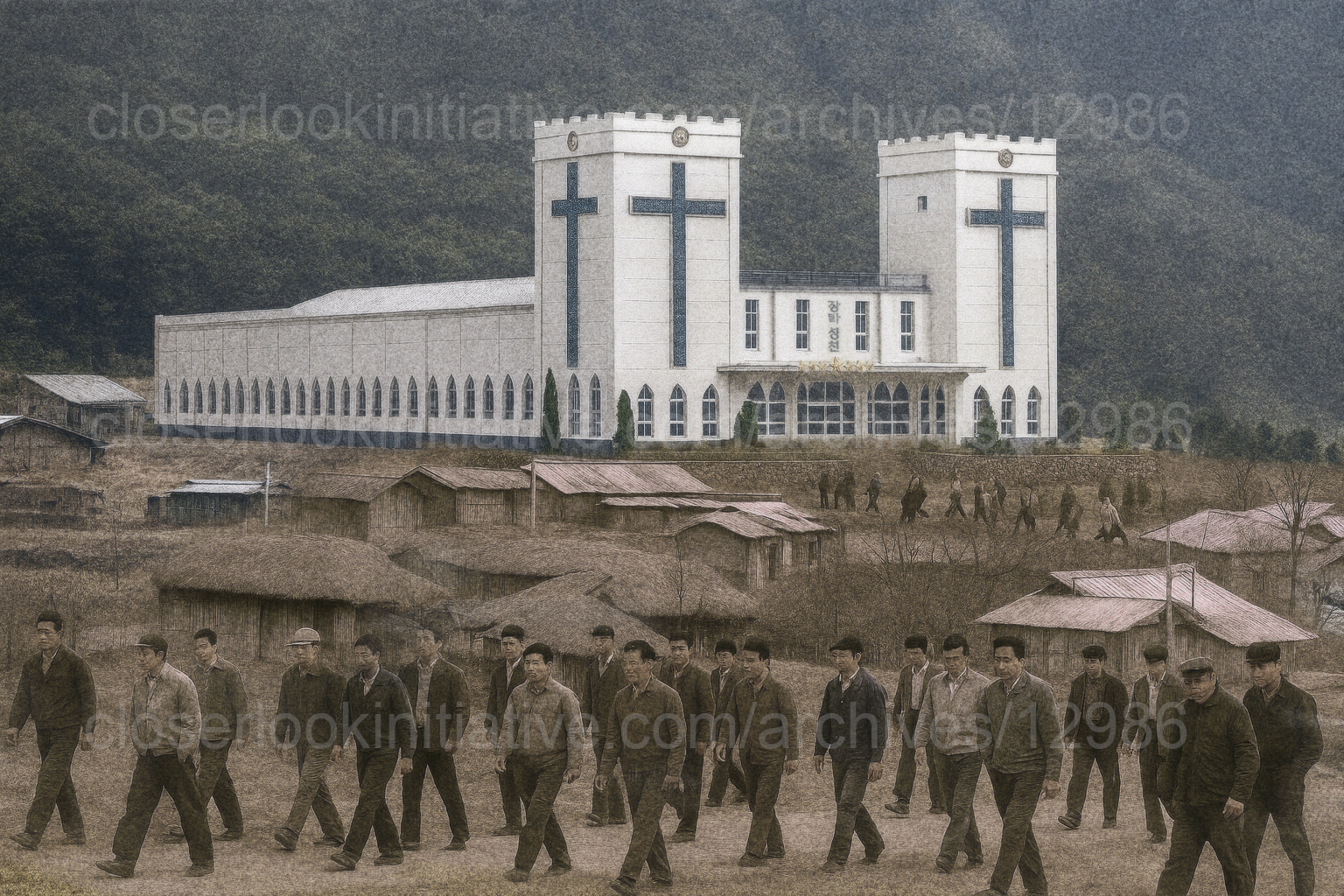
This series, “Testing Shincheonji’s Claims: Two Lenses, One Story,” is part of the “What Makes SCJ Bible Study So Appealing?” collection of articles.
“The simple believe anything, but the prudent give thought to their steps.” — Proverbs 14:15
Have you ever wondered why intelligent, sincere seekers of truth find themselves captivated by Shincheonji’s Bible study? Why does their teaching feel so compelling, so undeniably right to those who encounter it? This series invites you on a journey of examination—to test, discern, and hold every claim up to the light of Scripture itself.
Think of yourself as a detective arriving at a complex scene. The same evidence lies before you, but depending on which investigative lens you use, entirely different stories emerge. A corporate analyst sees organizational takeover and workplace politics. A psychologist recognizes patterns of emotional control. A spiritual seeker perceives prophetic fulfillment and divine intervention. Same facts, same timeline, same people—yet radically different realities. This is the heart of what we’ll explore together.
Throughout this series, we’ll use familiar experiences to illuminate the unfamiliar—how a film’s soundtrack can make you cry even when the plot doesn’t add up, how a compelling story can mask fraud, how the same event can be framed as heroic or villainous depending on who’s telling it. These aren’t just analogies; they’re windows into understanding how narratives shape our perception of reality and how psychological principles can be weaponized to control our thinking.
What makes Shincheonji’s Bible study so appealing isn’t accidental. It’s a carefully constructed system connecting physical realities to spiritual interpretations that feel profound and revelatory. When ordinary organizational conflicts are reframed as spiritual battles between God and Satan, your life suddenly feels eternally significant. When you’re taught you understand mysteries that trained theologians cannot grasp, it’s intoxicating.
But Scripture itself demands we ask: Does something feeling true make it true? This is where God’s Word becomes our standard: “Test the spirits to see whether they are from God, because many false prophets have gone out into the world” (1 John 4:1). The Bible doesn’t just permit questioning—it commands it. Truth isn’t afraid of examination; deception is. Genuine faith doesn’t crumble under scrutiny; it’s refined by it.
In these articles, you’ll encounter Shincheonji’s actual teaching alongside careful examination of what Scripture says in full context. You’ll see how their claimed “divine patterns” measure against the consistent witness of God’s Word. You’ll understand why their Bible study creates powerful experiences of revelation and belonging—and why those experiences must be tested against Scripture’s own testimony.
The Bereans were commended as “noble” because “they received the message with great eagerness and examined the Scriptures every day to see if what Paul said was true” (Acts 17:11). If Paul’s teaching was subject to daily scriptural examination, how much more should we examine any teacher today? This isn’t doubt—this is discernment. This isn’t skepticism—this is biblical obedience.
Understanding Shincheonji’s psychological appeal doesn’t require special insight or advanced training. It requires honesty, courage, and willingness to ask the questions Scripture tells us to ask. As Proverbs warns, the simple believe anything—but the prudent give thought to their steps. Will we be simple believers who accept compelling narratives at face value, or prudent disciples who carefully examine where these teachings lead?
Join us as we examine, test, and discern—not with fear, but with confidence in God’s unchanging Word. Not to close our minds, but to open them to what Scripture actually says when read carefully, prayerfully, and in context. Truth fears nothing. Truth invites examination. If Shincheonji’s claims align with Scripture’s full testimony, examination will only confirm it. If they don’t, those who love truth deserve to know.
“Test everything; hold fast what is good” (1 Thessalonians 5:21).
The journey of biblical discernment begins here. And the truth you discover through honest examination of God’s Word will set you free.
A Review of “Testing Shincheonji’s Claims: Two Lenses, One Story”
In a world filled with competing spiritual claims, how do you find the truth without losing your ability to think? That question is the beating heart of the research series, Testing Shincheonji’s Claims: Two Lenses, One Story. This is more than a doctrinal analysis; it is a meticulously documented, deeply human guide to independent spiritual verification that empowers you to become the ultimate authority in your own search for truth.
This series is essential reading for anyone questioning their beliefs, loving someone who is involved with the organization, or simply seeking intellectual honesty in spiritual matters.
The Integrity of the Method: Listening Before Cross-Examination
The research claims accuracy by being transparent about its sources. The initial chapters are dedicated entirely to immersing the reader in the subject’s own worldview, quoting and explaining the organization’s doctrines (from the founder’s own books and teachings) on their own terms before any critique begins. This commitment ensures the critique is directed at the actual teachings, not misrepresentations of them.
The process meticulously details:
- The three-level curriculum and the specific Parables Codebook.
- The Betrayal-Destruction-Salvation (BDS) cycle.
- The claims regarding the Promised Pastor.
The Power of the Three Lenses: Multi-Faceted Verification
The report’s reliability is rooted in the central argument that complex claims must be verifiable using multiple, external, and objective tests. The series trusts you to make the final determination by setting up a systematic, three-part cross-examination. Truth does not fear examination.
The three distinct lenses applied to the doctrine are:
- The Sacred Lens: The system’s view (how the doctrine makes sense internally).
- The Secular Lens: The worldly view (how the system looks when judged by standards of corporate strategy, logic, and ethical practice).
- The Biblical Lens: The independent view (how the claims stack up against the complete, consistent narrative of the Scripture).
The research claims its accuracy is based on the consistency of its findings when viewed through these different lenses.
The Psychological and Logical Roadmap: Tools for Discernment
The series’ intellectual rigor comes from applying external, objective frameworks—logic and psychology—to subjective spiritual claims, giving the reader powerful, verifiable tools for discernment:
- The Psychological Test (Chapter 5): The research systematically overlays the organization’s practices onto established models of high-control groups (like the BITE model) in what it calls the Cult Playbook. This analysis links concepts like gaslighting, the sunk cost fallacy, and authority bias directly to the doctrines, helping the reader see that negative feelings are often the engineered outcome of a systematic process of control.
- The Logical Test (Chapter 17): Applies basic strategic logic, asking, “If Christianity is Satan’s kingdom, why would Satan attack it?” This use of the “Kingdom Divided” principle proves that the fundamental premise of the system collapses under basic, unbiased logic.
- The Falsifiability Test (Chapter 19): This section is essential, introducing the philosophical standard that truth must be testable. It highlights that a claim structured so it cannot be disproven (an unfalsifiable claim) is logically untrustworthy because it is immune to all evidence.
The Theological Heart: Restoration vs. Replacement
The deepest and most transformative part of the research is the return to biblical text. It uses the concept of the “Scarlet Thread” (Chapters 24-25) to trace the single, consistent story of God’s redemptive plan from Genesis to Revelation.
- Challenging Replacement Theology: The analysis directly refutes the claims that Jesus’ work was insufficient or that God operates on a cycle of Destruction and Replacement. Instead, it demonstrates the biblical pattern of Discipline and Restoration, revealing a God characterized by steadfast love and complete sufficiency.
- The Sufficiency of Christ: By detailing the finality of the New Covenant, the report argues that the entire biblical narrative makes the necessity of a “New John” or a “third covenant” redundant and contradictory.
The Invitation to Independent Verification
The series makes no claim to absolute authority. It argues that truth welcomes examination, while deception fears scrutiny. The report’s ultimate standard for accuracy rests with the reader:
- Detective’s Report, Not Judge’s Verdict (Chapter 27): The author presents the findings as an investigative report, explicitly handing the evidence to the reader for independent cross-examination.
- The Berean Model: The series models and encourages the biblical example of the Bereans (Acts 17:11), who tested even apostolic teaching against the established Scriptures.
In summary, Testing Shincheonji’s Claims is a call to intellectual courage. It doesn’t tell you what to believe, but it gives you the roadmap and the courage to trust your own honest verification process. Your journey toward truth is too important to leave in the hands of a single human authority.
We highly recommend engaging with this research. Start your independent cross-examination today.
Complete Chapter List (1-30)
The 30 chapters provide a systematic examination of Shincheonji’s (SCJ) doctrines and practices. They progress logically from outlining the SCJ system to testing it against biblical, historical, and ethical standards, culminating in practical guidance for discernment.
The Detective’s Journey into Truth
Every story changes depending on who is telling it.
A historian might call it coincidence.
A theologian might call it prophecy.
A psychologist might call it belief formation.
And a detective—like us—calls it evidence.
Every story has two sides — what we see, and what we’re told to see.
This series begins where those two collide—the one people are told, and the one they discover for themselves.
This series is about that discovery.
It begins like a detective case. We follow the trail of clues hidden inside one of the most secretive religious movements in modern times: the Shincheonji Church of Jesus in South Korea. What looks at first like a Bible study promising “peace and understanding” slowly unfolds into a complex system of spiritual control built around one man’s claim to divine authority.
You soon realize you’re not just studying one belief system — you’re tracing the anatomy of how faith can be rewritten.
For decades, Shincheonji has claimed that all of Christianity has ended in failure, that the Book of Revelation has been fulfilled in their midst, and that a single man, Lee Man-hee, now stands as God’s chosen messenger — the only path to salvation in this generation.
Its theology is as intricate as it is persuasive. It reinterprets the Bible as a repeating cycle of betrayal, destruction, and salvation, insisting that every era ends in failure — and that only those who find the “Promised Pastor” can be saved.
This analysis report is not a rumor collection or an angry exposé. It’s a careful investigation — a detective’s report told through evidence, Scripture, and human stories.
Each chapter follows the same question: Are we seeing fulfillment, or fabrication?
Through 30 chapters, we will move from surface appearance to inner structure, tracing how a simple idea — that God repeats the same pattern of betrayal, destruction, and salvation in every era — becomes the foundation for a completely new gospel.
I. System Foundation and Interpretive Lens (Chapters 1–5)
This section introduces the SCJ structure and the method it uses to establish its unique theological perspective.
- Chapter 1: The Shincheonji Bible Study Framework: Details the three-level curriculum (Parables, Bible Logic, Revelation) designed to instill the “parable filter” necessary to interpret SCJ’s history as prophecy fulfillment.
- Chapter 2: Two Realities, Same Story – The Power of Interpretive Frameworks: Establishes that a single set of historical facts (e.g., the 1966–1984 Tabernacle Temple events) can be understood through vastly different lenses (Corporate, Personal, Spiritual).
- Chapter 3: The Sacred Lens – Spiritual Drama Through Parables: Explains how the “parable filter” transforms ordinary organizational conflict into a divine drama of eternal significance.
- Chapter 4: The Impact of Interpretive Frameworks: Contrasts the SCJ pattern of Betrayal-Destruction-Salvation with the traditional biblical pattern of Recognition-Repentance-Restoration.
- Chapter 5: Investigating Shincheonji’s Divine Blueprint vs. The Cult Playbook: Examines the core claim of a pre-determined 8-step pattern against established patterns of psychological manipulation.
II. System Theology and Core Doctrines (Chapters 6–9)
This section details the specific claims regarding the leader, salvation, and the necessity of organizational membership.
- Chapter 6: Consistent Narrative vs. Selective Narrative: Examines whether the core SCJ narrative is a consistently derived truth or one selectively imposed onto Scripture to fit organizational needs.
- Chapter 7: The Hidden Savior: New John: Focuses on the gradual, deceptive reveal of the founder, Lee Man-hee (LMH), as the “Promised Pastor” (New John) and the essential mediator for the current era.
- Chapter 8: The Shifting Standards of Salvation: Discusses the doctrine of era-specific salvation and the conditional nature of faith, requiring acceptance of LMH and SCJ membership.
- Chapter 9: Understanding the Two Seeds Doctrine: Explores the claim that the church is a “mixed field” of “wheat” and “weeds,” justifying the recruitment (“harvesting”) mission to gather the elect into SCJ.
III. Discernment and Operational Analysis (Chapters 10–13)
This section focuses on testing the organization’s methods for truthfulness, transparency, and logical consistency.
- Chapter 10: Why Truth welcomes Examination: Emphasizes the principle that genuine truth welcomes open investigation (the Berean model), contrasting this with systems that rely on fear and secrecy.
- Chapter 11: The Wisdom of Hiding: Deceive, Deny, Revise: Analyzes deceptive recruitment methods and the pattern of doctrinal revision when claims are challenged, noting the system’s reliance on information control.
- Chapter 12: The Importance of Independent Research: Calls for independent verification of all claims as a necessary tool against manipulation and unverified authority.
- Chapter 13: Evaluating Spiritual Claims and Evidence: Discusses the challenge of verifying subjective claims and the necessity of multiple, independent witnesses to establish truth, a standard set by Jesus Himself.
IV. Testimony, Witness, and External Review (Chapters 14–16)
This section presents the human cost and the consistent pattern observed by those with inside knowledge and professional expertise.
- Chapter 14: The Testimony Vault: Presents corroborating testimony from various internal witnesses (leaders, teachers, and long-term participants) that consistently describe patterns of deception and control.
- Chapter 15: What Pastors and Counselors Discovered: Provides the external professional perspective from theologians and counselors who observe consistent psychological and theological patterns across many cases.
- Chapter 16: When Messiahs Multiply: Compares SCJ’s claims and methods to those of other high-control groups globally, illustrating that the blueprint is not a unique revelation but a common pattern of manipulation.
V. Applying Biblical and Logical Tests (Chapters 17–20)
This section applies logical and philosophical standards to test the system’s internal consistency and claims of unique fulfillment.
- Chapter 17: The Logical Contradiction in Shincheonji’s Claims: Applies the logical test that “a kingdom divided against itself cannot stand” (Matthew 12:26) to the claim that Christianity is Satan’s kingdom.
- Chapter 18: The Real Test of Authority: Focuses on the “Fruit Test” (Matthew 7:16) and the Humility Test to distinguish genuine spiritual authority from authoritarian control.
- Chapter 19: When Claims Cannot Be Tested: Introduces the philosophical principle of falsifiability, examining how core prophecies are structured to be immune to external evidence.
- Chapter 20: The Danger of Creative Fulfillment: Contrasts legitimate biblical adaptation with illegitimate distortion (gap-filling, reinterpretation) to create a predetermined narrative.
VI. Biblical Theology and Christological Focus (Chapters 21–26)
This section provides a deep theological counter-analysis, testing the claims against the continuous, consistent narrative of the Bible.
- Chapter 21: The Heart of God: Contrasts the system’s view of a God who replaces failures with the biblical God of relentless pursuit and restoration (e.g., the prodigal son).
- Chapter 22: When Satan Tried to Hijack God’s Plan (And Failed Every Time): Examines biblical history to show that God’s plan does not require concealment or fear, refuting the “hidden savior” theology.
- Chapter 23: The God Who Waits: Reinforces the theme of God’s strategic timing and patient grace, showing that His final actions are about redemption, not abandonment.
- Chapter 24: The Scarlet Thread – Part 1: Traces the theme of redemption and the Messiah through the Old Testament, demonstrating the prophetic consistency that points solely to Christ.
- Chapter 25: The Scarlet Thread – Part 2: Continues the analysis through the New Testament, confirming Jesus’ sufficiency and addressing the diminished view of the Holy Spirit.
- Chapter 26: Reading Revelation Like a First-Century Christian: Interprets Revelation through its original historical and literary context (as resistance literature), arguing it is a message of hope, not a code for a modern leader.
VII. Conclusion, Discernment, and Guidance (Chapters 27–30)
This final section offers principles for independent discernment, a summary of the evidence, and practical guidance for those affected.
-
- Chapter 27: Your Investigation Begins: Serves as a hand-off to the reader, urging them to continue the investigation with independence and intellectual honesty.
- Chapter 28: Hope and Help – Guidance for Members, Families, Christians, and Seekers: Provides practical, compassionate advice for safe discernment, effective communication, and emotional recovery.
- Chapter 29: How Do We Know Which Voice We’re Hearing?: Explores the Transformation Test, distinguishing the voice of the Spirit by the genuine spiritual fruit and transformation it produces.
- Chapter 30: How Does God Actually Speak to You?: Summarizes the principles of discernment, focusing on relationship and the witness of time as the reliable confirmation of God’s voice.
Each chapter leads us deeper into that question until the final discovery:
that the greatest danger to faith isn’t doubt — it’s misplaced certainty.
When truth becomes a trademark, when salvation is sold through one organization, and when questioning is called betrayal, the gospel has already been replaced.
Each chapter invites you to ask:
What lens am I using?
Who taught me to see this way?
And what happens if I remove the filter?
The goal is not to destroy faith, but to return it to its rightful place—anchored in Scripture, illuminated by love, and tested by truth.
Because truth doesn’t hide behind secrecy. It walks in daylight.
The Invitation
So read this series like a detective.
Examine the evidence.
Question every claim — including this one.
Because genuine faith doesn’t fear investigation; it demands it.
The story you’re about to read is not just about Shincheonji.
It’s about how all of us, in one way or another, must learn to tell the difference between revelation and reinterpretation, between a promise kept and a promise rewritten.
Welcome to the case.
The truth has nothing to hide. Turn the page. The investigation begins.
Focus: Establishing SCJ’s unique methods and the psychological blueprint of the narrative.
Chapter 1: The Shincheonji Bible Study Framework
- Overview: Details the systematic three-level curriculum and core doctrines used to establish the organization’s unique end-times narrative.
- Part 1: Timeline of Reality of Fulfilment of Revelation: Presents the chronological structure of history and prophecy, defined by covenantal eras and the cycle of Betrayal, Destruction, and Salvation (BDS).
- Part 2: Review of Cast of Characters: Lists the key individuals and organizations from the 1966–1984 events, classifying their roles as prophetic fulfillment (Saviors, Destroyers, Betrayers).
- Part 3: Schincheonji’s Fixed Parables Codebook: Summarizes the mandatory system of symbolic meanings used to interpret the Bible, asserting that this codebook is essential for salvation.
- Part 4: Shincheonji Bible Study Structure: A Roadmap to Comprehensive Understanding: Outlines the progressive curriculum (Parables, Bible Logic, Revelation) as a structured roadmap to build the necessary interpretive framework.
- Part 5: SCJ’s Foundational Doctrines: The Three Important Promises in Revelation: Details the core claims concerning the Promised Teaching (open word), the Promised Pastor (LMH), and the Promised Kingdom (SCJ).
Chapter 2: Two Realities, Same Story – The Power of Interpretive Frameworks
- Overview: Contrasts how the historical events can be seen as either organizational conflict or a divine drama, depending on the interpretive filter applied.
- Part 1: The Secular Lens – Corporate Drama Without Parables: Views the 1966–1984 events as an organizational power struggle and internal conflict.
- Part 2: Adaptive Defense: Studying Critics to Strengthen Control: Discusses the method of monitoring criticism and using counter-arguments to maintain a unified narrative.
- Part 3: The Corporate Merger Pattern: Frames the Tabernacle Temple incident as a predictable sequence of institutional takeover.
Chapter 3: The Sacred Lens – Spiritual Drama Through Parables
- Overview: Shows how applying the “parable filter” transforms ordinary historical details into a cosmic spiritual drama.
- Part 1: The 5W1H Testimony Method: Discusses the claim that the narrative is uniquely verifiable using the standard of Who, What, When, Where, Why, and How to assert historical precision.
- Part 2: The Transformation of Meaning: Shows how applying the parable filter maps the 1966–1984 events onto prophetic scenes in Revelation.
- Part 3: The Power of Parables: Making the Invisible Tangible: Explains the psychological effect of parables, arguing they make abstract concepts feel immediate and real.
- Part 4: The Biblical Reality: Satan’s Corporate Rebellion: Uses the allegory of a corporate takeover (Creation Corp vs. Profit & Co.) to relate the theological concept of Satan’s opposition to God’s plan.
- Part 5: Shincheonji’s Application: The Parable Method in Practice: Details how the fixed parable codebook is applied to the Tabernacle Temple narrative.
- Part 6: The Psychological Trap: When Narrative Power Replaces Evidence: Discusses how emotionally compelling narratives can override critical evaluation, creating a self-validating loop where questioning the interpretation feels like rejecting God.
- Part 7: The Detective’s Warning: Emotional Resonance Is Not Evidence: Concludes by warning that the emotional satisfaction of a compelling story does not validate its accuracy.
Chapter 4: The Impact of Interpretive Frameworks
- Overview: Examines the consequences of adopting a rigid interpretive lens and contrasts the organization’s pattern of renewal with biblical concepts of revival.
- Part 1: The Power of Interpretive Layers: Uses the analogy of a film’s musical score to show how an interpretive framework adds dramatic significance to facts.
- Part 2: Why Christianity is Declining: Discusses factors perceived as contributing to the decline of traditional Christianity, framing this as proof of the need for the organization’s message.
- Part 3: Transformation Without Control: Distinguishes the organization’s pattern of destruction and replacement from the biblical pattern of recognition, repentance, and restoration.
- Part 4: The Detective Conclusion: Summarizes the investigation by contrasting the Secular, Spiritual (SCJ), and Biblical patterns of understanding the same historical events.
Chapter 5: Investigating Shincheonji’s Divine Blueprint vs. The Cult Playbook
- Overview: Compares the claim of a divine 8-step pattern (BDS cycle) to established models of psychological control.
- Part 1: Evidence Collection: The Smoking Gun Comparison: Directly lists the organization’s 8 steps against the universal “Cult Creation Blueprint,” noting their precise correspondence.
- Part 2: Expanding the Investigation: Other Familiar Patterns: Compares the leader’s narrative to the Hero’s Journey formula, suggesting the story is structured to be psychologically compelling.
- Part 3: Cross-Referencing: What Real Biblical Patterns Look Like: Contrasts the simplistic BDS pattern with genuine, Christ-centered biblical patterns (Typology) to test for authenticity.
- Part 4: Detective’s Critical Discovery: Concludes that the patterns match storytelling formulas and manipulation cycles more closely than authentic biblical patterns.
- Part 5: Comprehensive Psychological Profile: The High-Control Group Blueprint: Provides a detailed analysis of the organization’s practices against established characteristics of high-control groups.
- Part 6: Experts Framework: Introduces the research of cult experts (Steven Hassan, Robert Lifton, Margaret Singer) whose work validates the psychological model applied.
- Part 7: The Test of the Bereans: Examining the Scriptures for Ourselves: Highlights the irony of the organization using the Berean model while restricting members’ ability to perform genuine, independent research.
- Part 8: The Meta-Investigation: Why Patterns Work: Explores the psychological appeal of patterns, noting that both genuine faith and manipulation systems appeal to the same fundamental human needs.
- Part 9: The Detective’s Closing Observations: Questions Worth Asking: Leaves the reader with critical questions about the necessity of transparency and the nature of the “persecution” defense.
- Part 10: The Real Divine Pattern: Contrasts the organization’s BDS pattern with the authentic biblical pattern of salvation by grace through faith alone.
- Part 11: The Psychology of Pattern Recognition: Why We Fall for False Patterns: Explains the cognitive tendency (apophenia) to see patterns that aren’t there, which the organization’s teaching exploits.
Focus: Detailed examination of the central doctrines (Savior, Salvation, Authority) against the internal biblical context.
Chapter 6: Consistent Narrative vs. Selective Narrative
- Overview: Investigates whether the organization’s claims are derived from a consistent reading of Scripture or through selective reading to support a predetermined end.
- Part 1: When Our Minds Create What We Expect to Find: Discusses cognitive biases like apophenia and confirmation bias that influence scriptural interpretation.
- Part 2: Two Competing Narratives – Which One Fits the Biblical Evidence?: Compares the system’s narrative of Abandonment, Destruction, and Replacement against the biblical theme of Exile, Discipline, and Restoration.
- Part 3: How Organizations Fit Events to Narratives: Discusses how groups often reinterpret historical events retroactively to preserve their narrative pattern.
- Part 4: Examining Biblical History: Does It Show a Single Pattern or Multiple Patterns?: Tests the claim of a single prophetic pattern by examining periods like the Judges and the Prophets.
- Part 5: Church History: Destruction and Restoration, or Continuous Growth?: Challenges the claim that Christianity was destroyed, asserting that historical evidence shows continuous growth despite persecution.
- Part 6: The Irony: Why Shincheonji Targets Christians: Argues that the organization targets Christians because they already believe in core principles, making them vulnerable to a twisted application of their existing beliefs.
- Part 7: The Fundamental Difference: Two Stories About God’s Character: Compares the conditional, abandoning God portrayed by the system with the biblical God of unconditional, pursuing faithfulness.
- Part 8: The Biblical Evidence: Which Story Does Scripture Actually Tell?: Examines specific Old Testament narratives to show that God’s actions focused on restoration, not total replacement.
- Part 9: The Critical Difference: What Story Are We Being Told?: Concludes that the system’s narrative serves organizational control by creating fear and exclusivity.
- Part 10: History Repeats Itself – Recognizing the Pattern: Notes the striking similarities between the subject’s organization and the Tabernacle Temple it claims to expose.
- Part 11: The Persecution Defense – A Predictable Script: Analyzes the consistent use of the “persecution defense” by leaders of high-control groups when facing legal charges.
- Part 12: The Blue Screen of Truth: What Happens When People Start Comparing Notes: Uses a technological analogy to show that truth emerges when information flows freely.
- Part 13: The Question Every Seeker Must Ask: Summarizes the core conflict: choose the path of isolation and fear or the path of independent discernment and biblical obedience.
Chapter 7: The Hidden Savior: New John
- Overview: Details the systematic process of elevating the founder, LMH, to the status of “New John” or Promised Pastor, essential for salvation.
- Part 1: Why Shincheonji Hides Behind Front Groups: Discusses the systematic use of deception and front organizations for recruitment, arguing that truth should not need to hide its identity.
- Part 2: The Harvesting Strategy: Uprooting and Replanting: Explains how the teaching is used to justify systematically dismantling a convert’s previous faith (“uprooting the weeds”).
- Part 3: The Concept of the New John: A Gradual Unveiling: Details the step-by-step process used to build the case that LMH is the “New John,” or Promised Pastor, based on symbolic interpretations of Revelation.
- Part 4: The Obscurity Problem: Why Wasn’t This Clearer?: Challenges the claim of a hidden savior by noting that the Messiah was prophesied clearly and publicly, and that LMH’s obscurity raises questions of authenticity.
- Part 5: Why Jesus Didn’t Abandon His Church: Challenges the claim that Christianity fell into darkness by citing Jesus’ explicit promises about the Holy Spirit’s presence and the Church’s endurance.
- Part 6: The Biblical Teaching on Jesus’s Sufficiency: Argues that the teaching that LMH’s testimony is necessary for “final salvation” contradicts Scripture’s emphasis on Christ’s finished and sufficient work (“It is finished”).
- Part 7: The Problem of the “Third Covenant”: Challenges the teaching that LMH establishes a “third covenant,” citing Hebrews which describes Christ’s New Covenant as eternal and final.
- Part 8: The Replacement of the Holy Spirit: Refutes the claim that LMH is the physical “Advocate” or “vessel” of the Holy Spirit, citing the Spirit’s deity and presence in all believers.
- Part 9: The Question of Lee Man-hee’s Sinlessness: Presents documented evidence of LMH’s moral failures (e.g., extramarital affairs, embezzlement) which contradict the required biblical standard for a leader.
- Part 10: The Authority Question – Why Jesus Through Lee Man-hee?: Examines the asserted divine chain of command and argues that it violates Jesus’s own standard of authority and mediation.
- Part 11: The Logical Inconsistencies: Identifies flaws like circular reasoning and unfalsifiability in the organization’s theological framework.
- Part 12: The True Gospel – Jesus Is Enough: Reasserts the simple, complete gospel of grace through faith, which requires no human mediator or organizational membership.
- Part 13: A Call to Return: Concludes with an invitation to return to the simplicity of the gospel and to test the organization’s methods against Jesus’ character.
Chapter 8: The Shifting Standards of Salvation
- Overview: Details the conditional nature of the organization’s salvation doctrine, arguing that it replaces assurance with performance.
- Part 1: The Three-Era Framework – A Moving Target: Outlines the belief that salvation requirements change from Physical Israel to Spiritual Israel to New Spiritual Israel, creating an unstable standard.
- Part 2: The Complete Salvation Checklist—What Shincheonji Actually Requires: Lists the seven requirements for salvation (e.g., accepting LMH, being sealed, organizational membership), showing it is a works-based system.
- Part 3: The Noah’s Ark Analogy – Making Era-Specific Salvation Seem Logical: Explains how the ark analogy is used to rationalize changing salvation requirements, noting that this implies God is an inconsistent architect who repeatedly changes His plan.
- Part 4: The “Milk” vs. “Solid Food” Framework – Redefining Spiritual Maturity: Discusses how the analogy is used to frame the organization’s complex teachings as spiritual maturity while dismissing genuine biblical faith as “milk”.
- Part 5: The Book of Revelation—From Supplementary Text to Salvation Requirement: Explains that understanding Revelation (via LMH) is made essential for salvation, diminishing the sufficiency of Christ’s cross-work.
- Part 6: Redefining Core Concepts—Faith, the Holy Spirit, and Being Born Again: Details how the organization uses Christian terms but redefines them (e.g., Faith becomes “locating salvation”; Born Again becomes re-education).
- Part 7: The Urgency Factor – Time Is Running Out: Analyzes the use of artificial deadlines (e.g., the 144,000 quota, the closed door parable) to create pressure and fear that prevents critical evaluation.
- Part 8: The Pattern of Redefinition—A Strategy Revealed: Summarizes the organizational strategy of using familiar biblical terms while gradually shifting their meaning for control.
- Part 9: The Human Cost—What This Salvation Doctrine Does to People: Discusses the psychological toll, including loss of assurance, anxiety, and broken relationships caused by the performance-based system.
- Part 10: The Heart of the Gospel – God’s Eternal Plan to Save Humanity: Contrasts the organization’s system with the biblical gospel, which is rooted in God’s unchanging character and Christ’s sufficiency.
- Part 11: What Scripture Actually Teaches About Salvation: Concludes by listing the radical differences between the system’s requirements and the simple, accessible gospel.
Chapter 9: Understanding the Two Seeds Doctrine
- Overview: Explores the rationale behind the claim that the church is a “mixed field” of “wheat” and “weeds,” justifying the recruitment mission.
- Part 1: The Logical Problem – The Inescapable Vicious Cycle: Applies logic to the BDS pattern, questioning if an omniscient God would design a system where obedience guarantees failure.
- Part 2: The Prophetic Timeline – From Jeremiah to Jesus: Details the claim that the Parable of the Weeds (Matthew 13) is the fulfillment of Jeremiah’s prophecy about sowing two seeds.
- Part 3: The Nature and Identity of the Two Seeds: Explains the spiritual dualism that labels everyone as either “sons of the kingdom” (wheat) or “sons of the evil one” (weeds).
- Part 4: When the Harvesters Leave the Field—Leadership Testimonies: Discusses the theological problem created when high-ranking leaders identified as “sealed wheat” leave the organization, contradicting the doctrine.
- Part 5: What Constitutes Betrayal in Shincheonji’s Framework: Defines “betrayal” as dishonoring the chosen messenger (LMH), contrasting this with biblical definitions of sin.
- Part 6 – The Betrayal of Knowing Without Joining: Examines the coercive teaching that knowing the truth creates an obligation to join, using John the Baptist as a negative example of failure.
- Part 7: The 144,000 Firstfruits—Shincheonji’s Primary Mission: Details the system’s literal interpretation of the 144,000 as organizational members, creating urgency and exclusivity.
- Part 8: How Lee Man-hee “Overcame”—The Logic of Victory: Examines the self-validating claim of LMH as the unique “overcomer” and the circular reasoning used to establish his authority.
- Part 9: From Spiritual Israel to Babylon—Christianity’s Fall: Describes the process by which the organization claims Christianity became “Babylon” through historical corruption.
- Part 10: Why Did Jesus Allow Christianity to Fall into Darkness?: Challenges the claim of a 2,000-year apostasy, arguing it requires God to be an inconsistent architect who designs His covenants to fail.
- Part 11: Why Both Seeds Coexist in Christianity: Details the organization’s identification of itself as the “barn” or “Mount Zion” where the “wheat” must be gathered for salvation.
- Part 12: The Wedding Banquet and the First Resurrection: Explains how the Parable of the Ten Virgins is used to create fear of missing out on the exclusive rewards of the sealed 144,000.
- Part 13: The Exodus of Revelation—Doctrinal Changes and Departures: Notes the reality of frequent doctrinal shifts and the departures of long-time members, which contradicts the claims of unchanging truth.
- Part 14: Is This Interpretation Correct?: Challenges the organization’s use of proof-texts (Jeremiah 31:27, Matthew 13) by examining their original biblical context.
- Part 15: The Psychological Impact of the Two Seeds Doctrine: Summarizes how the doctrine creates fear, uncertainty, and dependence by devaluing a convert’s former faith.
- Part 16: The Pattern Designed from the Beginning: Discusses the claim that the entire history of failure was predetermined by God (Isaiah 46:10) to culminate in the organization.
- Part 17: Testing the Foundation: Concludes that the system is built on a faulty premise and invites the reader to test its claims against Jesus’ clear promises.
Focus: Applying the principle that truth welcomes examination and gathering external corroboration.
Chapter 10: Why Truth welcomes Examination
- Overview: Emphasizes the principle that genuine truth welcomes open investigation (the Berean model), contrasting this with systems that rely on secrecy and fear.
- Part 1: The Biblical Standard: Truth Welcomes Investigation: Establishes the standard from Scripture (1 John 4:1, Acts 17:11) that spiritual claims must be verified and tested.
- Part 2: A Case Study in Systematic Lying: Details the organization’s “wisdom of hiding” and the institutionalized nature of deception, arguing that a strategy of systematic lying is fundamentally ungodly.
- Part 3: The Danger of Quarreling Without Understanding: Advises approaching dialogue with members through humble listening and gentle questions, recognizing that members view criticism as spiritual attack.
- Part 4: Case Study – A Conversation Between a Current Member and a Questioner: Analyzes a typical conversation where specific evidence (e.g., changing dates for prophetic fulfillment) is met with deflection, evasion, and appeals to subjective faith.
- Part 5 Understanding the SCJ Member’s Reality: Encourages compassion by recognizing that the member is trapped in a closed system and genuinely believes they are defending God.
- Part 6 Questions for Reflection: Provides practical questions to guide both current members and those helping them to test the system’s claims against its own stated standards.
- Part 7: The Psychological Consequences of Systematic Deception: Discusses the severe psychological impact of leaving the system, including trust issues, anxiety, and identity confusion.
- Part 8: The Reality of Deception and the Power of Restoration: Reasserts that being deceived does not mean spiritual failure, citing Jesus’ warning that “even the elect” could be deceived.
- Part 9: The Biblical Gospel: Contrasts the organization’s complex, works-based system with the simple, complete, and freeing gospel of grace.
Chapter 11: The Wisdom of Hiding: Deceive, Deny, Revise
- Overview: Analyzes the psychological strategy of “gaslighting” and how the system rewrites its history and doctrines when claims are challenged.
- Part 1: The Paris Olympics “Last Supper” Controversy: Uses a public event to illustrate the classic pattern of denial, reframing, and minimization (gaslighting).
- Part 2: Shincheonji’s Gaslighting Through Doctrinal Changes: Documents the revision of core prophecies (e.g., the 144,000 timeline) after the COVID-19 crisis, illustrating the systematic effort to hide inconsistencies.
- Part 3: The “Movie Casting” Analogy: Examines the defense that claims doctrinal changes are merely “identifying the cast” for a pre-written script, and shows how this is actually rewriting the script.
- Part 4: The Trust Paradox: Poses the critical question: If the organization lied to recruit you, why trust them to keep you?.
- Part 5: The Phenomenon of Manufactured Support: Discusses how movements can create a false appearance of legitimacy, warning that manufactured support fears scrutiny.
- Part 6: Why God Hates Lies and Deception: Establishes that God would never use Satan’s tools (deception/lying) to accomplish His purposes.
- Part 7: The Danger of Taking Things Out of Context: Explains how presenting truthful information out of context creates a false narrative—a form of evidence manipulation.
- Part 8: The Heart Behind the Action: Character Assassination as Spiritual Murder: Argues that deliberately slandering opponents is a form of spiritual violence that reveals a lack of integrity.
- Part 9: The Heart of the Matter: Intent to Control: Concludes that the intent behind misleading interpretations is often control—maintaining authority and followership.
- Part 10: The Psychological Prison: Summarizes how the combined tactics of deception and information control create a psychological prison for members.
- Part 11: The Cost of Leaving vs. The Cost of Staying: Uses the analogy of an exploitative workplace to explain how psychological costs can trap people even after they recognize exploitation.
- Part 12: The Slave Mentality: Details the psychological mechanism of the sunk cost fallacy—the tendency to continue investing because of past sacrifices, even when it is irrational.
- Part 13: Why People Stay After Discovering the Truth: Concludes that the system actively engineers high sunk costs to make leaving feel psychologically impossible.
- Part 14: Why Smart People Make Irrational Decisions: Focuses on the sunk cost fallacy as the reason why intelligent people continue to invest in a failing system.
- Part 15 – Testimonies from Ex-Members: Direct Quotes Only: Provides direct quotes from former members on financial, health, and relational exploitation, documenting the human cost.
- Part 16: The Path Forward: Offers a path to recovery by accepting the loss and moving forward, emphasizing that courage is required to cut losses.
Chapter 12: The Importance of Independent Research
- Overview: Argues that independent verification is a moral and spiritual necessity to protect against deception.
- Part 1: The Martyrdom Effect and Information Warfare: Uses the Apostle Paul’s post-conversion study period to demonstrate the biblical model of verifying spiritual experiences against Scripture independently.
- Part 2: False Martyrdom: Dying for Lies: Contrasts the authenticity of true martyrs with those who promote falsehood, noting that deception lacks the power to inspire genuine conviction.
- Part 3: The Call to Discernment in an Age of Misinformation: Warns against following the crowd and emphasizes the need for individuals to verify claims through independent research.
- Part 4: The Investigator’s First Principle: Verify Everything: Lays out the Berean model (Acts 17:11) as the standard for checking claims, stressing the need for triangulation across multiple sources.
- Part 5: False Prophets and False Teachers: Understanding the Biblical Warnings: Identifies the historical and New Testament patterns of false teachers (e.g., Gnostics, Judaizers) and their motives.
- Part 6: The Pattern Repeats Today: Shows the striking parallels between the organization’s methods and the patterns of false teaching warned against in Scripture.
- Part 7: Did Christianity Fall Into Darkness? Examining Shincheonji’s Central Claim: Challenges the central claim of a 2,000-year apostasy, citing Jesus’ promises and the consistency of denominational agreement on core gospel truth.
- Part 8: Jesus’s Sheep Recognize His Voice: Explains the relational aspect of discernment: true believers have the Holy Spirit’s internal witness that helps them recognize truth.
- Part 9: SCJ’s Teaching on the Parable of the Keys: Uses the organization’s own instruction on discernment to argue that humble examination is required to truly possess “wisdom”.
- Part 10: The Keys and Knowing Your Opponent: Discusses the danger of the echo chamber created by discouraging comparison and outside information.
- Part 11: The Irony of Deceptive Evangelism: Questions why a group with “truth” would need to use deceptive tactics (like “The Sprout System” and “Leafs” as informants), contrasting this with Jesus’s open proclamation.
- Part 12: The Secret Monitoring System: “Leafs” as Informants: Details how “leafs” (recruiters) secretly monitor and report on potential members’ doubts to tailor lessons and create an illusion of divine insight.
- Part 13: True Faith Has Life: Argues that authentic faith produces a message that is flexible and relational, unlike the scripted, fearful performance of those under control.
- Part 14: Examining Shincheonji’s Public Image Campaign: Discusses the use of public relations campaigns (like HWPL) to borrow legitimacy and mask the true recruitment mission.
- Part 15: The Test of Genuine Truth: Calls for applying a test: genuine truth grows stronger under examination; falsehood requires protection from scrutiny.
Chapter 13: Evaluating Spiritual Claims and Evidence
- Overview: Establishes the biblical and logical standards necessary for assessing claims of unique spiritual authority.
- Part 1: Why Jesus Provided Physical Evidence: Explains that Jesus provided physical, verifiable proof (eating, being touched) of His resurrection to establish credibility.
- Part 2: Why Physical Evidence Matters: Argues that verifiable evidence is required for extraordinary claims, and Jesus’s physical return contradicts claims of a spiritual return in another person.
- Part 3: The Role of Miracles in Establishing Divine Authority: Posits that claims of divine authority require miraculous authentication as evidence, a standard Jesus met.
- Part 4: Jesus’s Warnings About False Claims: Cites Jesus’ warnings that false messiahs will be convincing but should be rejected, noting that spiritualizing His return fails the “in the flesh” test.
- Part 5: When Human Opinion Becomes Divine Mandate: Analyzes the pattern where the leader’s interpretation is presented as unquestionable divine truth, designed to stop investigation.
- Part 6: The Credibility Question: Discusses the importance of source credibility, comparing Jesus’ extensive external validation (prophecy, miracles) with the subject’s reliance on self-testimony.
- Part 7: The Biblical Standard for Evaluating Witnesses: Details the principle of multiple, independent witnesses (Deuteronomy 19:15) required by Scripture to establish truth.
- Part 8: Special Considerations for Sexual Abuse Cases: Applies witness standards to abuse cases, noting that a pattern of victim testimony creates a form of corroborating evidence.
- Part 9: Biblical Balance: Calls for a balanced approach that seeks justice for victims and protects against false accusations, prioritizing protection of the vulnerable over institutional reputation.
- Part 10: The Pursuit of Truth in a World of Competing Claims: Concludes that humility and wisdom are essential for navigating claims that lack verifiable evidence.
- Part 11: When Vagueness Becomes a Strategy: An examination of how high-control groups like Shincheonji train members to use vague, rehearsed responses during recruitment—sounding authoritative but lacking substance when pressed for specifics—a tactical approach that prevents critical examination, creates dependency on the organization’s interpretation, and masks the absence of verifiable evidence or genuine personal transformation.
Chapter 14: The Testimony Vault
- Overview: Presents multiple, corroborating testimonies from various internal witnesses, documenting consistent patterns of deception and control.
- Part 1: The Supreme Assembly Elder: Testimony of a high-ranking leader detailing financial corruption and fabricated membership numbers.
- Part 2: The Curriculum Architect: Testimony of a department head detailing systematic doctrinal revision and the intentional hiding of past versions of teachings.
- Part 3: The 30-Year Member – When a Lifetime of Devotion Meets Reality: Testimony of a long-term member detailing the evolution of doctrines and disillusionment that led to her departure.
- Part 4: Mr. Cho – The Tabernacle Temple Witness and Head Teacher: Eyewitness testimony contradicting the system’s foundational claim that the 1966–1984 events were prophetic fulfillment.
- Part 5: In Yong – The Headquarters Insider: Testimony of a headquarters worker confirming manufactured growth numbers and the surveillance state at the center of the organization.
- Part 6: Kim Dae-won – The Seven Bowls Witness: Eyewitness testimony from a man who claims he was one of the organization’s “fulfilled prophecies,” but denies the prophetic interpretation of the events.
- Part 7: Hee-suk – Lee Man-hee’s Abuse Victim Breaks the Silence: Testimony of a sexual abuse survivor detailing the abuse of spiritual authority and the organization’s subsequent cover-up tactics.
- Part 8: The Doctrine Analyst – How Shincheonji Manipulates Biblical Geography: Analysis showing how physical locations (headquarters, a local mountain) are spiritualized to create an artificial “prophetic reality”.
- Part 9: The Unanswered Challenge – Fifteen Years of Silence: Details the persistent, unanswered public debate challenge from a cult researcher, arguing that truth fears no questions.
- Part 10: The Mindanao Missionary – When Peace Work Becomes Predation: Testimony detailing how the organization’s HWPL peace group is a recruitment front in conflict zones.
- Part 11: The Investigative Journalist – Documenting Shincheonji’s Criminal Enterprise: Testimony detailing the organization’s pattern of financial and legal misconduct.
- Part 12: The Reddit Community – Collective Testimony: Presents online testimonies as a source of corroborating patterns across global members.
- Part 13: Conclusion: Summarizes that the multiple, consistent testimonies reveal a systematic pattern of deception, control, and exploitation.
- Part 14: The Beast From The Earth Who Testified: Mr. Oh. Shincheonji’s prophetic narrative collapsed when the man they called the “Beast from the Earth” testified under oath: “I have never met him.”
Chapter 15: What Pastors and Counselors Discovered
- Overview: Provides the external professional perspective from theologians and counselors who observe consistent patterns across many cases.
- Part 1: The Counselor’s Observations – Patterns Across Many Cases: Details the psychological conditioning that makes members resistant to evidence, noting the common patterns of spiritual trauma.
- Part 2: The Respondent’s Experience – When Examination Meets Deflection: Testimony confirming that public theological examination is typically met with deflection and personal attack rather than substantive engagement.
- Part 3: The Doctrinal Analysis – Comparing Teachings to Scripture: Summarizes how the system systematically redefines core Christian doctrines (salvation, Christ, Scripture, Holy Spirit) while using Christian vocabulary.
- Part 4: The Interpretive Examination – Testing Their Methods Against Scripture: Details how the system uses arbitrary allegorizing, circular reasoning, and ignoring context to force interpretations.
- Part 5: The Path Forward – Guidance For Recovery and Healing: Outlines the stages of recovery and the necessity of rebuilding a faith based on grace and freedom.
- Part 6: When Many Witnesses Confirm the Same Truth: Concludes that the convergence of internal and external testimonies provides undeniable evidence of a systematic pattern.
Chapter 16: When Messiahs Multiply
- Overview: Compares the system’s claims and methods to those of six other groups (e.g., Jehovah’s Witnesses, Unification Church), illustrating a global pattern of manipulation.
- Part 1: Shincheonji’s Grand Narrative: Summarizes the SCJ recruitment and doctrinal progression.
- Part 2: The World Mission Society’s Divine Family: Details the WMSCOG’s claims regarding Ahn Sahng-hong and “God the Mother”.
- Part 3: The Unification Church’s True Parents: Details Sun Myung Moon’s role as the “True Father” who completes Jesus’ mission.
- Part 4: Providence’s Secret Lessons: Details Jung Myung-seok’s claim as Messiah and the use of secretive lessons.
- Part 5: The Tabernacle Temple’s Prophetic Drama: Summarizes the foundational narrative of the Tabernacle Temple (Yoo Jae-yeol) from which SCJ inherited its theology.
- Part 6: The Olive Tree’s Prophetic Roots: Details Park Tae-son’s claim as the “Righteous Man from the East” and the historical root for many later Korean movements.
- Part 7: Jehovah’s Witnesses and the Global Pattern: Uses JWs as an example of a globally patterned group, noting the identical recruitment blueprint.
- Part 8: The Pattern Emerges: Identifies the identical blueprint—love bombing, gradual revelation, isolation, use of the same Bible verses—used by all groups to establish their leader’s unique authority.
- Part 9: The Question of Jesus: Highlights the common strategy of all groups to diminish Jesus’ sufficiency and elevate their leader or organization as essential for salvation.
- Part 10: The Question of Control: Compares the levels of control exerted by various groups, noting that intensive time commitments and isolation are consistent features.
- Part 11: The Question of God’s Presence: Questions the reliance on subjective feelings as proof of truth, noting that members of all groups report identical experiences.
- Part 12: The Devastating Conclusion: Summarizes the evidence that these are all systems built on the same manipulation blueprint.
- Part 13: For Current Members: Provides questions to help members test their beliefs against the pattern.
- Part 14: For Those Considering Joining: Offers a pre-commitment checklist for those being recruited.
- Part 15: The Question That Remains: Reinforces that the interpretive method allows the same verses to “prove” contradictory claims.
- Part 16: The Christianity Crisis: Why High-Control Groups Are Filling the Void: Discusses how Christianity’s decline is due to a failure to meet spiritual needs (e.g., community, purpose).
- Part 17: The Teaching Vacuum: Notes that low biblical literacy in churches creates a vacuum that cults fill with structured, intensive study.
- Part 18: The Cultural Accommodation: Explains how churches compromised their message, making them less distinct and less appealing than demanding cults.
- Part 19: The Commercialization Problem: Contrasts the therapeutic and entertainment focus of some churches with the cults’ emphasis on radical transformation.
- Part 20: Why Cults Use Christianity’s Decline: Argues that cults thrive by correctly diagnosing Christianity’s failures but offering a false solution.
- Part 21: The Denominations Dilemma: Challenges the cultic argument that denominational differences prove Christianity has failed.
- Part 22: Churches That Get It Right: Provides examples of churches that successfully resist cult recruitment by emphasizing genuine discipleship and community.
- Part 23: The Humanity Factor: Contrasts the cults’ transactional, performance-based relationship with the biblical model of personal, grace-based relationship.
- Part 24: Revival Through Return: Concludes that the path to Christian renewal requires a return to Scripture, community, and costly discipleship.
- Part 25: Comparing Shincheonji (SCJ) Doctrine with the Olive Tree Movement: This analysis reveals the striking connections between Shincheonji and the Olive Tree Movement—particularly significant because Lee Man-hee spent a formative decade (1957-1967) in Park Tae-sun’s movement, where he absorbed the theological framework that became Shincheonji’s foundation.
- Part 26: Comparing Shincheonji (SCJ) Doctrine with the World Mission Society Church of God (WMSCOG): This analysis reveals striking parallels between Shincheonji (founded 1984) and the World Mission Society Church of God (founded 1964)—two Korean-originated movements that share remarkably similar doctrines, recruitment methods, and organizational structures, despite having different leaders and teachings about who God is.
- Part 27:Comparing Shincheonji (SCJ) Doctrine with the Unification Church (The Moonies): This analysis examines the profound theological and methodological similarities between Shincheonji (founded 1984) and the Unification Church founded by Sun Myung Moon (founded 1954)—both Korean movements that teach Jesus’s mission was incomplete and claim their leader possesses the final revelation needed to complete God’s work on earth.
- Part 28: Comparing Shincheonji (SCJ) Doctrine with Providence (JMS – Jesus Morning Star): This analysis examines the striking similarities between Shincheonji (founded 1984) and Providence/JMS founded by Jung Myung-seok (founded 1980)—both Korean movements that emerged from similar religious backgrounds, claim their leader possesses exclusive understanding of biblical mysteries, and use sophisticated Bible study programs to gradually introduce distinctive teachings.
- Part 29: Comparing Shincheonji (SCJ) Doctrine with Jehovah’s Witnesses: This analysis examines the remarkable similarities between Shincheonji (founded 1984 in South Korea) and Jehovah’s Witnesses (founded 1870s in the United States)—two movements separated by geography, culture, and time, yet sharing striking parallels in their theological frameworks, organizational structures, claims to exclusive truth, and sophisticated educational systems designed to indoctrinate members into their unique interpretations of scripture.
Focus: Applying pure logic and the principles of intellectual honesty to the system’s core contradictions.
Chapter 17: The Logical Contradiction in Shincheonji’s Claims
Overview: This chapter applies foundational strategic and logical tests, based on the biblical principle that “a kingdom divided against itself cannot stand,” to examine the central claim that Christianity is a demonic system or “Babylon.”
- Part 1: Christians Face Real Persecution: Argues that the widespread, historical, and ongoing persecution of Christians worldwide logically contradicts the idea that Christianity is secretly serving Satan.
- Part 2: Christianity Leads People to Jesus: Questions the strategic sense of a demonic kingdom establishing faith in the Messiah and promoting the study of the Bible, actions contrary to Satan’s goals.
- Part 3: The Prayer Problem: Examines the theological and logical problem created if prayers directed toward Jesus Christ are answered with peace, healing, or guidance, challenging the claim that the Holy Spirit has left traditional churches.
- Part 4: Shincheonji’s Targeting Strategy: Analyzes the organization’s focus on recruiting existing Christians (sheep stealing) rather than atheists or non-believers, arguing this reveals a priority for organizational growth efficiency over genuine evangelism.
- Part 5: The Martyrdom Test: Compares the ultimate sacrifice of genuine Christian martyrs—who die confessing faith in Christ—with the organization’s claims, arguing that true conviction is proven by costly sacrifice.
- Part 6: The Fruit Inspection Test: Applies Jesus’ standard to compare the tangible global fruit of traditional Christianity (charity, education, community support) against the deceptive and divisive fruit of high-control systems.
- Part 7: The Parasitic Dependency Problem: Argues that the organization is structurally dependent on the language, traditions, and existing infrastructure of Christianity for recruitment, proving it is a parasitic force, not an original divine replacement.
- Part 8: The 2,000-Year Gap Problem: Challenges the claim of a 2,000-year apostasy by highlighting the theological absurdity of a sovereign God designing a central, eternal covenant (the Church) to fail for two millennia.
- Part 9: When Logic Exposes the Lie: Concludes that the system’s foundational contradiction—that Satan attacks his own kingdom—collapses under basic, unbiased logical and strategic analysis.
Chapter 18: The Real Test of Authority
Overview: This chapter establishes the objective standards (biblical and logical) necessary for verifying a leader or organization’s claim to exclusive divine authority, contrasting manipulation with genuine spiritual fruit.
- Part 1: The Biblical Standard for Testing Authority: Establishes the scriptural mandate (e.g., the Berean model) requiring believers to test all claims against the established Word of God, regardless of the teacher’s charisma.
- Part 2: The Manipulation of Context: Analyzes the pattern of isolating single Bible verses and symbolic language to create interpretations that are disconnected from the original historical and literary context of the text.
- Part 3: The Parallel to Biblical Proof-Texting: Links the organization’s selective use of scripture to the historical pattern of proof-texting used by various heretical groups to justify false doctrines.
- Part 4: The Test of the Full Context: Emphasizes that correct spiritual understanding requires reading a passage in light of the entire Bible’s context (hermeneutics), not just isolated quotes.
- Part 5: The Unfalsifiable Claim Problem: Discusses the logical barrier created when a teaching is structured to be immune to all evidence (e.g., labeling questioning as “spiritual blindness”), making genuine verification impossible.
- Part 6: What Does the Teaching Produce?: Applies the “Fruit Test” (Matthew 7:16) by evaluating the ethical, character, and relational outcomes produced by the teaching (e.g., love, peace, honesty vs. deception, fear, division).
- Part 7: When the Blind Lead the Blind: Discusses the psychological danger of relying on group consensus (the “echo chamber” effect) instead of fulfilling the personal responsibility for independent verification.
- Part 8: The Authority Figure Manipulation: Details how the cognitive bias toward authority figures is exploited to equate questioning the leader’s interpretation with questioning God Himself, establishing control.
- Part 9: The Test of Transparency: Contrasts genuine truth’s openness with the organization’s reliance on secrecy, hidden identity, and information control as a mechanism for maintaining followership.
- Part 10: The Real Test of Authority: Concludes that true spiritual authority is proven by fruit, humility, and fidelity to Christ, not by self-proclaimed titles or complex, unverifiable knowledge.
- Part 11: When One Voice Claims to Speak for God: When one voice claims to speak for God, how do we know it’s really God speaking?
- Part 12: The Literary Mirror and the Faithful and Wise Servant Parable: The very parable Shincheonji uses to identify Lee Man-hee as “the faithful and wise servant” is structurally paired with Jesus’ explicit warnings against false messiahs and false prophets.
- Part 13: Why Jesus’ Disciples Struggled to Understand:Shincheonji claims biblical understanding requires exclusive access to Lee Man-hee, but Jesus’ own disciples didn’t understand until the Holy Spirit came at Pentecost, proving understanding comes from the Spirit, not one person.
Chapter 19: When Claims Cannot Be Tested The Unfalsifiable Prophecy
- Overview: Introduces the philosophical principle of falsifiability, examining how prophecies are structured to be immune to external evidence.
- Part 1: The Problem of Vague Prophecy – When Details Disappear Under Scrutiny: Explains how prophetic claims are often made intentionally vague to appear accurate, citing the “Barnum Effect”.
- Part 2: The Single-Witness Problem – When Testimony Cannot Be Corroborated: Argues that claims establishing the claimant’s unique authority require independent corroboration (the courtroom standard) to be credible.
- Part 3: The Unfalsifiable Claim – When Prophecy Cannot Be Tested: Argues that a claim is untrustworthy if no conceivable evidence could prove it wrong.
- Part 4: The Pattern of Failed Prophecies – Historical Examples: Cites historical examples (e.g., Millerites, Jehovah’s Witnesses) that show the pattern of revising predictions to maintain an unfalsifiable framework.
- Part 5: Applying the Falsifiability Test to Shincheonji’s Core Claims: Systematically tests core claims, concluding that the reliance on spiritual blindness as a defense makes them unfalsifiable.
- Part 6: Why Unfalsifiable Claims Are Appealing – The Psychology of Certainty: Explains that unfalsifiable certainty is psychologically appealing because it reduces the anxiety of an uncertain world.
- Part 7: The Flat Earth Parallel – When Evidence Doesn’t Matter: Uses the flat earth movement to illustrate how dedicated belief systems manufacture counter-evidence to ignore objective reality.
- Part 8: The Divine Test—Why God Allows Counterfeits to Exist: Anyone can claim to love truth when there’s no counterfeit to test them against. But when a convincing deception is placed before us, the test reveals whether our commitment to truth is genuine—or just convenient.
- Part 9: Reclaiming Testable Faith – A Different Approach: Advocates for testable, evidence-based faith that welcomes scrutiny, citing the Berean model.
Chapter 20: The Danger of Creative Fulfillment
- Overview: Contrasts legitimate biblical adaptation with illegitimate distortion used to create a predetermined narrative.
- Part 1: God’s Heart for Restoration, Not Replacement: Establishes the biblical pattern of restoration (not destruction) as the standard for God’s work.
- Part 2: The Art of Gap-Filling: Discusses how the intentional ambiguities in Scripture are filled with specific, unverifiable claims from the organization’s narrative, turning reasonable inference into creative invention.
- Part 3: Understanding Adaptation vs. Distortion: Contrasts legitimate literary adaptation with illegitimate distortion that hijacks the core message and contradicts the original source.
- Part 4: The Verification Problem: Explains that the organization creates a closed information system where the claimant controls both the alleged events and their interpretation, making external verification impossible.
- Part 5: The “Faithful Adaptation” Test: Proposes a series of questions to test whether an interpretation is a faithful reading of the text or an invention imposed by a predetermined framework.
- Part 6: The Danger of Uncritical Consumption: Warns about the necessity of independent verification when consuming complex religious narratives.
- Part 7: Practical Steps for Your Own Investigation: Provides actionable advice for conducting independent research and verifying the system’s claims.
- Part 8: This Analysis as a Starting Point: Acknowledges the analysis’s role as a starting point for further personal investigation.
Focus: Rebuilding a consistent, Christ-centered view of God’s character through biblical narratives that demonstrate His relentless pursuit, sovereign power, and patient grace.
Chapter 21: The Heart of God
- Overview: Contrasts the system’s view of a God who replaces failures with the biblical God of relentless pursuit and restoration.
- Part 1: The Regret That Reveals a Father’s Heart: Uses God’s “regret” over Saul to show that God’s response to failure is grief and compassion, not failure and indifference.
- Part 2: The God Who Relents When Hearts Turn: Uses the Golden Calf incident to show that God can be moved by genuine appeal, contrasting this with the system’s fixed blueprint.
- Part 3: The God Who Changes Plans When People Change Hearts: Uses the Nineveh narrative to demonstrate that God’s warnings are invitations to repent, not predetermined scripts for destruction.
- Part 4: Hezekiah – When God Adds Fifteen Years: Shows that God is responsive to genuine faith even when a death sentence is pronounced.
- Part 5: The Flood – Grief Before Judgment: Emphasizes that God’s judgment is preceded by grief and patience, not detached mechanical action.
- Part 6: Israel – The Wife Who Kept Breaking God’s Heart: Uses the marriage metaphor in the prophets to illustrate God’s unwavering covenant faithfulness despite betrayal.
- Part 7: The Exile – Discipline, Not Abandonment: Shows that exile was discipline with a promise of restoration, not final abandonment and replacement.
- Part 8: David – The Man After God’s Own Heart Who Failed Spectacularly: Contrasts David’s moral failure with God’s unconditional covenant to restore the royal line.
- Part 9: Peter – The Denier Who Became the Rock: Contrasts Peter’s denial and subsequent restoration with the system’s pattern, arguing that Jesus restores failures.
- Part 10: The Prodigal Son – The Story That Reveals Everything: Highlights the parable as the ultimate expression of a Father who runs toward failures.
- Part 11: The God Who Doesn’t Shift Standards Based on Eras: Cites Hebrews 11 to show that the standard for salvation has always been faith, not changing requirements based on eras.
- Part 12: The God Who Isn’t Afraid of His Enemies: Argues that God’s plan is not vulnerable to Satan’s plots, which is why God openly proclaimed the Messiah’s coming.
- Part 13: The Ultimate Revelation – Jesus: Concludes that Jesus, not a human leader, is God’s final, complete revelation.
- Part 14: The New Covenant – Written on Hearts, Not Organizations: Uses Jeremiah 31 to show that the New Covenant is characterized by internal heart transformation, not external organizational structure.
- Part 15: The Question That Changes Everything: Reflects on the fundamental choice between the system’s conditional god and the biblical God of grace.
- Part 16: The Invitation That Never Expires: Emphasizes the unconditional nature of Christ’s invitation to come and find rest.
- Part 17: The God Who Finishes What He Starts: Reasserts the sufficiency and completeness of Christ’s work (“It is finished”).
- Part 18: The God Whose Mercies Are New Every Morning: Cites Lamentations to show that God’s faithfulness endures even in judgment.
- Part 19: The Contrast in Worship: Compares the performance-based worship of the conditional system with the response-based worship motivated by God’s mercy.
- Part 20: The Final Question: Asks which God is truly reflected in Scripture: the one who destroys or the one who redeems and restores.
Chapter 22: When Satan Tried to Hijack God’s Plan (And Failed Every Time)
- Overview: Examines biblical history to show that God’s plan is not vulnerable to Satan’s plots and does not require concealment.
- Part 1: The Garden – When Satan Thought He Won: Shows that God immediately responded to the Fall with the promise of a Redeemer, turning attack into redemption.
- Part 2: Cain and Abel – When Satan Tried to Eliminate the Righteous Line: Notes that the attempt to destroy the line only resulted in the continuation of the righteous line.
- Part 3: The Flood – When Satan Corrupted the Whole Earth: Argues that God patiently waited for Noah to build the Ark, demonstrating His power to save through judgment.
- Part 4: The Tower of Babel – When Satan Tried to Unite Humanity Against God: Shows that Satan’s attempt to unite humanity in rebellion only resulted in God accomplishing His original command to fill the earth.
- Part 5: Abraham’s Line – When Satan Tried to Prevent the Promised Seed: Uses the attempted sacrifice of Isaac to show that God’s provision is sovereign, even over His own command.
- Part 6: Moses – When Pharaoh Tried to Kill the Deliverer: Refutes the idea of a “hidden savior” by noting that Moses’ identity was known, and God acted openly to deliver His people.
- Part 7: Jesus – When Herod Tried to Kill the Messiah: Argues that God openly proclaimed Jesus’ coming through prophecy, and the attempts on His life only resulted in the fulfillment of more prophecy.
- Part 8: The Resurrection – When Death Couldn’t Hold Him: Shows that the empty tomb proved that God’s plan could not be stopped by death, the final attack.
- Part 9: The Early Church – When Persecution Spread the Gospel: Argues that persecution only led to the further spread of the gospel, confirming God’s sovereignty over all opposition.
- Part 10: The Logical Problem with Shincheonji’s Theology: Concludes that the “hidden savior” paradox creates a theology where God operates in fear, contrary to biblical teaching on sovereignty.
- Part 11: What the Bible Actually Says About God’s Sovereignty: Reasserts that nothing can separate believers from God’s love, refuting the fear-based theology of concealment.
- Part 12: The God Who Pursues the Lost: Uses parables to show that God is actively searching for the lost, contradicting the idea of a hidden, distant God.
- Part 13: The Foreshadowing of Jesus vs. The Hiding of Lee Man-hee: Contrasts the clear prophecies of Jesus with the silence surrounding LMH, arguing the latter is an illogical theological construct.
- Part 14: The Incarnation That Satan Couldn’t Stop: Focuses on the humility and vulnerability of Jesus’ birth as proof that God’s plan doesn’t rely on being hidden.
- Part 15: The Cross – When Satan’s Victory Became His Defeat: Argues that the cross was the moment where God publicly disarmed all spiritual enemies, the ultimate expression of His sovereignty.
- Part 16: The Great Commission – No Hiding, Only Proclamation: Cites Jesus’ final command as proof that the Christian mission is public, open, and global, not concealed.
- Part 17: The Sovereignty Statements That Demolish Fear-Based Theology: Lists biblical declarations of God’s absolute control, arguing they refute the theological premise that LMH’s identity needed protection.
- Part 18: Reflecting on God’s Character and Methods: Invites reflection on the nature of revelation, noting that God promised clarity through the Holy Spirit, not continued concealment.
- Part 19: Exploring Logical Questions: Poses questions about the system’s claims of Satan’s binding and the discrepancy between cosmic and local fulfillment.
- Part 20: A Path Forward for Personal Reflection: Offers guidance on testing the system’s claims against the simplicity and sufficiency of the Gospel.
- Part 21: Questions for Personal Reflection: Provides direct questions for the reader to test the claims of the system against their own experience and the Bible.
- Part 22: Conclusion – A Humble Invitation to Reflection: Concludes that the system’s theology is driven by fear and contradicts the biblical portrait of a sovereign God.
Chapter 23: The God Who Waits
- Overview: Reinforces the theme of God’s strategic timing and patient grace, showing that His final actions are about redemption, not abandonment.
- Part 1: Two Different Fathers: Poses the central question: is God a Father who abandons failures or one who runs toward them?.
- Part 2: The Red Sea – When Waiting Looked Like Failure: Uses the Red Sea crossing to show that God waits until human effort is exhausted to maximize His glory and deepen faith.
- Part 3: Jericho – When waiting defied logic: Demonstrates that God requires faith and obedience to achieve victory, not military strength.
- Part 4: David and Goliath – The 40-day wait: Shows that God waits to reveal His power when the situation is undeniably hopeless by human standards.
- Part 5: Lazarus – The four-day wait that changed everything: Argues that Jesus waited until Lazarus was undeniably dead to demonstrate that He is the resurrection and the life.
- Part 6: The wilderness – Where God meets us in our brokenness: Contrasts the organization’s view of the wilderness as a place of judgment with the biblical view of it as a place of provision and transformation.
- Part 7: When the cast-out are not cast away: Uses figures like Hagar and Elijah to show that God pursues those rejected by people.
- Part 8: The prodigal son – The father who runs: Highlights the parable as the ultimate expression of a Father who runs toward failures and celebrates restoration.
- Part 9: When God reduces to reveal: Uses the Gideon narrative to show that God sometimes deliberately reduces human strength to ensure that the glory goes to God alone.
- Part 10: Abraham and Isaac – The waiting room of faith: Shows that God waits until the last minute to test faith and provide provision.
- Part 11: Esther – When silence becomes presence: Demonstrates that God is active even when His name is not mentioned, working behind the scenes for last-minute deliverance.
- Part 12: Daniel – The overnight wait: Shows that God doesn’t prevent the trial but sustains Daniel through the night to demonstrate His protection.
- Part 13: Peter – The three-day wait for restoration: Contrasts Peter’s denial and restoration with the system’s pattern, arguing that Jesus restores failures rather than replacing them.
- Part 14: Paul – From persecutor to apostle: Shows that God transforms the worst of sinners, choosing restoration over destruction.
- Part 15: The new covenant – Not replacement, but fulfillment: Argues that the New Covenant fulfills, rather than abolishes, the Old Covenant.
- Part 16: Romans 11 – The definitive answer to replacement theology: Uses Paul’s argument to show that God’s calling is irrevocable, defending the pattern of preservation.
- Part 17: The cross – The ultimate last-minute rescue: Concludes that the Cross was the ultimate act of God’s love, where He provided salvation while humanity was still sinful.
- Part 18: The resurrection – The three-day wait: Shows that the Resurrection proved that no situation is too hopeless for God’s power.
- Part 19: Salvation security – Guaranteed or conditional?: Contrasts the anxiety of conditional salvation with the guaranteed security of salvation in Christ.
- Part 20: The Babylon question – Destruction or purification?: Argues that Revelation’s command to “come out” is a call to purification from worldliness, not the destruction of the Church.
- Part 21: The second coming – The final last-minute rescue: Reiterates that God’s current patience is rooted in His desire that all come to repentance.
- Part 22: For those who feel they’ve failed: Offers encouragement that failure is not the end of the story, citing the restoration of failures (Peter, Paul).
- Part 23: The way back to grace: Provides practical steps for finding grace and assurance outside of a conditional system.
- Part 24: For families and friends: Offers guidance on how to gently point loved ones to Scripture without confrontation.
Focus: Tracing God’s unified redemptive plan from Genesis to Revelation, demonstrating that Jesus is the complete fulfillment of all prophecy and the final word of God.
Chapter 24: The Scarlet Thread – Part 1
- Overview: Traces the theme of redemption and the Messiah through the Old Testament (Genesis to Malachi), demonstrating the prophetic consistency that points solely to Christ.
- Part 1: How Jesus Read the Old Testament: Establishes the pattern of Suffering, Death, Resurrection, and Glory as the key Jesus used to interpret the Old Testament.
- Part 2: Who Is This Jesus the Old Testament Points To?: Establishes Jesus’ deity through Old and New Testament verses, arguing that He cannot be replaced.
- Part 3: Only God Can Promise and Fulfill: Details the mathematical impossibility of Jesus fulfilling hundreds of prophecies by chance, establishing the veracity of the biblical narrative.
- Part 4: Jesus’ Mission – More Than Fulfilling Prophecies: Clarifies that Jesus came primarily to defeat eternal death, not just to fulfill a sequence of predictions.
- Part 5: What Jesus Accomplished on the Cross: Details that Jesus’ work was complete (defeated death, broke sin’s power, restored relationship).
- Part 6: How Does God End People’s Sin?: Distinguishes between the penalty of sin (removed at the cross), the power of sin (broken at the cross), and the presence of sin (removed at Christ’s return).
- Part 7: How Shincheonji Misuses the Concept of Prophecy Fulfillment: Argues that the organization’s interpretations downgrade Jesus’ authority by claiming He finished only the OT prophecies.
- Part 8: How This Contradicts “It Is Finished”: Directly challenges the interpretation that Jesus’ final words meant His work was only partially complete.
- Part 9: An Invitation to Examine: Invites the reader to test the claims against the unmistakable prophecies that point to Jesus.
- Part 10: The Foundation – Genesis Through Deuteronomy: Walks through the Pentateuch, showing how figures like Abel, Noah, and Abraham foreshadow Christ.
- Part 11: The Third Day Pattern Begins: Establishes the recurring “third day” theme throughout the Old Testament as God’s signature of deliverance, pointing to Jesus’ resurrection.
- Part 12: Leviticus: The Book of Holiness: Explains how the five offerings and the Day of Atonement point to the completeness of Jesus’ sacrifice.
- Part 13: Numbers: The Book of Wilderness Wandering: Shows that the bronze serpent lifted up was a direct picture of Jesus on the cross.
- Part 14: Deuteronomy: The Book of Remembrance: Highlights the prophecy of the Prophet like Moses (Deuteronomy 18:15) and the principle that the Word is near (Deuteronomy 30:14).
- Part 15: The Kingdom – Joshua Through Esther: Shows how the leaders and stories of the monarchy period (Ruth, David) point to Jesus as the Kinsman-Redeemer and eternal King.
- Part 16: 1 & 2 Samuel: The Rise of the Kingdom: Focuses on the Davidic Covenant, arguing that God’s promise of an eternal King is fulfilled solely in Jesus.
- Part 17: The Wisdom Books – Job Through Song of Solomon: Shows how the themes of suffering and love in these books point to Jesus as the Wisdom of God and the ultimate Bridegroom.
- Part 18: The Prophets – Isaiah Through Malachi: Systematically walks through the prophets, detailing the prophecies of the virgin birth, suffering servant, and new covenant that Jesus fulfilled.
- Part 19: The Minor Prophets: Twelve Voices, One Message: Summarizes how the Minor Prophets reinforce the themes of judgment, restoration, and the coming Messiah.
- Part 20: The Scarlet Thread Through the Old Testament: Concludes that every book in the Old Testament forms a single, unified narrative pointing to Christ.
- Part 21: A Single Narrative from Genesis to Malachi: Summarizes the entire narrative arc, arguing that God’s consistent pattern is discipline and restoration, not destruction and replacement.
Chapter 25: The Scarlet Thread – Part 2
- Overview: Continues the analysis through the New Testament, confirming Jesus’ sufficiency and refuting the need for a new mediator or revelation.
- Part 1: The Long Wait: Understanding the 400 Years of Silence: Explains the historical context preceding Jesus’ birth as purposeful preparation for His ministry.
- Part 2: The Literary Connections: How the Books Talk to Each Other: Demonstrates the unified authorship of Scripture through the seamless integration of themes and vocabulary between books.
- Part 3: How the Old and New Testaments Connect: Shows that the New Testament is heavily reliant on the Old Testament, proving that the Bible is a single, interconnected revelation.
- Part 4: The Holy Spirit – The Third Person of the Trinity: Refutes the claim that the Holy Spirit’s role is transferred to a human, citing the Spirit’s deity and presence in all believers.
- Part 5: The Gospels – Four Perspectives on One Savior: Uses the four Gospels (Matthew, Mark, Luke, John) to confirm Jesus’ deity, authority, and finality.
- Part 6: Jesus: Fully God and Fully Man: Explains the hypostatic union—Jesus’ unique nature as fully God and fully human—arguing this is why He cannot be replaced.
- Part 7: Why Jesus’ Deity Matters: Argues that only because Jesus is God is His sacrifice sufficient and His role as mediator exclusive.
- Part 8: The Third Wheel Problem: Explains that inserting a human mediator creates a barrier to direct access to God, contradicting the New Covenant reality.
- Part 9: Three Illustrations to Sense the Trinity: Uses analogies (e.g., colors of light, a nation’s government structure) to illustrate the concept of one God in three Persons.
- Part 10: The Pattern of False Christs: Cites Jesus’ warnings and historical examples (e.g., Jim Jones, David Koresh) to establish the patterns of deception used by those who claim to be Christ.
- Part 11: Lee Man-hee’s Titles – A Case Study in Elevation: Shows how LMH claims titles belonging to Jesus alone (e.g., Morning Star, The Bride), making himself the functional savior.
- Part 12: Acts – The Church Is Born: Shows that the Holy Spirit’s work began at Pentecost and continues, proving there was no 2,000-year spiritual gap.
- Part 13: The Letters – Paul’s Epistles: Shows how Paul’s writings emphasize salvation by grace through faith and warn against those who add requirements or claim special revelation.
- Part 14: Hebrews – Jesus Is Better: Argues that Hebrews systematically proves Jesus’ superiority over the Old Covenant system, meaning no further replacement is needed.
- Part 15: The General Epistles: Summarizes the teachings of James, Peter, John, and Jude, confirming the themes of hope, humility, and protection against deception.
- Part 16: Revelation – The Grand Finale: Presents Revelation as the culmination of all biblical themes, not a secret code requiring a modern decoder.
- Part 17: A Different Lens: Introduces the concept of viewing Scripture through the lens of God’s unchanging character.
- Part 18: Who Testifies About Lee Man-hee?: Concludes that no prophet or apostle testified about LMH, exposing the lack of biblical validation for his claims.
- Part 19: True Church: Refutes the claim that the true church does not exist, citing Jesus’ promise that the gates of Hades will not prevail against it.
- Part 20: The Unbroken Work of the Holy Spirit: Reasserts the continuous work of the Holy Spirit throughout history, refuting the claim of a spiritual gap.
- Part 21: The Question of Jesus’ Nature and Authority: Highlights the fundamental contradiction in claiming Jesus is merely a vessel while also possessing divine attributes.
- Part 22: Why Does Satan Attack His Own Kingdom?: Reinforces the logical contradiction that persecution of Christians disproves the claim that Christianity is Satan’s kingdom.
- Part 23: A Question About God’s Character: Concludes that changing the nature of God (from Trinity to three separate beings) fundamentally changes the gospel.
- Part 24: Jesus Is God’s Final Word: Summarizes that the entire Bible points to Jesus as the final and sufficient revelation.
Chapter 26: Reading Revelation Like a First-Century Christian
- Overview: Interprets Revelation through its original historical and literary context, arguing it is a message of hope and resistance for its original audience , not a code for a modern leader. This refutes the eisegesis methodology of groups claiming exclusive interpretation.
- Part 1: The Time Traveler’s Dilemma: Revelation was a vivid image , not a puzzle. The original audience (95 AD) didn’t need a decoder ring because they lived the reality.
- Part 2: The Translation Problem – More Than Just Words: Separating the text from its culture changes the meaning , leading to a crisis because a 2,000-year gap makes context nearly impossible to recover without diligent study.
- Part 3: The Cultural Context Crisis: Modern linear thinking is imposed on an ancient Hellenistic text that viewed the whole organically , often placing the key message at the center.
- Part 4: Understanding Chiastic Structure – The Ancient Memory Tool: Chiastic structure (A-B-C-B’-A’) was used for the crucial practical purpose of memorization during oral reading in the first century.
- Part 5: The Chiastic Structure of Revelation: The Gospel of John and Revelation form a deliberate chiastic pair —two bookends that mirror the story of Jesus’ first and second comings.
- Part 6: Understanding Context – A Modern Parallel: The book is a political allegory. Reading it as prophecy is like claiming Orwell’s 1984 literally predicted the year 1984.
- Part 7: The Terminator Principle – Future Visions and Present Realities: John used cosmic, future-oriented imagery (like the Terminator‘s robots) to comment on the present anxieties of first-century Christians under Rome.
- Part 8: The Migration Analogy – When Worldviews Collide: Reading Revelation without context is like an immigrant reading a local letter—missing the worldview, economic, and political friction referenced.
- Part 9: Generational Perspectives – Why Context Changes Everything: Just as generations (Z, Millennials) view oppression differently based on their context , Revelation must be read in its own time to understand its focus.
- Part 10: The Old Testament Foundation – A Book of Echoes: Revelation contains over 500 allusions to the Old Testament , which was the readers’ native language (Lamb, Plagues, Babylon), not a hidden code.
- Part 11: The Exile Pattern – Already Fulfilled in Jesus: The imagery of exile (Daniel on Patmos, Babylon/Rome) had already found its ultimate fulfillment in Christ (Son of Man, the Temple).
- Part 12: The First-Century Lens – What Did They Actually See?: First-century readers instantly recognized the imagery: The Beast was Rome , the genre was Apocalyptic (hope for the persecuted) , and the context was Exodus (deliverance from empire).
- Part 13: Ephesus – The Economic Heart of Asia Minor: The mark of the beast and inability to “buy or sell” was a direct reference to the economic pressure of the trade guilds and the imperial cult in 95 AD.
- Part 14: Scammers, False Teachers, and Human Nature: The early church constantly faced false apostles and scammers who exploited believers for profit (“peddlers of God’s word”) , showing this problem is timeless.
- Part 15: The Seven Churches Route – Strategic Gospel Distribution: The seven churches were strategic hubs along a postal route. The economic pressure was warfare against the church’s ability to spread the message.
- Part 16: The Gospel of John and Revelation – Two Halves of One Message: The stunning connections show Revelation is the victory story of the same Lamb introduced in John’s Gospel, not a separate code.
- Part 17: The Battle of Jericho – The Pattern Repeats: Revelation’s cycles of judgment mirror the seven-day siege of Jericho , illustrating God’s consistent pattern of judging oppressive cities and saving the faithful.
- Part 18: The Watermark Gospel – Jesus Hidden in Plain Sight: The story of Jesus is woven throughout all of Scripture like a watermark (Adam/Bride, Joseph/Savior), culminating in Revelation.
- Part 19: The Three Enemies – Understanding the Real Battle: The Dragon and the two Beasts depict the three timeless enemies: Satan, the World (Systemic), and the Flesh (Internal/False Religion).
- Part 20: The Condition of the Heart – The Real Question: All theology funnels to the core question: “Will you remain faithful to Jesus, even when it costs you everything?” (The Heart Question) .
- Part 21: Jesus Has Already Won – Living in Victory: Believers fight from victory , not for victory, because the Lion conquered by becoming the Lamb who was slain.
- Part 22: God Pursues Us – We Don’t Pursue Him: The profound truth is that God pursues us (Luke 19:10) and is patient , making salvation depend on His mercy, not our performance.
- Part 23: Daily Surrender – The Ongoing Transformation: Salvation is a gift, but transformation is a daily process , requiring the continual denial of self (“living sacrifice”) , with the Holy Spirit as our Helper.
- Part 24: The Consequences of Sin in a Broken World: Suffering exists because we live between the times: the penalty of sin is removed, but the presence of sin remains in a broken world.
- Part 25: Where Jesus Is, Heaven Is: Heaven is primarily a Person (Jesus) , and the ultimate promise is God dwelling with man (Heaven coming down to Earth) .
- Part 26: The Heart Question Returns: The ultimate choice is revealed: follow Jesus because He is worthy (true devotion) or follow only His benefits (self-interest).
- Part 27: The Detective Goes Back in Time: Sarah’s imaginative exercise confirms the first readers received Revelation as a letter of immediate hope in their present suffering, using familiar imagery to encourage endurance.
- Part 28: The Shincheonji Methodology: SCJ commits the “cardinal sin” of removing Revelation from its context to claim special revelation and make the teaching unfalsifiable , directly contradicting Scripture.
- Part 29: The Shincheonji Time Machine – A Case Study in Misreading: Applying SCJ’s claim (fulfillment in Korea in 1984) to a first-century Christian proves the entire system is illogical and abandons the original audience’s need for hope now.
- Part 30: The Pattern of Failed Predictions – Why We Keep Getting It Wrong: Historical failed end-times predictions follow the same pattern: remove context, map current events onto symbols , and revise when they fail.
- Part 31: What This Means for Us Today: The timeless truths apply now: Empires Still Demand Worship, Faithful Witness Still Costs, and God’s Victory Is Certain.
- Part 32: What the Bible Actually Says About Predictions: Cites Matthew 24:36 (“no one knows”) to refute claims of timing and Deuteronomy 18:21-22 (failed prophecy = false prophet) to disqualify revised timelines.
- Part 33: The Proper Lens – How to Actually Read Revelation: The correct lens asks: “What was John communicating to them?” to find timeless truths about God’s Sovereignty, the Pattern of Exodus, and Worship as Resistance.
- Part 34: The Chiastic Key – Finding the Center: Revelation’s center is Chapters 12-14, revealing the cosmic conflict (Satan defeated but making war on believers) , from which all other sections flow.
- Part 35: The Danger of Eisegesis – Reading Ourselves Into the Text: Defines eisegesis (reading meaning into the text) as SCJ’s methodology to fit their conclusion , making the Bible say anything.
- Part 36: The Call to Proper Discernment: Discernment requires context, research, and humility. We are commanded to test everything against Scripture, even the Apostle Paul’s teaching.
- Part 37: Reading Like a First-Century Christian – The Path Forward: Outlines the steps for proper reading: Learn the Context, Read It as a Whole (non-linear), Ask the Right Questions, and Reject False Teachers.
- Part 38: A Final Thought – The Humility of Uncertainty: Argues that humility is required in interpretation , and that claims of absolute certainty about every detail are suspicious.
- Part 39: The Detective’s Conclusion: Concludes that the problem is the entire methodology of removing the text from its context , making the Bible a “pretext for a prooftext“.
- Part 40: The Choice Before Us: Presents the choice between Path One (speculation, human dependence) and Path Two (return to the original message of hope and faithful endurance).
Focus: Empowering the reader to conclude the investigation and offering support resources.
Chapter 27: Your Investigation Begins
- Overview: Serves as a handoff to the reader, urging them to conduct their own independent verification of all claims.
- Part 1: The Detective’s Report, Not the Judge’s Verdict: Emphasizes the need to verify this analysis through other sources, not accept it as final truth.
- Part 2: The Cross-Examination Principle: Contrasts the freedom of thought (democratic principle) with the authoritarianism of mind (control mechanism) used by high-control groups.
- Part 3: The Legal Analogy: Independent Representation: Uses the analogy of a legal defense to argue that independent representation and counsel are necessary for an honest evaluation of claims.
- Part 4: This Analysis as a Starting Point, Not an Ending Point: Acknowledges the analysis’s limitations and potential biases, encouraging the reader to continue the investigation.
- Part 5: Final Reflections: Summarizes the importance of the pursuit of truth and independent verification.
Chapter 28: Hope and Help – Guidance for Members, Families, Christians, and Seekers
- Overview: Provides practical, compassionate guidance for safe discernment and emotional recovery.
- Part 1: For Current Shincheonji Members: Offers a step-by-step path to safe discernment and reflection on the weight of their pledges.
- Part 2: For Family and Friends of Members: Advises on maintaining relationship, setting boundaries, and avoiding confrontation.
- Part 3: For Christians Seeking Discernment: Encourages believers to strengthen their biblical foundation and recognize patterns of deception.
- Part 4: For Seekers Investigating Christianity: Cautions seekers not to judge authentic Christianity by the organization’s distorted claims.
Chapter 29: How Do We Know Which Voice We’re Hearing?
- Overview: Addresses the challenge of discerning the voice of God from competing claims and psychological pressures.
- Part 1: The Dangerous Assumption of Certainty: Argues that groups claiming exclusive truth are often the least reliable.
- Part 2: Examining the Fruit: Beyond Doctrinal Claims: Applies Jesus’s “Fruit Test” (Matthew 7:16) to observable outcomes like deception, family harm, and legal issues.
- Part 3: Wisdom: The Foundation of Correct Interpretation: Establishes that true wisdom comes from humble reverence for God, not intellectual sophistication.
- Part 4: The Test of Consistency and Context: Argues that legitimate interpretation must be consistent with the whole counsel of Scripture.
- Part 5: The Witness of the Spirit vs. The Pressure of the Group: Discusses the challenge of distinguishing the Holy Spirit’s voice from psychological pressure and emotional manipulation.
- Part 6: The Humility Test: Assesses spiritual authority based on the leader’s willingness to admit error and accept correction.
- Part 7: Practical Steps for Discernment: Offers practical advice for verifying claims through prayer, honest examination of fruit, and seeking counsel.
- Part 8: The Ultimate Question: Poses the final question: Which teaching produces the fruit of the Spirit, demonstrates the wisdom from above, and points to Jesus Christ as sufficient?.
Chapter 30: How Does God Actually Speak to You?
- Overview: Provides the “Transformation Test” for discernment, explaining that God’s voice produces observable spiritual fruit and relationship over time.
- Part 1: The Gift of Wisdom: Discerning Truth from Falsehood: Establishes that wisdom for discernment is a gift from God, cultivated through relationship (John 10).
- Part 2: The Transformation Test: Evidence of God’s Voice: Explains that when God speaks, the evidence is transformation of character and the production of the fruit of the Spirit.
- Part 3: God Speaks Through Multiple Channels: Explains that God confirms His message through the alignment of Scripture, the Holy Spirit, circumstances, and other believers.
- Part 4: Distinguishing God’s Voice from Collective Social Constructs: Argues that God’s voice often challenges cultural assumptions, distinguishing it from mere social conditioning.
- Part 5: The Relational Nature of God’s Communication: Emphasizes that God calls each person by name (John 10:3), making communication deeply personal and relational.
- Part 6: The Fire of Genuine Testimony: Discusses how authentic sharing of faith flows from personal experience rather than memorized scripts.
- Part 7: Observing the Difference: Compares the fear-driven performance of those under control with the love-driven transformation of authentic faith.
- Part 8: Verifying the Source: Lays out biblical tests (Scripture, Character, Jesus, Freedom, etc.) for verifying the source of spiritual understanding.
- Part 9: The Witness of Time: Concludes that the most reliable verification is ongoing transformation and the persistent production of spiritual fruit.
A super short insight review into “Testing Shincheonji’s Claims: Two Lenses, One Story” series
Deconstructing Control
So, here’s a puzzle for you. When you see a really compelling spiritual movement, how can you tell if what you’re seeing is a genuine move of God or a very human, very predictable pattern of control? That’s what we’re going to deconstruct today. Our story actually starts in July of 2024 with this massive global IT outage.
You might remember it. A single software update from a company called CrowdStrike went wrong, and it just bricked millions of computers all at once. For a few hours, the world basically ground to a halt.
But you know, the crash itself isn’t the most interesting part of the story. The really fascinating thing is what was happening in those first few moments, in offices all over the world. All across the globe, you have thousands of individual IT workers staring at that infamous blue screen of death, and almost every single one of them thought the exact same thing: “This is my fault. I must have done something wrong.”
It’s just me. And that’s such a powerful psychological default, right? When you’re isolated, you assume the problem is you, not the system. But then, you get the question that changes the entire game.
What happens when all those isolated people, who are all blaming themselves, actually start talking to each other? Well, they discover the truth, and fast. They realize, “This isn’t thousands of individual mistakes. This is one single global system failure .” See isolation protects the system, but comparing notes, that’s what exposes it. (This theme is explored throughout the series, The Call to Independent Verification).
Now hold on to that idea, because it’s absolutely central to what we’re looking at next.
Part 1: Interpretative Score – How Facts Get Feelings (Chapter 4)
Okay, so high control groups often rely on that same principle of isolation. But they add another layer, one that’s maybe even more powerful.
Let’s call it the interpretive score. It’s the way a story can be laid over a set of facts to completely change how you feel about them. Think about it like a movie soundtrack.
You could be watching the exact same footage of, say, a corporate merger. Now if you play inspiring, triumphant orchestral music underneath it, it feels like a story of visionary leaders building a better future. But take the exact same footage and play sad, melancholy music, and suddenly it feels like a tragic, hostile takeover.
The facts you’re seeing haven’t changed at all. It’s the music, that interpretive score, that’s telling you how to feel. And this is exactly the technique that groups like Shinshenji use.
They add a spiritual score to everyday life. A simple disagreement at work? No. That’s spiritual warfare.
Someone decides to join the group? That’s not just a choice, it’s prophetic fulfillment. This score makes ordinary events feel world-shatteringly important, divinely orchestrated. And when something feels that profound, that emotionally resonant, it becomes almost impossible to question.
Part 2: A Pattern of Control – Recognizing the Tactics (Chapter 5)
So what happens when people start to notice that the facts on the ground don’t quite match that beautiful music? How does this system maintain control? Well that brings us to the actual tactics. And let me tell you, once you learn to recognize this pattern, you will start seeing it everywhere. A key tactic in the playbook is something called gaslighting.
Now this word gets thrown around a lot, but its real definition is very specific. It’s when someone tries to make you question your own perception of reality, your own memory, even your own sanity. We saw a perfect public example of this during the 2024 Paris Olympics.
There was a scene in the opening ceremony that, to millions of people, looked like a clear parody of The Last Supper. And the response from the organizers followed the gaslighting playbook to a tee.
Step 1. When they got criticism, they denied the obvious, saying, no no, that’s not what it was at all. Step 2. They questioned people’s perceptions, suggesting critics were just seeing things. And finally, Step 3. The apology, which wasn’t for their action, but was for anyone who was offended, which suddenly puts the blame back on the audience for how they reacted. That’s the pattern.
And here’s what makes this so incredibly tricky. These systems, they don’t just work on people who are somehow weak or unintelligent. Not at all.
As this former member says, these groups are filled with some of the smartest, most dedicated people you could ever meet. Valedictorians, professionals, people with families. So this is not about a lack of intelligence.
It’s about the power of very sophisticated psychological systems. The “Two Lenses, One Story” series gives this great analogy, let’s call it Charlie’s Dilemma , that helps explain why smart people stay. Imagine a guy named Charlie.
He’s been at the same company for, say, 15 years. He knows he’s overworked, he knows he’s underpaid, but the thought of leaving feels impossible. Why? Because he’s invested so much.
His entire identity, all of his friendships, his whole sense of purpose is tied up in that job. That’s the sunk cost fallacy in action. The emotional cost of walking away feels higher than the actual cost of staying, even when staying is clearly hurting him.
Part 3: The Echo Chamber Analogy (Chapter 27)
The environment itself is also a subtle control mechanism. The series uses the analogy of a Small, Soundproof Room to illustrate the echo chamber created by controlled information. If you spend all your time in a small, stale room, you eventually stop noticing the smell; it becomes your normal.
To test if the claims you’re hearing are true, you have to be willing to “step out of the room” for a second. You need to breathe the fresh air of external evidence, logic, and the complete narrative of the Scriptures, maybe even get some sun (objective truth), so that when you come back, you can smell the stale air and see the environment clearly for the first time.
The research is designed to provide that moment of stepping out, allowing you to hear objective evidence, logic, and the complete, unfiltered narrative of the Scriptures.
Part 4: Two Competing Stories – Replacement vrs Restoration (Chapter 23)
Okay, so keeping those control tactics in mind, we can now get to the absolute heart of our investigation. Because when you strip away that manipulative, interpretive score, and you see the control tactics for what they are, you’re left with two completely different, competing stories about God and how he operates. And this is the fundamental clash.
On one hand, you have the story that Shinchanji tells. It’s a story of replacement. In this story, God’s people betray him, so he gets fed up, discards them, and just replaces them with a new, better, more exclusive group.
Love in this story is conditional. But then you look at the broad arc of the Bible, and you see a very different pattern. You see a story of restoration.
In this story, God’s people rebel, yes, constantly, but God relentlessly pursues and restores those very same people. The core difference really boils down to this. Is God’s love conditional on our performance, or is it unconditional? This verse really just sums it all up, doesn’t it? The idea here is that God’s faithfulness isn’t based on how good we are, it’s based on who He is.
He can’t abandon his people, because that would be a denial of his own character. From this viewpoint, the evidence throughout the Bible points to a God of restoration, not a God of replacement.
Part 5: The Unfalsifiable Claims – Emperor’s New Clothes (Chapter 19)
Okay, so if the core story being told doesn’t actually line up with the biblical evidence, how on earth does the system protect itself from that discovery? Well, it builds a fortress.
It creates claims that are literally impossible to disprove. It’s the exact same logic as the story of the emperor’s new clothes. You remember the story, right? These con artists sell the emperor a suit of clothes that’s invisible to anyone who’s stupid or unfit for their job.
It’s genius, because now nobody can admit they don’t see the clothes without admitting they’re stupid. The claim is built in such a way that the very act of questioning it proves that you are the one with the problem. You aren’t smart enough, or in a spiritual context, you aren’t spiritual enough to see the truth.
And here’s how that trap snaps shut in practice. Someone says, our leader is the only one who truly understands prophecy. If you express doubt, the response is, well, your doubts just prove you lack spiritual understanding.
The claim is now immune to evidence, or our group’s history fulfills the book of Revelation. If you point out that historical facts don’t match, they say, that’s because you’re not using our special parable filter to see it correctly. Now the claim is immune to history.
Every single door to outside evidence, to critical thinking is slammed shut.
Part 6: The Invitation – A More Noble Way (Chapter 27)
So, after all of this, where does that leave us? The point of this whole investigation isn’t just to hand you a set of answers. It’s really to invite you to become an investigator yourself, to embrace what the Bible itself actually calls a more noble way.
The Bible praises the Bereans for not blindly taking the Apostle Paul’s word for it, but for examining the Scriptures to see if what he was saying was actually true. Genuine truth welcomes investigation.
The invitation for all of us is to ask the hard questions:
- Do what those IT workers did: Start comparing notes with people outside of your information bubble.
- Examine the evidence for yourself.
- Test the fruit: Does the system produce love, joy, and peace in people’s lives, or does it consistently produce fear, anxiety, and isolation?
The fundamental question remains: Does real truth need to be protected by elaborate systems of information control, gaslighting, and logic traps, or is truth something that’s strong enough to stand on its own two feet, confident enough to welcome any and all investigation? That’s something worth thinking about.
Series of Articles
Be aware that groups like Shincheonji often respond to criticism by subtly adjusting their doctrine—a common tactic involving denial, adaptation, and manipulation; is a common tactic among high-control organizations. They may gather information on critics and “flip the script,” portraying exposure as persecution or misinformation. It’s essential to carefully observe doctrinal shifts rather than accepting new explanations at face value. Stay vigilant against gaslighting through evolving teachings designed to counter today’s realities and criticisms. (Read More)