In Chapter 1, we mapped Shincheonji’s three-level curriculum—the system that creates what we call the “parable filter.” We saw how SCJ trains students to view events at the Tabernacle Temple in Gwacheon, South Korea (1966-1984) as the fulfillment of biblical prophecy, transforming ordinary people into cosmic figures and organizational conflicts into spiritual warfare.
Now it’s time to remove those tinted glasses.
This chapter examines the exact same timeline, the same people, and the same events—but through secular, organizational, and psychological frameworks. What happens when we strip away the symbolic interpretations and look at what actually occurred?
Remember our detective analogy. In Chapter 1, we examined the tools of the religious specialist who sees prophetic succession. Now we’re bringing in the other detectives—the forensic accountant who sees corporate fraud and the behavioral psychologist who sees personal betrayal. Same evidence. Same timeline. Same people. Completely different story.
What This Chapter Reveals
When we examine the Tabernacle Temple events through secular frameworks, a strikingly different narrative emerges: a small religious group founded in 1966, experiencing leadership disputes, followed by an institutional takeover and a disgruntled member leaving to start a competing organization in 1984. We see personal ambition, wounded pride, strategic decisions motivated by human concerns, and the formation of an alternative narrative to justify separation—all following predictable patterns of religious group behavior documented throughout history.
Here’s the key: we’re not disputing the facts. SCJ and secular observers agree on the basic timeline. The facts are not in dispute. The interpretation of those facts is everything.
Through the parable filter (Chapter 1), these events become the fulfillment of Revelation. Through secular frameworks (this chapter), these same events become ordinary organizational conflict and the founding of a splinter group.
The Central Question
If the same events can be fully explained through ordinary human motivations and organizational dynamics, what evidence supports the claim that these events represent the fulfillment of biblical prophecy rather than the mythologization of ordinary organizational conflict?
Same facts. Same timeline. Same people. The framework determines everything.
Let’s begin by examining the Tabernacle Temple events through the lens of organizational behavior—seeing what this story looks like when we treat it as a case study in religious institutional dynamics rather than prophetic fulfillment.
Chapter 2
Two Realities, Same Story – The Power of Interpretive Frameworks
When Facts Meet Faith: The Same Events, Different Meanings
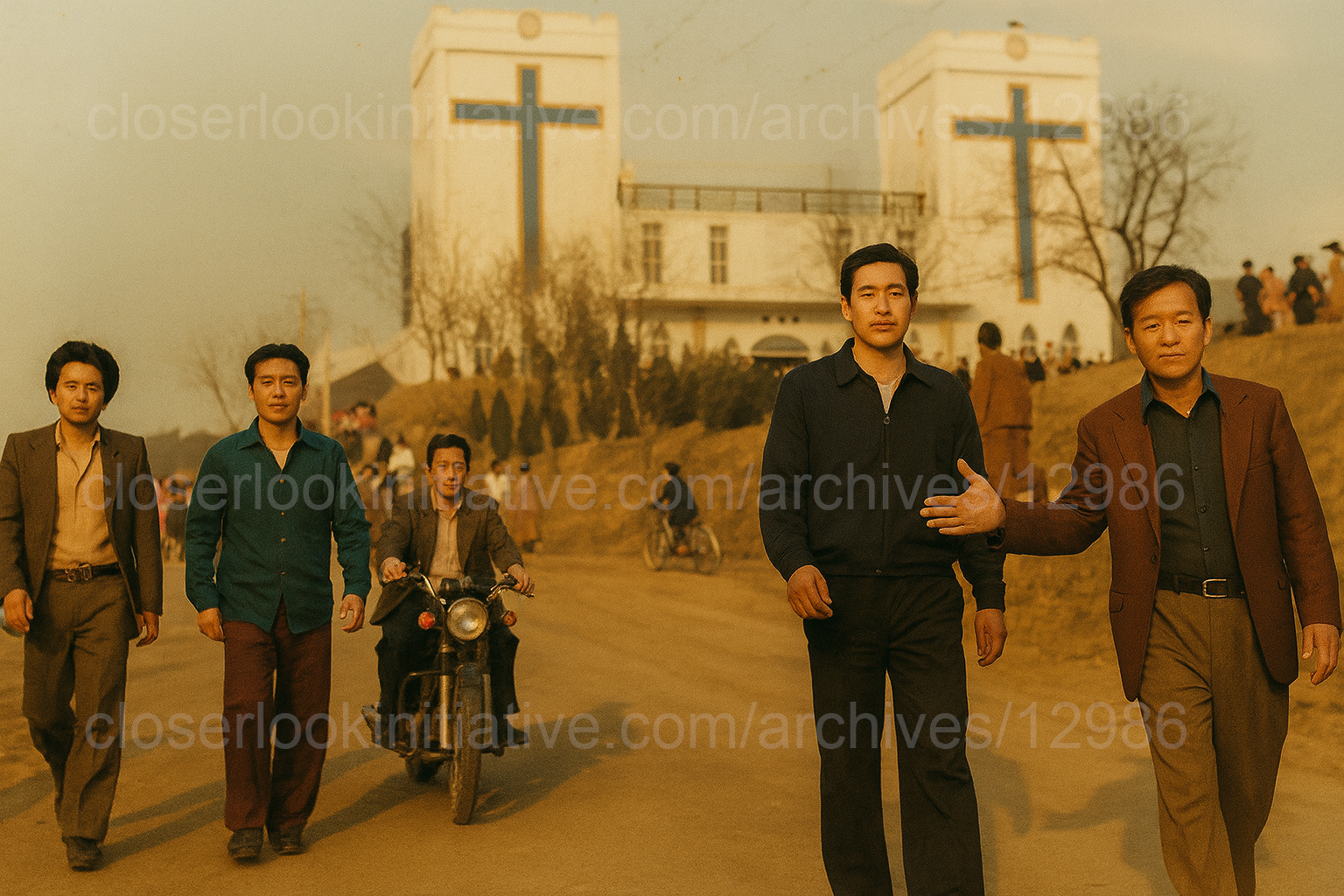
Just as our detectives at the crime scene gather the same physical evidence but construct different narratives based on their investigative frameworks, the political narrative and the spiritual narrative we’re about to explore aren’t competing versions of different events – although SCJ assigns symbolic roles to real individuals to fit their narrative of fulfillment, the actual historical events unfolded in an entirely different way.
Here’s Shincheonji’s perspective:
- March 14, 1966: Seven messengers establish the Tabernacle Temple
- 1967: Lee Man-hee joins at age 35-36 as both employee (temple worker) and congregation member
- 1970: Lee Man-hee reads the damaging Magazine article about Mr. Yoo (shown in SCJ Reality of the Fulfillment of Revelation movie)
- 1971: Lee Man-hee flees after assassination threats (shown in SCJ Reality of the Fulfillment of Revelation movie)
- 1975: Mr. Yoo invites Mr. Oh (Pastor Nicholas) as instructor
- 1980: Mr. Tak’s SEC group takes control of the pulpit
- September 20, 1981: Final transformation ceremony at 2:00 PM
- 1984: Lee Man-hee establishes Shincheonji Church of Jesus
Yet, here’s the historical perspective:
- Lee Man-hee joined in a lawsuit against the Tabernacle Temple for fraud and abuse in 1971
- Lee Man-hee never had an assassin sent against him
- Lee Man-hee was apart of Baek’s Recreation sect in 1977 when he was supposed to be anointed by Jesus
- Yoo Jae-yeol was sent to prison in 1975
- The original Tabernacle Temple was sold off to the city of Seoul in 1977
- The Stewardship Education Center was not supported by the Government, but instead, was a small ministry focusing on how to administrate a church via leadership, and did not push Calvinistic doctrines
- Lee Man-hee started Shincheonji in 1980, not in 1984.
- The Stewardship Education Center was not “destroyed” by 1991, and even had published documents in 1995.
While these men did exist, what SCJ claims of these men is different from what happened in reality:
- Lee Man-hee: The central figure who joins as both temple worker and member, flees, protests, and eventually starts his own organization
- Mr. Yoo (Yoo Jun Yeol): The Tabernacle Temple leader representing the seven-member management team
- Mr. Oh (Pastor Nicholas): The instructor who introduces Calvin’s teachings
- Mr. Tak: The SEC leader
- The Seven Messengers: The original founders who made blood covenants
→ Prophecy and Fulfillment Revelation 1 – 22 and the many changes
With this foundation of unchanging facts established, let’s examine how dramatically different these events appear when viewed through different investigative lenses. Like our detectives analyzing the same crime scene, we’ll see how the framework we apply transforms our understanding of what actually happened and what it means.
What transforms completely is the significance assigned to these facts.
Even if we were to take into account what Shincheonji claims to have happened, let’s observe these events through a secular lens.
Previous Articles for context:
- SCJ’s Fulfillment of Revelation Part 1 – Investigating Shincheonji’s “Fulfillment of Revelation”: The Real History Behind the Claims
- SCJ’s Fulfillment of Revelation Part 2
- The Real Reasons Behind the Tabernacle Temple’s Destruction and Sale
- Why Fulfillment of Prophecy is Absolutely Critical for Shincheonji
- Spiritual Warfare: The Battle for Truth in an Age of Deception
Recommended Exploration
-
- Prophecy and Fulfillment Revelation 1 – 22 and the many changes
- University of Pretoria – The Shincheonji religious movement : a critical evaluation
- How First-Century Christians Read Revelation Like a Political Cartoon
- Why God Allows Free Will: The Purpose of Choice and Love
- How Bible Scriptures Are Twisted: A Clear Comparison of Distortion and Contextual Meaning
- Guarding Against Deception: False Teachings and Prophets
- Why Moses Was Denied Entry into the Promised Land?
- It would sound confusing, but this is the true story of Shincheonji
- Shincheonj´s origins DEBUNKED by former Tabernacle Temple member
- [Physical Fulfillment] The Reality of Stewardship Education Center (SEC)
- WILD lies of Shincheonji exposed
- Mr. President! Pastor Oh Pyeong-ho, the destroyer(?), proposes a public debate!
- Journalist reports on Shincheonji’s criminal activities
- Parliamentary Forum to Expel Shincheonji and Other Cults
When we strip away spiritual interpretations and examine these events through a secular, organizational lens – much like a corporate fraud investigator analyzing a business takeover – we see a familiar pattern of institutional conflict that could happen in any corporation, political organization, or religious group. This investigative framework reveals patterns that business journalists and organizational psychologists would immediately recognize.
When we remove the theological overlay and examine the Tabernacle Temple story, a familiar pattern emerges: the rise and fall of a charismatic organization, internal power struggles, and the eventual fragmentation that occurs when institutional control becomes more important than founding principles. This is a story we’ve seen repeated throughout history – in religious movements, political parties, corporations, and social organizations.
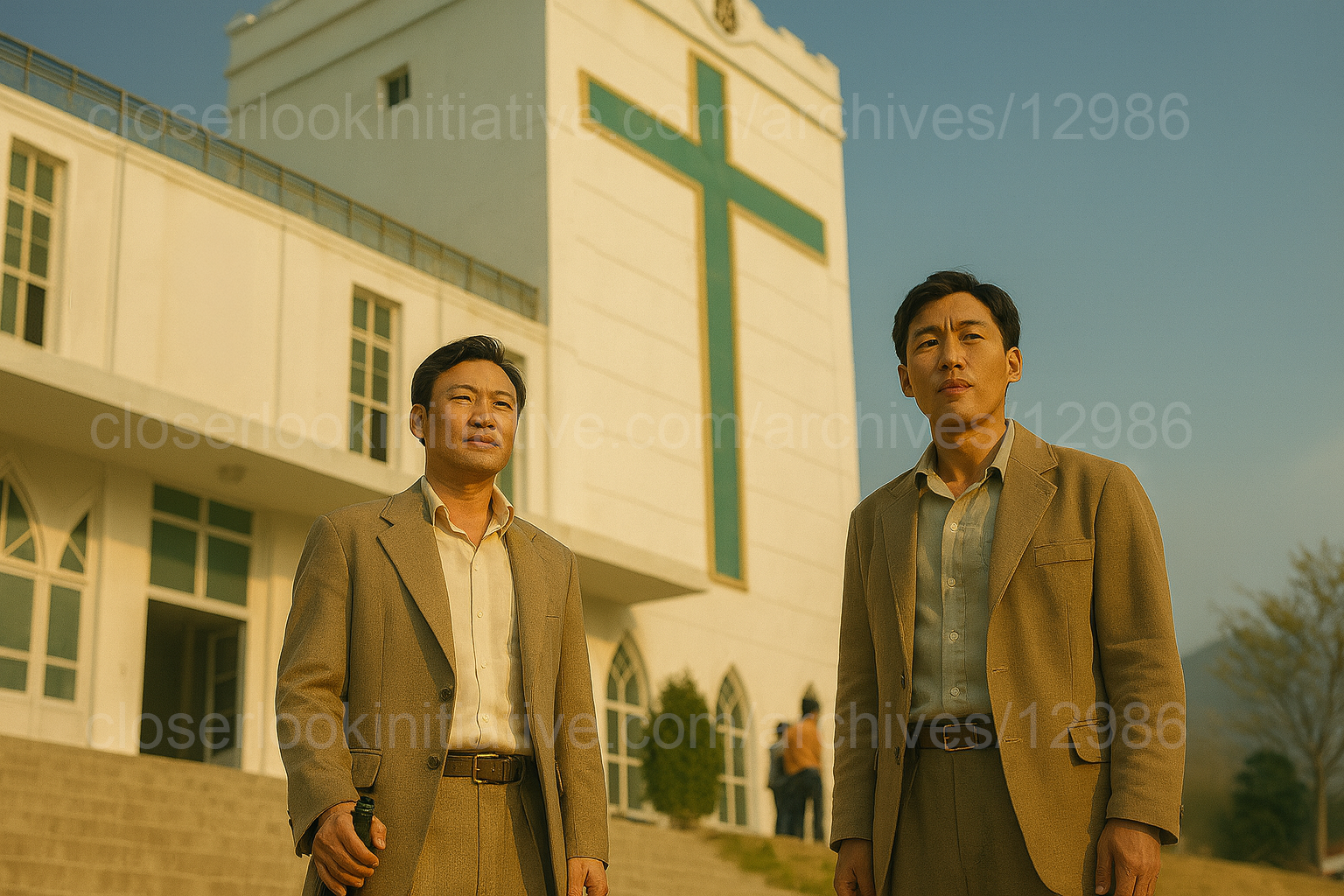
Historical Context: The Real Story Behind the Claims
Before we examine the Tabernacle Temple events through secular frameworks, it’s essential to understand the historical context documented in witness testimonies and public archives. The companion article “SCJ’s Fulfillment of Revelation Part 1: A Factual Investigation into Shincheonji’s Origin Story” provides crucial background that reveals a very different picture than SCJ’s carefully curated narrative.
The historical record shows that post-Korean War South Korea (1950s-1980s) experienced a proliferation of apocalyptic religious movements—what researchers called a “supermarket of messiahs.” Anti-cult researcher Tak Myung-hwan documented over 300 fringe religious groups by the mid-1970s, including 64 Christian-based sects with up to 1.4 million followers. Many were led by self-proclaimed messiahs who promised physical immortality, predicted specific doomsday dates, and demanded total financial surrender from followers. The social impact was devastating—families torn apart, widespread financial exploitation, and psychological manipulation that eventually prompted government intervention.
Most significantly, the historical investigation reveals that Lee Man-hee’s supposedly “unique” revelations were actually part of a century-long genealogy of Korean cult movements traceable to 1917. His doctrines about parables, the 144,000, spiritual marriage, and the betrayal-destruction-salvation cycle were all previously taught by earlier cult leaders. Before founding Shincheonji, Lee spent decades “cult-hopping” through multiple movements—including 7 years with Park Tae-seon’s Olive Tree movement and time with the Tabernacle Temple—learning and adapting doctrines from each group. This documented pattern contradicts SCJ’s portrayal of Lee as a simple farmer who received direct divine revelation.
Witness testimonies and historical records reveal significant discrepancies between Shincheonji’s narrative and documented facts, suggesting what scholars call “forced fulfillment”—retrofitting events to match prophetic interpretations after they occurred. A striking example of this is the question of how many people actually founded the Tabernacle Temple. While SCJ insists exactly seven people founded it to match Revelation’s seven stars and seven lampstands, critics point out that eight people were actually part of the founding group.
SCJ allegedly focused only on seven to match the prophecy, dismissing the eighth as “insignificant”—a selective interpretation designed to make reality fit prophecy rather than letting the facts speak for themselves. This pattern of numerical manipulation to force prophetic alignment raises serious questions about the authenticity of SCJ’s fulfillment claims.
The slickly produced SCJ movie “The Reality of the Fulfillment of Revelation” contains numerous historical inaccuracies and dramatizations that contradict witness testimonies, including portraying violent confrontations and assassination attempts that have no basis in documented evidence.
We strongly recommend reading the full article for comprehensive documentation of these historical facts, including the genealogy of Korean cult movements, Lee Man-hee’s religious background, and the social context that produced hundreds of similar messianic claims during this period. Understanding this documented history is essential for evaluating SCJ’s claims through a secular lens.
The Workplace Drama Narrative
The story becomes straightforward workplace drama:
A dedicated employee and congregation member (Lee Man-hee) discovers corruption in his organization’s leadership (Mr. Yoo and the seven-member management team). In 1970, a newspaper article exposed damaging information about Mr. Yoo, one of the organization’s leaders, serious enough to threaten not just the organization’s reputation, but potentially its legal standing and public legitimacy.
When he tries to expose the problems through letters warning the leadership to retract their decisions, the management attempts to silence him through intimidation, violence, and even attempts to kill him. Lee Man-hee fled in 1971 after receiving assassination threats from within the organization itself. Unable to reform the organization from within, he eventually leaves and starts a competing organization based on what he claims were the original values before corruption set in.
(Note: Some narratives were depicted in Shincheonji’s “Reality of the Fulfillment of Revelation” movie shown in advanced-level Bible study classes, like Lee Man-hee reading a magazine, an article about Mr. Yoo facing an assassination attempt and getting beaten up.)
From a secular perspective, this raises important questions:
- Why would an ordinary member/employee face assassination threats from his own organization?
- What was Lee Man-hee’s role in the article’s publication or dissemination – was he a source, a whistleblower, or simply a vocal critic?
- Was he involved in internal disputes that escalated to physical danger?
- The fact that assassination threats came from within the organization – not from external enemies – suggests serious internal dysfunction and the breakdown of legitimate authority structures.
An intriguing irony emerges here: Lee Man-hee himself was reading negative materials about Mr. Yoo and the Tabernacle Temple—essentially ‘drinking poison’ by his own later standards.
Today, Shincheonji members who sign the pledge are strictly forbidden from researching negative information about the organization on the internet, yet this is precisely what Lee Man-hee did when investigating the Tabernacle Temple.
This contradiction may explain why Mr. Yoo states in the Revelation movie that Lee ‘knows too much’ and needed to be silenced—Lee Man-hee now prohibits the very investigative behavior he himself practiced.
What he once did to discern truth, he now condemns as poison for his own followers.
The Counter-Intelligence Operation
High control groups don’t survive by ignoring criticism—they survive by studying it, adapting to it, and weaponizing it against their critics.
Like detectives who monitor criminal networks to stay one step ahead, these organizations run their own counter-intelligence operations. Former Shincheonji members have reported the existence of what they call a “poison team”—designated members, including some current students, whose job is to monitor online criticism, read ex-member testimonies, and track discussions on platforms like the Shincheonji subreddit.
These surveillance teams function like undercover investigators, systematically gathering intelligence about what critics are saying, what arguments are being made, and what vulnerabilities are being exposed. This information is then reported back to leadership so the organization can prepare internal responses, develop counter-arguments, and inoculate current members against these criticisms before they ever encounter them.
The Evidence Asymmetry
This practice reveals a striking contradiction: the organization forbids ordinary members from researching criticism online, labeling it as “poison” that will contaminate their faith, yet leadership actively consumes this same “poison” to stay strategically informed.
The double standard is clear—leaders can handle the information that would supposedly destroy faith, but regular members cannot. This isn’t about protecting members from falsehood; it’s about maintaining information asymmetry that keeps leadership in control.
Like a criminal defense team that examines all the prosecution’s evidence while preventing their client from seeing it, or intelligence agencies that monitor enemy communications while restricting their own citizens’ access to outside information, high control groups create a strategic advantage by knowing what their critics say while ensuring their members remain ignorant of those same arguments.
The Inoculation Strategy
In organizational strategy, this is called “competitive intelligence”—the systematic gathering and analysis of information about competitors to maintain strategic advantage. In psychology, it’s related to “inoculation theory”—the practice of exposing people to weakened versions of opposing arguments so they develop resistance to stronger versions later.
Like forensic experts who study crime patterns to predict future behavior, Shincheonji’s poison team serves both functions: they gather intelligence about critics’ arguments and then create pre-packaged responses that inoculate members against those criticisms. When members eventually encounter these arguments, they’ve already been taught how to dismiss them, making the actual evidence less persuasive than the pre-installed defense mechanism.
Flipping the Script: The Deflection Tactic
This strategy enables what critics call “flipping the script”—taking the accusations made against Shincheonji and redirecting them back at mainstream Christianity. When critics accuse Shincheonji of being “Babylon” (a biblical symbol of spiritual corruption and false religion), Shincheonji responds by claiming that traditional Christianity is the real Babylon.
When critics point out cultish behavior, Shincheonji accuses traditional churches of cult-like adherence to tradition. When critics highlight manipulation tactics, Shincheonji claims that mainstream Christianity manipulates people through fear of hell and blind faith. This rhetorical strategy mirrors a classic courtroom defense tactic: creating a “war of doctrine” where both sides accuse each other of the same spiritual crimes, making it difficult for observers to determine who is actually telling the truth.
Creating Confusion Instead of Clarity
The effectiveness of this approach lies in its ability to create moral equivalence and confusion. If everyone is accusing everyone else of being Babylon, how can anyone determine who is right?
If both sides claim the other is manipulative, how can seekers discern truth from deception? This is precisely the goal—not to win the argument through evidence, but to create enough confusion that people fall back on subjective experience, emotional connection, and group loyalty rather than objective verification. Like a defendant who responds to criminal charges by accusing the prosecutors of the same crimes, the strategy doesn’t require proving innocence—it only requires creating enough doubt and confusion to prevent clear judgment.
The Self-Sealing System
The Bible warns against this exact tactic: “Woe to those who call evil good and good evil, who put darkness for light and light for darkness” (Isaiah 5:20). When organizations systematically study criticism not to correct their errors but to develop more sophisticated defenses against truth, they demonstrate the self-sealing nature of deceptive systems. Truth welcomes examination and correction; deception studies criticism only to become better at avoiding accountability. The existence of a “poison team” reveals that leadership knows exactly what the criticisms are—they’ve read the testimonies, examined the arguments, and understood the concerns. Their response isn’t to address these issues honestly, but to develop strategic defenses that keep members from ever seriously considering whether the criticisms might be valid.
Pre-Packaged Defenses: The Scripted Response
This adaptive defense mechanism explains why high control groups are so difficult to challenge and why members often seem prepared with responses to every objection. They’re not independently reasoning through criticisms—they’re deploying pre-packaged defenses developed by leadership who studied those exact criticisms. Like soldiers trained to respond to specific enemy tactics, members have been inoculated against arguments they’ve never actually examined for themselves. The blind are leading the blind, but the leaders have studied the terrain while keeping their followers’ eyes covered, creating the illusion of sight while maintaining actual blindness.
Our detective faces an unusual challenge in this investigation: the organization under scrutiny is monitoring the investigation itself. Like a criminal who plants informants in the police department, Shincheonji assigns teams to track what critics say, what ex-members testify, and what evidence emerges—not to address concerns honestly, but to develop defenses before members encounter the evidence. When the detective interviews current members, they’re not speaking with independent witnesses evaluating facts, but with individuals pre-programmed with responses to questions they’ve never personally investigated. This reveals a fundamental principle: truth welcomes examination; deception studies criticism only to avoid accountability.
The transformation process looks like a typical corporate merger:
An outside consulting firm (SEC/CSTC led by Mr. Tak) identifies a struggling organization (Tabernacle Temple) and orchestrates a systematic takeover. They install their own management (Mr. Oh), implement new policies and procedures (Presbyterian doctrine), rebrand the organization (Central Isaac Presbyterian Church), and require all employees to pledge loyalty to the new corporate culture.
The Whistleblower Response
The resistance appears as standard whistleblower behavior:
Lee Man-hee’s protests outside the building, his letters warning the management about the changes, and his attempts to rally internal opposition all follow predictable patterns of organizational dissent. His physical beatings, violence, and legal persecution represent the unfortunate but common consequences faced by those who challenge powerful institutional interests.
The Entrepreneurial Outcome
The final outcome resembles typical entrepreneurial response:
Unable to reform the original organization, Lee Man-hee launches a competitor (Shincheonji) that promises to preserve the original mission and values that were abandoned during the corporate takeover.
From this investigative perspective, there’s nothing supernatural or prophetic about these events. They follow well-documented patterns of organizational behavior, power struggles, and institutional change. Business schools teach case studies remarkably similar to this narrative. The framework reveals human motivations, strategic decisions, and predictable consequences – all explainable without reference to divine intervention or prophetic fulfillment.
This interpretation makes the story relatable and understandable to anyone who has experienced workplace politics, organizational change, or institutional corruption. It requires no special theological knowledge or spiritual insight – just familiarity with how human organizations operate under pressure.
But this is only one way to interpret the evidence.
The same facts, viewed through a different lens, tell a radically different story – one where these events aren’t merely organizational dysfunction, but the fulfillment of ancient prophecies and the unfolding of cosmic spiritual warfare. In that narrative, the newspaper scandal becomes prophetic revelation, the violence becomes spiritual persecution, the transformation becomes prophesied betrayal, and Lee Man-hee becomes not just a disaffected employee, but the chosen witness of Revelation.
That’s the lens we’ll explore in the next chapter – and you’ll see how dramatically the same facts can be reinterpreted when viewed through a theological framework that sees divine purpose in every detail.
THEME 1: Testing and Discerning Truth
1 Thessalonians 5:19-22; 1 John 4:1-3, 1 John 2:18-19, 1 John 2:20, 1 John 2:27; 2 John 1:7-11; Acts 17:10-11; Proverbs 14:15; Proverbs 18:17; 2 Timothy 3:16-17; Psalm 119:105
THEME 2: Warning Against False Teachers and Deception
Matthew 7:15-20, Matthew 24:4-5, Matthew 24:11, Matthew 24:23-27; Mark 13:21-23; Luke 17:23-24; 2 Peter 2:1-3, 2 Peter 2:17-19; 2 Corinthians 11:3-4, 2 Corinthians 11:13-15; Galatians 1:6-9; Colossians 2:4, Colossians 2:8; 1 Timothy 4:1; 2 Timothy 4:3-4; Titus 1:10-11; Jude 1:4, Jude 1:12-13
THEME 3: Calling Evil Good and Good Evil
Isaiah 5:20-21; Proverbs 17:15; Malachi 2:17; Romans 1:25; 2 Timothy 3:1-5, 2 Timothy 4:3-4
THEME 4: Manipulation and Control Tactics
2 Corinthians 4:2; 2 Corinthians 2:17; 1 Thessalonians 2:3-6; 2 Peter 2:3, 2 Peter 2:14-15, 2 Peter 2:18-19; Jude 1:16; Ezekiel 13:10; Jeremiah 23:16-17, Jeremiah 23:32
THEME 5: Truth Sets Free vs. Bondage to Lies
John 8:31-32, John 8:44; 2 Thessalonians 2:9-12; Romans 1:18, Romans 1:25; Ephesians 4:14-15, Ephesians 5:6-11; 1 Timothy 4:1-2
THEME 6: Spiritual Blindness and Self-Deception
Matthew 15:14, Matthew 23:16-17, Matthew 23:24, Matthew 23:26; Luke 6:39; John 9:39-41; Romans 2:19; 2 Corinthians 4:3-4; Revelation 3:17-18
THEME 7: Wisdom and Discernment
Proverbs 2:1-6, Proverbs 3:5-7, Proverbs 4:5-7, Proverbs 14:12, Proverbs 16:25; James 1:5; Philippians 1:9-10; Hebrews 5:14; 1 Corinthians 2:14-15
THEME 8: Scripture as Authority and Sufficiency
2 Timothy 3:15-17; 2 Peter 1:3-4, 2 Peter 1:19-21; Psalm 119:105, Psalm 119:130; John 17:17; Acts 17:11; Hebrews 4:12; Isaiah 8:20
THEME 9: Exposing Darkness and Speaking Truth
Ephesians 5:11-13; John 3:19-21; 1 Corinthians 4:5; Luke 8:17, Luke 12:2-3; Proverbs 28:13; James 5:19-20
THEME 10: Hypocrisy and Double Standards
Matthew 23:3, Matthew 23:13, Matthew 23:27-28; Luke 12:1; Romans 2:1, Romans 2:21-23; James 1:22-24; 1 John 2:4
THEME 11: Pride and Self-Righteousness
Proverbs 16:18, Proverbs 26:12, Proverbs 29:23; Luke 18:9-14; Romans 12:3, Romans 12:16; 1 Corinthians 8:2; Galatians 6:3; James 4:6; 1 Peter 5:5
THEME 12: Accountability and Judgment for Teachers
James 3:1; Matthew 12:36-37; Luke 12:47-48; Ezekiel 3:17-19, Ezekiel 33:6; Hebrews 13:17; 1 Timothy 5:20
THEME 13: Love of Truth vs. Love of Lies
2 Thessalonians 2:10-12; Psalm 52:3; John 3:19-20; Romans 1:18, Romans 1:25; 2 Timothy 4:3-4; Proverbs 12:17
THEME 14: Spiritual Warfare and Deception
Ephesians 6:11-12; 2 Corinthians 10:3-5, 2 Corinthians 11:14; 1 Peter 5:8; Revelation 12:9; John 8:44; 1 John 4:1
THEME 15: Wolves in Sheep’s Clothing
Matthew 7:15; Acts 20:28-30; 2 Corinthians 11:13-15; 2 Peter 2:1-3; Jude 1:4; Philippians 3:2
THEME 16: Protecting the Flock
Acts 20:28-31; 1 Peter 5:2-3; Ezekiel 34:2-4, Ezekiel 34:10; Jeremiah 23:1-2; John 10:11-13; Titus 1:9-11
THEME 17: Fruit of True vs. False Teachers
Matthew 7:16-20; Luke 6:43-45; Galatians 5:19-23; James 3:13-18; 1 John 4:1-3; 3 John 1:11
THEME 18: Twisting Scripture
2 Peter 3:16; Matthew 4:5-7; 2 Corinthians 2:17, 2 Corinthians 4:2; Jeremiah 23:36; Proverbs 30:5-6
THEME 19: Greed and Exploitation
1 Timothy 6:5, 1 Timothy 6:9-10; 2 Peter 2:3, 2 Peter 2:14-15; Titus 1:11; Jude 1:11; Micah 3:11; 1 Thessalonians 2:5
THEME 20: Repentance and Restoration
Acts 3:19; 2 Chronicles 7:14; Ezekiel 18:30-32; Joel 2:12-13; James 4:8-10; 1 John 1:9; Revelation 2:5, Revelation 3:19
THEME 21: Walking in Light vs. Darkness
1 John 1:5-7, 1 John 2:9-11; John 8:12, John 12:35-36; Ephesians 5:8-11; Romans 13:12; 1 Thessalonians 5:4-5
THEME 22: Truth and Transparency
John 18:20; 2 Corinthians 4:2; Proverbs 10:9, Proverbs 28:13; 1 Timothy 3:9; Acts 24:16
THEME 23: Freedom in Christ
Galatians 5:1; John 8:36; 2 Corinthians 3:17; Romans 8:2; James 1:25; 1 Peter 2:16
THEME 24: Guarding Your Heart and Mind
Proverbs 4:23; Philippians 4:7-8; 2 Corinthians 10:5; Colossians 2:8; 1 Peter 1:13; Romans 12:2
THEME 25: Standing Firm in Truth
Ephesians 6:14; 2 Thessalonians 2:15; 1 Corinthians 15:58, 1 Corinthians 16:13; Philippians 1:27, Philippians 4:1; Colossians 1:23
THEME 26: Love and Truth Together
Ephesians 4:15; 1 Corinthians 13:6; 2 John 1:1-3; 3 John 1:1; Zechariah 8:19; Psalm 85:10
THEME 27: God’s Justice and Vindication
Romans 12:19; Deuteronomy 32:35; Psalm 37:6, Psalm 94:1-2; Proverbs 20:22; 1 Thessalonians 4:6; Hebrews 10:30
THEME 28: Humility and Teachability
Proverbs 11:2, Proverbs 15:33, Proverbs 18:12; James 4:6, James 4:10; 1 Peter 5:5-6; Philippians 2:3-4; Micah 6:8
THEME 29: Unity in Truth
John 17:17-21; Ephesians 4:3-6, Ephesians 4:13-15; Philippians 2:2; 1 Corinthians 1:10; Psalm 133:1
THEME 30: Hope and Perseverance
Romans 5:3-5, Romans 15:13; Hebrews 10:23, Hebrews 12:1-3; James 1:2-4, James 1:12; 1 Peter 1:3-7; Revelation 2:10
In a world overflowing with information, it is essential to cultivate a spirit of discernment. As we navigate the complexities of our time, let us remember the wisdom found in Proverbs 14:15: “The simple believes everything, but the prudent gives thought to his steps.” This verse calls us to be vigilant and thoughtful, encouraging us to seek the truth rather than accept information at face value.
As we engage with various sources and experts, let us approach each piece of information with a humble heart, always ready to verify and reflect. The pursuit of truth is not merely an intellectual exercise; it is a journey of faith. We are reminded in 1 Thessalonians 5:21 to “test all things; hold fast what is good.” This calls us to actively engage with the information we encounter, ensuring it aligns with the values and teachings we hold dear.
In a time when misinformation can easily spread, we must be watchful and discerning. Jesus teaches us in Matthew 7:15 to “beware of false prophets, who come to you in sheep’s clothing but inwardly are ravenous wolves.” This warning serves as a reminder that not all information is presented with good intentions. We must be diligent in our quest for truth, seeking transparency and validation from multiple sources.
Moreover, let us remember the importance of humility. In our efforts to discern truth, we may encounter organizations or narratives that seek to control information. It is crucial to approach these situations with a spirit of awareness and caution. As Proverbs 18:13 states, “If one gives an answer before he hears, it is his folly and shame.” We must listen carefully and consider the implications of what we hear before forming conclusions.
Let us also be mindful not to be content with what we read, even in this post. Always verify the information you encounter for potential errors and seek a deeper understanding. The truth is worth the effort, and our commitment to discernment reflects our dedication to integrity.
Finally, let us not forget the promise of guidance found in James 1:5: “If any of you lacks wisdom, let him ask of God, who gives generously to all without reproach, and it will be given to him.” In our pursuit of truth, let us seek divine wisdom, trusting that God will illuminate our path and help us discern what is right.
As we strive for understanding, may we be like the Bereans mentioned in Acts 17:11, who “received the word with all eagerness, examining the Scriptures daily to see if these things were so.” Let us commit ourselves to this diligent search for truth, ensuring that our hearts and minds are aligned with God’s Word.
With humility and courage, let us continue to seek the truth together, always verifying, always questioning, and always striving for transparency in our quest for knowledge.
- Lee, Man-hee. The Creation of Heaven and Earth. Gwacheon: Shincheonji Press, 2007. 2nd ed. 2014. Printed July 25 2007 | Published July 30 2007 | 2nd ed. printed March 1 2009 | 2nd ed. published March 8 2009 | 3rd ed. April 23 2014. Publisher address: Jeil Shopping 4 F, Byeolyang-dong, Gwacheon-si Gyeonggi-do, Republic of Korea. Phone +82-2-502-6424.Registration No. 36 (25 Nov 1999). © Shincheonji Church of Jesus — The Temple of the Tabernacle of the Testimony.
- Lee, Man-hee. The Physical Fulfillment of Revelation: The Secrets of the Kingdom of Heaven. Gwacheon: Shincheonji Press, 2015. Korean 7th ed. July 20 2011 | 8th ed. June 5 2014 | English 1st ed. March 12 2015. Publisher address: Jeil Shopping 4 F, Byeolyang-dong, Gwacheon-si Gyeonggi-do, Republic of Korea. Phone +82-2-502-6424.Registration No. 36 (25 Nov 1999). © Shincheonji Church of Jesus — Temple of the Tabernacle of the Testimony.
- Lee, Man-hee. The Explanation of Parables. Gwacheon: Shincheonji Press, 2021. First edition 19 Jul 2021. Designed by the Department of Culture (General Assembly). Produced by the Department of Education (General Assembly). © Shincheonji Church of Jesus the Temple of the Tabernacle of the Testimony.
- Lee, Man-hee. The Reality of Revelation. Seoul: n.p., 1985. English translation titled Reality of Revelation (1985 Translation)
- A Candid Look at Shincheonji: The Story of Chairman Lee
- Shincheonj’s origins DEBUNKED by former Tabernacle Temple member
- The Reality of the Tabernacle Temple and the 7 Letters
- Shincheonji Church of Jesus – Wikipedia
- Olive Tree (Religious Movement) – Wikipedia
- Olive Tree (Religious Movement) Encyclopedia
- Park Tae-seon – Another Korean Pikareum Messiah
- 한국 그리스도교계 신흥 종교의 종말론에 관한 신학적 고찰
- ‘신천지 예수교 증거장막성전’에 대한 교의신학적 비판
- 기독교복음선교회(JMS)와 신천지의 교리와 계보를 중심으로
- 한국 그리스도교계 신흥 종교의 종말론에 관한 신학적 고찰 (Full Text)
- Cheonji TV (천지TV), which stands for New Heaven New Earth TV
- Shincheonji Church of Jesus Youtube Channel
- SCJ Bible Study
- Free of Shincheonji
- 바이블백신센터 Bible Vaccine
- Shincheonji Exposed
- Exposing the Cults
- r/Shincheonji