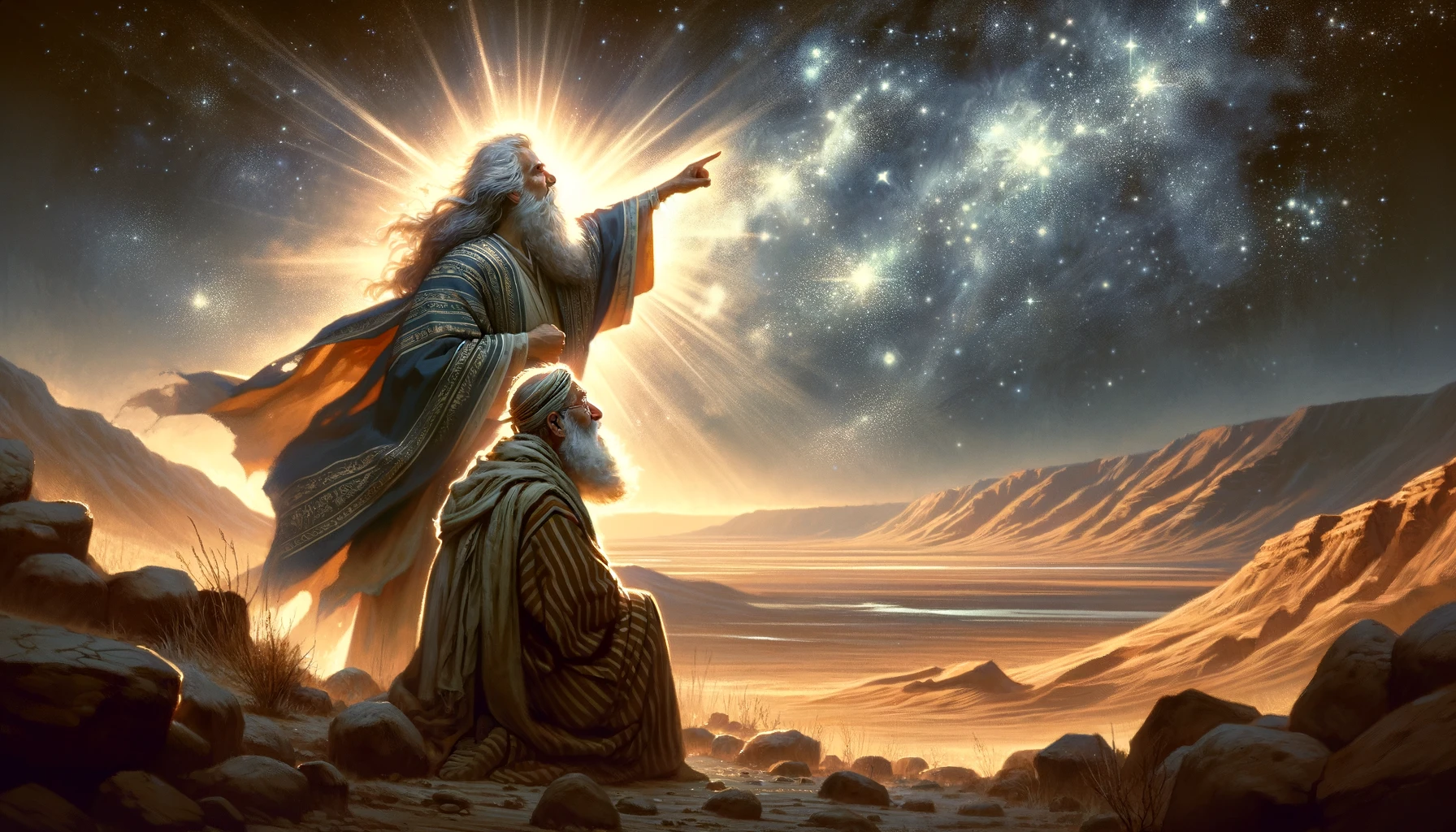
The lesson explores the connection between God’s covenant with Abraham in Genesis and the book of Revelation. It discusses how God made promises to Abraham about his descendants being enslaved for 400 years before entering the promised land, which was fulfilled through Moses leading the Israelites out of Egypt. The Israelites were given the covenant and law at Sinai, with the goal of becoming a “kingdom of priests” to the world, but they repeatedly broke the covenant by worshipping other gods. This led to prophecies in the Old Testament about a “new covenant” and the coming of the Messiah (Jesus) to establish something new. Jesus fulfilled these prophecies at his first coming by being born of a virgin, sowing the seed of the kingdom, and instituting the new covenant at the Last Supper. The lesson connects this to the book of Revelation, where God appoints someone like John to reveal the fulfillment of all promises, leading to the coming down of the New Jerusalem. The main points emphasize God’s pattern of prophecy and fulfillment, the importance of key chapters/themes, and being obedient like Abraham to receive God’s promises in the end times described in Revelation.
Our Hope: To learn from Abraham’s example and believe and have action according to the promise of out Time, Revelation!
Intermediate: God’s Covenant, Abraham and Revelation
Who here knew that Abraham was intimately tied with the book of Revelation? I hope so. Well, we’ll definitely understand the link between the two today and comprehend that the promises made during Abraham’s time are living and active even today.
Now, intermediate goes by two names. You can also call it Bible logic. So you might see the instructor Rob or me use this term. They both mean the same concept.
Instead of doing this equals this, right? That period was for understanding the parables. We’ve moved on now.
We’ll have main reference chapters. And one of the best ways, in my opinion, to gain a working understanding and knowledge of the Bible is to remember the themes of chapters. So when you encounter a chapter, you can recall its theme.
For example, when I think of Matthew 4, two things come to mind: Jesus’ temptation in the desert and the beginning of his ministry. If I want to discuss Jesus’ temptation or the start of his ministry, I refer people to Matthew 4. I might not remember the exact verse, but I’ll get to Matthew 4 first and then find the relevant verse, saying, “Oh yeah, it’s this verse right here.” Because I remember Matthew 4 means those two things, I can use that to help me understand and navigate the Bible.
As we go through the Bible logic period, the intermediate period of the course, we’ll really be focusing on chapters. They’re going to be very important. So the important chapters for us today are Genesis 15. When you see Genesis 15, think “God’s promise to Abraham.” And then Exodus 12. When you see Exodus 12, think “the escape from Egypt, the instructions God gave the people to escape.”
When you look at John 19, that’s Jesus’ crucifixion, but particularly the focus is on verse 30, which is “it is finished.” And Revelation 21:6. Revelation 21, you should think “heaven in the spiritual world joins with heaven in the physical world. They become one.” And in verse 6, it says “it is done.”
Are we understanding the importance of the chapters? Each lesson will have main reference chapters, and remember the theme of each chapter.
Our hope is to learn from Abraham’s example, believe, and have action according to the promise of our time, which is Revelation.
Introduction
Who wrote the book of Genesis, and when? It was Moses.
When did Moses write the book of Genesis?
The book of Genesis details events that happened up to 6,000 years ago, but it was not recorded 6,000 years ago.
When did Moses write the book of Genesis and all the rest of the five books up to Deuteronomy?
To understand this, it helps to know how much time took place between Moses and Jesus. Approximately 1,500 years passed between them, which means to us, the book of Genesis, Exodus, Leviticus, Numbers, and Deuteronomy were recorded approximately 3,500 years ago.
It’s amazing how words that are 3,500 years old can still be pertinent today. That’s how God works. His word is always living and active. Every single letter in the Bible is living and active. Particularly, we’re going to focus on Abraham. Abraham was the 10th descendant or the 10th generation descendant of Noah.
We have Adam, and from Adam to Noah was nine generations, and then from Noah to Abraham was 10 generations. Noah was the 9th, and Abraham was the 10th generation. Many people were between Adam and Abraham. Does anyone know how long the period was between Adam and Abraham?
It’s a period of time that we can relate to because it’s how long it was between us and our Lord and Savior, which is 2,000 years. Between Adam and Abraham was a period of 2,000 years, a long time. It’s important to understand how much time passes between those that God is using and why that’s important.
Now, from Abraham to Moses was a period of four generations. Moses was the fourth generation descendant of Jacob. We had Abraham, Isaac, Jacob, Levi, and then three more generations, we get Moses. You can read about this in Exodus chapters 1 and 2.
Hopefully, that introduction helps us understand a little bit more. One more important question: Moses was not around to read or see the events of Adam and Eve, was he? He wasn’t around to see the events of Abraham, was he? No, he wasn’t around to see any of the book of Genesis, which spans 2,500 years. So how could he write it in such great detail?
How did he do it?
Through God’s spirit. That’s the answer.
Who was thinking about that but was too scared to say it?
Say it next time. Right, because God showed him the events of Genesis. That’s the only way he could have recorded it in such great detail.
Main Content
We will once again explore the connection between Abraham and the book of Revelation, focusing primarily on Abraham in the first half. However, let us first comprehend the rationale behind God’s modus operandi. Recall when I inquired about any verses that illustrate God’s pattern of prophecy and fulfilment? Isaiah 14:24 is one of the excellent verses you can keep in mind for future reference.
Isaiah 14:24
The Lord Almighty has sworn,
“Surely, as I have planned, so it will be,
and as I have purposed, so it will stand.
Undoubtedly, as God has sworn, so it shall be. As He has meticulously planned, it will unfold precisely. Surely, as He has promised or purposed, it shall stand firm. This affirms that God fulfills His promises unwavering.
He keeps them, always, without fail. He has never broken a promise, and He never will, a testament to His absolute commitment of 100%.
But what about us? Let us strive to keep our promises, just as God does. So, what promise are we going to understand today?
We shall first delve into the promise that God made to Abraham.
Genesis 15:1, 13-14
1 After this, the word of the Lord came to Abram in a vision:
“Do not be afraid, Abram.
I am your shield,
your very great reward. ”
13 Then the Lord said to him, “Know for certain that your descendants will be strangers in a country not their own, and they will be enslaved and mistreated four hundred years. 14 But I will punish the nation they serve as slaves, and afterward they will come out with great possessions.
God promised Abraham that he would have numerous descendants, even though Abraham was childless and old, along with his wife. God said, “You will have as many descendants as the stars in the sky and the sands on the shore.” This was an immense number, too vast to count.
Additionally, God foretold that those very descendants would be enslaved in a land not their own for 400 years. This prophecy was fulfilled through the family drama that unfolded from Abraham to Jacob and his family entering Egypt. The events included Isaac’s birth and Ishmael’s dislike for him, Jacob taking the birthright from Esau and working years to marry the wife he wanted, having 12 sons, and one son (Joseph) having dreams that angered his brothers, leading to his enslavement in Egypt. Eventually, Jacob’s family settled in Egypt. The series of events, better than a TV show, paved the way for the fulfillment of God’s prophecy.
Notably, God did not reveal the specific land where they would be strangers or the great possessions they would acquire upon leaving. When God makes a promise, He provides enough information for faith but does not always divulge all the details about how it will unfold.
Similarly, in our time, we should not demand that the Bible explicitly mentions everything. The Old Testament did not mention Jesus by name, but it provided sufficient clues to recognize Him as the promised one. Likewise, we have enough evidence to understand that Egypt was the “strange land” God referred to.
Jacob’s descendants, the 12 tribes, grew numerous in Egypt. However, a new Pharaoh perceived them as a threat due to their increasing population and decided to enslave them. Thus, they were enslaved for approximately 400 years, fulfilling God’s prophecy.
We know that God is not done with these people, for he made a promise that he is going to keep. So he comes to Moses and tells him, “Through you, I am going to let my people go. I’m going to free them from the captivity that I had promised would happen to their forefather Abraham.”
When God does so, he will give Moses specific instructions on what to do with the people and provide his covenant for them to live by and follow. God is speaking to Moses in this way because he is thinking, “I have to keep my promise to Abraham, your forefather.”
Moses understands these things, as he is the one God tasked to record the events from Genesis to Deuteronomy. He did this while on Mount Sinai, spending time with God, so much time that the people forgot or were worried if he’d ever come back down, leading to the events of Genesis 32.
Moses spent a lot of time with God and received the law and the covenant, fulfilling the promises made. Abraham did not know many things about what God was going to do with him. But when God said “go,” Abraham did not hesitate; he went instead.
Some of us might relate to this a little. We know that we’re supposed to flee to Mount Zion, but we don’t know exactly where it is or how to do this thing. Let’s be like Abraham because he went and allowed God to guide him. Though his path seemed a little troubled, he ended up in the destination God wanted him to be in, and so did his descendants. Let’s go to the book of Romans.
Romans 4:20-21
20 Yet he did not waver through unbelief regarding the promise of God, but was strengthened in his faith and gave glory to God, 21 being fully persuaded that God had power to do what he had promised.
Moses was fully convinced that God possessed the power to fulfill all His promises. This belief stemmed from the fact that God had granted a son to Abraham and Sarah, despite their advanced age being well past the typical childbearing years.
Furthermore, when God instructed Abraham to sacrifice his son, but then provided a ram instead, it reinforced Abraham’s unwavering faith in God’s word. When God made a promise to Abraham, he wholeheartedly believed in that promise and acted upon it without hesitation, demonstrating his true conviction in the divine assurances.
Hebrews 11:8
By faith Abraham, when called to go toHere is my attempt to rephrase the text while preserving the vocabulary and key messages:
He obeyed, even though he didn’t know where he was going. Class, let us emulate Abraham, for frequently God instructs us to embark on a journey, and we discover later the destination He intended for us. However, He charts and guides our path throughout the entire way, not leaving us stranded or lost. We simply need to maintain an attitude of “What is happening? What should we do now?” Yet, He continues guiding us in that manner. Therefore, let us be those who are obedient. a place he would later receive as his inheritance, obeyed and went, even though he did not know where he was going.
He obeyed, even though he didn’t know where he was going. Class,
Let’s be like Abraham, because oftentimes God tells us to go. And then we find out later where he wanted us to go. But he’s charting and guiding our path the whole way along.
Not leaving us out. In nowhere. Just got to be like, what’s going on?
Okay. What do we do now? But guiding us in that way.
So let’s be those who are obedient.
1. God’s Covenant
We’ll ask a few important questions here.
ONE – Why was there a covenant in every era?
What does the covenant signify? Why is it important?
The covenant signifies recreation, but not in a physical sense. God has already created the physical world once. When we say recreation, we are referring to the recreation of the heart. It signifies God starting anew with a new people, working through them and recreating their hearts.
When the previous group’s hearts go dark, God establishes new hearts in people and works through them. This is the essence of recreation.
1. We see an example of this in Genesis chapters 2 and 3, where God established a covenant with Adam.
In Genesis 2:17, it states, “You may eat from any tree in the garden, but you must not eat from the tree of the knowledge of good and evil.”
This is a covenant, possessing all the characteristics of a covenant:
1. The subjects are God, Adam, and by proxy, Eve.
2. The content is: Eat from these trees, but do not eat from that tree.
3. It was established when God spoke to Adam.
4. It was meant to be kept forever.
5. The consequences were: If you do not eat from the forbidden tree, you will live forever and rule over the garden. If you break the covenant, the consequence is death.
This confirms the existence of a covenant, as mentioned in Hosea 6:7, which we’ll discuss later. So, God established a covenant with Adam, but unfortunately, Adam did not keep that covenant.
And what happened then?
Reminder:
Covenant: Do not eat from the Tree of Knowledge of Good and Evil.
2. Adam’s descendants immediately descended into sin, and sin escalated rapidly.
As sin increased, there was an inverse relationship with lifespans – they decreased. Adam and his descendants lived for several hundred years, with Adam living up to 930 years and Methuselah, the longest-lived person, living for 969 years. However, no one lives anywhere near that long now.
In Genesis 6:3,5-7, God imposed a life limit on humanity, stating that their days would be up to 120 years. Methuselah’s lifespan of 969 years was the longest. What happened? God’s spirit left because He was grieved and filled with pain.
Sometimes we question why God allows certain things if He knows the consequences. However, we neglect to consider that God has feelings and a heart. God does not want to compel love or worship because true love cannot stem from coercion. True love is chosen freely.
The angels, elders, and spirits of heaven bow down to God not because they are robots but because they choose to, recognizing that God is worth it. This is what God desires for us as well.
To allow us to choose Him, a being we cannot see with our naked eyes, God has to work through people we can see and hear. However, this means those people must speak, and we must listen. Some may not listen, but choice is crucial for true love to exist.
God is hurt when people decide not to choose Him because He knows the alternative and tries to help people understand it.
Satan, however, is extremely skilled at leading people away from God. Let us be among those who choose God.
Reminder:
God leaves, grieved, pain (Gn 6:3, 5-7)
TWO – God’s Covenant with Abraham (Genesis 16:13-21)
1. The prophecy given to Abraham, as recorded in Genesis 15, represents the fulfilment of God’s promise that his descendants would be strangers and slaves in a land not their own.
2. Despite being enslaved for 400 years, the parable foretells that they would eventually flee from that land of Egypt and enter the promised land of Canaan with great possessions, after the appointed time had elapsed.
THREE – Fulfill Through Moses (Exodus 12:12-14)
This represents a prophecy, a promise that God made to Abraham. For the fulfilment of this promise, the word of God had to come true through Moses, who came in a later time and era after Abraham.
Exodus 12:12-14
12 “On that same night I will pass through Egypt and strike down every firstborn—both men and animals—and I will bring judgment on all the gods of Egypt. I am the Lord. 13 The blood will be a sign for you on the houses where you are; and when I see the blood, I will pass over you. No destructive plague will touch you when I strike Egypt.
14 “This is a day you are to commemorate; for the generations to come you shall celebrate it as a festival to the Lord—a lasting ordinance.
God instructed the Israelites regarding the 10th plague in Egypt. On that same night, God said, “I will pass over or pass through Egypt and strike down every firstborn, both men and animals. I will bring judgment on the gods of Egypt.”
God declared, “I am the Lord. But how do people escape this? The blood will be given, will be a sign for you, and on the houses where you are, when I see the blood, I will pass over you. No destruction plague will touch you when I strike Egypt.” (Verse 14) “This is a day you are to commemorate for the generations to come. You shall celebrate it as a festival to the Lord, a lasting ordinance.”
We’re reading about the event of Passover. God’s people, the Israelites, were slaves in Egypt. To deliver His people from Egypt, God gave them specific instructions: Eat the flesh and blood of the lamb, and put its blood on your door frames and posts. This was to protect them from the 10th plague, the angel of death passing over.
When the people obeyed God’s command, the angel of death passed over their houses, and they were saved, leaving Egypt. They passed over or crossed over from death to life – their salvation at that time. They followed the one God appointed to lead them during this era.
The Israelites experienced salvation from Egypt but still had to travel through the desert to reach the promised land of Canaan (present-day Israel). This process was not easy, but it was a necessary journey they had to take. Our journey is similar – trapped in one location but needing to come out, not knowing exactly where to go or how to do it, but understanding the importance of doing so.
Unfortunately, the covenant established here was not perfectly kept, although it started with the best of intentions.
FOUR – Covenant (10 Commandments) with the People of Israel
1. – Kingdom of Priests
Exodus 19:5-6
5 Now if you obey me fully and keep my covenant, then out of all nations you will be my treasured possession. Although the whole earth is mine, 6 you will be for me a kingdom of priests and a holy nation.’ These are the words you are to speak to the Israelites.”
Exodus 19:5-6 is a chapter that we will read often. It’s so important because it actually details what God’s ultimate will has always been since the fall of Adam.
What has God desired? To return. But how was God going to return? Who was he going to return to? In that passage, we see what he desires – a kingdom of priests. Keep that in mind and store it in your long-term memory banks, for it is critically important – a kingdom of priests, a holy people, a treasured possession.
However, this is only true if they obey, as it is conditional. Meaning, if you obey, you will receive these blessings. If you do not obey, you will not receive these blessings. God’s word is always fulfilled, even the unpleasant parts. God keeps all of his promises, both the blessings and the curses.
If you’re thinking, “I’d like to read about these curses,” and you should, go to Deuteronomy 28 and read the whole chapter, all 60 plus verses. It’s a lot, but you’ll see how God blesses and how he curses, and he means it. Those words will be fulfilled if the conditions of the covenant aren’t met. And they were not met.
So, it’s very important. And the people, of course, accept this covenant with God. They say, “Amen, we will obey everything that you have said, for you have delivered us from Egypt. And we want to get to the promise that you made to our forefather Abraham.”
The most important part of the promise, which started with the Ten Commandments, is in the next chapter.
2. – 1st of 10, No other gods!
Exodus 20:3
“You shall have no other gods before me.
At first glance, it may seem simple, but adhering to the first of the Ten Commandments proved to be more challenging than the people realized. It was an immense struggle.
The first and most important commandment is to have no other gods before God. Worship no other gods before Him.
However, we know that the Israelites grappled with this commandment, and their disobedience manifested swiftly. They broke this commandment right away, as evidenced by the golden calf incident in Exodus 32, which occurred shortly after receiving the commandments.
3. – Betrayal of Solomon
Throughout their time period, the Israelites continued to struggle with keeping the covenant. The biggest betrayal in breaking up this covenant came with Solomon in 1 Kings 11. Solomon was made weak by his many ties to the world. He had many wives, and eventually, they pulled his heart away from God. He brought in false idols, not outside of Egypt or Israel, but inside Israel itself. Solomon built temples to these detestable gods, and God was extremely unhappy.
As a consequence, God told Solomon, “Because you have done this, I’m going to tear the kingdom away from the hands of your son. I will leave you one tribe, but the others I’m taking away.” This led to the division of the kingdom into 11 tribes in the north and one in the south. Subsequently, Assyria and Babylon took over Israel.
The covenant was broken, marking the end of the period of the kings and the beginning of the period of the prophets, such as Isaiah, Jeremiah, Ezekiel, and Daniel. These men were writing during the time when the people were in Babylon after having been destroyed because of their betrayal. The prophets wrote the prophecies of the Old Testament during this period, as God testified about what he would do anew because the people, who were supposed to be a holy nation and a kingdom of priests, had left that position.
Remember, God needs people to speak because he wants every single person to choose him. God’s ultimate desire for the physical Israelites was for them to choose him and then preach his word to everybody. They were meant to go out to the rest of the world and teach others how to follow God too, so that the corrupted world could be healed, and God could return. That was always his desire. Unfortunately, the people did not fulfill that job, so God said, “Okay, time to start anew.”
2. The Creation of a New Thing
ONE – Old Testament Prophecy
You might be wondering, “What’s that?” We touched upon it briefly in the previous lesson, but today, we’re going to delve deeper into it.
We’re going to explore the crucially important chapter. This chapter holds immense significance. Recall our discussion about chapter themes, right?
When you think of Jeremiah 31, what should come to mind? You should be thinking, “This is about me.”
1. Creation of a New Thing
Jeremiah 31:22
How long will you wander,
O unfaithful daughter?
The Lord will create a new thing on earth—
a woman will surround a man.”
This is an important prophecy.
So, what did God say? How long will you wander? Remember, Jeremiah was writing during the time of captivity of the Israelites.
God said, “How long will you wander, oh unfaithful daughter Israel?” And then He declared, “I will create a new thing.”
He also said, expressed differently in various versions, “A woman will return to or surround a man.” Typically, men are physically larger than women.
So, what does it mean for a woman to surround a man? When is it possible for a woman to fully surround a man?
When she’s pregnant. Ah, now it’s clear who this passage is referring to.
This passage is talking about Jesus and Mary. “A woman will surround a man.”
This should tell us right away that Jesus is involved in the new thing that God is doing. In fact, Jesus starts it.
“A woman will surround a man.” So, remember Isaiah 7:14 and Jeremiah 31:22, which point to the promise of Jesus’s birth.
Keep in mind that this “new thing” is important, and it starts with Jesus. But that’s not the only important promise in Jeremiah 31.
2. Sowing 2 kinds of seed
Jeremiah 31:27
“The days are coming,” declares the Lord, “when I will plant the house of Israel and the house of Judah with the offspring of men and of animals.
We have the promise of one being born, and there will be the creation of a new thing. We also have the promise of the sowing of two types of seed, man and animals. We should be thinking, “Oh, hold on a second. Didn’t Jesus sow the good seed in his field?” So, we are now reading about what Jesus was prophesied to do.
The creation of a new thing is starting to unfold. A man will be born to a woman, and that man will have to sow the seed of man. However, we know that the devil comes and sows the weed of animals or the weed of beasts. So, that prophecy is then fulfilled at the first coming. There is one more significant prophecy that is fulfilled.
3. New Covenant
Jeremiah 31:31
“The time is coming,” declares the Lord,
“when I will make a new covenant
with the house of Israel
and with the house of Judah.
A time, an era, is coming when God will make a new covenant. The reason for this is that the old covenant has become obsolete.
TWO – New Testament Fulfillment (First Coming)
During the Passover night, Jesus established a new covenant with his disciples, as mentioned in Luke 22:14-20. This event represents the fulfillment of the parable described in Matthew 13:24-30.
As we are witnessing these events unfold, let us examine how the Old Testament prophecies were fulfilled during the time of Jesus’ first coming. It is important to note that generally, the Old Testament points to the era of the first coming, while the New Testament focuses on the time of the second coming.
The events we discussed earlier were fulfilled during the period of Jesus’ first coming.
1. Matthew 1:18-23, Jesus —-> Creation of New Thing
Jesus was born to a virgin, representing the fulfillment of a prophecy and the beginning of a new era. His birth was a figurative parable, signifying the Word made flesh. From the moment he came into the world, Jesus began the work of creating something new.
2. Matthew 13:24-30, 37-43. God’s seed = heaven, devil’s seed = hell
Jesus sowed the good seed. He sowed it in His field. Which field did Jesus establish at the time of His first coming? What else can you call that field?
The field represents the world or a person’s heart. That’s right. The field is the world.
The good seed stands for the sons of the kingdom, and the weed stands for the sons of the evil one. Both were growing in the same place – Jesus’s world, Jesus’s field.
Then, in Luke 22, Jesus established the new covenant, as was prophesied in Jeremiah 31. Let’s look at how that prophecy was fulfilled.
Remember, we’re looking through the lens of the entire Bible, essentially. We’ve gone through the whole Bible. Did you notice that? Did you pick that up? We’re flying through the Bible. So let’s examine how it was concluded.
3. Abraham and Revelation
Why are they connected deeply?
ONE – To the Destination, what God has Promised
God made a promise to Abraham and his descendants, giving them the hope of entering the land of Canaan. That was their destined place, the promised land.
However, in our present time, what is revealed in the book of Revelation? What is our hope and destination?
The ultimate dwelling place, the promised land we strive to arrive at, is heaven. That is the hope we are hoping for.
But the establishment of this second coming, this promised land revealed in Revelation, does not happen instantly. There is a process, a series of events that must take place for it to be fulfilled.
Let us now examine that process.
Reminder:
Abraham: Hope —> Canaan
In Revelation: Our Hope —> Heaven
TWO – A Promised Pastor Chosen
Revelation 1:1-3
The revelation of Jesus Christ, which God gave him to show his servants what must soon take place. He made it known by sending his angel to his servant John, 2 who testifies to everything he saw—that is, the word of God and the testimony of Jesus Christ. 3 Blessed is the one who reads the words of this prophecy, and blessed are those who hear it and take to heart what is written in it, because the time is near.
So, just like our papers in school, right? When your English teacher instructed you on the structure for writing papers, what did they tell you about the beginning, middle, and end? For those who studied English, what was the consistent element throughout?
The main subject or topic you’re writing about.
So, you introduce what you’re going to discuss, then discuss it, and finally, summarize what you’ve discussed.
That’s the structure of every paper. But guess what? God did it first.
The first three verses summarize the entire Bible or the book of Revelation. What do they say?
The revelation of Jesus Christ, which God gave to him. So, God gives Jesus the revelation. And he, meaning Jesus, made it known by sending his angel to his servant, John, who testifies to everything he saw. That is, the word of God and the testimony of Jesus Christ. Blessed is the one who reads the words of this prophecy. And blessed are those who hear it and take to heart what is written in it, because the time is near.
Now, these words are 2,000 years old. So, how much nearer are we now than when these words were written? We’re very near, very close. So, how urgent should our sense of urgency be? Should it be, “Oh, I’ll take a break and do this later?” Or should it be, “Now is the time, no breaks. It’s go time.” Right? It’s go time.
Let’s go. As this is the prophecy of Revelation, it must be fulfilled exactly as recorded. If someone claims to have an explanation of Revelation but doesn’t talk about this, they really don’t know what they’re talking about. And that means they cannot take you to the place promised in the book of Revelation. They won’t know. So, we have to discern these days.
It’s not about comfort or pleasing people. Those things lead to death. But following God’s words leads to life.
So, what is promised here? That God, Jesus, and the angel will appoint someone and give him a critical job to do: Go and testify to the people what you saw and heard. Tell them what you witnessed. Explain it in great detail to them – the who, what, when, where, why, how, and the place where they need to gather.
That is the job we are giving to you. Remember in Revelation 10:8-11, when the angel with the little book in his hand gives it to John and tells him, “Eat it.” And so John has to do this. He has to eat it. And in his mouth, it’s like honey – it’s yummy, delicious. Why is it honey in his mouth? Why is it like honey when he eats the word? Because the word is sweet. Because he’s understanding the words. “Oh my goodness, I understand this. Oh, this makes sense. Oh, wow, this is what Jesus meant when he said this.”
But then it turns sour in his stomach. Why does it turn sour? Because he has to give the word to other people. He has to testify. And he knows it’s not going to be easy. “Oh my goodness, I understand this. And now I realize that no one else does. And every time that’s been the case for someone in the Bible, they’ve really struggled.”
Let me show you an example of someone who struggled in a similar way to John. Let’s go to the book of Ezekiel, really fast detour.
Ezekiel 3:12-15
12 Then the Spirit lifted me up, and I heard behind me a loud rumbling sound—May the glory of the Lord be praised in his dwelling place!— 13 the sound of the wings of the living creatures brushing against each other and the sound of the wheels beside them, a loud rumbling sound. 14 The Spirit then lifted me up and took me away, and I went in bitterness and in the anger of my spirit, with the strong hand of the Lord upon me. 15 I came to the exiles who lived at Tel Abib near the Kebar River. And there, where they were living, I sat among them for seven days—overwhelmed.
After witnessing many incredible visions from the kingdom of heaven, God instructed Ezekiel in verse 11, saying, “Go now to your countrymen in exile and speak to them. Whether they listen or fail to listen, convey to the people what you have seen.” This directive caused Ezekiel to feel upset in his spirit, as he knew the task would not be easy.
Overwhelmed by the weight of his responsibility, Ezekiel sat for seven days. His job was to testify about what would happen to spiritual Israel first – the chosen people prophesied to fall and go dark at the second coming. Despite the challenges, Ezekiel had to fulfill this duty and share the revelations he had witnessed.
Revelation 6 – Spiritual Israel (Chosen People)
Like in Revelation 6, which of course was promised by Jesus in Matthew 24 that this will take place.
Revelation 14:14-16 – Harvest
He must assist heaven with the work of harvest, as the seed was sown 2000 years ago, and now the harvest is ripe, and the harvest time has come. He needs to help people come out of that location so that the work of recreation can take place.
Revelation 7 – Recreation
The work of recreation, harvest, and sealing people involves putting God’s word of revelation in their hearts and minds. This is done so that when heaven comes down, the people will be gathered and ready.
Revelation 21:1-6 – Holy City New Jerusalem Comes Down to New Hean New Earth
They are ready and waiting for Revelation 21 to take place at that location, the place where heaven is coming down, as promised, right on time, amen.
So, let us understand these things now, right? Hopefully, much of it is just a review, as we have gone through the parables period.
Hopefully, you are beginning to put these pieces together and understanding God’s plan from beginning to end. If there are parts that are fuzzy for you, speak with your evangelist. Pull them aside and say, “Hey, go over this with me again. I want to make sure I understand this because it is go time for me and everybody, and this is very important.”
Memorization
Isaiah 14:24
The Lord Almighty has sworn,
“Surely, as I have planned, so it will be,
and as I have purposed, so it will stand.
Instructor Review
These were the words spoken by Jesus on the cross after fulfilling everything that was promised for him to accomplish. And, of course, in Revelation 21:6, it states, “It is done.” All the prophecies about the New Testament have now been fulfilled.
God initiated this entire journey by coming to Abraham and giving him a promise of a great many descendants. That promise remains living and active today, the very same promise.
So, what does God do with his descendants? He establishes a covenant. Unfortunately, they fail to keep that covenant.
Therefore, God promises the creation of a new thing. Beginning with the birth of Jesus, he began a new work, sowing the seed and establishing a new covenant. These two actions essentially summarize his entire ministry.
He gave the word and established a new covenant in his blood, so that 2,000 years later, there can be a harvest of that seed that was sown. And those people can partake in that new covenant that was established all those years ago.
This is why I said Jeremiah 31 is about us, actually. About the people who will be alive at the time of Revelation. It was pointing to us.
We’ve been on God’s mind for a long time. And everyone who believes in Christ and is waiting patiently will also be a part of it too if they flee to the mountain, if they do as is prophesied in Revelation, if they are harvested, if they are sealed, if they end up in the place where the lamb is promised to be.
Let’s be those people.
Let’s Us Discern
Analyzing Shincheonji Lesson 67: “God’s Covenant, Abraham and Revelation”
A Critical Examination Using “Testing Shincheonji’s Claims: Two Lenses, One Story”
Introduction: Building the Bridge to SCJ’s Claims
Lesson 67 represents a sophisticated theological maneuver. Having established their interpretive framework in previous lessons, the instructor now connects ancient biblical covenants to Shincheonji’s present claims. This lesson is essentially building a bridge from Abraham to Lee Man-hee—making SCJ appear as the inevitable fulfillment of God’s 6,000-year plan.
As Chapter 6 of “Testing Shincheonji’s Claims: Two Lenses, One Story” explains, the difference between a consistent narrative and a selective one is crucial. This lesson selectively presents biblical history to create a pattern that appears to require SCJ’s existence. But as we’ll see, this pattern is constructed by omitting crucial biblical truths and reinterpreting key passages.
The instructor’s stated goal is to help students “learn from Abraham’s example and believe and have action according to the promise of our time, Revelation!” But what’s actually happening is the installation of a theological framework that makes joining SCJ appear as urgent and necessary as Abraham’s obedience to God.
Let’s examine this lesson carefully, distinguishing genuine biblical teaching from SCJ’s unique doctrines.
Part 1: The Framework – “Creation and Recreation”
The Core Teaching
What the Lesson Says:
The instructor reviews the “creation and recreation” cycle:
- Adam created → Adam corrupted → God recreates through Noah
- Noah → Ham/Canaan corrupted → God recreates through Abraham
- This cycle continues until Revelation
- “Final recreation takes place in the book of Revelation. There will be no need for any other.”
Analysis:
This teaching was introduced in Lesson 66, and now it’s being reinforced as the lens through which to view all biblical history. This is repetition for internalization—a key indoctrination technique.
Chapter 4 of “Testing Shincheonji’s Claims” warns about interpretive frameworks. Once this “creation/recreation cycle” lens is accepted, students will see all biblical history as a series of failures requiring constant divine “do-overs” until SCJ appears.
The Biblical Problem:
This framework fundamentally misunderstands God’s covenants and His sovereign plan.
God’s Covenants Are Progressive, Not Cyclical:
Chapter 24-25 of “Testing Shincheonji’s Claims” (“The Scarlet Thread Parts 1 & 2”) demonstrates that God’s covenants build upon each other, all pointing toward Christ:
- Adamic Covenant (Genesis 3:15) – Promise of a Redeemer who will crush the serpent
- Noahic Covenant (Genesis 9) – God’s faithfulness to preserve creation
- Abrahamic Covenant (Genesis 12, 15, 17) – Blessing to all nations through Abraham’s seed
- Mosaic Covenant (Exodus 19-24) – Reveals God’s holiness and humanity’s need
- Davidic Covenant (2 Samuel 7) – Promise of eternal kingdom
- New Covenant (Jeremiah 31, fulfilled in Christ) – Law written on hearts, sins forgiven
These aren’t failed attempts requiring “recreation.” They’re progressive revelation of God’s unified plan of redemption through Christ.
Galatians 3:16-18: “The promises were spoken to Abraham and to his seed. Scripture does not say ‘and to seeds,’ meaning many people, but ‘and to your seed,’ meaning one person, who is Christ. What I mean is this: The law, introduced 430 years later, does not set aside the covenant previously established by God and thus do away with the promise. For if the inheritance depends on the law, it no longer depends on the promise; but God gave it to Abraham through a promise.”
Paul explicitly teaches that the Abrahamic covenant was fulfilled in Christ, not replaced by a cycle of recreations.
God’s Plan Never Failed:
Isaiah 46:10: “I make known the end from the beginning, from ancient times, what is still to come. I say, ‘My purpose will stand, and I will do all that I please.'”
Ephesians 1:11: “In him we were also chosen, having been predestined according to the plan of him who works out everything in conformity with the purpose of his will.”
God’s plan has been consistent from the beginning. He didn’t need to keep “starting over” because His plan never failed—it was always progressing toward Christ.
The “6,000 Years” Timeline
What the Lesson Says:
The instructor mentions:
- “Between Adam and Abraham was a period of 2,000 years”
- The book of Genesis “details events that happened up to 6,000 years ago”
- Implicit: We’re now at the end of 6,000 years, requiring final “recreation”
Analysis:
This establishes a timeline framework that makes SCJ’s appearance seem prophetically timed. The implication is:
- 2,000 years: Adam to Abraham
- 2,000 years: Abraham to Jesus
- 2,000 years: Jesus to now (Lee Man-hee)
- Therefore: We’re at the end of the 6,000-year cycle
The Biblical Problem:
This is speculative chronology, not biblical doctrine.
1. Biblical Genealogies Have Gaps:
Biblical genealogies often skip generations for literary purposes. The phrase “father of” can mean “ancestor of.” Scholars debate whether biblical genealogies provide precise chronology or representative lineages.
2. Jesus Warned Against Date-Setting:
Acts 1:7: “He said to them: ‘It is not for you to know the times or dates the Father has set by his own authority.'”
Matthew 24:36: “But about that day or hour no one knows, not even the angels in heaven, nor the Son, but only the Father.”
Jesus explicitly forbids calculating the timing of His return.
3. Peter’s Warning About Speculation:
2 Peter 3:8-9: “But do not forget this one thing, dear friends: With the Lord a day is like a thousand years, and a thousand years are like a day. The Lord is not slow in keeping his promise, as some understand slowness. Instead he is patient with you, not wanting anyone to perish, but everyone to come to repentance.”
Peter’s point is that God’s timing is not constrained by human calculations. He’s patient, not bound to a 6,000-year schedule.
Chapter 19 of “Testing Shincheonji’s Claims” (“When Claims Cannot Be Tested”) addresses this pattern: Groups create timelines that make their existence appear prophetically necessary, but these timelines are based on speculation, not Scripture.
Part 2: Abraham and the Covenant
What the Lesson Gets Right
The lesson accurately presents several biblical truths about Abraham:
- God made promises to Abraham (Genesis 15) ✓
- Abraham believed God (Romans 4:20-21) ✓
- Abraham obeyed without knowing the full plan (Hebrews 11:8) ✓
- God fulfilled His promises (Exodus 12) ✓
- The Passover was significant (Exodus 12:12-14) ✓
These are genuine biblical truths, and the instructor presents them accurately.
The Manipulation:
The instructor uses these accurate biblical truths to build credibility, then subtly redirects them toward SCJ’s agenda.
The Subtle Redirections
Redirection #1: “Let’s Be Like Abraham”
What the Lesson Says:
“Some of us might relate to this a little. We know that we’re supposed to flee to Mount Zion, but we don’t know exactly where it is or how to do this thing. Let’s be like Abraham because he went and allowed God to guide him.”
Analysis:
The instructor creates a parallel between Abraham’s journey and joining SCJ:
- Abraham didn’t know where he was going → You don’t know where “Mount Zion” is
- Abraham obeyed anyway → You should join SCJ even with questions
- God guided Abraham to the right place → God will guide you to SCJ
This is parallel construction—making SCJ’s recruitment process appear equivalent to Abraham’s divine calling.
Chapter 7 of “Testing Shincheonji’s Claims” (“The Hidden Savior: New John”) identifies this exact technique: creating parallels between biblical figures and SCJ’s processes to make their claims appear biblical.
The Biblical Reality:
Abraham’s calling was unique:
Genesis 12:1-3: “The Lord had said to Abram, ‘Go from your country, your people and your father’s household to the land I will show you. I will make you into a great nation, and I will bless you; I will make your name great, and you will be a blessing. I will bless those who bless you, and whoever curses you I will curse; and all peoples on earth will be blessed through you.'”
Abraham received:
- Direct divine revelation (God spoke to him personally)
- Specific promises (descendants, land, blessing to all nations)
- Divine confirmation (visions, covenant ceremony in Genesis 15)
Joining SCJ involves:
- Human recruitment (someone invites you to a Bible study)
- Organizational processes (classes, tests, “sealing”)
- Pressure to commit without full information
These are not equivalent.
The Proper Application:
Abraham’s faith teaches us to:
- Trust God’s promises in Scripture
- Obey God’s clear commands
- Walk by faith when God’s will is unclear
It does not teach us to:
- Join organizations without understanding their full doctrine
- Ignore red flags because “God will guide”
- Make commitments under pressure
Proverbs 14:15: “The simple believe anything, but the prudent give thought to their steps.”
1 Thessalonians 5:21: “Test everything; hold fast what is good.”
Biblical faith is informed trust, not blind compliance.
Redirection #2: The Passover Parallel
What the Lesson Says:
The instructor describes the Passover in detail:
- God’s people were slaves in Egypt
- God gave specific instructions: eat the lamb, put blood on doorframes
- The angel of death passed over
- They “passed over or crossed over from death to life – their salvation at that time”
- “Our journey is similar – trapped in one location but needing to come out”
Analysis:
This creates another parallel:
- Israelites trapped in Egypt → You trapped in traditional Christianity
- Passover lamb’s blood saves → SCJ’s teaching saves
- Leaving Egypt → Leaving your church to join SCJ
- Journey to promised land → Journey to “Mount Zion” (SCJ)
Chapter 20 of “Testing Shincheonji’s Claims” (“The Danger of Creative Fulfillment”) warns about this: taking historical events and reinterpreting them as templates for current organizational processes.
The Biblical Reality:
The Passover Points to Christ, Not SCJ:
1 Corinthians 5:7: “For Christ, our Passover lamb, has been sacrificed.”
John 1:29: “The next day John saw Jesus coming toward him and said, ‘Look, the Lamb of God, who takes away the sin of the world!'”
1 Peter 1:18-19: “For you know that it was not with perishable things such as silver or gold that you were redeemed from the empty way of life handed down to you from your ancestors, but with the precious blood of Christ, a lamb without blemish or defect.”
The Passover lamb was a type (prophetic picture) of Christ. The fulfillment is Jesus’ sacrifice on the cross, not joining SCJ.
Salvation is Complete in Christ:
Ephesians 2:8-9: “For it is by grace you have been saved, through faith—and this is not from yourselves, it is the gift of God—not by works, so that no one can boast.”
Romans 10:9: “If you declare with your mouth, ‘Jesus is Lord,’ and believe in your heart that God raised him from the dead, you will be saved.”
Salvation happens when we believe in Christ, not when we join an organization.
The “Egypt” Metaphor:
The lesson implies that traditional Christianity is “Egypt” (bondage) and SCJ is the “promised land” (freedom). But biblically:
Egypt represents:
- Slavery to sin (Romans 6:6)
- Life before knowing Christ (Colossians 1:13)
- The world system opposed to God (1 John 2:15-17)
The Promised Land represents:
- Rest in Christ (Hebrews 4:9-10)
- Eternal life (John 14:2-3)
- The new creation (Revelation 21:1-4)
Believers in Christ have already “crossed over”:
John 5:24: “Very truly I tell you, whoever hears my word and believes him who sent me has eternal life and will not be judged but has crossed over from death to life.”
Colossians 1:13: “For he has rescued us from the dominion of darkness and brought us into the kingdom of the Son he loves.”
If you’re a believer in Christ, you’ve already been delivered. You don’t need to “escape” to SCJ.
Part 3: The Covenant Teaching
The “Kingdom of Priests” Emphasis
What the Lesson Says:
The instructor emphasizes Exodus 19:5-6:
“Now if you obey me fully and keep my covenant, then out of all nations you will be my treasured possession. Although the whole earth is mine, you will be for me a kingdom of priests and a holy nation.”
He states:
- “This is critically important – a kingdom of priests, a holy people, a treasured possession”
- “God’s ultimate will has always been since the fall of Adam”
- “Remember this phrase, ‘kingdom of priests,’ as it’s crucial for understanding Revelation”
Analysis:
This is planting a seed for later lessons. Students are being primed to accept that:
- God’s ultimate goal is a “kingdom of priests”
- This wasn’t achieved in the Old Testament (Israel failed)
- This wasn’t achieved in the New Testament (the church failed)
- This will be achieved through SCJ’s 144,000
The Biblical Reality:
The “Kingdom of Priests” Was Fulfilled in the Church:
1 Peter 2:9: “But you are a chosen people, a royal priesthood, a holy nation, God’s special possession, that you may declare the praises of him who called you out of darkness into his wonderful light.”
Peter applies Exodus 19:5-6 directly to the church—all believers in Christ.
Revelation 1:5-6: “To him who loves us and has freed us from our sins by his blood, and has made us to be a kingdom and priests to serve his God and Father—to him be glory and power for ever and ever! Amen.”
Revelation 5:9-10: “And they sang a new song, saying: ‘You are worthy to take the scroll and to open its seals, because you were slain, and with your blood you purchased for God persons from every tribe and language and people and nation. You have made them to be a kingdom and priests to serve our God, and they will reign on the earth.'”
The “kingdom of priests” is all believers in Christ, not a specific organization like SCJ.
All Believers Are Priests:
Hebrews 4:16: “Let us then approach God’s throne of grace with confidence, so that we may receive mercy and find grace to help us in our time of need.”
1 Timothy 2:5: “For there is one God and one mediator between God and mankind, the man Christ Jesus.”
In Christ, all believers have direct access to God. We don’t need human mediators (besides Christ) or organizational affiliation to be part of God’s “kingdom of priests.”
Chapter 8 of “Testing Shincheonji’s Claims” (“The Shifting Standards of Salvation”) documents how SCJ gradually shifts from this biblical understanding (all believers are priests) to their organizational claim (only the 144,000 in SCJ are priests).
The “Conditional Covenant” Emphasis
What the Lesson Says:
The instructor emphasizes:
“However, this is only true if they obey, as it is conditional. Meaning, if you obey, you will receive these blessings. If you do not obey, you will not receive these blessings.”
He references Deuteronomy 28 (blessings and curses).
What’s Biblical:
The Mosaic Covenant was indeed conditional—blessings for obedience, curses for disobedience.
What’s Manipulative:
This emphasis on conditional obedience is preparing students to accept that:
- Salvation/blessing requires obedience
- Obedience means following SCJ’s teachings
- Disobedience (leaving SCJ or questioning) brings curses
The Biblical Balance:
The Old Covenant was conditional, but the New Covenant is different:
Hebrews 8:6-13: “But in fact the ministry Jesus has received is as superior to theirs as the covenant of which he is mediator is superior to the old one, since the new covenant is established on better promises… By calling this covenant ‘new,’ he has made the first one obsolete.”
The New Covenant is based on Christ’s faithfulness, not ours:
Hebrews 10:14: “For by one sacrifice he has made perfect forever those who are being made holy.”
2 Timothy 2:13: “If we are faithless, he remains faithful, for he cannot disown himself.”
Romans 8:38-39: “For I am convinced that neither death nor life, neither angels nor demons, neither the present nor the future, nor any powers, neither height nor depth, nor anything else in all creation, will be able to separate us from the love of God that is in Christ Jesus our Lord.”
Salvation is secure in Christ:
John 10:28-29: “I give them eternal life, and they shall never perish; no one will snatch them out of my hand. My Father, who has given them to me, is greater than all; no one can snatch them out of my Father’s hand.”
Philippians 1:6: “Being confident of this, that he who began a good work in you will carry it on to completion until the day of Christ Jesus.”
The Proper Understanding:
- Salvation is by grace through faith, secured by Christ’s work (Ephesians 2:8-9)
- Sanctification (growing in holiness) involves our obedience (Philippians 2:12-13)
- Assurance comes from Christ’s promises, not our performance (1 John 5:13)
SCJ conflates these categories to create fear: “If you don’t obey (by staying in SCJ), you’ll lose salvation.”
But Romans 8:1 declares: “Therefore, there is now no condemnation for those who are in Christ Jesus.”
The “Israel Failed” Narrative
What the Lesson Says:
The instructor traces Israel’s failures:
- Golden calf (Exodus 32)
- Solomon’s idolatry (1 Kings 11)
- Division of kingdom
- Exile to Babylon
- “The covenant was broken”
- “The people did not fulfill that job, so God said, ‘Okay, time to start anew'”
What’s Biblical:
Israel did repeatedly disobey God, and these events are recorded in Scripture.
What’s Missing:
1. God Always Preserved a Remnant:
1 Kings 19:18: “Yet I reserve seven thousand in Israel—all whose knees have not bowed down to Baal and whose mouths have not kissed him.”
Romans 11:1-5: “I ask then: Did God reject his people? By no means! I am an Israelite myself, a descendant of Abraham, from the tribe of Benjamin. God did not reject his people, whom he foreknew… So too, at the present time there is a remnant chosen by grace.”
Even during Israel’s worst periods, God had faithful people.
2. God’s Promises to Israel Are Irrevocable:
Romans 11:29: “For God’s gifts and his call are irrevocable.”
Romans 11:26: “And in this way all Israel will be saved.”
God hasn’t abandoned Israel. His promises remain.
3. The Church Didn’t Replace Israel:
Romans 11:17-24 uses the metaphor of an olive tree:
- Natural branches (Israel) were broken off due to unbelief
- Wild branches (Gentiles) were grafted in
- But God can graft natural branches back in
- Both share in the same root (Abraham’s covenant)
This is not replacement, but expansion. God’s people now include both believing Jews and believing Gentiles, united in Christ.
The SCJ Implication:
By emphasizing Israel’s failure without mentioning God’s faithfulness to the remnant, the lesson implies:
- Israel failed completely → God started over with the church
- The church failed completely → God is starting over with SCJ
But this contradicts Scripture’s teaching about God’s faithfulness and the continuity of His people.
Chapter 22 of “Testing Shincheonji’s Claims” (“When Satan Tried to Hijack God’s Plan”) addresses this: God’s plan has never failed. Every apparent setback was part of His sovereign purpose leading to Christ.
Part 4: The “New Thing” Teaching
Jeremiah 31:22 – “A Woman Will Surround a Man”
What the Lesson Says:
The instructor uses Jeremiah 31:22:
“The Lord will create a new thing on earth—a woman will surround a man.”
He explains:
- “When is it possible for a woman to fully surround a man? When she’s pregnant.”
- “This passage is talking about Jesus and Mary”
- “This should tell us right away that Jesus is involved in the new thing that God is doing. In fact, Jesus starts it.”
- “But that’s not the only important promise in Jeremiah 31”
Analysis:
This interpretation is partially correct but incomplete. The instructor is setting up to argue that:
- Jeremiah 31 prophesies about Jesus (true)
- But Jeremiah 31 also contains prophecies still unfulfilled (SCJ’s claim)
- Therefore, Jeremiah 31 points to both Jesus and Lee Man-hee/SCJ
The Biblical Context:
Jeremiah 31 in Full Context:
Jeremiah 31 is about God’s restoration of Israel after exile. The chapter contains:
Verses 1-14: Promise of restoration and joy Verses 15-22: Comfort for Rachel (Israel) and promise of return Verses 23-30: Future restoration of Judah Verses 31-34: The New Covenant Verses 35-40: God’s eternal faithfulness to Israel
Verse 22 in context:
Jeremiah 31:21-22: “Set up road signs; put up guideposts. Take note of the highway, the road that you take. Return, Virgin Israel, return to your towns. How long will you wander, unfaithful Daughter Israel? The Lord will create a new thing on earth—the woman will return to the man.”
This is about Israel’s return from exile. The “new thing” is Israel’s restoration and the coming Messiah who will make this possible.
The “woman surrounding/returning to man” likely means:
- Israel (feminine in Hebrew) returning to God (masculine)
- Or, as the instructor suggests, a virgin birth (Mary and Jesus)
Either way, this was fulfilled in Christ.
The New Covenant (Jeremiah 31:31-34):
Jeremiah 31:31-34: “The days are coming, declares the Lord, when I will make a new covenant with the people of Israel and with the people of Judah. It will not be like the covenant I made with their ancestors when I took them by the hand to lead them out of Egypt, because they broke my covenant, though I was a husband to them, declares the Lord. This is the covenant I will make with the people of Israel after that time, declares the Lord. I will put my law in their minds and write it on their hearts. I will be their God, and they will be my people. No longer will they teach their neighbor, or say to one another, ‘Know the Lord,’ because they will all know me, from the least of them to the greatest, declares the Lord. For I will forgive their wickedness and will remember their sins no more.”
This New Covenant was inaugurated by Jesus:
Luke 22:20: “In the same way, after the supper he took the cup, saying, ‘This cup is the new covenant in my blood, which is poured out for you.'”
Hebrews 8:6-13 quotes Jeremiah 31:31-34 and explains that this covenant is now in effect through Christ.
Hebrews 10:16-18: “This is the covenant I will make with them after that time, says the Lord. I will put my laws in their hearts, and I will write them on their minds… And where these have been forgiven, sacrifice for sin is no longer necessary.”
The New Covenant is complete in Christ. It doesn’t await another fulfillment through SCJ.
Part 5: Psychological Manipulation Techniques
Technique #1: Historical Inevitability
How It Works:
The lesson presents biblical history as a series of failures leading inevitably to SCJ:
- Adam failed → Noah
- Noah’s descendants failed → Abraham
- Israel failed → Jesus
- The church failed (implied) → SCJ
Analysis:
This creates a sense of historical inevitability—SCJ appears as the necessary next step in God’s plan.
Chapter 6 of “Testing Shincheonji’s Claims” warns about selective narratives. By emphasizing failures and omitting God’s faithfulness to His remnant, the lesson creates a distorted view of history.
The Biblical Reality:
God’s plan never failed:
Isaiah 55:11: “So is my word that goes out from my mouth: It will not return to me empty, but will accomplish what I desire and achieve the purpose for which I sent it.”
Ephesians 1:9-10: “He made known to us the mystery of his will according to his good pleasure, which he purposed in Christ, to be put into effect when the times reach their fulfillment—to bring unity to all things in heaven and on earth under Christ.”
God’s plan has been consistently moving toward its fulfillment in Christ, not through cycles of failure.
Technique #2: Parallel Construction
Examples from the Lesson:
- Abraham’s journey → Your journey to SCJ
- Passover/Exodus → Leaving your church for SCJ
- Promised land → “Mount Zion” (SCJ)
- Israel’s covenant → SCJ’s “sealing”
Analysis:
By creating these parallels, the lesson makes SCJ’s processes appear as natural extensions of biblical patterns.
Chapter 7 of “Testing Shincheonji’s Claims” identifies this as a key manipulation tactic.
The Problem:
These are false equivalencies. Biblical events were:
- Divinely initiated (God spoke directly)
- Historically unique (one-time events in redemptive history)
- Pointing toward Christ (the ultimate fulfillment)
SCJ’s processes are:
- Humanly initiated (recruitment by members)
- Organizationally driven (classes, tests, membership)
- Pointing toward Lee Man-hee (a human leader)
These are not equivalent.
Technique #3: Selective Emphasis
What’s Emphasized:
- Israel’s failures
- Conditional aspects of covenants
- Need for obedience
- Cycles of recreation
- “Kingdom of priests” (without explaining it’s fulfilled in the church)
What’s Omitted:
- God’s faithfulness to the remnant
- The New Covenant’s completion in Christ
- The Holy Spirit’s role in believers
- The church as God’s current “kingdom of priests”
- Assurance of salvation in Christ
Analysis:
This selective emphasis creates a distorted picture that makes SCJ appear necessary.
Chapter 4 of “Testing Shincheonji’s Claims” explains how interpretive frameworks shape what we see. By controlling which information is presented, the instructor shapes students’ understanding.
Technique #4: Emotional Manipulation
Examples:
- “Let’s be like Abraham” (creates aspiration)
- “Our journey is similar” (creates identification)
- “Trapped in one location but needing to come out” (creates urgency)
- “God’s ultimate will… kingdom of priests” (creates sense of purpose)
- “If you do not obey, you will not receive these blessings” (creates fear)
Analysis:
The lesson alternates between:
- Inspiration (Abraham’s faith, God’s promises)
- Identification (your situation is like theirs)
- Urgency (you need to act now)
- Fear (disobedience brings curses)
This emotional rollercoaster makes rational evaluation difficult.
Chapter 12 of “Testing Shincheonji’s Claims” (“The Importance of Independent Research”) warns about this. Emotional manipulation prevents careful discernment.
Biblical Response:
2 Timothy 1:7: “For the Spirit God gave us does not make us timid, but gives us power, love and self-discipline.”
God doesn’t manipulate through fear and urgency. He gives us self-discipline—the ability to think clearly and make wise decisions.
Part 6: What the Lesson Gets Right (And How to Respond)
Legitimate Biblical Truths:
The lesson does present some genuine biblical truths:
- God keeps His promises (Isaiah 14:24) ✓
- Abraham believed God (Romans 4:20-21) ✓
- God works through covenants (Genesis 15, Exodus 19) ✓
- The Passover was significant (Exodus 12) ✓
- Israel struggled with obedience (1 Kings 11) ✓
- God promised a New Covenant (Jeremiah 31) ✓
The Proper Response:
Use these same biblical truths to evaluate SCJ:
1. God keeps His promises—and He already has in Christ:
2 Corinthians 1:20: “For no matter how many promises God has made, they are ‘Yes’ in Christ. And so through him the ‘Amen’ is spoken by us to the glory of God.”
All God’s promises find their fulfillment in Christ, not in SCJ.
2. Abraham believed God’s direct revelation—we have God’s written Word:
2 Timothy 3:16-17: “All Scripture is God-breathed and is useful for teaching, rebuking, correcting and training in righteousness, so that the servant of God may be thoroughly equipped for every good work.”
We don’t need new revelation through Lee Man-hee. Scripture is sufficient.
3. God works through covenants—and the New Covenant is final:
Hebrews 8:6: “But in fact the ministry Jesus has received is as superior to theirs as the covenant of which he is mediator is superior to the old one, since the new covenant is established on better promises.”
There’s no need for another covenant through SCJ.
4. The Passover pointed to Christ—not to SCJ:
1 Corinthians 5:7: “For Christ, our Passover lamb, has been sacrificed.”
The fulfillment is Christ’s sacrifice, not joining SCJ.
5. Israel struggled—but God preserved a remnant:
Romans 11:5: “So too, at the present time there is a remnant chosen by grace.”
God has always had faithful people. The church hasn’t completely failed.
6. God promised a New Covenant—and it’s already in effect:
Luke 22:20: “This cup is the new covenant in my blood, which is poured out for you.”
The New Covenant was inaugurated by Jesus and is complete.
Part 7: Red Flags in This Lesson
🚩 Red Flag #1: Creating False Parallels
What to Watch For:
- Comparing your situation to biblical figures
- Making SCJ’s processes appear equivalent to biblical events
- Using biblical language for organizational activities
Why It Matters:
This makes SCJ appear biblical when it’s actually organizational.
Biblical Response:
2 Corinthians 10:12: “We do not dare to classify or compare ourselves with some who commend themselves. When they measure themselves by themselves and compare themselves with themselves, they are not wise.”
True biblical teaching doesn’t need to create false parallels.
🚩 Red Flag #2: Emphasizing Failure Without Faithfulness
What to Watch For:
- Focusing on Israel’s failures without mentioning God’s remnant
- Implying the church has completely failed
- Creating a narrative of constant failure requiring “recreation”
Why It Matters:
This distorts biblical history and makes SCJ appear necessary.
Biblical Response:
Matthew 16:18: “And I tell you that you are Peter, and on this rock I will build my church, and the gates of Hades will not overcome it.”
Jesus promised the church would prevail, not fail completely.
🚩 Red Flag #3: Conditional Salvation
What to Watch For:
- Emphasis on obedience as requirement for salvation
- Fear-based motivation (“curses” for disobedience)
- Implying salvation can be lost
Why It Matters:
This contradicts the gospel of grace.
Biblical Response:
Ephesians 2:8-9: “For it is by grace you have been saved, through faith—and this is not from yourselves, it is the gift of God—not by works, so that no one can boast.”
Salvation is by grace, not by organizational obedience.
🚩 Red Flag #4: Incomplete Fulfillment Claims
What to Watch For:
- Teaching that biblical prophecies weren’t fully fulfilled in Christ
- Claiming additional fulfillment is needed through SCJ
- Reinterpreting “New Covenant” passages as still future
Why It Matters:
This diminishes Christ’s completed work.
Biblical Response:
John 19:30: “It is finished.”
Hebrews 10:14: “For by one sacrifice he has made perfect forever those who are being made holy.”
Christ’s work is complete.
🚩 Red Flag #5: Urgency and Pressure
What to Watch For:
- “You need to come out now”
- “Like Abraham, go without knowing”
- “Don’t miss this opportunity”
- Discouraging careful consideration
Why It Matters:
Urgency prevents discernment.
Biblical Response:
Proverbs 19:2: “Desire without knowledge is not good—how much more will hasty feet miss the way!”
God doesn’t rush people into decisions.
Part 8: Questions for Reflection
If you’re studying with Shincheonji or considering their teaching, ask yourself:
About the Parallels:
- Are these parallels biblically valid, or are they constructed to make SCJ appear necessary?
- Did Abraham receive direct divine revelation, or was he recruited by an organization?
- Does the Passover point to Christ’s sacrifice or to joining SCJ?
About the Covenants:
- If the New Covenant is complete in Christ (Hebrews 8), why would another covenant be needed?
- If believers are already a “kingdom of priests” (1 Peter 2:9), why would I need to join SCJ’s 144,000?
- If salvation is by grace through faith (Ephesians 2:8-9), why does SCJ emphasize conditional obedience?
About God’s Faithfulness:
- If God always preserved a remnant in Israel (Romans 11:5), why would the church have completely failed?
- If Jesus promised the church would prevail (Matthew 16:18), how could it have been in complete darkness for 2,000 years?
- If God’s plan never fails (Isaiah 46:10), why would He need constant “recreations”?
About Verification:
- Can I verify these claims independently, or must I accept SCJ’s framework first?
- Am I being given time to carefully consider, or am I being pressured to act quickly?
- Can I talk to former members, read critical perspectives, and consult with trusted Christians outside SCJ?
Part 9: A Biblical Alternative
What the Bible Actually Teaches:
1. God’s Plan is Consistent, Not Cyclical:
Ephesians 1:9-10: “He made known to us the mystery of his will according to his good pleasure, which he purposed in Christ, to be put into effect when the times reach their fulfillment—to bring unity to all things in heaven and on earth under Christ.”
God’s plan has always been moving toward Christ, not through cycles of failure.
2. The New Covenant is Complete:
Hebrews 8:6: “But in fact the ministry Jesus has received is as superior to theirs as the covenant of which he is mediator is superior to the old one, since the new covenant is established on better promises.”
There’s no need for another covenant.
3. All Believers Are God’s “Kingdom of Priests”:
1 Peter 2:9: “But you are a chosen people, a royal priesthood, a holy nation, God’s special possession, that you may declare the praises of him who called you out of darkness into his wonderful light.”
You don’t need to join SCJ to be part of God’s kingdom.
4. Salvation is Complete in Christ:
Colossians 2:10: “And in Christ you have been brought to fullness. He is the head over every power and authority.”
You don’t need additional steps through an organization.
5. The Holy Spirit Guides Believers:
John 16:13: “But when he, the Spirit of truth, comes, he will guide you into all the truth.”
You don’t need a human mediator (besides Christ) to understand Scripture.
Part 10: For Those Who Are Concerned
If You’re Studying with SCJ:
Take Time:
- Don’t let parallels to Abraham pressure you into quick decisions
- Abraham received direct divine revelation; you’re being recruited by humans
- God is patient (2 Peter 3:9)
Seek Multiple Perspectives:
- Talk to trusted Christians outside SCJ
- Read about covenant theology from multiple sources
- Consult with your pastor about Jeremiah 31 and Hebrews 8
- Research independently
Test the Claims:
- Does the New Covenant require completion through SCJ, or is it complete in Christ?
- Are believers already a “kingdom of priests,” or do they need to join SCJ?
- Is the Passover fulfilled in Christ’s sacrifice, or does it point to SCJ?
Ask Questions:
- Why do these biblical events require SCJ for fulfillment?
- If Christ said “It is finished,” what remains to be completed?
- Can I verify these interpretations with Christian scholars outside SCJ?
Resources:
- Chapter 27 of “Testing Shincheonji’s Claims” (“Your Investigation Begins”)
- Chapter 28 (“Hope and Help”)
- CloserLookInitiative.com
If Someone You Love is Involved:
Stay Connected:
- Don’t cut off relationship
- Express love and concern
- Ask questions about the parallels they’re being taught
Educate Yourself:
- Understand covenant theology
- Study Jeremiah 31 and Hebrews 8 in context
- Learn about the New Covenant’s fulfillment in Christ
Pray:
- For wisdom in conversations
- For the Holy Spirit to reveal truth
- For protection from deception
Seek Support:
- Connect with other families
- Consider consulting with a pastor or Christian counselor
- Don’t handle this alone
Resources:
- Chapter 28 of “Testing Shincheonji’s Claims”
- CloserLookInitiative.com
- Local cult awareness resources
Conclusion: The Real Abraham Story
Lesson 67 presents Abraham as a model for joining SCJ without full information. But the real Abraham story teaches something different:
Abraham’s Faith Was Based On:
- Direct divine revelation (God spoke to him)
- Specific promises (descendants, land, blessing)
- Divine confirmation (covenant ceremony, visions)
- Progressive revelation (God revealed His plan over time)
Abraham’s Faith Was Not:
- Blind compliance with organizational demands
- Joining a group without understanding its full doctrine
- Making commitments under pressure
- Following human leaders claiming divine authority
The Real Fulfillment:
Galatians 3:7-9: “Understand, then, that those who have faith are children of Abraham. Scripture foresaw that God would justify the Gentiles by faith, and announced the gospel in advance to Abraham: ‘All nations will be blessed through you.’ So those who rely on faith are blessed along with Abraham, the man of faith.”
Galatians 3:14: “He redeemed us in order that the blessing given to Abraham might come to the Gentiles through Christ Jesus, so that by faith we might receive the promise of the Spirit.”
Galatians 3:29: “If you belong to Christ, then you are Abraham’s seed, and heirs according to the promise.”
You are already Abraham’s heir if you belong to Christ. You don’t need to join SCJ.
The Real Covenant:
The lesson emphasizes covenants and asks you to make commitments to SCJ. But the real covenant is already available:
Hebrews 8:10-12: “This is the covenant I will establish with the people of Israel after that time, declares the Lord. I will put my laws in their minds and write them on their hearts. I will be their God, and they will be my people. No longer will they teach their neighbor, or say to one another, ‘Know the Lord,’ because they will all know me, from the least of them to the greatest. For I will forgive their wickedness and will remember their sins no more.”
This covenant is available to you right now through faith in Christ. You don’t need:
- To join an organization
- To complete a course
- To be “sealed” at a physical location
- To wait for a specific time
Romans 10:9: “If you declare with your mouth, ‘Jesus is Lord,’ and believe in your heart that God raised him from the dead, you will be saved.”
That’s it. That’s the covenant. Believe in Christ, and you’re in.
A Final Word:
If you’re studying this lesson, you’re being told that Abraham’s journey is like your journey to SCJ. But consider this:
Abraham was called to leave his country for an unknown land. You’re being called to leave your church for a specific organization.
Abraham received direct revelation from God. You’re receiving teaching from humans claiming special knowledge.
Abraham’s journey pointed toward Christ. SCJ’s journey points toward Lee Man-hee.
Abraham’s faith was in God’s promises. SCJ asks for faith in their interpretation.
These are not the same.
True faith in Christ means:
- Trusting His completed work (John 19:30)
- Resting in His promises (Hebrews 4:9-10)
- Walking in the Spirit’s guidance (Galatians 5:16)
- Being part of His universal church (Ephesians 4:4-6)
- Having direct access to God (Hebrews 4:16)
You don’t need SCJ. You need Jesus.
John 14:6: “Jesus answered, ‘I am the way and the truth and the life. No one comes to the Father except through me.'”
Acts 4:12: “Salvation is found in no one else, for there is no other name under heaven given to mankind by which we must be saved.”
True freedom is found in Christ alone.
May God grant you wisdom, discernment, and courage as you seek truth.
This analysis is provided in the spirit of Jude 22-23: “Be merciful to those who doubt; save others by snatching them from the fire; to others show mercy, mixed with fear—hating even the clothing stained by corrupted flesh.”
For more resources, see “Testing Shincheonji’s Claims: Two Lenses, One Story” (Chapters 1-30) and CloserLookInitiative.com.
Outline
God’s Covenant, Abraham, and Revelation: An In-Depth Exploration
I. Review of Previous Lesson
A. God’s Cyclical Recreation: Throughout the Bible, God establishes covenants, humanity falls into corruption, and God initiates a recreation process. This culminates in the final recreation in Revelation.
B. God’s Pattern of Prophecy and Fulfillment: God operates by foretelling events through prophecy and then bringing those prophecies to fruition.
C. Four Types of Pastors: The Bible describes pastors of prophecy, the promised pastor, general pastors, and false pastors.
D. Six Qualifications for Entering Heaven: The parable of the sheep and goats, along with other parables, point to the qualifications for entering heaven at the Second Coming.
II. Introduction: Understanding the Book of Genesis
A. Authorship and Timing: Moses wrote Genesis approximately 3,500 years ago, detailing events that occurred thousands of years prior.
B. Divine Inspiration: Moses received the details of Genesis through God’s spirit, allowing him to record events he didn’t personally witness.
C. Timeline: The period between Adam and Abraham was approximately 2,000 years, while Moses was a fourth-generation descendant of Abraham.
III. Main Content: God’s Promise to Abraham and Its Significance
A. God’s Unwavering Fulfillment of Promises: Isaiah 14:24 emphasizes God’s absolute commitment to fulfilling His promises.
B. The Promise to Abraham (Genesis 15:1, 13-14): God promised Abraham numerous descendants, their enslavement in a foreign land for 400 years, and their eventual liberation with great possessions.
C. Fulfillment of the Prophecy (Exodus 12:12-14): God, through Moses, delivered the Israelites from Egyptian slavery through the Passover event, marking their passage from death to life.
D. Abraham’s Unwavering Faith (Romans 4:20-21, Hebrews 11:8): Abraham believed God’s promises and acted upon them without hesitation, serving as an example of faith and obedience.
IV. God’s Covenants: A Pattern of Recreation and Renewal
A. The Purpose of Covenants: Covenants signify the recreation of the heart, representing God starting anew with a chosen people.
B. Covenant with Adam (Genesis 2:17): This covenant established God’s authority and the consequences of disobedience, but Adam broke it, leading to sin and death.
C. Covenant with Abraham (Genesis 16:13-21): God reaffirmed His promise to Abraham, emphasizing His commitment to fulfilling His word despite human failures.
D. Covenant with Moses (Exodus 12:12-14): This covenant established the Passover, symbolizing God’s deliverance and protection for His people.
E. Covenant with Israel (Exodus 19:5-6, Exodus 20:3): God established the Ten Commandments, promising blessings for obedience and curses for disobedience, with the primary command being the worship of only one God.
F. Betrayal and Consequences (1 Kings 11): Solomon’s idolatry broke the covenant, leading to the division of the kingdom and the emergence of prophets who foretold God’s future plans.
V. The Creation of a New Thing: Prophecy and Fulfillment
A. Jeremiah 31: A Chapter of Hope and Renewal: This chapter outlines God’s plan for a new covenant, a new creation, and the sowing of a new seed.
B. Prophecy of a New Creation (Jeremiah 31:22): The prophecy of a woman surrounding a man points to the birth of Jesus, marking the beginning of God’s new work.
C. Prophecy of Sowing Two Seeds (Jeremiah 31:27): This prophecy foreshadows Jesus sowing the good seed in the world, with the devil sowing weeds alongside, representing the struggle between good and evil.
D. Prophecy of a New Covenant (Jeremiah 31:31): This prophecy anticipates the establishment of a new covenant, replacing the old one that was broken.
E. Fulfillment in the First Coming: Jesus’ birth, ministry, and establishment of the new covenant during the Last Supper fulfill the prophecies in Jeremiah 31.
VI. Abraham and Revelation: The Connection and Its Significance
A. The Ultimate Destination: God’s promise to Abraham was the inheritance of Canaan. Similarly, the promise in Revelation is the inheritance of heaven, the ultimate dwelling place for believers.
B. The Appointed Witness (Revelation 1:1-3): God chose John to receive and testify about the revelation of Jesus Christ, emphasizing the importance of understanding and heeding this prophecy.
C. Ezekiel’s Parallel Experience (Ezekiel 3:12-15): Ezekiel, burdened with the task of conveying God’s message to a disobedient people, provides a parallel to John’s experience of receiving and sharing the Revelation.
D. The Promised Pastor’s Mission: The chosen pastor in Revelation is tasked with guiding God’s people towards the fulfillment of the prophecies, including the harvest (Revelation 14:14-16), the recreation (Revelation 7), and the descent of the New Jerusalem (Revelation 21:1-6).
VII. Summary: God’s Plan from Beginning to End
A. The Continuity of God’s Promises: God’s promise to Abraham continues to resonate today, culminating in the promise of heaven revealed in the book of Revelation.
B. The New Creation in Christ: Jesus, through His birth, ministry, and sacrifice, established a new covenant and sowed the seeds for a new creation.
C. The Importance of Understanding and Obedience: Jeremiah 31 speaks directly to those living in the time of Revelation, urging them to understand and heed God’s plan for their salvation and the establishment of His kingdom.
D. A Call to Action: The urgency of the message in Revelation demands immediate action, encouraging believers to flee to Mount Zion, be harvested, sealed, and ultimately gathered in the place where the Lamb will dwell.
A Study Guide
God’s Covenant, Abraham, and Revelation: A Study Guide
Short Answer Quiz
Instructions: Answer the following questions in 2-3 sentences.
- What is the significance of Genesis 15 and Exodus 12 in understanding God’s covenant with Abraham?
- How does the concept of “recreation” relate to God’s covenants throughout the Bible?
- What is the connection between Jeremiah 31:22 and the birth of Jesus?
- Explain the significance of the phrase “kingdom of priests” in understanding God’s plan for Israel.
- How does the parable of the sower in Matthew 13 relate to the fulfillment of prophecy in the New Testament?
- Why is the new covenant established by Jesus significant?
- What is the connection between the promised land of Canaan for Abraham’s descendants and the hope of heaven in Revelation?
- What is the main task of the promised pastor chosen in Revelation?
- Why does the word turn sour in John’s stomach after he eats the little book in Revelation 10:8-11?
- How does the experience of Ezekiel in Ezekiel 3:12-15 parallel the experience of John in Revelation?
Answer Key
- Genesis 15 lays out God’s promise to Abraham of countless descendants and their enslavement in a foreign land for 400 years. Exodus 12 describes the fulfillment of this prophecy through the Passover and the Israelites’ exodus from Egypt, demonstrating God’s faithfulness to His covenant.
- “Recreation” refers to the renewal of hearts and God starting anew with a chosen people, not a physical recreation of the world. When a previous group strays from God, He establishes a new covenant and works through a new generation to restore their hearts and fulfill His plan.
- Jeremiah 31:22 prophesies, “A woman will surround a man,” symbolizing the virgin birth of Jesus. This prophecy signifies the start of God’s “new thing,” a new covenant through Jesus, marking a pivotal shift in God’s plan.
- The “kingdom of priests” represents God’s ultimate desire for Israel – to be His treasured possession, set apart to spread His word and bring healing to the world. This highlights the responsibility entrusted to Israel, which they ultimately failed to fulfill.
- The parable of the sower in Matthew 13 illustrates the sowing of God’s seed (the word) and the devil’s seed (false teachings) within the world. This parable fulfills the prophecy in Jeremiah 31:27 about the two kinds of seed and foreshadows the harvest at the second coming.
- The new covenant established by Jesus through His blood supersedes the old covenant that Israel failed to keep. It offers forgiveness of sins and a direct relationship with God, fulfilling the prophecy in Jeremiah 31:31 and paving the way for salvation through faith in Jesus.
- Both Canaan for Abraham’s descendants and heaven in Revelation represent the ultimate destination, the fulfillment of God’s promise. Canaan was the physical promised land, while heaven is the spiritual promised land, signifying eternal dwelling with God.
- The promised pastor in Revelation is chosen to receive and testify to God’s revelation, guiding people to understand the truth and prepare for the second coming. This individual must faithfully convey the message, despite potential hardships and rejection.
- The word turns sour in John’s stomach because he understands the challenging task of sharing the revelation with others. He knows it won’t be easy and anticipates resistance and persecution, mirroring the experiences of previous prophets who spoke God’s truth.
- Both Ezekiel and John receive weighty revelations from God and are tasked with sharing them, despite knowing they will face opposition. Ezekiel sits overwhelmed for seven days, while John experiences the bitterness of the word in his stomach, demonstrating the burden and responsibility that comes with speaking God’s truth.
Additional Questions
1. What was God’s covenant with Abraham and through whom did He fulfill the covenant?
– They would be slaves in a country not their own for 400 years and will rule Canaan (Genesis 15:13-21). Fulfilled through Moses (Exodus 12:12-14)
2. What was God’s covenant with Physical Israel?
– Be a kingdom of priests by obeying fully (Exodus 19:5-6).
– The ten commandments (Exodus 20).
3. Why did God have to create a new thing?
– Betrayal of Solomon (Physical Israel) 1 Kings 11, Hosea 6:7
Glossary of Key Terms
- Covenant: A binding agreement between God and humanity, involving promises and conditions.
- Recreation: The spiritual renewal of hearts and the establishment of a new covenant with God’s chosen people.
- Prophecy: God’s foretelling of future events, revealing His plan and purpose.
- Fulfillment: The realization of God’s prophecies, demonstrating His faithfulness and sovereignty.
- Kingdom of Priests: God’s intention for Israel to be a holy nation, dedicated to serving Him and spreading His word to the world.
- New Covenant: The covenant established by Jesus through His sacrifice, offering forgiveness of sins and a direct relationship with God.
- Passover: The event commemorating the Israelites’ deliverance from Egypt, foreshadowing salvation through Jesus Christ.
- Promised Pastor: The individual chosen in Revelation to receive and testify to God’s revelation, guiding people to truth and preparation for the second coming.
- Harvest: The gathering of believers at the time of the second coming, as prophesied in the parable of the sower.
- New Jerusalem: The heavenly city described in Revelation, symbolizing the ultimate dwelling place with God for those who are saved.
Breakdown
Timeline of Events
Old Testament Era:
- Creation: God creates Adam and Eve and establishes a covenant with them. (Genesis 2-3)
- The Fall: Adam and Eve disobey God, sin enters the world, and humanity’s lifespan decreases. (Genesis 3)
- The Flood: God, grieved by humanity’s wickedness, sends a flood to wipe out humanity except for Noah and his family. (Genesis 6-9)
- Abraham’s Covenant: God makes a covenant with Abraham, promising him numerous descendants, a land of their own (Canaan), and blessings for all nations. (Genesis 12, 15)
- Enslavement in Egypt: Abraham’s descendants are enslaved in Egypt for 400 years, fulfilling part of the covenant. (Exodus 1-12)
- Exodus and Passover: God sends Moses to deliver the Israelites from slavery in Egypt. The Passover event symbolizes a crossing over from death to life. (Exodus 12)
- Covenant at Sinai: God establishes a covenant with the Israelites at Mount Sinai, giving them the Ten Commandments and promising them blessings if they obey. (Exodus 19-20)
- Kingdom of Israel: The Israelites enter the promised land of Canaan, establish a kingdom, and experience periods of obedience and disobedience to God’s covenant.
- Division of the Kingdom: Solomon’s disobedience leads to the division of the kingdom into Israel (north) and Judah (south). (1 Kings 11)
- Exile and Prophets: Israel and Judah are conquered and exiled due to their continued disobedience. Prophets like Isaiah, Jeremiah, Ezekiel, and Daniel arise during this time, proclaiming messages of judgment and hope.
- Jeremiah’s Prophecies: Jeremiah prophesies the coming of a “new thing” (Jesus), the sowing of two kinds of seed, and a new covenant. (Jeremiah 31)
New Testament Era (First Coming):
- Jesus’ Birth: Jesus is born of a virgin (Mary), fulfilling the prophecy of the “woman surrounding a man” and initiating the “new thing.” (Matthew 1:18-23)
- Jesus’ Ministry: Jesus preaches the good news of the Kingdom of God, performs miracles, and sows the good seed of God’s word. (Matthew 4-28)
- Parable of the Wheat and Weeds: Jesus explains that both good and bad will exist in the world until the time of harvest. (Matthew 13:24-30, 37-43)
- The New Covenant: Jesus establishes the new covenant in his blood during the Passover meal with his disciples. (Luke 22:14-20)
- Crucifixion and “It is finished”: Jesus dies on the cross, fulfilling the Old Testament prophecies and atoning for the sins of humanity. (John 19:30)
New Testament Era (Second Coming & Beyond):
- Revelation to John: God gives Jesus a revelation, which is then communicated to the apostle John through an angel. John is tasked with recording and sharing this message with others. (Revelation 1:1-3)
- Spiritual Israel’s Fall: John witnesses a vision of the fall of “spiritual Israel” (likely those claiming to follow God but not truly living according to his word). (Revelation 6)
- The Harvest: John sees a vision of the harvest, representing the gathering of those who have accepted God’s word and the separation of the good from the bad. (Revelation 14:14-16)
- Recreation: The harvest is followed by a period of “recreation,” where God seals and prepares his people for the coming of the new heaven and new earth. (Revelation 7)
- New Jerusalem Descends: John sees the holy city, New Jerusalem, coming down from heaven to a renewed earth, marking the fulfillment of God’s promises and the establishment of his eternal kingdom. (Revelation 21:1-6)
- “It is done”: With the arrival of the New Jerusalem, God declares that his plan of redemption is complete and all prophecies have been fulfilled. (Revelation 21:6)
Cast of Characters
1. God (The Father): The creator and sustainer of all things, who initiates and carries out a plan of redemption for humanity through covenants and promises. He is characterized as loving, just, merciful, and faithful.
2. Adam: The first human being created by God. His disobedience brought sin and death into the world.
3. Eve: The first woman, created from Adam’s rib. She also partakes in the first sin.
4. Noah: A righteous man chosen by God to survive the flood and repopulate the earth with his family.
5. Abraham: The patriarch of the Israelite people, with whom God established a covenant promising him numerous descendants, a land, and blessings for all nations. He is known for his faith and obedience to God.
6. Moses: The prophet who led the Israelites out of slavery in Egypt. He received the Ten Commandments from God on Mount Sinai and mediated the covenant between God and the Israelites.
7. Solomon: A king of Israel known for his wisdom, but his many wives and foreign alliances eventually led him into idolatry, causing the division of the kingdom.
8. Isaiah, Jeremiah, Ezekiel, Daniel (The Prophets): Prophets who arose during the time of Israel’s exile. They proclaimed messages of judgment, repentance, and hope for the future, including prophecies about the coming Messiah.
9. Mary: The virgin mother of Jesus, chosen by God to fulfill the prophecy of the “woman surrounding a man.”
10. Jesus (The Son): The Messiah, the fulfillment of God’s promises, and the initiator of the “new thing.” He came to earth to atone for humanity’s sins, establish a new covenant, and inaugurate the Kingdom of God.
11. John (The Apostle): The apostle who received the revelation from Jesus and was tasked with recording and sharing it in the book of Revelation. He witnessed visions of the future, including the fall of spiritual Israel, the harvest, and the coming of the New Jerusalem.
12. Satan (The Devil): The enemy of God and humanity, who opposes God’s plan and seeks to lead people away from him. He is depicted as sowing weeds among the good seed.
Overview
Briefing Doc: God’s Covenant, Abraham, and Revelation
Main Themes:
- God’s consistent pattern of creation, corruption, and recreation throughout history, culminating in the final recreation in Revelation.
- God’s unwavering fulfillment of prophecies and promises, exemplified by the covenant with Abraham.
- The importance of obedience and faith, exemplified by Abraham’s willingness to follow God’s call without knowing the destination.
- The establishment of a new covenant through Jesus, fulfilling Old Testament prophecies and paving the way for the second coming.
- The urgency of understanding and fulfilling the prophecies of Revelation, discerning false teachings and choosing God’s path to life.
Most Important Ideas/Facts:
1. Cyclical Pattern of Recreation:
“Throughout the Bible, there is a cyclical pattern of creation and recreation. This cycle repeats itself repeatedly. A perfect illustration of this is the creation of Adam.”
- God repeatedly recreates humanity, starting with Adam, then Noah, and finally Abraham.
- This cycle culminates in the final recreation in Revelation, where God will establish a new heaven and new earth.
2. Prophecy and Fulfillment:
“God operates through a pattern of prophecy and fulfillment. This is His trademark, His consistent approach throughout time. He prophesies, foretelling events, and then brings about the fulfillment of those prophecies. This is what He has always done and will continue to do, including in our present era.”
- God’s trustworthiness is demonstrated through His consistent fulfillment of prophecies throughout history.
- This pattern provides assurance that the promises of Revelation will also be fulfilled.
3. Covenant with Abraham:
“God promised Abraham that he would have numerous descendants, even though Abraham was childless and old, along with his wife. God said, ‘You will have as many descendants as the stars in the sky and the sands on the shore.'”
- God’s covenant with Abraham promised him countless descendants, their enslavement for 400 years, and eventual deliverance to the promised land.
- This prophecy was fulfilled through the Israelites’ enslavement in Egypt, the exodus under Moses, and their entry into Canaan.
4. New Covenant Through Jesus:
““The time is coming,” declares the Lord, “when I will make a new covenant with the house of Israel and with the house of Judah.” (Jeremiah 31:31)
- Jesus’ coming fulfilled Old Testament prophecies about a new covenant.
- This new covenant, sealed by Jesus’ blood, offers salvation and eternal life to all who believe.
5. The Urgency of Revelation:
“So, how urgent should our sense of urgency be? Should it be, ‘Oh, I’ll take a break and do this later?’ Or should it be, ‘Now is the time, no breaks. It’s go time.’ Right? It’s go time.”
- The prophecies of Revelation are nearing fulfillment, requiring believers to be prepared and vigilant.
- The source emphasizes the need to discern false teachings and choose God’s path, leading to life.
Key Quotes:
- Isaiah 14:24: “The Lord Almighty has sworn, “Surely, as I have planned, so it will be, and as I have purposed, so it will stand.”
- Genesis 15:1, 13-14: “1 After this, the word of the Lord came to Abram in a vision: “Do not be afraid, Abram. I am your shield, your very great reward. ” 13 Then the Lord said to him, “Know for certain that your descendants will be strangers in a country not their own, and they will be enslaved and mistreated four hundred years. 14 But I will punish the nation they serve as slaves, and afterward they will come out with great possessions.”
- Romans 4:20-21: “20 Yet he did not waver through unbelief regarding the promise of God, but was strengthened in his faith and gave glory to God, 21 being fully persuaded that God had power to do what he had promised.”
- Hebrews 11:8: “By faith Abraham, when called to go to a place he would later receive as his inheritance, obeyed and went, even though he did not know where he was going.”
- Exodus 19:5-6: “5 Now if you obey me fully and keep my covenant, then out of all nations you will be my treasured possession. Although the whole earth is mine, 6 you will be for me a kingdom of priests and a holy nation.’ These are the words you are to speak to the Israelites.””
- Jeremiah 31:22: “How long will you wander, O unfaithful daughter? The Lord will create a new thing on earth— a woman will surround a man.””
- Revelation 1:1-3: “The revelation of Jesus Christ, which God gave him to show his servants what must soon take place. He made it known by sending his angel to his servant John, 2 who testifies to everything he saw—that is, the word of God and the testimony of Jesus Christ. 3 Blessed is the one who reads the words of this prophecy, and blessed are those who hear it and take to heart what is written in it, because the time is near.”
Conclusion:
The lesson presents a comprehensive view of God’s plan for humanity, highlighting the interconnectedness of the Old and New Testaments. It emphasizes the importance of understanding God’s covenant with Abraham, the fulfillment of prophecies in Jesus, and the urgency of preparing for the events foretold in Revelation. The ultimate goal is to be part of the final recreation, entering the promised land of heaven and living eternally with God.
Q&A
Q&A
1. What is the connection between Abraham and the book of Revelation?
God’s promise to Abraham in Genesis serves as a foundation for understanding His plan throughout the Bible, culminating in the events of Revelation. Both Abraham’s journey to the Promised Land and the promise of a new heaven and new earth in Revelation represent the fulfillment of God’s covenant with His people.
Abraham’s example of faith and obedience serves as a model for believers today who are seeking to enter the ultimate Promised Land: heaven.
2. What is the significance of the covenant in the Bible?
The covenant represents God’s desire for recreation, not in the sense of physically creating the world again, but in renewing the hearts of His people. Throughout the Bible, God establishes covenants with individuals and groups, offering blessings for obedience and consequences for disobedience. Each covenant highlights God’s faithfulness and His longing for a relationship with humanity.
3. How is the concept of “recreation” presented in the Bible?
Recreation signifies God starting anew with His people, transforming their hearts and working through them to fulfill His purpose. This cycle is evident throughout the Bible: from Adam to Noah to Abraham, God establishes covenants, but humanity repeatedly falls into sin and corruption. Ultimately, the final recreation takes place in Revelation, where God establishes a new heaven and new earth, bringing an end to the cycle of sin and ushering in a state of eternal harmony.
4. How does the prophecy in Jeremiah 31 relate to Jesus?
Jeremiah 31 foretells the coming of Jesus and the establishment of a new covenant. The verse “a woman will surround a man” (Jeremiah 31:22) points to the virgin birth of Jesus, while the promise of a new covenant (Jeremiah 31:31) finds its fulfillment in the Last Supper, where Jesus institutes a new covenant sealed in His blood.
5. What is the significance of the “kingdom of priests” mentioned in Exodus 19:5-6?
God’s intention was for physical Israel to be a “kingdom of priests,” a holy nation dedicated to sharing His word and bringing the world back to Him. They were meant to be a light to the nations, demonstrating His love and paving the way for His return. However, Israel repeatedly failed to uphold the covenant, ultimately leading to its division and exile.
6. What is the main message of the book of Revelation?
Revelation reveals God’s ultimate plan for humanity and the culmination of His redemptive work. It depicts the final battle between good and evil, the judgment of the wicked, and the establishment of a new heaven and new earth, where God dwells eternally with His redeemed people. The book emphasizes the importance of faith, obedience, and perseverance for believers as they navigate the challenges of the last days.
7. Who is John in the book of Revelation and what is his role?
John, the author of Revelation, serves as God’s chosen messenger to reveal the events of the end times. He receives visions and instructions from Jesus through an angel and is tasked with recording and sharing these revelations with the church. John’s experience of eating the little book, which is sweet in his mouth but bitter in his stomach (Revelation 10:8-11), symbolizes the mixed emotions of understanding God’s truth and the difficult task of communicating it to others.
8. What is the call to action for believers based on the teachings about Abraham and Revelation?
The teachings about Abraham and Revelation encourage believers to emulate Abraham’s faith and obedience, trusting in God’s promises even when the path ahead is unclear. They are called to persevere through trials, remain faithful to God’s word, and actively participate in the spiritual harvest by sharing the message of salvation with others. The ultimate goal is to be prepared for the return of Christ and the establishment of the new heaven and new earth, the ultimate fulfillment of God’s covenant and the eternal dwelling place for His faithful people.