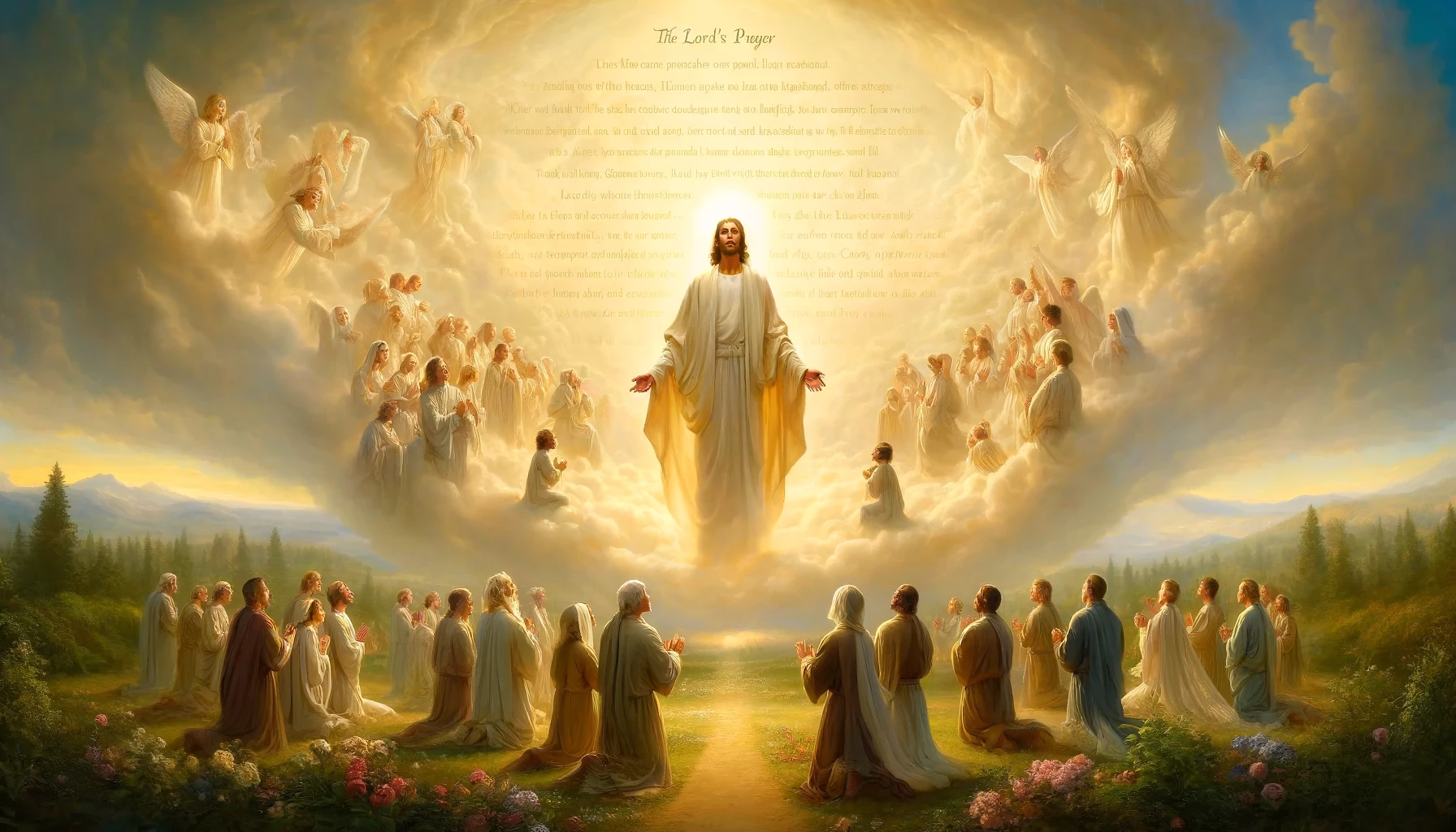
The lesson provides an in-depth teaching on the deeper spiritual meanings behind the Lord’s Prayer in the context of biblical prophecy and the Second Coming of Christ. It explains that being able to call God “Father” requires being born of His seed or Word, and that there will be two types of “seeds” or people revealed at the end times. The prayer for God’s kingdom to come refers to the New Jerusalem descending from heaven to establish God’s reign on earth as in heaven. The “daily bread” refers to the spiritual food or revelations needed for that time, not just physical sustenance. It emphasizes the importance of forgiveness to be forgiven, enduring trials/temptations, being delivered from evil/Babylon, and God’s kingdom being established forever after judgment. Overall, it presents the Lord’s Prayer as a prophetic blueprint for the spiritual realities and requirements surrounding Christ’s Second Coming.
I’m, of course, always excited to spend time with each one of you to discuss important topics in the Bible. Especially now, as we’re in the intermediate level, we’re able to delve deeper and really talk about why things are the way they are and what familiar things mean, perhaps more closely than we should have before. Today’s topic is one of those where we’ll see something familiar with new or fresh eyes. I’m very excited for everyone to be here today.
The True Meaning of the Lord’s Prayer
Mt 6, Jn 8
We’re going to delve deeply into something we’re quite familiar with today. It’s probably one of the first prayers we learned as young Christians, and we may not have realized that there’s so much substance and depth in that Lord’s prayer. We’re going to unwrap it like an onion and get to its core.
Our main reference chapters are Matthew 6 and John chapter 8. Matthew 6, of course, because that’s where the Lord’s prayer is found. But Matthew 6 exists within three really important chapters that Jesus spoke to his disciples.
Matthew chapters 5 to 7 contained a lot of moral teachings and mindset guidance that Jesus was giving to his disciples and ultimately to all Christians. Matthew 6 is situated between those chapters. And then we have John chapter 8.
In John chapter 8, it really talks about two types of seed, or two types of people – those who belong to God and those who belong to the devil. We get a good understanding of who those people are and what they tend to do from John chapter 8. We’ll really see that today.
Our hope is to understand the deeper meanings behind the Lord’s prayer and be ready.
Let that be the case.
The Lord’s Prayer
9 “This, then, is how you should pray: “‘Our Father in heaven, hallowed be your name, 10 your kingdom come, your will be done on earth as it is in heaven. 11 Give us today our daily bread. 12 Forgive us our debts, as we also have forgiven our debtors. 13 And lead us not into temptation, but deliver us from the evil one. ’
Matthew 6:9-13
Depending on the version you might read, there might be that little extra portion. For some versions, you don’t see that little extra portion, “for yours is the kingdom and the power and the glory.” It should be in the footnotes at the bottom of your Bible, and it should have a notice that some manuscripts included it, while others did not.
So, it’s included in the footnotes at the bottom. Anyway, that’s the Lord’s Prayer, right? It’s one of the most famous prayers in the whole Bible, next to prayers like the Sermon on the Mount or Jesus praying in the Garden of Gethsemane.
There are several really famous prayers in the Bible, but this is probably the most famous because it teaches us how we should pray. Jesus starts it, instructing us on how we ought to pray.
What we’re going to do is break down, line by line, the important points to know about each thing that Jesus asks us to pray about and the significance of each one.
1.- Father in Heaven (Matthew 6:9)
So, which heaven is being talked about here? Our Father in heaven, because we learned about different types of heaven, didn’t we?
What are the two types of physical heaven? Both types of physical heaven represent the tabernacle of the chosen people, but there are two types of tabernacles. And those belong to the same type of tabernacle of the chosen people.
Let me explain it like this. In Revelation 21:1, one place goes away, and another place remains. There’s the first heaven and the first earth, and there’s the new heaven and the new earth. So, there are two types of heaven in the physical world.
But what’s talked about in Matthew chapter 6 is heaven in the spiritual world. It’s God’s dwelling place.
ONE – Heaven in the spiritual world.
That’s the heaven that’s being discussed here. The heaven that God went to after He left earth in Genesis 6:3. So, that’s been where He’s been dwelling for the last 6,000 years. But, of course, His hope is to come back. We’ll talk about that in a moment.
TWO – Our Father
Now, it talks about Him as our Father. So, there are some important things to mention here about God being our Father or a father. If I were to go to a random street corner and run into someone and say, “Oh, hey, Dad,” what would that person do? How would they react? “Excuse me, sir. You must be mistaken.”
Why? There’s no relationship there. What do I lack in order to be considered this person’s child? What do I not have? I lack that person’s seed, right? So, I cannot call them Father in the traditional sense because I don’t have that person’s seed. God is actually in the same way.
In order to be qualified to call God Father, one must have what? One must be born of God’s seed. And what is God’s seed, as was mentioned? God’s seed equals the Word (Luke 8:11). This is the reason why God says, “Put my Word in your heart and in your mind.” And those who do so will belong to me. They will be my children. And I myself will be their God because they will have my seed within them.
That’s why it says in 1 Peter 1:23, “You have not been born of perishable seed, but of imperishable seed through the living and enduring Word of God.” But when a people lose God’s Word, it affects their childhood to God, their childhoodness. So, this is what Jesus talks about in John 8:41-44.
He’s sparring with the Israelites, of course, spiritually and verbally, and he’s confronting them about why they refuse to believe in him. So, let’s turn to John chapter 8 and really look at what Jesus used to describe what had happened to them.
39 “Abraham is our father,” they answered. “If you were Abraham’s children,” said Jesus, “then you would do the things Abraham did. 40 As it is, you are determined to kill me, a man who has told you the truth that I heard from God. Abraham did not do such things. 41 You are doing the things your own father does.” “We are not illegitimate children,” they protested. “The only Father we have is God himself.” 42 Jesus said to them, “If God were your Father, you would love me, for I came from God and now am here. I have not come on my own; but he sent me. 43 Why is my language not clear to you? Because you are unable to hear what I say. 44 You belong to your father, the devil, and you want to carry out your father’s desire. He was a murderer from the beginning, not holding to the truth, for there is no truth in him. When he lies, he speaks his native language, for he is a liar and the father of lies.
John 8:39-44
We’re reading about the situation of these people, right? Originally, they were children of God, children of Abraham, because they had God’s seed. They had his law, the law was given to them, the commandment, the covenant was given to them, and they kept it for a time. But over time, as Satan loves to do, he began to sow weeds among the wheat, right? Using the New Testament parable, but the logic is actually the same for the Old Testament.
Satan is always trying to disrupt God’s people and pull them towards him. But he does so in a way where people do not realize that they had transitioned fathers. That’s why they protested, “We are not illegitimate children. God is our father. Abraham is our father.”
But Jesus told them, “God and Abraham are no longer your father. Your father is now the devil. And you carry out your father’s desires. (Jn 8:41-44) He is a liar and a murderer. And you’re doing the same things that he does, though you do not realize it.” So, it is possible for someone to lose the right to call God their father.
Yes, it is. And it happened already. But of course, it’s not a permanent state of being. I imagine some who heard these words from Jesus said, “Whoa, I want to change. Let me follow the one that God had sent.” And now God is their father again. It’s not a permanent thing. But a person has to make that decision for themselves. When they hear the knowledge of the truth, they have to decide to change. The change is not automatic.
So Jesus prophesied about this happening once more, with two types of seed being sown in the field that we came from. In Matthew 13:24-30, two types of sons are promised to appear, two types of seed or offspring, sons of the kingdom, and the sons of the evil one.
Sons of the kingdom, what else can we call them? What seed were they born from in Matthew 13? Sons of the kingdom. Well, this is not subject to the kingdom. So let’s not mix them together. In this case, sons of the kingdom is good. And sons of the evil one is not good. So what seed did the sons of the kingdom come from? Wheat, or the good seed that was sown by the farmer. But the sons of the evil one came from? Weeds, or evil seed. The seed sown by the enemy lies. And like we mentioned, both grew up in the same field.
Until what time can we distinguish between them? Until the harvest. Then we can know which is which. Harvest equals the end of the age. So those who can continue to call God Father will be revealed at the time of the second coming. And all those who realize that they need to change will need to change and become part of where God is working.
So that’s really important to keep in mind. Let’s remain qualified to call God Father with his seed within us. So that God is not like, “I don’t recognize you. Who are you?” Right? Because Jesus promised that it would be like that. Matthew 7:21-23, “Away from me, you evildoers. I do not know you.” Let’s not let that be us.
I don’t want to hear those words at the end. I’d rather God say, “Well done, my good and faithful servant. Well done, my child. You have done well.” Like, let’s hear those words instead. (John 17:8, John 14:23-24)
2.- Your Kingdom Come
your kingdom come, your will be done on earth as it is in heaven.
Matthew 6:10
Our kingdom come. You should be having alarm bells already.
Oh, that makes a lot of sense. We’ve heard this one before too. So what is the kingdom that must come?
1.- What is the kingdom that comes? The city that comes is the holy city, New Jerusalem. (Revelation 21:1-4)
How is this city established? How does this city come to be?
The holy city, New Jerusalem.
Doesn’t it come down to Mount Zion?
Well, it comes down, but it has to be built before it comes down. It has to be prepared. When is the holy city, New Jerusalem, prepared?
Before it comes down. What is talked about that?
So Revelation details it, but there’s actually a promise from the four Gospels that promises the preparation of this place. Does anyone remember?
Is it when Jesus went to heaven to prepare a room for us?
What chapter and what book is mentioned? It’s in John 14:1-3.
“Do not let your hearts be troubled. Trust in God ; trust also in me. 2 In my Father’s house are many rooms; if it were not so, I would have told you. I am going there to prepare a place for you. 3 And if I go and prepare a place for you, I will come back and take you to be with me that you also may be where I am.
John 14:1-3
I will take you to the place that I am preparing.
And I will come back to take you to where I am. So Jesus promised to ascend and prepare this place for us. And he’s speaking to the 12 disciples directly.
And what’s special about the 12 disciples is that they also helped Jesus build this place after they died, after they were martyred. They too were integral into the building of this place. And we know that because as it says in Revelation 21:14, the 12 disciples are also the 12 foundations of the holy city, New Jerusalem.
They’re the 12 foundations. So they had an integral part to play in the building of this place. So the kingdom that is promised to come by Jesus is this kingdom right here.
The holy city, New Jerusalem, that comes down out of heaven from God, dressed as a bride beautifully prepared for her husband. And the two become one. We’ll talk a lot about what this is going to be like when we get to Revelation.
I’m excited for everyone to jump into that. But there are opportunities before Revelation that we’ll get to see more about that too coming up. But this is the kingdom that Jesus is thinking about in Matthew 6:10.
2. So where is the place that this kingdom comes to? Where is it coming to?
It’s coming to Mount Zion, which is also known as the holy, the new heaven and new earth. Heaven being the tabernacle and earth being the saints in the tabernacle.
Heaven and earth. The two become one. Now there’s another place that it’s promised to come to.
Him who overcomes I will make a pillar in the temple of my God. Never again will he leave it. I will write on him the name of my God and the name of the city of my God, the new Jerusalem, which is coming down out of heaven from my God; and I will also write on him my new name.
Revelation 3:12
This passage, Revelation 3:12, is one of the most important verses in the entire book of Revelation. It states, “To the one who overcomes, I will make them a pillar in the temple of my God, and they will never again leave it. I will write on them the name of my God, the name of the city of my God (the new Jerusalem, which comes down out of heaven from my God), and my new name.”
Amen. Jesus promises that God, the holy city of new Jerusalem, and Jesus himself will come to the one who overcomes. This is very remarkable.
And of course, the one who overcomes will be here on Mount Zion. Our Father in heaven, God the Father in the spiritual realm, those born of his seed, who are waiting for his kingdom to come. So what can happen then?
“Your kingdom come, your will be done on earth as it is in heaven.” Amen.
3.- Your Will be Done on Earth as in Heaven (Mathew 6:10)
So, what is God’s will that He desires? What is God’s will that needs to be done here? God’s desire has been and will always be to dwell with His people.
That has been His desire since the Garden of Eden. After the Garden of Eden, God needed to put a plan in motion to permanently return to His created beings, us. However, there had to be steps along the way to set up this eventual fulfillment of God returning back to us.
God gave us many figurative representations, many teasers along the way. Where in the Bible and what was the first time after the Garden of Eden that God told someone to build what he saw in heaven on earth? When did it happen?
1.- It happened with Moses during the time of Exodus. In Exodus 25:8-9 and Exodus and Hebrews 8:5, it talks about how Moses saw heaven in the spiritual world. This makes sense because Moses spent a lot of time with God on Mount Sinai. So, he saw heaven in the spiritual world. And then, what was he tasked with doing?
He was tasked with building what he saw in heaven on earth. So that God’s will, which it says in Exodus 25:8-9, “I desire to dwell with my people,” could be fulfilled. God instructed, “Build the place exactly as the pattern I will show you on the mountain. When I show you that pattern, do exactly as I said, build it out of these materials, build it with these things, use these fragrances, build these elements in my tabernacle, because I want it to feel like home when I return.” However, that tabernacle was not God’s permanent dwelling place, was it? No.
So, in what way does God desire to continually dwell with people?
To be with us, like in us, like have His word in us.
Yes, that’s right. Because then God will always be with us in that case. Not just a temporary thing when He comes for a certain amount of time and then goes back, but God always wants to dwell with us.
And God really helped people understand this by coming and being with His son.
2. So, at the time of the first coming, Jesus was the temple of God. He was God’s dwelling place. And Jesus, too, also saw heaven in the spiritual world and was able to testify to what he saw and also get to work doing what his Father was doing.
17 Jesus said to them, “My Father is always at his work to this very day, and I, too, am working.” 18 For this reason the Jews tried all the harder to kill him; not only was he breaking the Sabbath, but he was even calling God his own Father, making himself equal with God. 19 Jesus gave them this answer: “I tell you the truth, the Son can do nothing by himself; he can do only what he sees his Father doing, because whatever the Father does the Son also does.
John 5:17-19
So what did Jesus say here?
The son can only do what he sees his father doing. So whatever the Father was doing, Jesus did accordingly.
And based on verse 17, has God been resting since Adam or working since Adam?
He has been working. He really hasn’t been able to rest since the fall of man because He has been busy redeeming us. That’s what He has been up to.
And so each person that God appoints to do a specific task is doing that task for God’s ultimate will of fulfillment to be returned.
3.- But we know that the same logic also has to happen at the time of the second coming too. So someone is tasked with seeing heaven in the spiritual world and building what he saw at the second coming.
Who? New John.
What does he have to build on earth as it is in heaven?
He has to go to heaven. And then, when he comes back, what does he have to do? He has to build a church.
Which one? The one on Mount Zion. Amen.
He has to build the kingdom of heaven in the physical world, a.k.a. Mount Zion. So if you’re in a place and the leader of that place cannot say that he was inspired by seeing heaven in the spiritual world and then establishing that place, then that place cannot be Mount Zion. Because it has to be built according to heaven in the spiritual world, which means there are equivalents to everything that was seen in the spiritual world. Like in Revelation chapter 4, John sees God in the center of the throne. He sees Jesus as well.
He sees 24 elders. He sees seven spirits. He sees four living creatures.
He sees the sea of glass. He sees 12 gates. All of those have to be replicated.
Another evidence thing we can put for identifying Mount Zion is that it has to replicate heaven in the spiritual world. So keep those things in mind.
4.- Give Us Today Our Daily Bread (Matthew 6:11)
In the past, I recall this phrase being explained to me more literally. The understanding was to be thankful that God has provided physical food for sustenance. However, upon studying the open word, it carries a much deeper significance.
Before delving into that, let’s first explore the concept of “today,” as it is an intriguing term. What does “today” truly represent?
ONE – Today → Prophecy
To gain insight into the figurative representation of “today,” let us refer to Hebrews chapter 4. By examining this passage, we can uncover how “today” is utilized in the Bible as a symbolic reference to prophecy.
Therefore God again set a certain day, calling it Today, when a long time later he spoke through David, as was said before: “Today, if you hear his voice, do not harden your hearts.”
Hebrews 4:7
The writer of Hebrews is making a connection with a prophecy. In that prophecy, the term “today” is used, which God had said beforehand. “Today,” like on that day, is referring to a time in the future, a prophecy. Because the Lord’s prayer is a prophecy.
So, when that “today” comes, or when that prophecy is actually being fulfilled, what is the daily bread that we need? Let me explain the logic again, as it can be a bit confusing.
As stated in Hebrews 4:7, “Therefore God again set a certain day, calling it ‘today,'” meaning in the future, “when a long time later he spoke through David, as was said before.” This is a reference to Psalms 95:7-8, according to the footnote.
“Today, if you hear his voice, do not harden your hearts.” So, “today” is like saying “at that time,” “in the last days,” or “a time is coming.” It refers to a prophecy that will take place. And when that prophecy is fulfilled, that day then becomes a reality.
What are we to expect at that time or in the future when the prophesied “today” becomes a reality? We are expecting or requiring daily bread. So then, what is the daily bread that we need?
It is not physical food that Jesus is telling us to pray for, because this is a prophecy. It is actually spiritual food that Jesus is instructing us to pray for.
TWO – Daily Bread → Spritual Food → Word of God
According to Deuteronomy 8:3, spiritual food is the Word.
“Give us today our daily bread.” Because man does not live on bread alone, but on every word that comes from the mouth of the Lord.
That’s the bread we need at the time of the second coming. Of course, God will provide us with the physical things that we need. Because later on in the chapter, verse 33, Jesus says, “Seek first God’s kingdom and his righteousness.” He knows you need physical food, clothes, and a place to stay.
So, do not chase after those physical things like pagans do. Instead, focus on the spiritual food that you need. Feed your spirit.
So, what was the daily bread provided in each era? Let’s talk about that.
THREE – The daily bread provided in each era.
We have the time of Exodus. We have the time of the first coming. And we have the time of the second coming.
1. – Physical Food
So, what was the daily bread given at the time of Exodus?
It was manna. In this case, it was physical food that was given daily. That’s where the term “daily bread” comes from.
Because every day, God provided His people with physical manna to eat, to provide sustenance for them while they were in the desert. So, it was physical in nature, physical food that was given at the time of the Old Testament or the time of the Exodus. It was physical food needed to feed the flesh or feed the body.
2. – Spiritual Food
But the logic that God had established literally or physically then became spiritual at what time?
The time of the first coming. When the manna from heaven was no longer bread to do this with the mouth (eating), but bread to do this with the ear (listening).
Not eaten with the mouth, but eaten with the ear. And this is what Jesus talked about in John chapter 6, when He said, “Your ancestors ate the bread from heaven, yet they still died.” (Luke 22:14-20)
Died. But if someone eats the bread I am, the bread that I am, how will they live? Forever.
That’s right. So, the bread that Jesus wants us to eat is spiritual bread or spiritual food.
The words of God in Jesus, which of course are meant to feed the spirit. Feed the spirit to eternal life. And that food is Jesus’ flesh and blood.
Just like the Passover lamb back in Exodus chapter 12, Jesus was the reality of our Passover lamb. And we need to eat His flesh and drink His blood, which is spiritual food to feed our spirits.
3. – The second coming is actually very similar.
He who has an ear, let him hear what the Spirit says to the churches. To him who overcomes, I will give some of the hidden manna. I will also give him a white stone with a new name written on it, known only to him who receives it.
Revelation 2:17
We see here a promise of something that will be given to the one who overcomes. The one who overcomes must be given hidden manna.
So, Jesus gives hidden manna to the one who overcomes. Just like Jesus’ flesh and blood 2000 years ago represented the words of Jesus, who is life, and Jesus gave explanations of Old Testament prophecy and fulfillment, the hidden manna of the second coming is the same. It represents the prophecy and fulfillment of the New Testament.
Jesus’ flesh and blood represented the prophecy and fulfillment of the Old Testament, and Jesus’ flesh and blood of the second coming represents the prophecy and fulfillment of the New Testament. It is the prophecies of the New Testament becoming reality – the who, the what, the when, the where, the why, and the how – so that people understand what is taking place in their time and can be in the place where God, Jesus, and heaven intend to return.
The place where eternal life will take place, not just after someone dies, which is what we’ve always been told, but even while they’re still around. That is what Jesus and God are promising when heaven comes down – no more death, mourning, crying, and pain. Those things are the old order that will pass away.
4. – Satan’s Food
However, a thing that appears at the second coming that we must avoid is Satan’s food, which is also promised to appear. And there are many that eat Satan’s food daily.
This is Satan’s food:
- Revelation 2:14-15 = They are called food sacrificed to idols.
- Revelation 18:2-3 = They are also called the wine of adulteries, or the maddening wine that appears as well.
And as it says in Revelation 18, all nations are drunk on this maddening wine. No exceptions. So all need to flee from this place that gives Satan’s food.
Therefore, give us today the prophecy, our daily bread, our spiritual food. What is that? The prophecy and fulfillment of the New Testament. That’s what we need to hear at this time, as it quickens our spirit because we then realize things are taking place. Finally, we’ve waited a long time – 2,000 years.
And we’re so lucky to be born in the time when these things are taking place. You know, one thing that I always like to think about is looking back through my life and realizing that at the same time I was attending football practice, studying for exams, going out with friends, and watching movies, at that very moment, revelation was taking place. And I had no clue. No clue. Revelation was happening.
So, it’s really incredible how that happens and how we can understand those things. Because now, a food that I did not have access to because it was hidden, the hidden manna, I’m now able to eat. And it tastes sweet, like honey.
5.- Forgive Us as We Forgive Others (Matthew 6:12)
A truly important command that we are given regarding how we should relate to our neighbors is to forgive.
This is one of the hardest things for us to do. I don’t know why, but it’s so difficult to forgive. And part of the reason is because of the sin that resides within us.
Unforgiveness comes from pride. We cannot forgive that person for what they did. And we know where pride originates from.
This is the reason why God commands us to forgive. Because when we don’t forgive, we remind Him of the one who sinned against Him. And He doesn’t like being reminded of what was done to Him and His kingdom.
So forgiveness is critically important. We have to forgive. If there’s someone on your heart that you’re thinking about right now, someone who did something to you, maybe they know what they did, or maybe they didn’t. But that doesn’t matter. Because in your heart, it holds a strong resentment.
You must forgive that person so that the burden can be lifted off. And it’s so much lighter after you forgive. So let’s read about the importance of forgiveness.
12 Forgive us our debts, as we also have forgiven our debtors. 14 For if you forgive men when they sin against you, your heavenly Father will also forgive you. 15 But if you do not forgive men their sins, your Father will not forgive your sins.
Matthew 6:12, 14-15
ONE – Forgiving Sin → Your sin can be forgiven
Jesus instructed us to forgive the sins of others, so that our sins can be forgiven. This is a command from Jesus, not an optional choice.
Let us follow this instruction. Let us release whatever burden has been weighing us down for a long time. It is time to let it go so that we can move forward.
We have the ability to do it. And the word (Scripture) can also help us accomplish it. Amen.
Can we do it, Class? Can we forgive? Yes.
Let us do it. Amen. We can do it.
TWO – 77x → All the time. (Matthew 18:21-35)
And how often should we forgive everyone? All the time.
“Do I have to forgive my brother 30 times, Jesus? Do I have to forgive him 40 times? How many times should I forgive my brother?”
77x → All the time.
So, let us do it.
There is no limit to how often we should forgive. However, Jesus also said to correct our neighbor. So, forgiveness does not mean ignoring or condoning wrongdoing.
Let us make a positive change. Right? Let us strive to do better.
Encourage your brothers as well. Both forgiveness and correction are required, so that a person does not continue to repeat offenses.
So, forgive so that we can also be forgiven. And please read these passages in Matthew 18.
It also includes the parable of the unrepentant servant who owed a debt to a king that he could not repay. And, of course, we understand what that means, right? An unpayable debt.
And so, the debt was lifted from that servant. But then, to his friend who owed him a much smaller debt, a tiny debt, he refused to forgive that fellow servant’s debt. So, the king reinstated his insurmountable debt and put him in prison until he could pay it off.
So, let us learn a lesson. Hey, we do not want that unpayable debt to remain on us. No way.
We want to ensure that the master forgives us of that unpayable debt, right? And, of course, Jesus’ blood is the forgiveness of that debt. But it will not apply to us if we refuse to let the debt go from others.
So, let us do it. All right.
6.- Lead Us Not in Temptation (Matthew 6:13)
And lead us not into temptation, but deliver us from the evil one. ’
Matthew 6:13
There are two crucial points to consider here. The text states, “do not lead us into temptation.” So, how can we comprehend this on a deeper, figurative level?
This does not represent that God tempts individuals, as the book of James states, “God cannot be tempted.” That is not His nature. God does not place something sinful before you and test whether you will succumb to it or not. That is Satan’s tactic.
However, God does allow tests to occur to assess the strength of our faith. How then can we understand the concept of “temptation” in the context of the second coming?
Let us examine two important biblical passages that shed light on this matter.
ONE – Many will be → Persecuted, betrayed and deceived
9 “Then you will be handed over to be persecuted and put to death, and you will be hated by all nations because of me. 10 At that time many will turn away from the faith and will betray and hate each other, 11 and many false prophets will appear and deceive many people. 12 Because of the increase of wickedness, the love of most will grow cold, 13 but he who stands firm to the end will be saved.
Matthew 24:9-13
Jesus prophesied a time when many will face persecution, betrayal, deception, temptation, and trials with numerous challenges. During this era, many will flee from the true faith, falling away.
However, in verse 13, Jesus stated, “But he who stands firm till the end will be saved.” Let us represent the fulfilment of this verse, remaining steadfast no matter what lies or false hopes may arise. The lesson is to embody verse 13, standing firm in the faith until the end, regardless of the difficulties encountered.
TWO – Hour of Trial → Come upon the whole world
Let’s now examine the book of Revelation to see an example of one of the trials that Jesus promised.
Since you have kept my command to endure patiently, I will also keep you from the hour of trial that is going to come upon the whole world to test those who live on the earth.
Revelation 3:10
What is being said here?
There will be an hour of trial. This hour of trial will test everyone. It will come upon the whole world.
We need to be those who are prepared for this and overcome. We must overcome.
We must stand firm until the end when this takes place. We can do it. Now, lead us not into temptation.
7.- Deliver Us from Evil (One)
After the phrase “lead us not into temptation,” Jesus says, “deliver us from evil.” Some versions might say “evil one,” but it conveys the same meaning.
The phrase “deliver us from evil” requires further understanding. Let’s examine it in the context of the second coming.
To deliver means to grab someone who is in danger and take them out of that perilous place. So, at the time of the second coming, what place traps God’s people, necessitating their deliverance?
Babylon. That’s correct. Babylon is the place of evil, the home of demons, from which God’s people must be extracted. They must come out of Babylon, the haunt for every evil spirit.
This logic has been consistent throughout every era. Noah and his family had to be extracted from the flood that was destroying the sinful world. Moses and the Israelites had to be delivered from their captivity in Egypt and brought to the promised land. Jesus extracted his followers and believers from the corrupt world of Israel.
Similarly, during the time of the second coming, an extraction or harvest must occur. And it is happening. God’s people are being delivered from the evil place, just as prophesied.
8.- For Yours is the Kingdom, The Power and The Glory Forever!
Some of your verses will have it in verse 13, while others may not. ‘For yours is the kingdom and the power and the glory forever. Amen.’
Let’s explore what this means regarding God’s kingdom, power, and glory. Throughout the book of Revelation, you will find numerous instances where the spirits and angels of heaven celebrate God’s kingdom, power, and glory, as well as God’s salvation. This is because all the events that have been unfolding over the past 6,000 years are finally coming to an end by God’s grace, which is the reason for their celebration.
Let’s examine one of these examples from the book of Revelation, although there are many.
1 After this I heard what sounded like the roar of a great multitude in heaven shouting: “Hallelujah! Salvation and glory and power belong to our God, 6 Then I heard what sounded like a great multitude, like the roar of rushing waters and like loud peals of thunder, shouting: “Hallelujah! For our Lord God Almighty reigns.
Revelation 19:1,6
ONE – God reigns after → The judgement of Babylon
A great multitude shouted, “Hallelujah, our Lord God Almighty reigns.”
And when will He reign? After the judgment of Babylon. After the judgment of Babylon, God will reign.
And that has been His desire for a long time.
The judgment of Babylon takes place in the previous chapter, Revelation 18. So that is why in Revelation 19, they are celebrating because Babylon has been judged.
And for how long will He reign after Babylon’s judgment? Forever and ever.
Wow, glory to God.
Memorization
“Be careful not to do your ‘acts of righteousness’ before men, to be seen by them. If you do, you will have no reward from your Father in heaven. 2 “So when you give to the needy, do not announce it with trumpets, as the hypocrites do in the synagogues and on the streets, to be honored by men. I tell you the truth, they have received their reward in full. 3 But when you give to the needy, do not let your left hand know what your right hand is doing, 4 so that your giving may be in secret. Then your Father, who sees what is done in secret, will reward you. 5 “And when you pray, do not be like the hypocrites, for they love to pray standing in the synagogues and on the street corners to be seen by men. I tell you the truth, they have received their reward in full. 6 But when you pray, go into your room, close the door and pray to your Father, who is unseen. Then your Father, who sees what is done in secret, will reward you. 7 And when you pray, do not keep on babbling like pagans, for they think they will be heard because of their many words. 8 Do not be like them, for your Father knows what you need before you ask him. 9 “This, then, is how you should pray: “‘Our Father in heaven, hallowed be your name, Memorize the Lord’s Prayer. Many of you are already thinking, “Oh, I’ve got that covered.” I’ve been reciting the Lord’s Prayer for decades. However, now, as you say the Lord’s Prayer, you should contemplate its deeper meanings each time. Amen. Let’s review what we’ve learned so far. Please revisit all of last week’s lessons as well. That’s part of the homework, so that we are all caught up for the upcoming week.
Matthew 6:1-9
Let’s Us Discern
Analyzing Shincheonji Lesson 75: “The True Meaning of the Lord’s Prayer”
A Critical Examination Using “Testing Shincheonji’s Claims: Two Lenses, One Story”
Introduction: Hijacking Sacred Prayer
Lesson 75 represents one of the most spiritually manipulative teachings in Shincheonji’s curriculum. Having established their framework, created fear and superiority, and positioned Lee Man-hee as the “promised pastor,” the instructor now does something particularly troubling: reinterprets the Lord’s Prayer—one of Christianity’s most sacred prayers—to make it about SCJ’s agenda.
The instructor is essentially saying: “When Jesus taught us to pray ‘Your kingdom come,’ He was prophesying about SCJ. When you pray this prayer, you’re actually praying for SCJ’s establishment and Lee Man-hee’s work.” By the end of this lesson, students will have learned that:
- The Lord’s Prayer is actually prophecy about the second coming (SCJ)
- “Our Father in heaven” requires having God’s seed (SCJ’s teachings)
- “Your kingdom come” means the establishment of SCJ’s organization
- Traditional Christians have lost the right to call God “Father”
As Chapter 13 of “Testing Shincheonji’s Claims: Two Lenses, One Story” warns, this is “The Danger of Allegorizing Everything”—taking a straightforward teaching and reinterpreting it to fit SCJ’s narrative, thereby hijacking something sacred for organizational purposes.
The instructor’s stated goal is to help students “understand the deeper meanings behind the Lord’s Prayer and be ready!” But what’s actually happening is the hijacking of sacred Christian prayer to:
- Make SCJ appear as the fulfillment of Jesus’ teaching
- Create dependence on SCJ’s “deeper” interpretation
- Make students feel they now understand what others don’t
- Reinforce all previous SCJ teachings through familiar prayer
This is sophisticated spiritual manipulation through reinterpretation of sacred texts. Let’s examine it carefully.
For additional refutation resources, check CloserLookInitiative.com’s SCJ Examination section, which provides detailed analysis of SCJ’s reinterpretation of the Lord’s Prayer.
Part 1: The Setup – Review and Urgency
The Review Section
What the Lesson Says:
The instructor reviews previous lessons:
- “Subjects of the kingdom” (traditional Christians) are “thrown out”
- “Those from north, south, east, west” (SCJ members) “take their seats”
- “Betrayal and destruction have already happened”
- “Recently” – The events must have happened within the lifetime of the witness
The instructor emphasizes:
- “They have to take place within the lifetime of the one who sees them and has to testify”
- “So, recently. That’s what I wanted to say. Recently is my point, more recently than you might think”
Analysis:
This creates urgency and immediacy:
- The events of Revelation are happening now
- There’s a witness (Lee Man-hee) who saw them
- You need to respond now (join/stay in SCJ)
- Traditional Christians have already been thrown out
Chapter 19 of “Testing Shincheonji’s Claims” (“When Claims Cannot Be Tested”) addresses this: SCJ creates urgency to prevent careful evaluation.
The “Qualifications for the Feast” Framework
What the Lesson Says:
The instructor lists “qualifications for the Feast of the Kingdom of Heaven”:
- Having one’s name in the Book of Life
- Being born of God’s seed
- Being harvested
- Being sealed
- Not adding to or subtracting from Revelation
- Preparing lamp, oil, and wedding clothes
Analysis:
This creates a checklist mentality where:
- Salvation becomes about meeting qualifications
- These qualifications are defined by SCJ
- Students fear they might not meet them
- Staying in SCJ becomes essential to meeting them
Chapter 8 of “Testing Shincheonji’s Claims” (“The Shifting Standards of Salvation”) documents how SCJ gradually shifts from grace-based salvation to performance-based salvation.
The Biblical Reality:
Salvation is by grace through faith, not by meeting qualifications:
Ephesians 2:8-9: “For it is by grace you have been saved, through faith—and this is not from yourselves, it is the gift of God—not by works, so that no one can boast.”
Romans 3:22-24: “This righteousness is given through faith in Jesus Christ to all who believe. There is no difference between Jew and Gentile, for all have sinned and fall short of the glory of God, and all are justified freely by his grace through the redemption that came by Christ Jesus.”
Titus 3:5: “He saved us, not because of righteous things we had done, but because of his mercy. He saved us through the washing of rebirth and renewal by the Holy Spirit.”
The “qualification” for salvation is faith in Christ, not meeting a checklist.
For refutation of SCJ’s salvation checklist, check CloserLookInitiative.com’s SCJ Examination section.
Part 2: “Our Father in Heaven” – The Seed Teaching
The Core Teaching
What the Lesson Says:
Matthew 6:9: “Our Father in heaven, hallowed be your name.”
The instructor explains:
1. “Heaven” = Heaven in the spiritual world (God’s dwelling place)
2. “Our Father” = Requires having God’s seed:
- “In order to be qualified to call God Father, one must have what? One must be born of God’s seed”
- “God’s seed equals the Word (Luke 8:11)”
- “Those who do so will belong to me. They will be my children”
3. You can lose the right to call God “Father”:
- Uses John 8:39-44 (Jesus tells religious leaders their father is the devil)
- “It is possible for someone to lose the right to call God their father. Yes, it is. And it happened already”
- “Those who can continue to call God Father will be revealed at the time of the second coming”
Analysis:
This creates fear and uncertainty:
- You must have God’s seed (SCJ’s teachings) to call God “Father”
- Traditional Christians have lost this right (like the Pharisees)
- You could lose this right if you leave SCJ
- Only at the second coming (through SCJ) will it be revealed who truly has God’s seed
Chapter 8 of “Testing Shincheonji’s Claims” documents this pattern: Creating fear about losing salvation to control behavior.
The Biblical Reality
1. All Believers Are Children of God:
John 1:12-13: “Yet to all who did receive him, to those who believed in his name, he gave the right to become children of God—children born not of natural descent, nor of human decision or a husband’s will, but born of God.”
Galatians 3:26: “So in Christ Jesus you are all children of God through faith.”
Romans 8:14-16: “For those who are led by the Spirit of God are the children of God. The Spirit you received does not make you slaves, so that you live in fear again; rather, the Spirit you received brought about your adoption to sonship. And by him we cry, ‘Abba, Father.’ The Spirit himself testifies with our spirit that we are God’s children.”
1 John 3:1: “See what great love the Father has lavished on us, that we should be called children of God! And that is what we are!”
All who believe in Christ are children of God. This is not dependent on SCJ membership.
2. God’s “Seed” is the Gospel, Not SCJ’s Teachings:
Luke 8:11: “This is the meaning of the parable: The seed is the word of God.”
Context (Luke 8:4-15): The parable of the sower
- The seed is the word of God (the gospel message)
- Different soils represent different responses to the gospel
- Those who “hear the word, retain it, and by persevering produce a crop” are saved
1 Peter 1:23: “For you have been born again, not of perishable seed, but of imperishable, through the living and enduring word of God.”
Context (1 Peter 1:22-25):
- “You have been born again… through the living and enduring word of God”
- “And this is the word that was preached to you” (the gospel)
God’s seed is the gospel of Jesus Christ, not SCJ’s interpretive system.
3. John 8:39-44 is About Rejecting Jesus, Not About Losing “Seed”:
John 8:39-44 (Jesus confronts religious leaders):
Context:
- Jesus is speaking to religious leaders who claim Abraham as their father
- They reject Jesus despite His miracles and teaching
- They plot to kill Him (John 8:40)
- Jesus says their actions reveal their true father (the devil)
The point:
- Rejecting Jesus = rejecting God
- Seeking to kill Jesus = doing the devil’s work
- Not believing Jesus = not being God’s children
This does NOT mean:
- Believers can lose their status as God’s children
- Traditional Christians have lost the right to call God “Father”
- Only SCJ members are God’s children
The Difference:
The religious leaders in John 8:
- Rejected Jesus as the Messiah
- Refused to believe despite evidence
- Sought to kill Jesus
Traditional Christians:
- Believe in Jesus as Lord and Savior
- Trust in His death and resurrection for salvation
- Worship and serve Jesus
These are not the same. Traditional Christians have not “lost the right” to call God Father.
4. Believers Are Secure in Their Relationship with God:
Romans 8:38-39: “For I am convinced that neither death nor life, neither angels nor demons, neither the present nor the future, nor any powers, neither height nor depth, nor anything else in all creation, will be able to separate us from the love of God that is in Christ Jesus our Lord.”
John 10:28-29: “I give them eternal life, and they shall never perish; no one will snatch them out of my hand. My Father, who has given them to me, is greater than all; no one can snatch them out of my Father’s hand.”
Philippians 1:6: “Being confident of this, that he who began a good work in you will carry it on to completion until the day of Christ Jesus.”
Believers are secure in their relationship with God. We don’t lose the right to call Him “Father” if we leave SCJ.
Chapter 21 of “Testing Shincheonji’s Claims” (“The Heart of God”) addresses this: God desires relationship with all His children, not just one organization’s members.
For detailed refutation of the “seed” teaching, check CloserLookInitiative.com’s SCJ Examination section.
Part 3: “Your Kingdom Come” – The SCJ Kingdom
The Core Teaching
What the Lesson Says:
Matthew 6:10: “Your kingdom come, your will be done on earth as it is in heaven.”
The instructor explains:
1. “Your kingdom come” = The holy city, New Jerusalem:
- “What is the kingdom that comes? The holy city, New Jerusalem (Revelation 21:1-4)”
- “How is this city established? How does this city come to be?”
- “It has to be prepared before it comes down”
2. This is being prepared now through SCJ:
- References John 14:1-3 (“I go to prepare a place for you”)
- Implies this “place” is being prepared through SCJ’s work
- “Your kingdom come” means praying for SCJ’s establishment
Analysis:
This hijacks the Lord’s Prayer to make it about SCJ:
- When you pray “Your kingdom come,” you’re praying for SCJ
- The “kingdom” is SCJ’s organization (the “New Jerusalem”)
- Jesus’ promise to “prepare a place” is being fulfilled through SCJ
- Traditional Christians who pray this don’t realize they’re praying for SCJ
Chapter 13 of “Testing Shincheonji’s Claims” warns: Allegorizing everything allows you to make any passage mean whatever you want.
The Biblical Reality
1. “Your Kingdom Come” is a Prayer for God’s Reign:
What is “the kingdom of God”?
Luke 17:20-21: “Once, on being asked by the Pharisees when the kingdom of God would come, Jesus replied, ‘The coming of the kingdom of God is not something that can be observed, nor will people say, “Here it is,” or “There it is,” because the kingdom of God is in your midst.'”
The kingdom of God is:
- God’s reign and rule in people’s hearts and in the world
- Present wherever God’s will is done
- Future in its complete fulfillment when Christ returns
When we pray “Your kingdom come,” we’re praying:
- For God’s will to be done on earth
- For God’s reign to be established in hearts and lives
- For Christ’s return and the complete establishment of His kingdom
- For God’s purposes to be accomplished
This is not about one organization (SCJ).
2. The Kingdom is Already Present in Christ:
Matthew 12:28: “But if it is by the Spirit of God that I drive out demons, then the kingdom of God has come upon you.”
Luke 11:20: “But if I drive out demons by the finger of God, then the kingdom of God has come upon you.”
Colossians 1:13: “For he has rescued us from the dominion of darkness and brought us into the kingdom of the Son he loves.”
The kingdom came with Jesus’ first coming. We are already in the kingdom if we’re in Christ.
3. The Kingdom Will Be Fully Realized at Christ’s Return:
Revelation 11:15: “The seventh angel sounded his trumpet, and there were loud voices in heaven, which said: ‘The kingdom of the world has become the kingdom of our Lord and of his Messiah, and he will reign for ever and ever.'”
2 Timothy 4:1: “In the presence of God and of Christ Jesus, who will judge the living and the dead, and in view of his appearing and his kingdom, I give you this charge…”
The kingdom will be fully established when Christ returns visibly to judge and reign.
4. John 14:1-3 is About Heaven, Not SCJ:
John 14:1-3: “My Father’s house has many rooms; if that were not so, would I have told you that I am going there to prepare a place for you? And if I go and prepare a place for you, I will come back and take you to be with me that you also may be where I am.”
What is Jesus saying?
Context (John 13-14):
- Jesus is preparing His disciples for His departure (death, resurrection, ascension)
- He comforts them: “Don’t be troubled. I’m going to prepare a place for you”
- He promises to return and take them to be with Him
“My Father’s house”:
- Heaven (God’s dwelling place)
- Eternal home with God
- Not an earthly organization
“I will come back and take you to be with me”:
- Jesus will return (second coming)
- He will take believers to be with Him (1 Thessalonians 4:16-17)
- We will be where He is (heaven/new creation)
This is not about SCJ preparing a “place” on earth. It’s about Jesus preparing our eternal home in heaven.
5. The New Jerusalem is the Eternal City, Not SCJ:
Revelation 21:1-4: “Then I saw ‘a new heaven and a new earth,’ for the first heaven and the first earth had passed away, and there was no longer any sea. I saw the Holy City, the new Jerusalem, coming down out of heaven from God, prepared as a bride beautifully dressed for her husband. And I heard a loud voice from the throne saying, ‘Look! God’s dwelling place is now among the people, and he will dwell with them. They will be his people, and God himself will be with them and be their God. He will wipe every tear from their eyes. There will be no more death or mourning or crying or pain, for the old order of things has passed away.'”
The New Jerusalem:
- Comes after “the first heaven and the first earth had passed away”
- Comes down out of heaven from God (not built by humans)
- Is the eternal dwelling place of God with His people
- Is characterized by no more death, mourning, crying, or pain
This is the eternal state, not SCJ’s organization in 21st-century Korea.
Chapter 20 of “Testing Shincheonji’s Claims” (“The Danger of Creative Fulfillment”) addresses this: SCJ strips prophecies of their true meaning to claim fulfillment through their organization.
For detailed refutation of SCJ’s “kingdom” teaching, check CloserLookInitiative.com’s SCJ Examination section.
Part 4: The Psychological Manipulation
Technique #1: Hijacking Sacred Prayer
What’s Happening:
The Lord’s Prayer is one of the most sacred and familiar prayers in Christianity:
- Taught by Jesus Himself
- Prayed by Christians for 2,000 years
- Memorized from childhood
- Used in worship, private prayer, times of need
SCJ’s Strategy:
By reinterpreting the Lord’s Prayer to be about SCJ:
- Makes SCJ appear central to Jesus’ teaching
- Makes students feel they now understand what others don’t
- Creates emotional connection between prayer and SCJ
- Makes leaving SCJ feel like rejecting Jesus’ prayer
Analysis:
This is sophisticated manipulation:
- Takes something familiar and sacred
- Reinterprets it to fit SCJ’s agenda
- Makes students feel enlightened (they see the “deeper meaning”)
- Creates emotional investment in SCJ
Chapter 13 of “Testing Shincheonji’s Claims” warns: Allegorizing everything, especially sacred texts, is dangerous manipulation.
Technique #2: Creating Fear of Losing Relationship with God
Examples:
- “It is possible for someone to lose the right to call God their father. Yes, it is”
- “Those who can continue to call God Father will be revealed at the time of the second coming”
- Traditional Christians have lost God’s seed (like the Pharisees)
- You could lose this right if you leave SCJ
Analysis:
This creates intense fear:
- You might lose your relationship with God
- Traditional Christians have already lost it
- Only those in SCJ are secure
- Leaving SCJ = losing God as Father
Chapter 8 of “Testing Shincheonji’s Claims” documents this: SCJ uses fear of losing salvation to control members.
Biblical Response:
Romans 8:15-16: “The Spirit you received does not make you slaves, so that you live in fear again; rather, the Spirit you received brought about your adoption to sonship. And by him we cry, ‘Abba, Father.’ The Spirit himself testifies with our spirit that we are God’s children.”
1 John 4:18: “There is no fear in love. But perfect love drives out fear, because fear has to do with punishment. The one who fears is not made perfect in love.”
God does not motivate through fear of losing relationship with Him.
Technique #3: Creating Superiority Through “Deeper Meaning”
Examples:
- “We’re able to delve deeper and really talk about why things are the way they are”
- “We may not have realized that there’s so much substance and depth in that Lord’s prayer”
- “We’re going to unwrap it like an onion and get to its core”
- Traditional Christians pray this without understanding its “true meaning”
Analysis:
This creates sense of superiority:
- We understand the “deeper meaning”
- They (traditional Christians) just recite it without understanding
- We are enlightened; they are ignorant
- We are praying for God’s true kingdom (SCJ); they don’t know what they’re praying for
Chapter 6 of “Testing Shincheonji’s Claims” warns: Creating false superiority through selective interpretation isolates and controls.
Biblical Response:
1 Corinthians 8:1-2: “Now about food sacrificed to idols: We know that ‘We all possess knowledge.’ But knowledge puffs up while love builds up. Those who think they know something do not yet know as they ought to know.”
Romans 12:3: “For by the grace given me I say to every one of you: Do not think of yourself more highly than you ought, but rather think of yourself with sober judgment, in accordance with the faith God has distributed to each of you.”
Technique #4: Reinforcing All Previous Teachings
How It Works:
The Lord’s Prayer reinterpretation ties together all previous SCJ teachings:
- “Our Father” = God’s seed teaching (Lesson 73)
- “Your kingdom come” = New Jerusalem/SCJ organization (Lessons 68-74)
- “On earth as in heaven” = Physical fulfillment (Lesson 68)
- “Give us daily bread” = The word/teaching (upcoming)
- “Deliver us from evil” = Fleeing from the beast (Lesson 74)
Analysis:
This creates a cohesive framework where:
- Everything fits together (seems logical)
- Each lesson reinforces the previous ones
- The Lord’s Prayer becomes proof of SCJ’s teaching
- Questioning one part means questioning the whole framework
Chapter 4 of “Testing Shincheonji’s Claims” explains: Interpretive frameworks shape everything you see. Once accepted, they’re hard to question.
Technique #5: The “Recently” Urgency
Examples:
- “Betrayal and destruction have already happened”
- “They have to take place within the lifetime of the one who sees them”
- “Recently. That’s what I wanted to say. Recently is my point, more recently than you might think”
Analysis:
This creates urgency:
- The events are happening now
- There’s a witness (Lee Man-hee) who saw them
- You need to respond immediately
- Delaying means missing out
Chapter 19 of “Testing Shincheonji’s Claims” addresses this: Creating urgency prevents careful evaluation.
Biblical Response:
2 Peter 3:8-9: “But do not forget this one thing, dear friends: With the Lord a day is like a thousand years, and a thousand years are like a day. The Lord is not slow in keeping his promise, as some understand slowness. Instead he is patient with you, not wanting anyone to perish, but everyone to come to repentance.”
God is patient. True faith doesn’t require rushed decisions based on manufactured urgency.
For more on manipulation tactics, check CloserLookInitiative.com’s SCJ Examination section.
Part 5: What the Lesson Gets Right (And How to Respond)
Legitimate Biblical Truths:
The lesson does reference some genuine biblical truths:
- The Lord’s Prayer is important teaching from Jesus ✓
- Believers are born of God’s seed (the Word) ✓
- We should pray for God’s kingdom to come ✓
- John 8 shows that rejecting Jesus = rejecting God ✓
- Jesus is preparing a place for believers (John 14:1-3) ✓
The Proper Response:
Use these same biblical truths to evaluate SCJ:
1. The Lord’s Prayer is important—and means what Jesus said:
Matthew 6:9-13 is straightforward teaching on prayer:
- Approach God as Father (intimate relationship)
- Pray for God’s will to be done
- Ask for daily needs (physical and spiritual)
- Seek forgiveness and extend it to others
- Ask for protection from temptation and evil
This is not coded prophecy about SCJ. It’s practical teaching on prayer.
2. Believers are born of God’s seed—the gospel:
1 Peter 1:23: “For you have been born again, not of perishable seed, but of imperishable, through the living and enduring word of God.”
Context (1 Peter 1:25): “And this is the word that was preached to you.”
God’s seed is the gospel of Jesus Christ, not SCJ’s interpretive system.
3. We pray for God’s kingdom—which is His reign and rule:
Matthew 6:10: “Your kingdom come, your will be done, on earth as it is in heaven.”
We’re praying for:
- God’s will to be done
- God’s reign to be established in hearts
- Christ’s return and complete reign
Not for SCJ’s organizational establishment.
4. John 8 is about rejecting Jesus—not about losing “seed”:
John 8:44: “You belong to your father, the devil, and you want to carry out your father’s desires.”
Context: Jesus speaking to religious leaders who rejected Him and sought to kill Him.
This does not apply to believers who trust in Christ but don’t join SCJ.
5. Jesus prepares a place—in heaven, not through SCJ:
John 14:2-3: “My Father’s house has many rooms… I am going there to prepare a place for you. And if I go and prepare a place for you, I will come back and take you to be with me.”
Jesus is preparing our eternal home in heaven, not an earthly organization.
Part 6: Red Flags in This Lesson
🚩 Red Flag #1: Hijacking Sacred Prayer
What to Watch For:
- Reinterpreting the Lord’s Prayer to be about SCJ
- Making familiar prayer mean something completely different
- Creating “deeper meaning” that requires SCJ’s interpretation
Why It Matters:
Hijacking sacred texts is spiritual manipulation.
Biblical Response:
Proverbs 30:5-6: “Every word of God is flawless; he is a shield to those who take refuge in him. Do not add to his words, or he will rebuke you and prove you a liar.”
🚩 Red Flag #2: Fear of Losing Relationship with God
What to Watch For:
- “You can lose the right to call God Father”
- Traditional Christians have lost God’s seed
- Only SCJ members are secure
- Leaving SCJ = losing relationship with God
Why It Matters:
Fear-based control contradicts the gospel.
Biblical Response:
Romans 8:38-39: “For I am convinced that neither death nor life… nor anything else in all creation, will be able to separate us from the love of God that is in Christ Jesus our Lord.”
🚩 Red Flag #3: Creating False Superiority
What to Watch For:
- “We understand the deeper meaning”
- Traditional Christians pray without understanding
- We’re enlightened; they’re ignorant
Why It Matters:
Pride and superiority are not from God.
Biblical Response:
1 Corinthians 8:1-2: “Knowledge puffs up while love builds up. Those who think they know something do not yet know as they ought to know.”
🚩 Red Flag #4: Allegorizing Everything
What to Watch For:
- Straightforward teaching reinterpreted as prophecy
- Every phrase made to mean something about SCJ
- Context and plain meaning ignored
Why It Matters:
Allegorizing everything prevents objective testing.
Biblical Response:
2 Timothy 2:15: “Do your best to present yourself to God as one approved, a worker who does not need to be ashamed and who correctly handles the word of truth.”
🚩 Red Flag #5: Manufactured Urgency
What to Watch For:
- “Recently. More recently than you might think”
- “Betrayal and destruction have already happened”
- Need to respond immediately
Why It Matters:
Urgency prevents careful evaluation.
Biblical Response:
Acts 17:11: “Now the Berean Jews were of more noble character… for they received the message with great eagerness and examined the Scriptures every day to see if what Paul said was true.”
For more red flags, check CloserLookInitiative.com’s SCJ Examination section.
Part 7: Questions for Reflection
If you’re studying with Shincheonji or considering their teaching, ask yourself:
About the Lord’s Prayer:
- Did Jesus intend the Lord’s Prayer to be prophecy about a 21st-century organization?
- Does the context (Matthew 5-7, the Sermon on the Mount) support allegorizing this prayer?
- Have Christians for 2,000 years been praying this without understanding its “true meaning”?
About “Our Father”:
- Does the Bible teach that believers can lose the right to call God “Father”?
- Does John 8:44 apply to believers who trust in Christ but don’t join SCJ?
- If we’re secure in Christ (Romans 8:38-39), why would leaving SCJ mean losing God as Father?
About “Your Kingdom Come”:
- Is “the kingdom of God” an earthly organization (SCJ) or God’s reign and rule?
- Is John 14:1-3 about Jesus preparing an earthly organization or our eternal home in heaven?
- Is the New Jerusalem (Revelation 21) SCJ or the eternal city after this world passes away?
About Testing:
- Am I encouraged to test this interpretation with outside sources?
- Can I discuss concerns about reinterpreting sacred prayer openly?
- Am I being manipulated through fear, superiority, and urgency?
Part 8: A Biblical Alternative
How to Understand the Lord’s Prayer:
1. It’s Practical Teaching on Prayer, Not Prophecy:
Matthew 6:9-13 is part of the Sermon on the Mount (Matthew 5-7):
- Practical teaching on Christian living
- Instructions on prayer, fasting, giving, worry, judging
- Not coded prophecy about the second coming
2. “Our Father in Heaven” – Intimate Relationship:
Romans 8:15-16: “The Spirit you received does not make you slaves, so that you live in fear again; rather, the Spirit you received brought about your adoption to sonship. And by him we cry, ‘Abba, Father.’ The Spirit himself testifies with our spirit that we are God’s children.”
All believers can call God “Father” through faith in Christ.
3. “Your Kingdom Come” – Prayer for God’s Will:
Matthew 6:10: “Your kingdom come, your will be done, on earth as it is in heaven.”
We’re praying:
- For God’s will to be done in our lives and in the world
- For God’s reign to be established in hearts
- For Christ’s return and complete reign
4. “Give Us Today Our Daily Bread” – Daily Dependence:
Matthew 6:11: “Give us today our daily bread.”
We’re asking:
- For daily physical needs (food, provision)
- For daily spiritual needs (God’s Word, guidance)
- Acknowledging dependence on God
5. “Forgive Us… As We Forgive” – Grace and Mercy:
Matthew 6:12: “And forgive us our debts, as we also have forgiven our debtors.”
We’re asking:
- For God’s forgiveness of our sins
- For grace to extend forgiveness to others
- Acknowledging our need for mercy
6. “Lead Us Not Into Temptation” – Protection:
Matthew 6:13: “And lead us not into temptation, but deliver us from the evil one.”
We’re asking:
- For protection from temptation
- For deliverance from evil
- For God’s guidance away from sin
Part 9: For Those Who Are Concerned
If You’re Studying with SCJ:
Take Time:
- Don’t let reinterpretation of sacred prayer pressure you
- Don’t let fear of losing God as Father control you
- God is gracious and patient (2 Peter 3:9)
Seek Multiple Perspectives:
- Talk to trusted Christians outside SCJ
- Ask pastors about the Lord’s Prayer
- Read commentaries on Matthew 6 from multiple scholars
- Research independently
Test the Claims:
- Did Jesus intend this as prophecy about SCJ?
- Does the context support allegorizing this prayer?
- Can believers lose the right to call God “Father”?
- Is “Your kingdom come” about SCJ or God’s reign?
Ask Questions:
- Why is familiar prayer being reinterpreted to fit SCJ’s agenda?
- If I’m secure in Christ (Romans 8:38-39), why am I afraid?
- Can I discuss this openly with people outside SCJ?
- Am I being manipulated through hijacking of sacred texts?
Resources:
- Chapter 27 of “Testing Shincheonji’s Claims” (“Your Investigation Begins”)
- Chapter 28 (“Hope and Help”)
- CloserLookInitiative.com (especially the SCJ Examination section)
If Someone You Love is Involved:
Stay Connected:
- Don’t cut off relationship
- Express love and concern
- Ask questions about the Lord’s Prayer reinterpretation
Educate Yourself:
- Study Matthew 5-7 (Sermon on the Mount) in context
- Understand the Lord’s Prayer historically
- Learn about believers’ security in Christ
Pray:
- For wisdom in conversations
- For the Holy Spirit to reveal truth
- For protection from manipulation
Seek Support:
- Connect with other families
- Consider consulting with a pastor
- Don’t handle this alone
Resources:
- Chapter 28 of “Testing Shincheonji’s Claims”
- CloserLookInitiative.com (SCJ Examination section)
- Local cult awareness resources
Conclusion: The Real Prayer
Lesson 75 reinterprets the Lord’s Prayer to make it about SCJ. But the Bible presents the true meaning:
The Lord’s Prayer is About Relationship with God:
Matthew 6:9-13: “This, then, is how you should pray: ‘Our Father in heaven, hallowed be your name, your kingdom come, your will be done, on earth as it is in heaven. Give us today our daily bread. And forgive us our debts, as we also have forgiven our debtors. And lead us not into temptation, but deliver us from the evil one.'”
This is:
- Intimate (“Our Father”)
- Reverent (“hallowed be your name”)
- Submissive (“your will be done”)
- Dependent (“give us today our daily bread”)
- Humble (“forgive us our debts”)
- Gracious (“as we also have forgiven”)
- Seeking protection (“deliver us from the evil one”)
You Are Secure in Christ:
Romans 8:15-17: “The Spirit you received does not make you slaves, so that you live in fear again; rather, the Spirit you received brought about your adoption to sonship. And by him we cry, ‘Abba, Father.’ The Spirit himself testifies with our spirit that we are God’s children. Now if we are children, then we are heirs—heirs of God and co-heirs with Christ.”
John 1:12: “Yet to all who did receive him, to those who believed in his name, he gave the right to become children of God.”
You don’t need:
- SCJ’s reinterpretation of sacred prayer
- Fear of losing relationship with God
- Organizational membership to call God “Father”
- “Deeper meaning” that requires SCJ’s explanation
You need Jesus:
John 14:6: “Jesus answered, ‘I am the way and the truth and the life. No one comes to the Father except through me.'”
Hebrews 4:16: “Let us then approach God’s throne of grace with confidence, so that we may receive mercy and find grace to help us in our time of need.”
1 John 5:13: “I write these things to you who believe in the name of the Son of God so that you may know that you have eternal life.”
True freedom is found in Christ alone.
For additional resources and detailed refutation of SCJ’s reinterpretation of the Lord’s Prayer, visit CloserLookInitiative.com’s SCJ Examination section.
May God grant you wisdom, discernment, and courage as you seek truth.
This analysis is provided in the spirit of Jude 22-23: “Be merciful to those who doubt; save others by snatching them from the fire; to others show mercy, mixed with fear—hating even the clothing stained by corrupted flesh.”
For more resources, see “Testing Shincheonji’s Claims: Two Lenses, One Story” (Chapters 1-30), CloserLookInitiative.com, and the SCJ Examination section.
Outline
Outline: A Guide to the Lord’s Prayer and Second Coming Prophecies
Part 1: Foundations
- Review: Recaps the previous lesson’s focus on kingdom subjects and their contrasting fates: betrayal and expulsion versus inclusion from all corners of the world.
- ONE: Explores the implications of betrayal and destruction already having occurred, emphasizing the need for witness testimonies and highlighting the recent nature of these events.
- TWO: Reviews qualifications for the Feast of the Kingdom of Heaven, emphasizing the significance of possessing God’s seed, being harvested, sealed, and properly prepared.
- THREE: Connects Jesus’ teachings to the preparation needed for these qualifications, setting the stage for an in-depth exploration of the Lord’s Prayer.
Part 2: Deconstructing the Lord’s Prayer
- The Lord’s Prayer: Introduces the prayer as a guide for prayer and prepares for a line-by-line analysis.
- 1. Our Father in Heaven (Matthew 6:9):
- ONE – Heaven in the spiritual world: Identifies the specific heaven being referenced, highlighting God’s dwelling place and His eventual return.
- TWO – Our Father: Explores the qualifications for calling God “Father,” emphasizing the necessity of being born of God’s seed (the Word) and the potential for losing this right. Cites John 8:41-44, where Jesus confronts the Israelites about their spiritual lineage, and Matthew 13:24-30, which promises two types of sons (from wheat and weeds) at the second coming.
- 2. Your Kingdom Come (Matthew 6:10):
- ONE: Identifies the coming kingdom as the holy city, New Jerusalem, and outlines its preparation as described in Revelation and John 14:1-3, highlighting the roles of Jesus and the 12 disciples.
- TWO: Pinpoints the kingdom’s destination as Mount Zion (the new heaven and new earth) and connects it to Revelation 3:12, where God, the New Jerusalem, and Jesus promise to dwell with those who overcome.
- 3. Your Will be Done on Earth as in Heaven (Mathew 6:10):
- ONE: Defines God’s will as dwelling with His people, tracing this desire back to the Garden of Eden and highlighting the figurative representations leading to its fulfillment.
- TWO: Examines the tabernacle built by Moses as instructed by God (Exodus 25:8-9, Hebrews 8:5) and Jesus as the temple of God at the first coming (John 5:17-19).
- THREE: Links this pattern to the second coming, asserting that New John, inspired by his vision of heaven, must build the kingdom of heaven (Mount Zion) on Earth.
- 4. Give Us Today Our Daily Bread (Matthew 6:11):
- ONE – Today → Prophecy: Explores the figurative meaning of “today” in Hebrews 4:7, connecting it to prophecy and future fulfillment.
- TWO – Daily Bread → Spiritual Food → Word of God: Identifies the “daily bread” as spiritual food, equating it to the Word of God in Deuteronomy 8:3.
- THREE – The daily bread provided in each era: Compares the daily bread in different eras: physical manna in Exodus, spiritual food (Jesus’ flesh and blood) at the first coming, and hidden manna (New Testament prophecy and fulfillment) at the second coming.
- FOUR – Satan’s Food: Warns against Satan’s food (false teachings) at the second coming, citing Revelation 2:14-15 and Revelation 18:2-3.
- 5. Forgive Us as We Forgive Others (Matthew 6:12):
- ONE – Forgiving Sin → Your sin can be forgiven: Emphasizes the importance of forgiveness as a command from Jesus, citing Matthew 6:12, 14-15, and linking it to our own sins being forgiven.
- TWO – 77x → All the time (Matthew 18:21-35): Reinforces the unlimited nature of forgiveness, referencing the parable of the unrepentant servant who refused to forgive a small debt after having his own massive debt forgiven.
- 6. Lead Us Not in Temptation (Matthew 6:13):
- ONE – Many will be → Persecuted, betrayed and deceived: Clarifies that God does not tempt but allows tests to strengthen faith. Connects temptation to the trials prophesied in Matthew 24:9-13, emphasizing the importance of standing firm in the face of persecution, betrayal, and deception.
- TWO – Hour of Trial → Come upon the whole world: Cites Revelation 3:10, which describes an impending hour of trial upon the whole world, further emphasizing the need for preparation and overcoming.
- 7. Deliver Us from Evil (One):
- Explains “deliver us from evil” as a call for extraction from the place of evil (Babylon) at the second coming. Links this concept to historical deliverances: Noah from the flood, Israelites from Egypt, and believers from corrupt Israel.
- 8. For Yours is the Kingdom, The Power and The Glory Forever!: Explores the significance of this phrase, citing Revelation 19:1,6, where heavenly beings celebrate God’s reign after the judgment of Babylon.
Part 3: Conclusion
- SUMMARY: Reemphasizes the profound meaning of the Lord’s Prayer as both a guide to prayer and a prophecy. Summarizes key points regarding God’s dwelling place, His kingdom coming to Mount Zion, the need for spiritual food (hidden manna), forgiveness, enduring temptation, deliverance from Babylon, and God’s ultimate reign.
- Memorize the Lord’s Prayer: Encourages contemplation of the deeper meanings within the Lord’s Prayer.
A Study Guide
The Lord’s Prayer: A Deeper Understanding
I. Quiz
Instructions: Answer the following questions in 2-3 sentences each.
- What is the significance of the term “Our Father” in the Lord’s Prayer?
- Explain the metaphorical meaning of “Your Kingdom Come” within the context of the Second Coming.
- How does the concept of “daily bread” differ between the time of Exodus and the Second Coming?
- What is the connection between forgiveness and having one’s sins forgiven, as explained in the source material?
- Describe the “temptations” Jesus prophesied for the time of the Second Coming, and what is the believer’s responsibility in the face of these temptations?
- Why is “deliver us from evil” particularly relevant to the Second Coming?
- What symbolic place represents “evil” in the context of the Second Coming, and from where must God’s people be delivered?
- How does the phrase “for yours is the kingdom, the power, and the glory forever” relate to the events described in Revelation?
- According to the source material, what are the two types of seed sown at the time of the Second Coming and what is their significance?
- What is the importance of understanding the Lord’s Prayer as a prophecy?
II. Quiz Answer Key
- The term “Our Father” signifies that only those born of God’s seed, which is the Word, are qualified to call God their Father. This emphasizes the importance of having a spiritual connection with God through His Word.
- “Your Kingdom Come” refers to the Holy City, New Jerusalem, descending from heaven to Mount Zion (the new heaven and new earth) at the Second Coming. This signifies the establishment of God’s kingdom on earth.
- During the time of Exodus, “daily bread” was literal manna provided for physical sustenance. At the Second Coming, it represents the spiritual food of understanding the prophecy and fulfillment of the New Testament. This spiritual nourishment sustains believers through challenging times.
- Jesus emphasizes the importance of forgiving others so that our own sins can be forgiven by God. This highlights the interconnectedness of forgiveness and God’s mercy.
- Jesus prophesied temptations such as persecution, betrayal, and deception during the Second Coming. Believers are called to stand firm in their faith and resist these trials to be saved.
- “Deliver us from evil” becomes particularly relevant at the Second Coming as it signifies the extraction of God’s people from Babylon, a place of evil and spiritual corruption.
- Babylon symbolizes “evil” in the context of the Second Coming, representing a world consumed by materialism and falsehood. God’s people must be delivered from this corrupt system.
- The phrase “for yours is the kingdom, the power, and the glory forever” emphasizes God’s ultimate victory and reign after the judgment of Babylon. This signifies the establishment of God’s eternal kingdom.
- The two types of seed are wheat, representing the sons of the kingdom, and weeds, representing the sons of the evil one. This parable illustrates the separation of believers and non-believers at the time of judgment.
- Understanding the Lord’s Prayer as a prophecy reveals its deeper meaning beyond a simple recitation. It highlights the spiritual realities and events that believers should anticipate and prepare for, such as God’s kingdom coming, receiving spiritual food, enduring trials, and being delivered from evil.
III. Essay Questions
1. What is the “heaven” that is mentioned?
– Haven in the Spiritual World
2. What is the kingdom that comes and where does it come to?
– Holy City New Jerusalem
– Comes to New Heaven and New Earth and One Who Overcomes
3. What is the will done on Earth?
– Building what was shown in heaven
4. What is the place that we must deliver from?
– Babylon, home of demons
IV. Glossary of Key Terms
Babylon: In the context of the source material, Babylon represents the system of evil and falsehood that dominates the world at the time of the Second Coming. It represents a place of spiritual corruption from which God’s people need to be delivered.
Daily Bread: Refers to both physical and spiritual sustenance provided by God. In the Old Testament, it was literal manna. At the Second Coming, it symbolizes the understanding of prophecy and the fulfillment of the New Testament, providing spiritual nourishment for believers.
Deliver Us From Evil: A plea for God’s protection and guidance in the face of trials and temptations, particularly during the Second Coming. It implies the extraction of believers from the corrupting influences of Babylon.
God’s Seed: Represents the Word of God. Those who are born of God’s seed have internalized His Word and have a deep spiritual connection with Him.
Hidden Manna: Symbolic of the revealed truth and understanding of the New Testament prophecy at the time of the Second Coming. This spiritual food sustains and strengthens believers who overcome trials.
Holy City, New Jerusalem: Represents God’s kingdom descending from heaven to Mount Zion at the Second Coming. It symbolizes the establishment of a perfect and eternal dwelling place for God’s people.
Hour of Trial: A period of intense testing and tribulation that will come upon the whole world, as prophesied by Jesus. This trial will test the faith and endurance of all people.
Mount Zion: Refers to the new heaven and new earth, the final destination of the Holy City, New Jerusalem. It symbolizes the purified and redeemed creation where God will dwell with His people eternally.
Our Father: Signifies the intimate and familial relationship believers have with God through being born of His seed (the Word).
Satan’s Food: Represents the lies and falsehoods that deceive people and lead them away from God. It is symbolized by food sacrificed to idols, which represents the teachings of false pastors.
Temptation: Refers to the trials, persecution, betrayal, and deception that believers will face during the Second Coming. These tests are meant to challenge and strengthen their faith.
Your Kingdom Come: A plea for the arrival of God’s kingdom on earth, culminating in the descent of the Holy City, New Jerusalem, to Mount Zion at the Second Coming.
Breakdown
Timeline of Events
This timeline is based on the interpretation of biblical events presented in “The True Meaning of the Lord’s Prayer.”
Past Events:
- Pre-Genesis: God dwells with his people in the Garden of Eden.
- Genesis 6:3: God departs from Earth due to sin and dwells in the spiritual heaven.
- Exodus: God instructs Moses to build a tabernacle based on the pattern of heaven, fulfilling God’s desire to dwell with his people.
- First Coming of Jesus:Jesus, as the temple of God, dwells among his people.
- Jesus provides spiritual food in the form of his word, representing the fulfillment of Old Testament prophecy.
- Martyrdom of the 12 Disciples: They become integral in the building of the New Jerusalem.
- Recent Past: The events of Revelation, including the betrayal and destruction, have already taken place within the lifetime of the speaker and recent history.
Present Events:
- Current Era: The prophecy of the Lord’s Prayer is unfolding, with “today” representing the time of the second coming.
- Harvest/End of the Age:The sons of the Kingdom (those born of God’s seed) are being harvested and sealed.
- The sons of the evil one are revealed and face judgment.
Future Events:
- Second Coming of Jesus:Jesus returns with the New Jerusalem to Mount Zion (the new heaven and new earth).
- God’s will is fully realized on earth as it is in heaven.
- Judgment of Babylon:God’s people are delivered from Babylon, the place of evil.
- God reigns eternally after Babylon’s judgment.
Cast of Characters
- God the Father: Dwelling in the spiritual heaven since Genesis, God desires to return and dwell with his people. He is the ultimate authority and source of power and glory.
- Jesus Christ: The Son of God, Jesus was the temple of God during his first coming, providing spiritual food through his word. He is prophesied to return with the New Jerusalem and establish God’s kingdom on earth.
- The Holy Spirit: The Spirit guides and empowers believers, speaking to the churches and revealing truth.
- New John: A figure prophesied to receive a vision of heaven and build the kingdom of heaven (Mount Zion) on earth according to that vision.
- The 12 Disciples: Martyred for their faith, they are now the foundations of the New Jerusalem.
- The Sons of the Kingdom: Those born of God’s seed (the Word) who are harvested and sealed during the end times.
- The Sons of the Evil One: Those who have rejected God’s Word and will face judgment.
- False Pastors (Idols): Figures who lead people astray with lies and false teachings, representing the food sacrificed to idols that must be avoided.
- The Speaker/Teacher: An unnamed individual delivering “The True Meaning of the Lord’s Prayer” lesson. They claim to understand the prophecy of the Lord’s Prayer and guide others toward the true path.
Notes:
This interpretation of events is based on a specific theological perspective and may differ from other interpretations of the Bible. The lesson relies heavily on symbolism and allegorical interpretations, emphasizing the need for spiritual discernment and preparation for the second coming of Jesus.
Overview
Overview: The True Meaning of the Lord’s Prayer
Main Themes:
- The Lord’s Prayer as prophecy, revealing God’s plan for the end times.
- The importance of spiritual rebirth and possessing God’s seed (the Word) to be recognized as His child.
- The coming of God’s Kingdom, symbolized by the New Jerusalem descending upon Mount Zion.
- The need for spiritual food (“daily bread”) in the form of understanding and applying New Testament prophecy.
- The imperative to forgive others to receive God’s forgiveness.
- The coming hour of trial and the need to stand firm in faith.
- Deliverance from Babylon, the place of evil, and God’s ultimate reign.
Key Ideas and Facts:
1. Our Father in Heaven:
- This refers to God dwelling in the spiritual realm.
- To call God “Father,” one must be born of His seed, which is the Word of God (Luke 8:11, 1 Peter 1:23).
- Those who reject God’s word lose the right to call Him Father (John 8:41-44).
- Two types of sons will appear at the second coming: sons of the kingdom (wheat) and sons of the evil one (weeds) (Matthew 13:24-30).
2. Your Kingdom Come:
- The kingdom is the holy city, New Jerusalem (Revelation 21:1-4).
- It is being prepared by Jesus and the 12 disciples (John 14:1-3, Revelation 21:14).
- The kingdom will descend upon Mount Zion, the new heaven and new earth (Revelation 3:12).
3. Your Will Be Done on Earth as in Heaven:
- God’s will is to dwell permanently with His people.
- Moses built the tabernacle as a representation of heaven on earth (Exodus 25:8-9, Hebrews 8:5).
- Jesus, as the temple of God, exemplified God dwelling with His people (John 5:17-19).
- At the second coming, the New John will build Mount Zion as a reflection of heaven (Revelation).
4. Give Us Today Our Daily Bread:
- “Today” signifies a prophesied future time (Hebrews 4:7).
- “Daily bread” represents spiritual food, the Word of God (Deuteronomy 8:3).
- The daily bread in each era:
- Exodus: Physical manna.
- First coming: Jesus’ flesh and blood (his words) (John 6).
- Second coming: Hidden manna, representing understanding and applying New Testament prophecy (Revelation 2:17).
5. Forgive Us as We Forgive Others:
- Forgiveness is a command, not a choice (Matthew 6:12, 14-15).
- Unforgiveness stems from pride, reminding God of Satan’s sin.
- We must forgive others continually to receive God’s forgiveness (Matthew 18:21-35).
- Forgiveness should be accompanied by correction to encourage positive change.
6. Lead Us Not in Temptation:
- God allows tests but doesn’t tempt with sin (James).
- Temptation at the second coming will come in the form of persecution, betrayal, and deception (Matthew 24:9-13).
- We must stand firm in faith despite trials (Revelation 3:10).
7. Deliver Us from Evil:
- “Evil” refers to Babylon, the place of evil and demonic influence.
- God’s people must be delivered from Babylon, just as they were delivered from the flood, Egypt, and corrupt Israel.
8. For Yours is the Kingdom, The Power and The Glory Forever!:
- God will reign eternally after the judgment of Babylon (Revelation 18, 19:1,6).
Important Quotes:
- “You belong to your father, the devil, and you want to carry out your father’s desire. He was a murderer from the beginning, not holding to the truth, for there is no truth in him. When he lies, he speaks his native language, for he is a liar and the father of lies.” (John 8:44)
- “I am going there to prepare a place for you. 3 And if I go and prepare a place for you, I will come back and take you to be with me that you also may be where I am.” (John 14:2-3)
- “Man shall not live on bread alone, but on every word that comes from the mouth of the Lord.” (Deuteronomy 8:3)
- “To him who overcomes, I will give some of the hidden manna. I will also give him a white stone with a new name written on it, known only to him who receives it.” (Revelation 2:17)
- “For if you forgive men when they sin against you, your heavenly Father will also forgive you. 15 But if you do not forgive men their sins, your Father will not forgive your sins.” (Matthew 6:14-15)
- “Hallelujah! For our Lord God Almighty reigns.” (Revelation 19:6)
Conclusion:
The Lord’s Prayer is not merely a rote recitation but a prophetic message revealing God’s plan for the end times. It emphasizes the need for spiritual preparation, including being born of God’s seed, receiving spiritual nourishment through understanding prophecy, forgiving others, and standing firm in faith during trials. Ultimately, it points towards the coming deliverance from evil, the establishment of God’s Kingdom, and His eternal reign.
Q&A
Q&A: The True Meaning of the Lord’s Prayer
1. What makes someone qualified to call God “Father”?
To truly call God “Father,” one must possess God’s seed within them. This seed, according to Luke 8:11, is the Word of God. By internalizing and living by God’s Word, we become His children, establishing a genuine parent-child relationship with Him. Those who reject or abandon God’s Word lose the right to call Him Father.
2. What is the kingdom that Jesus speaks of in “Your kingdom come”?
The kingdom Jesus refers to is the Holy City, New Jerusalem, as described in Revelation 21:1-4. This magnificent city descends from heaven and represents God’s dwelling place with His people.
3. What is the “daily bread” we should pray for?
The “daily bread” in the Lord’s Prayer is not literal food, but spiritual nourishment. Just as manna sustained the Israelites in the desert, we need God’s Word to sustain our spirits. This spiritual food includes understanding biblical prophecy and its fulfillment, particularly in the New Testament, which helps us navigate the complexities of the end times.
4. Why is it crucial to forgive others?
Forgiveness is not optional but a command from Jesus. It is essential because our ability to receive God’s forgiveness hinges on our willingness to forgive others. Holding onto resentment and unforgiveness only serves to remind God of the sin committed against Him and hinders our spiritual growth.
5. What does it mean to pray “Lead us not into temptation”?
This phrase doesn’t mean God tempts us. Rather, He allows us to be tested to refine our faith. Praying this part of the Lord’s Prayer is a plea for guidance and strength to withstand the trials and tribulations prophesied for the end times.
6. How does the Lord’s Prayer speak about deliverance from evil?
The prayer “deliver us from evil” points to our need for extraction from Babylon, a symbolic representation of wickedness and spiritual corruption in the world. Just as God delivered His people from previous dangers, He promises to deliver us from the evils prevalent in the end times.
7. What does “For yours is the kingdom, the power, and the glory forever!” signify?
This powerful declaration celebrates God’s ultimate triumph. After the judgment of Babylon, which symbolizes the destruction of evil, God will reign supreme forever. It’s a proclamation of faith in God’s everlasting sovereignty and His victory over all things.
8. How should our understanding of the Lord’s Prayer change after studying its deeper meaning?
While many of us may have recited the Lord’s Prayer for years, understanding its deeper meaning unveils its prophetic nature and rich symbolism. It’s no longer just a prayer to recite but a guide for navigating our spiritual journey and a source of hope and strength in a world filled with challenges.