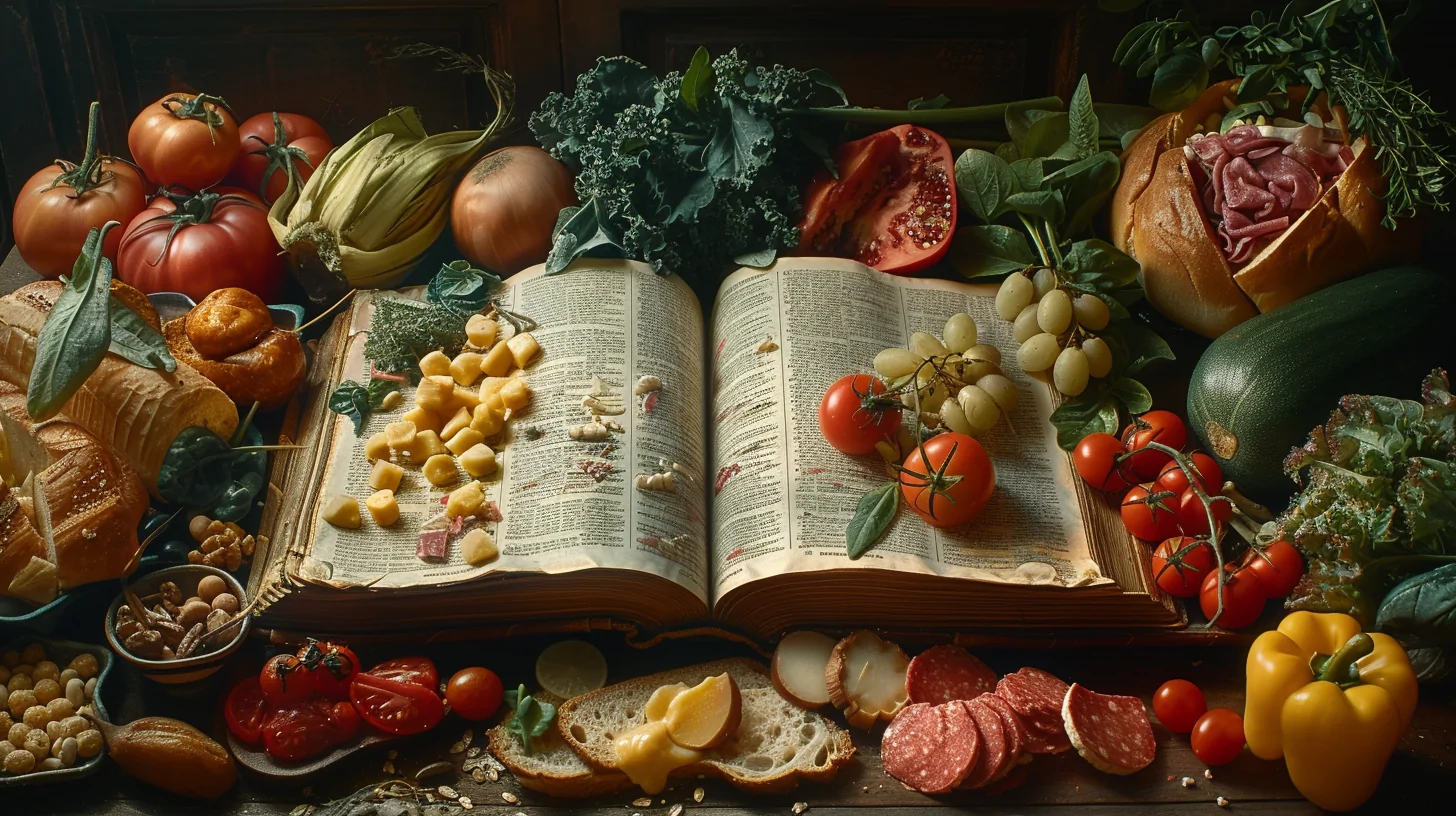
This lesson discusses the biblical concept of “figurative food” which represents the word of God. There are two types of spiritual food – God’s life-giving word which leads to eternal life, and Satan’s deceptive words which lead to spiritual death. Discernment is key to distinguishing between the two.
The lesson explains that just as physical food nourishes the body, God’s word nourishes the spirit and soul. However, the Bible warns of a coming famine of hearing God’s word (Amos 8:11), requiring discernment to recognize the true, life-giving spiritual food at the proper time (Matthew 24:45-47, Revelation 2:17).
Satan attempts to counterfeit God’s food by making his deceptive teachings appealing, as seen in the example of Eve being tempted by the forbidden fruit (Genesis 3:1-6). Careful listening and comparing teachings against Scripture is necessary to discern truth from lies (Job 34:3-4, Acts 17:11). The overarching message is the importance of feasting on God’s true word while rejecting Satan’s poisonous counterfeits through the exercise of spiritual discernment.
Secrets of Heaven: Figurative Food
What is a figurative food?
Food = The word
The seed represents the word of God. It also represents spiritual food that gives life. The parable shows how God’s word, when planted in a person’s heart, can grow and transform them. Just as food nourishes the body, God’s word nourishes the spirit when we read and apply it.
There are many parables in the Bible that illustrate this concept. We will explore several of them to understand the power of God’s word to change lives.
One aspect we must grasp is spiritual discernment – the ability to distinguish truth from error and recognize what teachings we should accept or reject. We especially need discernment regarding “food at the proper time” – timely spiritual nourishment that equips us for the challenges of these last days. Discerning the truth and appropriating God’s word is critical for living a life of vibrant faith.
In previous lessons, we studied the parables of the figurative tree and birds, which likely brought new insights. As we dive deeper into additional parables, their meaning and application will become clearer.
Analyzing the logic of these parables reveals a profound truth: the seed is sown in the field of a person’s heart with the intention that it will root itself deeply and transform them into its likeness. God desires to implant His seed within us so that we may be reborn in His image.
This rebirth is crucial as it aligns us more closely with God’s nature. We must beware of Satan’s efforts to undermine this process and nurture discernment to recognize life-giving spiritual food.
Interestingly, did you know that it is possible to experience being ‘born again’ multiple times?
Let’s take Adam for an example, he was originally formed from dust. But God breathed into his nostrils the breath of life and he became a living soul, a living being. However, after Adam ate the forbidden fruit from the tree of the knowledge of good and evil, God said to him “You will return to dust.”
Let’s also consider the example of Judas – one who walked with Jesus for 3 and a half years, only to end up betraying him in the end. Clearly, Judas went in the opposite direction from what would have been righteous.
In contrast, look at the example of the Apostle Paul. As a devout Pharisee prior to his conversion, Paul was zealous in keeping the Mosaic law. However, after encountering Jesus, Paul completely changed course – he was born again spiritually.
The key point is that one’s spiritual state is not fixed. Individuals can transition back and forth, based on their actions, experiences, and personal decisions.
Therefore, let’s not be complacent or presumptuous in our walk with God, resting on past laurels. Scripture contains many examples of those who wavered in their devotion to the Lord. Instead, let us determine to be steadfast in our faith, like a rock that cannot be moved.
Figurative Food
Main Reference
3 As Jesus was sitting on the Mount of Olives, the disciples came to him privately. “Tell us,” they said, “when will this happen, and what will be the sign of your coming and of the end of the age?”
7 Nation will rise against nation, and kingdom against kingdom. There will be famines and earthquakes in various places.
Matthew 24 is all about the end of the age. One really important thing to note about Matthew 24 is that there are many different perspectives on this chapter. Some say it has already been fulfilled, some say it hasn’t yet.
How can we know for sure whether or not it has been fully fulfilled?
Jesus’ disciples asked him about the signs of his coming – has Jesus come back yet?
If we say no, that means there are still aspects of Matthew 24 that need to be fulfilled. So don’t be confused by someone claiming it’s already fulfilled. We very much need to continue examining this chapter.
Another common perspective is that current wars are signs of Matthew 24’s prophecies unfolding. However, there have been so many wars, famines, earthquakes and plagues over the last 2000 years. If those were the signs, where is Jesus?
This suggests the signs cannot be literal current events, but rather are figurative in nature. We can’t look at news events and expect them to be definitive signs of Matthew 24 happening. Does this make sense why these were mentioned?
Going back 100 years, people thought World War I was the sign of Matthew 24. Life kept going on – it hasn’t happened yet. They thought the same of World War II.
So let’s understand prophecy must be interpreted figuratively and spiritually. What we see happening may not be real signs, so don’t be deceived.
Now, one sign Jesus did say will come – a famine. What does this famine mean? What does it signify that a famine will come at the second coming or end of the age?
Let’s also examine another promise Jesus made here…
45 “Who then is the faithful and wise servant, whom the master has put in charge of the servants in his household to give them their food at the proper time? 46 It will be good for that servant whose master finds him doing so when he returns. 47 Truly I tell you, he will put him in charge of all his possessions.
Jesus asks, “Who then is the faithful and wise servant?”
What will the faithful servant provide? Food at the proper time. We see here that while the master is away, he will return.
Let me clarify – the faithful servant is not Jesus. The master is Jesus. The faithful servant is someone who serves Jesus faithfully by providing for those in his household.
There is mention of a household with servants. This is an important promise Jesus makes, so let’s keep this context in mind.
Reminder:
Faithful wise servant ——> Food at the proper time ——–> Servants in house
To understand the notion of “food” here, which will shed light on this passage, let’s look at the story Jesus tells about his interaction with the tempter and what he asked him to do.
3 The tempter came to him and said, “If you are the Son of God, tell these stones to become bread.”
4 Jesus answered, “It is written: ‘Man shall not live on bread alone, but on every word that comes from the mouth of God.’”
When I look at Matthew 4, I always like to think of chapters in terms of themes, as it helps me categorize the Bible really well in my head.
So when I hear Matthew 4, I think of Jesus being tempted and beginning his ministry. But this is very early on, before Jesus really started to preach. He went into a time of fasting and prayer and training. But Satan came to tempt him. And the first thing Satan said was to turn these stones into bread, since Jesus had been fasting a long time and was most likely hungry.
How did Jesus rebut Satan’s temptation? What did he use? What did Jesus use to overcome Satan? The word…
He humbled you, causing you to hunger and then feeding you with manna, which neither you nor your ancestors had known, to teach you that man does not live on bread alone but on every word that comes from the mouth of the Lord.
.
If you’re unfamiliar with the Word, Satan will easily overpower you. You won’t be able to resist his manipulations.
However, because Jesus was intimately familiar with the Word and embodied its essence, He could effortlessly counter Satan’s attacks and temptations.
Let’s emulate Jesus’s example. Remember the key message of this verse: God intentionally allows us to experience hunger. But why would God do this?
He causes us to feel hunger so that we can learn a crucial lesson—we must rely on His words. His words are the true source of sustenance for our souls.
The physical sensation of hunger teaches us the spiritual need for nourishment that only God’s Word can satisfy.
Therefore, if someone neglects to read the Word, their spirit suffers from starvation. This neglect can lead to wondering why feelings of depression, anxiety, fear, stress, and so forth arise. It is because your spirit is famished—starving, indeed. Yet some may argue, ‘I don’t need to read the Bible. My faith is strong; I worship constantly.’
However, such a person remains spiritually malnourished, puzzled by their lack of fulfillment. Just as your physical body requires food, so does your spirit. Reflect on this past year: you have undoubtedly sustained your body—praise be to God. But have you also nourished your spirit?
For many of us, the answer is affirmative as we have delved into the scriptures.
1. Physical Characteristics and Types of Food
For since the creation of the world God’s invisible qualities—his eternal power and divine nature—have been clearly seen, being understood from what has been made, so that people are without excuse.
Always keep this verse in mind. God uses creation to explain.
Understanding the parables is crucial as they reveal God’s invisible qualities—attributes not readily observed or perceived by our senses, such as His eternal power and divine nature. These aspects of God, though invisible, can be discerned through His creations, which we are intimately familiar with.
Consider how well we know the workings of seeds, trees, and food. This knowledge of the physical world provides a foundation for comprehending spiritual truths. When God draws comparisons between Himself and these physical elements, our understanding of Him deepens. However, this recognition only occurs when we shift our focus onto these natural examples.
So who here has been reading verses and felt like you were reading them for the first time, even though you’ve read them hundreds of times before? It’s like this person or insight has always been there, but your attention wasn’t focused on it until now. God is turning your attention to something He had already mentioned thousands of years before. What an awesome experience!
So God uses creation to explain Himself.
What are some physical characteristics of food? Well, there’s one key thing about food:
There are two kinds of food: good (nutritious) and bad (unhealthy). I’m not referring to taste – this distinction is about the health impacts of different foods. What’s the difference between good and bad foods?
Good foods provide the nutrients needed to maintain health and vitality. Consuming them supports a healthy life. Bad foods lack essential nutrients or contain harmful substances. Eating too many unhealthy foods can contribute to weight gain, exhaustion, and other health issues over time. Ultimately, regularly choosing unhealthy foods can increase the risk of disease and earlier death.
We’ve all experienced the dilemma – why does unhealthy food often taste so good when it can negatively impact our health? The temptation is understandable. However, by focusing on adding more wholesome, nutritious options into our diets, we can still enjoy delicious food while caring for our health. Our choices about what we eat each day truly matter.
Good food is important for sustaining life because you can’t eat a salad once and expect to be okay for the rest of your life. You have to eat salad repeatedly, almost every day, so that your body functions properly.
It also takes discipline to eat well consistently. Unfortunately, our society makes it extremely difficult to eat healthy. They put everything that’s bad all over the place – you walk into a grocery store and it looks like an arcade in there. But anyway, that’s a side point.
So physical food comes in two types – good food and bad food. Spiritual food also has two kinds: good food that belongs to God and bad food that belongs to Satan.
God’s food leads to life, Satan’s food leads to death.
If we want to have spirits that are alive, we must exclusively eat God’s food. I mean that very intentionally – once you’ve identified a food as bad, rotten or diseased, one does not continue testing that food to see if their body can handle it. They stop eating it altogether. So when you find Satan’s food, you toss it in the trash. But sometimes this takes discipline too, especially if that food looks tempting. Satan likes to make that food extra tempting.
And it’s not as easy as it might seem to avoid Satan’s food – that’s why it’s dangerous and that’s why we need to discern.
So let’s break down:
2. God’s food
“Come, all you who are thirsty, come to the waters; and you who have no money,
come, buy and eat! Come, buy wine and milk without money and without cost.
2 Why spend money on what is not bread, and your labor on what does not satisfy?
Listen, listen to me, and eat what is good, and you will delight in the richest of fare.
3 Give ear and come to me; listen, that you may live.
I will make an everlasting covenant with you, my faithful love promised to David.
In the Book of Isaiah, Chapter 55, we encounter a profound prophecy. God speaks through the prophet Isaiah, extending an invitation: ‘Come, all who are thirsty.’ This echoes the words of Jesus in Matthew 5: ‘Blessed are those who hunger and thirst for righteousness.’ The call is to all who yearn for spiritual fulfillment: ‘Come to the waters.’ And notably, this invitation requires no currency; one can ‘buy’ without money and partake without cost.
Here we are urged to consider: why invest in what does not nourish, or toil for what fails to satisfy? God emphasizes the crucial action – to listen. To ‘buy’ is to listen attentively. By heeding His words, we find nourishment that delights the soul, as expressed in verse 3.
The message is clear: give your attention and draw near to God. It is through listening and absorbing His words that we find true delight.
Every time we come before God’s word, we should be filled and spiritually nourished, not leaving hungrier than when we arrived. Unfortunately that sometimes happens – the word is poorly presented, difficult to digest, or we are not ready for the “solid food” we need. But here, God invites us to feast on His word in a way that enlightens and satisfies our souls. May that be the case for all of us each time we come to feast on God’s word.
Reminder:
Listen (hear) ——-> Filled, delighted.
God desires us to listen and hear His words, leading to delight and fulfillment. Each time we engage with His Word, we should be filled and satisfied.
48 I am the bread of life. 49 Your ancestors ate the manna in the wilderness, yet they died. 50 But here is the bread that comes down from heaven, which anyone may eat and not die. 51 I am the living bread that came down from heaven. Whoever eats this bread will live forever. This bread is my flesh, which I will give for the life of the world.”
52 Then the Jews began to argue sharply among themselves, “How can this man give us his flesh to eat?”
53 Jesus said to them, “Very truly I tell you, unless you eat the flesh of the Son of Man and drink his blood, you have no life in you. 54 Whoever eats my flesh and drinks my blood has eternal life, and I will raise them up at the last day. 55 For my flesh is real food and my blood is real drink.
Imagine being at the synagogue where Jesus was teaching when he said this. People often like to feel that believing in Jesus would have been easy back then. “Oh, I definitely would have believed in Jesus if I lived at that time,” some say. But would you really? Consider what he just said: “Eat my flesh and drink my blood.” If this was the first time you heard this, you would think this man is mad, which is what they said. “How can this man give us his flesh to eat? What is he talking about? That’s nonsense!”
For me, that gives a glimpse into what it would have been like to be there at that time. Believing in Jesus 2,000 years ago would not have been easy or culturally accepted like it is now with over 2 billion Christians today. This kind of teaching would have gotten you stoned back then. It was a problem.
The challenge for the people of that era was to discern between literal and figurative language. Jesus’ body is not present for us to consume in a physical sense, and yet, His followers at the time struggled to make this distinction, leading to confusion and disputes among them.
So, we must ask, what does the ‘flesh and blood’ of Jesus represent? While one might think it refers to His words, let’s not rely solely on that interpretation. Instead, let’s explore what Jesus Himself has to say about it.
The Spirit gives life; the flesh counts for nothing. The words I have spoken to you—they are full of the Spirit and life.
The words I have spoken to you are the spirit and life that I promised. When I said, ‘I am the bread of life,’ and ‘I am the word,’ it meant that to ‘eat’ my words is to receive life—the very eternal life that I promised you.
‘Eat my words, and you will live,’ for my words are an extension of myself. They are akin to my body. Thus, when He broke bread and shared communion with His disciples, they truly grasped this concept; they understood the symbolic significance of the bread and the wine as representations.
Holding onto Jesus’s words is essential until their ultimate fulfillment in the kingdom of God—a topic we will delve into more deeply in a future lesson. Indeed, the ‘bread of life’ is both Jesus’s flesh and His words; they are one and the same. However, only a few people devoted enough time to Jesus to allow Him to fully explain this concept.
Let’s examine what happened with most people. If we turn to verse..
60 On hearing it, many of his disciples said, “This is a hard teaching. Who can accept it?”
As they heard this teaching, many disciples said, “This is difficult teaching to accept.” Aware that his disciples were complaining about this, Jesus said to them, “Does this teaching offend you? What if you were to see the Son of Man ascending to where he was before?
The Spirit gives life, while the flesh counts for nothing. The words I have spoken to you are spirit and they are life.” Yet some of you do not believe.” Indeed, Jesus had known from the beginning which ones did not have faith and who would betray him.
He went on to say, “This is why I told you that no one can come to me unless enabled by the Father.” From this time, many of his disciples turned back and no longer followed him. Remember when I said John chapter 6 was a defining moment? Jesus’ words called out the weak and uncommitted ones who were not wholeheartedly with him.
Faced with their departure, what did Jesus ask the twelve? “Are you also going to leave me?”
In John 6:68, Peter says “Lord, to whom shall we go? You have the words of eternal life.” Let’s follow Peter’s example. There is nowhere else for us to turn. No other word for us to receive.
This passage reveals why Jesus often said not to work for food that perishes. Physical food spoils and focusing solely on it causes us to miss what truly satisfies. Those absorbed only in working to eat to live to work risk living meaningless lives until they die. Ecclesiastes illustrates the emptiness of living for material things alone – reading it lends a different perspective on life. But Jesus invites us to instead invest ourselves in food that endures – his eternal words.
Yet there are times when fully immersing in God’s word becomes difficult, as prophecy foretells. Even so, Peter’s confession remains true – only Jesus has words of life. We would do well to echo his conviction, no matter the season.
Reminder:
Jesus —–> Bread of Life and Flesh and Blood ——-> Eternal Life
“The days are coming,” declares the Sovereign Lord, “when I will send a famine through the land— not a famine of food or a thirst for water, but a famine of hearing the words of the Lord.
God promises through the prophet Amos that “I will bring a famine on the land. But not a famine of food or drink. Meaning, not a physical famine. But a famine of hearing my words.”
This famine of the end times refers to a famine of hearing God’s words.
In other words, it will not be possible for a time to not only hear God’s words, but also to understand them. The Book of Amos was one of the last books written in the Old Testament, a couple hundred years before Jesus was born. There was a 400 year period between Malachi and Jesus where God said “Nothing new.”
For 400 years, God said nothing new. As Matthew 24 reminds us, Jesus also promised famines and plagues where nothing new was said for a long time.
So what do people tend to do when they don’t hear the words of the Lord? They tend to add their own thoughts to fill in the blanks, because even though they’re hearing nothing new from God, they are often still in a position where they have to say something. They have to say something like “I think…etc.” This ends up causing confusion.
Let’s revisit Matthew 24. Let’s examine these passages relating to our time and truly comprehend them. A famine was promised at the second coming in Matthew 24:7. However, verses 45-47 indicate that famine ends.
When we read about the “food at the proper time,” what does this mean? We already know the answer, though you may not have known the exact phrase.
Any ideas? “Food at the proper time” refers to the word of God being opened and explained at the appropriate time, allowing for understanding and application.
There is another prophecy in Revelation that speaks to this as well.
Whoever has ears, let them hear what the Spirit says to the churches. To the one who is victorious, I will give some of the hidden manna. I will also give that person a white stone with a new name written on it, known only to the one who receives it.
In this passage, Jesus promises a reward, referred to as “Hidden Manna,” to those who overcome. Manna, a type of bread provided by God to the Israelites during their desert journey after the Exodus, holds significance. The Hebrew name “Manna” reflects the Israelites’ initial uncertainty about its nature, as they questioned, “What is it?” upon seeing the white substance descend from heaven.
While Manna served as physical sustenance for the Israelites, Jesus draws a parallel in John chapter 6, highlighting that despite their consumption of Manna, their ancestors still faced mortality. However, Jesus offers a different kind of sustenance—His own bread—that promises eternal life, surpassing mere physical nourishment.
In Revelation, Jesus unveils the existence of hidden Manna, initially concealed during times of scarcity. However, this famine does not persist indefinitely, and at an opportune moment, the hidden Manna becomes revealed and bestowed upon the servants in the household. This food, provided at the proper time, refers to the same entities, and their unveiling brings glory to God.
Beyond the hidden Manna, the passage also acknowledges the presence of “bad food,” which is associated with Satan.
Reminder:
Food at the proper time (Mat 24:7, 45-47) = opened word
Hidden Manna (Revelation 2:17) = opened word
3. Satan’s Food
The food that looks good to eat but leads to death instead.
“‘Fallen! Fallen is Babylon the Great!’ She has become a dwelling for demons
and a haunt for every impure spirit, a haunt for every unclean bird, a haunt for every unclean and detestable animal.
3 For all the nations have drunk the maddening wine of her adulteries.
The kings of the earth committed adultery with her, and the merchants of the earth grew rich from her excessive luxuries.”
At the time of the Second Coming and the fulfillment of the Book of Revelation, a place called Babylon will emerge. Historically, Babylon was a nation that invaded Israel and no longer exists in the physical world.
However, God symbolically uses the term “Babylon” to represent a place that will arise and cause destruction. This place will be characterized by its destructive nature, and it will offer “wine of adultery” that intoxicates all nations.
It is crucial to exercise discernment during this time. If we fail to discern, we risk unknowingly consuming this intoxicating influence. A person who is drunk often denies their condition, insisting that they are fine and capable of driving. They may slur their words and try to convince others of their sobriety.
We must be able to discern and avoid becoming those who drink this intoxicating influence, believing that everything is okay. We may not recognize when it appears or what it truly is. Additionally, it is important to note that Satan’s food is intentionally difficult to discern.
Remember, discernment is key to avoiding the pitfalls that may arise during these significant times.
but you must not eat from the tree of the knowledge of good and evil, for when you eat from it you will certainly die.”
When the woman saw that the fruit of the tree was good for food and pleasing to the eye, and also desirable for gaining wisdom, she took some and ate it. She also gave some to her husband, who was with her, and he ate it.
Eve perceived the fruit as visually appealing and delectable.
Satan strategically presents his enticements in an alluring manner. He refrains from offering something repulsive, as no one intentionally consumes rotten food.
People are naturally drawn to visually appealing things. Therefore, if we consider Satan’s word as his food, it appears enticing and tempting to consume.
However, an individual lacking discernment, as we discussed earlier, faces challenges in distinguishing between good and evil. The ability to discern is crucial, as it can be a matter of life and death.
4. Discern Foods
3 For the ear tests words as the tongue tastes food.
4 Let us discern for ourselves what is right; let us learn together what is good.
For the ear tests words. As the tongue tastes food. Having sharp and refined ears is important to be able to discern. But one does not have sharp ears unless they’ve trained themselves. That’s what we’re doing now. Glory to God, we’re in training, let’s train.
Well at this time. So that when Satan presents his food to us, And it sounds good. We say, oh, I know what you’re trying to do. I will not be partaking. I’ll be fasting from that food like that. No, thanks Satan. So, let’s discern.
Let’s talk about some ideas of what Satan’s food is that can really start to be discerned in our daily lives.
Let’s make it tangible. But the way to discern is it sounds good, but it does not align with the truth. That’s how you can discern. So let’s start listening well, and checking with the scriptures and as I said before at the beginning, when we looked at distinguished and good and evil, you also should be doing this for me, too.
Go back through the scriptures again.
Memorization
“The days are coming,” declares the Sovereign Lord, “when I will send a famine through the land— not a famine of food or a thirst for water, but a famine of hearing the words of the Lord.
and please read John chapter 6.
Instructor Review
Summary
we learned about figurative food in the spiritual sense.
Food symbolizes the Word, and there are two types: God’s food and Satan’s food. Satan’s food is often presented in a tempting manner, leading people to consume it without realizing its true nature. However, let us emulate Jesus, who was so filled with the Word—because He is the Word—that He could easily resist Satan’s temptations.
We should strive to become one with the Word by internalizing it. There are two kinds of food: nourishing food that brings life and harmful food that leads to death. God’s food is ‘eaten’ by listening—by hearing—which naturally builds faith, right? As Romans 10:17 says, “faith comes by hearing.” Therefore, what should we hear? We need to hear and understand Jesus’s words. Understanding is akin to digesting; it allows the Word to become part of our spirit.
Yet, there are prophesied times of famine—a period when God seems silent and His promises remain unfulfilled. During such times, we await the fulfillment of His words. When they are fulfilled, timely spiritual nourishment is provided through the explanations of parables and prophecies—not just explanations but their actual manifestations: the who, what, when, where, why, and how. Secrets once concealed are now unveiled.
What does Satan do during these famines? He tries to cloud people’s minds with deceptive thoughts so that they are too ‘intoxicated’ to recognize they are being deceived and too ‘intoxicated’ to acknowledge the truth when it is presented.
Therefore, if we maintain discerning and well-trained ears, we can distinguish between different spiritual ‘foods.’ Let us be vigilant in our consumption, choosing to ‘eat’ wisely and avoid spiritual poison.
Review with the Evangelist
Review
Title of the Lesson: Figurative Food in the Bible
We need to understand what figurative food is when God speaks about spiritual food in parables. What is He referring to when He uses figurative food?
He’s referring to His Word. Why does God use food to describe His Word? Because we need His Word to live spiritually, just as we need physical food to live physically. We cannot survive without it.
Our spirits, to truly live, need spiritual food – the Word of God. Just as our bodies need good nutrition from food to be healthy, our spirits also need good spiritual nutrition from God’s Word to be healthy.
We learned about two kinds of spiritual food: God’s life-giving Word and Satan’s counterfeit words meant to deceive. Satan tries to imitate everything God does.
If we eat a lot of junk food, we feel terrible afterwards. It’s the same with our spirits when we consume false teaching – we become spiritually sick and unhealthy. So it’s vital that we discern what kind of spiritual food we are taking in.
How can we discern whether the spiritual food we are eating is from God or not? Job 34:2-4 says we need to listen carefully, just as we taste food with our tongues. We “taste” spiritual food with our ears, by carefully listening to discern whether it lines up with Scripture or not. Like the Bereans in Acts 17, we must examine the Scriptures to see if what we heard matches God’s Word. That is how we eat good spiritual food – through attentive listening and comparing to the Bible.
Review in Small Group
Review
Title: Secrets of Heaven – Figurative Food
Last class we learned about the parable of food, which represents the word of God. Food has both physical and spiritual meanings. Physically, there is healthy food that leads to life and unhealthy food that leads to death. Spiritually, God’s food leads to eternal life while Satan’s food leads to spiritual death.
God invites us to eat His nourishing food, as seen in Isaiah 55:1-3 where we are told to come eat. Jesus also calls himself the bread of life (John 6:48-55), meaning he is the ultimate spiritual food. We must discern between good and bad spiritual food and only partake at the proper time.
God teaches this parable because Amos 8:11 warns of a coming famine of hearing God’s word. So we must recognize good from evil to identify God’s life-giving word, the proper “food” we should eat (Revelations 2:17). Discernment helps us do this, as Job 34:3-4 explains.
We must be careful because Satan’s food appears good but contradicts God’s word with lies, as Genesis 3:1-6 warns. Satan deceives and makes his food look appealing, but it leads to death. We discern good from evil by listening closely and checking what we hear against Scripture, as the Bereans did (Acts 17:11).
Let’s Us Discern
Analysis of SCJ Lesson 18: “Secrets of Heaven – Figurative Food”
A Refutation Using “Testing Shincheonji’s Claims: Two Lenses, One Story”
Introduction: The Hunger That Never Satisfies
Imagine you’re at a restaurant, famished after a long day. The waiter brings you a beautifully plated meal—it looks perfect, smells delicious, and the presentation is impeccable. You take a bite, and it tastes wonderful. But strangely, after finishing the entire meal, you’re still hungry. In fact, you feel hungrier than before.
Confused, you mention this to the waiter. He nods knowingly. “That’s because you’ve been eating the wrong food your whole life. Your body doesn’t recognize real nourishment anymore. Most restaurants serve ‘food’ that looks and tastes like food, but it’s actually empty—spiritually empty. That’s why you’re still hungry.”
He leans in closer. “The food you’ve been eating all your life? It’s been slowly starving you. You just didn’t know it. But we have the real food here—the food that truly satisfies. The problem is, most people can’t recognize it. They’re so used to fake food that when they encounter real food, they don’t even know what they’re looking at.”
Now you’re anxious. Have you been eating the wrong food your entire life? Is that why you sometimes feel spiritually empty? The waiter continues: “We can teach you to recognize real food from fake food. But you have to stop eating at other restaurants. If you mix real food with fake food, the fake food will contaminate everything. You need to eat only here, where we serve the real food.”
Over the following weeks, you return to this restaurant exclusively. You stop eating anywhere else—not because the food here is particularly satisfying (you’re often still hungry), but because you’ve been convinced that everywhere else serves “fake food” that’s spiritually poisoning you. When friends invite you to other restaurants, you decline with concern: “Don’t you know that food is fake? It’s starving your spirit!”
This is what happens in SCJ Lesson 18.
The lesson appears to be a straightforward Bible study about “food” as a metaphor for God’s Word. The instructor walks students through passages where Jesus speaks of Himself as the “bread of life” and warns against working for “food that perishes.” Everything sounds biblical, spiritually nourishing, and doctrinally sound.
But beneath the surface, something else is happening. The lesson is constructing a framework that will eventually position SCJ’s teaching as the only “real food” while labeling all other Christian teaching—including that of students’ home churches—as “fake food” or “food that perishes.” By teaching that consuming the “wrong food” leads to spiritual starvation and death, the lesson creates fear that keeps students from engaging with any theological perspective outside SCJ.
This lesson sits at position 18 in the Introductory (Parables) Level—strategically placed after students have learned about “sealed” Scripture, trees, birds, and seeds. Students are now being taught about spiritual nourishment, but the criteria for what constitutes “good food” are being subtly redefined to serve SCJ’s agenda. By the time students realize where this teaching leads, they’ve already accepted the framework: that most Christian teaching is “bad food,” that their churches serve “food that perishes,” that leaving SCJ means spiritual starvation, and that only through SCJ can they receive the “food at the proper time” that Jesus promised.
Let’s examine how this lesson uses legitimate biblical teaching about spiritual nourishment to create an illegitimate system of spiritual dependency and isolation, and how the principles in “Testing Shincheonji’s Claims: Two Lenses, One Story” expose the manipulation.
Part 1: What SCJ Teaches in This Lesson
The Surface Teaching (What Students Hear)
The lesson presents what appears to be straightforward biblical teaching about food as a metaphor for God’s Word:
Review of Previous Parables:
- Seed = The Word (Luke 8:11)
- Field = A person’s heart (1 Corinthians 3:9), Church (Matthew 13:38)
- Tree = Spirit being born again through the seed of the word and Pastor
- Birds = Spirits (Matthew 3:16, Matthew 12:43-45)
Main Teaching on Figurative Food:
Physical Characteristics of Food:
- There are two kinds of food: good (nutritious) and bad (unhealthy)
- Good food provides nutrients needed for health and vitality
- Bad food lacks essential nutrients or contains harmful substances
- Good food must be consumed regularly, not just once
Spiritual Meaning of Food:
- Food = The Word (God’s Word)
- Just as physical bodies need food, spirits need spiritual food
- Neglecting to read God’s Word causes spiritual starvation
- Depression, anxiety, fear, and stress can result from spiritual malnourishment
Two Types of Spiritual Food:
God’s Food:
- Leads to life
- Isaiah 55:1-3: “Come, buy and eat… listen, and eat what is good”
- John 6:48-55: Jesus is the “bread of life”; His flesh and blood = His words
- John 6:63: “The words I have spoken to you—they are full of the Spirit and life”
- Provides eternal life
Satan’s Food:
- Leads to death
- Must be completely avoided once identified
- Looks tempting but is spiritually poisonous
- Requires discernment to recognize
Key Prophecies:
Matthew 24:3, 7: Jesus prophesied famines at the end of the age Matthew 24:45-47: A “faithful and wise servant” will give “food at the proper time” Amos 8:11: “A famine… not a famine of food or a thirst for water, but a famine of hearing the words of the Lord”
The Lesson’s Hope Statement: “Our Hope: To discern between food and eat the food at the proper time at the second coming!”
The Warning About Spiritual Regression: The lesson includes Matthew 12:43-45 (the parable of the unclean spirit returning with seven more spirits), warning that if someone begins learning “deeper truths” but stops, they’ll be “worse off after than when they were in the beginning.”
The Subtext (What’s Really Being Established)
Beneath this seemingly biblical teaching, several problematic foundations are being laid:
1. Creating Spiritual Hunger and Anxiety: The lesson creates profound anxiety about spiritual nourishment: Are you feeding your spirit? Are you spiritually starving without knowing it? Is your depression/anxiety due to spiritual malnourishment?
This anxiety will be resolved by staying in SCJ where students believe they’re receiving “real food.”
2. Positioning SCJ as the Source of “Food at the Proper Time”: The emphasis on Matthew 24:45-47 and the “faithful servant” giving “food at the proper time” prepares students to accept that SCJ has this special teaching. The implicit message: SCJ is providing the “food at the proper time” that Jesus prophesied.
3. Creating Fear of Spiritual Starvation: By teaching that there’s a “famine of hearing the words of the Lord” (Amos 8:11) and that most people are spiritually starving, the lesson creates fear: What if I’m in spiritual famine without knowing it? What if my church isn’t providing real spiritual food?
4. Establishing Dependency: The warning that stopping the study will make you “worse off than before” creates psychological dependency. Students feel they can’t leave without suffering spiritual consequences.
5. Preparing for Separation: By establishing that there’s “God’s food” (good) and “Satan’s food” (bad), and that “Satan’s food” must be completely avoided, the lesson prepares students to separate from any teaching outside SCJ—including their home churches.
6. Redefining “Spiritual Food”: While the lesson correctly identifies God’s Word as spiritual food, it’s preparing students to accept that only SCJ’s interpretation is the “real food” while other Christian teaching is “fake food” or “food that perishes.”
Part 2: Analysis Through “Testing Shincheonji’s Claims: Two Lenses, One Story”
Chapter 11-13: Information Control and the Verification Problem
Chapter 11 of “Testing Shincheonji’s Claims: Two Lenses, One Story” examines isolation strategies disguised as protection. This lesson demonstrates a sophisticated form of information control by teaching students to fear “bad food” (any teaching outside SCJ).
The Information Control in This Lesson:
The lesson teaches: “God’s food leads to life, Satan’s food leads to death. If we want to have spirits that are alive, we must exclusively eat God’s food… once you’ve identified a food as bad, rotten or diseased, one does not continue testing that food to see if their body can handle it. They stop eating it altogether.”
This creates a framework where:
- SCJ’s teaching = God’s food (leads to life)
- All other teaching = Satan’s food (leads to death)
- Testing or comparing = Dangerous contamination
The message is clear: Once SCJ tells you that other teaching is “Satan’s food,” you must avoid it completely. This prevents students from fact-checking SCJ’s claims against other Christian sources.
Chapter 13’s Verification Problem:
Chapter 13 addresses how to evaluate spiritual claims that cannot be independently verified. This lesson creates a verification problem: How can students objectively determine which teaching is “God’s food” and which is “Satan’s food”?
The lesson provides no objective criteria—only:
- God’s food “leads to life”
- Satan’s food “leads to death”
- You need “discernment” to recognize the difference
But how do students verify which is which? The lesson doesn’t say explicitly, but the implication is clear: SCJ will teach you to discern, and SCJ’s teaching is the “good food.”
Biblical Response:
1. The Bible encourages testing, not blind avoidance:
- Acts 17:11: “Now the Berean Jews were of more noble character than those in Thessalonica, for they received the message with great eagerness and examined the Scriptures every day to see if what Paul said was true.”
The Bereans didn’t avoid Paul’s teaching as potentially “bad food”—they tested it against Scripture. This is healthy discernment.
- 1 Thessalonians 5:21-22: “Test everything; hold fast what is good. Abstain from every form of evil.”
Paul encourages testing everything, not avoiding all teaching except one source.
- 1 John 4:1: “Dear friends, do not believe every spirit, but test the spirits to see whether they are from God, because many false prophets have gone out into the world.”
Testing requires engaging with teaching to evaluate it, not refusing to hear it at all.
2. The “food at the proper time” passage is about faithful stewardship, not special teaching:
The lesson heavily emphasizes Matthew 24:45-47: “Who then is the faithful and wise servant, whom the master has put in charge of the servants in his household to give them their food at the proper time?”
But context matters. Jesus is teaching about readiness for His return through a series of parables:
- Matthew 24:42: “Therefore keep watch, because you do not know on what day your Lord will come.”
- Matthew 24:44: “So you also must be ready, because the Son of Man will come at an hour when you do not expect him.”
Jesus then gives several parables about readiness:
- The faithful servant (24:45-51)
- The ten virgins (25:1-13)
- The talents (25:14-30)
- The sheep and goats (25:31-46)
The “faithful servant” parable is about all church leaders being faithful stewards who care for God’s people, not about one special person or organization at the Second Coming who has unique “food.” The contrast is between:
- Faithful servants: Those who care for God’s people faithfully while the master is away
- Wicked servants: Those who abuse their position, saying “My master is staying away a long time” and mistreating others (24:48-51)
This is a call to faithfulness for all Christian leaders, not a prophecy about one organization with special teaching at the Second Coming.
Moreover, Jesus’ very next parable (the ten virgins) warns about being ready with oil in your lamps—about personal preparedness, not about finding the one source of special teaching.
3. The Amos 8:11 “famine” was fulfilled, not future:
The lesson quotes Amos 8:11: “‘The days are coming,’ declares the Sovereign Lord, ‘when I will send a famine through the land—not a famine of food or a thirst for water, but a famine of hearing the words of the Lord.'”
The lesson presents this as a future prophecy about the Second Coming. But context and history show this was fulfilled:
Historical Context of Amos:
- Amos prophesied to the Northern Kingdom of Israel around 760 BC
- The prophecy warned of coming judgment for Israel’s sins
- The Northern Kingdom fell to Assyria in 722 BC
The “Famine” Fulfilled:
- After Israel’s fall, there was indeed a period when God’s prophetic word ceased
- The 400 years between Malachi and John the Baptist (the “intertestamental period”) was a time when “the word of the Lord was rare” (1 Samuel 3:1)
- This famine was broken when John the Baptist came, followed by Jesus
Jesus as the End of the Famine:
- Luke 4:18-19: Jesus read from Isaiah: “The Spirit of the Lord is on me, because he has anointed me to proclaim good news to the poor…”
- John 1:14: “The Word became flesh and made his dwelling among us”
- Hebrews 1:1-2: “In the past God spoke to our ancestors through the prophets at many times and in various ways, but in these last days he has spoken to us by his Son”
The “famine of hearing the words of the Lord” was ended by Jesus, who is the Word made flesh. To suggest we’re in another famine requiring SCJ’s special teaching misses that Jesus has already spoken God’s final word.
Chapter 18-20: Testing Authority and Creative Fulfillment
Chapter 18 of “Testing Shincheonji’s Claims” examines how to test claims of spiritual authority. This lesson makes implicit authority claims by positioning SCJ as having the “food at the proper time.”
The Authority Problem:
The lesson teaches that at the Second Coming, someone will give “food at the proper time” and that there’s a “famine of hearing the words of the Lord.” The implicit message: SCJ has this special teaching, making them the authoritative source of spiritual nourishment.
But how can students verify this claim? The lesson provides no methodology—only the assertion that there will be a famine and someone will provide food, and students need to discern who it is.
Chapter 19-20’s Response:
Chapter 19 discusses unfalsifiable claims. The lesson’s framework creates an unfalsifiable system:
- If you accept SCJ’s teaching → You’re eating “God’s food”
- If you question SCJ’s teaching → You’re resisting “real food” (like those who left Jesus in John 6)
- If you consult other sources → You’re eating “Satan’s food”
Chapter 20 warns about “creative fulfillment”—adding interpretive layers to Scripture that support predetermined conclusions. This lesson demonstrates that technique through its handling of the “food” metaphor and prophecies about famine.
Biblical Response to the John 6 Passage:
The lesson extensively uses John 6 (Jesus as the “bread of life”) to support its framework. But it misapplies the passage in several ways:
1. What Jesus actually meant by “eating His flesh”:
The lesson correctly identifies that Jesus’ “flesh and blood” represent His words (John 6:63). But it misses the deeper meaning:
- John 6:51: “I am the living bread that came down from heaven. Whoever eats this bread will live forever. This bread is my flesh, which I will give for the life of the world.”
Jesus is speaking about His sacrificial death. “This bread is my flesh, which I will give” points to the cross. To “eat His flesh and drink His blood” means to receive the benefits of His atoning sacrifice through faith.
- John 6:53-54: “Very truly I tell you, unless you eat the flesh of the Son of Man and drink his blood, you have no life in you. Whoever eats my flesh and drinks my blood has eternal life, and I will raise them up at the last day.”
This is about trusting in Christ’s death for salvation, not about consuming correct biblical interpretation.
2. Why many disciples left:
The lesson uses John 6:60-66 (many disciples leaving Jesus) to warn students not to leave SCJ’s teaching. But context shows why they left:
- John 6:60: “On hearing it, many of his disciples said, ‘This is a hard teaching. Who can accept it?'”
They left because they couldn’t accept that Jesus was claiming to be the source of eternal life through His sacrificial death. They were looking for a political messiah who would overthrow Rome, not a suffering servant who would die for sins.
- John 6:66: “From this time many of his disciples turned back and no longer followed him.”
They left because they rejected Jesus’ claim to be the Messiah, not because they found His teaching too difficult to understand intellectually.
Using this passage to warn SCJ students not to leave the organization is manipulation—it equates leaving SCJ with rejecting Jesus Himself.
3. Peter’s confession:
The lesson quotes Peter’s response: “Lord, to whom shall we go? You have the words of eternal life” (John 6:68).
But Peter was confessing faith in Jesus as a person, not in a particular interpretation or organization. Peter was saying: “You are the Christ, the Son of the living God” (Matthew 16:16). He wasn’t saying, “Your interpretation is the only correct one.”
The lesson subtly shifts Peter’s confession from faith in Christ to dependency on SCJ’s teaching.
Chapter 21-23: God’s Character and Sovereignty
Chapter 21 of “Testing Shincheonji’s Claims: Two Lenses, One Story” is titled “The Heart of God: When Love Refuses to Let Go.” This chapter examines whether God’s character is primarily about conditional acceptance (based on consuming the “right food”) or unconditional love (based on His grace).
The Character Problem in This Lesson:
The lesson presents God’s provision in a way that creates anxiety rather than confidence. Students are told:
“If someone neglects to read the Word, their spirit suffers from starvation. This neglect can lead to wondering why feelings of depression, anxiety, fear, stress, and so forth arise. It is because your spirit is famished—starving, indeed.”
While it’s true that neglecting Scripture isn’t spiritually healthy, the lesson creates a direct causation: depression/anxiety = spiritual starvation from not consuming enough “food” (SCJ’s teaching).
This is problematic for several reasons:
- It oversimplifies mental health: Depression and anxiety have complex causes (biological, psychological, circumstantial). While spiritual practices can help, suggesting that these conditions are simply due to not reading enough Scripture is pastorally harmful.
- It creates false guilt: Students who struggle with mental health issues may feel they’re not “eating” enough spiritual food, leading to shame and increased anxiety.
- It positions SCJ as the solution: The implicit message is that depression/anxiety can be resolved by consuming more “food” (SCJ’s teaching).
Chapter 21’s Biblical Response:
The chapter explains that God’s character is primarily defined by love and grace, not by performance-based acceptance:
1. God provides for His people:
- Matthew 6:25-26: “Therefore I tell you, do not worry about your life, what you will eat or drink; or about your body, what you will wear. Is not life more than food, and the body more than clothes? Look at the birds of the air; they do not sow or reap or store away in barns, and yet your heavenly Father feeds them. Are you not much more valuable than they?”
God promises to provide for His children—including spiritual nourishment. We don’t need to anxiously seek one special source of “food.”
- Philippians 4:19: “And my God will meet all your needs according to the riches of his glory in Christ Jesus.”
2. Jesus is the bread of life—not an organization:
- John 6:35: “Then Jesus declared, ‘I am the bread of life. Whoever comes to me will never go hungry, and whoever believes in me will never be thirsty.'”
Jesus Himself is the bread of life. Coming to Him through faith satisfies spiritual hunger—not consuming one organization’s interpretation.
- John 4:13-14: “Jesus answered, ‘Everyone who drinks this water will be thirsty again, but whoever drinks the water I give them will never thirst. Indeed, the water I give them will become in them a spring of water welling up to eternal life.'”
Jesus provides satisfaction that lasts, not temporary satisfaction requiring constant consumption of new teaching.
3. The Holy Spirit is our teacher:
- John 14:26: “But the Advocate, the Holy Spirit, whom the Father will send in my name, will teach you all things and will remind you of everything I have said to you.”
- 1 John 2:27: “As for you, the anointing you received from him remains in you, and you do not need anyone to teach you. But as his anointing teaches you about all things and as that anointing is real, not counterfeit—just as it has taught you, remain in him.”
Believers have the Holy Spirit as their teacher. While human teachers are valuable (Ephesians 4:11), believers aren’t dependent on one organization to provide spiritual nourishment.
Chapter 24-26: The Unified Biblical Narrative
Chapter 24-25 of “Testing Shincheonji’s Claims” (“The Scarlet Thread”) examines the Bible’s unified narrative centered on Christ’s redemptive work. This lesson demonstrates fragmentation by pulling “food” passages from multiple contexts without showing how they all point to the gospel.
The Fragmentation Problem:
The lesson jumps between:
- Matthew 4:3-4 (Man shall not live by bread alone)
- Deuteronomy 8:3 (God fed you with manna)
- Isaiah 55:1-3 (Come, buy and eat)
- John 6:48-55 (Jesus as bread of life)
- Matthew 24:45-47 (Food at the proper time)
- Amos 8:11 (Famine of hearing God’s words)
Each passage is examined to support the “good food vs. bad food” framework, but the lesson never shows how these passages fit into the Bible’s overarching story of redemption through Christ.
Chapter 26 (“Reading Revelation Like a First-Century Christian”) explains that prophetic imagery was meaningful to its original audience. The “food at the proper time” in Matthew 24 would have been understood as a call to faithful stewardship, not as a coded prophecy about the 21st century requiring SCJ’s interpretation.
Biblical Response:
1. The Bible’s unified message about spiritual nourishment:
When we read the Bible as a unified story, the spiritual food theme has a clear progression:
Old Testament: God provides for His people
- Exodus 16: God provided manna in the wilderness
- Deuteronomy 8:3: “He humbled you, causing you to hunger and then feeding you with manna… to teach you that man does not live on bread alone but on every word that comes from the mouth of the Lord”
- Psalm 34:8: “Taste and see that the Lord is good”
Prophetic Promise: God will provide abundant spiritual nourishment
- Isaiah 55:1-2: “Come, all you who are thirsty, come to the waters; and you who have no money, come, buy and eat!… Listen, listen to me, and eat what is good”
- Jeremiah 15:16: “When your words came, I ate them; they were my joy and my heart’s delight”
New Testament Fulfillment: Jesus is the bread of life
- John 6:35: “I am the bread of life. Whoever comes to me will never go hungry”
- John 6:51: “I am the living bread that came down from heaven. Whoever eats this bread will live forever”
- 1 Corinthians 10:3-4: “They all ate the same spiritual food and drank the same spiritual drink; for they drank from the spiritual rock that accompanied them, and that rock was Christ”
The Church’s Nourishment: Believers are fed through Word and Spirit
- 1 Peter 2:2-3: “Like newborn babies, crave pure spiritual milk, so that by it you may grow up in your salvation, now that you have tasted that the Lord is good”
- Hebrews 5:12-14: Progression from milk to solid food as believers mature
- Acts 2:42: “They devoted themselves to the apostles’ teaching and to fellowship, to the breaking of bread and to prayer”
The Unified Message:
- God provides for His people’s spiritual needs
- Jesus is the ultimate fulfillment—He is the bread of life
- Believers are nourished through Christ by the Spirit and through Scripture
- The church provides mutual nourishment through teaching, fellowship, and worship
- All believers have access to this nourishment through Christ
This is the Bible’s unified teaching about spiritual food. The lesson isn’t wrong that God’s Word is spiritual food, but it fragments these passages to build a dependency system rather than showing how they all point to Christ as the source of all spiritual nourishment.
2. The “manna” metaphor in Scripture:
The lesson references manna but doesn’t fully explain its significance:
Old Testament Manna:
- Exodus 16:4: “Then the Lord said to Moses, ‘I will rain down bread from heaven for you. The people are to go out each day and gather enough for that day'”
- Exodus 16:31: “The people of Israel called the bread manna. It was white like coriander seed and tasted like wafers made with honey”
Manna was:
- Provided daily by God
- Sufficient for each day’s needs
- A test of obedience (gathering only what was needed)
- A reminder of dependence on God
Jesus as the True Manna:
- John 6:31-32: “Our ancestors ate the manna in the wilderness; as it is written: ‘He gave them bread from heaven to eat.’ Jesus said to them, ‘Very truly I tell you, it is not Moses who has given you the bread from heaven, but it is my Father who gives you the true bread from heaven'”
- John 6:49-51: “Your ancestors ate the manna in the wilderness, yet they died. But here is the bread that comes down from heaven, which anyone may eat and not die. I am the living bread that came down from heaven. Whoever eats this bread will live forever”
Jesus is the fulfillment of the manna—the true bread from heaven. He provides eternal life, not just temporary sustenance. To suggest that SCJ’s teaching is the “true manna” or “food at the proper time” misses that Jesus Himself is the fulfillment.
Part 3: The Psychological Progression
The Indoctrination Process at Lesson 18
By Lesson 18, students have been in the Parables course for approximately 5-9 weeks. Let’s examine what’s happened psychologically:
1. Accumulated Framework:
Students have been taught:
- The Bible was “sealed” and requires special interpretation (Lessons 1-10)
- Seeds, trees, birds, fields all have symbolic meanings (Lessons 11-17)
- Now: Food = God’s Word, and there’s good food vs. bad food
Each lesson adds another layer to the interpretive framework, making it increasingly difficult to question the overall system.
2. Creating Spiritual Anxiety:
The lesson creates profound anxiety about spiritual nourishment:
- Am I spiritually starving without knowing it?
- Is my depression/anxiety due to not eating enough spiritual food?
- What if I’ve been eating Satan’s food my whole life?
This anxiety motivates students to seek the “real food” that SCJ promises to provide.
3. Fear of Spiritual Regression:
The warning from Matthew 12:43-45 (the unclean spirit returning with seven more) creates fear: “If someone begins learning deeper truths but stops, they’ll be worse off than before.”
This creates psychological dependency: students feel they can’t leave without suffering severe spiritual consequences.
4. Binary Thinking:
The lesson reinforces black-and-white categories:
- God’s food vs. Satan’s food
- Life vs. death
- Real food vs. fake food
- Spiritual nourishment vs. spiritual starvation
This binary thinking makes it psychologically difficult to recognize that most Christian teaching is faithful, Christ-centered nourishment that may differ on secondary issues.
5. Preparation for Isolation:
By establishing that “Satan’s food” must be completely avoided once identified, and that mixing good and bad food contaminates everything, the lesson prepares students to isolate from all teaching outside SCJ.
6. Identity Formation:
Students begin to see themselves as those who can “discern” real food from fake food, while everyone else (including their pastors and Christian friends) remains spiritually starving without knowing it. This creates spiritual elitism.
Biblical Response: The Gospel’s Nourishment
The contrast with the gospel’s message about spiritual nourishment is instructive:
The Gospel Provides Abundant Nourishment:
- John 10:10: “The thief comes only to steal and kill and destroy; I have come that they may have life, and have it to the full.”
Jesus provides abundant life, not scarcity and anxiety about finding the right “food.”
- Psalm 23:1: “The Lord is my shepherd, I lack nothing.”
God provides for His sheep. We don’t need to anxiously seek one special source.
The Gospel Produces Satisfaction:
- John 4:14: “Whoever drinks the water I give them will never thirst. Indeed, the water I give them will become in them a spring of water welling up to eternal life.”
Jesus provides lasting satisfaction, not temporary relief requiring constant consumption of new teaching.
- Psalm 107:9: “For he satisfies the thirsty and fills the hungry with good things.”
The Gospel Encourages Community Nourishment:
- Acts 2:42: “They devoted themselves to the apostles’ teaching and to fellowship, to the breaking of bread and to prayer.”
Believers are nourished in community, not through isolation from all other sources.
- Hebrews 10:24-25: “And let us consider how we may spur one another on toward love and good deeds, not giving up meeting together, as some are in the habit of doing, but encouraging one another”
Part 4: Distinguishing Biblical Truth from SCJ Framework
What’s Biblical in This Lesson?
It’s important to acknowledge what’s actually true and biblical:
1. God’s Word is spiritual food:
- Matthew 4:4: “Man shall not live on bread alone, but on every word that comes from the mouth of God”
- Jeremiah 15:16: “When your words came, I ate them; they were my joy and my heart’s delight”
This is biblical truth.
2. Jesus is the bread of life:
- John 6:35: “I am the bread of life. Whoever comes to me will never go hungry”
- John 6:51: “I am the living bread that came down from heaven”
This is orthodox Christian teaching.
3. We need regular spiritual nourishment:
- 1 Peter 2:2: “Like newborn babies, crave pure spiritual milk, so that by it you may grow up in your salvation”
- Hebrews 5:12-14: Believers should progress from milk to solid food
This is sound biblical principle.
4. There is false teaching to avoid:
- 2 Peter 2:1: “But there were also false prophets among the people, just as there will be false teachers among you”
- Galatians 1:8-9: “But even if we or an angel from heaven should preach a gospel other than the one we preached to you, let them be under God’s curse!”
This is biblical warning.
5. Neglecting Scripture isn’t spiritually healthy:
- Psalm 119:105: “Your word is a lamp for my feet, a light on my path”
- 2 Timothy 3:16-17: “All Scripture is God-breathed and is useful for teaching, rebuking, correcting and training in righteousness”
This is biblical truth.
What’s Uniquely SCJ?
The problematic elements are subtle but significant:
1. The claim that SCJ has “food at the proper time”:
- Biblical: Matthew 24:45-47 is about all Christian leaders being faithful stewards
- SCJ: This passage refers to SCJ’s special teaching at the Second Coming
2. The suggestion that there’s currently a “famine of hearing God’s words”:
- Biblical: Amos 8:11 was fulfilled historically; Jesus ended the famine as the Word made flesh
- SCJ: We’re currently in a famine requiring SCJ’s special teaching
3. The binary framework (all teaching is either God’s food or Satan’s food):
- Biblical: Test all teaching; some is sound, some is false, much is faithful but imperfect
- SCJ: All teaching is either completely good (SCJ) or completely bad (everyone else)
4. The fear-based isolation:
- Biblical: Test all teaching against Scripture (Acts 17:11)
- SCJ: Avoid all teaching outside SCJ because it’s “Satan’s food”
5. The warning that leaving will make you “worse off”:
- Biblical: Matthew 12:43-45 is about spiritual regression from rejecting truth
- SCJ: Used to create fear about leaving the organization
6. The suggestion that mental health issues = spiritual starvation:
- Biblical: Spiritual practices support overall wellbeing
- SCJ: Depression/anxiety are directly caused by not consuming enough “food” (SCJ’s teaching)
The Blurred Lines
The genius of this lesson is how it blurs biblical truth with SCJ framework:
Example 1: Spiritual Food
- Biblical truth: God’s Word is spiritual food that nourishes believers
- Biblical context: Jesus is the bread of life; believers are nourished through Christ by the Spirit and Scripture
- SCJ addition: Only SCJ’s interpretation is “real food”; other teaching is “Satan’s food”
- Result: Students accept isolation while thinking they’re consuming biblical truth
Example 2: Food at the Proper Time
- Biblical truth: Matthew 24:45-47 calls Christian leaders to faithful stewardship
- Biblical context: A parable about readiness for Christ’s return
- SCJ addition: This is a prophecy about SCJ providing special teaching at the Second Coming
- Result: Students accept SCJ’s authority while thinking they’re believing biblical prophecy
Example 3: Spiritual Hunger
- Biblical truth: Believers should hunger and thirst for righteousness (Matthew 5:6)
- Biblical context: This hunger is satisfied by coming to Christ (John 6:35)
- SCJ addition: This hunger can only be satisfied by SCJ’s teaching; other sources leave you starving
- Result: Students become dependent on SCJ while thinking they’re pursuing spiritual maturity
Part 5: The Larger Pattern
How This Lesson Fits SCJ’s Overall Strategy
This lesson is part of a carefully designed progression:
Lessons 1-15: Foundation
- Bible is “sealed” and requires special interpretation
- Most Christians don’t understand Scripture correctly
- Students need SCJ’s teaching to understand God’s Word
Lessons 16-18: Creating Dependency
- Lesson 16-17 (Tree/Birds): Spiritual beings need proper environment
- Lesson 18 (Food): Spiritual beings need proper nourishment (SCJ’s teaching)
Each lesson adds another layer of dependency on SCJ as the source of spiritual health.
Later Lessons: Solidifying the Framework
- Lesson 19-25: Further symbolic interpretation building SCJ’s framework
- Intermediate Level: Christianity has been “destroyed”; SCJ is the restoration
- Advanced Level: Lee Man-hee is the promised pastor; SCJ is the 144,000
Lesson 18’s Specific Role:
This lesson creates dependency and fear that keeps students in SCJ:
- “What if I’m spiritually starving without knowing it?”
- “What if leaving makes me worse off than before?”
- “I need to stay in SCJ where I’m receiving real food”
The fear of spiritual starvation becomes a psychological trap.
The Testimony Pattern
Chapter 14 of “Testing Shincheonji’s Claims” shares testimonies from former members. A common theme regarding the “food” teaching:
“I was taught that SCJ had ‘real food’ (God’s Word properly interpreted) while all other churches had ‘fake food’ or ‘food that perishes.’ I became afraid to listen to my pastor’s sermons or read Christian books because I thought they would spiritually poison me. I stopped going to my home church because I believed they weren’t providing real spiritual nourishment. The ‘food’ teaching had isolated me from the body of Christ and made me completely dependent on SCJ. It took me months after leaving to realize that my church had been faithfully teaching God’s Word all along—I had just been taught to see it as ‘fake food.'”
This lesson creates that dependency and isolation.
Conclusion: The Path Forward
For Those Currently in SCJ’s Course
If you’re reading this while taking SCJ’s Bible study, you’re at a critical juncture. The “food” teaching has likely created anxiety: Am I spiritually starving? Is my church providing real food? What if I’ve been eating Satan’s food my whole life?
But consider this: Jesus is the bread of life, not an organization.
- John 6:35: “Then Jesus declared, ‘I am the bread of life. Whoever comes to me will never go hungry, and whoever believes in me will never be thirsty.'”
If you have Jesus, you have the bread of life. You’re not spiritually starving if you’re in Christ.
Chapter 27 of “Testing Shincheonji’s Claims” (“Your Investigation Begins”) provides practical steps:
- Examine Matthew 24:45-47 in context: Read the entire chapter. Is this actually about one organization at the Second Coming, or about all Christian leaders being faithful?
- Study Amos 8:11 in context: Was this a future prophecy or was it fulfilled historically? Did Jesus end the “famine” as the Word made flesh?
- Test the “good food vs. bad food” framework: How can you objectively verify which teaching is which? Why are you discouraged from testing SCJ’s claims against other sources?
- Evaluate the fruit: Is this teaching producing confidence in Christ or anxiety about spiritual starvation?
- Visit closerlookinitiative.com/shincheonji-examination: This comprehensive resource provides detailed biblical refutation of SCJ’s claims about “food at the proper time.”
For Those Who Have Left
Chapter 28 of “Testing Shincheonji’s Claims” (“Hope and Help”) offers guidance for former members. Key points regarding the “food” teaching:
1. You weren’t spiritually starving: Your church was providing faithful biblical teaching. You were being nourished through Scripture, worship, fellowship, and the Holy Spirit’s work. SCJ taught you to see faithful teaching as “fake food,” but it was real nourishment all along.
2. Jesus is your bread of life: You don’t need one organization’s interpretation to be spiritually nourished. Jesus Himself is the bread of life, and you have Him through faith.
3. You can engage with Christian teaching again: Reading Christian books, listening to sermons, and learning from various teachers isn’t consuming “Satan’s food”—it’s receiving the nourishment God provides through His body, the church.
4. The “worse off” warning was manipulation: Matthew 12:43-45 is about spiritual regression from rejecting truth, not about leaving an organization. You’re not “worse off” for leaving SCJ—you’re free to be nourished by Christ through His church.
For the Christian Community
The existence of teachings like SCJ’s “food” doctrine should motivate us to:
1. Emphasize Christ as our source: Jesus is the bread of life. We’re nourished through Him, not through one organization’s interpretation.
2. Provide genuine nourishment: Ensure our churches are faithfully teaching Scripture, providing fellowship, and creating environments where believers can grow.
3. Address spiritual hunger honestly: Some people join SCJ because they’re genuinely hungry for deeper biblical teaching. We must provide solid food, not just milk.
4. Teach healthy discernment: Help believers learn to test teaching against Scripture without isolating from all other sources.
5. Respond with compassion: Those caught in or leaving SCJ need grace, not condemnation. They were seeking spiritual nourishment; they were simply misled about where to find it.
Final Thoughts
This lesson—Lesson 18 on figurative food—appears to be encouraging biblical teaching about spiritual nourishment through God’s Word. But beneath the surface, it’s constructing a dependency system that positions SCJ as the only source of “real food” while creating fear about all other Christian teaching.
The principles in “Testing Shincheonji’s Claims: Two Lenses, One Story” help us see through the deception:
- Chapter 11-13: Recognize isolation tactics and demand verifiable criteria
- Chapter 18-20: Test authority claims and watch for creative fulfillment
- Chapter 21-23: Remember God’s character is grace and abundance, not scarcity and anxiety
- Chapter 24-26: Keep the Bible’s unified message centered on Christ
- Chapter 27-28: Know that investigation is possible and healing is available
The true gospel is better than SCJ’s counterfeit:
- Jesus is the bread of life, not an organization
- Nourishment through Christ, not through one interpretation
- Abundance in God, not scarcity and anxiety
- Satisfaction in Christ, not constant hunger for new teaching
- Freedom in Christ, not bondage to fear
May those reading this find freedom in Christ, who said, “I am the bread of life. Whoever comes to me will never go hungry, and whoever believes in me will never be thirsty” (John 6:35)—not through one organization’s teaching, but through faith in Him.
Additional Resources
For more detailed refutation of Shincheonji’s specific doctrines and claims:
Visit: closerlookinitiative.com/shincheonji-examination
This comprehensive resource provides:
- Detailed analysis of SCJ’s “food” teaching and dependency tactics
- Biblical examination of Matthew 24:45-47 and Amos 8:11 in context
- Refutation of claims about “food at the proper time”
- Testimonies from former members about the isolation created by this teaching
- Guidance for families and counselors
- Resources for healthy spiritual nourishment in community
The examination is thorough, biblically grounded, and presented with grace—exactly what’s needed to counter SCJ’s sophisticated but deceptive system.
“I am the bread of life. Whoever comes to me will never go hungry, and whoever believes in me will never be thirsty.” — John 6:35
“Taste and see that the Lord is good; blessed is the one who takes refuge in him.” — Psalm 34:8
“The Lord is my shepherd, I lack nothing.” — Psalm 23:1
“And my God will meet all your needs according to the riches of his glory in Christ Jesus.” — Philippians 4:19
Outline
Unveiling the Secrets of Heaven: A Deep Dive into Figurative Food
I. Parable Foundations
- This section establishes the core symbolic language used throughout the lesson, equating biblical elements like seeds, fields, and trees to spiritual concepts such as the Word, the heart, and spiritual growth.
II. The Importance of Discernment
- This section emphasizes the need for spiritual discernment, particularly in recognizing “food at the proper time” – timely spiritual nourishment for the end times. It stresses the dynamic nature of spiritual growth, using biblical examples like Adam, Judas, and Paul to show that one’s spiritual state can change.
III. Understanding the Figurative Tree
- This section revisits the parable of the tree, representing the born-again inner being of a believer. It further explores the pastor’s role as the head of the church, impacting the spiritual direction and well-being of the congregation.
IV. Understanding the Figurative Birds
- This section delves into the parable of the birds, representing spirits that seek a dwelling place. It uses Matthew 12:43-45 to illustrate the transitory nature of spirits and the importance of staying rooted in truth to avoid spiritual emptiness and vulnerability to evil influences.
V. Unveiling the Figurative Food
- This section introduces the core concept of figurative food, using Matthew 24:3-7 to explain that the famine prophesied at the end times represents a famine of hearing and understanding God’s Word. It stresses the importance of interpreting prophecy figuratively and spiritually, not solely through literal current events.
VI. The Faithful Servant and Timely Nourishment
- This section examines Matthew 24:45-47, focusing on the faithful servant who provides “food at the proper time.” It connects this concept to Matthew 4:3-4, where Jesus counters temptation by emphasizing that true sustenance comes from God’s Word, not physical bread alone.
VII. God’s Intentional Hunger
- This section explores Deuteronomy 8:3, highlighting God’s intention in allowing us to experience hunger – both physical and spiritual – to teach us reliance on His Word as the ultimate source of nourishment. It emphasizes the consequences of neglecting God’s Word, leading to spiritual starvation and various negative emotional states.
VIII. Physical and Spiritual Nourishment
- This section uses Romans 1:20 to establish the connection between God’s creation and our understanding of His invisible qualities. It argues that our familiarity with physical food, with its categories of good and bad, helps us grasp the spiritual parallel of God’s nourishing Word versus Satan’s deceptive words.
IX. God’s Life-Giving Food
- This section explores passages like Isaiah 55:1-3 and John 6:48-55 to showcase God’s invitation to feast on His Word, likening it to life-giving water, bread, and even Jesus’s flesh and blood. It emphasizes the importance of internalizing God’s Word, understanding its meaning, and allowing it to nourish our spirits.
X. The Bread of Life
- This section dives deeper into John 6, analyzing the disciples’ reactions to Jesus’s teachings about being the “bread of life.” It highlights the importance of holding onto Jesus’s words and recognizing that they, along with His sacrifice, provide eternal life.
XI. The Famine of Hearing God’s Word
- This section examines Amos 8:11, reinforcing the prophecy of a famine where God’s Word becomes scarce. It links this to the potential for confusion and the rise of false teachings when people try to fill the void left by the absence of clear, authoritative truth from God.
XII. The Hidden Manna
- This section examines Revelation 2:17, revealing the promise of “hidden manna” for those who overcome. It connects this hidden manna to the opening and understanding of God’s Word at the proper time, providing the necessary spiritual nourishment during a time of spiritual famine.
XIII. Satan’s Deceptive Food
- This section introduces the concept of Satan’s food, drawing a parallel to the forbidden fruit in Genesis 2:17 and 3:6. It warns that Satan’s offerings are often enticing and appealing, disguised to deceive those lacking discernment.
XIV. Discerning the Food
- This section uses Job 34:3-4 to emphasize the importance of training our spiritual ears to discern between God’s truth and Satan’s lies. It calls for active engagement with Scripture, comparing what we hear to the truth of God’s Word, much like the Bereans in Acts 17.
XV. Summary and Review
- This final section provides a concise recap of the key lessons, emphasizing the symbolism of food as representing God’s Word. It reiterates the importance of choosing life-giving spiritual nourishment over deceptive teachings, cultivating discernment through careful listening and biblical comparison. It ends by urging continued study and reflection on these crucial concepts.
A Study Guide
Secrets of Heaven: Figurative Food Study Guide
Quiz
- What does figurative food represent in the Bible?
- According to the study, what are the two main types of spiritual food and what are their effects?
- In Matthew 4:3-4, what does Satan tempt Jesus with and how does Jesus respond? What does this teach us about spiritual nourishment?
- Why does God allow us to experience spiritual hunger?
- What is the meaning of “eating the flesh and blood” of Jesus according to John 6:63?
- Explain the significance of the “hidden manna” mentioned in Revelation 2:17.
- What is the spiritual significance of Babylon as described in Revelation 18:2-3?
- How does Satan make his “food” appealing?
- What is the primary way we can discern between good and bad spiritual food?
- Why is it especially important to develop discernment during times of spiritual famine?
Quiz Answer Key
- Figurative food in the Bible represents God’s word.
- The two main types of spiritual food are God’s word, which brings eternal life, and Satan’s counterfeit words, which lead to spiritual death.
- Satan tempts Jesus to turn stones into bread while fasting. Jesus responds by quoting Deuteronomy 8:3, stating that man lives not by bread alone but by every word from God’s mouth. This teaches us that God’s word is the true source of spiritual sustenance.
- God allows us to experience spiritual hunger so we learn to rely on His words for true nourishment.
- “Eating the flesh and blood” of Jesus means internalizing and living by his words, which are spirit and life.
- The “hidden manna” symbolizes the revealed word of God, unveiled at the proper time to nourish and strengthen believers. It represents the deeper understanding of God’s word that becomes available during times of spiritual awakening.
- Babylon represents a place of spiritual corruption and deception that will lead people astray with false teachings and enticements.
- Satan makes his “food” appealing by presenting it in a way that seems good and desirable, often appealing to human pride, desires, or fears. It’s often disguised as truth or wisdom.
- The primary way to discern between good and bad spiritual food is by carefully listening and comparing what we hear to the truth of Scripture.
- Discernment is especially important during times of spiritual famine because it helps us recognize and avoid Satan’s deceptive teachings, which become more prevalent when God’s word is scarce.
Additional Questions
1. What is the true meaning of figurative food? – Food = word (Matthew 4:3-4, Deteronemy 8:3)
2. What are the 2 types of foods and their effects on us?
– God’s food —> Life
– Satan’s food —> death
3. How can you discern foods? – Ear tests words (Job 34:3-4) and check scriptures (Acts 17:11)
Glossary of Key Terms
- Figurative Food: In the context of this study, it symbolizes God’s word and spiritual nourishment.
- Discernment: The ability to distinguish between truth and falsehood, particularly in spiritual matters, recognizing what teachings and influences to accept or reject.
- Spiritual Hunger: A state of longing for spiritual truth and nourishment from God’s word.
- Hidden Manna: The revealed word of God, made available at the proper time to provide spiritual nourishment and understanding.
- Babylon: In the study, it represents a place or system of spiritual corruption and deception that will lead people astray with false teachings.
- Satan’s Food: False teachings, deceptive philosophies, and worldly influences that lead to spiritual death.
- Food at the Proper Time: The timely revelation and understanding of God’s word, providing nourishment and guidance when needed.
- Eating God’s Word: Internalizing and living by the teachings and principles found in Scripture.
- Spiritual Famine: A time when God’s word becomes scarce, and false teachings become more prevalent.
Breakdown
Timeline of Events:
This lesson does not provide a chronological timeline of events. Instead, it focuses on explaining biblical parables and prophecies related to spiritual nourishment and discernment, particularly in the context of the end times.
Cast of Characters:
1. Jesus Christ: The central figure of Christianity, referred to as the “Son of God” and “Master.” He is the source of “living bread” and “words of eternal life.”
- Key Teachings:Emphasizes the importance of spiritual nourishment over physical food.
- Declares Himself as the “bread of life,” signifying His words and sacrifice as the source of eternal life.
- Promises the provision of “food at the proper time” for His faithful servants.
- Warns about false teachings and the need for discernment.
2. Satan: The adversary of God and humanity, also known as the “tempter.” He offers deceptive teachings that appear enticing but lead to spiritual death.
- Key Actions:Tempts Jesus to turn stones into bread, focusing on physical needs over spiritual ones.
- Presents his teachings in a visually appealing and tempting manner.
- Works to cloud people’s minds with deceptive thoughts during times of spiritual famine.
3. God the Father: The ultimate authority and source of truth. He provides spiritual nourishment through His Word and guides His people through prophets.
- Key Actions:Sends prophets to warn about future events, including spiritual famine.
- Provides “hidden manna” as spiritual sustenance for those who overcome.
- Uses creation to reveal His invisible qualities.
4. Apostle Paul: A devout Pharisee who underwent a radical conversion and became a dedicated follower of Jesus. His life exemplifies the transformative power of being “born again.”
- Key Significance:Illustrates the concept of spiritual rebirth and the possibility of transitioning between spiritual states.
- Demonstrates the impact of encountering Jesus and the subsequent change in life direction.
5. Judas: One of Jesus’ twelve disciples who ultimately betrayed him.
- Key Significance:Serves as a warning against complacency and the potential for backsliding in faith.
- Highlights the importance of steadfastness and unwavering devotion to God.
6. Adam: The first human created by God, formed from dust and given the breath of life. His disobedience led to spiritual and physical death.
- Key Significance:Represents the initial state of humanity before sin entered the world.
- Illustrates the consequences of rejecting God’s commands and choosing disobedience.
7. The Faithful Servant: An individual entrusted with the responsibility of providing spiritual nourishment (“food at the proper time”) to fellow believers.
- Key Role:Represents those who diligently serve God and care for the spiritual needs of others.
- Emphasizes the importance of faithfully stewarding God’s resources and teachings.
8. The Israelites: God’s chosen people who received physical manna during their journey through the wilderness.
- Key Significance:Illustrate the need for both physical and spiritual sustenance.
- Provide a historical context for understanding the concept of “hidden manna” as revealed in Revelation.
9. The Bereans: Residents of Berea known for their diligent study of Scripture to verify the teachings they received.
- Key Significance:Emphasize the importance of critically examining teachings and comparing them to the Bible.
- Serve as a model for engaging with God’s Word and seeking truth.
10. Prophets (Amos, Isaiah): Messengers chosen by God to communicate His will and pronounce future events.
- Key Roles:Deliver warnings about upcoming spiritual famine and the need for discernment.
- Convey God’s invitation to receive His nourishing words and find spiritual satisfaction.
11. Eve: The first woman created by God, deceived by Satan into disobeying God’s command.
- Key Significance:Highlights the deceptive nature of sin and its alluring appearance.
- Illustrates the consequences of failing to discern between good and evil.
This cast of characters represents a diverse group of individuals who play significant roles in the biblical narrative. They illustrate the complexities of faith, the importance of spiritual nourishment, the dangers of deception, and the transformative power of God’s Word.
Overview
Overview: Figurative Food in the Bible
Main Theme: This document explores the concept of “figurative food” in the Bible, using the analogy of food to represent the Word of God. It emphasizes the importance of discerning between God’s life-giving Word and Satan’s deceptive words, particularly during times of spiritual famine.
Key Ideas and Facts:
1. Figurative Food as the Word of God:
- The lesson establishes the core analogy: food represents the Word of God, essential for spiritual nourishment and growth.
- “Food = The word. The seed represents the word of God. It also represents spiritual food that gives life.”
- “Man shall not live on bread alone, but on every word that comes from the mouth of God.” (Matthew 4:4)
2. Two Types of Spiritual Food:
- The lesson highlights the existence of two types of spiritual food: God’s nourishing Word leading to eternal life and Satan’s counterfeit words leading to spiritual death.
- God’s Food:
- “Give ear and come to me; listen, that you may live.” (Isaiah 55:3)
- “I am the bread of life… Whoever eats this bread will live forever.” (John 6:48, 51)
- “The words I have spoken to you—they are full of the Spirit and life.” (John 6:63)
- Satan’s Food:
- “For all the nations have drunk the maddening wine of her adulteries.” (Revelation 18:3)
- “[The fruit] was good for food and pleasing to the eye, and also desirable for gaining wisdom…” (Genesis 3:6)
3. Spiritual Famine and the Need for Discernment:
- The lesson underscores the prophecy of a spiritual famine, a time when hearing and understanding God’s Word becomes difficult.
- “The days are coming…when I will send a famine through the land— not a famine of food or a thirst for water, but a famine of hearing the words of the Lord.” (Amos 8:11)
- This famine necessitates discernment – the ability to distinguish between truth and error.
- “For the ear tests words as the tongue tastes food. Let us discern for ourselves what is right; let us learn together what is good.” (Job 34:3-4)
4. The Importance of Proper Timing and Revelation:
- The lesson emphasizes the concept of “food at the proper time” and “hidden manna” referring to the revelation and understanding of God’s Word at the appropriate time.
- “Who then is the faithful and wise servant, whom the master has put in charge of the servants in his household to give them their food at the proper time?” (Matthew 24:45)
- “To the one who is victorious, I will give some of the hidden manna.” (Revelation 2:17)
5. Practical Application:
- The lesson encourages active engagement with the Word of God, comparing what is heard with Scripture (like the Bereans in Acts 17:11), and developing discerning “ears” to identify and reject Satan’s deceptive words.
Quotes:
- “God uses creation to explain.” (Referring to the use of parables and analogies)
- “God intentionally allows us to experience hunger…He causes us to feel hunger so that we can learn a crucial lesson—we must rely on His words.”
- “Satan’s food is intentionally difficult to discern.”
- “The ‘bread of life’ is both Jesus’s flesh and His words; they are one and the same.”
Conclusion:
This lesson presents a compelling case for understanding the Word of God as vital spiritual nourishment. It highlights the importance of discernment, especially in times of spiritual famine, and encourages active engagement with Scripture to distinguish between life-giving truth and deceptive falsehoods.
Q&A
Q&A: Figurative Food in the Bible
What does “figurative food” mean in the Bible?
“Figurative food” refers to the Word of God. It’s called “figurative” because it’s not literal food we eat, but spiritual nourishment we receive through reading, hearing, and understanding God’s Word. Just as our bodies need physical food to survive and thrive, our spirits need the Word of God for spiritual sustenance and growth.
Why does God use the analogy of food to describe His Word?
God uses the analogy of food because it’s something we can easily relate to. We understand the importance of food for physical life, and God wants us to grasp the vital role His Word plays in our spiritual lives. Just as we need to eat regularly to stay healthy, we also need to consistently engage with God’s Word for spiritual well-being.
What are the two types of spiritual food mentioned in the Bible?
The Bible talks about two types of spiritual food:
- God’s Food: This is the true, nourishing food that leads to eternal life. It’s represented by Jesus, who calls Himself the “Bread of Life” (John 6:48-55). God’s Word, when understood and applied, brings life, wisdom, and spiritual growth.
- Satan’s Food: This is the counterfeit food that looks appealing but is actually poisonous. It represents false teachings, lies, and deceptive philosophies that lead to spiritual death. Satan disguises his “food” to make it tempting, but it ultimately harms us.
How can we discern between God’s food and Satan’s food?
Discernment is key to recognizing the difference between true and false spiritual food. Here are some ways to develop discernment:
- Study the Bible: Become familiar with God’s Word so you can identify teachings that align with it.
- Listen Carefully: Pay attention to what you hear and evaluate it against Scriptural truth.
- Test the Spirits: 1 John 4:1 encourages us to “test the spirits” to see if they are from God. This means examining teachings and ideas to see if they are consistent with the character and teachings of God revealed in the Bible.
What is the “famine of hearing the words of the Lord”?
Amos 8:11 prophesies a time when there will be a “famine of hearing the words of the Lord.” This refers to a time of spiritual drought where people will have limited access to or understanding of God’s Word. During this famine, it will be crucial to hold onto the truth we already know and to be vigilant in discerning false teachings.
What is the “hidden manna” in Revelation 2:17?
The “hidden manna” represents the deeper revelation and understanding of God’s Word that will be revealed to those who overcome during times of spiritual famine. It’s the spiritual food that sustains and nourishes us through difficult times.
What is the significance of Jesus calling Himself the “Bread of Life”?
Jesus calls Himself the “Bread of Life” to emphasize that He is the ultimate source of spiritual sustenance. Just as physical bread nourishes our bodies, Jesus nourishes our souls. By accepting Him and His teachings, we receive the spiritual nourishment we need for eternal life.
How can we apply the concept of “figurative food” to our daily lives?
- Make a habit of reading and studying God’s Word. Just as we need to eat physical food regularly, we need to consistently engage with the Bible.
- Be careful what you “feed” your spirit. Be discerning about the teachings you accept and the media you consume.
- Share the “bread of life” with others. Tell others about Jesus and the life-giving truth found in His Word.