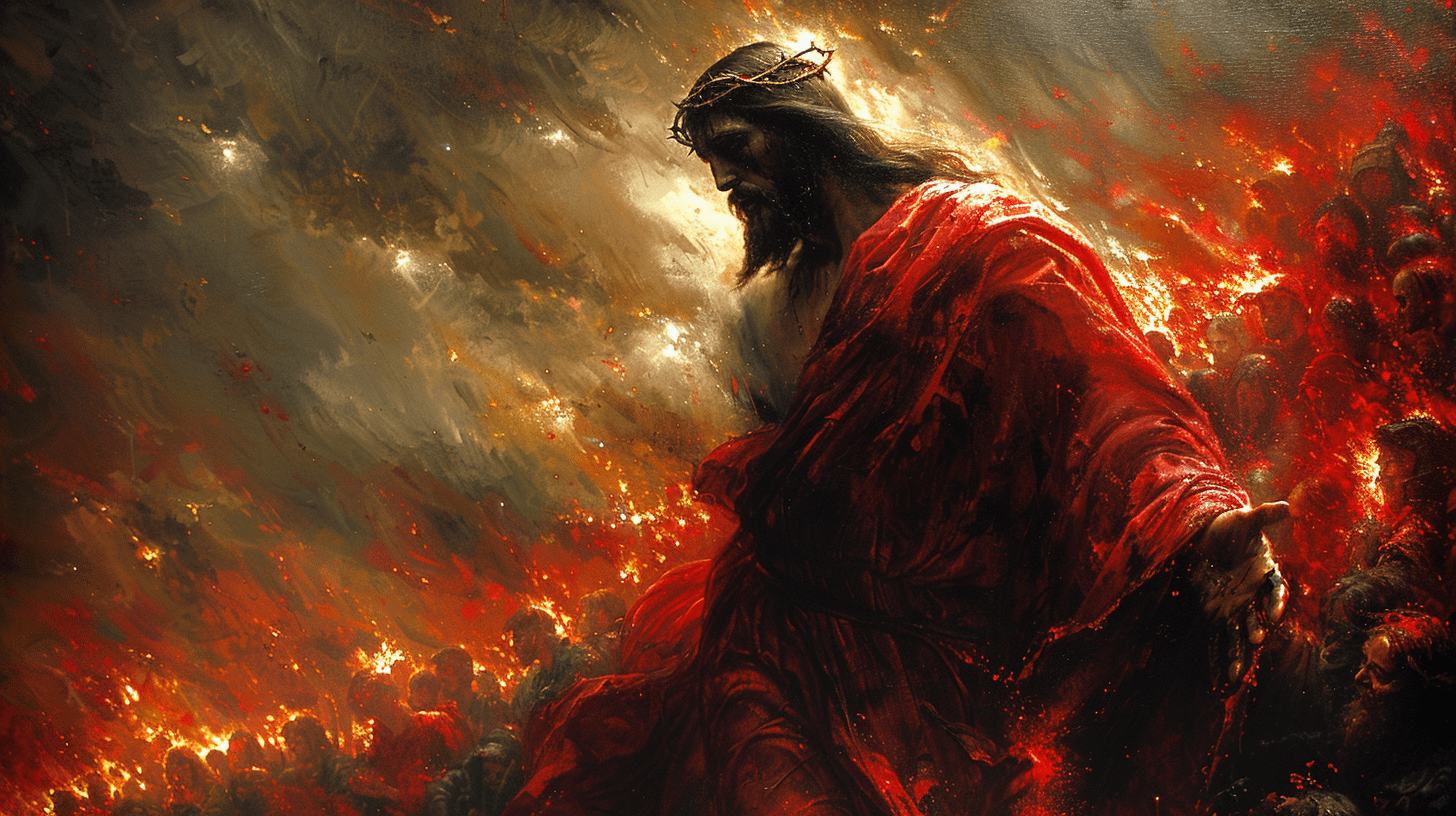
[Lesson 53] Figurative Grave and Resurrection

by ichthus

This is Part 2 of a lesson exploring the figurative meanings of breath, death, grave, and resurrection. It reviews the previous lesson’s points about breath representing the word of life, and death representing the state of not having that word.

The main focus is on the figurative meanings of grave and resurrection. A grave represents an organization of false truth where the spiritually dead are gathered. Jesus referred to the Pharisees and teachers of the law as “whitewashed tombs” outwardly appearing righteous but inwardly full of dead men’s bones and uncleanness.

Resurrection represents a spirit coming back to life by receiving the word of life, coming out of the grave of false teachings. The lesson examines Old Testament prophecies like Ezekiel’s vision of the valley of dry bones, and how Jesus fulfilled them by giving the word that resurrected those who accepted it at his first coming.

It then looks at prophecies in Revelation about the need for a resurrection and coming out from the false Babylon at the time of the Second Coming, when the sealed words will be opened again to many peoples, nations and languages. The lesson emphasizes the urgency of receiving this word and coming out of spiritual graves of false teachings.


Study Guide SCJ Bible Study

Shincheonji holds distinct theological views that differ from mainstream Christian denominations, yet it also shares some common teachings. This overlap can sometimes blur the lines between their beliefs and those of traditional Christianity. Therefore, it is essential to exercise critical thinking and discernment to differentiate between these shared elements and the unique doctrines they present.

While their interpretations warrant careful examination through a critical and biblical lens, it is equally important to approach these matters with an open yet discerning mindset.

The following notes were documented in person during Shincheonji’s 9-month Bible Study Seminar. They provide insight into the organization’s approach to introducing and explaining its beliefs to potential new members, often referred to as the ‘harvesting and sealing.’ This process is described as being ‘born again’ or ‘born of God’s seed,’ which involves uprooting the old beliefs and replanting new ones. This uprooting and replanting must occur continuously. By examining this process, we can gain a better understanding of the mindset and beliefs held by Shincheonji members.

Figurative meanings:

Grave: Organization of False Truth

Resurrection: Spirit living again through the word of life

Prophecy can also mean preach or to speak | Ezekiel 37:4

Old Testament Prophecy

Dry Bones  = People of Israel.  These were individuals who once lived in the Promised Land but had long since become dead, both physically and spiritually. | Exekiel 37:11-14

Review with the Evangelist

Memorization

John 6:63

The Spirit gives life; the flesh counts for nothing. The words I have spoken to you—they are full of the Spirit and life.


Yeast of Heaven

We must understand and believe 100%, to receive Heaven and Eternal Life. Understanding is the same as believing. The more you understand, the more you believe. If you do not understand all you see is the flesh. But it is God, Jesus and the heavenly hosts doing the work. Instead of seeing a Pastor, we should discern and see the spirit at work


Our Hope: To come out of graves and resurrection at the time of the second coming!


Secrets of Heaven Figurative Breath, Death, Grave and Resurrection Part Two

I hope everyone is eager to delve into the word of God today. We will be exploring part two of what we learned in the previous lesson, bringing this study to a conclusion so that we can fully comprehend the current state of the world and what actions we need to take in our time.

Previous Lesson Review

Review

In the previous lesson, we discussed breath and death. We talked about how the breath figuratively represents the word of life, and how death represents the state of not having the word of life. However, now we will be discussing the grave and resurrection.


Let’s take a moment to write down our understanding of what the grave is, and what resurrection is, in a figurative or spiritual sense. What is a spiritual grave, and what is spiritual resurrection?


Grave: A place where people who don’t have the word of life gather, representing an organization of false truth. A place where many of the spiritually dead are buried.


Resurrection: A spirit that is now living again because it has received the word of life. Resurrection is a spirit coming back to life through the word of life, a spirit that has come out of a grave.


Keep this understanding in mind. Let’s read our hope for today: To come out of graves and resurrect at the time of the second coming. May this be the case for all of us.


Is this something we can do today, or do we have to wait? Ponder on this.


In the previous lesson, we looked at the breath, right? The breath is the word of life, and death is the state of not having the word of life. Jesus spoke the words of life to many people, but only those who heard and accepted the words of Jesus came to life again.


Like Jesus’s 12 disciples, when Jesus said, “You are already clean because of the words I have spoken to you,” or “Those who hear my words have crossed over from death to life,” or “For I gave them the words that you gave me, and they accepted them. They believed in the one that you had sent.”


Those were the people who came to life with that word of life. But everyone else who was already dead remained dead. So, just like at the first coming, it was possible to be physically alive but spiritually dead.


It is also possible at the time of the second coming to be physically alive but spiritually dead. And by now, we should have reached a point of understanding and maturity where we don’t simply equate believer with alive and non-believer with dead. Hopefully, we’ve left those thoughts in the past, now that we’ve understood the open word a little bit more.


Both the living and the dead, at the time of the first coming, believed in God was not the standard for being alive or dead. The standard was whether or not someone believed in the life that had been sent by God.


That was the difference between the living and the dead then. Both were believers. This is why Jesus said to one of those disciples in Matthew 8, “Let the dead, who were most likely Jewish people, bury their own dead.”


Stay with me. Stay with life. If you leave me, you will die spiritually.


So this is really important, and we should be keeping these things in mind for our time today. No more believer, non-believer. That’s a milk thought, a milk mindset. It’s believers that need to understand this word more. Okay?


About the Test

I want to share my best study tips for the test. These tips have helped me through many tests, and I hope they will assist you as well.


1. My first tip for tackling the test is quiz, quiz, quiz.

Quiz yourself repeatedly. Don’t wait for us to conduct an official quiz in the class. You should be quizzing yourself frequently and consistently.

How do you conduct a quiz? Write down the questions on a blank sheet of paper and then answer them. Alternatively, have the questions written on a separate piece of paper, allowing you to take as many quizzes as you desire.


2. So, quiz, quiz, quiz. Quiz yourself on five questions at a time.

This approach reduces the mental load that quizzes can impose. Study questions one through five diligently, and then take a quiz. If you miss a question, study those same five questions again and retake the quiz.

Repeat the quiz until you pass all five questions perfectly. Then, move on to questions six to ten, studying them diligently. Quiz yourself repeatedly until you pass them all.

Proceed to questions 11 to 15. By following this method, you will solidify your understanding of questions one to ten, eliminating the need to revisit them.


If you attempt all 25 questions at once, you might forget some. This happens because you haven’t practiced the questions enough. You want the official test date to be the hundredth time you’ve taken the test. Then, it will be easy.

You’ll feel confident, thinking, “Oh yeah, I’ve got this. This is easy.” And you’ll breeze through the test.

So, quiz yourself multiple times.


3. My best technique for quizzing is to write the questions on one page, keeping the questions separate from the answers.

This approach allows me to avoid rewriting the questions repeatedly. For the answers, I write them on a different page. Then, I set the answer page aside so that I can quiz myself using only the question page.

After attempting to answer the questions, I refer to the separate answer page to check my responses. By having the questions on one page and the answers on another, I can effectively test my knowledge and understanding.

This method of separating questions and answers on different pages is an excellent test-taking technique.

If you follow these three steps, you’ll find the test much more manageable. Oh, there’s one more point to consider.


4. Since both the questions and answers are already provided, write down the answers word-for-word.

Accuracy is crucial here. Therefore, try your best not to paraphrase if possible. Simply write as it is written.

The answers are very concise. In this case, these are the four key points:


  1. Quiz yourself frequently. Even take a quiz tonight on the questions you’ve studied. Attempt five questions at a time to make it easier for yourself.
  2. Do not proceed to the next five questions until you have mastered the previous five.
  3. To facilitate quick quizzing, put questions on one page alone, so you don’t have to rewrite them repeatedly. Then, have the answers on a separate page that you can refer to after the quiz to check your responses.
  4. Word-for-word. Because the answers are already given, you don’t have to come up with them independently.


If you follow these four steps, the test will be straightforward.


Figurative Grave

Main Reference

New Testament Prophecy

John 5:28-29

28 “Do not be amazed at this, for a time is coming when all who are in their graves will hear his voice 29 and come out—those who have done what is good will rise to live, and those who have done what is evil will rise to be condemned.

Jesus provided us with some clues regarding the type of content we are reading here. Right? What did he say in verse 28 again? “Do not be amazed at this, for a time is coming.”

We know that this represents prophecy, right? A prophecy about a future time that is yet to come.

But which time are we reading about here? Which era is Jesus referring to when he says, “a time is coming”?


We are looking at the second coming, also known as the fulfillment of the revelations, the time of the revelations’ fulfillment. That’s the time Jesus is talking about here.

And what will happen during this time?


Those who are in graves will come out.

This should hold a different meaning for us now that we are studying graves and resurrection.

At the time of the second coming, those who are in graves will come out. Do not be amazed by this.


1. Physical Characteristics of a Grave (Tomb)


A grave or a tomb, you can also say a tomb is the same or very similar to a grave, is the dwelling place for bodies that have died.


1. A physical grave is where physical bodies are buried.

A tomb is similar to a grave, but in a tomb, more bodies are buried.


2. A tomb is the gathering place of many dead bodies. Many dead bodies are buried in a tomb.

So, considering these two characteristics, we should be able to apply them to a spiritual grave as well. A spiritual grave will share the same characteristics.

A spiritual grave will be where the spiritually dead are buried. The spiritually dead are buried there. This is pretty straightforward.

However, it is a sad reality for those who are buried in this type of place.

So, what is the reality of the tomb at the time of the first coming? We’ll look at the time of the first coming first to really come to a deep understanding of this.


2. Spiritual (True) Meaning of a Grave (Tomb)

Matthew 23:27-28

27 “Woe to you, teachers of the law and Pharisees, you hypocrites! You are like whitewashed tombs, which look beautiful on the outside but on the inside are full of the bones of the dead and everything unclean. 28 In the same way, on the outside you appear to people as righteous but on the inside you are full of hypocrisy and wickedness.

ONE – Jesus is rebuking the Pharisees, and this rebuke also includes the Sadducees and teachers of the law. Although Jesus is speaking directly to the Pharisees, his words apply to them all. What is he saying about the Pharisees?

In Matthew 23:27-28, Jesus says, “You Pharisees are like whitewashed tombs. The Pharisees can also represent the Sadducees and teachers of the law in this context. Jesus calls them whitewashed tombs, beautiful on the outside but full of dead men’s bones on the inside.”


Jesus is making an important point here. One cannot discern who is righteous by physical appearance alone. If you were alive 2000 years ago and encountered a Pharisee without knowing much about Jesus, you would see someone who appears righteous, well-dressed, and proper in manner.


When such a person entered a room, everyone would welcome them, saying, “Oh, a Pharisee has joined us. Welcome, sir, please sit.” You would think, “This must be a truly righteous man.”


Look at how everyone reveres and treats them. But there’s something crucial to understand about them. On the outside, they appear like sheep, but on the inside, they are ferocious wolves.


Outwardly, they are whitewashed tombs, but inwardly, they are full of dead men’s bones. And what did Jesus also say in verse 28? “In the same way, on the outside, you appear to people as righteous, but on the inside, you are full of hypocrisy and wickedness.”


Appearance is not a reliable tactic for discernment. Disregard appearance immediately. It is the worst possible way to discern who is truthful and who is not.


You should not be listening to my words alone. What did Jesus himself say about this? I love the way the book of Luke describes this as well.

Luke 11:44

“Woe to you, because you are like unmarked graves, which people walk over without knowing it.”

TWO – Woe to you, who are like whitewashed tombs or unmarked graves.

An unmarked grave means that you can walk over it without realizing that someone is buried there. There is no marker or indication of the importance of the person beneath. You would not know until you dig up the grave and find the dead bodies underneath.


So, if you were to look at the Pharisees and Sadducees, they are like unmarked graves. You cannot discern that they are spiritually dead just by looking at them. You would walk right past them, unaware that they lack spiritual life.


Again, appearance alone cannot reveal whether someone is spiritually alive or dead. It is not a reliable method of discernment that we should use. And those who are spiritually dead can harm others around them in a specific way.


What would a Pharisee, Sadducee, or a teacher of the law do that could spiritually harm others?


What would they do? They would use their words, which represent the true state of their spiritual deadness, to negatively impact others.

Romans 3:13-14

13 “Their throats are open graves; their tongues practice deceit.”

“The poison of vipers is on their lips.”

14     “Their mouths are full of cursing and bitterness.”

Their throats are open graves, and poison comes from their mouths. 


When they speak, they kill the spirits of those listening. This is why Jesus said in Matthew 23, “You travel over land and sea to win a single convert, but when you do so, you make them twice as much a son of hell as you are.” When we say words are spirit, it is because one’s words either have the ability to give life to someone or to bring death to someone.


One of the biggest tragedies in our world today is children who never hear words of kindness, encouragement, and love from their parents. Some of us here in this class have gone through that ourselves, where we only heard chastisation, doubt, and discouragement from those who raised us. What does that do to a person’s heart and spirit after time after time of receiving negative words?


It destroys them. 


Your words are very powerful, Class, and know that the more of the open words you receive, the more powerful your words become. You must speak carefully, and you must not use your words unwisely, and you must consider the spiritual maturity level of the one you are speaking to. Let me say this loudly for everyone in the back.


You in this class, after just three and a half months of studying the open word, are more spiritually mature than 90% of believers. That includes pastors. A pastor who does not know the open word versus someone who has only been learning the open word for two months is incomparable.


All you have to say is, “A figurative grave represents an organization of false truth according to Jesus,” and someone who hasn’t heard the open word yet will go, “Huh? What are you talking about?” And then you show them the passage, and their mind is blown because they never saw it that way.


But someone who is not ready to know this, if you say this to someone who hasn’t been studying, instead of giving them life, you’ll accidentally harm that person, like giving a steak to an infant and expecting the infant to be able to eat the steak. Be careful with your words. Your words are powerful now.


Be very careful. Be wise. Speak at a person’s eye level. Give milk to those who are spiritually infants so that they can grow. Then they can receive solid food. We’ll talk about how to do that tonight in small groups, so keep that in mind.


But the Pharisees and Sadducees were not careful with their words. They always cursed, they always lied, they always slandered, and they killed people with their words. So this is why Jesus, when he came, said, “You must leave these people. You cannot expect life, and for me, and while we’re still receiving death from them, it doesn’t work like that. You have to come out of these people. You have to leave them, for they are blind guides. All they have for you is death.” So a grave spiritually represents an organization of false truth. Those who teach falsehood bring death.

Quick Review

Quick Review

Secrets of Heaven: Figurative Breath, Death, Grave, and Resurrection, Part Two.


Today, we will focus on the grave and resurrection. Previously, we examined how Jesus referred to those who taught lies during the time of his first coming as “graves.” He called them whitewashed tombs and unmarked graves, meaning that while they may appear attractive on the outside, within lies only death.


Additionally, we saw that they also killed others spiritually with their words of falsehood and lies. Jesus spoke of a time when those who are in these figurative graves will come out when his words, representing the true prophecy, are fulfilled. Let us now explore the process of how they emerge by examining the figurative resurrection.


Figurative Resurrection

1. Physical Characteristics of Resurrection 

One that was once dead now comes to life once again.


ONE – The spirit, also known as the breath, returns to the body. This represents the physical characteristics of resurrection. Let us examine how this concept is portrayed figuratively in prophecy and how it finds its fulfilment.

The spirit and the breath returning to the body is a parable representing the resurrection process. We will explore how this word, or lesson, unfolds across different eras, both when it was sealed and when it became open. The false hopes and lies will flee, giving way to the true seed of hope that comes out from the once dead state.

Old Testament Prophecy

Ezekiel 37:1-6

The hand of the Lord was on me, and he brought me out by the Spirit of the Lord and set me in the middle of a valley; it was full of bones. 2 He led me back and forth among them, and I saw a great many bones on the floor of the valley, bones that were very dry. 3 He asked me, “Son of man, can these bones live?”

I said, “Sovereign Lord, you alone know.”

4 Then he said to me, “Prophesy to these bones and say to them, ‘Dry bones, hear the word of the Lord! 5 This is what the Sovereign Lord says to these bones: I will make breath[a] enter you, and you will come to life. 6 I will attach tendons to you and make flesh come upon you and cover you with skin; I will put breath in you, and you will come to life. Then you will know that I am the Lord.’”

So what do we observe here?

Ezekiel has a vision. He said, the hand of the Lord was upon me, and He brought me out by the spirit of the Lord and set me in the middle of a valley filled with dry bones. He led me back and forth among them, and I saw a great multitude of bones on the floor of the valley, bones that were extremely dry, indicating that they had been dead for a very long time.


He asked me, “Son of man, can these bones live?” I replied, “Sovereign Lord, only You know.”


Then He said to me, “Prophesy over these bones and say to them, ‘Dry bones, hear the word of the Lord. This is what the Sovereign Lord says to these bones: I will cause breath to enter you, and you will come to life.'”


“‘I will attach tendons to you and make flesh come upon you and cover you with skin. I will put breath in you, and you will come to life. Then you will know that I am the Lord.'”


So let’s illustrate what happens here.


God speaks to Ezekiel, but He addresses him as “Son of Man,” which is a hint, and He instructs Ezekiel to prophesy.


Prophesy has a few meanings. We often think of it as speaking only about the future, which is indeed one meaning of prophecy. However, prophecy can also mean to preach or to speak, depending on the context. So He is telling Ezekiel to prophesy to these dry bones so that they may live again.

Ezekiel 37:7-10

7 So I prophesied as I was commanded. And as I was prophesying, there was a noise, a rattling sound, and the bones came together, bone to bone. 8 I looked, and tendons and flesh appeared on them and skin covered them, but there was no breath in them.

9 Then he said to me, “Prophesy to the breath; prophesy, son of man, and say to it, ‘This is what the Sovereign Lord says: Come, breath, from the four winds and breathe into these slain, that they may live.’” 10 So I prophesied as he commanded me, and breath entered them; they came to life and stood up on their feet—a vast army.

The passage describes a figurative prophecy from Ezekiel. As he was instructed, Ezekiel prophesied, and the bones began to come together. Tendons, muscles, and skin formed over the bones. However, there was no breath of life within them. 


Then, Ezekiel was told to call upon the breath to enter these forms. When the breath came into them, they awoke as a vast army. This represents their resurrection, the dead coming back to life.


The question remains: who are these ones that needed to be resurrected and brought back to life? The parable leaves this open for interpretation, but the key lesson is the hope of resurrection and fulfilment of this prophecy in its appointed time and era. The word is sealed until that moment when the dead shall come out and be revived.

Ezekiel 37:11-14

11 Then he said to me: “Son of man, these bones are the people of Israel. They say, ‘Our bones are dried up and our hope is gone; we are cut off.’ 12 Therefore prophesy and say to them: ‘This is what the Sovereign Lord says: My people, I am going to open your graves and bring you up from them; I will bring you back to the land of Israel. 13 Then you, my people, will know that I am the Lord, when I open your graves and bring you up from them. 14 I will put my Spirit in you and you will live, and I will settle you in your own land. Then you will know that I the Lord have spoken, and I have done it, declares the Lord.’”

The vision of the dry bones in the book of Ezekiel is a figurative representation of the people of Israel or the house of Israel. These were individuals who once lived in the Promised Land but had long since become dead, both physically and spiritually.


However, God prophesies through Ezekiel that a time will come when He will open their graves and bring them out, resurrecting them from their dead state. He declares that He is the Lord, and they will come to celebrate and acknowledge Him as such. 


As Ezekiel is a book of prophecy in the Old Testament, we know that the words spoken here must find their fulfilment at the time of the first coming. 


Let us now examine how this prophecy of the dry bones being revived found its true realization during the era of the first coming.

First Coming Fulfillment

John 5:24-29

24 “Very truly I tell you, whoever hears my word and believes him who sent me has eternal life and will not be judged but has crossed over from death to life. 25 Very truly I tell you, a time is coming and has now come when the dead will hear the voice of the Son of God and those who hear will live. 26 For as the Father has life in himself, so he has granted the Son also to have life in himself. 27 And he has given him authority to judge because he is the Son of Man.

28 “Do not be amazed at this, for a time is coming when all who are in their graves will hear his voice 29 and come out—those who have done what is good will rise to live, and those who have done what is evil will rise to be condemned.

So, what do we see here? Jesus said something interesting. Did you catch what he said in verse 24?

“I tell you the truth. Whoever hears my words and believes him who sent me has eternal life and will not be condemned. He has crossed over from death to life.”


What else?

“I tell you the truth. A time is coming and has now come.” What did Jesus do there?

He’s talking about two times here, isn’t he? What two times is he talking about?


The time when he’s literally speaking at this very moment, but also a future time. So, keep that future time in mind. “A time is coming and has now come when the dead will hear the voice of the son of God, and those who hear it will live.”


“For as the Father has life in himself, so he has granted the Son to have life in himself. And he has given him authority to judge because he is the Son of Man.” And because he is the Son of Man, he represents the reality of what Ezekiel saw.


So, Jesus here is someone like Ezekiel because the thing that Ezekiel saw in a vision, Jesus lived out in reality. Ezekiel was like a living parable, you could even say. Remember OPAGH: objects, people, animals, geographic locations, and historical events.


Ezekiel was the “People” in this case. Jesus lived out the words of Ezekiel. So, Jesus spoke to the people of Israel.


And as he spoke to them, those who listened came to life again. So, what happened to these people?


Let’s read verses 28 and 29 once again. Jesus said, “Do not be amazed at this, for a time is coming when all who are in their graves will hear his voice and come out. Those who have done good will rise to live, and those who have done evil will rise to be condemned.”


So, those who are in their graves will come out of their graves and will exit their graves.


So, two things need to happen here:


  1. To hear the word
  2. To come out


Because it doesn’t make sense for someone who comes to life to recognize they’re in a grave and willingly stay in the grave. What a horrific experience! “Get me out of here. Whatever it takes. Stick your hand in the dirt. I’m out of here.”


“I’m not staying here. This isn’t a place for me to dwell anymore.” One who is resurrected must come out of the grave that they were in when they recognize where that grave is.


They have to come out. Okay. So, this was at the time of the first coming.


Now, let’s look at the time of the second coming. When the resurrection must take place in the same way that it happened at the time of the first coming.

New Testament Prophecy

Revelation 18:1-3

After this I saw another angel coming down from heaven. He had great authority, and the earth was illuminated by his splendor. 2 With a mighty voice he shouted:

“‘Fallen! Fallen is Babylon the Great!’[a]

    She has become a dwelling for demons

and a haunt for every impure spirit,

    a haunt for every unclean bird,

    a haunt for every unclean and detestable animal.

3 For all the nations have drunk

    the maddening wine of her adulteries.

The kings of the earth committed adultery with her,

    and the merchants of the earth grew rich from her excessive luxuries.”

THREE – We have a state of a people described here.

First, we see an angel from heaven come down, and he shouts with a loud voice, “Fallen, fallen is Babylon the Great.” Now, this is in the book of Revelation. Revelation is a vision for a future time.

The nation of Babylon has long since, for thousands of years, been extinct, right? The nation of Babylon does not exist anymore today. Will the nation of Babylon appear once again and call themselves “We are Babylon,” announcing it at the UN? No, that is not what will happen.


If we understand how prophecies work, we’ll realize that the name “Babylon” is being used figuratively, meaning that a place or places will appear that will have similar characteristics to the original Babylon. What did Babylon do? Well, at the time of kings like Solomon, the nation of Babylon was strong and powerful.


When the Israelites sinned against God, broke His covenant, and worshiped idols in Israel during Solomon’s time, God was very angry with those people. He allowed the nation of Babylon to consume them. Assyria consumed the north, and Babylon consumed the south. The Israelites were enslaved in that location for 70 years. That’s what happened in history. So, the fact that God is naming Babylon in Revelation means a place will appear that will do a very similar thing.


It will capture those who belong to God, and it will hold them tight.

But we see here in Revelation 18 that it says, “Fallen, fallen is Babylon,” which means that Babylon is going to be judged. Glory to God! But what is Babylon? What is this place?


Because this place is a home for demons and a haunt for every evil spirit. And at this place, a particular type of food is given, maddening wine.


We have actually looked at the figurative meaning of wine before, haven’t we?


Figurative wine represents the word, but maddening wine or wild wine represents Satan’s lies.


Is the maddening wine Hinduism? Is the maddening wine Islam? Is the maddening wine Taoism? Is the maddening wine Buddhism? No, it is not.


And it’s certainly not a wine we should drink, don’t get me wrong, but it is not the maddening wine of Revelation 18.


Who is Satan’s main target? Can Satan get you with Hinduism? Well, can Satan get you with Buddhism? Oh, he can’t? Well, what can he get you with? Lies, but not just any lies. What kind of lies? That’s his greatest tool, the twisting of God’s word.


That’s the easiest tool that will get the people he’s trying to go after. Non-believers aren’t his target. He already has them. They’ve already been consumed. Who are his targets? Those who are trying to get closer to God.


You are his target. I am his target. He’s coming for you. As an angel masquerading as light, like 2 Corinthians 11:13-15, you are his target. 2 Thessalonians 2:9, who sets himself in God’s temple to be worshipped as God.


You’re his target. As you noticed in the Old Testament, Satan’s tactics evolved over time. In the early days, it was physical idols, like the golden calf, that he went after the people with. Eventually, the people became wise to those things. So what did he do?


He used the nations around them to entice them into sin. Then after that, he came to people and gave them dreams. And then those people would say, “I had a dream from the Lord. I had a dream for the Lord.” And now the people are confused. “Wait, is he right or is he right? This guy says his word is from the Lord, and so does this guy. Who do we follow?” His tactics evolved to grab the people of that time. So what about today?


What are his tactics today? Are we in the clear? Or is there a bunch of maddening wine today that many are drinking?


When someone is drunk, they don’t know that they’re drunk. Oftentimes, they’ll claim, “No, I’m okay. I’m doing just fine. No, I can do it. I can walk down the stairs. No, no, I can do it myself. Okay, here we go. Right? Oh, I can drive. No problem. I got this. I only had a few drinks.” You put down 10 drinks, bro. Right? You don’t take his keys. He can’t discern whether or not he’s ready to drive or not. “No, you’re drunk. I’m not drunk.” A person who is drunk does not claim that they are drunk, oftentimes. And they lose the ability to discern. Their decision-making becomes hampered.


So what is God saying? “My people, my people are drunk with the maddening wine, everyone. My people.” And not just some nations. What does he say? Back to Revelation 18:3. What does the first few verses of Revelation 18:3 say? “For some of the nations. For most of the nations. All. All nations.”


All nations. No exceptions. All nations are drunk on the maddening wine of adultery. All nations. All nations but mine. Mine is fine. My nation’s doing well. Right? We tend to do that, don’t we? “No, I’m doing great. I’m in the right. But I didn’t know these things, but I’m in the right.”


Let us not have thoughts like that. All nations are drunk on the maddening wine of adultery. So what needs to happen in our time? What Jesus promised. Jesus’ words must be fulfilled. And how will they be fulfilled? What must take place to remedy this situation?

Second Coming Fulfillment

The revelation of Jesus Christ, as stated in Revelation 1:1-3, is what must take place. God gave this revelation to Jesus to show His servants the events that will soon occur. Jesus made it known by sending His angel to His servant John, who testifies to everything he saw. 


This is the word of God and the testimony of Jesus.


Blessed is the one who reads the words of this prophecy aloud. And blessed are those who hear it and take to heart what is written in it, for the time is near for these prophesied events to happen.


As prophesied in Revelation, this revelation needs to take place exactly as it is written. It comes from God, to Jesus Christ, to the angel, to John, and then to be shared with many peoples, nations, languages, and kings.

Revelation 10:8-11

8 Then the voice that I had heard from heaven spoke to me once more: “Go, take the scroll that lies open in the hand of the angel who is standing on the sea and on the land.”

9 So I went to the angel and asked him to give me the little scroll. He said to me, “Take it and eat it. It will turn your stomach sour, but ‘in your mouth it will be as sweet as honey.’[a]” 10 I took the little scroll from the angel’s hand and ate it. It tasted as sweet as honey in my mouth, but when I had eaten it, my stomach turned sour. 11 Then I was told, “You must prophesy again about many peoples, nations, languages and kings.”

You must prophesy again about many peoples, nations, languages, and kings. It sounds a lot like Ezekiel 37, doesn’t it? Speak to the valley of dry bones.

The logic is the same. This is how God has always done things. Come to one, speak to many, bring them out.

Come to one, speak to many, bring them out. That’s God’s pattern. It was the case with Moses, Joshua, Jonah, and Jesus.

That’s how God has always worked. He comes to one person, speaks to many through that person, and brings them out. It’s like that.


For they don’t realize they’re in captivity. So let us come out. As Revelation 18:4 says, “Come out of her, my people, so that you will not share in her sins, for her sins have piled up as high as heaven, and God has remembered her iniquities.”


And if someone is still in Babylon when Babylon is being judged, I don’t want to know what happens. So let’s not be there.


Memorization

Revelation 18:4

Then I heard another voice from heaven say:

“‘Come out of her, my people,’ so that you will not share in her sins, so that you will not receive any of her plagues;

Let’s Us Discern

A Refutation of SCJ Lesson 53: “Figurative Breath, Death, Grave and Resurrection Part Two”

A Refutation Using “Testing Shincheonji’s Claims: Two Lenses, One Story”


Imagine you’re visiting a cemetery with a friend who claims to be a historian. As you walk among the gravestones, he begins explaining what you’re seeing: “Most people think a cemetery is just a place where dead bodies are buried. But there’s a deeper meaning here—a spiritual reality that most people miss.”

He points to the rows of graves. “These represent something far more significant than physical death. They represent spiritual death—the state of being separated from truth. And just as bodies are buried in these graves, spiritually dead people are ‘buried’ in organizations that lack the word of life.”

At first, this sounds like a reasonable spiritual metaphor. After all, doesn’t the Bible use death and resurrection as spiritual concepts? Didn’t Jesus talk about people being spiritually dead? Didn’t Paul write about being “dead in transgressions and sins”?

But then your friend continues: “Most churches today are spiritual graveyards. They’re filled with people who think they’re alive because they believe in Jesus, but they’re actually spiritually dead because they don’t have the opened word. These churches are tombs—gathering places for the spiritually dead.”

You feel uncomfortable. This seems to be judging millions of sincere Christians as spiritually dead. But your friend reassures you: “I know this is difficult to hear. It’s a ‘milk thought’ to assume that all believers are spiritually alive. That’s an immature understanding. As you grow in the word, you’ll realize that being alive or dead isn’t about believing in God—it’s about having the specific word of life that’s being revealed at the second coming.”

He gestures toward the cemetery exit. “The good news is that there’s a resurrection happening right now. People are coming out of these spiritual graves—leaving their dead churches—and receiving the word of life. This is the resurrection Jesus prophesied about in John 5:28-29. It’s happening today, and you can be part of it.”

Suddenly, what seemed like a Bible study about spiritual metaphors has become a judgment on the entire Christian church. Churches are graveyards. Believers are dead. The only way to “resurrect” is to leave your church and receive this special “word of life” being revealed now.

This is what happens in SCJ Lesson 53.

The lesson appears to be the continuation of a biblical study about figurative death and resurrection. The instructor, Nate, discusses graves and resurrection using Scripture passages, particularly John 5:28-29. Everything sounds biblical—after all, Jesus did talk about people coming out of graves, and the Bible does use death and resurrection as spiritual metaphors.

But beneath the surface, something far more insidious is happening. The lesson is using biblical language about spiritual death and resurrection to accomplish several strategic goals:

  1. Redefine churches as “spiritual graveyards” where the spiritually dead are buried
  2. Categorize most Christians as “spiritually dead” despite their faith in Jesus
  3. Prepare students to leave their churches (come out of the graves)
  4. Frame joining SCJ as “resurrection” (receiving the word of life)
  5. Dismiss basic Christian faith as “milk thought” requiring maturity to move beyond
  6. Create urgency about a resurrection happening “at the time of the second coming”—which SCJ claims is now

By Lesson 53, students have invested 7-8 months and approximately 210+ hours. They’ve completed Lesson 52 on “breath” and “death,” accepting that the “breath of life” must be received “at the second coming” and that spiritual death means lacking this specific “word of life.” Now, Lesson 53 builds on that foundation to teach that churches are graves, believers are dead, and students must “come out” to resurrect.

The lesson’s stated hope—”To come out of graves and resurrection at the time of the second coming!”—sounds biblical. But it’s actually preparing students to accept that:

  • Their churches are spiritual tombs
  • Their pastors and fellow believers are spiritually dead
  • They must leave these “graves” to receive life
  • The resurrection is happening now through SCJ’s teaching
  • Staying in their churches means remaining spiritually dead

This refutation will expose how Lesson 53 distorts Scripture’s teaching about spiritual death and resurrection, how it manipulates students psychologically, and how it prepares them for the devastating instruction to abandon their churches. We’ll apply the frameworks from “Testing Shincheonji’s Claims: Two Lenses, One Story” to reveal the manipulation, and we’ll return to what Scripture actually teaches about the church, spiritual life, and resurrection.

Let’s begin by understanding where students are in their journey and what this lesson is really accomplishing.


Part 1: Where Students Are—The Deepening Investment

The Journey So Far

By Lesson 53, students have traveled even further down SCJ’s path:

Introductory Level (Lessons 1-30): The Parable Foundation

  • Learned that the Bible is written in “parables” requiring special interpretation
  • Accepted symbolic meanings: seed = word, field = heart/church, birds = spirits, etc.
  • Completed approximately 15-20 weeks (4-5 months)
  • Invested roughly 60-80 hours in classes alone

Intermediate Level (Lessons 31-53): Bible Logic

  • Learning how to connect Old Testament “patterns” with New Testament “fulfillment”
  • Just completed Lesson 52 on “Figurative Breath and Death”
  • Now at Lesson 53, approximately 7-8 months into the program
  • Invested 210+ hours in total (classes, homework, review, test preparation)
  • Preparing for their first major test (mentioned as April 25th in Lesson 52)

What’s Happened Psychologically:

By Lesson 53, students have:

  • Deepened relationships with instructors and fellow students over 7-8 months
  • Solidified identity as someone learning special biblical truth
  • Increased sunk cost investment (210+ hours, 7-8 months of life)
  • Internalized foundational premises about biblical interpretation
  • Isolated further from outside perspectives (discouraged from discussing with pastors)
  • Built deep trust in the teaching system and instructors
  • Accepted the “breath and death” framework from Lesson 52
  • Prepared for testing which validates the program’s seriousness

The Significance of This Timing:

Lesson 53 comes at a strategic point:

  1. After the “breath and death” foundation – Students have already accepted that spiritual life depends on having the “word of life” and that spiritual death means lacking it
  2. Before the test – The test (April 25th) will solidify students’ commitment through the effort of studying and the accomplishment of passing
  3. Deep in the Intermediate Level – Students are 23 lessons into the 30-lesson Intermediate Level, approaching the Advanced Level where the most controversial teachings await
  4. At the threshold of church abandonment – This lesson begins the direct assault on churches as “spiritual graves,” preparing students for the eventual instruction to leave
  5. Emotionally vulnerable – After 7-8 months of intensive study, students are fatigued, invested, and psychologically primed to accept more extreme teachings

The Emotional and Mental State

The lesson opens with an unusual section called “Home Blessing” and “Yeast of Heaven” that reveals SCJ’s strategy:

“Home Blessing” – John 6:63: “The Spirit gives life; the flesh counts for nothing. The words I have spoken to you—they are full of the Spirit and life.”

“Yeast of Heaven”: “We must understand and believe 100%, to receive Heaven and Eternal Life. Understanding is the same as believing. The more you understand, the more you believe. If you do not understand all you see is the flesh. But it is God, Jesus and the heavenly hosts doing the work. Instead of seeing a Pastor, we should discern and see the spirit at work.”

What This Reveals:

  1. Equating understanding with believing – “Understanding is the same as believing” makes salvation dependent on intellectual comprehension rather than faith
  2. Requiring 100% understanding – “We must understand and believe 100%” creates impossible standards and ongoing anxiety
  3. Dismissing what’s visible as “flesh” – “If you do not understand all you see is the flesh” trains students to distrust their observations and rely on SCJ’s interpretations
  4. Reframing leadership – “Instead of seeing a Pastor, we should discern and see the spirit at work” prepares students to view Chairman Lee not as a human leader but as God’s instrument
  5. Creating spiritual elitism – Those who “understand” see the spiritual reality; those who don’t only see the flesh

This opening sets the tone: students are being trained to see beyond the obvious, to accept that what appears to be human leadership is actually divine work, and to believe that understanding SCJ’s teaching is equivalent to believing and necessary for salvation.

The Test Pressure

A significant portion of Lesson 53 is devoted to test preparation tips. While this might seem like helpful study advice, it serves several psychological purposes:

The Four Study Tips:

  1. “Quiz, quiz, quiz” – Repeatedly test yourself
  2. “Five questions at a time” – Break material into manageable chunks
  3. “Questions on one page, answers on another” – Efficient quiz method
  4. “Word-for-word” – Write answers exactly as given, don’t paraphrase

What This Accomplishes:

  1. Increases time investment – Students spend additional hours studying for the test beyond class time
  2. Creates performance anxiety – The emphasis on “word-for-word” accuracy and repeated quizzing creates pressure to perform perfectly
  3. Validates the program – Serious tests make the study seem academic and legitimate
  4. Identifies commitment levels – Those who study hard and pass demonstrate they’re “good soil”; those who struggle are less committed
  5. Prepares for future tests – This first test conditions students for increasingly difficult tests in later levels that will include SCJ’s most controversial doctrines
  6. Reinforces rote memorization – “Word-for-word” accuracy emphasizes memorization over understanding, making students less likely to question or think critically

The Psychological Impact:

The test creates a performance-based mentality where:

  • Spiritual status feels measured by test performance
  • Passing proves you’re retaining the word (good soil)
  • Failing suggests spiritual inadequacy
  • Study time becomes evidence of spiritual commitment
  • Success reinforces commitment to continue

This shifts focus from grace to works, from Christ to performance, from faith to knowledge retention.

The “Milk Thought” Manipulation

One of the most significant psychological tactics in Lesson 53 is the dismissal of basic Christian beliefs as “milk thought”:

The Instructor’s Statement:

“And by now, we should have reached a point of understanding and maturity where we don’t simply equate believer with alive and non-believer with dead. Hopefully, we’ve left those thoughts in the past, now that we’ve understood the open word a little bit more… No more believer, non-believer. That’s a milk thought, a milk mindset. It’s believers that need to understand this word more. Okay?”

What This Does:

  1. Dismisses orthodox Christianity – The basic Christian understanding that believers have eternal life and unbelievers don’t is labeled as immature (“milk thought”)
  2. Creates spiritual hierarchy – Students who accept SCJ’s teaching are “mature”; those who hold to traditional beliefs are drinking “milk”
  3. Redefines the categories – It’s no longer believer vs. unbeliever, but those who have the “opened word” vs. those who don’t
  4. Targets Christians specifically – “It’s believers that need to understand this word more” makes Christians the primary target for conversion
  5. Uses biblical language – The reference to “milk” comes from 1 Corinthians 3:2 and Hebrews 5:12-14, making the manipulation seem biblical

The Biblical Reality:

When Paul and the author of Hebrews wrote about “milk” vs. “solid food,” they were addressing:

1 Corinthians 3:1-3 – “Brothers and sisters, I could not address you as people who live by the Spirit but as people who are still worldly—mere infants in Christ. I gave you milk, not solid food, for you were not yet ready for it. Indeed, you are still not ready. You are still worldly. For since there is jealousy and quarreling among you, are you not worldly? Are you not acting like mere human beings?”

Paul’s concern was worldliness, jealousy, and quarreling—moral and relational immaturity, not lack of esoteric knowledge.

Hebrews 5:12-14 – “In fact, though by this time you ought to be teachers, you need someone to teach you the elementary truths of God’s word all over again. You need milk, not solid food! Anyone who lives on milk, being still an infant, is not acquainted with the teaching about righteousness. But solid food is for the mature, who by constant use have trained themselves to distinguish good from evil.”

The “solid food” is teaching about righteousness and the ability to distinguish good from evil—moral discernment and righteous living, not complex symbolic interpretations.

The Distortion:

SCJ uses “milk thought” to:

  • Dismiss the foundational gospel truth that believers have eternal life
  • Create shame about holding orthodox Christian beliefs
  • Pressure students to accept SCJ’s redefinition of spiritual life and death
  • Make students feel they’re progressing spiritually when they’re actually departing from biblical truth

This is a classic cultic tactic: label orthodox belief as immature and heterodox belief as mature, making members feel they’re growing when they’re actually being deceived.


Part 2: The Lesson’s Content—What SCJ Teaches

The Review: Reinforcing the Foundation

Lesson 53 begins by reviewing Lesson 52’s teaching:

Review Points:

  1. Breath = The word of life (figuratively)
  2. Death = The state of not having the word of life
  3. Grave = A place where people who don’t have the word of life gather, representing an organization of false truth; a place where many of the spiritually dead are buried
  4. Resurrection = A spirit that is now living again because it has received the word of life; a spirit coming back to life through the word of life; a spirit that has come out of a grave

The Stated Hope:

“To come out of graves and resurrect at the time of the second coming. May this be the case for all of us.”

The Key Question:

“Is this something we can do today, or do we have to wait? Ponder on this.”

What This Reveals:

The question “Is this something we can do today, or do we have to wait?” is preparing students to accept that:

  1. The “second coming” is happening now – Not a future event, but current fulfillment
  2. The resurrection is available today – Students can “resurrect” by receiving SCJ’s teaching
  3. Action is required – “Coming out of graves” means leaving their churches
  4. Urgency is necessary – This is happening now, so students must act now

This sets up the core manipulation: churches are graves, believers are dead, and students must leave (come out) to receive life (resurrect) through SCJ’s teaching.

The Main Teaching: Figurative Grave

The lesson’s main section focuses on defining what a “spiritual grave” is, using John 5:28-29 as the primary text.

Main Reference – John 5:28-29:

“Do not be amazed at this, for a time is coming when all who are in their graves will hear his voice and come out—those who have done what is good will rise to live, and those who have done what is evil will rise to be condemned.”

SCJ’s Interpretation:

  1. “A time is coming” = Prophecy about the future
  2. The time = The second coming, also known as the fulfillment of Revelation
  3. “Those who are in graves” = People in spiritual graves (dead churches)
  4. “Will come out” = Will leave these dead churches
  5. This is happening now = At the time of the second coming (which SCJ claims is now)

The Physical-to-Spiritual Transfer:

The lesson then defines a physical grave’s characteristics and applies them spiritually:

Physical Grave Characteristics:

  1. A grave is the dwelling place for bodies that have died – A physical grave is where physical bodies are buried
  2. A tomb is the gathering place of many dead bodies – Many dead bodies are buried in a tomb

Spiritual Application:

  1. A spiritual grave is where the spiritually dead are buried – The spiritually dead are buried there
  2. A spiritual tomb is where many spiritually dead gather – Many spiritually dead people are in this place

The Coming Implication:

While the lesson doesn’t explicitly state it yet (that will come in future lessons), the implication is clear:

  • Churches are spiritual graves/tombs where the spiritually dead gather
  • Most Christians are spiritually dead despite believing in Jesus
  • Students must “come out” of these graves (leave their churches) to resurrect
  • Resurrection happens by receiving the “word of life” from SCJ

The First Coming Parallel

The lesson draws a parallel between the first and second comings:

The Instructor’s Statement:

“Like Jesus’s 12 disciples, when Jesus said, ‘You are already clean because of the words I have spoken to you,’ or ‘Those who hear my words have crossed over from death to life,’ or ‘For I gave them the words that you gave me, and they accepted them. They believed in the one that you had sent.’

Those were the people who came to life with that word of life. But everyone else who was already dead remained dead. So, just like at the first coming, it was possible to be physically alive but spiritually dead.

It is also possible at the time of the second coming to be physically alive but spiritually dead.”

The Key Distinction:

“Both the living and the dead, at the time of the first coming, believed in God was not the standard for being alive or dead. The standard was whether or not someone believed in the life that had been sent by God.

That was the difference between the living and the dead then. Both were believers.”

What This Teaches:

  1. At the first coming, believing in God wasn’t enough—you had to believe in Jesus (the life sent by God)
  2. At the second coming, believing in Jesus isn’t enough—you have to believe in the new “life” being sent (SCJ’s teaching/Chairman Lee)
  3. Both times, religious people (believers in God then, believers in Jesus now) could be spiritually dead
  4. The pattern repeats – Just as Jews who believed in God but rejected Jesus were “dead,” Christians who believe in Jesus but reject SCJ’s teaching are “dead”

The Matthew 8 Reference:

“This is why Jesus said to one of those disciples in Matthew 8, ‘Let the dead, who were most likely Jewish people, bury their own dead.’ Stay with me. Stay with life. If you leave me, you will die spiritually.”

The Application:

Just as Jesus told His disciples to stay with Him (the life) and not return to the spiritually dead Jews, students are being told to stay with SCJ’s teaching (the life) and not return to their spiritually dead churches.

What’s Not Yet Explicitly Stated

At Lesson 53, students likely still don’t know:

  1. They’re studying Shincheonji curriculum (though some may be starting to suspect)
  2. Chairman Lee Man-hee is claimed to be the “life sent by God” at the second coming (parallel to Jesus at the first coming)
  3. They’ll be explicitly told to leave their churches (though it’s being heavily implied)
  4. SCJ teaches only 144,000 people will be saved (all SCJ members)
  5. The “fulfillment of Revelation” refers to events in SCJ’s organizational history in the 1980s
  6. The “opened word” is Chairman Lee’s testimony about these events

But the foundation is being laid. By accepting that:

  • Churches are spiritual graves
  • Most Christians are spiritually dead
  • The resurrection is happening now
  • Students must “come out” to receive life
  • Believing in Jesus isn’t enough—you need the specific “word of life” being revealed now

Students are being prepared to accept these more extreme claims when they’re eventually revealed.


Part 3: Biblical Refutation—What Scripture Actually Teaches

Let’s examine what the Bible actually teaches about spiritual death, resurrection, graves, and the church—and how this differs dramatically from SCJ’s distortions.

John 5:28-29 in Context

SCJ uses John 5:28-29 as their main text, claiming it’s prophecy about people coming out of spiritual graves (dead churches) at the second coming. Let’s examine what Jesus actually meant.

John 5:28-29:

“Do not be amazed at this, for a time is coming when all who are in their graves will hear his voice and come out—those who have done what is good will rise to live, and those who have done what is evil will rise to be condemned.”

The Immediate Context (John 5:19-27):

Jesus has just been explaining His relationship with the Father and His authority to give life:

John 5:24-25 – “Very truly I tell you, whoever hears my word and believes him who sent me has eternal life and will not be judged but has crossed over from death to life. Very truly I tell you, a time is coming and has now come when the dead will hear the voice of the Son of God and those who hear will live.”

Notice the progression:

  1. Verse 24 – Spiritual resurrection: “whoever hears my word and believes… has crossed over from death to life” (present tense—happening now through faith)
  2. Verse 25 – Spiritual resurrection: “a time is coming and has now come when the dead will hear the voice of the Son of God and those who hear will live” (spiritual resurrection through hearing and believing)
  3. Verses 28-29 – Physical resurrection: “a time is coming when all who are in their graves will hear his voice and come out” (future physical resurrection)

The Distinction:

Jesus is making a clear distinction between:

  • Spiritual resurrection (verses 24-25) – Happening now through faith in Christ; crossing over from spiritual death to spiritual life
  • Physical resurrection (verses 28-29) – Future event when the physically dead will be raised

How Do We Know Verses 28-29 Are About Physical Resurrection?

  1. The language – “All who are in their graves” refers to physical graves where physical bodies are buried
  2. The universality – “All” will come out—both righteous and wicked. This is the final judgment, not an ongoing spiritual process
  3. The judgment – “Those who have done what is good will rise to live, and those who have done what is evil will rise to be condemned.” This is the final judgment based on works, not an ongoing process of leaving churches
  4. The parallel passages – Other Scriptures clearly teach a future physical resurrection:

Daniel 12:2 – “Multitudes who sleep in the dust of the earth will awake: some to everlasting life, others to shame and everlasting contempt.”

Acts 24:15 – “I have the same hope in God as these men themselves have, that there will be a resurrection of both the righteous and the wicked.”

Revelation 20:12-13 – “And I saw the dead, great and small, standing before the throne, and books were opened… The sea gave up the dead that were in it, and death and Hades gave up the dead that were in them, and each person was judged according to what they had done.”

The Biblical Teaching:

John 5:28-29 is about the future physical resurrection of all people for final judgment, not about people leaving churches to join SCJ. This is a fundamental Christian doctrine affirmed throughout Scripture and church history.

The Distortion:

SCJ takes a passage about physical resurrection and reinterprets it as spiritual resurrection happening now through their organization. This distortion:

  1. Ignores the context where Jesus distinguishes spiritual (now) from physical (future) resurrection
  2. Contradicts the clear language about physical graves and universal resurrection
  3. Misses the judgment aspect – The passage is about final judgment, not organizational affiliation
  4. Serves SCJ’s agenda by making their organization necessary for “resurrection”

What Are “Graves” in Scripture?

SCJ defines spiritual graves as “places where the spiritually dead gather” and applies this to churches. But what does Scripture actually teach?

Physical Graves in Scripture:

Throughout the Bible, graves are literal burial places for physical bodies:

  • Genesis 23 – Abraham purchases a burial plot for Sarah
  • Matthew 27:52-53 – “The tombs broke open. The bodies of many holy people who had died were raised to life.”
  • John 11:38-44 – Lazarus is raised from a physical tomb

Spiritual “Death” and “Graves” Metaphors:

When Scripture uses death and graves metaphorically, the meaning is clear from context:

Ezekiel 37:1-14 – The Valley of Dry Bones:

This is the most extensive use of graves as metaphor in Scripture. God shows Ezekiel a valley of dry bones and asks, “Can these bones live?”

Ezekiel 37:11-14 – “Then he said to me: ‘Son of man, these bones are the people of Israel. They say, “Our bones are dried up and our hope is gone; we are cut off.” Therefore prophesy and say to them: “This is what the Sovereign LORD says: My people, I am going to open your graves and bring you up from them; I will bring you back to the land of Israel… I will put my Spirit in you and you will live, and I will settle you in your own land.”‘”

What This Means:

  1. God interprets His own metaphor – The “graves” represent Israel’s exile and hopelessness, not churches
  2. The resurrection is Israel’s return from Babylonian exile and spiritual renewal
  3. The fulfillment was the return from exile and, ultimately, spiritual renewal through Christ and the Holy Spirit
  4. The application is about God’s faithfulness to restore His people, not about leaving churches

SCJ’s Misuse:

SCJ might claim Ezekiel 37 supports their teaching about spiritual graves and resurrection. But:

  1. God provides the interpretation – It’s about Israel’s restoration from exile, not about churches being graves
  2. The resurrection is by God’s Spirit – “I will put my Spirit in you” (v. 14), not by understanding SCJ’s teaching
  3. The fulfillment is historical – Israel did return from exile, and spiritual renewal came through Christ
  4. No mention of leaving God’s people – The vision is about God restoring His people, not individuals leaving them

What Is the Church in Scripture?

SCJ’s teaching requires viewing churches as spiritual graves—dead organizations where the spiritually dead gather. But what does Scripture actually teach about the church?

The Church Is Christ’s Body:

Ephesians 1:22-23 – “And God placed all things under his feet and appointed him to be head over everything for the church, which is his body, the fullness of him who fills everything in every way.”

The church is Christ’s body. He is the head. Can Christ’s body be a graveyard? Can the fullness of Christ be spiritually dead?

Colossians 1:18 – “And he is the head of the body, the church; he is the beginning and the firstborn from among the dead, so that in everything he might have the supremacy.”

Christ is the head of the church. If the church is spiritually dead, Christ’s headship has failed—but Christ cannot fail.

The Church Is Christ’s Bride:

Ephesians 5:25-27 – “Husbands, love your wives, just as Christ loved the church and gave himself up for her to make her holy, cleansing her by the washing with water through the word, and to present her to himself as a radiant church, without stain or wrinkle or any other blemish, but holy and blameless.”

Christ died for the church to make her holy and present her as radiant, without blemish. If all churches are spiritual graveyards, Christ’s sacrifice failed—but Christ’s work is perfect.

Revelation 19:7-8 – “Let us rejoice and be glad and give him glory! For the wedding of the Lamb has come, and his bride has made herself ready. Fine linen, bright and clean, was given her to wear.”

The church is the Lamb’s bride, making herself ready for the wedding. This is not the description of a graveyard.

The Church Is God’s Temple:

1 Corinthians 3:16-17 – “Don’t you know that you yourselves are God’s temple and that God’s Spirit dwells in your midst? If anyone destroys God’s temple, God will destroy that person; for God’s temple is sacred, and you together are that temple.”

The church is God’s temple where His Spirit dwells. Can God’s Spirit dwell in a graveyard? Can God’s sacred temple be spiritually dead?

Ephesians 2:19-22 – “Consequently, you are no longer foreigners and strangers, but fellow citizens with God’s people and also members of his household, built on the foundation of the apostles and prophets, with Christ Jesus himself as the chief cornerstone. In him the whole building is joined together and rises to become a holy temple in the Lord. And in him you too are being built together to become a dwelling in which God lives by his Spirit.”

The church is God’s household, built on Christ as the cornerstone, becoming a dwelling where God lives by His Spirit. This is the opposite of a graveyard.

The Church Is the Pillar of Truth:

1 Timothy 3:15 – “If I am delayed, you will know how people ought to conduct themselves in God’s household, which is the church of the living God, the pillar and foundation of the truth.”

The church is the pillar and foundation of truth. If all churches are spiritually dead graveyards, there is no pillar of truth—but God promised to preserve His truth.

Christ’s Promise About His Church:

Matthew 16:18 – Jesus said, “And I tell you that you are Peter, and on this rock I will build my church, and the gates of Hades will not overcome it.”

Jesus promised that the gates of Hades (death) will not overcome His church. If SCJ’s teaching is true—that all traditional churches are spiritual graveyards—then the gates of Hades have overcome the church, and Jesus’s promise has failed.

But Jesus cannot fail. His promise stands. The church universal—all true believers in Christ throughout history and around the world—has never been overcome by death and never will be.

Can Individual Churches Have Problems?

Yes, absolutely. Revelation 2-3 addresses seven churches, and most have serious problems:

  • Ephesus lost its first love (Revelation 2:4)
  • Pergamum tolerated false teaching (Revelation 2:14-15)
  • Thyatira tolerated Jezebel’s teaching (Revelation 2:20)
  • Sardis had a reputation of being alive but was dead (Revelation 3:1)
  • Laodicea was lukewarm (Revelation 3:15-16)

But Notice:

  1. Jesus addresses each church directly – He doesn’t need a human mediator to diagnose problems or provide solutions
  2. The solution is always repentance – Return to Christ, remember what you’ve received, repent and do the things you did at first
  3. Even in the “dead” church (Sardis), there are faithful believers – “Yet you have a few people in Sardis who have not soiled their clothes” (Revelation 3:4)
  4. Jesus never tells anyone to leave and join a different organization – The call is always to repent and return to faithfulness within the church
  5. The churches still have lampstands – Despite their problems, they still have Christ’s presence (the lampstand represents Christ’s presence, Revelation 1:20)

The Point:

While individual churches can have serious problems and even become spiritually lifeless, the solution is never to abandon the church universal and join a cultic organization. The solution is:

  • Repentance and return to Christ
  • Reformation and renewal through God’s word
  • If necessary, finding a healthier church within the body of Christ
  • Never abandoning Christian fellowship (Hebrews 10:25)

SCJ’s teaching that all churches are spiritual graveyards contradicts:

  • Christ’s promises about His church
  • The biblical descriptions of the church as Christ’s body, bride, and temple
  • The presence of the Holy Spirit in believers
  • The historical reality of faithful Christians throughout 2,000 years

Spiritual Life and Death: The Biblical Standard

SCJ teaches that the standard for spiritual life is having the “word of life” being revealed at the second coming. But what does Scripture actually teach?

The Biblical Standard – Having Christ:

1 John 5:11-12 – “And this is the testimony: God has given us eternal life, and this life is in his Son. Whoever has the Son has life; whoever does not have the Son of God does not have life.”

The standard is simple and clear: If you have the Son, you have life. If you don’t have the Son, you don’t have life.

There’s no third category of “people who have the Son but are still spiritually dead because they don’t understand Revelation’s fulfillment.”

John 3:16 – “For God so loved the world that he gave his one and only Son, that whoever believes in him shall not perish but have eternal life.”

“Whoever believes in him” has eternal life. Not “whoever understands the opened word at the second coming,” but “whoever believes in him.”

John 5:24 – Jesus said, “Very truly I tell you, whoever hears my word and believes him who sent me has eternal life and will not be judged but has crossed over from death to life.”

The transition from death to life happens when you hear Jesus’s word and believe. This is immediate—”has crossed over” (past tense). It’s not a future event dependent on understanding SCJ’s teaching.

John 11:25-26 – Jesus said, “I am the resurrection and the life. The one who believes in me will live, even though they die; and whoever lives by believing in me will never die.”

Jesus IS the resurrection and the life. Those who believe in Him will never die spiritually. This is Jesus’s explicit promise. SCJ’s claim that believers can be spiritually dead contradicts Jesus directly.

Romans 8:9-11 – “You, however, are not in the realm of the flesh but are in the realm of the Spirit, if indeed the Spirit of God lives in you. And if anyone does not have the Spirit of Christ, they do not belong to Christ. But if Christ is in you, then even though your body is subject to death because of sin, yet your spirit is alive because of righteousness.”

If someone belongs to Christ, they have the Spirit, and their spirit is alive. There’s no category of “Christians who belong to Christ but are spiritually dead.”

Colossians 2:13 – “When you were dead in your sins and in the uncircumcision of your flesh, God made you alive with Christ. He forgave us all our sins.”

Past tense—”made you alive.” If you’re in Christ, you’ve already been made alive. You’re not waiting for additional revelation or organizational membership to become alive.

Ephesians 2:4-5 – “But because of his great love for us, God, who is rich in mercy, made us alive with Christ even when we were dead in transgressions—it is by grace you have been saved.”

We’re made alive with Christ by grace, not by understanding complex symbolic interpretations or joining the right organization.

The Contrast:

Scripture says: If you have Christ through faith, you have life. You’ve crossed over from death to life. Your spirit is alive. You’ll never die spiritually.

SCJ says: Even if you have Christ through faith, you’re still spiritually dead unless you have the “opened word” being revealed at the second coming through Chairman Lee.

These cannot both be true. SCJ’s teaching directly contradicts Scripture’s clear statements about who has spiritual life.


Part 4: Connecting to the 30 Chapters—Frameworks for Discernment

Let’s apply the comprehensive frameworks from “Testing Shincheonji’s Claims: Two Lenses, One Story” to evaluate Lesson 53 systematically.

Lens 1: The Two Lenses Framework (Chapters 1-2)

Chapter 1 and 2 of “Testing Shincheonji’s Claims: Two Lenses, One Story” present two fundamentally different ways of reading Scripture and evaluating spiritual claims:

Lens One: The Divine Blueprint

  • Scripture interprets Scripture
  • Christ is the center and fulfillment
  • The gospel is simple and accessible
  • Salvation is by grace through faith
  • The Holy Spirit guides all believers
  • The church universal is God’s people

Lens Two: The Cult Playbook

  • Special interpretation required
  • A human leader is essential
  • Complex, exclusive knowledge needed
  • Salvation requires organizational membership
  • Only select people can understand truth
  • One group exclusively represents God

Applying This to Lesson 53:

The lesson uses Lens One language extensively—it quotes Scripture, discusses biblical concepts like death and resurrection, and sounds thoroughly theological.

But it’s operating through Lens Two:

Special interpretation required:

  • John 5:28-29 isn’t about physical resurrection but spiritual resurrection happening now
  • “Graves” aren’t physical burial places but churches
  • “Coming out” means leaving your church to join SCJ

A human leader is essential:

  • The “life sent by God” at the second coming (parallel to Jesus at the first coming) will be revealed as Chairman Lee
  • Just as disciples had to stay with Jesus (the life), students must stay with SCJ’s teaching

Complex, exclusive knowledge:

  • Understanding that churches are graves requires moving beyond “milk thought”
  • Only those who “understand the opened word” can see this spiritual reality
  • Basic Christian belief (believers are alive) is dismissed as immature

Salvation requires organizational membership:

  • “Coming out of graves” means leaving churches
  • “Resurrection” means receiving SCJ’s teaching
  • Staying in churches means remaining spiritually dead

Only select people understand:

  • “If you do not understand all you see is the flesh”
  • Those who see beyond the obvious understand the spiritual reality
  • Most Christians don’t see this truth

One group exclusively represents God:

  • Churches are graves where the spiritually dead gather
  • Only SCJ has the “word of life” that brings resurrection
  • The resurrection is happening now through SCJ

Chapter 2 of “Testing Shincheonji’s Claims: Two Lenses, One Story” warns: “The most effective deception uses the language of Lens One while operating through Lens Two. It sounds biblical, quotes Scripture extensively, and appears to honor God’s word—but underneath, it’s building dependence on human interpretation, organizational membership, and exclusive knowledge. Lesson 53 perfectly illustrates this deception. It uses biblical passages about death and resurrection, but it’s actually teaching that churches are graveyards, believers are dead, and salvation requires leaving your church to join SCJ.”

Lens 2: The Church as Graveyard (Chapter 5)

While “Testing Shincheonji’s Claims: Two Lenses, One Story” doesn’t have a chapter specifically titled “The Church as Graveyard,” Chapter 5 addresses how cults redefine the church and create “us vs. them” mentalities.

The Pattern:

Cultic groups typically:

  1. Redefine the church – The true church is only their organization, not the universal body of believers
  2. Demonize other churches – Traditional churches are portrayed as false, dead, or Babylonian
  3. Create urgency to leave – Staying in your church means spiritual death or missing God’s work
  4. Frame leaving as obedience – Leaving your church is portrayed as following God, not abandoning His people
  5. Isolate members – Once members leave their churches, they lose their primary Christian community and become dependent on the group

How Lesson 53 Does This:

Redefines the church:

  • Churches are “spiritual graves” where the spiritually dead gather
  • They’re “organizations of false truth”
  • They’re tombs where “many of the spiritually dead are buried”

Demonizes other churches:

  • Implies churches are like the spiritually dead Jews who rejected Jesus
  • Suggests pastors and believers are spiritually dead despite believing in Jesus
  • Frames churches as places to escape from, not communities to belong to

Creates urgency to leave:

  • “Is this something we can do today, or do we have to wait?” (Answer: do it today)
  • The resurrection is happening now at the second coming
  • Students must “come out of graves” to resurrect

Frames leaving as obedience:

  • Just as Jesus told disciples to “stay with me” and not return to the dead
  • Students are being told to stay with SCJ’s teaching (the life)
  • Leaving churches is framed as coming out of death into life

Isolates members:

  • Once students leave their churches, they lose their:
    • Pastor’s guidance and accountability
    • Christian friends and community
    • Spiritual roots and history
    • Connection to the broader body of Christ
  • They become dependent on SCJ for:
    • Spiritual teaching and interpretation
    • Community and relationships
    • Identity and purpose
    • Assurance of salvation

The Biblical Response:

Hebrews 10:24-25 – “And let us consider how we may spur one another on toward love and good deeds, not giving up meeting together, as some are in the habit of doing, but encouraging one another—and all the more as you see the Day approaching.”

We’re commanded not to give up meeting together with other believers. While this doesn’t mean we can never change churches, it does mean we shouldn’t abandon Christian fellowship.

1 Corinthians 12:12-27 – The entire passage describes the church as one body with many members, each necessary and valuable. Verse 21 says, “The eye cannot say to the hand, ‘I don’t need you!’ And the head cannot say to the feet, ‘I don’t need you!'”

We need each other in the body of Christ. Leaving the church universal to join an exclusive organization violates this biblical principle.

Acts 2:42-47 – The early church devoted themselves to the apostles’ teaching, fellowship, breaking bread, and prayer. They met together daily, shared with one another, and praised God. This is the biblical picture of church—not a graveyard but a living community.

Chapter 5 of “Testing Shincheonji’s Claims: Two Lenses, One Story” emphasizes: “When a group teaches that all churches except theirs are spiritually dead, they’re not just making a theological claim—they’re implementing a control tactic. By convincing members that leaving their church is necessary for spiritual life, they isolate members from outside influence, create dependence on the organization, and make leaving the group feel like spiritual death. This is a classic cultic manipulation that contradicts Scripture’s teaching about the church as Christ’s body, bride, and temple.”

Lens 3: The Milk Thought Manipulation (Chapter 7)

Chapter 7 of “Testing Shincheonji’s Claims: Two Lenses, One Story” addresses how cults misuse biblical concepts of spiritual maturity to shame members into accepting false teaching.

The Biblical Concept:

Scripture does distinguish between spiritual milk and solid food:

1 Corinthians 3:1-2 – “Brothers and sisters, I could not address you as people who live by the Spirit but as people who are still worldly—mere infants in Christ. I gave you milk, not solid food, for you were not yet ready for it.”

Hebrews 5:12-14 – “In fact, though by this time you ought to be teachers, you need someone to teach you the elementary truths of God’s word all over again. You need milk, not solid food! Anyone who lives on milk, being still an infant, is not acquainted with the teaching about righteousness. But solid food is for the mature, who by constant use have trained themselves to distinguish good from evil.”

What “Milk” and “Solid Food” Actually Mean:

Milk (elementary truths):

  • The basic gospel message
  • Foundational doctrines
  • Simple truths for new believers

Solid Food (mature teaching):

  • Deeper understanding of righteousness
  • Ability to distinguish good from evil
  • Application of biblical principles to complex situations
  • Moral and spiritual discernment

What “Milk” and “Solid Food” Are NOT:

  • Milk is NOT orthodox Christian beliefs
  • Solid food is NOT esoteric knowledge or complex symbolic interpretations
  • Maturity is NOT accepting heterodox teaching
  • Growth is NOT moving away from foundational gospel truths

How SCJ Misuses This:

Lesson 53 calls the belief that “believers are alive and non-believers are dead” a “milk thought” that mature students should move beyond.

The Instructor says:

“And by now, we should have reached a point of understanding and maturity where we don’t simply equate believer with alive and non-believer with dead. Hopefully, we’ve left those thoughts in the past, now that we’ve understood the open word a little bit more… No more believer, non-believer. That’s a milk thought, a milk mindset.”

What This Does:

  1. Shames orthodox belief – The foundational Christian truth that believers have eternal life is labeled as immature
  2. Redefines maturity – Accepting SCJ’s teaching that believers can be spiritually dead is framed as growth
  3. Creates pressure to conform – Students don’t want to be seen as drinking “milk” or being immature
  4. Inverts truth – What’s actually apostasy from biblical truth is presented as spiritual advancement
  5. Targets the ego – Appeals to pride (“you’re mature now, not like those milk-drinkers”)

The Biblical Reality:

The belief that believers have eternal life through faith in Christ is not “milk thought”—it’s the foundation of the gospel:

John 3:16 – “For God so loved the world that he gave his one and only Son, that whoever believes in him shall not perish but have eternal life.”

John 5:24 – “Very truly I tell you, whoever hears my word and believes him who sent me has eternal life and will not be judged but has crossed over from death to life.”

1 John 5:11-13 – “And this is the testimony: God has given us eternal life, and this life is in his Son. Whoever has the Son has life; whoever does not have the Son of God does not have life. I write these things to you who believe in the name of the Son of God so that you may know that you have eternal life.”

This isn’t elementary teaching to move beyond—it’s the core gospel truth to build upon. True spiritual maturity means understanding this truth more deeply, applying it more fully, and living it more consistently—not abandoning it for a system that makes salvation dependent on organizational membership.

The Danger:

By labeling orthodox Christian belief as “milk thought,” SCJ:

  1. Undermines biblical assurance – Students lose confidence that they have eternal life through faith in Christ
  2. Creates spiritual elitism – Those who accept SCJ’s teaching feel superior to “milk-drinking” Christians
  3. Facilitates apostasy – Students abandon foundational gospel truth thinking they’re maturing
  4. Prevents correction – When others point out the error, students dismiss them as immature
  5. Serves SCJ’s agenda – Students become open to accepting that salvation requires SCJ membership

Chapter 7 of “Testing Shincheonji’s Claims: Two Lenses, One Story” warns: “When a group labels orthodox Christian belief as immature and heterodox teaching as mature, they’re inverting biblical truth. True spiritual maturity means growing deeper in understanding and application of gospel truth, not abandoning it for complex symbolic systems that ultimately serve organizational control. If your spiritual teaching makes you question whether believers have eternal life through faith in Christ, you’re not maturing—you’re being deceived.”

Lens 4: The First and Second Coming Parallel (Chapter 16)

Chapter 16 of “Testing Shincheonji’s Claims: Two Lenses, One Story” addresses how SCJ uses parallels between the first and second comings to justify their claims about Chairman Lee.

SCJ’s Pattern:

Lesson 53 explicitly draws this parallel:

At the First Coming:

  • Believing in God wasn’t enough
  • You had to believe in Jesus (the life sent by God)
  • Religious people (Jews) who believed in God but rejected Jesus were spiritually dead
  • Jesus told disciples to stay with Him (the life) and not return to the dead

At the Second Coming (SCJ’s claim):

  • Believing in Jesus isn’t enough
  • You have to believe in the new “life” sent by God (Chairman Lee/SCJ’s teaching)
  • Religious people (Christians) who believe in Jesus but reject SCJ are spiritually dead
  • Students are told to stay with SCJ’s teaching (the life) and not return to dead churches

The Logic:

If the pattern at the first coming was that religious people needed to accept the new revelation (Jesus), then at the second coming, religious people need to accept the new revelation (SCJ’s teaching/Chairman Lee).

The Biblical Problems:

1. Jesus’s Coming Was Unique:

Hebrews 1:1-2 – “In the past God spoke to our ancestors through the prophets at many times and in various ways, but in these last days he has spoken to us by his Son, whom he appointed heir of all things, and through whom also he made the universe.”

God’s ultimate revelation is in His Son. There’s no third revelation coming.

2. Jesus Is the Final Word:

John 1:1, 14 – “In the beginning was the Word, and the Word was with God, and the Word was God… The Word became flesh and made his dwelling among us.”

Jesus IS the Word of God incarnate. There’s no additional “word” needed beyond Christ.

3. The Second Coming Is About Christ’s Return, Not a New Revelation:

Acts 1:11 – “This same Jesus, who has been taken from you into heaven, will come back in the same way you have seen him go into heaven.”

The second coming is Jesus Himself returning, not a new human leader bringing new revelation.

1 Thessalonians 4:16-17 – “For the Lord himself will come down from heaven, with a loud command, with the voice of the archangel and with the trumpet call of God, and the dead in Christ will rise first. After that, we who are still alive and are left will be caught up together with them in the clouds to meet the Lord in the air.”

The Lord Himself will come down—visibly, audibly, unmistakably. This hasn’t happened yet.

4. No New Gospel:

Galatians 1:8-9 – “But even if we or an angel from heaven should preach a gospel other than the one we preached to you, let them be under God’s curse! As we have already said, so now I say again: If anybody is preaching to you a gospel other than what you accepted, let them be under God’s curse!”

Paul pronounces a curse on anyone—even an angel—who preaches a different gospel. The gospel doesn’t change at the second coming.

5. Christ’s Work Is Finished:

John 19:30 – Jesus said, “It is finished.”

Hebrews 10:12-14 – “But when this priest had offered for all time one sacrifice for sins, he sat down at the right hand of God… For by one sacrifice he has made perfect forever those who are being made holy.”

Christ’s work of salvation is finished and perfect. No additional work is needed at the second coming.

The False Parallel:

The parallel SCJ draws is false because:

  1. Jesus didn’t replace God – He revealed God fully as God the Son incarnate
  2. SCJ claims to replace Christ – They make salvation dependent on their teaching rather than faith in Christ
  3. Jesus fulfilled Old Testament prophecy – His coming was predicted and He fulfilled it perfectly
  4. SCJ fabricates fulfillment – They assign meanings to Revelation based on their organizational history
  5. Jesus’s identity was verified – Through miracles, resurrection, and fulfillment of specific prophecies
  6. Chairman Lee’s claims are unverifiable – The “fulfillments” are spiritual, invisible, and unfalsifiable

Chapter 16 of “Testing Shincheonji’s Claims: Two Lenses, One Story” emphasizes: “SCJ’s parallel between first and second comings is designed to make Chairman Lee seem like the logical continuation of God’s revelation pattern. But this parallel is false. Jesus didn’t add to God’s revelation—He IS God’s ultimate revelation. The second coming isn’t about a new human leader bringing new teaching—it’s about Christ Himself returning. Any teaching that makes salvation at the second coming dependent on accepting a human leader’s interpretation contradicts the sufficiency of Christ and the finality of His work.”


Lens 5: The Sealed Book That Was Never Sealed (Chapter 15)

Chapter 15 of “Testing Shincheonji’s Claims: Two Lenses, One Story” addresses SCJ’s foundational claim that Revelation was sealed and incomprehensible until Chairman Lee witnessed its fulfillment. Lesson 53’s reference to “the opened word” directly connects to this claim.

The Instructor’s Statement:

“Hopefully, we’ve left those thoughts in the past, now that we’ve understood the open word a little bit more.”

What “The Opened Word” Means in SCJ’s System:

By referencing “the opened word,” the instructor is preparing students for SCJ’s claim that:

  1. Revelation was sealed – It was a mystery that couldn’t be understood
  2. Chairman Lee witnessed fulfillment – He personally saw Revelation’s prophecies fulfilled in the 1980s
  3. He can now reveal the opened word – His testimony is the “opened word” students need
  4. Understanding this opened word is necessary – Without it, you’re spiritually dead

The Biblical Reality:

Revelation 22:10 – “Then he told me, ‘Do not seal up the words of the prophecy of this scroll, because the time is near.'”

John was explicitly told NOT to seal Revelation. Why? Because “the time is near”—near to the first-century readers, not the 21st century.

Revelation 1:1-3 – “The revelation from Jesus Christ, which God gave him to show his servants what must soon take place. He made it known by sending his angel to his servant John, who testifies to everything he saw—that is, the word of God and the testimony of Jesus Christ. Blessed is the one who reads aloud the words of this prophecy, and blessed are those who hear it and take to heart what is written in it, because the time is near.”

Key points:

  • “What must soon take place” – Soon for the first-century readers
  • “Blessed is the one who reads aloud” – First-century readers were blessed for reading it
  • “The time is near” – Near to them, not 2,000 years later

If Revelation was sealed until the 1980s, why did Jesus:

  • Tell John not to seal it?
  • Say the time was near in the first century?
  • Pronounce a blessing on first-century readers?

The Contrast with Daniel:

Daniel 12:4, 9 – “But you, Daniel, roll up and seal the words of the scroll until the time of the end… Go your way, Daniel, because the words are closed up and sealed until the time of the end.”

Daniel was told to seal his prophecy until the time of the end. But John was told NOT to seal Revelation. This shows that by the time of Revelation, the “time of the end” had arrived—the final age inaugurated by Christ’s first coming.

Why This Matters:

If Revelation was meant to be understood by first-century readers, then:

  1. It doesn’t require special 21st-century revelation to understand
  2. Chairman Lee isn’t necessary to “open” what was never sealed
  3. The “opened word” claim is false – The word was always open
  4. SCJ’s entire system collapses – Their authority depends on claiming exclusive access to sealed truth

Chapter 15 of “Testing Shincheonji’s Claims: Two Lenses, One Story” warns: “SCJ’s claim that Revelation was sealed until Chairman Lee witnessed its fulfillment contradicts Revelation’s own statements. The book explicitly says NOT to seal it because the time is near. If the time was near in the first century, the book was meant to be understood then. SCJ’s ‘opened word’ claim is a fabrication designed to create dependence on their organization and leader. The word was never sealed—it doesn’t need Chairman Lee to open it.”

Lens 6: The Betrayal-Destruction-Salvation Pattern (Chapter 6)

Chapter 6 of “Testing Shincheonji’s Claims: Two Lenses, One Story” explains how SCJ uses a recurring biblical pattern to justify their existence: betrayal leads to destruction, which leads to salvation through a new work.

How Lesson 53 Fits This Pattern:

While not explicitly stated yet, the lesson is building toward SCJ’s application of this pattern:

Betrayal:

  • Traditional Christianity betrayed God’s word
  • Churches became corrupted and spiritually dead
  • Pastors led people astray with false teaching

Destruction:

  • Churches became spiritual graveyards
  • Believers became spiritually dead despite faith in Jesus
  • The church universal was destroyed (became Babylon)

Salvation:

  • God raised up a new work (SCJ) at the second coming
  • The promised pastor (Chairman Lee) brings the opened word
  • People must “come out of graves” (leave churches) to resurrect (join SCJ)

The Biblical Problems:

1. Jesus Promised the Church Would Not Be Overcome:

Matthew 16:18 – “And I tell you that you are Peter, and on this rock I will build my church, and the gates of Hades will not overcome it.”

If all churches became spiritual graveyards, the gates of Hades overcame the church, and Jesus’s promise failed. But Jesus cannot fail.

2. Jesus Promised to Be with His Church Always:

Matthew 28:20 – “And surely I am with you always, to the very end of the age.”

If the church died spiritually and needed to be restarted through SCJ, Jesus abandoned His promise. But Jesus is faithful.

3. God Receives Glory in the Church Throughout All Generations:

Ephesians 3:21 – “To him be glory in the church and in Christ Jesus throughout all generations, for ever and ever! Amen.”

If the church became a graveyard, there were generations where God received no glory from His church. But Scripture says He receives glory throughout all generations.

4. The Holy Spirit Guides the Church:

John 16:13 – “But when he, the Spirit of truth, comes, he will guide you into all the truth.”

If the church completely lost truth and became spiritually dead, the Holy Spirit failed in His mission. But the Spirit is God and cannot fail.

5. There Has Always Been a Faithful Remnant:

Throughout Scripture, even in the darkest times, God preserved a faithful remnant:

  • 7,000 in Israel who hadn’t bowed to Baal (1 Kings 19:18)
  • A few in Sardis who hadn’t soiled their clothes (Revelation 3:4)
  • The “true Israel” within ethnic Israel (Romans 9:6)

God has always preserved His people. The church universal—all true believers—has never been completely destroyed.

The Historical Reality:

Church history shows continuous faithful witness:

  • Early church fathers preserved apostolic teaching
  • Reformers called the church back to Scripture
  • Missionaries spread the gospel worldwide
  • Countless believers maintained faithful witness through persecution
  • The church has existed on every continent for 2,000 years

While individual churches and denominations have had problems, the church universal—the body of all true believers—has never been overcome.

Chapter 6 of “Testing Shincheonji’s Claims: Two Lenses, One Story” emphasizes: “SCJ’s betrayal-destruction-salvation pattern requires believing that Christianity completely failed for 2,000 years until SCJ appeared. This contradicts Jesus’s promises, undermines confidence in God’s faithfulness, and ignores the countless faithful believers throughout church history. God has always preserved His people. The church universal has continued from Pentecost to today and will continue until Christ returns.”

Lens 7: Understanding and Believing (Chapter 14)

Chapter 14 of “Testing Shincheonji’s Claims: Two Lenses, One Story” addresses how cults replace faith with intellectual comprehension, making salvation dependent on understanding rather than trusting in Christ.

The Lesson’s Opening Statement:

“We must understand and believe 100%, to receive Heaven and Eternal Life. Understanding is the same as believing. The more you understand, the more you believe.”

The Equation:

Understanding = Believing = Salvation

What This Does:

  1. Makes salvation dependent on intellectual comprehension – You must “understand 100%” to receive eternal life
  2. Equates understanding with believing – Faith becomes intellectual assent to SCJ’s teaching rather than trust in Christ
  3. Creates impossible standards – Who can understand 100%? This creates perpetual anxiety and dependence
  4. Shifts the focus from Christ to knowledge – Salvation depends on what you know, not who you trust
  5. Justifies the 108-lesson program – If understanding equals believing equals salvation, then completing the program becomes necessary for salvation

The Biblical Reality:

Faith Is Trust, Not Just Understanding:

Hebrews 11:1 – “Now faith is confidence in what we hope for and assurance about what we do not see.”

Faith is confidence and assurance—trust in God’s promises—not comprehensive intellectual understanding.

Romans 10:9-10 – “If you declare with your mouth, ‘Jesus is Lord,’ and believe in your heart that God raised him from the dead, you will be saved. For it is with your heart that you believe and are justified, and it is with your mouth that you profess your faith and are saved.”

Salvation comes through believing in your heart that Jesus is Lord and that God raised Him from the dead. This is simple faith, not complex understanding of symbolic systems.

John 3:16 – “For God so loved the world that he gave his one and only Son, that whoever believes in him shall not perish but have eternal life.”

“Whoever believes in him” – not “whoever understands 100% of Revelation’s symbolism” or “whoever completes 108 lessons.”

The Gospel Is Simple Enough for Children:

Matthew 18:3 – Jesus said, “Truly I tell you, unless you change and become like little children, you will never enter the kingdom of heaven.”

Jesus commends childlike faith, not intellectual sophistication. Children can trust Jesus without understanding complex theology.

Mark 10:15 – “Truly I tell you, anyone who will not receive the kingdom of God like a little child will never enter it.”

The kingdom is received with childlike trust, not earned through comprehensive understanding.

Understanding Grows After Believing:

John 7:17 – Jesus said, “Anyone who chooses to do the will of God will find out whether my teaching comes from God or whether I speak on my own.”

Understanding follows obedience and faith. We don’t need to understand everything before believing.

1 Corinthians 13:12 – “For now we see only a reflection as in a mirror; then we shall see face to face. Now I know in part; then I shall know fully, even as I am fully known.”

Even mature believers “know in part.” Complete understanding awaits heaven. If salvation required 100% understanding, no one could be saved.

The Danger:

By equating understanding with believing, SCJ:

  1. Makes salvation dependent on intellectual capacity – Those with less education or intellectual ability are at a disadvantage
  2. Creates perpetual insecurity – How do you know if you understand 100%? You can never be sure
  3. Justifies endless teaching – You always need more understanding, so you always need more lessons
  4. Shifts focus from Christ to knowledge – The object of faith becomes understanding rather than Christ
  5. Enables control – The organization controls who has “correct understanding” and thus who is saved

Chapter 14 of “Testing Shincheonji’s Claims: Two Lenses, One Story” warns: “When a group equates understanding with believing and makes salvation dependent on intellectual comprehension, they’ve departed from the biblical gospel. Faith is trust in Christ, not mastery of complex symbolic systems. The gospel is simple enough for a child to understand and trust. If your spiritual teaching makes salvation dependent on 100% understanding of esoteric knowledge, you’re not learning the gospel—you’re being indoctrinated into a works-based system that replaces faith with intellectual performance.”


Part 5: The Psychological Manipulation—How Lesson 53 Works on the Mind

Beyond theological distortions, Lesson 53 employs sophisticated psychological techniques to deepen students’ commitment and prepare them for church abandonment.

Creating Spiritual Elitism

The Technique:

The lesson creates a hierarchy of spiritual understanding:

“Milk Thought” Christians:

  • Believe that believers are alive and non-believers are dead
  • Think believing in Jesus is enough
  • Don’t understand the spiritual reality
  • Only see the flesh, not the spirit at work
  • Are immature and need to grow

“Mature” Students:

  • Understand that believers can be spiritually dead
  • Know that believing in Jesus isn’t enough—you need the opened word
  • See beyond the obvious to spiritual reality
  • Discern the spirit at work, not just the pastor
  • Have moved beyond milk to solid food

How It Works:

  1. Appeals to pride – Students feel superior to “milk-drinking” Christians who don’t understand
  2. Creates in-group/out-group dynamics – “We” understand what “they” don’t
  3. Justifies judgment – Students feel entitled to judge other Christians as spiritually dead
  4. Prevents correction – When others challenge the teaching, students dismiss them as immature
  5. Deepens commitment – Students don’t want to return to “milk thought” by leaving

The Biblical Reality:

James 4:6 – “God opposes the proud but shows favor to the humble.”

1 Corinthians 8:1-2 – “Knowledge puffs up while love builds up. Those who think they know something do not yet know as they ought to know.”

Romans 12:3 – “For by the grace given me I say to every one of you: Do not think of yourself more highly than you ought, but rather think of yourself with sober judgment, in accordance with the faith God has distributed to each of you.”

True spiritual maturity is marked by humility, love, and sober self-assessment—not by feeling superior to other believers.

Reframing Discomfort as Confirmation

The Technique:

The lesson anticipates that students will feel uncomfortable judging churches as graveyards and believers as spiritually dead. This discomfort is reframed as evidence of growth:

The Instructor says:

“And by now, we should have reached a point of understanding and maturity where we don’t simply equate believer with alive and non-believer with dead. Hopefully, we’ve left those thoughts in the past…”

The Implication:

If you’re uncomfortable with this teaching, it’s because you’re still holding onto “milk thoughts.” Your discomfort proves you need to grow more, not that the teaching is wrong.

How It Works:

  1. Prevents critical thinking – Discomfort is interpreted as personal immaturity, not teaching error
  2. Normalizes extreme views – What should be alarming (calling believers dead) becomes a sign of maturity
  3. Creates pressure to conform – Students suppress doubts to appear mature
  4. Inverts moral intuition – What feels wrong (judging believers as dead) is presented as right
  5. Deepens commitment – Students who overcome discomfort feel they’ve grown and are more invested

The Biblical Reality:

1 Thessalonians 5:21 – “Test everything; hold fast what is good.”

Discomfort with teaching should prompt testing, not automatic acceptance.

Acts 17:11 – “Now the Berean Jews were of more noble character than those in Thessalonica, for they received the message with great eagerness and examined the Scriptures every day to see if what Paul said was true.”

The Bereans were commended for testing even Paul’s teaching against Scripture. Questioning isn’t immaturity—it’s biblical wisdom.

Proverbs 14:15 – “The simple believe anything, but the prudent give thought to their steps.”

Wisdom means carefully evaluating teaching, not accepting everything that claims to be mature or advanced.

The “Seeing Beyond the Flesh” Manipulation

The Technique:

The lesson teaches: “If you do not understand all you see is the flesh. But it is God, Jesus and the heavenly hosts doing the work. Instead of seeing a Pastor, we should discern and see the spirit at work.”

What This Does:

  1. Trains students to distrust their observations – What you see (a human leader) isn’t the reality (God at work)
  2. Prepares for accepting Chairman Lee’s authority – When they learn about him, they’ll see him as God’s instrument, not a human leader
  3. Prevents critical evaluation – Questioning the leader means you’re only seeing the flesh, not the spirit
  4. Creates mystical thinking – Everything is reinterpreted as spiritual warfare or divine activity
  5. Justifies deception – The organization’s deceptive practices are “spiritual” not “fleshly” matters

The Biblical Reality:

1 John 4:1 – “Dear friends, do not believe every spirit, but test the spirits to see whether they are from God, because many false prophets have gone out into the world.”

We’re commanded to test spiritual claims, not accept everything that claims to be from God.

Matthew 7:15-20 – “Watch out for false prophets. They come to you in sheep’s clothing, but inwardly they are ferocious wolves. By their fruit you will recognize them… Thus, by their fruit you will recognize them.”

We’re told to evaluate teachers by their fruit—observable evidence, not just spiritual claims.

2 Corinthians 11:13-15 – “For such people are false apostles, deceitful workers, masquerading as apostles of Christ. And no wonder, for Satan himself masquerades as an angel of light. It is not surprising, then, if his servants also masquerade as servants of righteousness.”

Not everything that claims to be spiritual is from God. Satan’s servants masquerade as servants of righteousness. We must discern carefully.

The Danger:

By teaching students to “see beyond the flesh” and interpret everything as spiritual, SCJ:

  1. Disables critical thinking – Students stop trusting their observations and moral intuitions
  2. Enables leader worship – Chairman Lee will be seen as God’s instrument, not a fallible human
  3. Justifies deception – Lying about the organization’s identity becomes “spiritual wisdom”
  4. Prevents accountability – Leaders can’t be questioned because that’s “seeing only the flesh”
  5. Creates vulnerability – Students become susceptible to any claim that’s framed as “spiritual”

The Test as Indoctrination Tool

The Technique:

The extensive test preparation instructions serve multiple purposes beyond helping students pass:

The Four Tips:

  1. Quiz yourself repeatedly
  2. Five questions at a time
  3. Questions on one page, answers on another
  4. Word-for-word accuracy

What This Accomplishes:

  1. Increases time investment – Students spend hours beyond class time studying
  2. Reinforces rote memorization – “Word-for-word” accuracy emphasizes memorization over critical thinking
  3. Creates performance anxiety – Students worry about passing and proving they’re “good soil”
  4. Validates the program – Serious tests make the study seem academic and legitimate
  5. Prepares for future tests – Conditions students for increasingly difficult tests with more controversial content
  6. Identifies commitment levels – Those who study hard demonstrate they’re invested; those who don’t are less committed
  7. Produces accomplishment – Passing creates satisfaction and reinforces commitment to continue

The Psychological Impact:

Performance-Based Spirituality:

  • “I need to study hard to prove I’m good soil”
  • “Passing shows the word is remaining in me”
  • “Failing means I’m not spiritual enough”
  • “My test score reflects my spiritual status”

Sunk Cost Escalation:

  • “I’ve spent hours studying for this test”
  • “I can’t quit now after all this effort”
  • “Passing the test validates my investment”
  • “I need to continue to make the effort worthwhile”

Group Dynamics:

  • “Others are studying hard—I should too”
  • “I don’t want to be the one who fails”
  • “Passing together bonds us as a group”
  • “Those who struggle aren’t as committed”

The Biblical Contrast:

Ephesians 2:8-9 – “For it is by grace you have been saved, through faith—and this is not from yourselves, it is the gift of God—not by works, so that no one can boast.”

Salvation is by grace, not by test performance or knowledge retention.

Romans 8:1 – “Therefore, there is now no condemnation for those who are in Christ Jesus.”

Our standing before God isn’t based on performance but on Christ’s finished work.

Colossians 2:20-23 – “Since you died with Christ to the elemental spiritual forces of this world, why, as though you still belonged to the world, do you submit to its rules: ‘Do not handle! Do not taste! Do not touch!’? These rules, which have to do with things that are all destined to perish with use, are based on merely human commands and teachings. Such regulations indeed have an appearance of wisdom, with their self-imposed worship, their false humility and their harsh treatment of the body, but they lack any value in restraining sensual indulgence.”

Performance-based religious systems have an appearance of wisdom but lack spiritual value. They’re based on human commands, not God’s grace.

The Urgency Manipulation

The Technique:

The lesson creates urgency through the question: “Is this something we can do today, or do we have to wait?”

The Implication:

The resurrection (coming out of graves) is available NOW. Students don’t have to wait—they can and should act today.

What This Does:

  1. Creates pressure to act – Don’t delay, don’t wait, do it now
  2. Prevents careful consideration – Urgency short-circuits critical thinking
  3. Frames hesitation as disobedience – If you can do it today, why wait?
  4. Prepares for church abandonment – When told to leave their churches, students will feel they should act immediately
  5. Exploits emotional state – After 7-8 months of study, students are primed to take action

The Biblical Reality:

Proverbs 19:2 – “Desire without knowledge is not good—how much more will hasty feet miss the way!”

Hasty decisions without proper knowledge lead to error.

Proverbs 14:29 – “Whoever is patient has great understanding, but one who is quick-tempered displays folly.”

Patience and careful consideration demonstrate wisdom, not immaturity.

Acts 17:11 – “Now the Berean Jews were of more noble character than those in Thessalonica, for they received the message with great eagerness and examined the Scriptures every day to see if what Paul said was true.”

The Bereans took time to examine teaching carefully. This was commended, not criticized.

1 John 4:1 – “Dear friends, do not believe every spirit, but test the spirits to see whether they are from God.”

Testing takes time. We shouldn’t rush into accepting teaching without careful evaluation.

The Danger:

By creating urgency, SCJ:

  1. Prevents careful evaluation – Students don’t take time to research or consult others
  2. Exploits emotional vulnerability – After months of investment, students are primed to act
  3. Facilitates rash decisions – Students leave churches without proper consideration
  4. Creates regret – Hasty decisions often lead to regret, but by then students are isolated
  5. Serves the organization – Quick action prevents students from discovering the truth about SCJ

Part 6: Where This Leads—The Coming Devastation

Students at Lesson 53 are being prepared for devastating instructions that will come in future lessons. Let’s examine what’s coming and how this lesson sets the stage.

The Explicit Instruction to Leave Churches

What’s Coming:

In the Advanced Level (Revelation), students will be explicitly told:

  1. Churches are Babylon – Traditional churches are the “Babylon” of Revelation that God’s people must leave
  2. Pastors are false teachers – Church leaders are blind guides leading people to destruction
  3. Staying means spiritual death – Remaining in your church means staying in a spiritual grave
  4. Leaving is obedience to God – Coming out of churches is following God’s command to “come out of Babylon”
  5. SCJ is the true church – Only SCJ is the restored Tabernacle where God’s spirit dwells

How Lesson 53 Prepares:

By teaching that:

  • Churches are “spiritual graves” where the spiritually dead gather
  • Believers in churches are spiritually dead despite faith in Jesus
  • “Coming out of graves” is the resurrection happening at the second coming
  • Students can and should do this today, not wait

The lesson creates the framework where leaving churches seems like the logical, biblical, obedient response.

The Devastation:

When students leave their churches, they lose:

Spiritual Support:

  • Pastoral guidance and accountability
  • Biblical teaching from trained pastors
  • Connection to historic Christian faith
  • Spiritual roots and heritage

Community:

  • Long-term friendships
  • Support networks
  • Mentors and role models
  • Sense of belonging

Family Relationships:

  • Shared faith with family members
  • Family church traditions
  • Spiritual connection with loved ones
  • Family trust and harmony

Discernment:

  • Outside perspectives on SCJ’s teaching
  • Warning voices about cultic involvement
  • Access to orthodox Christian resources
  • Accountability to mature believers

The Biblical Response:

Hebrews 10:24-25 – “And let us consider how we may spur one another on toward love and good deeds, not giving up meeting together, as some are in the habit of doing, but encouraging one another—and all the more as you see the Day approaching.”

We’re commanded not to give up meeting together with believers. While we can change churches if necessary, we shouldn’t abandon Christian fellowship.

1 Corinthians 12:12-27 – The entire passage describes the church as one body with many members. We need each other. Leaving the body of Christ to join an exclusive organization violates this principle.

Revelation 18:4 – “Then I heard another voice from heaven say: ‘Come out of her, my people,’ so that you will not share in her sins, so that you will not receive any of her plagues.”

SCJ will use this verse to justify leaving churches (claiming churches are Babylon). But in context:

  1. Babylon in Revelation is Rome – The first-century readers would have understood this as the Roman Empire persecuting Christians
  2. “Coming out” means spiritual separation – Not joining a different organization, but refusing to participate in Rome’s idolatry and immorality
  3. The church isn’t Babylon – Revelation addresses seven churches with problems, but never calls them Babylon. The church is Christ’s bride, not Babylon.
  4. If churches were Babylon, Jesus would have told the seven churches to disband, not to repent and reform

The 144,000 and Limited Salvation

What’s Coming:

In the Advanced Level, students will learn:

  1. The 144,000 is literal – It’s not symbolic but an exact number
  2. Only 144,000 will be saved – These are the only people who will reign with Christ
  3. The 144,000 are SCJ members – Specifically, those who complete the program and are “sealed”
  4. The great multitude are second-class – They’re saved but don’t reign; they serve the 144,000
  5. Salvation is limited – There’s urgency because spots are filling up

How Lesson 53 Prepares:

By teaching that:

  • Most believers are spiritually dead (not saved)
  • Only those with the “word of life” are truly alive
  • Understanding equals believing equals salvation
  • The resurrection (salvation) is happening now through SCJ

The lesson creates categories of saved (those with SCJ’s word) and unsaved (everyone else, including believers) that will later be applied to the 144,000 doctrine.

The Biblical Reality:

Revelation 7:9 – “After this I looked, and there before me was a great multitude that no one could count, from every nation, tribe, people and language, standing before the throne and before the Lamb.”

The great multitude is innumerable—not a limited group. They’re standing before God’s throne, clearly saved.

Revelation 7:14 – “These are they who have come out of the great tribulation; they have washed their robes and made them white in the blood of the Lamb.”

The great multitude is saved by the blood of the Lamb, just like the 144,000. There’s no indication of second-class status.

John 3:16 – “For God so loved the world that he gave his one and only Son, that whoever believes in him shall not perish but have eternal life.”

“Whoever believes” – not “the first 144,000 who join the right organization.”

Romans 10:13 – “Everyone who calls on the name of the Lord will be saved.”

Everyone—not a limited number, not an exclusive group.

Chairman Lee as the Promised Pastor

What’s Coming:

In the Advanced Level, students will learn:

  1. Chairman Lee Man-hee is the promised pastor – He’s the “one who overcomes” in Revelation 2-3
  2. He witnessed Revelation’s fulfillment – He personally saw the prophecies fulfilled in the 1980s
  3. He alone can explain the opened word – His testimony is necessary for understanding
  4. He’s the new John – Just as John received Revelation, Chairman Lee received its fulfillment
  5. Following him is following God – Accepting his teaching is accepting God’s word

How Lesson 53 Prepares:

By teaching that:

  • “Instead of seeing a Pastor, we should discern and see the spirit at work”
  • At the second coming, believing in Jesus isn’t enough—you need the new “life” sent by God
  • Just as disciples had to stay with Jesus (the life), students must stay with SCJ’s teaching
  • Understanding the opened word is necessary for salvation

The lesson prepares students to view Chairman Lee not as a human leader but as God’s chosen instrument, the new “life” sent at the second coming.

The Biblical Reality:

1 Timothy 2:5 – “For there is one God and one mediator between God and mankind, the man Christ Jesus.”

There is one mediator—Christ. Not Chairman Lee, not any human leader.

John 14:6 – Jesus said, “I am the way and the truth and the life. No one comes to the Father except through me.”

Jesus is the life. Not a human leader’s teaching, not an organization’s interpretation.

Acts 4:12 – “Salvation is found in no one else, for there is no other name under heaven given to mankind by which we must be saved.”

Salvation is in Christ’s name alone. Not in understanding Chairman Lee’s testimony.

Matthew 23:8-10 – Jesus said, “But you are not to be called ‘Rabbi,’ for you have one Teacher, and you are all brothers. And do not call anyone on earth ‘father,’ for you have one Father, and he is in heaven. Nor are you to be called instructors, for you have one Instructor, the Messiah.”

We have one Teacher—Christ. No human leader should take that role.

Deceptive Recruitment

What’s Coming:

Eventually, students will be expected to:

  1. Recruit friends and family – Bring others into the study program
  2. Hide SCJ’s identity – Use front groups and don’t reveal it’s Shincheonji
  3. Use deceptive methods – Present it as general Bible study, not SCJ recruitment
  4. Feel responsible for others’ salvation – If you don’t recruit them, they’ll remain spiritually dead
  5. Prioritize recruitment – Recruiting becomes a primary focus and measure of spirituality

How Lesson 53 Prepares:

By teaching that:

  • Most believers are spiritually dead (they need what you have)
  • Churches are spiritual graves (people need to come out)
  • The resurrection is happening now (urgency to share)
  • Understanding equals salvation (you must help others understand)

The lesson creates a sense of responsibility: if you have the “word of life” and others don’t, you must share it—even if it means using deceptive methods, because their eternal destiny is at stake.

The Biblical Reality:

2 Corinthians 4:2 – “Rather, we have renounced secret and shameful ways; we do not use deception, nor do we distort the word of God. On the contrary, by setting forth the truth plainly we commend ourselves to everyone’s conscience in the sight of God.”

Paul explicitly renounced deception. Christian evangelism is honest and transparent.

Ephesians 4:25 – “Therefore each of you must put off falsehood and speak truthfully to your neighbor, for we are all members of one body.”

We’re commanded to put off falsehood and speak truth.

Colossians 4:5-6 – “Be wise in the way you act toward outsiders; make the most of every opportunity. Let your conversation be always full of grace, seasoned with salt, so that you may know how to answer everyone.”

Christian witness is gracious and wise, not manipulative and deceptive.

Proverbs 12:22 – “The LORD detests lying lips, but he delights in people who are trustworthy.”

God detests lying. Deceptive recruitment methods are not from God, regardless of how they’re justified.


Part 7: For Students Currently Taking This Lesson

If you’re currently taking Lesson 53 or have recently completed it, here’s what you need to know and consider.

Where You Are in the Journey

By Lesson 53, you’ve invested significantly:

Time Investment:

  • 7-8 months of study
  • 210+ hours in classes, homework, and review
  • Test preparation time
  • Social activities with the group

Emotional Investment:

  • Deep relationships with instructors and fellow students
  • Identity as someone learning special truth
  • Satisfaction of understanding “hidden meanings”
  • Sense of spiritual superiority over “milk-drinking” Christians

Intellectual Investment:

  • Accepted that churches are spiritual graves
  • Believe that most Christians are spiritually dead
  • Trust that understanding equals believing equals salvation
  • Internalized the first/second coming parallel

Spiritual Investment:

  • Believe you’re learning truth others miss
  • Feel you’re part of the resurrection happening now
  • Trust you’re maturing beyond “milk thought”
  • Hope you’re becoming truly alive in God’s eyes

The Sunk Cost Reality:

All this investment makes it psychologically painful to consider that the teaching might be wrong. The thought of wasting 7-8 months and 210+ hours is difficult. The idea that the relationships are based on deception is heartbreaking. The possibility that you’ve been judging other Christians falsely is humbling.

But here’s what you need to understand: The time already invested is gone. Continuing in a false system won’t redeem it—it will only waste more time and lead you into deeper deception, including the devastating decision to leave your church.

Critical Questions to Ask Yourself

About the Teaching:

  1. Does calling churches “spiritual graveyards” align with Scripture’s description of the church as Christ’s body, bride, and temple?
  2. Does Jesus’s promise that “the gates of Hades will not overcome” His church allow for all churches to become spiritually dead?
  3. Does the Bible teach that believers in Christ can be spiritually dead, or does it say “whoever has the Son has life”?
  4. Is John 5:28-29 about physical resurrection at final judgment, or about leaving churches to join an organization?
  5. Does the Bible equate understanding with believing, or does it present faith as trust in Christ?

About the Methods:

  1. Why does the teaching create urgency (“Is this something we can do today?”) rather than encouraging careful evaluation?
  2. Why are you being taught to judge other Christians as spiritually dead?
  3. Why is orthodox Christian belief (believers have eternal life) labeled as “milk thought”?
  4. Why does the organization still hide its identity if this is truth?
  5. Why are you discouraged from discussing this with your pastor?

About the Effects:

  1. Has this teaching made you feel closer to Jesus or more dependent on the organization’s teaching?
  2. Are you becoming more loving toward other Christians or more judgmental?
  3. Do you feel more confident in God’s grace or more anxious about your spiritual status?
  4. Is this teaching producing the fruit of the Spirit (love, joy, peace) or anxiety, pride, and division?
  5. How would you feel if you were told to leave your church? Does that seem biblical?

What You Need to Know About What’s Coming

If you continue, you will be told to:

  1. Leave your church – It’s a spiritual graveyard where you’ll remain dead
  2. Join SCJ – It’s the only place where the spiritually alive gather
  3. Accept Chairman Lee as the promised pastor – He’s the one who witnessed Revelation’s fulfillment
  4. Believe only 144,000 will be saved – All SCJ members who complete the program
  5. Recruit others using deceptive methods – Hide SCJ’s identity and present it as Bible study
  6. Make salvation dependent on organizational membership – Understanding SCJ’s teaching is necessary for eternal life

Is this what you signed up for?

When you started, you probably thought you were:

  • Learning to understand the Bible better
  • Growing spiritually
  • Discovering truth

You probably didn’t expect you’d be asked to:

  • Judge your church as a spiritual graveyard
  • View fellow believers as spiritually dead
  • Leave your church and Christian community
  • Accept a Korean man as God’s promised pastor
  • Believe salvation requires organizational membership

Now that you know where this leads, do you want to continue?

What to Do If You Have Doubts

1. Don’t Suppress Your Doubts

Your discomfort with calling churches “graveyards” and believers “dead” isn’t immaturity—it’s your conscience alerting you that something is wrong.

1 Thessalonians 5:21 – “Test everything; hold fast what is good.”

2. Research Independently

Despite being discouraged, you need to know what you’re involved in:

3. Talk to Your Pastor

Schedule a meeting with your pastor:

  • Show them the materials you’ve been studying
  • Ask them to evaluate the teaching biblically
  • Listen to their concerns with an open mind
  • Don’t assume they “just don’t understand”

4. Pray for Discernment

James 1:5 – “If any of you lacks wisdom, you should ask God, who gives generously to all without finding fault, and it will be given to you.”

Ask God to show you if this teaching is true or false. Pray that if it’s deception, He would open your eyes.

5. Take a Break

If you’re feeling overwhelmed, take a break from the study. Tell your instructor you need time to process and pray.

A legitimate Christian ministry will respect your need for space. If there’s pressure to continue without thinking, that’s a red flag.

6. Reach Out for Help

Contact:

  • Former member support groups
  • Cult awareness organizations
  • Churches with experience helping people leave SCJ
  • Family members or friends who have expressed concerns

The Choice Before You

Option 1: Continue the Study

  • Complete the remaining 55 lessons (another year)
  • Accept increasingly extreme teachings
  • Eventually leave your church and join SCJ
  • Recruit others using deceptive methods
  • Make salvation dependent on organizational membership
  • Live with anxiety about maintaining correct understanding

Option 2: Leave Now

  • Stop attending classes immediately
  • Research SCJ independently
  • Reconnect with your church and pastor
  • Return to the simple gospel of grace
  • Help others avoid this deception
  • Experience freedom in Christ

The Cost of Each Choice:

Continuing will cost you:

  • Another year of time
  • Your church community
  • Relationships with family and friends
  • Your spiritual freedom
  • Your integrity (when asked to deceive)
  • Potentially your salvation (if you replace faith in Christ with organizational membership)

Leaving will cost you:

  • Relationships with instructors and students (though real friends will remain)
  • The sense of having special knowledge
  • The feeling of being spiritually elite
  • The time already invested (sunk cost)
  • Admitting you were deceived (which takes humility)

But leaving will gain you:

  • Freedom in Christ
  • Return to biblical truth
  • Restored relationships with church and family
  • Peace and assurance in the gospel
  • Integrity and honesty
  • Opportunity to help others

The Biblical Call:

Galatians 5:1 – “It is for freedom that Christ has set us free. Stand firm, then, and do not let yourselves be burdened again by a yoke of slavery.”

2 Corinthians 6:17 – “Therefore, ‘Come out from them and be separate, says the Lord. Touch no unclean thing, and I will receive you.'”

God calls you to separate from false teaching. Ironically, SCJ will use this verse to tell you to leave your church. But the verse is actually calling you to leave SCJ—the organization teaching false doctrine, not the church that proclaims Christ.


Part 8: For Friends and Family—How to Help

If someone you care about is taking Lesson 53, they’re at a critical juncture. They’re being prepared to leave their church. Here’s how you can help.

Understanding the Urgency

By Lesson 53, your friend or family member is:

  • Being told churches are spiritual graveyards
  • Learning that believers are spiritually dead
  • Hearing they must “come out” to resurrect
  • Feeling urgency to act now, not wait
  • Preparing for a test that will deepen investment
  • Approaching the Advanced Level where the most extreme teachings await

Time is critical. Once they enter the Advanced Level and are explicitly told to leave their church, it becomes much harder to reach them.

What TO DO

1. Express Specific Concerns About This Lesson

Share your concerns about the specific teaching:

Use “I” statements:

  • “I’m concerned that you’re being taught to view churches as graveyards”
  • “I’m worried about teaching that calls believers spiritually dead”
  • “I’m troubled that you’re being prepared to leave your church”

Ask direct questions:

  • “Does it seem biblical to call churches spiritual graveyards?”
  • “Does Jesus’s promise that ‘the gates of Hades will not overcome’ His church allow for all churches to be spiritually dead?”
  • “If believers have Christ, doesn’t the Bible say they have life?”
  • “Are you being prepared to leave your church? How do you feel about that?”

2. Provide Biblical Clarity

Share key Scriptures that directly contradict the lesson:

On the church:

  • Matthew 16:18 – Jesus promised His church would not be overcome
  • Ephesians 5:25-27 – Christ died for the church to make her holy
  • 1 Corinthians 3:16 – The church is God’s temple where His Spirit dwells

On spiritual life:

  • 1 John 5:11-12 – Whoever has the Son has life
  • John 11:25-26 – Those who believe in Jesus will never die spiritually
  • Romans 8:9-11 – If Christ is in you, your spirit is alive

On faith vs. understanding:

  • Ephesians 2:8-9 – Salvation is by grace through faith, not by understanding
  • Matthew 18:3 – We must receive the kingdom like children (simple faith)
  • 1 Corinthians 13:12 – We all “know in part”; complete understanding awaits heaven

3. Warn About What’s Coming

Let them know what they’ll be told in future lessons:

  • They’ll be explicitly instructed to leave their church
  • They’ll be told Chairman Lee is the promised pastor
  • They’ll learn that only 144,000 SCJ members will be saved
  • They’ll be expected to recruit others using deceptive methods

Say something like: “I’ve researched where this teaching leads. In future lessons, you’ll be told to leave your church because it’s ‘Babylon.’ You’ll be taught that only 144,000 people will be saved, and they’re all Shincheonji members. You’ll be expected to recruit others while hiding the organization’s identity. Is this what you want?”

4. Involve the Pastor Urgently

If your friend is still attending church, their pastor needs to know immediately:

  • Share that they’re being taught churches are graveyards
  • Explain they’re being prepared to leave
  • Ask the pastor to reach out pastorally
  • Request that the pastor address relevant topics in sermons
  • See if the pastor can arrange a meeting

5. Provide Resources

Give them specific resources:

  • “Testing Shincheonji’s Claims: Two Lenses, One Story” (especially Chapters 5, 6, 15, 16)
  • Direct them to https://closerlookinitiative.com/shincheonji-examination
  • Former member testimonies about leaving churches and the devastation it caused
  • Articles on SCJ’s deceptive practices

6. Maintain the Relationship

Even if they continue, maintain contact:

  • Show unconditional love
  • Stay connected through regular contact
  • Be available when they’re ready to leave
  • Don’t issue ultimatums that force them to choose

7. Pray Intensely

This is spiritual warfare. Pray for:

  • Their eyes to be opened before they leave their church
  • The Holy Spirit to convict them of truth
  • Courage to leave SCJ despite the investment
  • Protection from the coming instructions
  • Wisdom for you in how to help
  • Their pastor to have wisdom and compassion

What NOT to Do

1. Don’t Wait

If you wait until they’re explicitly told to leave their church, it may be too late. Act now while they’re still being prepared.

2. Don’t Assume They Know Where This Leads

They likely don’t realize they’re being prepared to leave their church. Make it explicit.

3. Don’t Accept the “Milk Thought” Dismissal

If they call your concerns “milk thought,” respond:

“The belief that believers have eternal life through faith in Christ isn’t immature—it’s the foundation of the gospel. If that’s ‘milk,’ then I’m happy to keep drinking it, because it’s what the Bible clearly teaches.”

4. Don’t Let Them Isolate

If they start missing church or distancing from Christian friends, address it immediately. Isolation makes them more vulnerable to SCJ’s control.

Signs They’re About to Leave Their Church

Watch for these warning signs:

  1. Increased criticism of their church – Finding fault with sermons, leadership, or members
  2. Decreased attendance – Missing services or arriving late/leaving early
  3. Withdrawal from church activities – Stopping involvement in small groups, ministry, or events
  4. Defending SCJ’s teaching – Arguing that churches are spiritually dead or that believers need more than faith in Christ
  5. Asking questions about leaving – “What would you think if I visited a different church?” or “Do you think it’s okay to leave a church that’s not teaching truth?”
  6. Increased time with SCJ – Spending more time with the study group and less with church friends
  7. Changed language – Using SCJ terminology like “opened word,” “spiritual graves,” or “coming out”

If you notice these signs, intervene immediately. They’re on the verge of leaving.

If They’ve Already Left Their Church

If they’ve already left, it’s not too late, but it’s more difficult:

1. Don’t Give Up

Many people who leave their churches eventually leave SCJ. Continue to:

  • Maintain the relationship
  • Pray consistently
  • Provide information
  • Be ready for when they’re ready to exit

2. Document the Devastation

Help them see the consequences:

  • “You’ve lost your church community”
  • “Your relationship with [pastor/friends] has been damaged”
  • “You’re isolated from other Christians”
  • “You’re dependent on one organization for all spiritual input”

3. Ask About Fulfillment

“Are you finding the spiritual life you were promised? Do you feel more alive or more anxious? Is this what you expected?”

4. Provide an Exit Path

Let them know:

  • Their church would welcome them back
  • You’ll support them if they leave SCJ
  • It’s not too late to return
  • Many others have left SCJ and recovered

5. Connect Them with Former Members

Former SCJ members who left after abandoning their churches can provide powerful testimony about:

  • The regret of leaving their church
  • The difficulty of being isolated from Christian community
  • The relief of returning to biblical faith
  • The process of recovery

Part 9: The Real Biblical Teaching—Life, Death, and Resurrection

Let’s return to what Scripture actually teaches about these crucial concepts, free from SCJ’s distortions.

Spiritual Death: The Biblical Definition

What Spiritual Death Actually Is:

Ephesians 2:1-5 – “As for you, you were dead in your transgressions and sins, in which you used to live when you followed the ways of this world and of the ruler of the kingdom of the air, the spirit who is now at work in those who are disobedient. All of us also lived among them at one time, gratifying the cravings of our flesh and following its desires and thoughts. Like the rest, we were by nature deserving of wrath. But because of his great love for us, God, who is rich in mercy, made us alive with Christ even when we were dead in transgressions—it is by grace you have been saved.”

Spiritual death is:

  • Being dead in transgressions and sins (v. 1)
  • Following the ways of the world and Satan (v. 2)
  • Gratifying the flesh’s desires (v. 3)
  • Being under God’s wrath (v. 3)
  • Separation from God due to sin

Spiritual death is NOT:

  • Believing in Jesus but lacking organizational knowledge
  • Attending church but not understanding “opened word”
  • Having faith in Christ but missing symbolic interpretations
  • Being part of a church that’s not SCJ

Romans 6:23 – “For the wages of sin is death, but the gift of God is eternal life in Christ Jesus our Lord.”

Death is the consequence of sin. Life is the gift of God in Christ. It’s that simple.

Spiritual Life: The Biblical Definition

What Spiritual Life Actually Is:

John 5:24 – Jesus said, “Very truly I tell you, whoever hears my word and believes him who sent me has eternal life and will not be judged but has crossed over from death to life.”

Spiritual life is:

  • Hearing Jesus’s word (the gospel)
  • Believing in God who sent Him
  • Having eternal life (present tense—now)
  • Not being judged (secure in Christ)
  • Having crossed over from death to life (past tense—already happened)

1 John 5:11-12 – “And this is the testimony: God has given us eternal life, and this life is in his Son. Whoever has the Son has life; whoever does not have the Son of God does not have life.”

The standard is clear and simple: If you have the Son, you have life. If you don’t have the Son, you don’t have life.

There’s no third category. No “people who have the Son but are still spiritually dead because they don’t understand Revelation’s fulfillment.”

John 11:25-26 – Jesus said, “I am the resurrection and the life. The one who believes in me will live, even though they die; and whoever lives by believing in me will never die.”

Jesus IS the resurrection and the life. Those who believe in Him will never die spiritually. This is Jesus’s explicit promise.

Colossians 2:13 – “When you were dead in your sins and in the uncircumcision of your flesh, God made you alive with Christ. He forgave us all our sins.”

Past tense—”made you alive.” If you’re in Christ, you’ve already been made alive. You’re not waiting for additional revelation or organizational membership.

Resurrection: The Biblical Teaching

Two Types of Resurrection in Scripture:

1. Spiritual Resurrection (Now):

Ephesians 2:5-6 – “Made us alive with Christ even when we were dead in transgressions—it is by grace you have been saved. And God raised us up with Christ and seated us with him in the heavenly realms in Christ Jesus.”

Believers have already been spiritually resurrected—made alive with Christ, raised up with Him, seated with Him in heavenly realms. This is present reality for all who trust in Christ.

Colossians 3:1 – “Since, then, you have been raised with Christ, set your hearts on things above, where Christ is, seated at the right hand of God.”

“You have been raised” – past tense. Spiritual resurrection has already happened for believers.

Romans 6:4-5 – “We were therefore buried with him through baptism into death in order that, just as Christ was raised from the dead through the glory of the Father, we too may live a new life. For if we have been united with him in a death like his, we will certainly also be united with him in a resurrection like his.”

Through union with Christ in His death and resurrection, we live new life now. This is spiritual resurrection.

2. Physical Resurrection (Future):

John 5:28-29 – “Do not be amazed at this, for a time is coming when all who are in their graves will hear his voice and come out—those who have done what is good will rise to live, and those who have done what is evil will rise to be condemned.”

This is the future physical resurrection of all people for final judgment. It’s universal (“all”), physical (“in their graves”), and future (“a time is coming”).

1 Corinthians 15:51-52 – “Listen, I tell you a mystery: We will not all sleep, but we will all be changed—in a flash, in the twinkling of an eye, at the last trumpet. For the trumpet will sound, the dead will be raised imperishable, and we will be changed.”

The physical resurrection will be:

  • Instantaneous (“in a flash, in the twinkling of an eye”)
  • At Christ’s return (“at the last trumpet”)
  • Universal (“we will all be changed”)
  • Physical (“the dead will be raised imperishable”)

1 Thessalonians 4:16-17 – “For the Lord himself will come down from heaven, with a loud command, with the voice of the archangel and with the trumpet call of God, and the dead in Christ will rise first. After that, we who are still alive and are left will be caught up together with them in the clouds to meet the Lord in the air. And so we will be with the Lord forever.”

The physical resurrection:

  • Happens when the Lord Himself comes down from heaven
  • Is accompanied by audible signs (loud command, trumpet)
  • Includes all believers (“the dead in Christ”)
  • Results in being with the Lord forever

The Point:

Spiritual resurrection happens now when we trust in Christ. We’re made alive, raised up, and seated with Him.

Physical resurrection will happen in the future when Christ returns. All people will be raised for final judgment.

Neither type of resurrection involves leaving churches to join SCJ.

The Church: What It Actually Is

SCJ teaches that churches are spiritual graveyards. But what does Scripture actually teach?

The Church Is Christ’s Body:

Ephesians 1:22-23 – “And God placed all things under his feet and appointed him to be head over everything for the church, which is his body, the fullness of him who fills everything in every way.”

Colossians 1:18 – “And he is the head of the body, the church; he is the beginning and the firstborn from among the dead, so that in everything he might have the supremacy.”

1 Corinthians 12:27 – “Now you are the body of Christ, and each one of you is a part of it.”

The church is Christ’s body. He is the head. We are members. Can Christ’s body be a graveyard? Can the fullness of Christ be spiritually dead? Impossible.

The Church Is Christ’s Bride:

Ephesians 5:25-27 – “Husbands, love your wives, just as Christ loved the church and gave himself up for her to make her holy, cleansing her by the washing with water through the word, and to present her to himself as a radiant church, without stain or wrinkle or any other blemish, but holy and blameless.”

Christ died for the church to make her holy and present her as radiant. If all churches are graveyards, Christ’s sacrifice failed. But Christ’s work is perfect.

Revelation 19:7-8 – “Let us rejoice and be glad and give him glory! For the wedding of the Lamb has come, and his bride has made herself ready. Fine linen, bright and clean, was given her to wear.”

The church is the Lamb’s bride, preparing for the wedding. This is not a graveyard.

The Church Is God’s Temple:

1 Corinthians 3:16-17 – “Don’t you know that you yourselves are God’s temple and that God’s Spirit dwells in your midst? If anyone destroys God’s temple, God will destroy that person; for God’s temple is sacred, and you together are that temple.”

Ephesians 2:21-22 – “In him the whole building is joined together and rises to become a holy temple in the Lord. And in him you too are being built together to become a dwelling in which God lives by his Spirit.”

The church is God’s temple where His Spirit dwells. Can God’s temple be a graveyard? Can God dwell in spiritual death? No.

The Church Is the Pillar of Truth:

1 Timothy 3:15 – “If I am delayed, you will know how people ought to conduct themselves in God’s household, which is the church of the living God, the pillar and foundation of the truth.”

The church is the pillar and foundation of truth. If all churches are graveyards, there is no pillar of truth. But God has preserved His truth through His church for 2,000 years.

Christ’s Promise:

Matthew 16:18 – Jesus said, “And I tell you that you are Peter, and on this rock I will build my church, and the gates of Hades will not overcome it.”

Jesus promised that death (Hades) will not overcome His church. If SCJ’s teaching is true, Jesus’s promise failed. But Jesus cannot fail.

The Reality:

While individual churches can have problems (Revelation 2-3 addresses seven churches with various issues), the church universal—all true believers in Christ—has never been overcome by death and never will be. Christ’s body, bride, and temple cannot be a graveyard.

The Simple Gospel

Amidst all the complexity of SCJ’s teaching, the gospel remains beautifully simple:

Romans 3:23 – “For all have sinned and fall short of the glory of God.”

Romans 6:23 – “For the wages of sin is death, but the gift of God is eternal life in Christ Jesus our Lord.”

Romans 5:8 – “But God demonstrates his own love for us in this: While we were still sinners, Christ died for us.”

John 3:16 – “For God so loved the world that he gave his one and only Son, that whoever believes in him shall not perish but have eternal life.”

Ephesians 2:8-9 – “For it is by grace you have been saved, through faith—and this is not from yourselves, it is the gift of God—not by works, so that no one can boast.”

This is the gospel:

  • We’re sinners deserving death
  • God loved us and sent Jesus
  • Jesus died in our place and rose again
  • We’re saved by grace through faith in Him
  • Not by works—not by understanding, not by organizational membership, not by leaving churches

If you have Christ through faith, you have life. Period.


Conclusion: The Grave Deception

Lesson 53 on “Figurative Breath, Death, Grave and Resurrection Part Two” appears to be a continuation of biblical teaching about spiritual metaphors. The instructor uses Scripture, discusses legitimate concepts, and sounds thoroughly theological.

But beneath the surface, the lesson is accomplishing something devastating:

It’s preparing students to:

  • View their churches as spiritual graveyards
  • Judge fellow believers as spiritually dead
  • Abandon their Christian communities
  • Accept that salvation requires organizational membership
  • Embrace Chairman Lee as God’s promised pastor
  • Recruit others using deceptive methods

By Lesson 53, students have invested 7-8 months and 210+ hours. The psychological barriers to leaving are immense. But the cost of continuing is far greater:

Continuing will lead to:

  • Leaving your church and losing your Christian community
  • Judging millions of sincere believers as spiritually dead
  • Replacing faith in Christ with organizational dependence
  • Using deception to recruit others
  • Living with anxiety about maintaining correct understanding
  • Potentially losing your salvation if you replace Christ with SCJ

The lesson’s core deception is this: It takes biblical language about spiritual death and resurrection and twists it to serve SCJ’s agenda. Churches become graveyards. Believers become corpses. Leaving becomes resurrection. And SCJ becomes the source of life.

But this contradicts everything Scripture teaches:

The Bible says:

  • The church is Christ’s body, bride, and temple—not a graveyard
  • Believers who have Christ have life—they’re not spiritually dead
  • Spiritual resurrection happens when we trust in Christ—not when we join an organization
  • Physical resurrection is future—not leaving churches now
  • Salvation is by grace through faith in Christ—not by understanding symbolic systems

SCJ says:

  • Churches are spiritual graveyards where the dead gather
  • Believers without SCJ’s teaching are spiritually dead
  • Resurrection happens by leaving churches and receiving SCJ’s word
  • This is happening now at the second coming
  • Salvation requires understanding the opened word and joining SCJ

These cannot both be true.

The Choice Before You

If you’re taking Lesson 53, you’re at a critical decision point. The next lessons will explicitly instruct you to leave your church. Once you do, recovery becomes much more difficult.

You must choose:

Option 1: Continue and Accept That:

  • Your church is a spiritual graveyard
  • Your pastor and fellow believers are spiritually dead
  • You must leave to resurrect spiritually
  • Chairman Lee is God’s promised pastor
  • Only 144,000 SCJ members will be saved
  • You must recruit others using deception

Option 2: Leave Now and Return To:

  • The biblical gospel of grace
  • The church as Christ’s body and bride
  • Assurance that believers have eternal life
  • Freedom from performance-based religion
  • Honest, transparent Christian witness
  • Peace and rest in Christ

The Biblical Call:

Galatians 5:1 – “It is for freedom that Christ has set us free. Stand firm, then, and do not let yourselves be burdened again by a yoke of slavery.”

Christ has set you free. Don’t let SCJ put you under bondage to a system that:

  • Makes salvation dependent on understanding
  • Requires leaving the church Christ died for
  • Replaces Christ’s sufficiency with human teaching
  • Creates anxiety instead of assurance
  • Demands deception instead of honesty

2 Corinthians 11:3-4 – “But I am afraid that just as Eve was deceived by the serpent’s cunning, your minds may somehow be led astray from your sincere and pure devotion to Christ. For if someone comes to you and preaches a Jesus other than the Jesus we preached, or if you receive a different spirit from the Spirit you received, or a different gospel from the one you accepted, you put up with it easily enough.”

Don’t let your mind be led astray from sincere and pure devotion to Christ. SCJ preaches a different Jesus—one whose work isn’t sufficient without SCJ’s teaching. They offer a different spirit—one that judges believers as dead. They present a different gospel—one that requires organizational membership for salvation.

Return to the true Jesus, the true Spirit, the true gospel.

For Those Who Have Already Left Their Churches

If you’ve already left your church because of SCJ’s teaching, it’s not too late. Many people have returned and found restoration.

What You Need to Know:

  1. Your church would likely welcome you back – Most churches are gracious and forgiving, understanding that you were deceived
  2. The damage can be repaired – Relationships can be restored, trust can be rebuilt, healing can happen
  3. You’re not alone – Many former SCJ members have walked this path and found freedom
  4. God is faithful – He will restore what was lost and bring good from this painful experience

Steps to Take:

  1. Acknowledge the deception – Admit to yourself that you were deceived by SCJ’s teaching
  2. Leave SCJ immediately – Stop attending classes, block contact with recruiters, remove yourself from the environment
  3. Contact your former church – Reach out to your pastor, explain what happened, ask for help
  4. Reconnect with Christian friends – Rebuild relationships that were damaged
  5. Study Scripture in context – Relearn biblical truth free from SCJ’s distortions
  6. Seek counseling if needed – Cult involvement can cause psychological trauma; professional help can aid recovery
  7. Help others – Once you’ve recovered, use your experience to warn others and help them escape

The Promise:

Joel 2:25 – “I will repay you for the years the locusts have eaten—the swarming locust and the young locust, the other locusts and the locust swarm—my great army that I sent among you.”

God promises to restore what was lost. The time invested in SCJ, the relationships damaged, the spiritual confusion—God can redeem it all.

Romans 8:28 – “And we know that in all things God works for the good of those who love him, who have been called according to his purpose.”

Even this painful experience can be used for good as you help others avoid the same deception.

For Friends and Family

If someone you love is taking Lesson 53 or has already left their church because of SCJ:

Don’t give up. Many people eventually leave SCJ and return to biblical faith. Your consistent love, prayer, and truth-telling matter.

Be patient. Recovery takes time. The psychological bonds created by 7-8 months of intensive indoctrination don’t break overnight.

Stay connected. Your ongoing relationship is your greatest tool for influence. Don’t cut off contact or issue ultimatums.

Provide truth. Share biblical teaching, former member testimonies, and accurate information about SCJ.

Pray persistently. This is spiritual warfare. Prayer is essential.

Be ready. When they’re ready to leave, they’ll need practical, emotional, and spiritual support. Be prepared to help.

The Real Hope

The lesson’s stated hope is: “To come out of graves and resurrection at the time of the second coming!”

But this hope is false. It’s based on:

  • A distorted view of churches as graveyards
  • A false claim that believers are spiritually dead
  • A misinterpretation of John 5:28-29
  • A fabricated “second coming” fulfillment in the 1980s
  • Dependence on Chairman Lee’s teaching for salvation

The real hope is found in Christ alone:

Colossians 1:27 – “To them God has chosen to make known among the Gentiles the glorious riches of this mystery, which is Christ in you, the hope of glory.”

Christ in you is the hope of glory—not SCJ’s teaching, not the opened word, not organizational membership. Christ Himself.

1 Peter 1:3-5 – “Praise be to the God and Father of our Lord Jesus Christ! In his great mercy he has given us new birth into a living hope through the resurrection of Jesus Christ from the dead, and into an inheritance that can never perish, spoil or fade. This inheritance is kept in heaven for you, who through faith are shielded by God’s power until the coming of salvation that is ready to be revealed in the last time.”

Your hope is living because Christ lives. Your inheritance is secure in heaven, kept by God’s power through faith—not through organizational membership or correct understanding of Revelation.

Titus 2:13 – “While we wait for the blessed hope—the appearing of the glory of our great God and Savior, Jesus Christ.”

The blessed hope is the appearing of Jesus Christ Himself—not the appearance of a Korean man claiming to be the promised pastor, not the fulfillment of Revelation in SCJ’s organizational history, but Jesus Himself returning in glory.

This is the hope that will not disappoint:

Romans 5:5 – “And hope does not put us to shame, because God’s love has been poured out into our hearts through the Holy Spirit, who has been given to us.”

This hope—hope in Christ, hope in His finished work, hope in His promises—will not disappoint. It’s grounded in God’s love poured out through the Holy Spirit.

SCJ’s hope will disappoint because it’s grounded in:

  • Human interpretation
  • Organizational claims
  • Fabricated fulfillments
  • Leader worship
  • Works-based salvation

But hope in Christ will never disappoint because it’s grounded in:

  • God’s unchanging character
  • Christ’s finished work
  • The Spirit’s indwelling presence
  • Scripture’s reliable promises
  • Grace, not works

The Final Word

Lesson 53 presents a grave deception—literally. It portrays churches as graves, believers as corpses, and SCJ as the source of resurrection life.

But the truth is the opposite:

The church is alive because Christ, who is the resurrection and the life, dwells in her by His Spirit.

Believers are alive because they have the Son, and whoever has the Son has life.

SCJ is the grave because it buries people under false teaching, separates them from Christ’s body, and replaces the gospel of grace with a system of works and knowledge.

The real resurrection happened 2,000 years ago when Christ rose from the dead, and it happens now whenever someone trusts in Him and is made alive spiritually. The final resurrection will happen when Christ returns and raises all people for judgment.

You don’t need to leave your church to resurrect. You need to trust in Christ.

You don’t need SCJ’s opened word to have life. You need the Living Word—Jesus Christ.

You don’t need to understand 100% to be saved. You need to believe with childlike faith in the One who died for you and rose again.

This is the gospel. This is the hope. This is the truth that sets you free.


For more information and resources:

  • Visit https://closerlookinitiative.com/shincheonji-examination for comprehensive examination of Shincheonji’s teachings
  • Read “Testing Shincheonji’s Claims: Two Lenses, One Story” for detailed biblical refutation
  • Contact former member support groups for help leaving SCJ
  • Speak with your pastor or a trusted Christian leader
  • Research SCJ independently online to learn what you haven’t been told

Remember: Truth welcomes examination. Deception fears it. If SCJ’s teaching is true, research will confirm it. If it’s false, you need to know before you leave your church and lose your Christian community.

The choice is yours. Choose wisely. Choose freedom. Choose Christ.


“Jesus said to her, ‘I am the resurrection and the life. The one who believes in me will live, even though they die; and whoever lives by believing in me will never die. Do you believe this?'” – John 11:25-26

Do you believe this?

If you do, you have life—not because you completed 53 lessons, not because you left your church, not because you understood symbolic interpretations, not because you joined the right organization, but because you have Christ.

And if you have Christ, you have everything.


Appendix: Quick Reference Guide

SCJ’s Claims vs. Biblical Truth

SCJ Claims Biblical Truth
Churches are spiritual graveyards The church is Christ’s body, bride, and temple (Eph 1:22-23, 5:25-27, 1 Cor 3:16)
Believers can be spiritually dead Whoever has the Son has life (1 John 5:11-12)
Understanding = believing = salvation Salvation is by grace through faith, not understanding (Eph 2:8-9)
John 5:28-29 is about leaving churches John 5:28-29 is about future physical resurrection for judgment
The resurrection is happening now through SCJ Spiritual resurrection happens at conversion; physical resurrection is future (Eph 2:5-6, 1 Cor 15:51-52)
Believing in Jesus isn’t enough at the second coming Jesus is the way, truth, and life—no one comes to the Father except through Him (John 14:6)
Orthodox Christian belief is “milk thought” The gospel is the foundation to build on, not move beyond (1 Cor 3:11)
You must come out of churches to resurrect Don’t give up meeting together with believers (Heb 10:24-25)
Chairman Lee is the promised pastor Christ is the one mediator between God and humanity (1 Tim 2:5)
Only 144,000 SCJ members will be saved Whoever believes in Jesus has eternal life (John 3:16)

Warning Signs You’re Being Prepared to Leave Your Church

  • ✓ Teaching that churches are spiritual graveyards
  • ✓ Claiming believers are spiritually dead without SCJ’s teaching
  • ✓ Dismissing orthodox beliefs as “milk thought”
  • ✓ Creating urgency to “come out” now
  • ✓ Drawing parallels between first and second comings to justify new revelation
  • ✓ Teaching that understanding equals believing equals salvation
  • ✓ Encouraging you to “see beyond the flesh” and view leaders as God’s instruments
  • ✓ Increasing criticism of your church and pastor
  • ✓ Decreasing church attendance and involvement
  • ✓ Isolation from Christian friends and family

If You’re Having Doubts

Do:

  • ✓ Test the teaching against Scripture (1 Thess 5:21)
  • ✓ Research SCJ independently online
  • ✓ Talk to your pastor about what you’re learning
  • ✓ Pray for discernment (James 1:5)
  • ✓ Take a break from the study to think and pray
  • ✓ Reach out to former members or cult awareness organizations
  • ✓ Trust your conscience and moral intuitions

Don’t:

  • ✗ Suppress your doubts as “spiritual warfare”
  • ✗ Accept the “milk thought” dismissal of your concerns
  • ✗ Continue without taking time to evaluate
  • ✗ Isolate yourself from outside perspectives
  • ✗ Make major decisions (like leaving your church) under pressure
  • ✗ Assume everyone who questions the teaching is deceived
  • ✗ Ignore warning signs about where this is leading

Key Scriptures to Remember

On Salvation:

  • John 3:16 – Whoever believes in Jesus has eternal life
  • Ephesians 2:8-9 – Saved by grace through faith, not works
  • 1 John 5:11-12 – Whoever has the Son has life

On the Church:

  • Matthew 16:18 – The gates of Hades will not overcome Christ’s church
  • Ephesians 5:25-27 – Christ died for the church to make her holy
  • 1 Corinthians 3:16 – The church is God’s temple where His Spirit dwells

On Spiritual Life:

  • John 5:24 – Believers have crossed over from death to life
  • John 11:25-26 – Those who believe in Jesus will never die spiritually
  • Romans 8:9-11 – If Christ is in you, your spirit is alive

On Testing Teaching:

  • 1 Thessalonians 5:21 – Test everything; hold fast what is good
  • Acts 17:11 – The Bereans examined Scripture to test Paul’s teaching
  • 1 John 4:1 – Test the spirits to see whether they are from God

On False Teachers:

  • Matthew 7:15-20 – Recognize false prophets by their fruit
  • 2 Corinthians 11:13-15 – False apostles masquerade as servants of righteousness
  • Galatians 1:8-9 – Anyone preaching a different gospel is under God’s curse

Resources for Help

Online Resources:

Books and Articles:

  • “Testing Shincheonji’s Claims: Two Lenses, One Story” (30 chapters)
  • “Combating Cult Mind Control” by Steven Hassan
  • “The Subtle Power of Spiritual Abuse” by David Johnson and Jeff VanVonderen

People to Contact:

  • Your pastor or church leaders
  • Trusted Christian friends or family members
  • Former SCJ members who have recovered
  • Professional counselors experienced with cult recovery

A Final Prayer

Father God,

We pray for everyone involved in Shincheonji’s study program, especially those taking Lesson 53 who are being prepared to leave their churches.

Open their eyes to see the deception. Help them recognize that churches are not graveyards but Your beloved bride. Show them that believers are not spiritually dead but alive in Christ. Give them courage to leave SCJ despite the time invested.

We pray for friends and family watching loved ones being deceived. Give them wisdom, patience, and love. Help them speak truth effectively. Sustain them through this difficult journey.

We pray for former members recovering from SCJ involvement. Heal their wounds, restore their relationships, renew their faith. Use their experiences to help others.

We pray for SCJ leaders and members. Convict them of the truth. Show them that they’re teaching a false gospel. Bring them to genuine repentance and faith in Christ alone.

Above all, we pray that Your church would stand firm in the truth of the gospel. Protect believers from deception. Strengthen pastors to teach sound doctrine. Help us all to test everything and hold fast to what is good.

We ask this in the name of Jesus Christ, who is the resurrection and the life, the way, the truth, and the life, the one mediator between God and humanity.

Amen.


THE END


This refutation has been completed using the frameworks from “Testing Shincheonji’s Claims: Two Lenses, One Story” and biblical analysis to expose the deception in SCJ Lesson 53. The goal is not to attack individuals but to reveal false teaching and point people to the truth of the gospel.

If you or someone you know is involved in Shincheonji, please visit https://closerlookinitiative.com/shincheonji-examination for more resources and help.

May God grant discernment, courage, and freedom to all who read this.

Outline

The Figurative Meanings of Grave and Resurrection in the Bible


Part 1: Review & Introduction

  • Review: This section briefly recaps the previous lesson’s content on breath and death, establishing that breath symbolizes the word of life, while death represents the absence of it.
  • Introduction: Introduces the focus of the current lesson: the figurative meanings of “grave” and “resurrection,” prompting readers to contemplate their spiritual interpretations.

Part 2: Understanding the Grave

  • Physical Characteristics: Explains that a physical grave, or tomb, serves as a burial place for dead bodies, drawing a parallel to a spiritual grave where the spiritually dead reside.
  • Spiritual Meaning:
  • Matthew 23:27-28: Explores Jesus’s rebuke of the Pharisees, Sadducees, and teachers of the law, using the analogy of “whitewashed tombs” to illustrate their outward righteousness concealing inner hypocrisy and wickedness. This emphasizes the unreliability of physical appearances for spiritual discernment.
  • Luke 11:44: Continues the analogy, comparing them to “unmarked graves,” emphasizing the hidden nature of their spiritual deadness.
  • Romans 3:13-14: Connects the Pharisees’ spiritually dead state to their harmful words, characterizing their throats as “open graves” and their speech as poisonous, highlighting the power of words to bring life or death. This section stresses the importance of careful speech, especially for those who have received the “open word,” as their words carry greater spiritual weight.

Part 3: Understanding the Resurrection

  • Physical Characteristics: Defines physical resurrection as the return of life to a deceased body, symbolized by the spirit (breath) re-entering the body. It introduces the concept of this being a parable representing the spiritual resurrection process.
  • Old Testament Prophecy (Ezekiel 37)Ezekiel 37:1-6: Analyzes Ezekiel’s vision of the valley of dry bones, where God commands him to prophesy, symbolizing the preaching of the word of life, to bring them back to life. This introduces the concept of prophecy having multiple meanings, including speaking about the future, preaching, and general speaking.
  • Ezekiel 37:7-10: Describes the bones coming together to form bodies through Ezekiel’s prophecy, but lacking the breath of life. God instructs Ezekiel to call upon the breath, signifying the infusion of the word of life, resulting in the resurrection of a vast army, symbolic of a revitalized people.
  • Ezekiel 37:11-14: Reveals that the dry bones represent the people of Israel, once dwelling in the Promised Land but fallen into spiritual and physical death. God, through Ezekiel, promises their resurrection, symbolizing their return to spiritual life and their land. The prophecy’s setting in the Old Testament signifies its fulfillment at the time of the first coming of Jesus.
  • First Coming Fulfillment (John 5)John 5:24-29: Examines Jesus’ words, highlighting two key points: 1) Hearing his word and believing in God grants eternal life, signifying the transition from spiritual death to life; 2) A time is coming, and has already arrived, where the dead will hear his voice and live, referring to both his present ministry and a future time. This section emphasizes the parallel between Jesus’ actions and Ezekiel’s vision, positioning Jesus as the fulfillment of that prophecy.
  • Identifying the Need for a Second Coming ResurrectionRevelation 18:1-3: Analyzes the proclamation of Babylon’s fall by an angel, identifying “Babylon” as a figurative representation of places characterized by spiritual captivity and deception. The “maddening wine” offered in Babylon symbolizes Satan’s lies, particularly the twisting of God’s word, targeting believers and leading them astray. This section draws a comparison to drunkenness, emphasizing the loss of discernment and impaired decision-making caused by consuming these lies.
  • Revelation 18:3: Highlights the impact of this “maddening wine” reaching all nations, signifying the widespread prevalence of spiritual deception and the need for a remedy.
  • Second Coming Fulfillment (Revelation)Revelation 1:1-3: Establishes the importance of the revelation of Jesus Christ to expose the events leading to the second coming. This revelation, received by John and shared with all nations, serves as a warning and a call to preparation.
  • Revelation 10:8-11: Describes John consuming the scroll, symbolizing the internalization of the prophecy, which turns his stomach sour, suggesting the difficult and challenging nature of the message. The command to prophesy again mirrors Ezekiel’s call, emphasizing the pattern of God working through individuals to spread his word and liberate his people from spiritual death.
  • Revelation 18:4: This concluding section reinforces the call to separate from Babylon (spiritual deception) before its judgment.

This lesson provides an overview of the spiritual interpretations of “grave” and “resurrection,” linking them to the dangers of spiritual deception and the hope offered by the second coming of Jesus. It emphasizes the power of God’s word to bring life and the need for discernment in navigating the complexities of spiritual truth.

A Study Guide

Unmasking Babylon: Understanding Spiritual Death and Resurrection

Quiz

Instructions: Answer the following questions in 2-3 sentences each.

  1. What is the figurative meaning of “breath” and “death” in the context of this lesson?
  2. How did Jesus differentiate between the spiritually alive and dead during His first coming?
  3. Explain the analogy of the Pharisees as “whitewashed tombs.”
  4. What is the significance of Jesus’ statement, “Let the dead bury their own dead”?
  5. How can spiritually dead individuals negatively impact others?
  6. What is meant by “maddening wine” in Revelation 18?
  7. Explain the symbolism of the dry bones in Ezekiel’s vision.
  8. How did the prophecy of the dry bones find fulfillment during the first coming of Jesus?
  9. What is the role of the Revelation of Jesus Christ in addressing the spiritual state of the world today?
  10. What is the significance of the command to “prophesy again” in Revelation 10?

Answer Key

  1. Breath figuratively represents the Word of Life, while death represents the absence of this life-giving Word. Those who have the Word of Life are spiritually alive, while those without it are spiritually dead.
  2. Jesus did not equate being a believer with being spiritually alive. Instead, He emphasized that true life came from believing in Him as the Son of God and accepting His words. This distinction meant that even believers could be spiritually dead if they rejected Him.
  3. The Pharisees, representing religious leaders of the time, were likened to whitewashed tombs because they appeared righteous and beautiful on the outside but were filled with hypocrisy and wickedness on the inside. This analogy highlights the danger of judging spiritual life based on outward appearances.
  4. This statement, directed at one of His disciples, emphasizes that even those who claim to follow God can be spiritually dead if they do not truly embrace the Word of Life. It underscores the importance of genuine faith and spiritual connection over mere religious affiliation.
  5. Spiritually dead individuals, despite their outward appearance, can spread falsehood and negativity through their words, harming the spiritual well-being of others. Their words act as a poison, killing the spirit and hindering genuine spiritual growth.
  6. “Maddening wine” symbolizes the deceptive and destructive lies of Satan, particularly those disguised as interpretations of God’s Word. This “wine” intoxicates individuals, clouding their judgment and leading them astray from the truth.
  7. The dry bones represent the spiritually dead people of Israel, who had lost hope and connection with God. They symbolize a state of spiritual desolation and separation from the life-giving presence of God.
  8. The prophecy found fulfillment when Jesus, through His words and ministry, breathed new life into the spiritually dead. Those who heard and accepted His message experienced spiritual resurrection, coming out of their metaphorical graves and embracing the truth He offered.
  9. The Revelation of Jesus Christ serves as a wake-up call, exposing the prevalence of spiritual death and the pervasiveness of Satan’s deception, symbolized by Babylon. It offers hope and guidance for individuals to escape this spiritual decay and find true life in Christ.
  10. This command, similar to Ezekiel’s call to prophesy to the dry bones, signifies the need to proclaim the truth of God’s Word in a world saturated with spiritual falsehood. It highlights the mission to awaken the spiritually dead and guide them towards genuine life and connection with God.

Additional Questions

1. What is the meaning of the Figurative Grave and Resurrection?

– Grave/Tomb: Organization of False Truth
– Resurrection: Sprit Living again through the word of Life

2. Who were the Grave/Tomb in the First Coming?

– Pharisees, Sadducees and Teachers of the Law (Matthew 23:27-28)

3. How will the Israelites be resurrected at the time of First Coming?

– Old Testament Prophecy: Ez 37:1-14 (Son of Man breathe life to Bones)
– First Coming Fulfillment: John 5:24-29 (God → Jesus → People of Israel
– Come out from the grave

4. What about the today at Second Coming? How will we be resurrected?

– New Testament Prophecy: Rv 18:1-4 (All Nations Drunk with maddening wine of adultery)

– Second Coming Fulfillment: Rv 1:1-3 (God → Jesus → Angel → New John → PNLK (People, Nations, Languages and Kingdoms)

Glossary

  • Breath: Figuratively represents the Word of Life, which brings spiritual life and vitality.
  • Death: Represents the absence of the Word of Life, leading to spiritual emptiness and separation from God.
  • Grave: Symbolizes an organization or system that perpetuates false teachings and keeps individuals trapped in spiritual death.
  • Resurrection: The act of coming to spiritual life through accepting the Word of Life, escaping spiritual death, and embracing truth.
  • Whitewashed Tombs: Analogy used by Jesus to describe the Pharisees, who appeared righteous outwardly but harbored inner hypocrisy and wickedness.
  • Unmarked Graves: Represent the hidden nature of spiritual death, where individuals may appear outwardly alive but lack true spiritual life.
  • Maddening Wine: Symbolizes the deceptive and intoxicating lies of Satan, often disguised as interpretations of God’s Word.
  • Babylon: In Revelation, represents a system or entity that embodies spiritual corruption, falsehood, and enslavement.
  • Prophecy: A divinely inspired message or revelation concerning past, present, or future events, often conveying warnings, promises, or calls to repentance.
  • Fulfillment: The realization or accomplishment of a prophecy, demonstrating the accuracy and trustworthiness of God’s Word.

Breakdown

Timeline of Events:

This lesson primarily focuses on interpreting biblical passages about spiritual death and resurrection, drawing parallels between the first coming of Jesus and a prophesied second coming. It does not present a chronological timeline of historical events. However, we can outline the spiritual journey it describes:

Old Testament Era:

  • Prophecy of Dry Bones (Ezekiel 37): Ezekiel receives a vision of a valley of dry bones, symbolizing the spiritually dead people of Israel. God promises to breathe life into them, representing a future resurrection.

First Coming of Jesus:

  • Fulfillment of Ezekiel’s Prophecy: Jesus, as the Son of Man, fulfills the role of Ezekiel in bringing spiritual life to those who hear and believe his word. This marks the beginning of the resurrection for some.
  • Jesus Condemns False Teachers (Matthew 23, Luke 11): Jesus rebukes the Pharisees, Sadducees, and teachers of the law, calling them “whitewashed tombs” and “unmarked graves” full of spiritual death. They spread lies and kill others spiritually with their words.

Present Era:

  • Babylon’s Rise and Fall (Revelation 18): A new “Babylon” emerges, characterized by spiritual deception and the spread of “maddening wine,” representing Satan’s twisting of God’s word. This Babylon is destined to fall under God’s judgment.

Second Coming of Jesus:

  • Revelation of Jesus Christ: The events prophesied in the Book of Revelation unfold, including the full revelation of truth through Jesus Christ.
  • Call to Come Out of Babylon (Revelation 18:4): A call goes out to God’s people to separate themselves from Babylon before its destruction.
  • New Prophecy (Revelation 10): John receives a scroll representing a new prophecy that he must share with many peoples, nations, languages, and kings. This echoes Ezekiel’s call to prophesy to the dry bones.
  • Final Resurrection: All who are in spiritual graves will hear Jesus’s voice and come out, leading to a final judgment and separation between those who have done good and those who have done evil.

Cast of Characters:

  • Jesus Christ: The central figure, fulfilling the Old Testament prophecies and bringing spiritual life through his word. He is both the Son of God and the Son of Man, representing the fulfillment of God’s plan for humanity.
  • Ezekiel: An Old Testament prophet who receives a vision of dry bones, symbolizing the spiritually dead people of Israel. His prophecy foreshadows the resurrection through Jesus Christ.
  • John: The apostle who receives the revelation of Jesus Christ and is instructed to share the prophecy with the world.
  • Pharisees, Sadducees, and Teachers of the Law: Religious leaders during Jesus’s time, condemned for their hypocrisy and spiritual deadness. They represent those who teach false truths and lead others astray.
  • The Speaker: An unnamed teacher presenting a lesson based on the biblical passages. They emphasize the urgency of understanding spiritual truth, particularly in light of the prophesied events of the second coming.

Notes:

  • The lesson primarily focuses on interpreting biblical passages and does not provide specific names or details for most individuals.
  • The timeline focuses on the spiritual journey described in the text rather than historical events.
  • The term “Babylon” is used figuratively to represent any system or organization that spreads spiritual deception and leads people away from God.

Overview

Overview: Figurative Death, Grave, and Resurrection in the Bible

Main Theme: This lesson examines the concept of spiritual death, graves, and resurrection in the Bible, drawing parallels between the time of Jesus’s first coming and the prophesied events of the second coming. It argues that organizations teaching false truths are “graves,” from which individuals must “resurrect” by embracing the true Word of God.

Key Ideas and Facts:

1. Spiritual Death and Life:

  • Breath symbolizes the Word of Life. Death represents the absence of this Word. (Source: Class 53)
  • Believing in God is not the sole criterion for spiritual life. Accepting the life sent by God, Jesus Christ, is the true standard. (Source: Class 53)

2. Figurative Graves:

  • Jesus likened Pharisees and religious leaders to “whitewashed tombs” and “unmarked graves” – outwardly righteous but inwardly filled with hypocrisy and death. (Source: Matthew 23:27-28, Luke 11:44, Class 53)
  • Organizations teaching false truths are figurative graves. Their words bring spiritual death instead of life. (Source: Romans 3:13-14, Class 53)
  • Example: “Their throats are open graves; their tongues practice deceit.” (Source: Romans 3:13)

3. Figurative Resurrection:

  • Resurrection involves hearing the true Word of God and coming out of the “grave” of falsehood. (Source: John 5:28-29, Class 53)
  • Ezekiel’s vision of dry bones coming to life through prophecy prefigures spiritual resurrection. (Source: Ezekiel 37:1-14, Class 53)
  • This prophecy found initial fulfillment during Jesus’s first coming, when those who heard and believed his words were resurrected from spiritual death. (Source: John 5:24-29, Class 53)

4. Second Coming and Babylon:

  • Revelation prophesies a future “Babylon,” representing organizations spreading spiritual falsehood. (Source: Revelation 18:1-3, Class 53)
  • “Maddening wine” symbolizes Satan’s lies, particularly the twisting of God’s Word, which intoxicates and deceives nations. (Source: Revelation 18:3, Class 53)
  • A call to come out of “Babylon” to avoid judgment echoes the need to escape the graves of false teachings. (Source: Revelation 18:4, Class 53)

5. God’s Pattern of Redemption:

  • God consistently works through individuals to reach and revive many. He calls one person, empowers them to speak to the masses, and leads them out of spiritual captivity. (Source: Class 53)
  • Examples: Moses, Joshua, Jonah, Jesus. (Source: Class 53)

Call to Action:

  • Discern spiritual truth from falsehood. Recognize that outward appearances can be deceptive, and focus on the substance of teachings.
  • Be careful with words, recognizing their power to give life or death. Speak wisely and consider the spiritual maturity of the listener.
  • Heed the call to come out of “Babylon,” rejecting false teachings and embracing the true Word of God found in Revelation.

Note: This overview is based solely on the provided lesson and may not represent a comprehensive theological perspective. Further study and exploration of Biblical interpretations are encouraged.

Q&A

Q&A: Figurative Death, Grave, and Resurrection in the Bible

1. What is the figurative meaning of “breath” and “death” in the Bible?

Breath symbolizes the word of life, representing truth and spiritual vitality.

Death signifies the absence of the word of life, a state of spiritual emptiness and separation from God.

2. How does Jesus connect the concept of “graves” to spiritual death?

In the Gospels, Jesus uses the imagery of “whitewashed tombs” and “unmarked graves” to describe the Pharisees and Sadducees. Outwardly, they appeared righteous, but inwardly, they were filled with spiritual decay. These “graves” represent organizations or systems that perpetuate false teachings and lead people away from God’s truth, ultimately causing spiritual death.

3. What is the “maddening wine” of Babylon in Revelation, and why is it significant?

“Maddening wine” symbolizes the distorted and false interpretations of God’s word that permeate the world. It represents a deceptive blend of truth and lies that intoxicates people spiritually, leading them astray from genuine faith. It highlights the prevalence of spiritual deception in the end times.

4. How do the physical characteristics of resurrection relate to spiritual resurrection?

Physical resurrection involves the return of breath (spirit) to a lifeless body. Spiritually, this parallels the process of receiving the word of life and experiencing a revival of one’s spirit. It signifies moving from a state of spiritual death to a vibrant life in Christ.

5. How is the prophecy of the dry bones in Ezekiel fulfilled in both the Old and New Testaments?

Old Testament: Ezekiel’s vision of dry bones coming to life symbolized the future restoration of the Israelites, both physically and spiritually.

New Testament: This prophecy finds its ultimate fulfillment in Jesus Christ. His words bring spiritual life to those who believe, just as breath revived the dry bones. Those who hear and accept his teachings experience a spiritual resurrection, moving from spiritual death to life.

6. What is the significance of the command to “come out of Babylon” in Revelation?

This call is a warning and an invitation to separate oneself from the corrupt systems and false teachings of the world. It emphasizes the urgency of seeking truth and aligning oneself with God’s word to avoid judgment.

7. How does God’s pattern of working with humanity repeat throughout the Bible?

God consistently chooses individuals to carry his message to the masses, leading them out of spiritual darkness. Examples include Moses, Joshua, Jonah, and ultimately, Jesus Christ. This pattern highlights God’s initiative in reaching out to humanity and offering salvation.

8. How can understanding figurative language in the Bible enhance our spiritual growth?

Recognizing the deeper meaning behind biblical imagery allows us to grasp the full scope of God’s message. It helps us connect the events of the past to our present spiritual journeys and understand the importance of seeking truth and living according to God’s word.

You may also like

You cannot copy content of this page