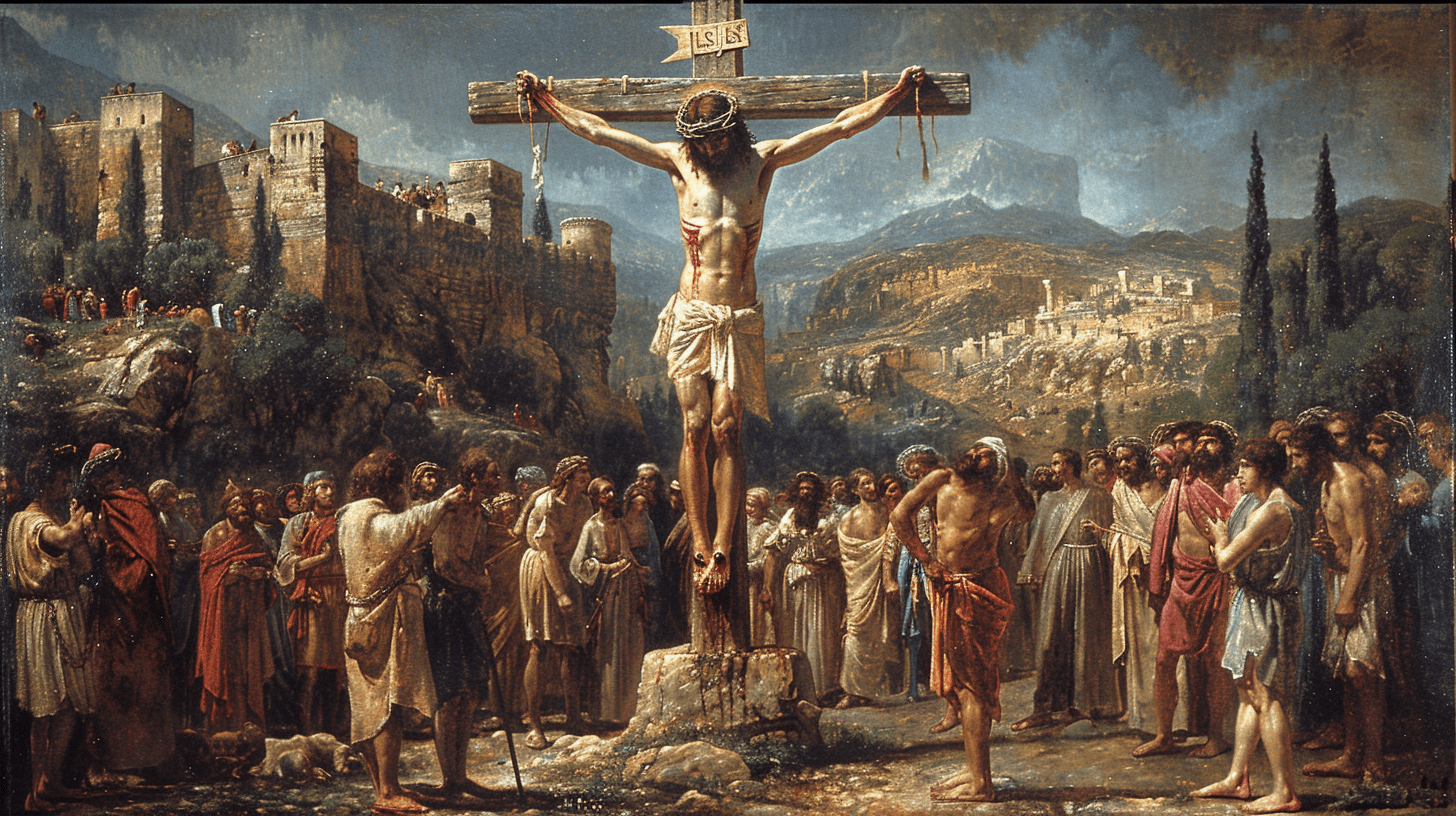
[ Special Lesson 51] God’s Redemptive Plan!

by ichthus

This lesson covered God’s plan for redemption, which began after Adam and Eve’s sin allowed Satan to corrupt the world with sin, death, pain, etc. For thousands of years, God promised through prophecies that He would send His son Jesus as the Messiah. The lesson went over prophecies foretelling Jesus’ virgin birth, suffering, death for sin, and resurrection.

Jesus’ first coming accomplished bearing sin and defeating death. However, his second coming is still necessary to bring full salvation by capturing Satan, establishing God’s kingdom on earth (Mount Zion/New Jerusalem), and allowing God’s dwelling to be with humanity again free from sin, death, and suffering.

The lesson emphasized the importance of the prophecies being fulfilled exactly as foretold, proving the divine inspiration of Scripture. It encouraged believers to appreciate Jesus’ role more deeply and to eagerly await and prepare for his second coming to restore all things.

Report – Discernment Study Guide SCJ Bible Study

Shincheonji holds distinct theological views that differ from mainstream Christian denominations, yet it also shares some common teachings. This overlap can sometimes blur the lines between their beliefs and those of traditional Christianity. Therefore, it is essential to exercise critical thinking and discernment to differentiate between these shared elements and the unique doctrines they present.

While their interpretations warrant careful examination through a critical and biblical lens, it is equally important to approach these matters with an open yet discerning mindset.

The following notes were documented in person during Shincheonji’s 9-month Bible Study Seminar. They provide insight into the organization’s approach to introducing and explaining its beliefs to potential new members, often referred to as the ‘harvesting and sealing.’ This process is described as being ‘born again’ or ‘born of God’s seed,’ which involves uprooting the old beliefs and replanting new ones. This uprooting and replanting must occur continuously. By examining this process, we can gain a better understanding of the mindset and beliefs held by Shincheonji members.

Figurative meanings:

Emmanuel = God with us. Emmanual is just a figurative representation. Emmanuel is a parable, another way to express a parable is through a title. His title was God with us. His name is Savior.

This is how God works. God comes and gives a prophecy about what he intends to do. He speaks that prophecy in parable-like language, so that Satan, who is ruling the world, will not send forces to destroy God’s plan.


Redemption of sin had to occur before salvation could be possible. Sin had to be atoned for by the blood of one who was perfect. This removed Satan’s shield, making him vulnerable for the final defeat, which will happen in Revelation.

Jesus promised Revelation to bring salvation and a new word, as mentioned in James 1:21.

Hebrews 9:26-29

First Coming: Bear Sin

Second Coming: Bring Salvation!

God’s intention over this 6,000-year era is to establish Mount Zion as a fulfillment of prophecy. At this sacred place, 144,000 individuals will gather, along with a great multitude. God will appoint someone to seal those who are yet to arrive. The purpose behind this is to prepare a dwelling place not just for the Lamb but also for others.

The figurative language represents deeper spiritual truths. The 144,000 and the great multitude symbolize those who will flee from false hopes and lies to embrace the true Word.

Revelation 14:2  says “Coming down, out of heaven.” The holy city, new Jerusalem, heaven in the spiritual world, is coming down.

Review with the Evangelist

Memorization

Hebrews 1:7

In speaking of the angels he says,

“He makes his angels spirits, and his servants flames of fire.”

Yeast of Heaven

Conduct yourselves in a manner worthy of the gospel of Christ, so that whether I come and see you or remain absent, I will hear of you that you are standing firm in one spirit, which one mind striving together for the faith of the gospel.


Our Hope: Let’s understand why the world is the way it is and God’s plan to restore what was lost!


God’s Plan for Redemption!

This is undoubtedly one of the most significant days for believers because the very foundation of our faith revolves around this day. Can we have a few volunteers share their thoughts on the exciting events that occurred today or discuss why this day holds such importance to them?


The reason I asked this question is that it’s always beneficial to reflect on the events that have transpired before us, as many individuals have endured great suffering, especially Christ, so that we may have the words we possess today. This will be part of our discussion today.


By doing so, we can maintain a sense of gratitude for what we have and where we are.

God’s plan of redemption has been unfolding for over 6,000 years. We’ll explore this plan today.

Our hope. Let’s understand why the world is in its current state and God’s plan to restore what was lost.

Previous Lesson Review

Review

In the previous lesson, we learned about the living creatures and the winds. The four living creatures represent the four archangels of heaven, implying that God has four high-ranking angels who are commanders in His army. When they say, “come,” events unfold, and there are other angels under their command, referred to as “eyes,” as mentioned in Revelation 5:6. These four living creatures, or archangels, also command the winds.


We discovered that the winds have two meanings. The winds symbolize other angels and the judgment they bring. Spiritually, when winds are blowing, judgment is taking place.


When the winds are halted, judgment has been paused for a time to allow something special to occur. As stated in Revelation 7, the winds are stopped so that sealing can take place.


However, we also know that in Revelation 7, the winds begin to blow again because it is prophesied that a great tribulation will also occur. This is also significant. Are we prepared for the impending great tribulation, or has it already begun?


These are questions we need to ask ourselves at this time. When winds are blowing, judgment is taking place. When winds stop, judgment is paused.


But why is there a need for judgment in the first place? What has been happening that has led us to a point where all these events must occur? Let’s go back in time to when these things happened so that we can understand God’s plan for redemption.


Before we do that, however, let’s read an essential passage because we often wonder, “What is God’s will for my life? What does God intend to happen for me?” Let’s turn to the book of Jeremiah.

Jeremiah 29:11-13

11 For I know the plans I have for you,” declares the Lord, “plans to prospert you and not to harm you, plans to give you hope and a future. 12 Then you will call on me and come and pray to me, and I will listen to you. 13 You will seek me and find me when you seek me with all your heart.

Jeremiah 29:11-13 is so important because we realize that God has a plan for all of us. And God’s plan, to summarize it all, is for us to prosper. Not for us to be hurt, but for us to be able to prosper. Why? But the real question is, how will this apply to someone?


What did it say here? In verse 12, for us to have a future and hope. So for us to prosper, to have hope, to have a future. Why? And how is this possible? Then you will call upon me, come and pray to me, and I will listen to you. You will seek me, and you will find me when you seek me with all of your heart. So these things will take place for us if we seek God with all of our heart, meaning total and undivided attention and devotion. When we seek God with all of our heart, then God’s plan can take place for us.


God’s plan cannot really take place for someone who does not seek him, who is not interested in him or what he is doing because that person is not living in the way that God requires that person to live, following him, seeking him. 


But I wanted to look at another passage here, some things that I’ve heard that are on our mind as we continue through the class and thoughts that I even had as we’ve been studying. It seems like things are happening quickly, almost like we are caught off guard and we’re playing catch-up, learning the open word at this time, and we’re only able to learn a little bit at a time each class.


And so the more we learn, we’re like, “What’s going on? Things seem to be happening already like that.” I know what that feeling is like because I had it too. But I want us to know that God is never late, and that God called you now on purpose, and that this was the perfect time for you to come and hear this word as part of God’s plan for your life to give you hope and a future. Let’s read about this. Let’s turn to 2nd Peter.

2 Peter 3:9

The Lord is not slow in keeping his promise, as some understand slowness. Instead he is patient with you, not wanting anyone to perish, but everyone to come to repentance.

God is not slow in the way some understand slowness. We often have to wait for what God has intended, for God’s promises, and often a very long time. For most of our lives, we have been waiting to truly understand God, to truly understand God’s Spirit, to truly understand the Word.


However, now is the time that God had specifically prepared for you. So, take advantage of this time that God is giving you. You have set aside three plus days per week, two hours at a time, to truly understand God’s Word well.


Use that time wisely. Make the most of every opportunity, because now is the time that God intended for you to learn the open Word, understand His plan, and comprehend what is going on in our current era. You are not late.


You are not behind. You are right on time, because God is right on time.

Can we trust that God planned this time for us?

So, let’s discuss the content for today.


1. Beginning: God’s Dwelling

In the beginning, to comprehend the state of the world today, we must explore where God’s dwelling resided. The book of Genesis, chapter three, provides insight into this.

Genesis 3:8

Then the man and his wife heard the sound of the Lord God as he was walking in the garden in the cool of the day, and they hid from the Lord God among the trees of the garden.

In the beginning, where was God’s dwelling? God’s dwelling was actually in the garden. This makes a lot of sense when you think about it logically. God is our father. Like a parent, if things are going well and everything is okay, a parent would not live apart from their children. The children would live with them, so the parent can be with them, nurture them, and take care of them. Would God create us and then leave if things were okay? Of course not. God was here, dwelling among His creation. But something happened.


God gave instructions to Adam and Eve. He primarily gave instructions to Adam before Eve came into the picture. He told Adam, “Do not eat from this tree. You may eat from these trees in the garden, but of this tree in the middle of the garden, you may not eat” (Genesis 2:17). Then, He instructed Adam to name the plants and animals in the garden and tend to it, as it was his kingdom to reign and rule over, to take care of.


However, we know that Satan doesn’t like God doing things without interfering in some way or form. Satan interfered and caused the deception of Adam and Eve, a story we’ve heard many times. Satan was in the garden, and he encouraged the serpent to entice Eve to consider the tree of the knowledge of good and evil. He did this by figuratively snaking into her mind.


Here’s how he did it: He didn’t say, “God does not exist. Do not believe in Him. Be an atheist.” That wouldn’t have worked because they could see God walking in the cool of the day. That would be a foolish thing to say. Instead, he said, “What did God tell you? Oh, He said that to you? Well, guess what? This is actually what God really meant.”


So, he took God’s word and twisted it a little, but not completely. The fruit still looked good enough to eat. If the fruit had become steak or a cockroach, they wouldn’t have eaten it. But the fruit remained looking just about right enough to eat.


What we should understand from this is that God gave the command to Adam. So, Adam’s job was to teach Eve and make sure she fully understood, without any doubt, what God had asked them to do. But the reason why Satan went for Eve was because she wasn’t the one who heard the command directly. And so, she had a little bit of doubt.


She thought the fruit was good to eat, and then she gave it to Adam. So, really, Adam had failed at his job. His job was to teach her and make sure she understood well. Blame is all around, right? I’ve heard this story many times explained, with blame placed here and there. They both failed at their job. What should Eve have done? Ask Adam, “Is this true what the serpent is saying?” or “God, is this true what the serpent is saying?” And that would have been the end of it.


But Satan enticed them with their own personal desires to be a little bit like God. That might have seemed interesting. So, we really need to consider the way Satan works. He’s very sly. He’s not going to come to a believer of God and tell that person, “God does not exist.” That would not work. That would be a bullet that would bounce right off a believer. But the goal is to make them believe in God differently than God wants them to believe. That’s Satan’s greatest trick.


So, when this took place, right? We know that God told them in Genesis 2:17 not to eat from the tree of the knowledge of good and evil, for if they did, they would surely die. But we see that in Genesis 3:6, they do, in fact, eat from that tree.


Adam and Eve ate from the tree of the knowledge of good and evil. When this happened, the world that was once perfect, that God had created, has now become corrupt. So, let’s see God’s heart because of the way this world continued to devolve after they ate from the tree of the knowledge of good and evil.

Genesis 6:5-6

5 The Lord saw how great the wickedness of the human race had become on the earth, and that every inclination of the thoughts of the human heart was only evil all the time. 6 The Lord regretted that he had made human beings on the earth, and his heart was deeply troubled.

The Lord was grieved, correct? Many perceive God as impenetrable, but the text represents God experiencing pain. 


God was deeply grieved by what transpired with His creation, as He witnessed His creation descending further into sin, with sin increasing generation after generation.


It worsened progressively, akin to having your child taken and abused, subsequently becoming a villain. Imagine witnessing your child’s transformation into villainy.

Such a scenario would deeply trouble any parent. The unimaginable pain would be profound. Thus, God decided to make a decree.

Genesis 6:3

Then the Lord said, “My Spirit will not contend with humans forever, for they are mortal; their days will be a hundred and twenty years.”

My spirit will not remain with.

Where it says the word “contend” in your Bible, in verse 3, there should be a small footnote, “My spirit will not remain.”

Does everyone else see that footnote as well at the bottom of your Bible?


 “My spirit will not remain.” Meaning that God’s spirit left this place that He created.


So, when God’s spirit left, what then happened to us?

If you were to describe God in a number of ways, what would you say about Him?

When you think about God, what are some things that come to mind?


All-powerful. How does John 1:1-4 describe Him?  The Word.

God is holy, sovereign, just, the truth, the light. God is life. God is love.

God is all-knowing, omniscient, omnipresent.


God is many things. But one of the things that it also says in John 1:1-4 is that in Him was life.


And that life was the light of men. God is the source of life, as the creator of all things. What happens when life leaves, and death enters?


How long was Adam supposed to live when God said, “Let us make man in our own image?”


120 years.  Adam was before that life limit.

That’s how long we live now, though, right? Well, not all of us. Not many people live that long.


But let’s think about it. “Let us make man in our own image.” Can God die?

Can the angels die? 


Then why intentionally make beings in your image that can die? That doesn’t make sense.


Death is not God’s original intention. In fact, God doesn’t like death at all. Numbers 19 describes how a person should cleanse themselves if they touch a dead body.


In fact, they have to cleanse themselves twice in the same week before they can join the rest of the congregation if they touch a dead body. God does not like death. God is a God of life.


So, when God’s spirit left, death entered the world.


2. Satan’s Corruption

What are the consequences of death entering the world? Satan’s corruption.


If you’re thinking, was Adam really supposed to live forever? Well, in Genesis 5, we see how long he lived – 930 years. Have you ever seen someone who lived 930 years? No.


His immediate descendants also lived for quite a few hundred years. However, with every generation, you started to see a downward trend in their lifespans. And now, no one is living anywhere near God’s life limit of 120 years.


Very few people even get to see 100 years. We’re about 70 to 80 if we have strength. So, as sin was increasing, our lifespans decreased. There was an inverse correlation for those math geeks out there. 


As sin went up, lifespans went down. And sin has been continuously increasing up to our time now.


6,000 years later, sin is pretty bad in our world today, right? Really awful. So, let’s talk about this now.


What Satan likes to do is take what is God’s and corrupt it, right? That’s what Satan loves to do.


Let’s fill it in with what exists today in our world.


Sin has entered the world and is now a thing we have to contend with. Death has entered the world and is now a thing we have to contend with. Mourning has entered the world and is now a thing that we have to contend with. Some of us have had to mourn recently. Crime has entered the world and is now a thing we have to contend with. Pain has entered the world and is now a thing we have to contend with. And many other things like war, plagues, sickness, famines, all of these things have entered the world.


So, if you think about it, do we really live in the world that God created? Not anymore. We live in the world that Satan corrupted.


Some might say, “Instructor, I don’t know if I can believe in God because babies get cancer. Why would God allow that to happen?”

Others might say, “Instructor, I don’t know if I can believe in God because my parent died of breast cancer.”


Or, “Instructor, I don’t know if I can believe in God because all these horrible things happen. Why would God allow these things to take place?” Who here has heard that sentiment or has struggled with that same sentiment themselves?


It’s hard. But because we don’t really look at Satan, we look straight at God and blame him for our own folly. Hmm.

So, if this is the state of the world, do we think that God is just okay with it? Like this is the way God intended? Certainly not.


Let’s dive a little bit deeper into this too. Let’s go to the book of Luke.

Luke 4:5-7

5 The devil led him up to a high place and showed him in an instant all the kingdoms of the world. 6 And he said to him, “I will give you all their authority and splendor; it has been given to me, and I can give it to anyone I want to. 7 If you worship me, it will all be yours.”

Satan, the tempter, is speaking here as Jesus is fasting for 40 days and 40 nights before beginning his ministry. Satan takes Jesus up to a high hill and begins to whisper sweet nothings into his ear. It’s quite interesting what Satan says here. He said, “All of these things, the splendor of the world, I will give to you.”


Did you catch the small but critical detail in what he said? In verse 6, Satan said something fascinating: “I will give you all their authority and splendor; it has been given to me, and I can give it to anyone I want to.”


Interesting. Who gave the world to Satan? Who gave it to him? Adam did. Why? Because Adam went away from God’s Word and followed Satan’s word instead. He gave him the world.


God told Adam to take care of the plants and animals, giving them names. The world we live in was his inheritance. But the moment they ate from the tree of the knowledge of good and evil, they handed the keys over to Satan, essentially giving him the world.


So Satan is speaking to Jesus here in a position of ownership. I can give you my phone because it is my phone. I own the device. How could Satan offer Jesus the world if he does not own it? Tell me, class.


We know Satan is a liar. Adam and Eve didn’t willingly give it to him, like saying, “I think it would be better in your hands.” No, he deceived and tricked them. But by receiving the fruit from the tree of the knowledge of good and evil, they gave the world to him.


And what has he been doing for the last 6,000 years? War, famine, plagues, deceiving people, sexual immorality, idols. He’s been going after God’s creation and doing a pretty bang-up job of making all of our lives miserable. And he does so in a way where instead of us turning the blame to where it really belongs, we look up and blame God, and we walk away from him.


How many people, due to the questions asked earlier like “God, how can you allow this,” have walked away from God? How many people do you know in your lives who have done the same thing? Mission accomplished for Satan – make their lives so awful, they willingly walk away from God. Many people have gone through that exact thing. Really sad.


Let’s see another passage about this.

1 John 5:19

We know that we are children of God, and that the whole world is under the control of the evil one.

The entire world is under the control of the evil one. If this has been the case for a long time, does it mean that God has been idle, doing nothing? To those who don’t understand the word, it may seem that way.


However, for those who know the word, we understand that God has been at work and has not given up on us. Glory to God.

Let’s shift our focus and discuss God’s plan of redemption.

Yes, let’s strike the devil, and what’s the most powerful blow we can deliver against him?

Precisely. With the word. Just like Jesus confronted him in the desert, for right after this, Jesus said, “Away from me,” after speaking the word to him.


So, the best weapon against the devil is, and always has been, the word. The spirit and the word are intertwined. When you strike the devil with the word, you are striking him with God’s spirit.


This is how we fight. Now, let’s examine how God intends to remedy this situation, for it is not God’s plan for things to continue as they are today. However, God’s plan must unfold over many years, many generations, and it takes numerous people over thousands of years to play an important role in God’s plan.


Every person we’ve read about in the Bible was a part of God’s plan of redemption. From the smallest person, like Ruth and her influence on the king, very small, or Esther, to the biggest person, Christ. All of those people had an essential role to play.


But today, we’re focusing on Christ. We’re focusing on Christ because Christ’s job was extremely important. So, let’s understand Christ.


3. God’s Plan for Redemption at First Coming

1. Promising His son

Isaiah 7:14

Therefore the Lord himself will give you a sign: The virgin will conceive and give birth to a son, and will call him Immanuel.

Therefore, the Lord God will give you a sign. The virgin will be with child. She will give birth to a son, and you are to name him Emmanuel.


Emmanuel, which figuratively represents God with us. Okay. A very interesting word that was spoken by God through the prophet Isaiah.


And how many years passed between Isaiah’s prophecy and its fulfillment? Can you answer this question for me? How many years elapsed between these words and their coming to pass?


700 years passed.


So for 700 years, people were reading the words of Isaiah and thinking, “Okay, a virgin will give birth to a son, and his name will be Emmanuel.” But during all that time, was it possible to know who the son would be and who the virgin would be? People could probably guess.


Most likely, she will be a woman from this place, and maybe the son will be like this. A virgin giving birth to a son? Is that even possible? Right? People would ask themselves these questions for many years.


And maybe there were some accounts that this had already taken place before the 700 years were up. A woman from the town had claimed this. Maybe this was the fulfillment of this passage.


But then it fizzled out. It didn’t turn into anything. But when it really happened, and it did happen for real, we know about it.


The moment you were reading this passage, you knew instantly who the virgin would be. You knew instantly who the virgin is. You knew instantly who the child is.


Why were we able to know these things so clearly, with no question in our mind? The prophecy had already been fulfilled. To us, it’s more like history than a prophecy, a historical event that had already taken place.


And as we’ve been talking about in the course, this is how God works. God comes and gives a prophecy about what he intends to do. He speaks that prophecy in parable-like language, so that Satan, who is ruling the world, will not send forces to destroy God’s plan.


Because how many times did Satan interrupt God’s plan when it was taking place? As often as he could. “Oh, Moses was born?”


How did the Pharaoh kill all the recently born males in Israel? Moses barely escaped with his life in the basket in the river. The moment Christ was born, the same tactic, the same spirit at work.


King Herod, kill all the recently born males. “I don’t want to lose my kingship.”


This is why God spoke in parables, so that his plan could take place, so that Satan couldn’t stop it.

Because he has a lot of power to do such a thing. It’s why God told the people, “Do not intermarry. Because if you do, they will turn your hearts away from me.”

And there were a lot more of them than God’s people. God’s people have always been outnumbered, always outnumbered by those who do not belong to God. 


So when God’s words are fulfilled, for example, in Matthew 1:18-23, regarding Isaiah 7:14, “The virgin with son to name Emmanuel,” let’s read about how this was fulfilled and why we believe in Christ as that son.

Matthew 1: 18-23

18 This is how the birth of Jesus the Messiah came about: His mother Mary was pledged to be married to Joseph, but before they came together, she was found to be pregnant through the Holy Spirit. 19 Because Joseph her husband was faithful to the law, and yet did not want to expose her to public disgrace, he had in mind to divorce her quietly.

20 But after he had considered this, an angel of the Lord appeared to him in a dream and said, “Joseph son of David, do not be afraid to take Mary home as your wife, because what is conceived in her is from the Holy Spirit. 21 She will give birth to a son, and you are to give him the name Jesus, because he will save his people from their sins.”

22 All this took place to fulfill what the Lord had said through the prophet: 23 “The virgin will conceive and give birth to a son, and they will call him Immanuel” (which means “God with us”).

So, what do we observe here? Ah, the prophecy is now fulfilled.


And now we have the details, like a testimony.


Who? Mary and Jesus.

Where? Bethlehem.

Why? Because it was prophesied.

How? In a manger.


We have the details of the prophecy being explained, and now it’s history to us.


But did you notice Jesus’ name? Did Jesus end up being called Emmanuel? Can someone explain that to me?


Why wasn’t Jesus called Emmanuel as prophesied?


Because Emmanuel is just a figurative representation.


Who here is thinking of it as a parable as well?


Emmanuel is a parable. Of course! Of course, it’s a parable, meaning God with us.

Another way to express a parable is through a title, role, or duty, like that. His title was God with us. His name is Savior.


Does that make sense? Right? The prophecy couldn’t have said, “We’ll give birth to a son, and his name would be Jesus,” because then Satan would attack every Jesus coming forward like that.

Emmanuel is a parable, a title. God with us.


Which Jesus certainly was. Amen? Are we seeing that connection here?


So, God’s plan had been in play for how long? Thousands of years, because he started talking about Jesus all the way back in the time of Moses. So God’s plan has been at work all this time.

It’s just been at work. All right, Moses, you had a pretty big role to play. “I need you to write the first five books of the Bible.

My people need to know what happened to us, why the world is this way, and they also need to have my law. Ready? Okay.

Get out a pen and paper. Get out a tablet and some chisel. We’re getting to work.”

Right? So God would work with Moses. And then after Moses, Joshua.

“Joshua, Moses did a great job. We’re now at this point.


Lead my people into the promised land. And when you get to a place called Jericho, blow seven trumpets over seven days while you walk around it so it can collapse. Okay, Lord, whatever you say.”


Right? Every person had a plan, a role to play, so that people could get where they needed to go, so that God’s plan could take place, so that the place where his son needed to be born could be prepared. Everyone was part of God’s plan.


Let’s see another important prophecy. So we looked at Jesus’s birth. We’re now going to look at his death.


The name Jesus means Savior, or he saves. So please note that. Matthew 1:21.


2. Elimination of Sin

Let’s examine the next passage about Jesus, who was born, lived, and ultimately accomplished the elimination of sin at the end of his life. We will read the entire chapter of Isaiah 53. Pay close attention to every detail within this chapter, as it holds significant meaning.

Isaiah 53

Who has believed our message

    and to whom has the arm of the Lord been revealed?

2 He grew up before him like a tender shoot,

    and like a root out of dry ground.

He had no beauty or majesty to attract us to him,

    nothing in his appearance that we should desire him.

3 He was despised and rejected by mankind,

    a man of suffering, and familiar with pain.

Like one from whom people hide their faces

    he was despised, and we held him in low esteem.

4 Surely he took up our pain

    and bore our suffering,

yet we considered him punished by God,

    stricken by him, and afflicted.

5 But he was pierced for our transgressions,

    he was crushed for our iniquities;

the punishment that brought us peace was on him,

    and by his wounds we are healed.

6 We all, like sheep, have gone astray,

    each of us has turned to our own way;

and the Lord has laid on him

    the iniquity of us all.

7 He was oppressed and afflicted,

    yet he did not open his mouth;

he was led like a lamb to the slaughter,

    and as a sheep before its shearers is silent,

    so he did not open his mouth.

8 By oppression and judgment he was taken away.

    Yet who of his generation protested?

For he was cut off from the land of the living;

    for the transgression of my people he was punished.

9 He was assigned a grave with the wicked,

    and with the rich in his death,

though he had done no violence,

    nor was any deceit in his mouth.

10 Yet it was the Lord’s will to crush him and cause him to suffer,

    and though the Lord makes his life an offering for sin,

he will see his offspring and prolong his days,

    and the will of the Lord will prosper in his hand.

11 After he has suffered,

    he will see the light of life and be satisfied;

by his knowledge my righteous servant will justify many,

    and he will bear their iniquities.

12 Therefore I will give him a portion among the great,

    and he will divide the spoils with the strong,

because he poured out his life unto death,

    and was numbered with the transgressors.

For he bore the sin of many,

    and made intercession for the transgressors.

For 700 years, these words had been in Israel before they were fulfilled, and people still could not see it. 700 years.


It was as if you were present at the first coming when reading these words. When someone says the Bible is written by men, I cannot comprehend it. How? Impossible.


It was prophesied that he would bear our sin, and he did.


Everything in his life was directed towards fulfilling these words. He knew what had to come, what he would have to go through.


He even petitioned if it was possible to take this cup from him, and that was not possible, for it had already been written. And he knew it because he understood how hard it would be. And I hope you are paying attention to the details.


Stricken by God? Man, he had nothing in his appearance to attract us to him? He grew up like a tender shoot, with no beauty or majesty?


Right? How is Jesus often depicted in the movies? Handsome and tall, striding through the streets.


That’s not what he looked like. It was easy to pass by Jesus and not think a second thought. But we know that God does not consider appearance as important.


The heart matters much more, and so does the Word. God wanted to eliminate all other variables for someone to listen to Jesus other than the Word. So, all of these details here, as we were paying attention, were all fulfilled.


He bore the cross, he bore our sin, he took on our iniquities, he died, and then he received the light of life.


700 years passed from when those words were recorded until they were fulfilled. Although we know the story quite well, we don’t have time to read about the fulfillment.


Matthew 27:45-46 talks about the burial or the crucifixion of Christ. 


Do you remember when Jesus said, “My God, my God, why have you forsaken me?”


Well, when I first learned about that as an early believer, I questioned why Jesus would question God like that. Who else had that thought before? Was Jesus truly questioning God, though?


No, he was not. Jesus was doing something special when he uttered those words. Jesus was quoting a popular Psalm.


The first line of Psalm 22 is, “Eloi, Eloi, lama sabachthani,” which means, “My God, my God, why have you forsaken me?” If people were paying close attention at Jesus’s crucifixion, they would have thought, “Hey, that’s the start of Psalm 22.”


“Wait a minute. They’re casting lots for his clothing. Wait a minute. They’re giving him wine vinegar to drink. Wait a minute.” They would see things around them being fulfilled.


Jesus was saying, “I’m on the cross, but things are being fulfilled. It’s like him saying, “Row, row, row your boat.” You’ll finish the rest of the song in your head.


The Psalms were sung at that time. They were songs to people. So when Jesus said, “Eloi, Eloi, lama sabachthani,” the rest of Psalm 22 would have gone through their heads, and they were seeing things being fulfilled right before their very eyes.


Do you want to see an example? Should we see an example? This lesson is going to be so long.


Oh my goodness. Let’s turn to Psalm 22 and see some examples that were fulfilled at that time.


Psalm 22:1 says, “My God, my God, why have you forsaken me?” Jesus was quoting this.


And then, as we continue through the chapter, verse 7 says, “All who see me mock me. They hurl insults, shaking their heads.” Psalm 22 is even older than the book of Isaiah, by the way.


Verse 9-10: “From birth I was cast upon you; from my mother’s womb you have been my God. Do not be far from me, for trouble is near and there is no one to help.”


Psalm 22:18: “They divide my garments among them and cast lots for my clothing.” A thousand years, a thousand years. And it was being fulfilled at Jesus’s crucifixion.


If you don’t have a deeper appreciation for Jesus after today, man, what is going on? Right? These things were taking place, and Jesus was calling their attention to passages they knew already so they could recognize who he was.


If they still had doubt, Jesus was trying to end their doubt while on the cross. Whoa. Okay.


So let’s go to John 19. Let’s see how Jesus concludes his work. We haven’t even gotten to the second coming yet, which we will get to.

John 19:28-30

28 Later, knowing that everything had now been finished, and so that Scripture would be fulfilled, Jesus said, “I am thirsty.” 29 A jar of wine vinegar was there, so they soaked a sponge in it, put the sponge on a stalk of the hyssop plant, and lifted it to Jesus’ lips. 30 When he had received the drink, Jesus said, “It is finished.” With that, he bowed his head and gave up his spirit.

It is finished. What was finished?


The fulfillment of the prophecy.


All of the words concerning me are finished. It is done.

Jesus’s entire life and ministry were fulfilling prophecy, his whole life. And he knew it. So he was always on a mission.


“Hey, disciples, go get a donkey for me. And when you bring it to me, I know it’s a strange request, but it has to happen. According to Zechariah 9:9, everything had to be fulfilled.”


Every request prophesied. It is finished. So, meaning all of the Old Testament has now been fulfilled.

The Old Testament concerning me. When Jesus died on the cross, the first of the two major issues that must be eliminated was eliminated. Sin was now done for.


That was Jesus’s first coming mission. We’re going to pick up the pace just a little bit now. 


Jesus’s first coming mission was the elimination of sin. Check. 

Most people, most believers stop here. Mistake.


Look at the world around us. The work is not done. There is still more to do.


Why give us the book of Revelation if everything was done? The work is not done.


4. God’s Plan of Redemption at the Second Coming

Let’s now look at the work at the time of the second coming that must take place.

1. To Bring Salvation

Hebrews 9:26-29

26 Otherwise Christ would have had to suffer many times since the creation of the world. But he has appeared once for all at the culmination of the ages to do away with sin by the sacrifice of himself. 27 Just as people are destined to die once, and after that to face judgment, 28 so Christ was sacrificed once to take away the sins of many; and he will appear a second time, not to bear sin, but to bring salvation to those who are waiting for him.

Reminder:
First Coming: Bear Sin

Second Coming: Bring Salvation!

The writer of Hebrews really breaks this down for us.

According to the text, Jesus will come again, not to bear sin, because he has already accomplished that task. His mission of bearing sin is complete. 


However, he still needs to return to bring salvation. To achieve this, Satan needs to be eliminated forever for God’s plan of redemption to be fully realized.


The text explains that Jesus’s first coming was critical, as redemption of sin had to occur before salvation could be possible. Sin had to be atoned for by the blood of one who was perfect. This removed Satan’s shield, making him vulnerable for the final defeat, which will happen in Revelation.


Jesus promised Revelation to bring salvation and a new word, as mentioned in James 1:21, “take hold of the word, the seed planted in you, which can save you.” This word that Jesus will bring at the time of his second coming will bring an end to the struggles we have been facing.


The text then suggests that there is an additional aspect to the permanent defeat of Satan, which will be explored further.

2. Capture the Dragon, Satan

Revelation 20:1-3

And I saw an angel coming down out of heaven, having the key to the Abyss and holding in his hand a great chain. 2 He seized the dragon, that ancient serpent, who is the devil, or Satan, and bound him for a thousand years. 3 He threw him into the Abyss, and locked and sealed it over him, to keep him from deceiving the nations anymore until the thousand years were ended. After that, he must be set free for a short time.


An angel arrives, grasping a massive chain and the key to the abyss’s shaft. With this formidable chain, the angel proceeds to bind the dragon, whom we recognize as Satan, restraining him for a thousand years. 


Thus, Jesus, from the heavenly realms, comes to capture the dragon for a brief period. To seize the dragon, also known as Satan, and bind him for a millennium.


During this thousand-year span, where the dragon is held captive, significant events unfold. We eagerly anticipate delving into the intricate details, but let us first revisit what we have already covered, ensuring a comprehensive understanding of how God’s plan unfolds at the second coming. What does God intend?

3. Establish a New Kingdom

God’s intention is to establish a new kingdom. The reason behind this is that His original kingdom was destroyed 6,000 years ago by Satan. Therefore, what God desires to do is restore what was lost. 


This is a logical and straightforward objective, not meant to confuse or complicate matters for anyone. In fact, God’s intended plan is quite simple. However, the mystery that needs to be understood is where this restoration will take place.

Revelation 14:1-3

Then I looked, and there before me was the Lamb, standing on Mount Zion, and with him 144,000 who had his name and his Father’s name written on their foreheads. 2 And I heard a sound from heaven like the roar of rushing waters and like a loud peal of thunder. The sound I heard was like that of harpists playing their harps. 3 And they sang a new song before the throne and before the four living creatures and the elders. No one could learn the song except the 144,000 who had been redeemed from the earth.

God’s intention over this 6,000-year era is to establish Mount Zion as a fulfillment of prophecy. At this sacred place, 144,000 individuals will gather, along with a great multitude. God will appoint someone to seal those who are yet to arrive. The purpose behind this is to prepare a dwelling place not just for the Lamb but also for others.


The figurative language represents deeper spiritual truths. The 144,000 and the great multitude symbolize those who will flee from false hopes and lies to embrace the true Word. 


Just as a seed holds the lesson of growth and new life, this time will mark the opening of a new era where what was once sealed will be revealed.

Revelation 21:1-6

Then I saw “a new heaven and a new earth,”for the first heaven and the first earth had passed away, and there was no longer any sea. 2 I saw the Holy City, the new Jerusalem, coming down out of heaven from God, prepared as a bride beautifully dressed for her husband. 3 And I heard a loud voice from the throne saying, “Look! God’s dwelling place is now among the people, and he will dwell with them. They will be his people, and God himself will be with them and be their God. 4 ‘He will wipe every tear from their eyes. There will be no more death’[b] or mourning or crying or pain, for the old order of things has passed away.”

5 He who was seated on the throne said, “I am making everything new!” Then he said, “Write this down, for these words are trustworthy and true.”

6 He said to me: “It is done. I am the Alpha and the Omega, the Beginning and the End. To the thirsty I will give water without cost from the spring of the water of life.

Many amazing things were said here.

Verse 2: “I saw the holy city, new Jerusalem.”

What does everyone think? Are we going up? Is that what the verse says?


No, it says “coming down, out of heaven.” The holy city, new Jerusalem, heaven in the spiritual world, is coming down.


Why? Because that was God’s original intention. God is restoring what was lost. It has always been his mission to come back to us, to be reunited fully with us, so that what goes away – death, mourning, crying, pain – will be no more. The old order of things, meaning the current order of things, the way the world works today, will be gone. And this is so incredible that God had to remind us in verse 5, “Write this down, for these words are trustworthy and true.”


God says, “I always keep my promises. I never break my promises. If I said this would happen, this is going to happen.”

Everyone, God’s final mission is for heaven to come down here, not just for us to go up when we die, which is all we’ve been told our entire Christian lives. 


We’ve avoided this passage altogether about heaven coming down so that God can be with his creation once again. It’s always been his mission. So, are we excited? Are we encouraged?


What should we do then? Get to work. 


It’s time for us to be a part of Mount Zion. Yes, this sets it up. Without the atonement of sin, there is no Mount Zion, heaven, but Jesus’ resurrection was part one.

Mount Zion is the conclusion when the Lamb can finally be with his people once again, with the place he promised to prepare for us.


So, let’s continue studying because there’s a lot that we were only able to tease here, and we’ll be going over each and everything.

Are you excited? I hope you’re excited. Let’s go.

And let’s gather. Where? At Mount Zion. Let’s find it and be there, for that is the place where heaven is promised to return to.


Memorization

Hebrews 9:28

so Christ was sacrificed once to take away the sins of many; and he will appear a second time, not to bear sin, but to bring salvation to those who are waiting for him.

Instructor Review

SUMMARY


God’s plan for redemption began when Adam and Eve fell into sin, and the world became corrupted by Satan. Satan brought sin, death, mourning, crying, pain, wars, plagues, famine, disease, and even babies with cancer – all the worst possible things imaginable. Satan even tempted Jesus, saying, “I will give you these things because they were given to me if you worship me as the one who owns and controls the world.” However, God did not want this to be forever. From the moment Adam and Eve sinned, God had been planning our redemption.

It started with His son, Jesus. For thousands of years, since the time of Moses, God had been promising His son through prophecies. We have looked at two key prophecies, but there are hundreds more, many of which we have already gone over, promising Jesus and revealing more about him and what he would go through. I hope you come away with a deeper appreciation for Jesus than you already had, and I pray that your appreciation deepens even further.

What is Jesus doing now? He is fulfilling the work he promised in the book of Revelation. Jesus bore sin 2,000 years ago, and that mission is complete. Now, Jesus is coming to bring salvation by capturing the devil and building a new kingdom where God and all of heaven can dwell forever, leaving all of this behind.

Let’s Us Discern

A Refutation of SCJ Lesson 51 Using “Testing Shincheonji’s Claims: Two Lenses, One Story”


Introduction: The Easter Deception

Imagine sitting in a Bible study on Easter Sunday evening. The room is filled with people who genuinely love Jesus and want to understand God’s word more deeply. The instructor opens with “Happy Easter, everyone. Happy Resurrection Day. How awesome is this day for us as believers?” Everyone nods in agreement. The atmosphere feels warm, spiritual, and Christ-centered.

The instructor asks volunteers to share why Easter is significant to them. People talk about Jesus’ resurrection, the victory over death, the hope of eternal life. The instructor affirms these responses: “This is undoubtedly one of the most significant days for believers because the very foundation of our faith revolves around this day.”

Everything feels right. This is a Christian Bible study celebrating the resurrection of Jesus Christ on Easter Sunday. What could be more legitimate?

But then the instructor transitions: “God’s plan of redemption has been unfolding for over 6,000 years. We’ll explore this plan today.” He reviews the previous lesson about living creatures, winds, judgment, and sealing. He emphasizes being prepared for “the impending great tribulation” and asks, “Has it already begun?”

Slowly, almost imperceptibly, the lesson shifts. What began as an Easter celebration becomes a vehicle for SCJ’s theological framework. Students don’t realize they’re being taught that God’s dwelling must return to earth through a physical organization, that they need to understand a specific “fulfillment” to be saved, and that they’re being prepared to accept claims about Chairman Lee Man-hee as the one through whom God’s redemption plan is completed.

By the time students reach Lesson 51, they’ve been studying for months. They’ve invested significant time, formed relationships, and accepted foundational premises about biblical interpretation. They trust their instructor. They believe they’re learning pure biblical truth. And now, on Easter Sunday—the day Christians celebrate Christ’s completed work of redemption—they’re being taught that redemption is still unfolding and requires understanding SCJ’s interpretation to participate in it.

This is Lesson 51: “God’s Plan for Redemption.”

The lesson appears to be a comprehensive biblical overview of salvation history—from the Garden of Eden, through Israel’s history, to Christ’s first coming, and looking forward to His return. The instructor quotes Scripture extensively, discusses familiar biblical stories, and emphasizes God’s love and plan for humanity.

But beneath the surface, the lesson is accomplishing several strategic goals:

  1. Reframing redemption history to make SCJ’s organization seem like the necessary next step in God’s plan
  2. Creating urgency about understanding “what is going on in our current era” through SCJ’s teaching
  3. Establishing the pattern that God’s dwelling must return to earth physically (preparing for claims about SCJ as the “Tabernacle Temple”)
  4. Building on previous lessons about sealing, judgment, and the need to be prepared
  5. Using Easter’s significance to make students feel they’re part of something momentous and divinely timed

The most insidious aspect is the timing. Students are told: “You are not late. You are not behind. You are right on time, because God is right on time.” This reassurance addresses the anxiety students naturally feel when they realize events are “happening quickly” and they’re “playing catch-up.” But instead of prompting students to question why they’re just now learning these supposedly essential truths, the reassurance makes them feel specially chosen—called by God at exactly the right moment.

By Lesson 51, students are deep in the Introductory Level (Parables), having completed all 49 lessons. They’ve accepted that:

  • The Bible is written in coded parables requiring special interpretation
  • Symbols have fixed meanings that must be taught authoritatively
  • Understanding prophecy is essential for salvation
  • They’re part of a special group learning what others miss
  • Questioning or researching outside the study shows lack of faith

Now they’re learning the grand narrative that will tie everything together—”God’s Plan for Redemption”—not realizing this narrative is being shaped to make SCJ’s claims seem like the inevitable conclusion.

Let’s examine this lesson carefully, using the framework from “Testing Shincheonji’s Claims: Two Lenses, One Story” and other biblical resources. We’ll see how SCJ uses legitimate biblical teaching about redemption history to build a framework that ultimately points not to Christ’s completed work, but to their organization and leader as necessary for salvation.


Part 1: The Setup—Creating Anxiety and Dependence

Before diving into the main content about redemption history, Lesson 51 carefully sets the psychological and emotional stage. Let’s examine the tactics at work in the opening section.

Tactic 1: Addressing Anxiety While Reinforcing Dependence

The instructor acknowledges that students are feeling overwhelmed: “It seems like things are happening quickly, almost like we are caught off guard and we’re playing catch-up, learning the open word at this time, and we’re only able to learn a little bit at a time each class.”

This is a brilliant psychological move. By Lesson 51, students are indeed feeling anxious. They’ve been studying for months, but the teaching keeps getting more complex. They sense urgency about end-times events but don’t fully understand what’s happening or where the study is leading. They’re investing significant time (three-plus days per week, two hours at a time) but still feel like they’re missing pieces of the puzzle.

The instructor validates these feelings: “I know what that feeling is like because I had it too.” This creates connection and trust—the instructor understands because he’s been there.

But notice what happens next. Instead of addressing the legitimate concern (Why am I feeling anxious if this is the gospel of peace? Why does biblical truth require such a lengthy, complex study?), the instructor reframes the anxiety as part of God’s plan: “God is never late, and God called you now on purpose, and this was the perfect time for you to come and hear this word as part of God’s plan for your life.”

The Problem with This Approach:

This reframing prevents students from recognizing that their anxiety might be a warning sign. In legitimate Christian teaching, the gospel produces peace, assurance, and clarity—not anxiety about being “caught off guard” or “playing catch-up.”

Romans 5:1 says, “Therefore, since we have been justified through faith, we have peace with God through our Lord Jesus Christ.”

Philippians 4:6-7 teaches, “Do not be anxious about anything, but in every situation, by prayer and petition, with thanksgiving, present your requests to God. And the peace of God, which transcends all understanding, will guard your hearts and your minds in Christ Jesus.”

2 Timothy 1:7 declares, “For the Spirit God gave us does not make us timid, but gives us power, love and self-discipline.”

If students are feeling anxious, overwhelmed, and like they’re playing catch-up with essential spiritual truth, something is wrong. This anxiety doesn’t come from the Holy Spirit or from understanding the gospel—it comes from a teaching system designed to create dependence.

Chapter 12 of “Testing Shincheonji’s Claims: Two Lenses, One Story”—”The Psychological Journey: From Curiosity to Captivity”—explains this tactic: “SCJ acknowledges students’ anxiety not to address its root cause, but to reframe it as evidence of God’s special timing and calling. This prevents students from recognizing that the anxiety itself is a red flag. Instead of questioning why biblical truth would produce such confusion and urgency, students are taught to see their anxiety as proof they’re on the right path at the right time.”

Tactic 2: Using Scripture to Validate the Study Program

The instructor quotes Jeremiah 29:11-13 and 2 Peter 3:9 to establish that God has a plan, God’s timing is perfect, and students are exactly where they need to be.

Jeremiah 29:11-13: “For I know the plans I have for you,” declares the Lord, “plans to prosper you and not to harm you, plans to give you hope and a future. Then you will call on me and come and pray to me, and I will listen to you. You will seek me and find me when you seek me with all your heart.”

2 Peter 3:9: “The Lord is not slow in keeping his promise, as some understand slowness. Instead he is patient with you, not wanting anyone to perish, but everyone to come to repentance.”

These are beautiful, encouraging passages that Christians rightly treasure. But notice how they’re being used:

SCJ’s Application:

  • God’s plan for you includes being in this study at this time
  • Seeking God “with all your heart” means dedicating yourself to this study program
  • God’s patience means He’s waited to reveal this truth until now, when you’re ready to hear it
  • You’re not late because God’s timing brought you here at the perfect moment

Biblical Context:

Jeremiah 29:11-13 was written to Jewish exiles in Babylon. God was promising that after 70 years of exile, He would restore them to their land. The passage is about God’s faithfulness to His covenant people, not about validating a particular Bible study program. The “seeking with all your heart” refers to genuine devotion to God Himself, not to a human organization’s teaching system.

2 Peter 3:9 addresses why Christ’s second coming seems delayed. Peter is responding to scoffers who mock Christians for believing Jesus will return. He explains that God’s “slowness” is actually patience—He’s giving people time to repent. This passage is about God’s mercy in delaying judgment, not about validating the timing of someone’s enrollment in a Bible study.

The Manipulation:

By applying these passages to the study program itself, SCJ accomplishes several things:

  1. Makes the study seem divinely ordained – “God called you now on purpose”
  2. Prevents questioning of the lengthy, complex process – “God’s timing is perfect”
  3. Redefines “seeking God” as participating in this specific study
  4. Creates fear of leaving – if God brought you here at the perfect time, leaving would mean rejecting God’s plan

Chapter 5 of “Testing Shincheonji’s Claims: Two Lenses, One Story”—”Divine Blueprint vs. The Cult Playbook”—warns about this tactic: “Cultic teaching takes biblical passages about God’s character and plan and applies them to the organization itself. Students begin to equate God’s will with the group’s program, God’s timing with the group’s schedule, and seeking God with participating in the group’s activities. This makes it psychologically difficult to leave because leaving the group feels like leaving God.”

Tactic 3: Emphasizing Time Investment

The instructor explicitly mentions the time commitment: “You have set aside three plus days per week, two hours at a time, to truly understand God’s Word well. Use that time wisely. Make the most of every opportunity, because now is the time that God intended for you to learn the open Word.”

Why This Matters:

By Lesson 51, students have invested approximately 150-200 hours over 3-5 months. This massive time investment creates psychological pressure to continue. Walking away would mean admitting that all those hours were wasted.

This is called the “sunk cost fallacy”—the tendency to continue investing in something because you’ve already invested so much, even when evidence suggests you should stop. SCJ deliberately creates this psychological trap by requiring a lengthy study program before revealing their most controversial teachings.

The instructor’s emphasis on “using time wisely” and “making the most of every opportunity” reinforces this trap. It makes students feel that questioning or leaving would be wasting the time they’ve invested, when in fact, stopping now would prevent wasting even more time.

Biblical Wisdom on Sunk Costs:

The Bible actually teaches the opposite of the sunk cost fallacy. When you discover you’re on the wrong path, the wise response is to turn around immediately, regardless of how far you’ve traveled.

Philippians 3:7-8 – Paul writes about his previous religious investments: “But whatever were gains to me I now consider loss for the sake of Christ. What is more, I consider everything a loss because of the surpassing worth of knowing Christ Jesus my Lord, for whose sake I have lost all things. I consider them garbage, that I may gain Christ.”

Paul didn’t say, “Well, I’ve invested so much in Pharisaism that I should keep going.” He recognized his previous path was wrong and immediately abandoned it, considering all that investment as “garbage” compared to knowing Christ.

Proverbs 14:15 – “The simple believe anything, but the prudent give thought to their steps.”

The prudent person evaluates whether they’re on the right path, regardless of how far they’ve traveled. The simple person continues because they’ve already started.

Tactic 4: Creating a Sense of Special Calling

The repeated emphasis on “God called you now on purpose,” “this was the perfect time,” and “you are right on time” creates a sense of special calling and divine appointment.

The Psychological Effect:

This makes students feel:

  • Specially chosen by God
  • Part of a significant moment in salvation history
  • Privileged to receive truth others don’t have
  • Responsible to continue because God specifically brought them here

The Problem:

This sense of special calling is based on accepting SCJ’s framework, not on biblical truth. The Bible teaches that God calls all people to repentance and faith in Christ (2 Peter 3:9, 1 Timothy 2:4). There’s nothing special about being recruited into a particular Bible study program.

Moreover, this sense of special calling will later be used to pressure students to remain in SCJ even when they have doubts. “God called you here for a reason” becomes “You can’t leave; God brought you here.”

Chapter 8 of “Testing Shincheonji’s Claims: Two Lenses, One Story”—”The Shifting Standards of Salvation”—explains: “SCJ creates a sense that students are specially chosen to receive truth at a divinely appointed time. This makes them feel privileged and significant, but it also creates obligation. If God specifically called you to this study, leaving would mean rejecting God’s call. This emotional manipulation makes it harder for students to evaluate the teaching objectively.”


Part 2: The Review—Building on Previous Indoctrination

Before presenting the main content about redemption history, the instructor reviews Lesson 50’s teaching about living creatures and winds. This review serves multiple purposes beyond simple reinforcement.

What the Review Accomplishes

The Review States: “The four living creatures represent the four archangels of heaven, implying that God has four high-ranking angels who are commanders in His army. When they say, ‘come,’ events unfold, and there are other angels under their command, referred to as ‘eyes,’ as mentioned in Revelation 5:6. These four living creatures, or archangels, also command the winds.”

“We discovered that the winds have two meanings. The winds symbolize other angels and the judgment they bring. Spiritually, when winds are blowing, judgment is taking place. When the winds are halted, judgment has been paused for a time to allow something special to occur.”

Purpose 1: Reinforcing SCJ’s Interpretive Framework

The review presents SCJ’s interpretations as established facts that students have “learned” and “discovered.” Notice the language:

  • “The four living creatures represent the four archangels” (stated as fact)
  • “We discovered that the winds have two meanings” (as if this is objective discovery, not SCJ’s interpretation)
  • “Spiritually, when winds are blowing, judgment is taking place” (stated as spiritual law)

This language makes SCJ’s interpretations seem like biblical facts rather than debatable interpretive claims. Students who accepted these interpretations in Lesson 50 now hear them repeated as established truth, reinforcing their acceptance.

Purpose 2: Creating Continuity and Complexity

By reviewing previous material, the instructor creates a sense of building knowledge. Students feel they’re progressing through a coherent system where each lesson builds on the previous one. This creates investment in the system itself—walking away would mean losing all this “knowledge” they’ve been accumulating.

The complexity also creates dependence. Students can’t easily explain what they’re learning to others because it requires understanding the entire interpretive framework. This isolation from outside perspectives is strategic.

Purpose 3: Introducing Urgency About Tribulation

The review transitions to a crucial question: “Are we prepared for the impending great tribulation, or has it already begun?”

This question accomplishes several things:

  • Creates urgency and anxiety
  • Implies that understanding SCJ’s teaching is necessary for preparation
  • Suggests that significant end-times events may already be underway
  • Makes students feel they need to continue studying to understand what’s happening

Biblical Problems with the Review

As we discussed in the Lesson 50 refutation, SCJ’s interpretation of the living creatures and winds has significant biblical problems:

The Living Creatures:

  • Ezekiel 10:20 explicitly identifies them as cherubim, not “four archangels”
  • The Bible never speaks of “four archangels” as a category
  • Revelation’s living creatures are best understood as representing all creation worshiping God, not as specific angels

The Winds:

  • While winds can symbolize judgment in some biblical contexts, SCJ’s specific interpretation (winds stopped for sealing, then released for tribulation) is their framework, not explicit biblical teaching
  • The passage in Revelation 7 is better understood in its first-century context as encouragement to persecuted churches that God knows and protects His people

The Tribulation Question: The question “Are we prepared for the impending great tribulation, or has it already begun?” reveals SCJ’s eschatological framework, which they haven’t yet fully disclosed to students.

What students don’t know at Lesson 51:

  • SCJ teaches that the “great tribulation” refers to specific events in their organizational history
  • They claim the tribulation has already occurred through conflicts within SCJ
  • They interpret Revelation’s prophecies as fulfilled through their organization’s experiences
  • Understanding these “fulfillments” is taught as necessary for salvation

The resource “SCJ’s Fulfillment of Revelation Part 1” documents how SCJ claims: “The great tribulation mentioned in Revelation 7:14 is not a future global catastrophe, but events that occurred within Shincheonji’s organization. Internal conflicts, leadership disputes, and organizational splits are claimed as the fulfillment of Revelation’s prophecies about tribulation, betrayal, and destruction.”

This is a classic cult tactic: taking ordinary organizational problems and claiming they’re the fulfillment of cosmic biblical prophecies. It makes the group seem specially significant while actually just describing normal human conflicts.

Chapter 20 of “Testing Shincheonji’s Claims: Two Lenses, One Story”—”The Danger of Creative Fulfillment”—warns: “When a group claims that ordinary events in their history are the fulfillment of biblical prophecy, ask: Could these same ‘fulfillments’ be claimed by any organization experiencing conflicts and changes? Is there anything unique about these events that requires them to be prophetic fulfillment? Or is the group simply reinterpreting its history through a biblical lens to seem specially significant?”


Part 3: God’s Dwelling in the Beginning—Setting Up the Pattern

The main content of Lesson 51 begins with “God’s Dwelling” in the Garden of Eden. This section appears to be straightforward biblical teaching, but it’s actually establishing a pattern that will be used to justify SCJ’s claims about their organization.

What the Lesson Teaches

Genesis 3:8 is quoted: “Then the man and his wife heard the sound of the Lord God as he was walking in the garden in the cool of the day, and they hid from the Lord God among the trees of the garden.”

The Instructor’s Application: “In the beginning, where was God’s dwelling? God’s dwelling was actually in the garden. This makes a lot of sense when you think about it logically. God is our father. Like a parent, if things are going well and everything is okay, a parent would not live apart from their children. The children would live with them, so the parent can be with them, nurture them, and take care of them. Would God create us and then leave if things were okay? Of course not. God was here, dwelling among His creation. But something happened.”

What’s True About This Teaching

The lesson is correct that Genesis depicts God’s intimate presence with humanity in the Garden. God walked in the Garden, spoke directly with Adam and Eve, and had fellowship with them. This reflects God’s original design—intimate relationship between Creator and creation.

The lesson is also correct that sin disrupted this relationship. Genesis 3 describes how Adam and Eve’s disobedience led to their expulsion from the Garden and separation from God’s immediate presence.

What’s Being Set Up

While the teaching about Eden is biblically accurate, it’s being used to establish a pattern that SCJ will later exploit:

The Pattern Being Established:

  1. God’s dwelling was originally on earth with humanity (Garden of Eden)
  2. Sin caused God’s dwelling to depart from earth
  3. God’s plan of redemption involves God’s dwelling returning to earth
  4. This return requires a physical location/organization where God dwells

Where This Pattern Leads:

Students don’t yet know that SCJ will claim:

  • Their organization is the restored “Tabernacle Temple” where God’s presence dwells
  • Chairman Lee Man-hee is the one through whom God’s dwelling has returned to earth
  • Joining SCJ is necessary to be part of this restored dwelling place
  • Understanding the “fulfillment” of Revelation through SCJ’s history is essential for salvation

The resource “The Real Reasons Behind the Tabernacle Temple’s Destruction and Sale” documents how SCJ teaches: “Shincheonji is the physical fulfillment of the Tabernacle Temple prophesied in Revelation. Just as God dwelt in the Garden with Adam, in the Tabernacle with Israel, and in Christ during His earthly ministry, God now dwells in Shincheonji through Chairman Lee Man-hee. This makes SCJ the necessary location for believers to encounter God’s presence.”

The Biblical Problem with This Pattern

The pattern SCJ is establishing contradicts the New Testament’s teaching about God’s dwelling.

The New Testament Teaching:

John 1:14 – “The Word became flesh and made his dwelling among us. We have seen his glory, the glory of the one and only Son, who came from the Father, full of grace and truth.”

God’s dwelling returned to earth in the incarnation—Jesus Christ is Immanuel, “God with us” (Matthew 1:23). The physical presence of God among humanity was fulfilled in Christ.

John 14:16-17, 23 – Jesus promises, “And I will ask the Father, and he will give you another advocate to help you and be with you forever—the Spirit of truth… On that day you will realize that I am in my Father, and you are in me, and I am in you… Anyone who loves me will obey my teaching. My Father will love them, and we will come to them and make our home with them.”

After Christ’s ascension, God’s dwelling with humanity continues through the Holy Spirit, who indwells all believers. God doesn’t dwell in a physical location or organization—He dwells in His people.

1 Corinthians 3:16 – “Don’t you know that you yourselves are God’s temple and that God’s Spirit dwells in your midst?”

1 Corinthians 6:19 – “Do you not know that your bodies are temples of the Holy Spirit, who is in you, whom you have received from God?”

Ephesians 2:19-22 – “Consequently, you are no longer foreigners and strangers, but fellow citizens with God’s people and also members of his household, built on the foundation of the apostles and prophets, with Christ Jesus himself as the chief cornerstone. In him the whole building is joined together and rises to become a holy temple in the Lord. And in him you too are being built together to become a dwelling in which God lives by his Spirit.”

The temple—God’s dwelling place—is the church, the community of all believers in Christ. It’s not a physical building or organization; it’s the people in whom the Holy Spirit dwells.

Revelation 21:3 – “And I heard a loud voice from the throne saying, ‘Look! God’s dwelling place is now among the people, and he will dwell with them. They will be his people, and God himself will be with them and be their God.'”

The ultimate fulfillment of God dwelling with humanity comes in the New Creation, when God’s presence fills all things and there’s no need for a temple “because the Lord God Almighty and the Lamb are its temple” (Revelation 21:22).

The Progression of God’s Dwelling:

The biblical pattern is:

  1. Garden of Eden – God’s presence with humanity in paradise
  2. Tabernacle/Temple – God’s presence with Israel in a physical structure (temporary, pointing forward)
  3. Incarnation – God’s presence in Jesus Christ (fulfillment of the physical dwelling)
  4. Church Age – God’s presence through the Holy Spirit in all believers (spiritual temple)
  5. New Creation – God’s presence filling all things (eternal fulfillment)

SCJ’s pattern tries to reverse this progression. They want to go backward from the spiritual reality (Holy Spirit in believers) to a physical structure (their organization). This contradicts the entire movement of biblical revelation.

Chapter 20 of “Testing Shincheonji’s Claims: Two Lenses, One Story” addresses this error: “SCJ takes imagery that has already been fulfilled in Christ and claims it needs a second, physical fulfillment through their organization. This allows them to insert themselves into biblical prophecy and claim that joining their group is necessary for salvation. But Scripture teaches that Christ is the fulfillment of Old Testament shadows, and the church—all believers in Christ—is the temple of God. No additional physical fulfillment is needed or biblical.”


Part 4: The Fall and Satan’s Deception—Subtle Distortions

The lesson continues with the familiar story of the Fall in Genesis 3. This section appears to be straightforward biblical teaching about sin’s entrance into the world, but it contains subtle distortions that serve SCJ’s agenda.

What the Lesson Teaches About the Fall

The Instructor’s Explanation: “God gave instructions to Adam and Eve. He primarily gave instructions to Adam before Eve came into the picture. He told Adam, ‘Do not eat from this tree. You may eat from these trees in the garden, but of this tree in the middle of the garden, you may not eat’ (Genesis 2:17). Then, He instructed Adam to name the plants and animals in the garden and tend to it, as it was his kingdom to reign and rule over, to take care of.”

“However, we know that Satan doesn’t like God doing things without interfering in some way or form. Satan interfered and caused the deception of Adam and Eve, a story we’ve heard many times. Satan was in the garden, and he encouraged the serpent to entice Eve to consider the tree of the knowledge of good and evil. He did this by figuratively snaking into her mind.”

“Here’s how he did it: He didn’t say, ‘God does not exist. Do not believe in Him. Be an atheist.’ That wouldn’t have worked because they could see God walking in the cool of the day. That would be a foolish thing to say. Instead, he said, ‘What did God tell you? Oh, He said that to you? Well, guess what? This is actually what God really meant.'”

“So, he took God’s word and twisted it a little, but not completely. The fruit still looked good enough to eat. If the fruit had become steak or a cockroach, they wouldn’t have eaten it. But the fruit remained looking just about right enough to eat.”

What’s Accurate in This Teaching

The lesson correctly identifies several biblical truths:

  1. God gave clear instructions to Adam about not eating from the tree of the knowledge of good and evil (Genesis 2:16-17)
  2. Satan used deception rather than direct denial of God. Genesis 3:1-5 shows the serpent questioning God’s word (“Did God really say…?”) and contradicting it (“You will not certainly die”), rather than denying God’s existence.
  3. Satan twisted God’s word rather than completely fabricating something new. The serpent took God’s actual command and distorted it, making the forbidden fruit seem desirable and God’s prohibition seem unreasonable.
  4. The deception was subtle—the fruit still looked appealing. Genesis 3:6 says, “When the woman saw that the fruit of the tree was good for food and pleasing to the eye, and also desirable for gaining wisdom, she took some and ate it.”

The Subtle Distortion: Blaming Eve’s Lack of Direct Instruction

Here’s where the lesson introduces a subtle but significant distortion:

The Instructor Says: “What we should understand from this is that God gave the command to Adam. So, Adam’s job was to teach Eve and make sure she fully understood, without any doubt, what God had asked them to do. But the reason why Satan went for Eve was because she wasn’t the one who he…”

The lesson cuts off here in the transcript, but the implication is clear: Satan targeted Eve because she received the instruction secondhand from Adam rather than directly from God, making her more vulnerable to deception.

The Problem with This Interpretation:

This interpretation subtly shifts blame and introduces ideas not found in the biblical text:

  1. It implies Eve was more vulnerable because she didn’t hear directly from God—but Genesis 3:2-3 shows Eve knew God’s command accurately. She quotes it to the serpent: “God did say, ‘You must not eat fruit from the tree that is in the middle of the garden, and you must not touch it, or you will die.'” She actually adds to God’s command (the “touch it” part), showing she took it seriously.
  2. It suggests the problem was Adam’s teaching rather than willful disobedience—but both Adam and Eve knew God’s command and chose to disobey. Romans 5:12 says, “Therefore, just as sin entered the world through one man, and death through sin…” Paul attributes the Fall to Adam’s choice, not to inadequate instruction.
  3. It creates a pattern where secondhand teaching is problematic—this will later be used to argue that Christians who learn from pastors and teachers (rather than directly from Chairman Lee) are vulnerable to deception, just like Eve.

Why This Matters for SCJ’s Agenda:

This interpretation sets up a pattern SCJ will exploit:

  • Direct revelation/teaching is superior to secondhand instruction
  • Those who receive truth secondhand are more vulnerable to deception
  • Therefore, learning from traditional pastors (secondhand) is less reliable than learning from Chairman Lee (who claims direct revelation)

Chapter 3 of “Testing Shincheonji’s Claims: Two Lenses, One Story”—”The Parable Trap”—explains this tactic: “SCJ creates suspicion of traditional Christian teaching by suggesting that truth must come through special revelation to specific individuals. This makes students distrust their pastors and previous Christian education, creating dependence on SCJ’s teaching as the ‘direct’ source of truth.”

The Biblical Reality About Teaching and Authority

The Bible actually affirms the validity and necessity of teaching that’s passed down faithfully:

2 Timothy 2:2 – “And the things you have heard me say in the presence of many witnesses entrust to reliable people who will also be qualified to teach others.”

Paul instructs Timothy to pass on what he learned from Paul to others, who will teach still others. This is four generations of teaching: Paul → Timothy → reliable people → others. None of these later generations received “direct revelation,” yet their teaching is valid because it faithfully transmits apostolic truth.

Acts 17:11 – “Now the Berean Jews were of more noble character than those in Thessalonica, for they received the message with great eagerness and examined the Scriptures every day to see if what Paul said was true.”

The Bereans are commended not for receiving direct revelation, but for carefully examining whether Paul’s teaching aligned with Scripture. The standard is Scripture itself, not whether teaching is “direct” or “secondhand.”

Ephesians 4:11-14 – “So Christ himself gave the apostles, the prophets, the evangelists, the pastors and teachers, to equip his people for works of service, so that the body of Christ may be built up until we all reach unity in the faith and in the knowledge of the Son of God and become mature, attaining to the whole measure of the fullness of Christ. Then we will no longer be infants, tossed back and forth by the waves, and blown here and there by every wind of teaching and by the cunning and craftiness of people in their deceitful scheming.”

Christ gave teachers to the church for the purpose of building up believers and protecting them from false teaching. The problem isn’t learning from teachers—God designed the church to include teachers. The problem is teachers who distort Scripture and promote “deceitful scheming.”

The Real Issue in the Fall:

The Fall wasn’t about Eve receiving secondhand instruction. It was about both Adam and Eve choosing to doubt God’s word and trust their own judgment over God’s clear command.

Genesis 3:6 says, “When the woman saw that the fruit of the tree was good for food and pleasing to the eye, and also desirable for gaining wisdom, she took some and ate it. She also gave some to her husband, who was with her, and he ate it.”

Notice: Adam “was with her.” He wasn’t absent. He heard the serpent’s deception and watched Eve eat, then chose to eat himself. Both were guilty of willful disobedience, not of misunderstanding due to secondhand instruction.

Romans 5:12-19 explains that Adam’s sin brought death to all humanity, and Christ’s obedience brings life. The focus is on Adam’s representative headship and Christ’s redemptive work, not on the mechanics of how Eve received instruction.

Satan’s Method: A Warning That Applies to SCJ

Ironically, the lesson’s description of Satan’s deceptive method perfectly describes what SCJ itself does:

The Lesson Says: “He didn’t say, ‘God does not exist. Do not believe in Him. Be an atheist.’ That wouldn’t have worked because they could see God walking in the cool of the day. That would be a foolish thing to say. Instead, he said, ‘What did God tell you? Oh, He said that to you? Well, guess what? This is actually what God really meant.’ So, he took God’s word and twisted it a little, but not completely.”

This is exactly SCJ’s method:

  • They don’t deny the Bible—they claim to teach it faithfully
  • They don’t reject Jesus—they claim to honor Him
  • They don’t say Christianity is false—they claim to be the true Christians

Instead, they say: “What did your pastor teach you? Oh, he said that to you? Well, guess what? This is actually what the Bible really means.”

They take biblical words and concepts—sealing, the 144,000, the Tabernacle Temple, the promised pastor—and twist them just enough to fit their theology, while keeping them familiar enough that students don’t immediately recognize the distortion.

The lesson warns: “The fruit still looked good enough to eat. If the fruit had become steak or a cockroach, they wouldn’t have eaten it. But the fruit remained looking just about right enough to eat.”

This perfectly describes SCJ’s teaching. If they immediately told students, “Chairman Lee is the second coming of Christ” or “Only 144,000 SCJ members will be saved,” students would reject it as obviously false. Instead, they present teaching that looks “just about right enough”—biblical language, scriptural references, Christian terminology—but with subtle distortions that eventually lead far from biblical truth.

2 Corinthians 11:13-15 warns about this exact tactic: “For such people are false apostles, deceitful workers, masquerading as apostles of Christ. And no wonder, for Satan himself masquerades as an angel of light. It is not surprising, then, if his servants also masquerade as servants of righteousness. Their end will be what their actions deserve.”

False teachers don’t announce themselves as false. They masquerade as teachers of truth, using biblical language and appearing righteous. The deception is subtle—just like the serpent’s in the Garden.


Part 5: The Progression After the Fall—Building the Redemption Narrative

While the uploaded transcript cuts off before completing the lesson, we can anticipate where it’s heading based on SCJ’s standard teaching pattern and the lesson title: “God’s Plan for Redemption.”

The Expected Progression

Based on SCJ’s curriculum structure and theology, Lesson 51 likely continues with:

  1. God’s dwelling departing from earth after the Fall
  2. God’s attempts to restore relationship through covenants (Noah, Abraham, Moses)
  3. The Tabernacle/Temple as God’s dwelling with Israel
  4. Israel’s repeated failure and God’s judgment
  5. Jesus’ first coming as God dwelling with humanity again
  6. Jesus’ departure and promise to return
  7. The need for God’s dwelling to return to earth (setting up SCJ’s claim)

Let’s examine the biblical reality of this redemption narrative and where SCJ distorts it.

The Biblical Narrative of Redemption

Phase 1: The Fall and Its Consequences

Genesis 3 describes the immediate consequences of sin:

  • Broken relationship with God (hiding from His presence)
  • Curse on the serpent, the woman, and the ground
  • Expulsion from the Garden
  • Death entering human experience

But even in judgment, God provides hope. Genesis 3:15 contains the first gospel promise (the “protoevangelium”): “And I will put enmity between you and the woman, and between your offspring and hers; he will crush your head, and you will strike his heel.”

This cryptic promise points forward to Christ, who would defeat Satan through His death and resurrection.

Phase 2: God’s Covenant with Humanity

Despite human sin, God doesn’t abandon His creation:

  • Noah (Genesis 6-9): God preserves humanity through the flood and makes a covenant never to destroy the earth by flood again
  • Abraham (Genesis 12-22): God calls Abraham and promises to bless all nations through his offspring (ultimately fulfilled in Christ, Galatians 3:16)
  • Moses (Exodus-Deuteronomy): God delivers Israel from Egypt, gives the Law, and establishes the covenant at Sinai

Phase 3: The Tabernacle and Temple

God instructs Israel to build the Tabernacle (Exodus 25-40), a physical structure where His presence would dwell among His people. Later, Solomon builds the Temple in Jerusalem (1 Kings 6-8).

Crucial Point: The Tabernacle and Temple were always understood as temporary and symbolic, pointing forward to something greater.

Hebrews 8:5 explains that the priests “serve at a sanctuary that is a copy and shadow of what is in heaven. This is why Moses was warned when he was about to build the tabernacle: ‘See to it that you make everything according to the pattern shown you on the mountain.'”

Hebrews 9:11-12 continues: “But when Christ came as high priest of the good things that are now already here, he went through the greater and more perfect tabernacle that is not made with human hands, that is to say, is not a part of this creation. He did not enter by means of the blood of goats and calves; but he entered the Most Holy Place once for all by his own blood, thus obtaining eternal redemption.”

The physical Tabernacle/Temple was a “copy and shadow” pointing to Christ. When Christ came, the shadow gave way to reality.

Phase 4: Prophetic Promises of Restoration

Throughout Israel’s history, the prophets promised that God would restore His people:

Ezekiel 37:26-27 – “I will make a covenant of peace with them; it will be an everlasting covenant. I will establish them and increase their numbers, and I will put my sanctuary among them forever. My dwelling place will be with them; I will be their God, and they will be my people.”

Jeremiah 31:31-34 – God promises a “new covenant” where He will write His law on people’s hearts and forgive their sins.

Isaiah 7:14 – “Therefore the Lord himself will give you a sign: The virgin will conceive and give birth to a son, and will call him Immanuel” (which means “God with us”).

These prophecies find their fulfillment in Christ and the New Covenant.

Phase 5: The Incarnation—God Dwelling with Humanity

John 1:14 declares: “The Word became flesh and made his dwelling among us. We have seen his glory, the glory of the one and only Son, who came from the Father, full of grace and truth.”

The Greek word for “made his dwelling” is eskēnōsen, which literally means “tabernacled.” Jesus is the true Tabernacle—God’s presence dwelling with humanity.

Matthew 1:23 quotes Isaiah’s prophecy: “The virgin will conceive and give birth to a son, and they will call him Immanuel” (which means “God with us”).

Jesus is the fulfillment of God’s promise to dwell with His people. In Christ, God and humanity are reconciled.

Phase 6: Christ’s Death and Resurrection—Redemption Accomplished

Jesus’ death on the cross accomplishes what the Old Testament sacrifices could only symbolize:

Hebrews 10:10-14 – “And by that will, we have been made holy through the sacrifice of the body of Jesus Christ once for all. Day after day every priest stands and performs his religious duties; again and again he offers the same sacrifices, which can never take away sins. But when this priest had offered for all time one sacrifice for sins, he sat down at the right hand of God, and since that time he waits for his enemies to be made his footstool. For by one sacrifice he has made perfect forever those who are being made holy.”

Christ’s sacrifice is complete and sufficient. There’s no need for ongoing sacrifices or additional redemptive work.

John 19:30 – Jesus’ final words on the cross: “It is finished.” The Greek word tetelestai means “paid in full” or “completed.” The work of redemption is done.

Phase 7: The Church Age—God Dwelling in His People

After His resurrection, Jesus promises to send the Holy Spirit:

John 14:16-17 – “And I will ask the Father, and he will give you another advocate to help you and be with you forever—the Spirit of truth. The world cannot accept him, because it neither sees him nor knows him. But you know him, for he lives with you and will be in you.”

At Pentecost (Acts 2), the Holy Spirit comes to indwell all believers. God’s presence is no longer confined to a physical temple but dwells in the hearts of His people.

1 Corinthians 3:16 – “Don’t you know that you yourselves are God’s temple and that God’s Spirit dwells in your midst?”

The church—the community of all believers—is now God’s temple.

Phase 8: Christ’s Return and the New Creation

The biblical narrative culminates not in a restored physical temple on earth, but in the New Creation where God’s presence fills everything:

Revelation 21:1-3 – “Then I saw ‘a new heaven and a new earth,’ for the first heaven and the first earth had passed away, and there was no longer any sea. I saw the Holy City, the new Jerusalem, coming down out of heaven from God, prepared as a bride beautifully dressed for her husband. And I heard a loud voice from the throne saying, ‘Look! God’s dwelling place is now among the people, and he will dwell with them. They will be his people, and God himself will be with them and be their God.'”

Revelation 21:22 – “I did not see a temple in the city, because the Lord God Almighty and the Lamb are its temple.”

In the New Creation, there’s no need for a physical temple because God’s presence fills everything. The progression is complete: from God dwelling in the Garden, to dwelling in the Tabernacle/Temple, to dwelling in Christ, to dwelling in believers through the Spirit, to dwelling with all creation in the New Heaven and New Earth.

Where SCJ Distorts This Narrative

SCJ’s teaching about redemption history contains a fatal distortion: they insert their organization into the biblical narrative as a necessary step between Christ’s first coming and His second coming.

SCJ’s Distorted Narrative:

  1. God dwelt with humanity in the Garden (TRUE)
  2. Sin caused separation (TRUE)
  3. God dwelt in the Tabernacle/Temple with Israel (TRUE)
  4. Israel failed and the temple was destroyed (TRUE)
  5. Jesus came as God dwelling with humanity (TRUE)
  6. Jesus left and promised to return (TRUE)
  7. Before Jesus returns, God’s dwelling must be restored through a physical organization (FALSE—SCJ’s addition)
  8. Shincheonji is this restored dwelling, the “Tabernacle Temple” (FALSE—SCJ’s claim)
  9. Understanding this fulfillment through Chairman Lee is necessary for salvation (FALSE—SCJ’s doctrine)

By inserting steps 7-9, SCJ makes their organization seem like a necessary part of God’s redemption plan. But these steps contradict the New Testament’s teaching that:

  • Christ’s work is complete (John 19:30, Hebrews 10:14)
  • God dwells in all believers through the Holy Spirit (1 Corinthians 3:16, 6:19)
  • The church universal is God’s temple (Ephesians 2:19-22)
  • No physical temple is needed because Christ is our access to God (Hebrews 10:19-22)

Chapter 15 of “Testing Shincheonji’s Claims: Two Lenses, One Story”—”The Sealed Book That Was Never Sealed”—addresses this distortion: “SCJ takes the biblical narrative of redemption and inserts their organization as a necessary fulfillment. This allows them to claim that understanding their specific interpretation and joining their group is essential for salvation. But the New Testament teaches that Christ has already accomplished redemption, and salvation comes through faith in Him alone, not through membership in any organization.”


Part 6: The Psychological Manipulation—How the Lesson Functions

Beyond the theological content, Lesson 51 employs sophisticated psychological manipulation. Let’s examine how the lesson functions to deepen students’ commitment and dependence.

Manipulation 1: Reframing Anxiety as Divine Timing

As we discussed earlier, the lesson acknowledges students’ anxiety about “playing catch-up” and “things happening quickly,” but reframes this anxiety as evidence of God’s perfect timing.

The Psychological Effect:

This reframing prevents students from recognizing that their anxiety is a warning sign. In healthy Christian teaching, understanding the gospel produces peace, clarity, and assurance. If students are feeling anxious and confused, something is wrong.

But by reframing the anxiety as “normal” and even as evidence of being on the right path (“God called you now on purpose”), the lesson turns a red flag into a green light.

What Students Should Recognize:

Philippians 4:6-7 teaches, “Do not be anxious about anything, but in every situation, by prayer and petition, with thanksgiving, present your requests to God. And the peace of God, which transcends all understanding, will guard your hearts and your minds in Christ Jesus.”

If your Bible study is producing anxiety rather than peace, that’s a problem with the teaching, not a sign of God’s timing.

Manipulation 2: Using Easter to Create Emotional Connection

The lesson is taught on Easter Sunday, the most significant day in the Christian calendar. This timing is strategic.

The Psychological Effect:

By connecting SCJ’s teaching with Easter celebration, the lesson creates emotional associations:

  • Easter = joy, hope, resurrection, salvation
  • This study = learning about God’s plan for redemption
  • Therefore: This study = participating in Easter’s significance

Students feel they’re part of something momentous and divinely significant, not realizing they’re being taught a distorted version of redemption that will eventually require accepting SCJ’s claims.

The Irony:

Easter celebrates Christ’s completed work of redemption. Jesus said, “It is finished” (John 19:30). The resurrection proves that God accepted Christ’s sacrifice and that redemption is accomplished.

But SCJ’s teaching implies that redemption isn’t complete—that understanding their interpretation and joining their organization is necessary to participate in God’s redemptive plan. This actually contradicts what Easter celebrates.

Manipulation 3: Emphasizing Time Investment

The repeated emphasis on the time students are investing (“three plus days per week, two hours at a time”) serves multiple purposes:

Purpose 1: Creating Sunk Cost The more time students invest, the harder it becomes psychologically to leave. Walking away would mean admitting that all those hours were wasted.

Purpose 2: Creating Commitment By explicitly acknowledging the time commitment, the lesson makes students feel they’ve made a significant choice. This increases their sense of commitment and makes them less likely to question.

Purpose 3: Creating Obligation The instruction to “use that time wisely” and “make the most of every opportunity” creates a sense of obligation. Students feel they owe it to themselves (and to God) to continue after investing so much.

What Students Should Recognize:

Proverbs 14:15 says, “The simple believe anything, but the prudent give thought to their steps.”

The prudent person evaluates whether they’re on the right path, regardless of how much time they’ve already invested. If you discover you’re on the wrong path, the wise response is to turn around immediately, not to keep going because you’ve already traveled far.

Manipulation 4: Isolating from Outside Perspectives

Throughout the lesson, students are subtly discouraged from seeking outside perspectives:

  • The emphasis on “seeking God with all your heart” is defined as dedication to this study
  • The suggestion that God specifically called them to this study at this time
  • The implication that questioning or leaving would mean rejecting God’s plan
  • The complex interpretive system that students can’t easily explain to others

The Effect:

Students become isolated from pastors, family members, and friends who might raise concerns. They believe that others “wouldn’t understand” because they haven’t studied like the student has.

This isolation is essential for SCJ’s deception to work. If students consulted with informed Christians, the problems with SCJ’s teaching would become apparent.

What Students Should Do:

Acts 17:11 commends the Bereans for examining Paul’s teaching against Scripture: “Now the Berean Jews were of more noble character than those in Thessalonica, for they received the message with great eagerness and examined the Scriptures every day to see if what Paul said was true.”

If your Bible study discourages you from verifying claims with other Christians or researching the organization, that’s a major red flag. Truth welcomes examination; deception requires isolation.

Chapter 11 of “Testing Shincheonji’s Claims: Two Lenses, One Story”—”The Wisdom of Hiding”—explains: “SCJ creates an environment where questioning feels like spiritual failure and isolation feels like spiritual maturity. Students are taught that their dedication to the study proves their commitment to God, while seeking outside perspectives would show lack of faith. This isolation is essential for maintaining the deception.”


Part 7: Where the Lesson Is Leading—The Coming Deception

Although the uploaded transcript is incomplete, we can anticipate where Lesson 51 is heading based on SCJ’s curriculum structure and standard teaching progression.

The Foundation Being Laid

Lesson 51 is establishing foundations that will support later claims:

Foundation 1: God’s Dwelling Must Return to Earth Physically

By emphasizing that God’s dwelling was originally on earth (Garden of Eden) and that redemption involves restoring what was lost, the lesson creates expectation that God’s dwelling must return to earth in a physical way.

Where This Leads: Students will later be taught that Shincheonji is the physical “Tabernacle Temple” where God’s presence dwells, fulfilling the pattern of God dwelling with humanity.

Foundation 2: Understanding God’s Plan Is Essential

The emphasis on understanding “why the world is the way it is and God’s plan to restore what was lost” creates the impression that salvation requires understanding this specific narrative.

Where This Leads: Students will later be taught that understanding the “fulfillment” of Revelation through SCJ’s history is necessary for salvation. Those who don’t understand this fulfillment cannot be saved.

Foundation 3: We’re Living in the Critical Moment

The questions “Are we prepared for the impending great tribulation, or has it already begun?” create urgency and suggest that students are living in a uniquely significant time.

Where This Leads: Students will later be taught that the great tribulation has already occurred through events in SCJ’s organizational history, that the sealing is happening now through SCJ’s educational program, and that time is running out to join before it’s too late.

Foundation 4: Direct Teaching Is Superior to Secondhand

The subtle suggestion that Eve was vulnerable because she received instruction secondhand from Adam rather than directly from God creates suspicion of traditional Christian teaching.

Where This Leads: Students will later be taught that traditional pastors don’t have the truth because they’re teaching “secondhand” theology, while Chairman Lee has “direct” revelation from witnessing Revelation’s fulfillment. This justifies leaving their churches and trusting SCJ exclusively.

The Progression Students Don’t Yet See

By Lesson 51, students have completed the Introductory Level (Parables, Lessons 1-49) and are progressing through the Intermediate Level (Bible Logic, Lessons 50-64). They don’t yet know what’s coming in the Advanced Level (Revelation, Lessons 65-108).

What’s Still Hidden:

Hidden Truth 1: This is Shincheonji Many students at Lesson 51 still don’t know they’re studying Shincheonji curriculum. They may have been told it’s “non-denominational Bible study” or “Zion Christian Mission Center” or simply “Bible study with Nate.”

Hidden Truth 2: Chairman Lee’s Claims Students don’t yet know that Chairman Lee Man-hee claims to be:

  • The “promised pastor” of Revelation
  • The one who has witnessed all of Revelation’s fulfillment
  • The “advocate” (paraclete) Jesus promised
  • The one through whom believers must receive truth

Hidden Truth 3: SCJ’s Exclusive Claims Students don’t yet know that SCJ teaches:

  • Only SCJ members are truly saved
  • The 144,000 is a literal, limited number
  • All other churches are “Babylon” that believers must leave
  • Understanding SCJ’s specific interpretation is necessary for salvation

Hidden Truth 4: The Commitment Required Students don’t yet know they’ll be expected to:

  • Be baptized into SCJ (even if already baptized as Christians)
  • Leave their current churches
  • Cut ties with Christians who oppose SCJ
  • Recruit others using deceptive methods
  • Dedicate significant time to SCJ activities

Why the Progressive Revelation?

SCJ reveals doctrine progressively because they know that if students learned these things upfront, most would immediately leave. The lengthy study program serves to:

  1. Build investment before revealing controversial claims
  2. Establish trust in the instructor and teaching system
  3. Create dependence on SCJ’s interpretive framework
  4. Form relationships that make leaving emotionally difficult
  5. Isolate students from outside perspectives that might expose the deception

By Lesson 51, students have invested 5-7 months and 150-200 hours. They’ve formed friendships. They’ve learned a complex system. They’ve begun to see themselves as part of something special. The psychological hooks are firmly set, making it much harder to leave when the controversial claims are finally revealed.

Chapter 12 of “Testing Shincheonji’s Claims: Two Lenses, One Story” explains: “SCJ’s curriculum is carefully designed to maximize investment before revealing the most problematic teachings. Each lesson builds on previous ones, creating a framework that makes later claims seem logical and necessary. By the time students learn they’re in Shincheonji and what SCJ actually teaches, they’ve already accepted the interpretive foundations that make those teachings seem biblical.”


Part 8: The Biblical Gospel vs. SCJ’s Distortion

Let’s clearly contrast what the Bible teaches about God’s plan of redemption with what SCJ is gradually teaching students.

The Biblical Gospel: Redemption Accomplished in Christ

The Problem: Sin Separates Humanity from God

Romans 3:23 – “For all have sinned and fall short of the glory of God.”

Romans 6:23 – “For the wages of sin is death, but the gift of God is eternal life in Christ Jesus our Lord.”

Isaiah 59:2 – “But your iniquities have separated you from your God; your sins have hidden his face from you, so that he will not hear.”

Sin is the problem. All humanity is guilty before God and deserves judgment. We cannot save ourselves through good works, religious effort, or special knowledge.

The Solution: Christ’s Completed Work

Romans 5:8 – “But God demonstrates his own love for us in this: While we were still sinners, Christ died for us.”

2 Corinthians 5:21 – “God made him who had no sin to be sin for us, so that in him we might become the righteousness of God.”

1 Peter 3:18 – “For Christ also suffered once for sins, the righteous for the unrighteous, to bring you to God. He was put to death in the body but made alive in the Spirit.”

Jesus Christ, God’s Son, took on human flesh, lived a sinless life, died on the cross as the sacrifice for sin, and rose from the dead, conquering sin and death. His work is complete and sufficient.

The Response: Faith in Christ Alone

John 3:16 – “For God so loved the world that he gave his one and only Son, that whoever believes in him shall not perish but have eternal life.”

Ephesians 2:8-9 – “For it is by grace you have been saved, through faith—and this is not from yourselves, it is the gift of God—not by works, so that no one can boast.”

Romans 10:9 – “If you declare with your mouth, ‘Jesus is Lord,’ and believe in your heart that God raised him from the dead, you will be saved.”

Salvation comes through faith in Jesus Christ alone. Not faith plus works, not faith plus knowledge, not faith plus organizational membership—faith alone in Christ alone.

The Result: Eternal Life and Assurance

John 5:24 – “Very truly I tell you, whoever hears my word and believes him who sent me has eternal life and will not be judged but has crossed over from death to life.”

1 John 5:11-13 – “And this is the testimony: God has given us eternal life, and this life is in his Son. Whoever has the Son has life; whoever does not have the Son of God does not have life. I write these things to you who believe in the name of the Son of God so that you may know that you have eternal life.”

Romans 8:38-39 – “For I am convinced that neither death nor life, neither angels nor demons, neither the present nor the future, nor any powers, neither height nor depth, nor anything else in all creation, will be able to separate us from the love of God that is in Christ Jesus our Lord.”

Believers have assurance of salvation. We know we have eternal life because God promises it to all who believe in Christ. Nothing can separate us from God’s love.

The Gospel Is Simple and Accessible:

The gospel is simple enough for a child to understand:

  • I am a sinner who deserves judgment
  • Jesus died for my sins and rose from the dead
  • I trust in Jesus alone for salvation
  • God forgives me and gives me eternal life

This doesn’t require:

  • 108 lessons over more than a year
  • Understanding complex symbolic systems
  • Joining a specific organization
  • Accepting a human leader’s authority
  • Achieving “100% sealing” through educational programs

SCJ’s Distorted Gospel: Redemption Through Organization

While SCJ uses biblical language and claims to teach the gospel, they gradually redefine salvation to require:

Requirement 1: Understanding Revelation’s “Fulfillment”

SCJ teaches that Revelation was a sealed mystery until Chairman Lee witnessed its fulfillment through events in SCJ’s organizational history. Understanding this fulfillment is presented as necessary for salvation.

Biblical Problem:

  • Revelation 1:3 pronounces a blessing on those who read and hear it, indicating it was meant to be understood by its original readers
  • Revelation 22:10 explicitly says, “Do not seal up the words of the prophecy of this scroll”
  • Salvation has never depended on understanding Revelation’s symbolism—it depends on faith in Christ

Requirement 2: Being “Sealed” Through SCJ’s Program

SCJ teaches that the sealing mentioned in Revelation 7 happens through completing their educational program and joining their organization. Those who aren’t “sealed” through SCJ cannot be saved.

Biblical Problem:

  • Ephesians 1:13-14 teaches that believers are sealed with the Holy Spirit at the moment of faith, not through educational programs
  • The sealing is God’s work, not human achievement
  • It happens when you believe, not when you complete 108 lessons

Requirement 3: Accepting Chairman Lee as the “Promised Pastor”

SCJ teaches that Chairman Lee is the “promised pastor” of Revelation, the one through whom God’s truth comes in the last days. Accepting his authority and testimony is presented as necessary for salvation.

Biblical Problem:

  • Jesus is the Good Shepherd (John 10:11, 14)
  • Jesus is the Chief Shepherd (1 Peter 5:4)
  • No human mediator is needed between believers and God except Jesus Christ (1 Timothy 2:5)
  • Salvation depends on confessing Jesus as Lord, not accepting any human leader’s authority

Requirement 4: Joining Shincheonji

SCJ teaches that their organization is the “Tabernacle Temple” where God’s presence dwells, and that believers must join SCJ to be part of God’s people in the last days.

Biblical Problem:

  • The church universal—all believers in Christ—is God’s temple (1 Corinthians 3:16, Ephesians 2:19-22)
  • Salvation is not tied to any specific organization
  • Jesus said, “Whoever believes in me will live, even though they die” (John 11:25)—not “whoever joins the right organization”

The Fundamental Difference

Biblical Gospel:

  • Centered on Christ – His person and work
  • Completed at the cross – “It is finished”
  • Received by faith – Simple trust in Jesus
  • Produces assurance – “I know that I have eternal life”
  • Creates freedom – “If the Son sets you free, you will be free indeed”

SCJ’s Distorted Gospel:

  • Centered on organization – SCJ’s history and structure
  • Requires ongoing work – Understanding fulfillment, completing lessons
  • Received by knowledge – Complex interpretive system
  • Produces anxiety – “Am I sealed enough? Do I understand correctly?”
  • Creates dependence – On SCJ’s teaching and leadership

Chapter 8 of “Testing Shincheonji’s Claims: Two Lenses, One Story”—”The Shifting Standards of Salvation”—explains: “SCJ begins with biblical language about salvation but gradually adds requirements until salvation depends on organizational membership and acceptance of Chairman Lee’s authority. By the time students realize what’s happened, they’ve already accepted the framework that makes these additions seem necessary. But the biblical gospel is clear: salvation is by grace alone, through faith alone, in Christ alone. Any teaching that adds requirements to this simple gospel is ‘a different gospel—which is really no gospel at all’ (Galatians 1:6-7).”


Part 9: Connecting to the 30 Chapters—A Framework for Discernment

Now let’s apply the comprehensive framework from “Testing Shincheonji’s Claims: Two Lenses, One Story” to evaluate Lesson 51 systematically. The book provides multiple lenses through which to examine SCJ’s claims. Let’s use several of them to analyze this lesson.

Lens 1: The Two Lenses Framework (Chapters 1-2)

The book’s central thesis is that there are two ways to read Scripture and evaluate spiritual claims:

Lens One: The Divine Blueprint

  • Scripture interprets Scripture
  • Christ is the center and fulfillment
  • The gospel is simple and accessible
  • Salvation is by grace through faith
  • The Holy Spirit guides all believers
  • The church universal is God’s people

Lens Two: The Cult Playbook

  • Special interpretation required
  • A human leader is essential
  • Complex, exclusive knowledge needed
  • Salvation requires organizational membership
  • Only select people can understand truth
  • One group exclusively represents God

Applying This to Lesson 51:

The lesson appears to use Lens One language—it’s taught on Easter Sunday, celebrates Christ’s resurrection, quotes Scripture extensively, and discusses “God’s plan for redemption.” It sounds biblical and Christ-centered.

But it’s actually operating through Lens Two:

  • Special interpretation required: The redemption narrative is being shaped to require understanding SCJ’s specific “fulfillment”
  • Complex, exclusive knowledge: Students need 108 lessons to understand what God is doing
  • Organizational membership implied: The emphasis on God’s dwelling returning to earth will eventually point to SCJ
  • Select people understand: “God called you now on purpose” creates a sense of exclusive access to truth

Chapter 2 warns: “The most effective deception uses the language of Lens One while operating through Lens Two. It sounds biblical, quotes Scripture, and appears to honor God’s word—but underneath, it’s building dependence on human interpretation, organizational membership, and exclusive knowledge.”

Lesson 51 perfectly illustrates this. On Easter Sunday, using biblical language about redemption, the lesson is actually building a framework that will eventually require accepting SCJ’s organization and leader as necessary for salvation.

Lens 2: The Parable Trap (Chapter 3)

Chapter 3 explains how SCJ misuses Jesus’ parables to create a system where the entire Bible requires special decoding. By Lesson 51, students have fully accepted this framework.

The Trap in Action:

Students learned in the Introductory Level that:

  • The Bible is written in “parables” requiring special interpretation
  • Jesus spoke in parables to hide truth from outsiders
  • Understanding these parables is essential for salvation
  • Only those who complete the study can understand

How It Applies to Lesson 51:

The lesson treats the entire redemption narrative as something requiring special interpretation:

  • The Garden of Eden story is used to establish patterns about God’s dwelling
  • The Fall is interpreted to create suspicion of “secondhand” teaching
  • The Tabernacle/Temple are treated as patterns requiring physical fulfillment
  • The entire narrative is being shaped to point toward SCJ’s claims

Students don’t question this approach because they’ve already accepted that biblical truth requires authoritative interpretation. They trust that the instructor is revealing the “real meaning” that others miss.

The Reality:

The biblical narrative of redemption is clear and accessible. From Genesis 3:15’s promise of the serpent-crusher, through the prophets’ promises of a coming Messiah, to Christ’s death and resurrection, the story is coherent and understandable.

The New Testament explicitly explains how Christ fulfills Old Testament prophecy:

  • Matthew frequently notes “This was to fulfill what was spoken by the prophet…”
  • Luke 24:27 says Jesus “explained to them what was said in all the Scriptures concerning himself”
  • Acts records the apostles preaching Christ from the Old Testament
  • Hebrews systematically shows how Christ fulfills the Old Testament shadows

The redemption story doesn’t require 108 lessons from a special organization to understand. It requires reading Scripture with the recognition that it all points to Christ.

Chapter 3 emphasizes: “Jesus used parables to reveal truth to those with open hearts, not to create permanent confusion requiring a special organization 2,000 years later to decode them. The biblical narrative of redemption is meant to be understood, and the New Testament explicitly explains how Christ fulfills it. SCJ’s claim that this narrative requires their special interpretation contradicts Scripture’s own clarity about redemption.”

Lens 3: Divine Blueprint vs. The Cult Playbook (Chapter 5)

Chapter 5 provides detailed contrasts between legitimate biblical teaching and cultic manipulation. Let’s apply several of these contrasts to Lesson 51:

Legitimate Teaching: Provides Context

Legitimate biblical teaching explains the historical situation, literary genre, original audience, and how a passage fits into the Bible’s overall message.

Cultic Teaching: Removes Context

Cultic teaching isolates passages from their context and imposes meanings that fit the group’s theology.

Lesson 51’s Approach:

The lesson quotes Genesis 3:8, Jeremiah 29:11-13, and 2 Peter 3:9, but doesn’t explain:

  • The historical context of Jeremiah (written to exiles in Babylon)
  • The literary context of 2 Peter (addressing scoffers about Christ’s return)
  • How these passages relate to the overall biblical narrative
  • What the original audiences would have understood

Instead, the passages are applied directly to SCJ’s study program:

  • Jeremiah 29:11 becomes about God’s plan for students to be in this study
  • 2 Peter 3:9 becomes about God’s timing in bringing students to this study now
  • Genesis 3 becomes about establishing patterns for understanding SCJ’s organization

Legitimate Teaching: Acknowledges Interpretive Challenges

Legitimate teaching admits when passages are difficult, when Christians disagree, and when multiple interpretations are possible.

Cultic Teaching: Presents One Interpretation as Obvious

Cultic teaching presents the group’s interpretation as the only possible understanding and implies that disagreement indicates spiritual blindness.

Lesson 51’s Approach:

The lesson presents SCJ’s redemption narrative as the obvious understanding of Scripture, without acknowledging:

  • Christian scholars have understood redemption history in various ways
  • The relationship between Old Testament shadows and New Testament fulfillment is complex
  • Different eschatological views exist among faithful Christians
  • These are interpretive frameworks, not explicit biblical statements

The lesson creates the impression that this is simply “what the Bible says” rather than SCJ’s specific interpretive framework.


Legitimate Teaching: Points to Christ

Legitimate teaching shows how passages point to Christ, His work, and the gospel.

Cultic Teaching: Points to the Organization

Cultic teaching uses Scripture to build loyalty to the group and its leader.

Lesson 51’s Approach:

While the lesson mentions Christ and is taught on Easter, the focus is actually on:

  • Understanding the redemption narrative in a way that will eventually point to SCJ
  • Being part of God’s plan at this specific time (which means being in this study)
  • Preparing for coming events (which will be interpreted through SCJ’s framework)
  • The pattern of God’s dwelling (which will eventually point to SCJ as the “Tabernacle Temple”)

Christ is mentioned, but He’s not the focus. The focus is on understanding the system that will eventually make SCJ’s claims seem necessary and biblical.


Legitimate Teaching: Encourages Questions

Legitimate teaching welcomes questions, provides resources for further study, and encourages students to verify claims.

Cultic Teaching: Discourages Questions

Cultic teaching presents questioning as doubt, discourages outside verification, and creates pressure to accept what’s taught.

Lesson 51’s Approach:

Students are not encouraged to:

  • Research what Christian scholars say about redemption history
  • Ask their pastors about this interpretation
  • Study these passages in their broader biblical context
  • Consider how this teaching compares to historic Christianity

Instead, they’re taught to:

  • Trust that “God called you now on purpose” to be in this study
  • “Use time wisely” by continuing through the program
  • “Seek God with all your heart” (defined as dedication to this study)
  • Accept that they’re learning the “open word” that others don’t have

The lesson creates psychological pressure to continue without questioning, using biblical language about God’s timing and plan to make questioning seem like spiritual failure.

Lens 4: The Shifting Standards of Salvation (Chapter 8)

Chapter 8 explains how SCJ gradually redefines salvation from faith in Christ to membership in their organization. Lesson 51 is a key step in this process.

Biblical Salvation:

Ephesians 2:8-9 teaches salvation by grace through faith in Christ, not by works or human effort.

SCJ’s Redefinition:

Salvation requires:

  1. Understanding Revelation correctly (only possible through SCJ’s teaching)
  2. Being “sealed” (which means completing their program and joining SCJ)
  3. Being part of the 144,000 (which means being an SCJ member)
  4. Accepting Chairman Lee as the promised pastor (revealed in Advanced Level)

How Lesson 51 Advances This:

The lesson’s emphasis on understanding “God’s plan for redemption” creates the impression that salvation requires understanding this specific narrative. Students are learning that:

  • There’s a specific plan they need to understand
  • God called them at this specific time to learn it
  • Understanding “what is going on in our current era” is essential
  • They need to be “prepared” for what’s coming

This prepares students to accept that salvation requires understanding SCJ’s interpretation of redemption history and Revelation’s fulfillment.

The review’s question—”Are we prepared for the impending great tribulation, or has it already begun?”—creates anxiety about being properly prepared. This anxiety will eventually be resolved by accepting SCJ’s teaching and joining their organization.

Chapter 8 warns: “SCJ begins with biblical language about salvation but gradually adds requirements until salvation depends on organizational membership. By the time students realize what’s happened, they’ve already accepted the framework that makes these additions seem necessary. Lesson 51’s emphasis on understanding God’s redemption plan is preparing students to accept that this understanding—available only through SCJ—is necessary for salvation.”

Lens 5: The Wisdom of Hiding (Chapter 11)

Chapter 11 exposes SCJ’s deceptive practices—how they hide their identity, deny their true teachings when confronted, and revise their claims when caught. Lesson 51 participates in this deception.

What’s Hidden at This Stage:

By Lesson 51, students likely still don’t know:

  • They’re studying Shincheonji curriculum
  • The organization claims Chairman Lee is the promised pastor of Revelation
  • The “Tabernacle Temple” refers to SCJ’s organization
  • They’ll be expected to leave their churches and join SCJ
  • The 144,000 is taught as a literal, limited number of SCJ members
  • Understanding SCJ’s specific “fulfillment” is taught as necessary for salvation

Why It’s Hidden:

If students knew these things at Lesson 51, many would leave immediately. The deception is strategic—reveal doctrine progressively so students are deeply invested before learning the most controversial claims.

What’s Being Revealed:

The lesson reveals just enough to advance the indoctrination:

  • God’s dwelling must return to earth (preparing for SCJ as “Tabernacle Temple”)
  • Understanding God’s plan is essential (preparing for SCJ’s exclusive knowledge claims)
  • Students are specially called at this time (preparing for SCJ membership as necessary)
  • Events are happening now that require understanding (preparing for SCJ’s fulfillment claims)

Biblical Standard:

Jesus said in John 18:20, “I have spoken openly to the world… I said nothing in secret.”

Paul wrote in 2 Corinthians 4:2, “We have renounced secret and shameful ways; we do not use deception, nor do we distort the word of God.”

Chapter 11 emphasizes: “Truth doesn’t need to be hidden. If a group is hiding its identity, concealing its doctrines, or discouraging students from researching the organization, that’s a clear sign of deception. Legitimate Christian teaching is transparent and welcomes scrutiny. The fact that SCJ reveals doctrine progressively over 108 lessons, hiding their identity and most controversial claims until students are deeply invested, proves they know their teaching wouldn’t be accepted if presented honestly upfront.”

Lens 6: The Psychological Journey (Chapter 12)

Chapter 12 traces the psychological progression from curiosity to captivity. By Lesson 51, students are well along this journey:

Stage 1: Curiosity (Lessons 1-20) – “This is interesting Bible study”

Stage 2: Commitment (Lessons 20-50) – “I’m learning things I never knew”

Stage 3: Investment (Lessons 50-80) – “I’ve invested too much to quit now” ← Lesson 51 is here

Stage 4: Identity (Lessons 80-108) – “This is who I am; this is my purpose”

Stage 5: Captivity (Post-graduation) – “I can’t leave; my salvation depends on this”

Where Students Are at Lesson 51:

Students have moved from commitment to the investment stage. They’ve spent 5-7 months studying, formed relationships, learned a complex system, and developed an identity as someone who understands what others miss. The psychological hooks are firmly set.

The lesson explicitly addresses the investment: “You have set aside three plus days per week, two hours at a time, to truly understand God’s Word well.” This acknowledgment serves to reinforce the sunk cost—students have invested approximately 150-200 hours by this point.

The lesson also addresses the anxiety that comes with this investment: “It seems like things are happening quickly, almost like we are caught off guard and we’re playing catch-up.” But instead of recognizing this anxiety as a warning sign, students are taught it’s evidence of God’s perfect timing.

The Danger:

The further students progress, the harder it becomes to leave. Time investment, relationship investment, intellectual investment, and identity investment all create psychological barriers to walking away.

By Lesson 51, students are at a critical point. They’ve invested enough that leaving feels painful, but they haven’t yet learned the most controversial claims. This is exactly where SCJ wants them—committed enough to continue, but not yet aware enough to be alarmed.

What Students Should Do:

Recognize that time already invested is a “sunk cost” that shouldn’t determine future decisions. The question isn’t “How much have I invested?” but “Is this teaching true?”

If the teaching is false, the wise response is to leave immediately, regardless of time invested. Continuing won’t redeem the time already spent—it will only waste more time in a false system.

Proverbs 14:15 says, “The simple believe anything, but the prudent give thought to their steps.”

Chapter 12 warns: “By Lesson 51, students are deep in the investment stage. SCJ counts on the sunk cost fallacy to keep them progressing. They know that acknowledging the time investment while reframing anxiety as divine timing will prevent most students from leaving. But wise people cut their losses when they discover they’re on the wrong path. The time to leave is as soon as you recognize the deception, not after investing even more time hoping it will eventually make sense.”

Lens 7: Evaluating Spiritual Claims (Chapter 13)

Chapter 13 provides a framework for evaluating spiritual claims and evidence. Let’s apply it to Lesson 51’s implicit claims:

Claim 1: “God called you now on purpose to learn this word at the perfect time”

Evaluation Questions:

  • Does the Bible teach that God calls people to specific Bible study programs? No. God calls people to repentance and faith in Christ (2 Peter 3:9, Acts 17:30).
  • Is there biblical precedent for God’s truth being available only at specific times to specific groups? No. God’s word has always been available to His people.
  • What evidence supports this claim? Only the instructor’s assertion and the student’s presence in the study.
  • What alternative explanation exists? The student was recruited through SCJ’s evangelism tactics, not specially called by God.

Verdict: This claim creates a false sense of divine appointment to prevent students from questioning why they’re just now learning supposedly essential truths. It’s emotional manipulation, not biblical truth.


Claim 2: “Understanding God’s plan for redemption is essential for salvation”

Evaluation Questions:

  • Does the Bible teach that salvation requires understanding a complex redemption narrative? No. Salvation requires faith in Christ (John 3:16, Acts 16:31).
  • Did Jesus or the apostles require people to complete lengthy studies before being saved? No. The Ethiopian eunuch was baptized immediately after understanding the gospel (Acts 8:35-38).
  • What’s the simplest explanation of the gospel? “Christ died for our sins according to the Scriptures, was buried, and was raised on the third day” (1 Corinthians 15:3-4).
  • Why would SCJ claim understanding their narrative is essential? To make their organization and teaching seem necessary for salvation.

Verdict: This claim contradicts the biblical gospel’s simplicity and accessibility. It’s designed to create dependence on SCJ’s teaching system.


Claim 3: “God’s dwelling must return to earth through a physical organization”

Evaluation Questions:

  • Does the New Testament teach that God’s dwelling requires a physical location? No. God dwells in believers through the Holy Spirit (1 Corinthians 3:16, 6:19).
  • Has the pattern of God’s dwelling already been fulfilled? Yes, in Christ (John 1:14) and now through the Spirit in the church (Ephesians 2:19-22).
  • What does Revelation teach about the ultimate fulfillment? The New Creation, where God’s presence fills everything (Revelation 21:3, 22).
  • Why would SCJ emphasize physical dwelling? To claim their organization is the necessary fulfillment of this pattern.

Verdict: This claim contradicts New Testament teaching about the spiritual nature of God’s dwelling in the church age. It’s preparing students to accept SCJ’s claim that their organization is the “Tabernacle Temple.”


Claim 4: “The great tribulation is impending or has already begun”

Evaluation Questions:

  • Does the Bible teach that understanding when tribulation occurs is essential for salvation? No. Jesus said, “About that day or hour no one knows” (Matthew 24:36).
  • What does SCJ claim about the tribulation? That it occurred through events in their organizational history.
  • Is this claim verifiable? Only by accepting SCJ’s interpretive framework.
  • What’s the danger of this claim? It creates urgency that prevents careful evaluation and makes students dependent on SCJ’s interpretation.

Verdict: This claim creates anxiety and urgency to manipulate students into continuing the study without careful evaluation. It will later be used to claim that SCJ’s organizational conflicts were the fulfillment of Revelation’s prophecies.

Lens 8: The Sealed Book That Was Never Sealed (Chapter 15)

Chapter 15 addresses SCJ’s claim that Revelation was a sealed mystery until Chairman Lee witnessed its fulfillment. Lesson 51 is preparing students for this claim.

SCJ’s Coming Claim:

Revelation was sealed and mysterious until Chairman Lee witnessed its fulfillment through events in SCJ’s history. Understanding this fulfillment is necessary for salvation.

Biblical Reality:

Revelation 1:3 pronounces a blessing on those who read and hear it: “Blessed is the one who reads aloud the words of this prophecy, and blessed are those who hear it and take to heart what is written in it, because the time is near.”

This indicates Revelation was meant to be understood by its original readers, not sealed until the 21st century.

Revelation 22:10 explicitly says, “Do not seal up the words of the prophecy of this scroll, because the time is near.”

Contrast this with Daniel 12:4, where Daniel is told to “seal up” his prophecy “until the time of the end.” Revelation explicitly says NOT to seal it up because the time is near—meaning the first-century readers needed to understand it.

How Lesson 51 Prepares for SCJ’s Claim:

By presenting the redemption narrative as something requiring special understanding, emphasizing that “God called you now on purpose” to learn the “open word,” and creating urgency about understanding “what is going on in our current era,” the lesson trains students to believe that:

  • Biblical truth requires expert interpretation
  • They’re living in a uniquely significant time
  • Understanding what’s happening now is essential
  • This understanding is available through this study

This makes Chairman Lee’s claimed role as the one who can finally explain Revelation seem necessary and reasonable.

Chapter 15 warns: “If Revelation was meant to be sealed until the 21st century, why did Jesus tell John not to seal it? Why did He pronounce a blessing on first-century readers? Why would God give a book to encourage persecuted churches but make it incomprehensible to them? SCJ’s claim that Revelation was sealed contradicts the book’s own statements about its purpose and accessibility. Lesson 51’s emphasis on understanding God’s plan ‘at this time’ is preparing students to accept this false claim.”

Lens 9: The Fulfillment Deception (Chapter 20)

Chapter 20—”The Danger of Creative Fulfillment”—explains how SCJ operates by claiming ordinary events in their organizational history are the fulfillment of biblical prophecy. Lesson 51 lays crucial groundwork for this deception.

The Pattern of False Fulfillment Claims:

  1. Take a biblical prophecy or pattern (e.g., the Tabernacle, God’s dwelling, the tribulation)
  2. Claim it requires physical fulfillment in our time (ignoring that it’s already fulfilled in Christ or is symbolic)
  3. Point to events in SCJ’s history as the fulfillment (organizational conflicts become “betrayal,” property disputes become “destruction,” recruitment becomes “salvation”)
  4. Claim this fulfillment proves SCJ is God’s chosen organization and Chairman Lee is His messenger

How Lesson 51 Fits This Pattern:

The lesson’s emphasis on God’s dwelling in the Garden and the need to restore what was lost is establishing step 2: the claim that biblical patterns require physical fulfillment in our time.

When students later learn that SCJ calls itself the “Tabernacle Temple” and claims its history fulfills Revelation’s prophecies, the foundation laid in Lesson 51 will make this seem logical: “Of course God’s dwelling had to return to earth physically, just like it was in the Garden. And SCJ is that fulfillment!”

The Problem with This Approach:

Biblical Prophecy Has Already Been Fulfilled in Christ:

Luke 24:44-45 records Jesus’ words after His resurrection: “He said to them, ‘This is what I told you while I was still with you: Everything must be fulfilled that is written about me in the Law of Moses, the Prophets and the Psalms.’ Then he opened their minds so they could understand the Scriptures.”

The Old Testament prophecies find their fulfillment in Christ:

  • The Tabernacle system pointed to Christ (Hebrews 9-10)
  • The temple pointed to Christ (John 2:19-21)
  • The sacrifices pointed to Christ (Hebrews 10:1-14)
  • The promised kingdom came in Christ (Luke 17:21, Colossians 1:13)

Revelation Addresses First-Century Realities:

The resource “How First-Century Christians Read Revelation Like a Political Cartoon” explains that Revelation’s original readers would have understood its imagery as addressing their immediate situation:

  • The beast represented Rome and emperor worship
  • Babylon represented Rome’s economic and political system
  • The persecution depicted was what they were currently experiencing
  • The victory promised was Christ’s ultimate triumph over all earthly powers

The book wasn’t a sealed mystery about events 2,000 years in the future; it was an encouragement to persecuted churches facing immediate threats.

SCJ’s Fulfillment Claims Are Arbitrary:

When you examine SCJ’s specific fulfillment claims (detailed in “The Real Reasons Behind the Tabernacle Temple’s Destruction and Sale” and “SCJ’s Fulfillment of Revelation Parts 1 & 2”), you find they’re arbitrary and self-serving:

  • Internal leadership conflicts are claimed as the prophesied “betrayal”
  • Property disputes and organizational splits are claimed as the prophesied “destruction”
  • Recruitment and growth are claimed as the prophesied “salvation”
  • Chairman Lee’s experiences are claimed as the prophesied witness of Revelation

These are ordinary organizational events that happen in many groups, but SCJ claims they’re the fulfillment of cosmic biblical prophecies. This allows them to seem biblically significant while actually just describing their own history.

Chapter 20 warns: “When a group claims that ordinary events in their history are the fulfillment of biblical prophecy, ask: Could these same ‘fulfillments’ be claimed by any organization that experiences conflicts, growth, and leadership changes? Is there anything unique about these events that requires them to be prophetic fulfillment? Or is the group simply reinterpreting its history through a biblical lens to seem specially significant? Lesson 51’s emphasis on patterns requiring fulfillment is preparing students to accept SCJ’s arbitrary claims as biblical necessity.”


Part 10: The Easter Irony—Celebrating Completion While Teaching Incompletion

There’s a profound irony in teaching Lesson 51 on Easter Sunday. Let’s examine what makes this timing particularly deceptive.

What Easter Celebrates

Easter is the celebration of Christ’s resurrection, which proves that His sacrifice for sin was accepted by God and that redemption is accomplished.

The Significance of the Resurrection:

Romans 4:25 – “He was delivered over to death for our sins and was raised to life for our justification.”

The resurrection proves that Christ’s death accomplished justification—we are declared righteous before God through Christ’s work.

1 Corinthians 15:17 – “And if Christ has not been raised, your faith is futile; you are still in your sins.”

The resurrection is essential to the gospel. Without it, we have no hope. With it, we have complete assurance of salvation.

Romans 8:34 – “Who then is the one who condemns? No one. Christ Jesus who died—more than that, who was raised to life—is at the right hand of God and is also interceding for us.”

The risen Christ is now at God’s right hand, interceding for believers. His work is complete, and He now advocates for us.

Hebrews 10:12-14 – “But when this priest had offered for all time one sacrifice for sins, he sat down at the right hand of God, and since that time he waits for his enemies to be made his footstool. For by one sacrifice he has made perfect forever those who are being made holy.”

Christ sat down—the posture of completed work. His sacrifice is sufficient for all time. Believers are “made perfect forever” by His one sacrifice.

The Message of Easter:

Easter declares:

  • Redemption is complete – “It is finished” (John 19:30)
  • Victory is won – Christ has conquered sin and death
  • Salvation is available – Through faith in the risen Christ
  • Assurance is possible – “I know that my Redeemer lives” (Job 19:25)
  • Hope is certain – Because Christ rose, we will rise (1 Corinthians 15:20-23)

What Lesson 51 Actually Teaches

While ostensibly celebrating Easter, Lesson 51 actually teaches that redemption is incomplete and requires additional work:

The Lesson’s Implicit Message:

  • Redemption is an ongoing plan requiring understanding
  • God’s dwelling must return to earth through a physical organization
  • Students must complete the study to understand God’s plan
  • Being “prepared” requires accepting SCJ’s interpretation
  • Salvation depends on understanding “what is going on in our current era”

The Contradiction:

Easter celebrates Christ’s completed work, but SCJ teaches that additional work is needed:

  • Christ’s sacrifice must be supplemented by understanding SCJ’s interpretation
  • Christ’s resurrection must be supplemented by witnessing Revelation’s “fulfillment”
  • Faith in Christ must be supplemented by organizational membership
  • The Holy Spirit’s sealing must be supplemented by SCJ’s educational program

This contradicts everything Easter represents.

The Subtle Shift from Christ to Organization

Notice how the lesson subtly shifts focus from Christ to the organization:

Easter’s Focus: Christ

  • His death for our sins
  • His resurrection from the dead
  • His victory over death
  • His gift of eternal life

Lesson 51’s Focus: The System

  • Understanding God’s plan (through SCJ’s interpretation)
  • Being called at the right time (to this study)
  • Being prepared (through this program)
  • Understanding what’s happening (through SCJ’s teaching)

The lesson uses Easter’s significance to make students feel they’re part of something momentous, but it redirects that significance from Christ’s completed work to SCJ’s ongoing program.

The Danger of This Timing

Teaching this lesson on Easter is particularly manipulative because:

1. It Creates Emotional Association

Students associate the joy and significance of Easter with SCJ’s teaching. The positive emotions of Easter celebration become attached to the study program.

2. It Provides Cover

If anyone questions whether this is legitimate Christian teaching, the instructor can point to Easter celebration as proof: “We’re celebrating Christ’s resurrection! How could this not be Christian?”

3. It Prevents Critical Thinking

On Easter, Christians are focused on worship and celebration, not critical evaluation. Students are less likely to carefully analyze the teaching when they’re in a celebratory mood.

4. It Exploits Spiritual Hunger

Easter often intensifies spiritual hunger—people want to understand God’s work more deeply. SCJ exploits this hunger by offering “deeper understanding” that actually leads away from the gospel.

What Easter Actually Means for Believers

Let’s contrast SCJ’s message with what Easter actually means:

Easter Means Redemption Is Complete:

Colossians 2:13-14 – “When you were dead in your sins and in the uncircumcision of your flesh, God made you alive with Christ. He forgave us all our sins, having canceled the charge of our legal indebtedness, which stood against us and condemned us; he has taken it away, nailing it to the cross.”

All our sins—past, present, and future—were nailed to the cross. The debt is paid. Nothing more is needed.

Easter Means Victory Is Won:

1 Corinthians 15:55-57 – “‘Where, O death, is your victory? Where, O death, is your sting?’ The sting of death is sin, and the power of sin is the law. But thanks be to God! He gives us the victory through our Lord Jesus Christ.”

Christ has won the victory. We don’t need to achieve victory through understanding complex interpretations or joining the right organization. The victory is already ours in Christ.

Easter Means Assurance Is Possible:

Romans 8:1 – “Therefore, there is now no condemnation for those who are in Christ Jesus.”

Believers have complete assurance. We’re not condemned. We don’t need to achieve “100% sealing” or understand Revelation’s fulfillment. We’re secure in Christ.

Easter Means Hope Is Certain:

1 Peter 1:3-4 – “Praise be to the God and Father of our Lord Jesus Christ! In his great mercy he has given us new birth into a living hope through the resurrection of Jesus Christ from the dead, and into an inheritance that can never perish, spoil or fade. This inheritance is kept in heaven for you.”

Our hope is living and certain because Christ rose from the dead. Our inheritance is secure. It doesn’t depend on our understanding or organizational membership.

The True Message of Easter:

If Lesson 51 truly honored Easter, it would teach:

  • Christ’s work is complete—trust in Him alone
  • Salvation is by grace through faith—not by understanding complex systems
  • Believers are sealed by the Holy Spirit—not by educational programs
  • Assurance comes from God’s promises—not from organizational membership
  • Hope is certain because Christ rose—not because we understand “fulfillment”

Instead, the lesson uses Easter’s significance to advance an agenda that contradicts everything Easter represents.


Part 11: Practical Guidance for Students—What to Do Now

If you’re a student currently taking SCJ’s curriculum and you’ve reached Lesson 51, or if you’re someone concerned about a friend or family member at this stage, this section provides practical guidance.

For Students Currently in the Study

Step 1: Recognize Where You Are

By Lesson 51, you’ve invested 5-7 months and approximately 150-200 hours. You’ve completed the entire Introductory Level (Parables) and are progressing through the Intermediate Level (Bible Logic). You’re deep in the investment stage.

What This Means:

You’re at a critical point. You’ve invested enough that leaving feels painful, but you haven’t yet learned the most controversial claims about Chairman Lee and SCJ’s exclusive salvation claims. This is exactly where SCJ wants you—committed enough to continue, but not yet aware enough to be alarmed.

The Psychological Trap:

The lesson explicitly acknowledged your time investment and reframed your anxiety as divine timing. This was strategic. SCJ knows that by Lesson 51, students are feeling overwhelmed and questioning whether to continue. The reassurance that “God called you now on purpose” and “you are right on time” is designed to prevent you from recognizing that your anxiety is a warning sign.

What You Need to Know:

Your anxiety is valid. If biblical truth produced this much confusion, urgency, and dependence on a specific teaching system, something would be wrong with the Bible. But the problem isn’t the Bible—it’s SCJ’s interpretive system.

The gospel produces peace (Romans 5:1), clarity (1 John 5:13), and freedom (John 8:32). If you’re experiencing anxiety, confusion, and dependence, that’s evidence you’re not learning the biblical gospel—you’re being indoctrinated into a cultic system.

Step 2: Ask the Critical Questions

It’s time to ask the questions you’ve been avoiding or that have been discouraged:

“Who is teaching me?”

  • What organization created this curriculum?
  • What are their core beliefs about salvation?
  • Why haven’t they been fully transparent about their identity?
  • What will I eventually be asked to believe about their leader?

“Where is this leading?”

  • What are the final conclusions I’ll be expected to accept?
  • Why is doctrine being revealed progressively instead of upfront?
  • What will I be asked to do after completing the 108 lessons?
  • Why does understanding the Bible require such a lengthy, complex program?

“How does this compare to historic Christianity?”

  • What would my pastor say about this teaching?
  • How does this interpretation compare to what Christians have believed for 2,000 years?
  • Why am I being taught to distrust other Christians and their understanding?
  • Does this teaching align with the historic creeds and confessions of the church?

“What does my gut tell me?”

  • Do I feel peace or anxiety?
  • Am I experiencing spiritual freedom or increasing control?
  • Does this teaching draw me closer to Christ or to an organization?
  • Am I becoming more confident in God’s grace or more anxious about my spiritual status?

“Why the secrecy?”

  • If this is biblical truth, why is it revealed progressively over 108 lessons?
  • Why am I discouraged from discussing this with my pastor or family?
  • Why does the organization hide its identity and full teachings?
  • What are they afraid would happen if I knew everything upfront?

Chapter 13 of “Testing Shincheonji’s Claims: Two Lenses, One Story” emphasizes: “God gave you a mind to think critically and a conscience to sense when something is wrong. If you’re feeling uneasy, if questions keep arising, if you sense something is off—pay attention to those feelings. They may be the Holy Spirit warning you. Don’t let anyone tell you that your doubts are spiritual weakness or that questioning shows lack of faith. Legitimate truth welcomes examination.”

Step 3: Do Independent Research

It’s time to break the isolation and verify what you’re being taught:

Research the organization:

  • Search online for “Shincheonji” or “SCJ” or “Zion Christian Mission Center”
  • Read testimonies from former members (there are many available online)
  • Look up news articles about the group
  • Check cult awareness websites and Christian apologetics resources
  • Visit https://closerlookinitiative.com/shincheonji-examination for comprehensive analysis

Consult trusted Christians:

  • Talk to your pastor about what you’ve been learning
  • Show the materials to mature Christians you trust
  • Ask them to evaluate the teaching biblically
  • Don’t accept the claim that they “wouldn’t understand” because they haven’t studied like you have

Study the passages independently:

  • Read Genesis 3, Jeremiah 29, 2 Peter 3, and other passages quoted in the lesson
  • Use a study Bible to understand the context
  • Look up what Christian commentators say about these passages
  • Compare SCJ’s interpretation with mainstream Christian understanding

Read critical resources:

  • “Testing Shincheonji’s Claims: Two Lenses, One Story” (30 chapters)
  • “The Real Reasons Behind the Tabernacle Temple’s Destruction and Sale”
  • “SCJ’s Fulfillment of Revelation Parts 1 & 2”
  • “How First-Century Christians Read Revelation Like a Political Cartoon”
  • Former member testimonies and analyses

Evaluate the claims:

  • Does SCJ’s interpretation align with Scripture in context?
  • Do their fulfillment claims make sense, or are they arbitrary?
  • Is their teaching consistent with historic Christianity?
  • Do their methods (secrecy, progressive revelation, isolation) match biblical patterns?

Chapter 11 warns: “SCJ has told you not to research them, not to discuss the study with others, and not to trust outside sources. Ask yourself: why would truth need to be protected from examination? Why would a legitimate Christian organization discourage you from verifying their claims? Truth welcomes scrutiny; deception requires isolation.”

Step 4: Understand the Sunk Cost Fallacy

You’ve invested months of time, formed relationships, and learned a complex system. The thought of walking away feels like wasting all that investment. This is the “sunk cost fallacy”—continuing in something because you’ve already invested so much, even when evidence suggests you should stop.

Recognize this trap:

  • Time already spent is gone whether you continue or stop
  • Continuing in false teaching doesn’t redeem the time already invested
  • The question isn’t “How much have I invested?” but “Is this true?”
  • Leaving now prevents further investment in something harmful
  • Wise people cut their losses when they discover they’re on the wrong path

Biblical wisdom on sunk costs:

Philippians 3:7-8 – Paul considered his previous religious investments as “loss” compared to knowing Christ: “But whatever were gains to me I now consider loss for the sake of Christ. What is more, I consider everything a loss because of the surpassing worth of knowing Christ Jesus my Lord, for whose sake I have lost all things. I consider them garbage, that I may gain Christ.”

Paul didn’t say, “Well, I’ve invested so much in Pharisaism that I should keep going.” He recognized his previous path was wrong and immediately abandoned it, considering all that investment as “garbage” compared to knowing Christ.

Matthew 16:26 – “What good will it be for someone to gain the whole world, yet forfeit their soul? Or what can anyone give in exchange for their soul?”

Even if you’ve invested significant time, it’s nothing compared to your soul. Don’t let past investment determine your eternal destiny.

The Truth:

Leaving SCJ isn’t wasting the time you’ve invested—it’s preventing further waste. Every additional lesson you take, every additional hour you spend, every additional relationship you form within the system only makes it harder to leave later.

The best time to leave was before you started. The second-best time is now.

Step 5: Prepare for Pushback

When you start asking questions or expressing doubts, you’ll likely experience significant pushback:

Common responses you might hear:

  • “You’re so close to understanding—don’t give up now!”
  • “Satan is attacking you because you’re learning the truth”
  • “Your doubts show you need to study more, not less”
  • “Outside sources are biased against us because they don’t understand”
  • “Your pastor doesn’t have the truth because he hasn’t witnessed fulfillment”
  • “God called you here for a reason—don’t reject His plan”
  • “If you leave now, you’ll miss out on salvation”
  • “You’re being deceived by Babylon (traditional churches)”
  • “We’ve invested so much time in you—don’t throw it away”

How to respond:

  • Stand firm in your decision to verify claims independently
  • Don’t let emotional manipulation override your rational concerns
  • Remember that legitimate truth welcomes examination
  • Trust your conscience and the Holy Spirit’s guidance
  • Don’t feel obligated to explain or justify your decision endlessly
  • Seek support from Christians outside the group
  • Block contact if necessary to prevent ongoing manipulation

Biblical guidance:

Acts 17:11 – The Bereans were commended for examining Paul’s teaching: “Now the Berean Jews were of more noble character than those in Thessalonica, for they received the message with great eagerness and examined the Scriptures every day to see if what Paul said was true.”

1 Thessalonians 5:21 – “Test everything; hold fast what is good.”

1 John 4:1 – “Dear friends, do not believe every spirit, but test the spirits to see whether they are from God, because many false prophets have gone out into the world.”

Galatians 1:8 – “But even if we or an angel from heaven should preach a gospel other than the one we preached to you, let them be under God’s curse!”

You have biblical authority to test teaching, reject false gospels, and leave groups that teach contrary to Scripture—regardless of how much time you’ve invested or how sincere the teachers seem.

Step 6: Make a Decision

Based on your research and prayer, you need to make a decision:

If you determine this is SCJ and the teaching is false:

  • Stop attending immediately—don’t wait for a “good time” to leave
  • Block contact from instructors and students who will pressure you to return
  • Reconnect with your church and Christian community
  • Seek support from those who understand cultic manipulation
  • Don’t feel obligated to “give them a chance to explain”—you’ve already given them months
  • Be prepared for them to claim you’re being deceived or attacked by Satan
  • Remember that leaving false teaching is obedience to God, not rejection of Him

If you’re still uncertain:

  • At minimum, pause the study while you research independently
  • Insist on knowing the organization’s identity and full teachings upfront
  • Consult with your pastor and show them the materials
  • Set a deadline for making a decision—don’t let uncertainty keep you trapped
  • Remember that legitimate Christian teaching doesn’t require secrecy or isolation
  • Trust that if this is true, it will withstand examination

Biblical guidance on decision-making:

Joshua 24:15 – “Choose for yourselves this day whom you will serve… But as for me and my household, we will serve the LORD.”

1 Kings 18:21 – “Elijah went before the people and said, ‘How long will you waver between two opinions? If the LORD is God, follow him; but if Baal is God, follow him.'”

Matthew 6:24 – “No one can serve two masters. Either you will hate the one and love the other, or you will be devoted to the one and despise the other.”

James 1:5-6 – “If any of you lacks wisdom, you should ask God, who gives generously to all without finding fault, and it will be given to you. But when you ask, you must believe and not doubt, because the one who doubts is like a wave of the sea, blown and tossed by the wind.”


Part 12: For Friends and Family—How to Help

If someone you care about is involved in SCJ’s study program and has reached Lesson 51 or beyond, here’s how you can help them recognize the deception and find freedom.

Understanding Where They Are

By Lesson 51, your friend or family member has:

  • Invested 3-5 months and 150-200 hours
  • Formed significant relationships within the study
  • Accepted foundational premises about biblical interpretation
  • Developed an identity as someone learning special truth
  • Likely become isolated from outside perspectives
  • Experienced psychological conditioning that makes questioning feel like spiritual failure

What This Means:

They’re deep in the investment stage. Leaving now feels like admitting they’ve wasted months of their life and been fooled. The psychological barriers to leaving are significant.

They’ve also been conditioned to view opposition as:

  • Evidence they’re on the right path (Satan attacks truth)
  • Proof that others don’t understand (they haven’t studied like I have)
  • Spiritual warfare (Babylon attacking God’s work)
  • Persecution (just like early Christians faced)

This conditioning means that direct confrontation often backfires, reinforcing their commitment rather than creating doubt.

What TO DO

1. Maintain the Relationship

Why it matters: Your ongoing relationship is your greatest tool for influence. If you cut off contact or issue ultimatums, you lose the ability to speak into their life.

How to do it:

  • Show unconditional love even while opposing the teaching
  • Stay connected through regular contact
  • Participate in non-SCJ activities together
  • Demonstrate that your love doesn’t depend on their leaving the group
  • Be patient—this may be a long process

Biblical model: 1 Corinthians 13:7 – “Love bears all things, believes all things, hopes all things, endures all things.”

Your persistent love may be what eventually breaks through the deception.


2. Ask Questions Rather Than Lecture

Why it matters: Questions prompt independent thinking, while lectures trigger defensiveness. SCJ has trained students to defend against direct attacks, but thoughtful questions can bypass these defenses.

Effective questions:

About the organization:

  • “What organization created this curriculum?”
  • “What are their core beliefs about salvation?”
  • “Why do they reveal doctrine progressively instead of upfront?”
  • “What will you eventually be asked to believe about their leader?”
  • “Have you researched this group online?”

About the teaching:

  • “How does this interpretation compare to what Christians have historically believed?”
  • “What does your pastor think about this teaching?”
  • “Why does understanding the Bible require 108 lessons?”
  • “If this is essential truth, why did Christians for 2,000 years not know it?”
  • “Does this teaching make you feel more secure in Christ or more anxious?”

About the methods:

  • “Why are you discouraged from discussing this with your pastor?”
  • “Why does the organization hide its identity?”
  • “If this is truth, why does it need to be protected from examination?”
  • “Why are you told not to research the group online?”
  • “Does Jesus’ teaching require this level of secrecy and complexity?”

About the effects:

  • “Do you feel more peaceful or more anxious since starting this study?”
  • “Are you becoming more confident in God’s grace or more worried about your spiritual status?”
  • “Does this teaching draw you closer to Jesus or to an organization?”
  • “How has this study affected your relationship with your church and Christian friends?”

Biblical model: Jesus often taught through questions, prompting people to think rather than simply accepting or rejecting statements. Questions engage the mind and bypass defensive reactions.


3. Provide Resources

Why it matters: Your friend needs access to information SCJ has kept from them. Providing resources gives them tools to evaluate the teaching independently.

What to provide:

Critical analyses:

Former member testimonies:

  • Personal stories from those who left SCJ
  • Videos and articles explaining the deception
  • Accounts of how SCJ’s teaching harmed people

Biblical teaching on the passages SCJ misuses:

  • Commentaries on Revelation showing how first-century readers understood it
  • “How First-Century Christians Read Revelation Like a Political Cartoon”
  • Resources on biblical interpretation principles
  • Teaching on salvation by grace through faith

How to present resources:

  • Don’t overwhelm—start with one or two key resources
  • Frame it as “I found this and thought you might be interested”
  • Offer to read/watch together and discuss
  • Don’t demand they agree—just ask them to consider the information
  • Be patient if they initially reject the resources

4. Share Your Concerns Lovingly

Why it matters: Your friend needs to know you’re concerned because you love them, not because you’re trying to control them or attacking their beliefs.

How to express concern:

Use “I” statements:

  • “I’m concerned because you seem more anxious than peaceful”
  • “I notice you’re becoming isolated from church and Christian friends”
  • “I’m worried about the amount of time this is requiring”
  • “I feel like we’re losing connection because of this study”

Express specific observations:

  • “You used to be confident in your salvation, but now you seem uncertain”
  • “This group hasn’t been transparent about their identity”
  • “The teaching seems to contradict what Christians have historically believed”
  • “You’re being discouraged from verifying their claims independently”

Appeal to biblical standards:

  • “The Bible says to test everything—can we examine this teaching together?”
  • “Scripture says the gospel brings peace, but you seem more anxious”
  • “Jesus taught openly, but this group reveals doctrine progressively”
  • “The Bible warns about false teachers—can we check if this fits those warnings?”

Affirm your relationship:

  • “I love you regardless of what you decide”
  • “Our relationship is more important than winning an argument”
  • “I’m here to support you, not to control you”
  • “I want what’s best for you spiritually”

5. Pray Consistently

Why it matters: This is ultimately a spiritual battle. Your friend is being deceived by a system that uses sophisticated psychological manipulation. Prayer invites God’s power into the situation.

What to pray for:

For your friend:

  • Spiritual discernment to recognize deception
  • Courage to ask hard questions
  • Protection from manipulation and fear
  • Wisdom to evaluate teaching biblically
  • Freedom from psychological bondage
  • Reconnection with the true gospel

For the situation:

  • That deception would be exposed
  • That the Holy Spirit would convict of truth
  • That opportunities would arise for honest conversation
  • That other Christians would speak truth in love
  • That your friend would encounter resources that open their eyes

For yourself:

  • Wisdom in how to approach your friend
  • Patience for a potentially long process
  • Love that perseveres despite rejection
  • Words that penetrate defenses
  • Strength to maintain the relationship

Biblical promises:

James 5:16 – “The prayer of a righteous person is powerful and effective.”

1 John 5:14-15 – “This is the confidence we have in approaching God: that if we ask anything according to his will, he hears us. And if we know that he hears us—whatever we ask—we know that we have what we asked of him.”

Ephesians 6:12 – “For our struggle is not against flesh and blood, but against the rulers, against the authorities, against the powers of this dark world and against the spiritual forces of evil in the heavenly realms.”


6. Be Patient

Why it matters: Leaving a cultic group is a process, not an event. Your friend has invested months, formed relationships, and built an identity around this study. Recognizing the deception and walking away takes time.

What patience looks like:

Expect setbacks:

  • They may initially reject your concerns
  • They may become defensive or distant
  • They may seem to be considering leaving, then recommit
  • Progress may be slow and non-linear

Celebrate small steps:

  • Asking questions is progress
  • Researching independently is progress
  • Expressing doubts is progress
  • Missing a class is progress
  • Each step toward truth matters, even if they don’t immediately leave

Maintain long-term perspective:

  • This may take months or even years
  • Seeds of doubt take time to grow
  • Your consistent presence matters even when it seems ineffective
  • Many former members say that concerns raised by loved ones eventually contributed to their leaving, even if they initially rejected those concerns

Biblical encouragement:

Galatians 6:9 – “Let us not become weary in doing good, for at the proper time we will reap a harvest if we do not give up.”

2 Timothy 2:24-26 – “And the Lord’s servant must not be quarrelsome but must be kind to everyone, able to teach, not resentful. Opponents must be gently instructed, in the hope that God will grant them repentance leading them to a knowledge of the truth, and that they will come to their senses and escape from the trap of the devil, who has taken them captive to do his will.”

What NOT TO DO

1. Don’t Attack Them Personally

Why it backfires: Personal attacks (“You’re stupid,” “How could you fall for this?”) create defensiveness and damage your relationship. They also reinforce SCJ’s narrative that opposition comes from people who don’t understand.

What to avoid:

  • Insulting their intelligence
  • Mocking their beliefs
  • Expressing anger or disgust
  • Making them feel ashamed
  • Comparing them negatively to others

What to do instead:

  • Remember that intelligent, sincere people can be deceived
  • Focus on the teaching, not their character
  • Express concern, not contempt
  • Affirm their positive qualities
  • Acknowledge that the deception is sophisticated

2. Don’t Issue Ultimatums

Why it backfires: Ultimatums (“Leave SCJ or I’m cutting you off”) force your friend to choose between you and the group. SCJ has conditioned them to expect this kind of opposition and to interpret it as persecution. Ultimatums usually drive them deeper into the group.

What to avoid:

  • “If you don’t leave, I won’t talk to you anymore”
  • “Choose: me or them”
  • “You’re not welcome here until you quit”
  • “I’m done with you if you continue this”

What to do instead:

  • Maintain the relationship even while opposing the teaching
  • Set healthy boundaries without cutting off contact
  • Express concern without demanding immediate change
  • Stay connected so you can continue to influence

Exception: If your friend’s involvement is causing serious harm (financial exploitation, neglect of responsibilities, dangerous behavior), you may need to set boundaries. But frame these as protecting yourself, not punishing them: “I can’t financially support your involvement in this group” rather than “Leave or I’m done with you.”


3. Don’t Debate Endlessly

Why it backfires: SCJ trains students in debate tactics and how to defend their interpretations. Endless debates often just reinforce their commitment as they practice defending the teaching.

What to avoid:

  • Getting drawn into detailed arguments about symbolic interpretations
  • Trying to win every point
  • Continuing discussions that go in circles
  • Making it about being right rather than seeking truth

What to do instead:

  • Ask questions that prompt independent thinking
  • Focus on big-picture issues (methods, effects, biblical standards) rather than detailed interpretations
  • Know when to step back and let others speak into their life
  • Plant seeds of doubt rather than trying to immediately change their mind
  • Recognize that some conversations are more productive than others

4. Don’t Give Up

Why it matters: Many former SCJ members say that their family’s persistent love and concern eventually contributed to their leaving, even when they initially rejected that concern.

What to avoid:

  • Cutting off contact in frustration
  • Deciding they’re a lost cause
  • Giving up because initial efforts failed
  • Assuming they’ll never leave

What to do instead:

  • Maintain long-term commitment to their wellbeing
  • Continue praying even when you see no results
  • Stay connected even when they’re distant
  • Remember that God can work even when you can’t see it
  • Trust that truth has power and seeds planted will eventually grow

Biblical encouragement:

Luke 15:11-32 – The parable of the prodigal son shows a father who never gave up on his wayward son, who maintained relationship, and who celebrated when his son returned. Your persistent love may be what eventually brings your friend home.


5. Don’t Enable

Why it matters: While maintaining relationship, you shouldn’t enable or support their involvement in SCJ.

What not to do:

  • Financially support their participation in SCJ
  • Provide transportation to classes
  • Help them recruit others
  • Pretend the teaching is harmless to keep peace
  • Participate in SCJ events
  • Minimize the seriousness of the deception

What to do instead:

  • Set clear boundaries about what you will and won’t support
  • Refuse to participate in SCJ activities while maintaining personal relationship
  • Be honest about your concerns rather than pretending everything is fine
  • Support them as a person while opposing their involvement in the group
  • Help them with legitimate needs while refusing to facilitate SCJ involvement

Biblical principle:

Ephesians 5:11 – “Have nothing to do with the fruitless deeds of darkness, but rather expose them.”

You can love your friend while refusing to support their involvement in deception.


Special Considerations for Different Relationships

For Parents:

Your unique position:

  • You have authority and influence from years of relationship
  • You likely provide financial or practical support
  • Your concern carries special weight
  • You may feel responsible for their spiritual wellbeing

Specific strategies:

  • Use your relational history to speak truth with authority
  • Set clear boundaries about financial support
  • Involve other family members in expressing concern
  • Consider consulting with a cult expert or counselor
  • Don’t blame yourself—intelligent adults can be deceived
  • Remember that your adult child must make their own decisions

Biblical encouragement:

Proverbs 22:6 – “Start children off on the way they should go, and even when they are old they will not turn from it.”

Trust that the biblical foundation you provided will eventually reassert itself.


For Spouses:

Your unique position:

  • You’re most directly affected by their involvement
  • You share life, finances, and possibly children
  • You have the most frequent opportunity for influence
  • The situation affects your entire family

Specific strategies:

  • Protect your marriage while opposing the teaching
  • Set boundaries about time and financial investment
  • Protect children from SCJ’s influence
  • Seek support from your church and Christian counselors
  • Consider involving your pastor in conversations
  • Don’t let SCJ become the only topic of conversation
  • Maintain spiritual health through your own church involvement

Biblical guidance:

1 Corinthians 7:13-14 – “And if a woman has a husband who is not a believer and he is willing to live with her, she must not divorce him. For the unbelieving husband has been sanctified through his wife, and the unbelieving wife has been sanctified through her believing husband.”

While this passage addresses unbelieving spouses, the principle applies: maintain the relationship while living out your faith. Your faithful presence may eventually influence your spouse.


For Friends:

Your unique position:

  • You may have less authority but also less baggage
  • Your friendship is voluntary, which makes your continued presence meaningful
  • You can offer perspective without parental or spousal dynamics
  • You may be able to reach them in ways family cannot

Specific strategies:

  • Maintain normal friendship activities
  • Gently question without lecturing
  • Share your own spiritual journey and what you’re learning
  • Invite them to church or Christian events
  • Be the consistent friend who doesn’t give up
  • Coordinate with family members if appropriate

Biblical model:

Proverbs 17:17 – “A friend loves at all times, and a brother is born for a time of adversity.”

Your faithful friendship during this difficult time demonstrates Christ’s love.


For Pastors and Church Leaders:

Your unique position:

  • You have theological training to evaluate the teaching
  • You have authority to speak into spiritual matters
  • You can mobilize church support
  • You can provide resources and counseling

Specific strategies:

  • Meet with the person to discuss their involvement
  • Evaluate the materials they’re studying
  • Provide biblical teaching that addresses SCJ’s errors
  • Offer to meet with them and their SCJ instructor (they’ll likely refuse)
  • Educate your congregation about SCJ’s tactics
  • Support family members who are concerned
  • Don’t give up even if they leave your church

Biblical responsibility:

Acts 20:28-31 – “Keep watch over yourselves and all the flock of which the Holy Spirit has made you overseers. Be shepherds of the church of God, which he bought with his own blood. I know that after I leave, savage wolves will come in among you and will not spare the flock. Even from your own number men will arise and distort the truth in order to draw away disciples after them. So be on your guard!”

Protecting the flock from false teaching is part of pastoral responsibility.


Part 13: For Former Students—Processing and Healing

If you’ve already left SCJ or are in the process of leaving, here’s guidance for healing and recovery.

Acknowledge What Happened

You Were Deceived, Not Stupid

The first step in healing is acknowledging that you were deceived by a sophisticated manipulation system. This isn’t about being stupid or gullible—intelligent, sincere people are deceived by cultic groups every day.

Why intelligent people are deceived:

  • SCJ uses sophisticated psychological manipulation
  • The deception is gradual and progressive
  • They exploit genuine spiritual hunger
  • They use biblical language and appear Christian
  • They create social and emotional bonds
  • They isolate you from outside perspectives
  • They condition you to interpret opposition as persecution

What you need to know:

  • Being deceived doesn’t mean you’re stupid
  • Acknowledging deception is strength, not weakness
  • Many others have been through exactly what you experienced
  • Your experience can help others avoid the same trap
  • You can recover and move forward

Biblical perspective:

2 Corinthians 11:3 – “But I am afraid that just as Eve was deceived by the serpent’s cunning, your minds may somehow be led astray from your sincere and pure devotion to Christ.”

Even sincere devotion to Christ can be exploited by deceptive teaching. Paul’s concern for the Corinthians shows that being deceived doesn’t mean you weren’t sincere or intelligent.


It’s Okay to Feel Angry

Anger is a healthy response to being deceived and manipulated. Don’t suppress it.

What you might be angry about:

  • Time wasted in the study program
  • Relationships damaged or lost
  • Trust betrayed by instructors
  • Spiritual confusion created
  • Manipulation and deception used
  • Isolation from church and family
  • False hope and anxiety produced

What to do with anger:

  • Acknowledge it as legitimate
  • Express it in healthy ways (journaling, counseling, talking with trusted friends)
  • Don’t let it consume you or define you
  • Use it as motivation to help others
  • Eventually work toward forgiveness (for your own healing, not because they deserve it)

Biblical perspective:

Ephesians 4:26 – “In your anger do not sin: Do not let the sun go down while you are still angry.”

Anger itself isn’t sin—it’s how you handle it that matters. Feel the anger, process it healthily, and don’t let it become bitterness.


It’s Okay to Feel Loss

Even though you left a deceptive group, you still experienced real loss:

What you lost:

  • Time invested (months or years)
  • Relationships formed (even if based on false premises)
  • Sense of purpose and identity
  • Feeling of being part of something significant
  • Community and belonging
  • Simple answers to complex questions

What to know:

  • Grieving this loss is normal and healthy
  • The relationships were real to you, even if manipulative
  • Losing false certainty can feel worse than having no answers
  • The sense of purpose SCJ provided was based on lies, but your need for purpose is legitimate
  • You can find authentic community, purpose, and belonging in Christ and His church

Biblical perspective:

Psalm 147:3 – “He heals the brokenhearted and binds up their wounds.”

God understands your pain and will heal you. The loss is real, but so is His restoration.


Reconnect with Truth

Return to the Gospel

After months or years of SCJ’s distorted teaching, you need to relearn the simple, beautiful gospel:

The True Gospel:

Salvation is by grace through faith in Christ alone: Ephesians 2:8-9 – “For it is by grace you have been saved, through faith—and this is not from yourselves, it is the gift of God—not by works, so that no one can boast.”

You are not saved by:

  • Understanding Revelation correctly
  • Completing educational programs
  • Joining the right organization
  • Achieving “100% sealing”
  • Accepting a human leader’s authority

You are saved by grace—God’s undeserved favor—through faith in Jesus Christ.


You are sealed by the Holy Spirit when you believe: Ephesians 1:13-14 – “And you also were included in Christ when you heard the message of truth, the gospel of your salvation. When you believed, you were marked in him with a seal, the promised Holy Spirit, who is a deposit guaranteeing our inheritance until the redemption of those who are God’s possession—to the praise of his glory.”

The sealing:

  • Happens when you believe in Christ
  • Is done by the Holy Spirit Himself
  • Is God’s guarantee of your salvation
  • Is complete and secure
  • Doesn’t come in percentages or require educational programs

Nothing can separate you from God’s love: Romans 8:38-39 – “For I am convinced that neither death nor life, neither angels nor demons, neither the present nor the future, nor any powers, neither height nor depth, nor anything else in all creation, will be able to separate us from the love of God that is in Christ Jesus our Lord.”

Your salvation is secure because it depends on Christ’s work, not your understanding or organizational membership.


You have assurance of eternal life: 1 John 5:11-13 – “And this is the testimony: God has given us eternal life, and this life is in his Son. Whoever has the Son has life; whoever does not have the Son of God does not have life. I write these things to you who believe in the name of the Son of God so that you may know that you have eternal life.”

You can know you have eternal life. Not because you achieved “100% sealing” or understood Revelation’s fulfillment, but because God promises eternal life to all who believe in His Son.


Reconnect with Christian Community

SCJ taught you to distrust traditional churches and Christians. You need to unlearn this and reconnect with the body of Christ.

Find a healthy church:

  • Look for a church that teaches the Bible faithfully
  • Seek a community that emphasizes grace, not works
  • Find a place where you can be honest about your experience
  • Look for mature Christians who can help you process and heal

Be honest with church leaders:

  • Tell them about your experience with SCJ
  • Ask for help processing what you learned
  • Request resources for relearning biblical truth
  • Allow them to shepherd you through recovery

Participate in community:

  • Attend worship services regularly
  • Join a small group or Bible study
  • Serve in some capacity
  • Build authentic relationships
  • Experience the freedom of Christian fellowship without manipulation

What to expect:

  • It may feel strange at first after SCJ’s intensive program
  • You may be suspicious of teaching initially
  • You may struggle with trusting Christian leaders
  • You may feel guilty for leaving SCJ
  • These feelings will fade as you experience healthy Christian community

Biblical truth:

Hebrews 10:24-25 – “And let us consider how we may spur one another on toward love and good deeds, not giving up meeting together, as some are in the habit of doing, but encouraging one another—and all the more as you see the Day approaching.”

Christian community is essential for spiritual health. Don’t let SCJ’s distortion of church keep you from experiencing authentic Christian fellowship.


Relearn Healthy Bible Study

SCJ taught you to read the Bible through their interpretive lens, looking for coded meanings and symbolic fulfillments. You need to relearn how to read Scripture naturally and in context.

Principles for healthy Bible study:

1. Scripture interprets Scripture

  • Let clear passages inform unclear ones
  • Use the New Testament’s own explanations of Old Testament prophecy
  • Don’t impose meanings that contradict other biblical teaching

2. Context is crucial

  • Understand the historical situation
  • Consider the literary genre
  • Know the original audience
  • See how passages fit in the book’s overall message

3. The Bible’s main message is Christ

  • All Scripture points to Jesus
  • The gospel is the center
  • Redemption through Christ is the theme

4. The gospel is simple and accessible

  • You don’t need special training to understand salvation
  • The Holy Spirit guides all believers
  • Children can understand the gospel

5. Humility about interpretation

  • Some passages are difficult
  • Christians disagree on some interpretations
  • You don’t need to have all the answers
  • It’s okay to say “I don’t know”

Resources for healthy Bible study:

  • Study Bibles with good notes (ESV Study Bible, NIV Study Bible)
  • Commentaries by respected scholars
  • Books on biblical interpretation
  • Your church’s Bible studies and teaching
  • Christian books on specific biblical topics

What to avoid:

  • Systems that claim to decode the entire Bible
  • Teaching that requires lengthy programs to understand
  • Interpretations that contradict historic Christianity
  • Anyone claiming exclusive access to biblical truth

Help Others

One of the most healing things you can do is use your experience to help others avoid or escape SCJ’s deception.

Share Your Story

Why it matters: Your testimony is powerful. Others considering SCJ or currently involved need to hear from someone who’s been through it.

How to share:

  • Write about your experience online (blogs, forums, social media)
  • Record video testimonies
  • Speak to churches and college groups about cultic manipulation
  • Connect with cult awareness organizations
  • Support others who are leaving or considering leaving

What to include:

  • How you were recruited
  • What attracted you initially
  • How the deception worked progressively
  • What made you start questioning
  • How you left and what helped
  • What you’ve learned and how you’re healing
  • Warning signs others should recognize

Biblical precedent:

2 Corinthians 1:3-4 – “Praise be to the God and Father of our Lord Jesus Christ, the Father of compassion and the God of all comfort, who comforts us in all our troubles, so that we can comfort those in any trouble with the comfort we ourselves receive from God.”

God comforts you so you can comfort others. Your experience, as painful as it was, can help others.


Provide Resources

What to share:

  • “Testing Shincheonji’s Claims: Two Lenses, One Story”
  • “The Real Reasons Behind the Tabernacle Temple’s Destruction and Sale”
  • “SCJ’s Fulfillment of Revelation Parts 1 & 2”
  • https://closerlookinitiative.com/shincheonji-examination
  • Your own testimony and insights
  • Biblical resources on the passages SCJ misuses

Who to share with:

  • Friends and family still in SCJ
  • People considering joining
  • Pastors and church leaders who need to understand the threat
  • College campus ministries where SCJ recruits
  • Online communities discussing SCJ
  • Cult awareness organizations

Support Other Former Members

Why it matters: Others who’ve left SCJ understand what you’ve been through in ways others can’t. Connecting with them provides mutual support and healing.

How to connect:

  • Join online communities of former SCJ members
  • Attend support groups if available
  • Reach out to others who’ve shared their stories
  • Offer to talk with people currently leaving
  • Share resources and encouragement

What you can offer:

  • Understanding of the experience
  • Validation of their feelings
  • Practical advice for recovery
  • Hope that healing is possible
  • Friendship without judgment

Pray for Current Members

Why it matters: Many people you studied with are still trapped in SCJ’s deception. Your prayers matter.

What to pray for:

  • That deception would be exposed
  • That they would encounter truth
  • That the Holy Spirit would convict them
  • That they would have courage to question
  • That they would find freedom in Christ
  • That SCJ’s harmful influence would be stopped

Biblical promise:

James 5:16 – “The prayer of a righteous person is powerful and effective.”

Your prayers can help free others from the same deception you escaped.


Be Patient with Yourself

Recovery Takes Time

Healing from cultic involvement is a process, not an event. Be patient with yourself.

What to expect:

Immediate aftermath (first few months):

  • Confusion about what you believed
  • Anger at being deceived
  • Grief over time and relationships lost
  • Relief at being free
  • Uncertainty about spiritual truth
  • Difficulty trusting Christian leaders
  • Guilt about leaving or about time wasted

Medium term (6 months to 2 years):

  • Gradual clarity about biblical truth
  • Reconnection with healthy Christian community
  • Processing of the experience
  • Rebuilding trust
  • Finding new purpose and identity
  • Helping others avoid or leave SCJ
  • Continued healing of relationships damaged by SCJ involvement

Long term (2+ years):

  • Full reintegration into Christian community
  • Mature understanding of biblical truth
  • Ability to discuss the experience without intense emotion
  • Using the experience to help others
  • Complete healing of most wounds
  • Gratitude for freedom in Christ

What helps recovery:

  • Healthy Christian community
  • Good biblical teaching
  • Counseling or therapy if needed
  • Connecting with other former members
  • Time and patience
  • God’s grace and healing

What hinders recovery:

  • Isolation from Christian community
  • Bitterness and unforgiveness
  • Rushing the process
  • Suppressing emotions
  • Avoiding dealing with the experience
  • Jumping into another unhealthy group

Biblical encouragement:

Psalm 30:5 – “Weeping may stay for the night, but rejoicing comes in the morning.”

The pain is real, but healing will come. Trust God’s process.


Part 14: The True Gospel—What You Need to Know

Let’s conclude by clearly stating what the Bible actually teaches about salvation, in stark contrast to what SCJ gradually teaches.

The Problem: Sin

All Humanity is Sinful:

Romans 3:23 – “For all have sinned and fall short of the glory of God.”

Romans 3:10-12 – “As it is written: ‘There is no one righteous, not even one; there is no one who understands; there is no one who seeks God. All have turned away, they have together become worthless; there is no one who does good, not even one.'”

Every human being (except Jesus) is a sinner. We have all rebelled against God, broken His law, and fallen short of His perfect standard.

Sin Deserves Judgment:

Romans 6:23 – “For the wages of sin is death, but the gift of God is eternal life in Christ Jesus our Lord.”

Ezekiel 18:4 – “The one who sins is the one who will die.”

Sin isn’t just a mistake or weakness—it’s rebellion against God that deserves His judgment. The penalty for sin is death—physical death and eternal separation from God.

We Cannot Save Ourselves:

Ephesians 2:8-9 – “For it is by grace you have been saved, through faith—and this is not from yourselves, it is the gift of God—not by works, so that no one can boast.”

Titus 3:5 – “He saved us, not because of righteous things we had done, but because of his mercy.”

We cannot earn salvation through good works, religious effort, special knowledge, or organizational membership. Salvation is God’s gift, not human achievement.

The Solution: Christ

Jesus Died for Our Sins:

1 Corinthians 15:3-4 – “For what I received I passed on to you as of first importance: that Christ died for our sins according to the Scriptures, that he was buried, that he was raised on the third day according to the Scriptures.”

2 Corinthians 5:21 – “God made him who had no sin to be sin for us, so that in him we might become the righteousness of God.”

1 Peter 3:18 – “For Christ also suffered once for sins, the righteous for the unrighteous, to bring you to God. He was put to death in the body but made alive in the Spirit.”

Jesus Christ, God’s Son, took on human flesh, lived a sinless life, and died on the cross as the sacrifice for sin. He took the punishment we deserved so we could be forgiven.

Jesus Rose from the Dead:

Romans 4:25 – “He was delivered over to death for our sins and was raised to life for our justification.”

1 Corinthians 15:17 – “And if Christ has not been raised, your faith is futile; you are still in your sins.”

Jesus didn’t stay dead. He rose from the grave on the third day, proving that His sacrifice was accepted by God and that He has power over sin and death.

Jesus’ Work is Complete:

John 19:30 – Jesus’ final words on the cross: “It is finished.”

Hebrews 10:12-14 – “But when this priest had offered for all time one sacrifice for sins, he sat down at the right hand of God, and since that time he waits for his enemies to be made his footstool. For by one sacrifice he has made perfect forever those who are being made holy.”

Christ’s work of redemption is complete. He sat down—the posture of finished work. Nothing needs to be added to His sacrifice. No additional revelation, no organizational membership, no special understanding is required.

The Response: Faith

Salvation is Through Faith in Christ Alone:

John 3:16 – “For God so loved the world that he gave his one and only Son, that whoever believes in him shall not perish but have eternal life.”

Acts 16:31 – “Believe in the Lord Jesus, and you will be saved.”

Romans 10:9 – “If you declare with your mouth, ‘Jesus is Lord,’ and believe in your heart that God raised him from the dead, you will be saved.”

Salvation comes through faith—trusting in Jesus Christ alone for forgiveness and eternal life. Not faith plus works, not faith plus knowledge, not faith plus organizational membership—faith alone in Christ alone.

This Faith is Simple and Accessible:

The gospel is simple enough for a child to understand:

  • I am a sinner who deserves judgment
  • Jesus died for my sins and rose from the dead
  • I trust in Jesus alone for salvation
  • God forgives me and gives me eternal life

This doesn’t require:

  • 108 lessons over more than a year
  • Understanding complex symbolic systems
  • Joining a specific organization
  • Accepting a human leader’s authority
  • Achieving “100% sealing” through educational programs
  • Understanding Revelation’s “fulfillment”

Faith Produces Transformation:

2 Corinthians 5:17 – “Therefore, if anyone is in Christ, the new creation has come: The old has gone, the new is here!”

True faith in Christ produces transformation—not through human effort, but through the Holy Spirit’s work. This transformation is evidence of genuine faith, not a requirement for salvation.

The Result: Eternal Life and Assurance

Believers Have Eternal Life:

John 5:24 – “Very truly I tell you, whoever hears my word and believes him who sent me has eternal life and will not be judged but has crossed over from death to life.”

John 10:28 – “I give them eternal life, and they shall never perish; no one will snatch them out of my hand.”

Those who believe in Christ have eternal life—not as a future possibility dependent on maintaining understanding or organizational membership, but as a present possession secured by Christ.

Believers Can Know They Are Saved:

1 John 5:11-13 – “And this is the testimony: God has given us eternal life, and this life is in his Son. Whoever has the Son has life; whoever does not have the Son of God does not have life. I write these things to you who believe in the name of the Son of God so that you may know that you have eternal life.”

You can know you have eternal life. Not because you’ve achieved “100% sealing” or understood Revelation’s fulfillment, but because God promises eternal life to all who believe in His Son.

Nothing Can Separate Believers from God’s Love:

Romans 8:38-39 – “For I am convinced that neither death nor life, neither angels nor demons, neither the present nor the future, nor any powers, neither height nor depth, nor anything else in all creation, will be able to separate us from the love of God that is in Christ Jesus our Lord.”

Your salvation is secure because it depends on Christ’s work, not your performance, understanding, or organizational affiliation. Nothing can separate you from God’s love in Christ.

Believers Are Sealed by the Holy Spirit:

Ephesians 1:13-14 – “And you also were included in Christ when you heard the message of truth, the gospel of your salvation. When you believed, you were marked in him with a seal, the promised Holy Spirit, who is a deposit guaranteeing our inheritance until the redemption of those who are God’s possession—to the praise of his glory.”

The sealing happens when you believe, is done by the Holy Spirit Himself, and is God’s guarantee of your salvation. It doesn’t come in percentages or require educational programs.

The Gospel Produces Peace, Not Anxiety

Biblical Faith Produces:

Peace with God: Romans 5:1 – “Therefore, since we have been justified through faith, we have peace with God through our Lord Jesus Christ.”

Freedom from Fear: 2 Timothy 1:7 – “For the Spirit God gave us does not make us timid, but gives us power, love and self-discipline.”

Confidence: Hebrews 10:19-22 – “Therefore, brothers and sisters, since we have confidence to enter the Most Holy Place by the blood of Jesus… let us draw near to God with a sincere heart and with the full assurance that faith brings.”

Joy: Romans 15:13 – “May the God of hope fill you with all joy and peace as you trust in him, so that you may overflow with hope by the power of the Holy Spirit.”

Assurance: 1 John 5:13 – “I write these things to you who believe in the name of the Son of God so that you may know that you have eternal life.”

SCJ’s Teaching Produces:

  • Anxiety about being “sealed enough”
  • Dependence on human organization and teaching
  • Fear of missing out on limited salvation
  • Uncertainty about spiritual status
  • Confusion requiring expert interpretation
  • Isolation from other Christians
  • Obligation to complete programs and recruit others

The Contrast:

If your spiritual teaching produces anxiety, confusion, dependence, and isolation rather than peace, assurance, freedom, and joy, something is fundamentally wrong. The problem isn’t your lack of understanding—it’s the teaching itself.

The gospel of Jesus Christ produces peace because salvation is God’s work, not ours. We rest in what Christ has done, not in what we must achieve.


Conclusion: Choose Freedom

You’ve now seen how SCJ Lesson 51 operates—using Easter Sunday and biblical language about redemption to advance an agenda that contradicts the gospel. The lesson appears to be straightforward Bible study, but it’s actually:

  • Building a framework that will make SCJ’s claims seem necessary
  • Creating anxiety that will be exploited for control
  • Establishing patterns that will justify organizational claims
  • Isolating students from perspectives that would expose the deception
  • Preparing for claims about Chairman Lee and exclusive salvation

By Lesson 51, you’re deep in the investment stage. You’ve spent months studying, formed relationships, and developed an identity around this teaching. The psychological hooks are firmly set.

But it’s not too late.

You can still choose freedom.

The time you’ve invested is a sunk cost. Continuing won’t redeem it—it will only waste more time in a false system. The wise response when you discover you’re on the wrong path is to turn around immediately, regardless of how far you’ve traveled.

The choice before you is clear:

Path 1: Continue with SCJ

  • Complete the remaining 57 lessons
  • Accept claims about Chairman Lee as the promised pastor
  • Join SCJ and leave your church
  • Recruit others using deceptive methods
  • Live in anxiety about maintaining “sealing”
  • Depend on organizational membership for salvation
  • Isolate from Christians who oppose SCJ

Path 2: Choose Freedom in Christ

  • Stop the study immediately
  • Research SCJ independently
  • Reconnect with your church and Christian community
  • Relearn the simple gospel of grace
  • Experience peace and assurance in Christ
  • Help others avoid or escape this deception
  • Live in the freedom Christ provides

The biblical gospel is:

  • Simple – A child can understand it
  • Accessible – Available to all who believe
  • Complete – Christ’s work is finished
  • Secure – Nothing can separate you from God’s love
  • Peaceful – Produces assurance, not anxiety
  • Free – Salvation is God’s gift, not human achievement

SCJ’s teaching is:

  • Complex – Requires 108 lessons to understand
  • Exclusive – Available only through their organization
  • Incomplete – Requires ongoing work and understanding
  • Uncertain – Produces anxiety about being “sealed enough”
  • Anxious – Creates fear and dependence
  • Costly – Requires time, relationships, and organizational membership

Choose the gospel. Choose Christ. Choose freedom.

John 8:31-32 – “To the Jews who had believed him, Jesus said, ‘If you hold to my teaching, you are really my disciples. Then you will know the truth, and the truth will set you free.'”

John 8:36 – “So if the Son sets you free, you will be free indeed.”

True freedom is found in Christ alone. Not in an organization. Not in special knowledge. Not in completing a study program. In Christ alone.


Additional Resources

For Further Study:

  • “Testing Shincheonji’s Claims: Two Lenses, One Story” (30 chapters) – Comprehensive analysis of SCJ’s theology and tactics
  • “The Real Reasons Behind the Tabernacle Temple’s Destruction and Sale” – Documentation of SCJ’s false fulfillment claims
  • “SCJ’s Fulfillment of Revelation Parts 1 & 2” – Detailed examination of SCJ’s arbitrary fulfillment claims
  • “How First-Century Christians Read Revelation Like a Political Cartoon” – Understanding Revelation in its original context
  • “Why Fulfillment of Prophecy is Absolutely Critical for Shincheonji” – Exposing the logical foundation of SCJ’s system
  • https://closerlookinitiative.com/shincheonji-examination – Comprehensive online resource for SCJ examination and refutation

For Support:

  • Reconnect with your local church and pastor
  • Seek counseling from those experienced in cult recovery
  • Connect with former SCJ members who understand your experience
  • Join online communities of former members for mutual support
  • Contact cult awareness organizations for resources

For Biblical Truth:

  • Study the gospel accounts (Matthew, Mark, Luke, John) to see Jesus clearly
  • Read Romans and Ephesians to understand salvation by grace
  • Study Hebrews to see how Christ fulfills Old Testament shadows
  • Read Revelation with a good study Bible that provides historical context
  • Learn biblical interpretation principles to read Scripture faithfully

Remember:

Galatians 5:1 – “It is for freedom that Christ has set us free. Stand firm, then, and do not let yourselves be burdened again by a yoke of slavery.”

Christ has set you free. Don’t let SCJ put you back under bondage to a system of works, knowledge, and organizational membership. Stand firm in the freedom Christ provides.

2 Corinthians 3:17 – “Now the Lord is the Spirit, and where the Spirit of the Lord is, there is freedom.”

True freedom is found where the Spirit of the Lord is—in Christ and His gospel, not in any human organization or teaching system.


END OF REFUTATION


This refutation was written to help students recognize the deceptive teaching in SCJ Lesson 51 and to point them back to the true gospel of Jesus Christ. It draws extensively on “Testing Shincheonji’s Claims: Two Lenses, One Story” and related resources that provide comprehensive biblical, logical, and historical analysis of Shincheonji’s teachings.

If this refutation has helped you, please share it with others who may be involved in SCJ’s study program. Truth sets people free, but only if they encounter it.

“Then you will know the truth, and the truth will set you free” (John 8:32).

Outline

God’s Plan for Redemption: A Detailed Look

I. Introduction: The Significance of Resurrection Day and God’s Plan

This section opens the lesson by emphasizing the importance of Easter and the resurrection of Jesus for believers. It highlights the significance of understanding God’s plan of redemption, which has been unfolding for over 6,000 years.

II. Review: The Four Living Creatures, the Winds, and Judgment

This section briefly reviews concepts from the previous lesson, explaining the symbolic meaning of the four living creatures (archangels) and the winds (judgment) in the Book of Revelation. It poses the question of whether the great tribulation has already begun.

III. God’s Will and the Perfect Timing of His Call

This section focuses on God’s plan for each individual, emphasizing that He desires prosperity, hope, and a future for all who seek Him wholeheartedly. It assures readers that God’s timing is perfect and that they are right on time to learn and understand His plan.

IV. The Beginning: God’s Dwelling in the Garden and the Fall of Man

This section explores the initial state of the world, where God dwelled in the Garden of Eden with Adam and Eve. It details the deception of Eve by Satan and the subsequent fall of man, leading to the corruption of the perfect world God had created.

V. Satan’s Corruption and the Consequences of Sin

This section examines the consequences of Adam and Eve’s disobedience, highlighting the entry of sin and death into the world. It describes the increasing wickedness of humanity, leading to God’s grief and the shortening of human lifespans.

VI. Satan’s Control Over the World and God’s Response

This section delves into Satan’s control over the world, noting his ability to tempt and deceive people, leading them away from God. It underscores the importance of using God’s Word as a weapon against Satan’s influence.

VII. God’s Plan for Redemption at First Coming

1. Promising His Son

This subsection discusses the prophecy of the virgin birth in Isaiah 7:14, emphasizing God’s use of parables to protect His plan from Satan’s interference. It highlights the fulfillment of the prophecy in the birth of Jesus and the meaning of the name “Emmanuel” as a figurative representation of “God with us.”

2. Elimination of Sin

This subsection examines the prophecy in Isaiah 53, detailing Jesus’s suffering, death, and the atonement for sin. It emphasizes the fulfillment of numerous prophecies in Jesus’s life, including those found in Psalm 22. This section concludes by highlighting that Jesus’s first coming successfully achieved the elimination of sin.

VIII. God’s Plan of Redemption at the Second Coming

1. To Bring Salvation

This subsection focuses on the purpose of Jesus’s second coming, which is to bring salvation. It explains that the atonement of sin at the first coming was necessary to pave the way for salvation at the second coming. This section emphasizes the importance of the new word that Jesus will bring at his return.

2. Capture the Dragon, Satan

This subsection describes the capture and binding of Satan for a thousand years, as depicted in Revelation 20:1-3. It sets the stage for the establishment of God’s new kingdom, free from Satan’s influence.

3. Establish a New Kingdom

This subsection reveals God’s ultimate goal: to establish a new kingdom, restoring what was lost due to Satan’s corruption. It highlights the symbolic meaning of Mount Zion and the gathering of the 144,000 and a great multitude as a representation of those who embrace God’s true Word. It concludes with the powerful imagery of the new Jerusalem descending from heaven, signifying the restoration of God’s dwelling place among humanity.

IX. Conclusion: Call to Action and Anticipation

This section concludes by emphasizing the importance of actively participating in God’s plan by seeking Mount Zion, the place where heaven will return to Earth. It encourages readers to be excited and anticipate the fulfillment of God’s promises.

A Study Guide

God’s Plan for Redemption: A Study Guide

I. Quiz

Instructions: Answer the following questions in 2-3 sentences each.

  1. What is the significance of the winds in the book of Revelation?
  2. According to Jeremiah 29:11-13, what is God’s plan for his people? What is required of them for this plan to be fulfilled?
  3. Why is it significant that God’s dwelling place was originally in the Garden of Eden?
  4. How did Satan corrupt the world God created?
  5. What does Luke 4:5-7 reveal about Satan’s claim to the world?
  6. What is the significance of the name “Emmanuel” in Isaiah 7:14?
  7. What was the primary purpose of Jesus’ first coming?
  8. What is the significance of Jesus’ words, “It is finished,” in John 19:30?
  9. According to Hebrews 9:26-29, what is the primary purpose of Jesus’ second coming?
  10. What will happen to Satan at the time of Jesus’ second coming, and what will be established according to Revelation 21:1-6?

II. Answer Key

  1. The winds symbolize both angels and judgment. When the winds are blowing, judgment is taking place. When the winds are halted, judgment is paused to allow something special to occur, such as the sealing in Revelation 7.
  2. God’s plan is for his people to prosper, have hope, and a future. This plan is fulfilled when they seek God with all their heart, meaning total and undivided attention and devotion.
  3. God’s dwelling place in the Garden signifies a perfect relationship between God and his creation. It emphasizes the idea that God desires to be close to and nurture his children.
  4. Satan corrupted the world through the deception of Adam and Eve, leading them to disobey God’s command. This introduced sin and death into the world, perverting God’s original perfect creation.
  5. Satan’s offer to give Jesus the world implies that he believes he has ownership over it. This ownership was gained through Adam and Eve’s disobedience, which essentially handed the keys of the world to Satan.
  6. “Emmanuel” means “God with us,” signifying that Jesus’ birth represents the presence of God among his people. It is a figurative title highlighting the divine nature of Jesus and his mission.
  7. The primary purpose of Jesus’ first coming was to eliminate sin through his sacrificial death on the cross. This atoned for humanity’s transgressions and paved the way for salvation.
  8. Jesus’ declaration “It is finished” signifies the completion of his mission to fulfill the Old Testament prophecies concerning him, particularly his sacrifice to atone for sin.
  9. According to Hebrews 9:26-29, Jesus will return to bring salvation to those who are waiting for him. This will involve the permanent defeat of Satan, enabling God’s plan for redemption to be fully realized.
  10. At Jesus’ second coming, Satan will be captured and bound for a thousand years. During this time, God will establish a new kingdom, symbolized by the new Jerusalem descending from heaven, where he will dwell with his people eternally, free from sin and suffering.

III. Additional Questions

1. What kind of world do we live in? Why?

– We live in a world Satan corrupted (I John 5:19)
– Increased sin and wickedness → God Left

2. What is God’s plan for redemption at first coming?

– Promising His son
– Elimination of sin

3. What is God’s plan for redemption at second coming?

– To bring salvation
– To capture the dragon
– To establish a new kingdom

IV. Glossary of Key Terms

  • Redemption: The act of God delivering humanity from sin and its consequences through the sacrifice of Jesus Christ.
  • Second Coming: The future return of Jesus Christ to earth to establish his kingdom and bring final judgment.
  • Mount Zion: A symbolic representation of God’s dwelling place and the gathering of the faithful, often associated with the new Jerusalem.
  • 144,000: A symbolic number representing the complete number of God’s chosen people, often interpreted as those who remain faithful to God amidst tribulation.
  • Great Tribulation: A period of intense hardship and persecution predicted in the Bible, often associated with the end times before the Second Coming of Jesus.
  • Satan: The personification of evil and the enemy of God and humanity, also referred to as the devil or the serpent.
  • Abyss: A bottomless pit or place of imprisonment, often associated with Satan’s confinement.
  • New Jerusalem: A symbolic city representing God’s eternal dwelling place with his people, characterized by purity, holiness, and the absence of suffering.
  • Parable: A figurative story or saying used to convey a deeper spiritual truth.
  • Prophecy: A divinely inspired message or prediction about future events, often revealing God’s will and plan.
  • Emmanuel: A name for Jesus meaning “God with us,” highlighting his divine nature and mission.
  • Atonement: The reconciliation of humanity with God through the sacrificial death of Jesus, which atones for sin.
  • Salvation: Deliverance from sin and its consequences, made possible through faith in Jesus Christ.
  • Holy Spirit: The third person of the Trinity, God’s active presence in the world, empowering and guiding believers.

Breakdown

Timeline of Events

Before Creation:

  • God exists as the Word, the source of life and light. (John 1:1-4)

Creation:

  • God creates the world and humanity in His image.
  • God dwells in the Garden of Eden with Adam and Eve. (Genesis 3:8)

The Fall:

  • Satan, disguised as a serpent, tempts Eve to eat from the tree of the knowledge of good and evil.
  • Adam and Eve disobey God’s command and eat the forbidden fruit. (Genesis 2:17, Genesis 3:6)
  • Sin and death enter the world.
  • God’s spirit departs from humanity, leaving them vulnerable to Satan’s influence. (Genesis 6:3)
  • Dominion over the world is transferred from Adam to Satan. (Luke 4:5-7)
  • Human lifespan decreases due to increasing sin.

God’s Plan for Redemption Unfolds:

  • God begins revealing His plan of redemption through prophets and chosen individuals, starting with Moses.
  • God gives Moses the Law to guide His people.
  • Over centuries, God uses prophets like Isaiah to foretell the coming of a savior.

The First Coming of Jesus:

  • Isaiah prophesies the virgin birth of Emmanuel, meaning “God with us,” 700 years before Jesus’ birth. (Isaiah 7:14)
  • The prophecy is fulfilled when Jesus is born to the Virgin Mary in Bethlehem. (Matthew 1:18-23)
  • Jesus lives a sinless life, fulfilling numerous prophecies about the Messiah.
  • Isaiah 53 vividly portrays the suffering and sacrifice of Jesus for the sins of humanity, prophesied 700 years before its fulfillment.
  • Jesus is crucified, taking upon Himself the sins of the world.
  • Jesus quotes Psalm 22 while on the cross, further signifying the fulfillment of prophecy.
  • Jesus declares “It is finished,” signifying the completion of His mission to bear sin. (John 19:28-30)
  • Jesus is resurrected, conquering death.

The Present:

  • Jesus prepares a place for His followers in heaven. (John 14:2-3)
  • The world remains under the control of Satan, resulting in continued suffering and evil. (1 John 5:19)
  • Believers await the second coming of Jesus, holding onto the Word for salvation. (James 1:21)

The Second Coming of Jesus:

  • Jesus will return, not to bear sin, but to bring salvation to those waiting for Him. (Hebrews 9:26-29)
  • An angel will bind Satan for a thousand years, preventing him from deceiving the nations. (Revelation 20:1-3)
  • Jesus will establish a new kingdom, restoring what was lost in the Fall.
  • 144,000 individuals, representing those who have embraced the true Word, will gather on Mount Zion. (Revelation 14:1-3)
  • The new Jerusalem, representing heaven, will descend from heaven to earth, signifying God’s dwelling among His people. (Revelation 21:1-6)
  • Death, mourning, crying, and pain will be no more. (Revelation 21:4)

Cast of Characters

God:

  • The creator of all things.
  • Dwells in heaven.
  • Grieved by humanity’s sinfulness.
  • Orchestrates a plan for redemption.
  • Promises and fulfills prophecies.
  • Desires to restore His original kingdom on earth.

Jesus:

  • The Son of God.
  • Fulfills the prophecy of Emmanuel, “God with us.”
  • Born of a virgin.
  • Lives a sinless life.
  • Sacrifices Himself on the cross to atone for humanity’s sins.
  • Conquers death through His resurrection.
  • Will return to bring salvation and establish a new kingdom.

Satan:

  • Also known as the dragon, the serpent, the devil, the evil one, and the tempter.
  • Tempted Adam and Eve, causing them to sin.
  • Gained dominion over the world through deception.
  • Responsible for the suffering and evil in the world.
  • Will be bound for a thousand years before his final defeat.

Adam:

  • The first human created by God.
  • Given dominion over the earth.
  • Disobeyed God’s command and brought sin into the world.
  • Lost dominion to Satan.

Eve:

  • The first woman created by God.
  • Deceived by Satan and tempted Adam to sin.

Moses:

  • Led the Israelites out of slavery in Egypt.
  • Received the Law from God.
  • Wrote the first five books of the Bible.

Isaiah:

  • Prophet who foretold the virgin birth of Emmanuel and the suffering of the Messiah 700 years before their fulfillment.

Mary:

  • The virgin mother of Jesus.

Angels:

  • Messengers of God.
  • Involved in God’s plan of redemption.
  • One angel will bind Satan during the second coming.

144,000:

  • Symbolic representation of those who will be redeemed and gather on Mount Zion.

The Great Multitude:

  • Represents the vast number of people who will be saved and dwell in the new kingdom.

The Four Living Creatures:

  • Represent the four archangels, commanders in God’s heavenly army.

The Winds:

  • Symbolize both angels and judgment.

The Abyss:

  • A place of confinement where Satan will be imprisoned for a thousand years.

Mount Zion:

  • The location where God’s new kingdom will be established.

New Jerusalem:

  • Symbolic representation of heaven, which will descend to earth.

Overview

Overview: God’s Plan for Redemption


Main Themes:

  • The Fall and Corruption of the World: The lesson emphasizes the original perfection of creation and God’s dwelling within the Garden of Eden. However, Adam and Eve’s sin led to the world’s corruption, introducing sin, death, and suffering. Satan is portrayed as the deceptive force behind this fall, gaining control over the world through Adam’s disobedience.
  • God’s Plan of Redemption: The core theme revolves around God’s active role in restoring the world and humanity’s relationship with Him. This plan spans millennia, involving key figures like Moses, Joshua, and culminating in Jesus Christ.
  • Jesus’ First Coming: The Elimination of Sin: The lesson meticulously analyzes biblical prophecies, particularly from Isaiah, foretelling the virgin birth and suffering of a savior. Jesus’ life and death are interpreted as the fulfillment of these prophecies, ultimately achieving the atonement for sin.
  • Jesus’ Second Coming: Bringing Salvation & Establishing a New Kingdom: The lesson emphasizes that God’s plan is not complete with Jesus’ first coming. The second coming is presented as a necessary stage to bring salvation, defeat Satan, and establish a new kingdom where God dwells with His people.

Most Important Ideas/Facts:

  1. God’s Grief and Departure: The lesson highlights God’s emotional response to humanity’s sin, stating, “The Lord was grieved… deeply grieved by what transpired with His creation, as He witnessed His creation descending further into sin”. This grief leads to God’s spirit withdrawing from the world, allowing death and corruption to enter.
  2. Satan’s Ownership and Deception: The text emphasizes Satan’s control over the corrupted world, using Luke 4:5-7 where Satan offers Jesus the kingdoms of the world. This is interpreted as proof of Satan’s temporary ownership, gained through deception rather than a willing handover from Adam.
  3. Prophecy and Fulfillment: The lesson meticulously links Old Testament prophecies with events in Jesus’ life, strengthening the belief in divine design and Jesus’ role as the promised Messiah. The emphasis on Isaiah 53, detailing the suffering servant, and Jesus quoting Psalm 22 on the cross are presented as powerful examples.
  4. Dual Purpose of Jesus’ Comings: The lesson clearly distinguishes the objectives of Jesus’ two comings. The first coming was to “bear sin,” achieved through his sacrificial death. The second coming aims to “bring salvation,” requiring the defeat of Satan and the establishment of a new, heavenly kingdom on earth.
  5. Mount Zion and the New Jerusalem: The lesson interprets Mount Zion as a symbolic representation of the gathering of God’s faithful and the future dwelling place of the Lamb (Jesus). Revelation 21 is cited as evidence of a new heaven and earth descending to humanity, signifying God’s ultimate restoration of his original creation.

Key Quotes:

  • “My spirit will not remain.” Meaning that God’s spirit left this place that He created.
  • “All of these things, the splendor of the world, I will give to you.” … Who gave the world to Satan? … Adam did.
  • “The virgin will conceive and give birth to a son, and they will call him Immanuel” (which means “God with us”).
  • It is finished. … Jesus’s entire life and ministry were fulfilling prophecy, his whole life. And he knew it. So he was always on a mission.
  • First Coming: Bear Sin. Second Coming: Bring Salvation!
  • “Write this down, for these words are trustworthy and true.” God says, “I always keep my promises. I never break my promises. If I said this would happen, this is going to happen.”

Overall Impression:

The lesson presents a comprehensive, though specific, interpretation of God’s plan for redemption within a Christian framework. It heavily relies on biblical scripture, interpreting events and prophecies to support the central themes of humanity’s fall, God’s restorative actions, and the crucial roles of Jesus’ two comings. The ultimate goal is presented as the establishment of a new kingdom, symbolized by Mount Zion and the New Jerusalem, where God will dwell eternally with His redeemed people.

Q&A

Q&A: God’s Plan for Redemption

1. Why is the world in its current state?

The world is in a state of corruption because of sin, which entered through Adam and Eve’s disobedience. This disobedience led to death, pain, and suffering, and gave Satan control over the world. The consequences of their actions have continued to affect humanity throughout history, resulting in the state of the world we see today.

2. What is God’s plan to fix the world?

God’s plan for redemption is to restore what was lost in the Garden of Eden and establish a new kingdom where He can dwell with His people. This plan unfolds in two stages: Jesus’ first coming to bear the sin of humanity and his second coming to bring salvation and establish a new heaven and earth.

3. What was the significance of Jesus’ first coming?

Jesus’ first coming was to fulfill Old Testament prophecies and atone for humanity’s sins through his death on the cross. By sacrificing himself, Jesus removed the barrier of sin between God and humanity, making salvation possible.

4. What will happen during Jesus’ second coming?

At the second coming, Jesus will:

  • Bring salvation: He will return to offer salvation to those who have faithfully awaited his return.
  • Defeat Satan: Jesus will permanently defeat Satan by binding him for a thousand years, preventing him from further deceiving the nations.
  • Establish a new kingdom: He will establish a new kingdom, symbolized by Mount Zion and the New Jerusalem, where God will dwell with his people in a perfect and eternal state.

5. What does it mean that heaven will come down to earth?

Instead of believers simply ascending to heaven after death, the Bible describes heaven descending to earth, creating a new heaven and a new earth free from sin, death, and suffering. This fulfills God’s original intention for humanity to live in perfect harmony with him.

6. What is the significance of Mount Zion?

Mount Zion represents the gathering place for God’s redeemed people, symbolized by the 144,000 and the great multitude. It is where God’s presence will be fully manifested, and where His people will experience eternal fellowship with Him.

7. How can we be a part of God’s plan?

We can be part of God’s plan by:

  • Seeking God with our whole heart: Dedicate ourselves to knowing and following God’s Word.
  • Studying the Bible: Deepen our understanding of God’s plan for redemption and the prophecies surrounding Jesus’ return.
  • Sharing the Gospel: Spread the message of salvation to others and help them find their place in God’s kingdom.

8. What should we take away from this lesson?

The main takeaways are:

  • To appreciate the depth of God’s love and the sacrifice of Jesus for our redemption.
  • To recognize that the work of redemption is not finished, and to eagerly anticipate Jesus’ second coming.
  • To find encouragement and hope in the promise of a new heaven and earth, where God will dwell with His people forever.

You may also like

You cannot copy content of this page