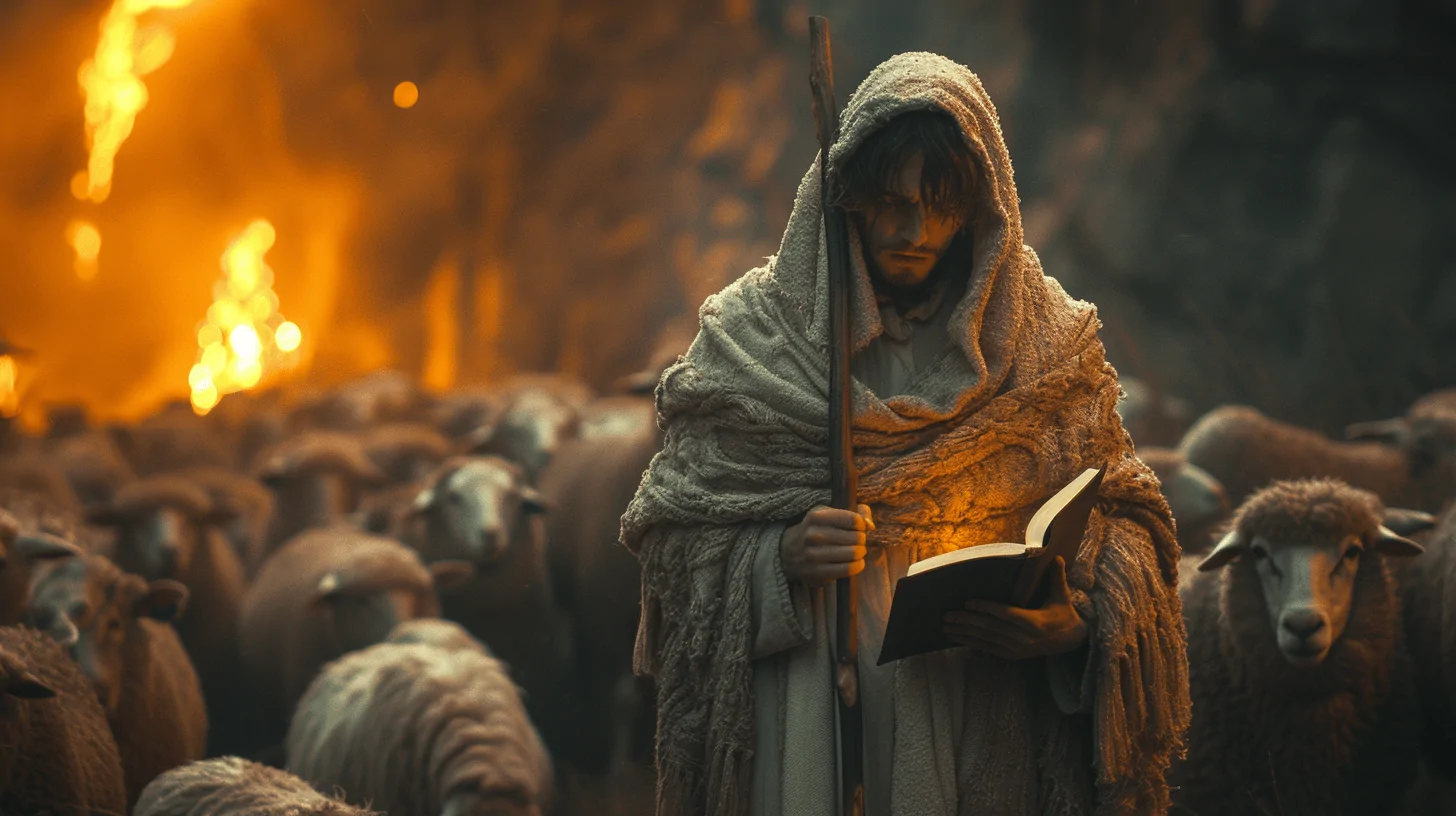
The lesson explores the symbolic meaning of the rod or staff in the Bible, representing God’s word and those who possess and teach it rightly. The rod has two main figurative meanings: God’s word itself which guides, comforts, corrects, and judges; and a person who faithfully handles and imparts God’s word, acting as a true shepherd. Jesus Christ is the ultimate embodiment of God’s authoritative word given by the Father to rule and judge with truth, and his true disciples also have spiritual authority through God’s word. In contrast, there are false shepherds who distort or reject God’s word, leading people astray, symbolized by the Pharisees and Sadducees. The “iron scepter” represents the authority granted to Jesus and those who overcome and remain faithful until the end. Discernment is crucial to ensure guidance by the true shepherd (God’s word) and not false shepherds, lest one stumbles from the truth as the end times approach.
Secrets of Heaven: Figurative Rod
What do you think the rod and staff mean?
Rod = The word and a person who has the word (with the word)
Open and Sealed Word
Today, we’ll delve into the concept of open and sealed word, a crucial aspect that enables us to comprehend the mysteries of the Kingdom of Heaven. Before we proceed, let’s briefly review this concept. Open and sealed words play a critical role in our ability to grasp the secrets of the Kingdom of Heaven. What we’ll be exploring today has remained concealed for a long time.
Contents in the Bible
What are the four types of content in the Bible? History, moral teachings, prophecy and fulfillment.
ONE – History
Things like David defeating Goliath. Joseph was the adoptive father of Jesus, although not his biological father. But Joseph raised Jesus, correct? That’s history.
TWO – Moral teachings
Treat others as you would like to be treated. Do not judge others or you will be judged. Do not covet your neighbor’s possessions or steal from them.
“Do not kill” – these are moral teachings and ethical principles to live by.
These types of moral guidelines and biblical histories are relatively straightforward for most Christians to understand and follow. Many Christians spend their whole lives focusing just on these basics. Like babies, they are only able to handle “milk” – simple teachings. They remain constantly hungry, always wanting more, because they are not actually getting any “solid food” – the deeper spiritual truths that require discernment.
There are prophecies and fulfillments, profound spiritual matters, that God seals off for a time until we are ready. When the student is ready, God opens up these deeper teachings.
THREE – Prophecies
I spoke to the prophets, gave them many visions and told parables through them.”
I spoke to the prophets, gave them many visions, and told parables through them. A prophet speaks prophecy, but that prophecy is spoken in parables. Parables are important to understand in order to understand prophecy, for the two are very connected.
Does anyone remember why God speaks His prophecies in parables? He does it this way so that the evil one cannot understand His plans. What happens when the evil one understands God’s plan? The evil one either copies God or does the complete opposite of what God is trying to do. He also tries to impede what God is trying to accomplish.
When Pharaoh noticed that Moses was born or that the Israelites were growing in size, Satan caught wind of Moses’s birth. So he inspired Pharaoh to kill all the babies, just as he did when Jesus the Messiah was born. Satan is always trying to impede God’s plan. But God speaks His prophecies and parables to protect His plans so that they cannot be stopped.
This means that initially the prophecy is sealed, meaning it cannot be understood by anyone, even if they are very intelligent or have studied the Bible their entire lives. This is intentional. But it does not remain that way forever.
11 For you this whole vision is nothing but words sealed in a scroll. And if you give the scroll to someone who can read, and say, “Read this, please,” they will answer, “I can’t; it is sealed.” 12 Or if you give the scroll to someone who cannot read, and say, “Read this, please,” they will answer, “I don’t know how to read.”
13 The Lord says:
“These people come near to me with their mouth and honor me with their lips, but their hearts are far from me. Their worship of me is based on merely human rules they have been taught.
This passage is not referring to literal literacy. Just as seeing is compared to understanding, and hearing is compared to understanding, reading is also compared to understanding.
Verse 11 refers to those who are supposed to be able to understand – the leaders and seers – but they are unable to. Verse 12 then states that those who depend on the leaders for understanding have no hope if the leaders themselves cannot understand.
This is a prophecy about the time of the first coming, but the logic of this prophecy also applies to our time. There will be those who cannot understand and thus will not be able to help others understand either. This will not be the case forever though. A time comes when the word is opened and able to be understood. For example, at Jesus’ first coming, he began explaining the scriptures so they could be understood.
I would like to explore and reflect on the interaction Jesus had with the Samaritan woman in a new light. This time, you’ll perceive it from an entirely new perspective.
24 God is spirit, and his worshipers must worship in the Spirit and in truth.”
25 The woman said, “I know that Messiah” (called Christ) “is coming. When he comes, he will explain everything to us.”
26 Then Jesus declared, “I, the one speaking to you—I am he.”
Wow, amen! Imagine being the Samaritan woman in this story. Think about it: she had been waiting for generations, and now she’s leading the one she’s been waiting for. But pay close attention to what she says in verse 25, because it’s so significant. She asks, “When the Messiah comes, what will he do?”
And the answer is: He will explain. He will open up the secrets of the Kingdom of Heaven. In Matthew 13:10-11, it says that these secrets have been given to us, but not to those on the outside (them). They will only hear parables, and the word will remain sealed to them.
But for those of us with humble hearts who come to Jesus and ask, “What do you mean by this? Explain it to us,” He will gladly do so. This is why it’s so important to have noble and good hearts that are receptive to the seed being sown.
Do you see the connection between all these parables? They’re all interconnected, not separate stories. They’re all part of one continuous thread in the Bible. It’s truly amazing!
Now, let’s consider our time. Is the word of the New Testament still open to us?
25 “Though I have been speaking figuratively, a time is coming when I will no longer use this kind of language but will tell you plainly about my Father.
So what did Jesus say here? A time is coming when I will no longer use figurative language. But what will we do? Tell you plainly about my Father. And the time is coming when I will no longer speak in this way. But we will tell you clearly about my Father.
Has that time come? What are we hearing?
Let’s get started with the lesson. I’ll let you reflect on that.
FOUR – Fulfilments
The open and sealed word. Do we understand the flo? Prophecy before it is fulfilled is sealed and cannot be fully grasped. When prophecy is fulfilled, it opens up and is able to be explained. Like Isaiah 7:14 – “A virgin will give birth to a child.”
Then 700 years passed when no one could fully know the meaning of that verse, because Mary and Jesus had not arrived yet. So when Mary and Jesus came, it became possible to truly understand Isaiah 7:14. There are many end times prophecies that follow this same pattern – warnings about the mountains, abomination, wars, famines, plagues, the Seven Seals, the Seven Trumpets, etc. What do these symbols mean and how can we know for sure? What must happen for us to fully comprehend?
The prophecies have to be fulfilled. As believers, we should be waiting for and watching for fulfillment. And once fulfillment takes place, we should be waiting for the explanation – “You say these things have happened, now explain it.” That is how we should be anticipating in the second coming.
Figurative Rod (Staff)
Main Reference:
I was given a reed like a measuring rod and was told, “Go and measure the temple of God and the altar, with its worshipers. 2 But exclude the outer court; do not measure it, because it has been given to the Gentiles. They will trample on the holy city for 42 months.
Let us analyze this prophecy to understand its significance in the same context. Here we have a reed that is given to someone. I was given a reed like a measuring rod. The writer of Revelation is the Apostle John. As Apostle John sees the vision of Revelation, he sees a particular vision for which he is given a reed.
In context, a reed is a crop similar to wheat that grew commonly in the Middle East, especially in Egypt at that time. Reeds have a weak nature – they are easy to bend and break.
So let us note that John was given a fragile reed, but this reed had a specific purpose. It was given to him to measure. A measuring rod.
To understand this prophecy, first let’s comprehend what a rod is, as opposed to a reed. A rod is sturdy and strong – it does not bend or break. So to grasp the prophecy, let us examine and understand what a rod is.
1. Physical Characteristics of a Rod (Staff)
A rod or staff serves multiple purposes, as intended by God, according to Romans 1:20. Creation itself is a testament to God, revealing His nature through what He has made.
Let’s consider the various functions of a rod:
ONE – A rod is robust and supportive, assisting those who may need aid:
a. In walking: It’s beneficial for individuals who are physically weaker or older, providing support as they move.
b. To guide: For those with visual impairments, a rod can help navigate their surroundings, preventing falls or trips.
d. To protect: A rod can also serve as a means of protection or defence.
e. To correct: It serves as a tool for correction. As the Bible suggests, sparing the rod may impede a child’s growth into a responsible adult. Proverbs 13:24
A rod or staff is indeed versatile. However, we’ll focus on a specific type of rod today: the scepter.
TWO – A scepter represents authority, a symbol of kingly power signifying the right to rule. Only those with granted authority to rule and guide can wield a scepter, as seen in the story of Esther from the Bible.
“All the king’s officials and the people of the royal provinces know that for any man or woman who approaches the king in the inner court without being summoned the king has but one law: that they be put to death unless the king extends the gold scepter to them and spares their lives. But thirty days have passed since I was called to go to the king.”
The king possessed the authority to pardon any individual he chose, simply by the gesture of raising his scepter. Imagine, with just that action, he could declare, ‘I pardon you.’ Shortly, we will explore how the scepter is symbolically used in the Book of Revelation to significant effect.
2. Spiritual Meaning of Rod : The Word
First meaning: Rod = the word
1 The Lord is my shepherd, I lack nothing.
2 He makes me lie down in green pastures, he leads me beside quiet waters,
3 he refreshes my soul. He guides me along the right paths for his name’s sake.
4 Even though I walk through the darkest valley, I will fear no evil, for you are with me;
your rod and your staff, they comfort me.
What do we see here? The Lord is our Shepherd. I shall not lack anything. The Lord guides me. In verse 4, His rod and His staff comfort me. A shepherd takes care of sheep.
Let’s talk about sheep. In the world, believers are compared to sheep. The world twists what God says is good.
What are sheep’s characteristics?
Why does God say the sheep will inherit the kingdom in Matthew 25:31-46, but the goats, being stubborn and heavy-headed, will not?
Sheep naturally listen for the shepherd’s voice. They ignore all other voices. The shepherd’s staff has a hook to wrap around the sheep and pull them to safety. That’s why it says “your rod and your staff comfort me” – they guide me and correct me.
Let’s be like sheep – not gullible (easily fooled and lacking independent thought) as the world sees it, but knowing and listening to the Shepherd’s voice through knowing God’s Word. Sheep go wherever the Lord goes. They are obedient followers, not mindless but attentive to their Shepherd.
In essence, being like sheep in the spiritual sense is not about gullibility as the world perceives it. It’s about conscious obedience and discernment—following the Lord with intentionality and faithfulness.
You are my sheep, the sheep of my pasture, and I am your God, declares the Sovereign Lord.’”
What did God say here? He said that we people are His sheep and He is our God. This compares people to sheep, similar to Matthew 25.
Let’s strive to be those sheep that God can guide with His rod. What then is the rod of God that He uses to guide us?
“Is not my word like fire,” declares the Lord, “and like a hammer that breaks a rock in pieces?
Through the prophet Jeremiah, God compares His word to fire, saying “Is not my word like fire?” There is another verse that also describes God’s word as fire. The fire is likely figurative, which we will explore further soon.
God also compares His word to a hammer that breaks rocks into pieces, saying “Is not my word like a hammer that breaks a rock to pieces?” A hammer is a rod with a blunt end used to deliver forceful blows. God uses this comparison to convey that His word carries out judgment, similar to how a hammer or rod executes judgment. The key message is that God’s word is like a purifying fire and an instrument of judgment.
but with righteousness he will judge the needy, with justice he will give decisions for the poor of the earth. He will strike the earth with the rod of his mouth; with the breath of his lips he will slay the wicked.
What does this passage say? It states that God will judge with the rod of His mouth. In other words, what comes out of one’s mouth are words. So God is conveying that He will judge with His words. The rod that guides, protects and that we should hear and listen to is the word of God.
Are you noticing a pattern? We have analyzed numerous parables showing that the “rod” symbolizes God’s word. This is not an accident. God wants us to comprehend His word in many ways. God’s word grows, guides, rebukes, corrects, judges, cleanses and refines. It serves many powerful functions. That is why studying Scripture is so vital. A believer who does not recognize the value of studying God’s word is like a chicken with its head cut off – powerless. But a believer with God’s word has great power.
Reminder:
Let’s briefly review what we discussed. We talked about the first meaning of “rod,” which refers to the word of God. We described some physical characteristics of a rod. A rod can be a tool for guiding, rebuking, protecting, and correcting. It can also be used for walking.
An important point about a rod is that if it is being used to support someone walking, and they move past the rod, what will happen? They will fall. So where must the rod be positioned in order to properly support someone walking? At all times, it must be positioned in front of them. Otherwise, it is useless.
We can draw a parallel – where should the word of God be in relation to us at all times? It should be in front of us at all times. Otherwise what will happen? We will stumble and fall. Let’s keep the word of God in front of us as guidance, so we do not falter.
3. Spiritual Meaning of Rod : A Person with the Word
The second definition of rod, which is a person.
Look, I know you are depending on Egypt, that splintered reed of a staff, which pierces the hand of anyone who leans on it! Such is Pharaoh king of Egypt to all who depend on him.
Interesting. We see here in the book of Isaiah that the Pharaoh, the king of Egypt, is compared to a splintered reed of a staff. Anyone who leans on the Pharaoh will be pierced. That was certainly the case at the time of the Exodus when God’s people left Egypt. The Pharaoh was not someone who was dependable, but the opposite of the Pharaoh was Moses, who tended to carry around a staff.
God even turned Moses’ staff into a snake, a miracle. And when Moses parted the Red Sea, what did he do? He lifted his staff. Moses was dependable while the Pharaoh was not. Both are compared to rods, but the Pharaoh was a reed that you can break.
So people are being compared to rods in the Bible, not by accident. God’s staff was Moses, and anyone like Moses becomes God’s staff – someone you can rely on. But Satan’s staff splinters you or pierces you, doing the very opposite.
An example at the time of the first coming: Whenever you think about John chapter 8, think of a war between two sides – two sides who claim to be believers, but only one side is true.
As it is, you are looking for a way to kill me, a man who has told you the truth that I heard from God. Abraham did not do such things.
So, at the first coming, who was God’s dependable instrument, who was God’s dependable servant? It was Jesus. He was the rod of God – someone that one could rely on in any situation to get them through what they needed to, with his words that guided, comforted, corrected. And his words allowed someone to live and act in accordance with God. But there were others who could not do the same; who had different words, which did not properly guide people.
44 You belong to your father, the devil, and you want to carry out your father’s desires. He was a murderer from the beginning, not holding to the truth, for there is no truth in him. When he lies, he speaks his native language, for he is a liar and the father of lies. 45 Yet because I tell the truth, you do not believe me! 46 Can any of you prove me guilty of sin? If I am telling the truth, why don’t you believe me? 47 Whoever belongs to God hears what God says. The reason you do not hear is that you do not belong to God.”
You do not hear because you do not belong to God. Jesus asked, “Are you children of Abraham?” You say, “We are descendants from Moses. We follow the law.” But Jesus said, “You are not children of Abraham. Abraham would have embraced me with open arms, yet you do not.”
Let’s look at another passage where Jesus rebukes those who are not dependable, Matthew chapter 22.
23 That same day the Sadducees, who say there is no resurrection, came to him with a question.
29 Jesus replied, “You are in error because you do not know the Scriptures or the power of God.
Context: In Matthew 22:23, the Sadducees, who did not believe in resurrection, try to trap Jesus with a tricky question.
The Sadducees were the second largest group in Israel at that time. As mentioned in verse 23, they did not believe in resurrection. The Sadducees only read and believed the first five books of the Bible, disregarding later prophecies about resurrection in books like Isaiah, Jeremiah and Ezekiel.
Imagine the Pharisees and Sadducees arguing amongst each other when they didn’t even share the same theological foundations – what a mess! Anyway, the Sadducees try to trap Jesus with an absurd scenario about a woman marrying multiple brothers after each one dies. They pose this tricky question because they don’t believe in resurrection themselves.
But how does Jesus respond? He says the Sadducees are in error because they don’t understand Scripture or God’s power. It’s impossible for them to be correct. The religious leaders who were supposed to guide the people couldn’t properly interpret Scripture (they were supposed to be able to read, but they could not). As we discussed earlier (Isaiah 29:11-13), the word is sealed to them because their hearts are closed.
Interestingly, Jesus’ second coming will have similarities to this situation during his first coming. The religious elite were ignorant then, and Jesus implies it will be similar upon his return.
4. Iron Scepter
26 To the one who is victorious and does my will to the end, I will give authority over the nations— 27 that one ‘will rule them with an iron scepter and will dash them to pieces like pottery’—just as I have received authority from my Father.
The iron scepter is given from God to Jesus, to the one who overcomes.
Some Bible versions might say “those who overcome” as well. Going forward.
Jesus said, “Just as I have been given authority from my Father, so too will I give authority to the one who overcomes when Revelation chapter 2 is fulfilled.”
So let’s examine what Jesus means when he mentions authority.
Jesus has been granted authority over all people by God the Father (John 17:2). This true authority comes only from God. Specifically, God gave Jesus the authority to rule – symbolized by an iron scepter (Psalm 2:9). However, Jesus did not rule like a traditional earthly king. Rather, he preached the word so that many could hear, be cleansed, and be saved.
So this is not an authority to simply command others. Rather, it is an authority to guide using the word of God – which is represented as a rod or iron scepter. This could be described as ecclesiastical authority – authority in religious or spiritual matters.
As we study more, we’ll discuss further what this authority means for Jesus’ second coming and for those who faithfully follow him. But an important implication is that today we must be able to discern any claim to ecclesiastical authority. As 1 John 4:1 states, we need to “test the spirits” to determine if they are from God.
In summary, Jesus has supreme authority granted from the Father to rule in spiritual matters for the salvation of many. Moving forward, we must test claims of religious authority against Scripture.
Memorization
but with righteousness he will judge the needy, with justice he will give decisions for the poor of the earth. He will strike the earth with the rod of his mouth; with the breath of his lips he will slay the wicked.
Instructor Review
SUMMARY
Let us keep this concept in mind and engrave it on our hearts: God will judge with the rod of His mouth – meaning His word. He has given all authority to judge to His Son, Jesus Christ, who spoke God’s truth. The rod is figurative language referring to God’s word and those who wield it.
A rod can guide, comfort, and lead, as used by a shepherd caring for his sheep. This is similar to when Jesus asked Peter three times, “Do you love me?” and told him to feed and tend to His sheep, meaning care for His followers. I pray we are all under the guidance of shepherds who teach soundly with God’s word, leading people to truth.
Review with the Evangelist
REVIEW
Title: Secrets of Heaven – The Figurative Rod
God uses physical things to explain spiritual truths, as stated in Romans 1:20. What are the physical characteristics of a rod? A rod is a tool used for walking and discerning, protecting, and guiding.
We also discussed the iron scepter, which symbolizes authority. The figurative rod has two meanings – God’s word itself, and the person who possesses God’s word. The rod gives comfort, corrects us, and guides us, as seen in Psalm 23.
There are two types of shepherds or people with God’s word – the God Shepherd and the Satanic shepherd. At Jesus’ first coming, the God Shepherd was Jesus, while the Satanic shepherds were the Pharisees and Sadducees who rejected God’s word. This illustrates the two spirits at work – God’s spirit manifested through Jesus and his disciples who accepted God’s word, and the satanic spirit manifested through the religious leaders who rejected truth.(Matthew 15:14)
Jesus is the rod of God and the iron scepter with authority to rule. His disciples also have authority through God’s word. The Pharisees lacked truth and were unable to properly guide people, like a blind man trying to lead others.
When following God’s guiding rod, we must stay behind it rather than running ahead without wisdom and discernment, or we may stumble. We must examine whether we are being guided by truth or falsehood, by those with God’s word or those leading us astray. Our hope is to be guided, protected and corrected by God’s rod in the end times.
Let’s Us Discern
Analysis of SCJ Lesson 22: “Secrets of Heaven – Figurative Rod (Staff)”
A Refutation Using “Testing Shincheonji’s Claims: Two Lenses, One Story”
Introduction: The Staff of Authority
Imagine you’re lost in a foreign city at night. A police officer approaches, badge gleaming under the streetlight. “You shouldn’t be here,” he says with concern. “This area is dangerous. Follow me—I’ll take you somewhere safe.” Grateful, you follow him through winding streets. He explains the city’s layout, points out landmarks, and speaks with such authority that you never think to question him.
But gradually, you notice something odd. The streets are getting darker, not lighter. The buildings look increasingly abandoned. When you hesitate, he taps his badge. “See this? This is my authority. I’m a police officer. You need to trust me.” His uniform looks right. His badge looks authentic. His confident tone suggests he knows exactly where he’s going.
Hours later, you realize he’s led you to an isolated warehouse district. The “badge” was a clever fake. The “uniform” was a costume. The “authority” was nothing but a prop and a performance. By the time you understand you’ve been deceived, you’re miles from where you started, completely dependent on someone who never had legitimate authority at all.
This is what happens in SCJ Lesson 22.
The lesson appears to be a solid biblical teaching about the “rod” or “staff” as a symbol of God’s Word and godly leadership. Instructor Nate walks students through passages from Psalms, Isaiah, Jeremiah, and Revelation, explaining how the rod represents both God’s Word and those who faithfully teach it. He contrasts true shepherds (like Moses and Jesus) with false shepherds (like Pharaoh and the Pharisees). Everything sounds orthodox, biblically grounded, and spiritually enriching.
But beneath the surface, something else is happening. The lesson is constructing a framework that will eventually position Lee Man-hee as “the one who overcomes” (abbreviated as “OWO” in the lesson materials)—the person who receives the “iron scepter” of authority at the Second Coming. By teaching that authority comes from having the “opened” Word, the lesson prepares students to accept that only those with SCJ’s interpretation have legitimate spiritual authority.
This lesson sits at position 22 in the Introductory (Parables) Level—strategically placed after students have learned about “sealed” and “opened” Scripture, symbolic interpretation, and the need for special revelation. Students are now being taught about spiritual authority and how to recognize it. The criteria being established will eventually point to one conclusion: Lee Man-hee has the “iron scepter,” making him the legitimate spiritual authority for this age.
By the time students realize where this teaching leads, they’ve already accepted the framework: that spiritual authority comes from having the “opened” Word, that most Christian leaders are like the blind Pharisees, that a special person receives the “iron scepter” at the Second Coming, and that questioning this authority means rejecting God’s plan. The “badge” looked authentic. The “uniform” seemed right. But the authority was never legitimate.
Let’s examine how this lesson uses legitimate biblical teaching to build an illegitimate claim to authority, and how the principles in “Testing Shincheonji’s Claims: Two Lenses, One Story” expose the manipulation.
Part 1: What SCJ Teaches in This Lesson
The Surface Teaching (What Students Hear)
The lesson presents a straightforward symbolic interpretation of the rod/staff in Scripture:
Physical Characteristics of a Rod:
- A tool for walking and support
- Used for guiding and directing
- Provides protection and defense
- Serves as an instrument of correction
- A scepter represents kingly authority
Spiritual Meaning #1: Rod = God’s Word
- Psalm 23:4: “Your rod and your staff, they comfort me”
- Jeremiah 23:29: “Is not my word like fire… and like a hammer that breaks a rock in pieces?”
- Isaiah 11:4: “He will strike the earth with the rod of his mouth”
The rod represents God’s Word, which guides, comforts, corrects, and judges.
Spiritual Meaning #2: Rod = A Person Who Has God’s Word
- Isaiah 36:6: Pharaoh is compared to a “splintered reed” (unreliable)
- Moses carried a staff and was God’s reliable instrument
- Jesus was the “rod of God” at the First Coming
- The Pharisees and Sadducees were “Satan’s rods” (false shepherds)
The Iron Scepter:
- Revelation 2:26-27: The one who overcomes receives authority (the iron scepter)
- This represents “ecclesiastical authority”—authority in spiritual matters
- Jesus received this authority from the Father (John 17:2)
- At the Second Coming, this authority is given to “the one who overcomes” (OWO)
Key Framework Being Established:
- Spiritual authority comes from having God’s Word
- There are two types of shepherds: God’s shepherds (reliable) vs. Satan’s shepherds (unreliable)
- True shepherds have the “opened” Word; false shepherds have “sealed” understanding
- At the Second Coming, a specific person (“the one who overcomes”) receives the iron scepter
- Believers must discern who has legitimate spiritual authority
The Subtext (What’s Really Being Established)
Beneath this seemingly biblical teaching, several problematic foundations are being laid:
1. Preparation for Lee Man-hee’s Authority Claim: The lesson introduces “the one who overcomes” (OWO) who receives the iron scepter at the Second Coming. Students don’t yet know this refers to Lee Man-hee, but the foundation is being laid. Later lessons will reveal that Lee Man-hee claims to be this person.
2. Delegitimizing Existing Christian Leadership: By comparing modern Christian leaders to the Pharisees and Sadducees (who couldn’t understand Scripture), the lesson prepares students to reject their pastors’ concerns about SCJ. The implicit message: your pastor is like the blind Pharisees who rejected Jesus.
3. Creating Dependency on SCJ’s Interpretation: The lesson emphasizes that true authority comes from having the “opened” Word. Since SCJ claims to have the only correct “opened” interpretation, this means only SCJ leaders have legitimate authority.
4. Establishing Unfalsifiable Authority: The lesson teaches that questioning spiritual authority means you’re like the Pharisees who rejected Jesus. This creates a psychological trap: if you question SCJ’s authority, you’re proving you’re on the wrong side.
5. Redefining “Ecclesiastical Authority”: The lesson introduces the concept of “ecclesiastical authority” (teaching authority in spiritual matters) and connects it to the iron scepter. This prepares students to accept that Lee Man-hee has unique teaching authority that supersedes all other Christian teachers.
Part 2: Analysis Through “Testing Shincheonji’s Claims: Two Lenses, One Story”
Chapter 18: The Real Test of Authority
Chapter 18 of “Testing Shincheonji’s Claims: Two Lenses, One Story” is titled “The Real Test of Authority: Distinguishing Genuine from Counterfeit Authority.” This chapter provides the exact framework needed to evaluate this lesson’s claims about spiritual authority.
The Authority Problem in This Lesson:
The lesson teaches that spiritual authority comes from having the “opened” Word. The instructor states:
“Jesus has supreme authority granted from the Father to rule in spiritual matters for the salvation of many. Moving forward, we must test claims of religious authority against Scripture.”
This sounds reasonable—we should test authority claims against Scripture. But notice what’s actually being established:
- Authority is redefined: The lesson defines authority as having correct interpretation (“opened” Word) rather than being appointed by God and confirmed by the church
- The test is circular: Students are told to test authority against Scripture, but they’re also taught that only those with SCJ’s interpretation can correctly understand Scripture
- A specific person is positioned: The “one who overcomes” (OWO) receives the iron scepter—setting up Lee Man-hee’s authority claim
Chapter 18’s Biblical Response:
The chapter explains that biblical authority is tested through multiple criteria:
1. Consistency with Scripture’s clear teaching:
- Acts 17:11: The Bereans “examined the Scriptures every day to see if what Paul said was true”
- 1 John 4:1: “Test the spirits to see whether they are from God”
True authority doesn’t fear scrutiny. Paul commended the Bereans for fact-checking him against Scripture.
2. Confirmed by multiple witnesses:
- 2 Corinthians 13:1: “Every matter must be established by the testimony of two or three witnesses”
- Matthew 18:16: Jesus Himself established this principle
Biblical authority is never based on one person’s claim. It’s confirmed by multiple witnesses and the broader church.
3. Produces fruit of the Spirit:
- Matthew 7:15-20: “By their fruit you will recognize them”
- Galatians 5:22-23: Love, joy, peace, patience, kindness, goodness, faithfulness, gentleness, self-control
True spiritual authority produces these fruits, not fear, isolation, and dependency.
4. Points to Christ, not to self:
- John 5:39-40: “These are the very Scriptures that testify about me, yet you refuse to come to me to have life”
- 2 Corinthians 4:5: “For what we preach is not ourselves, but Jesus Christ as Lord”
True authority points people to Christ, not to a human leader or organization.
Biblical Response to the “Iron Scepter” Claim:
The lesson’s interpretation of Revelation 2:26-27 is problematic in several ways:
1. Context of Revelation 2:
Revelation 2:26-27 is part of Jesus’ letter to the church in Thyatira:
“To the one who is victorious and does my will to the end, I will give authority over the nations—that one ‘will rule them with an iron scepter and will dash them to pieces like pottery’—just as I have received authority from my Father.”
The lesson interprets “the one who overcomes” as a single individual (Lee Man-hee) who receives unique authority. But context shows this is a promise to all faithful believers in Thyatira:
- Revelation 2:24-25: “Now I say to the rest of you in Thyatira… Only hold on to what you have until I come.”
- Revelation 2:26: “To the one who is victorious…” (singular used generically for any believer)
This is similar to how Jesus uses singular language generically elsewhere:
- John 3:16: “whoever believes” (singular, but applies to all believers)
- Matthew 16:24: “Whoever wants to be my disciple” (singular, but applies to all disciples)
The promise is to all overcomers in Thyatira, not to one special person at the Second Coming.
2. The “Overcoming” Theme in Revelation:
Revelation repeatedly promises rewards to “the one who overcomes”:
- Revelation 2:7: “To the one who is victorious, I will give the right to eat from the tree of life”
- Revelation 2:11: “The one who is victorious will not be hurt at all by the second death”
- Revelation 2:17: “To the one who is victorious, I will give some of the hidden manna”
- Revelation 2:26: “To the one who is victorious… I will give authority over the nations”
- Revelation 3:5: “The one who is victorious will… be dressed in white”
- Revelation 3:12: “The one who is victorious I will make a pillar in the temple of my God”
- Revelation 3:21: “To the one who is victorious, I will give the right to sit with me on my throne”
Are all these promises to one person (Lee Man-hee)? Or are they promises to all faithful believers who overcome through faith in Christ?
The answer is clear from Revelation itself:
- Revelation 12:11: “They triumphed over him by the blood of the Lamb and by the word of their testimony”
- 1 John 5:4-5: “Everyone born of God overcomes the world. This is the victory that has overcome the world, even our faith. Who is it that overcomes the world? Only the one who believes that Jesus is the Son of God.”
“Overcoming” in Revelation refers to all believers who remain faithful to Christ, not to one special individual.
3. The “Iron Scepter” Imagery:
The “iron scepter” language comes from Psalm 2:9:
“You will break them with a rod of iron; you will dash them to pieces like pottery.”
Psalm 2 is a messianic psalm about the Messiah’s reign. The New Testament applies this to Jesus Christ:
- Revelation 12:5: “She gave birth to a son, a male child, who ‘will rule all the nations with an iron scepter.’ And her child was snatched up to God and to his throne.”
- Revelation 19:15: “Coming out of his mouth is a sharp sword with which to strike down the nations. ‘He will rule them with an iron scepter.'”
The iron scepter belongs to Christ, not to a human leader. Revelation 2:26-27 promises that faithful believers will share in Christ’s authority when He returns, not that one person receives Christ’s unique authority.
This is consistent with other New Testament promises:
- 2 Timothy 2:12: “If we endure, we will also reign with him”
- Revelation 20:4: “They came to life and reigned with Christ a thousand years”
- Revelation 22:5: “And they will reign for ever and ever”
All faithful believers will reign with Christ, not one special person.
Chapter 19: When Claims Cannot Be Tested (Unfalsifiable Prophecy)
Chapter 19 of “Testing Shincheonji’s Claims” examines unfalsifiable claims—assertions that cannot be tested or proven wrong. This lesson creates an unfalsifiable authority structure:
The Unfalsifiable Framework:
The lesson teaches:
- True authority comes from having the “opened” Word
- Only those with the “opened” Word can correctly understand Scripture
- If you question this authority, you’re like the Pharisees who rejected Jesus
- The “one who overcomes” receives the iron scepter at the Second Coming
This creates a system where:
- If you accept the teaching → You’re a humble sheep following the true shepherd
- If you question the teaching → You’re a proud Pharisee rejecting God’s authority
- If you seek outside verification → You’re relying on “blind guides” who can’t understand Scripture
How can students test whether Lee Man-hee actually has the “iron scepter”? The lesson provides no objective criteria—only the claim that he has the “opened” Word, which students must accept on faith.
Biblical Response:
The Bible provides objective criteria for testing authority claims:
1. Prophecy must be 100% accurate:
- Deuteronomy 18:21-22: “You may say to yourselves, ‘How can we know when a message has not been spoken by the Lord?’ If what a prophet proclaims in the name of the Lord does not take place or come true, that is a message the Lord has not spoken.”
Has Lee Man-hee made prophecies that didn’t come true? Yes—documented false prophecies include predictions about the timing of the Second Coming and specific events that didn’t occur as predicted.
2. Teaching must align with apostolic doctrine:
- Galatians 1:8-9: “But even if we or an angel from heaven should preach a gospel other than the one we preached to you, let them be under God’s curse!”
- 2 John 1:9-10: “Anyone who runs ahead and does not continue in the teaching of Christ does not have God”
Does SCJ’s teaching align with historic Christian doctrine? No—their claims about Lee Man-hee contradict the apostolic teaching that Christ alone is the way to the Father (John 14:6) and that salvation comes through faith in Christ alone (Acts 4:12).
3. Authority is confirmed by the church:
- Acts 15: The Jerusalem Council tested Paul’s teaching and confirmed it
- 1 Corinthians 14:29: “Two or three prophets should speak, and the others should weigh carefully what is said”
Has Lee Man-hee’s authority been confirmed by the broader Christian church? No—he’s been rejected by Christian leaders worldwide as teaching heresy.
Chapter 20: The Danger of Creative Fulfillment
Chapter 20 of “Testing Shincheonji’s Claims” warns about “creative fulfillment”—how adaptation, gap-filling, and selective interpretation create false narratives. This lesson demonstrates that technique through its handling of the “iron scepter” prophecy.
The Creative Fulfillment in This Lesson:
The lesson takes Revelation 2:26-27 (a promise to all faithful believers) and creatively reinterprets it as a prophecy about one special person at the Second Coming. This requires:
- Ignoring context: The promise is to the church in Thyatira, not to a future individual
- Selective reading: Focusing on “the one who overcomes” while ignoring that this phrase appears seven times in Revelation 2-3, always referring to faithful believers generally
- Adding meaning: Introducing the concept of “ecclesiastical authority” and connecting it to the iron scepter, even though the text doesn’t make this connection
- Gap-filling: Since the text doesn’t identify who “the one who overcomes” is, SCJ fills the gap with Lee Man-hee
Biblical Response:
Chapter 24-25 of “Testing Shincheonji’s Claims” (“The Scarlet Thread”) examines the Bible’s unified narrative. When we read Revelation in light of the whole Bible, the “overcoming” theme is clear:
Old Testament Background:
- Genesis 3:15: The promise that the woman’s offspring would crush the serpent’s head
- Throughout the OT, God’s people “overcome” by trusting God despite opposition
New Testament Fulfillment:
- Romans 8:37: “In all these things we are more than conquerors through him who loved us”
- 1 John 5:4-5: “Everyone born of God overcomes the world… Who is it that overcomes the world? Only the one who believes that Jesus is the Son of God.”
Revelation’s Application:
- Revelation 12:11: “They triumphed over him by the blood of the Lamb”
- Revelation 21:7: “Those who are victorious will inherit all this”
The “overcoming” theme is about all believers who remain faithful to Christ, not about one special person receiving unique authority.
Chapter 13: The Verification Problem
Chapter 13 of “Testing Shincheonji’s Claims” addresses how to evaluate spiritual claims that cannot be independently verified. This lesson creates a verification problem by teaching about authority in a way that makes it impossible to objectively test.
The Verification Problem:
The lesson teaches that true spiritual authority comes from having the “opened” Word. But how can students verify who has the “opened” Word? The lesson provides no methodology except:
- Circular reasoning: Those with the “opened” Word can understand Scripture; if you understand Scripture correctly, you have the “opened” Word
- Appeal to results: True shepherds guide people correctly; if people are being guided, the shepherd must be true
- Comparison to Jesus: Jesus had the “opened” Word and was rejected by religious leaders; if someone is rejected by religious leaders, they might be like Jesus
None of these provide objective verification. Students are left dependent on the instructor’s claims.
Biblical Response:
The Bible provides verifiable criteria for testing spiritual authority:
1. Public, verifiable fulfillment:
- Luke 24:44-47: Jesus pointed to fulfilled prophecy as verification of His authority
- Acts 2:22: “Jesus of Nazareth was a man accredited by God to you by miracles, wonders and signs, which God did among you through him, as you yourselves know”
Jesus’ authority was verified by public events that people could witness and confirm.
2. Consistency with previous revelation:
- Isaiah 8:20: “Consult God’s instruction and the testimony of warning. If anyone does not speak according to this word, they have no light of dawn.”
- Acts 17:11: The Bereans examined the Scriptures to verify Paul’s teaching
True authority is consistent with God’s previous revelation, not contradictory to it.
3. Confirmation by multiple witnesses:
- John 5:31-39: Jesus appealed to multiple witnesses—John the Baptist, His works, the Father, and the Scriptures
- 2 Corinthians 13:1: “Every matter must be established by the testimony of two or three witnesses”
Lee Man-hee’s authority claim is based solely on his own testimony and SCJ’s interpretation—there are no independent witnesses confirming his claims.
Part 3: The Psychological Progression
The Indoctrination Process at Lesson 22
By Lesson 22, students have been in the Parables course for approximately 7-11 weeks. Let’s examine what’s happened psychologically:
1. Authority Confusion: Students have been taught:
- The Bible was “sealed” and required special interpretation
- Most Christians and Christian leaders don’t understand Scripture correctly
- True understanding comes from having the “opened” Word
- There are true shepherds and false shepherds
This creates confusion about authority: Who can I trust? My pastor says one thing, but this teacher says another. How do I know who’s right?
2. The Answer Provided: This lesson provides the answer: True authority comes from having the “opened” Word. The “one who overcomes” receives the iron scepter of authority at the Second Coming.
Students don’t yet know this refers to Lee Man-hee, but they’ve accepted the framework. When Lee Man-hee is later revealed as “the one who overcomes,” students will have already accepted that this person has unique spiritual authority.
3. Delegitimizing External Authority: By comparing Christian leaders to the Pharisees and Sadducees, the lesson pre-emptively discredits any concerns students’ pastors might raise about SCJ:
“The Pharisees and Sadducees were religious leaders who couldn’t understand Scripture. They rejected Jesus. Your pastor might be like them—unable to understand the ‘opened’ Word and rejecting God’s true messenger.”
4. Creating Identification: Students are encouraged to identify as “sheep” who follow the true shepherd’s voice:
“Let’s be like sheep—not gullible as the world sees it, but knowing and listening to the Shepherd’s voice through knowing God’s Word.”
This creates positive identity: I’m a humble sheep following the true shepherd, not a proud Pharisee rejecting God’s messenger.
5. Fear of Being Wrong: The lesson creates fear of being on the wrong side:
“You do not hear because you do not belong to God” (John 8:47, applied to the Pharisees).
The implicit message: If you reject this teaching, you might not belong to God. This fear keeps students from questioning even when they have doubts.
Biblical Response: How Jesus Actually Established Authority
The contrast with Jesus’ method is instructive:
Jesus provided verifiable evidence:
- John 10:37-38: “Do not believe me unless I do the works of my Father. But if I do them, even though you do not believe me, believe the works, that you may know and understand that the Father is in me, and I in the Father.”
Jesus didn’t say, “Just trust me because I have the ‘opened’ Word.” He pointed to verifiable evidence—His works, fulfilled prophecy, and consistency with Scripture.
Jesus welcomed scrutiny:
- John 5:31-39: Jesus appealed to multiple witnesses to verify His authority
- John 8:46: “Can any of you prove me guilty of sin? If I am telling the truth, why don’t you believe me?”
Jesus invited people to examine His claims, not to accept them blindly.
Jesus’ authority was confirmed by God:
- Matthew 3:17: “And a voice from heaven said, ‘This is my Son, whom I love; with him I am well pleased.'”
- John 12:28-30: God spoke from heaven, confirming Jesus’ mission
Jesus’ authority wasn’t based solely on His own claims—it was confirmed by God in ways others could witness.
Jesus pointed to Scripture’s fulfillment:
- Luke 24:27: “And beginning with Moses and all the Prophets, he explained to them what was said in all the Scriptures concerning himself.”
- John 5:39: “These are the very Scriptures that testify about me”
Jesus showed how He fulfilled Scripture, not how He had a special “opened” interpretation that contradicted what Scripture plainly said.
Part 4: Distinguishing Biblical Truth from SCJ Framework
What’s Biblical in This Lesson?
It’s important to acknowledge what’s actually true and biblical:
1. God’s Word is compared to a rod/staff:
- Psalm 23:4: “Your rod and your staff, they comfort me”
- Isaiah 11:4: “He will strike the earth with the rod of his mouth”
This is legitimate biblical metaphor.
2. Spiritual leaders should be tested:
- 1 John 4:1: “Test the spirits to see whether they are from God”
- Acts 17:11: The Bereans examined the Scriptures daily
This is biblical wisdom.
3. There are true and false teachers:
- Matthew 7:15: “Watch out for false prophets”
- 2 Peter 2:1: “There will be false teachers among you”
This is biblical truth.
4. Jesus had unique authority:
- Matthew 28:18: “All authority in heaven and on earth has been given to me”
- John 17:2: “You granted him authority over all people”
This is orthodox Christian teaching.
5. Believers will reign with Christ:
- 2 Timothy 2:12: “If we endure, we will also reign with him”
- Revelation 20:4: “They came to life and reigned with Christ”
This is biblical promise.
What’s Uniquely SCJ?
The problematic elements are subtle but significant:
1. The claim that one person receives unique authority at the Second Coming:
- Biblical: All faithful believers overcome and will reign with Christ
- SCJ: One special person (“the one who overcomes”) receives the iron scepter
2. Authority based on having “opened” interpretation:
- Biblical: Authority is tested by consistency with Scripture, confirmed by witnesses, and produces fruit of the Spirit
- SCJ: Authority comes from having SCJ’s specific interpretation
3. Delegitimizing all Christian leadership:
- Biblical: Test teachers, but respect legitimate spiritual authority (Hebrews 13:17)
- SCJ: All Christian leaders are like the blind Pharisees
4. The “ecclesiastical authority” concept:
- Biblical: Church leaders have teaching authority within the church (1 Timothy 3:1-7, Titus 1:5-9)
- SCJ: One person has unique “ecclesiastical authority” over all believers globally
5. The “OWO” abbreviation:
- Biblical: “The one who overcomes” refers to all faithful believers (1 John 5:4-5)
- SCJ: “OWO” is a title for Lee Man-hee specifically
The Blurred Lines
The genius of this lesson is how it blurs biblical truth with SCJ framework:
Example 1: Testing Authority
- Biblical truth: We should test spiritual authority (1 John 4:1)
- SCJ addition: The test is whether they have the “opened” Word (SCJ’s interpretation)
- Result: Students accept SCJ’s test while thinking they’re being biblically discerning
Example 2: True vs. False Shepherds
- Biblical truth: There are true and false teachers (Matthew 7:15)
- SCJ addition: True shepherds have the “opened” Word; false shepherds (including most pastors) don’t
- Result: Students reject their pastors’ concerns while thinking they’re avoiding false teachers
Example 3: The Iron Scepter
- Biblical truth: Faithful believers will reign with Christ (Revelation 2:26-27, 20:4)
- SCJ addition: One person receives unique authority (the iron scepter) at the Second Coming
- Result: Students accept Lee Man-hee’s authority claim while thinking they’re believing biblical prophecy
Part 5: The Larger Pattern
How This Lesson Fits SCJ’s Overall Strategy
This lesson is part of a carefully designed progression:
Lessons 1-15: Foundation
- Bible is “sealed” and requires special interpretation
- Symbols have hidden meanings
- Most Christians don’t understand Scripture correctly
Lessons 16-25: Building the Framework
- Specific symbols are defined (seed, tree, field, harvest, scales, fire, rod, etc.)
- Each symbol is connected to SCJ’s interpretive system
- Students learn to see Scripture through SCJ’s lens
Lesson 22’s Specific Role:
- Introduces the concept of spiritual authority
- Establishes criteria for recognizing true authority (having the “opened” Word)
- Introduces “the one who overcomes” who receives the iron scepter
- Delegitimizes Christian leadership by comparing them to Pharisees
Later Lessons (Intermediate/Advanced):
- Reveal that Lee Man-hee is “the one who overcomes”
- Teach that SCJ is the fulfillment of Revelation’s prophecies
- Position Lee Man-hee as having unique authority over all believers
The Progressive Disclosure:
Students at Lesson 22 don’t know:
- That “OWO” refers to Lee Man-hee
- That they’re being prepared to accept Lee Man-hee’s authority claim
- That the “iron scepter” teaching will be used to position Lee Man-hee as having authority over their lives
But the foundation is being laid. When Lee Man-hee is later revealed as “the one who overcomes,” students will have already accepted:
- That one person receives unique authority at the Second Coming
- That this authority comes from having the “opened” Word
- That questioning this authority means rejecting God’s plan
- That Christian leaders who oppose this are like the Pharisees
The Testimony Pattern
Chapter 14 of “Testing Shincheonji’s Claims” shares testimonies from former members. A common theme regarding the “rod/authority” teaching:
“I was taught that Lee Man-hee had the ‘iron scepter’—unique spiritual authority as ‘the one who overcomes.’ When I questioned SCJ’s teachings, I was told I was rebelling against God’s appointed authority. This made it psychologically impossible to leave—I thought leaving SCJ meant rejecting God Himself. It took me months after leaving to realize that Lee Man-hee’s authority claim was based on misinterpreted Scripture, not on legitimate biblical authority.”
This lesson creates that psychological trap. The “iron scepter” teaching becomes a tool for controlling members by making them believe that questioning SCJ means questioning God.
Part 6: Practical Application and Warning Signs
For Current Students: Questions to Ask
If you’re currently taking this course, here are critical questions to consider:
1. About the “one who overcomes”:
- Does Revelation 2:26-27 actually say this is one specific person, or could it refer to all faithful believers?
- Why does 1 John 5:4-5 say “everyone born of God overcomes the world”?
- If “the one who overcomes” is one person, why does Revelation use this phrase seven times (Rev 2:7, 11, 17, 26; 3:5, 12, 21)?
2. About the iron scepter:
- Does Revelation 19:15 say Christ rules with the iron scepter, or that a human leader does?
- If believers “reign with Christ” (Rev 20:4), doesn’t that mean we share in His authority rather than one person having unique authority?
- How can I verify who has the “iron scepter”?
3. About spiritual authority:
- What objective criteria can I use to test authority claims?
- Why am I being taught that Christian leaders are like the Pharisees?
- Is this teaching producing confidence in Christ or dependency on human leadership?
4. About the comparison to Pharisees:
- Did Jesus reject the Pharisees because they tested His claims, or because they rejected evidence?
- Didn’t Jesus provide verifiable evidence of His authority (miracles, fulfilled prophecy)?
- Am I being discouraged from testing claims or encouraged to test them?
5. About where this is leading:
- Who is “the one who overcomes” that this lesson refers to?
- What will I be expected to believe about this person in later lessons?
- Why isn’t the organization telling me upfront who they believe has the “iron scepter”?
For Family and Friends: Warning Signs
If someone you love is taking this course, watch for these signs:
1. Authority confusion:
- Questions their pastor’s authority or teaching
- Suggests their pastor doesn’t understand Scripture correctly
- Compares Christian leaders to the Pharisees
2. New vocabulary:
- Uses phrases like “opened Word” vs. “sealed Word”
- Talks about “the one who overcomes” or “OWO”
- Mentions “iron scepter” or “ecclesiastical authority”
3. Shifting loyalty:
- Shows increasing deference to the Bible study instructor
- Treats the instructor’s interpretation as authoritative
- Becomes defensive when the instructor’s teaching is questioned
4. Preparation for revelation:
- Hints that there’s a special person at the Second Coming
- Suggests that most Christians don’t recognize God’s true messenger
- Draws parallels between current times and Jesus’ rejection by religious leaders
5. Isolation from church authority:
- Stops seeking pastoral counsel
- Dismisses concerns from Christian leaders
- Increasingly separates from church community
For Pastors and Counselors
Chapter 15 of “Testing Shincheonji’s Claims” shares insights from pastors who have helped people leave SCJ. Key recommendations regarding the “authority” teaching:
1. Clarify biblical authority: Help the person understand how biblical authority actually works:
- Authority is tested by Scripture, confirmed by witnesses, and produces good fruit
- No human has unique authority over all believers—Christ alone has that authority
- Church leaders have authority within their congregations, but not global authority
2. Examine the “overcoming” theme: Walk through Revelation 2-3 together, showing that “the one who overcomes” appears seven times and refers to faithful believers generally, not to one special person.
3. Address the Pharisee comparison: Point out that:
- The Pharisees rejected Jesus despite overwhelming evidence (miracles, fulfilled prophecy)
- Testing authority claims is biblical (Acts 17:11, 1 John 4:1)
- Jesus welcomed scrutiny and provided verifiable evidence
4. Provide objective criteria: Help the person develop objective criteria for testing authority:
- Does the teaching align with historic Christian doctrine?
- Is the authority confirmed by the broader church?
- Does it produce fruit of the Spirit or control and fear?
- Does it point to Christ or to a human leader?
5. Be patient: Understand that accepting SCJ’s authority structure creates deep psychological investment. Questioning Lee Man-hee’s authority feels like questioning God. Deconstruction takes time.
6. Provide resources: Direct people to closerlookinitiative.com/shincheonji-examination for detailed refutation of SCJ’s authority claims, including analysis of their interpretation of Revelation 2:26-27 and the “one who overcomes” teaching.
Part 7: The Biblical Alternative
How Biblical Authority Actually Works
The biblical teaching about spiritual authority is far more beautiful and safe than SCJ’s system:
1. Christ has ultimate authority:
- Matthew 28:18: “All authority in heaven and on earth has been given to me”
- Colossians 1:18: “He is the head of the body, the church”
- Ephesians 1:22-23: “God placed all things under his feet and appointed him to be head over everything for the church”
No human has the authority that belongs to Christ alone.
2. Church leaders have delegated, limited authority:
- Hebrews 13:17: “Have confidence in your leaders and submit to their authority, because they keep watch over you as those who must give an account”
- 1 Peter 5:2-3: “Be shepherds of God’s flock that is under your care… not lording it over those entrusted to you”
Church leaders have authority within their congregations, but this authority is:
- Delegated (from Christ, not inherent)
- Limited (to their congregation, not global)
- Accountable (they must give account to God)
- Servant-hearted (not domineering)
3. Authority is tested by Scripture:
- Acts 17:11: “Now the Berean Jews were of more noble character than those in Thessalonica, for they received the message with great eagerness and examined the Scriptures every day to see if what Paul said was true.”
- 1 Thessalonians 5:21: “Test everything; hold fast what is good”
Even apostolic authority was tested against Scripture. No teacher is above scrutiny.
4. Authority is confirmed by multiple witnesses:
- 2 Corinthians 13:1: “Every matter must be established by the testimony of two or three witnesses”
- 1 Corinthians 14:29: “Two or three prophets should speak, and the others should weigh carefully what is said”
Biblical authority is never based on one person’s claim—it’s confirmed by the community of faith.
5. All believers share in Christ’s authority:
- Luke 10:19: “I have given you authority to trample on snakes and scorpions and to overcome all the power of the enemy”
- Ephesians 2:6: “And God raised us up with Christ and seated us with him in the heavenly realms in Christ Jesus”
- Revelation 20:4: “They came to life and reigned with Christ a thousand years”
All believers, not one special person, share in Christ’s authority and will reign with Him.
The True Meaning of “Overcoming”
The biblical teaching about overcoming is encouraging and inclusive:
1. Overcoming is through faith in Christ:
- 1 John 5:4-5: “For everyone born of God overcomes the world. This is the victory that has overcome the world, even our faith. Who is it that overcomes the world? Only the one who believes that Jesus is the Son of God.”
“Overcoming” isn’t about having special knowledge or interpretation—it’s about faith in Jesus.
2. Overcoming is by the blood of the Lamb:
- Revelation 12:11: “They triumphed over him by the blood of the Lamb and by the word of their testimony; they did not love their lives so much as to shrink from death.”
We overcome through Christ’s sacrifice, not through human achievement or special understanding.
3. Overcoming is for all believers:
- Romans 8:37: “No, in all these things we are more than conquerors through him who loved us.”
- 1 Corinthians 15:57: “But thanks be to God! He gives us the victory through our Lord Jesus Christ.”
Every believer in Christ is an overcomer, not just one special person.
4. Overcoming leads to shared reign with Christ:
- 2 Timothy 2:12: “If we endure, we will also reign with him”
- Revelation 5:10: “You have made them to be a kingdom and priests to serve our God, and they will reign on the earth”
All faithful believers will reign with Christ, not one person receiving unique authority.
How to Actually Study Revelation 2:26-27
Instead of SCJ’s approach (isolating the verse and reinterpreting it to refer to Lee Man-hee), here’s how to study it in context:
1. Read the entire letter to Thyatira (Revelation 2:18-29):
- Who is Jesus addressing? The church in Thyatira
- What is the problem? A false prophetess named Jezebel is leading people astray
- What is Jesus’ command? “Hold on to what you have until I come” (v. 25)
- Who receives the promise? “The rest of you in Thyatira” (v. 24) who remain faithful
2. Compare with other “overcoming” promises in Revelation 2-3:
- All seven churches receive “overcoming” promises
- Each promise is to faithful believers in that church
- The promises are varied (tree of life, crown of life, hidden manna, white stone, etc.)
- All promises are to “the one who overcomes” (singular used generically)
3. Understand the “iron scepter” imagery:
- The phrase comes from Psalm 2:9 (messianic psalm about Christ’s reign)
- Revelation 12:5 applies it to Christ: “She gave birth to a son… who ‘will rule all the nations with an iron scepter'”
- Revelation 19:15 applies it to Christ: “He will rule them with an iron scepter”
- Revelation 2:26-27 promises that faithful believers will share in Christ’s authority
4. Let Scripture interpret Scripture:
- 1 John 5:4-5: “Everyone born of God overcomes the world”
- Romans 8:37: “We are more than conquerors through him who loved us”
- 2 Timothy 2:12: “If we endure, we will also reign with him”
The “overcoming” theme is about all believers who remain faithful to Christ.
Conclusion: The Path Forward
For Those Currently in SCJ’s Course
If you’re reading this while taking SCJ’s Bible study, you’re at a critical juncture. The “rod/authority” teaching has likely created questions: Who has real spiritual authority? How can I know who to trust? What if I’m following the wrong shepherd?
But consider this: Biblical authority is verifiable, not secretive.
When Jesus claimed authority, He:
- Provided verifiable evidence (miracles, fulfilled prophecy)
- Welcomed scrutiny (“Can any of you prove me guilty of sin?” John 8:46)
- Pointed to multiple witnesses (John 5:31-39)
- Was confirmed by God publicly (Matthew 3:17, John 12:28-30)
When Lee Man-hee claims authority as “the one who overcomes,” he:
- Provides no verifiable evidence
- Discourages scrutiny (questioning is compared to the Pharisees’ rejection of Jesus)
- Relies on his own testimony and SCJ’s interpretation
- Has been rejected by the global Christian church
Chapter 27 of “Testing Shincheonji’s Claims” (“Your Investigation Begins”) provides practical steps:
- Examine Revelation 2:26-27 in context: Read the entire letter to Thyatira. Does it actually say one person receives unique authority, or is it a promise to all faithful believers?
- Study the “overcoming” theme: Look up every use of “overcome” in Revelation and 1 John. Does it refer to one person or to all believers?
- Test the authority claim: What objective evidence supports Lee Man-hee’s claim to have the “iron scepter”? How can you verify this independently?
- Seek outside perspectives: Talk to your pastor or mature Christian friends about what you’re learning. If the teaching is true, it will withstand scrutiny.
- Visit closerlookinitiative.com/shincheonji-examination: This comprehensive resource provides detailed biblical refutation of SCJ’s authority claims.
For Those Who Have Left
Chapter 28 of “Testing Shincheonji’s Claims” (“Hope and Help”) offers guidance for former members. Key points regarding the “authority” teaching:
1. The authority claim was false: Lee Man-hee doesn’t have the “iron scepter” of unique spiritual authority. Revelation 2:26-27 is a promise to all faithful believers, not to one special person. You weren’t rejecting God’s authority by leaving SCJ—you were rejecting a false authority claim.
2. You can trust biblical authority again: SCJ’s misuse of authority doesn’t mean all spiritual authority is corrupt. The Bible provides clear criteria for recognizing legitimate authority: consistency with Scripture, confirmation by witnesses, and fruit of the Spirit.
3. Christ’s authority is sufficient: You don’t need a human leader with an “iron scepter” to mediate between you and God. Christ has all authority (Matthew 28:18), and through Him you have direct access to the Father (Hebrews 4:16).
4. You are an overcomer: If you have faith in Christ, you are an overcomer (1 John 5:4-5). You don’t need to follow a human leader who claims this title—you already have victory through Christ.
For the Christian Community
The existence of teachings like SCJ’s “iron scepter” doctrine should motivate us to:
1. Teach biblical authority clearly: Help believers understand how biblical authority works—tested by Scripture, confirmed by witnesses, producing good fruit, and always pointing to Christ.
2. Model servant leadership: Church leaders should model the servant-hearted authority Jesus demonstrated (Mark 10:42-45), not the domineering control SCJ practices.
3. Encourage discernment: Teach believers to test all teaching against Scripture (Acts 17:11), not to blindly accept any teacher’s claims.
4. Emphasize Christ’s sufficiency: Our message must be clear: Christ has all authority, and through Him we have everything we need for life and godliness (2 Peter 1:3).
5. Respond with grace: Those caught in or leaving SCJ need compassion, not condemnation. They were seeking to follow God faithfully; they were simply misled about where true authority lies.
Final Thoughts
This lesson—Lesson 22 on the figurative rod—appears to be solid biblical teaching about God’s Word and spiritual authority. But beneath the surface, it’s constructing a framework that will eventually lead students to accept Lee Man-hee’s claim to unique spiritual authority as “the one who overcomes” with the “iron scepter.”
The principles in “Testing Shincheonji’s Claims: Two Lenses, One Story” help us see through the deception:
- Chapter 18: Test authority claims against objective biblical criteria
- Chapter 19: Recognize unfalsifiable authority structures
- Chapter 20: Watch for creative fulfillment that adds meaning to Scripture
- Chapter 13: Demand verifiable evidence, not circular reasoning
- Chapter 27-28: Know that investigation is possible and healing is available
The true gospel is better than SCJ’s counterfeit:
- Christ has ultimate authority, not a human leader
- All believers overcome through faith in Christ
- Authority is tested by Scripture and confirmed by the church
- We reign with Christ, not under a human “overcomer”
- Freedom in Christ, not control by human authority
May those reading this find freedom in Christ, who said, “All authority in heaven and on earth has been given to me” (Matthew 28:18)—not to a human organization or leader, but to Him alone.
Additional Resources
For more detailed refutation of Shincheonji’s specific doctrines and claims:
Visit: closerlookinitiative.com/shincheonji-examination
This comprehensive resource provides:
- Detailed analysis of SCJ’s interpretation of Revelation 2:26-27
- Biblical refutation of Lee Man-hee’s “one who overcomes” claim
- Examination of the “iron scepter” teaching
- Documentation of Lee Man-hee’s false prophecies
- Testimonies from former members about the authority structure
- Guidance for families and counselors
- Resources for healthy understanding of biblical authority
The examination is thorough, biblically grounded, and presented with grace—exactly what’s needed to counter SCJ’s sophisticated but deceptive authority claims.
“Jesus called them together and said, ‘You know that the rulers of the Gentiles lord it over them, and their high officials exercise authority over them. Not so with you. Instead, whoever wants to become great among you must be your servant, and whoever wants to be first must be your slave—just as the Son of Man did not come to be served, but to serve, and to give his life as a ransom for many.'” — Matthew 20:25-28
“But you are not to be called ‘Rabbi,’ for you have one Teacher, and you are all brothers. And do not call anyone on earth ‘father,’ for you have one Father, and he is in heaven. Nor are you to be called instructors, for you have one Instructor, the Messiah.” — Matthew 23:8-10
“All authority in heaven and on earth has been given to me.” — Matthew 28:18
Outline
Understanding the Figurative Rod: A Deep Dive into Scripture
I. Introduction: Unveiling Hidden Truths
- This section poses the question of the meaning of “rod and staff,” setting the stage for an exploration of deeper biblical understanding.
II. Foundational Concepts
- A. Review: Revisits the concept of figurative scales from a previous lesson, emphasizing the interconnectedness of faith and deeds in God’s judgment.
- B. Open and Sealed Word: Introduces the idea that some biblical knowledge is initially hidden and only revealed when the student is ready.
III. Decoding the Bible’s Contents
- A. Four Types of Content: Outlines the four categories of biblical content: history, moral teachings, prophecy, and fulfillment.
- B. The Challenge of Prophecy and Fulfillment: Highlights the difficulty of understanding prophecies, which are often sealed until their fulfillment.
- C. Jesus: The Opener of Secrets: Emphasizes Jesus’ role in explaining scriptures and opening up the secrets of the Kingdom of Heaven.
- D. Prophecy, Fulfillment, and Understanding: Explains the cycle of sealed prophecy becoming open upon fulfillment, using Isaiah 7:14 as an example.
IV. Deciphering the Figurative Rod
- A. Revelation 11:1-2: A Key Prophecy: Introduces the passage in Revelation featuring a measuring rod and its symbolic significance.
- B. The Nature of a Rod: Examines the physical characteristics and purposes of a rod, emphasizing its strength and supportive function.
- C. The Scepter: A Symbol of Authority: Introduces the scepter as a specific type of rod representing authority and the right to rule.
V. Unpacking the Spiritual Meaning of the Rod
- A. First Meaning: The Word of God: Explores the symbolism of the rod as representing God’s word, drawing upon Psalms 23:1-4, Ezekiel 34:31, Jeremiah 23:29, and Isaiah 11:4.
- B. The Importance of Scripture: Underscores the significance of studying God’s word for guidance, correction, and spiritual growth.
- C. Second Meaning: A Person with the Word: Presents the rod as symbolizing individuals who embody and wield God’s word, contrasting Moses with the Pharaoh in Isaiah 36:6.
- D. Godly and Satanic Shepherds: Explores the contrasting figures of Jesus and the Pharisees/Sadducees during his first coming, representing the two types of shepherds – those aligned with God’s word and those who reject it.
- E. The Iron Scepter and Authority: Analyzes Revelation 2:26-27, highlighting Jesus’ authority over nations, symbolized by the iron scepter, and the concept of ecclesiastical authority.
- F. Testing Claims of Authority: Emphasizes the importance of discerning true spiritual authority by testing claims against scripture (1 John 4:1).
VI. Summary and Reflection
- A. God’s Judgment and Authority: Reemphasizes the concept of God’s word as a tool of judgment and highlights Jesus as the ultimate authority in spiritual matters.
- B. Godly Shepherds and Guidance: Encourages seeking guidance from shepherds who teach sound doctrine and lead with God’s word.
- C. Discernment in the End Times: Underscores the need for discernment in identifying true spiritual guidance in preparation for the end times.
A Study Guide
Secrets of Heaven: Understanding the Figurative Rod
Key Concepts Review
- Figurative Scales: Represents God’s judgment of our faith and deeds. Both are essential for obedience and reflecting a genuine love for God (1 John 5:2-4, John 14:23-24, James 2:20-26).
- Open and Sealed Word: Prophecies and deeper spiritual truths initially concealed by God and revealed when the time is right (Hosea 12:10, Isaiah 29:11-13, John 4:24-26, Matthew 13:10-11).
- Understanding Prophecies: Prophecies are often presented in parables to protect God’s plan. They are sealed until fulfillment, at which point they can be explained (Isaiah 7:14).
Figurative Rod Explained
- Physical Characteristics: A rod or staff provides support, guidance, protection, and correction. It can be used for walking and defense. A scepter, a type of rod, represents authority and the right to rule (Esther 4:11).
- Spiritual Meaning:The Word: The rod symbolizes God’s word, which guides, protects, and corrects us like a shepherd’s rod (Psalm 23:1-4, Ezekiel 34:31, Jeremiah 23:29, Isaiah 11:4).
- A Person with the Word: The rod also represents individuals who possess and act according to God’s word, like Moses (Isaiah 36:6).
- Iron Scepter: Given to Jesus by God, signifying ultimate authority over all people (Revelation 2:26-27, John 17:2, 8, Psalm 2:9). This authority is used to guide and save through the word of God.
Short-Answer Quiz
- Explain the concept of “figurative scales” as discussed in the source material.
- Why does God present prophecies in parables? When does a prophecy become open and understandable?
- What are some physical characteristics of a rod that lend themselves to its symbolic meaning?
- How does Psalm 23:4 connect the shepherd’s rod with comfort and guidance?
- What is the difference between a sheep and a goat in the context of Matthew 25:31-46?
- Explain how Jeremiah 23:29 and Isaiah 11:4 demonstrate the rod as a symbol of God’s word.
- According to the source material, who was God’s rod during his first coming? How did he demonstrate the qualities of a rod?
- How does the example of the Sadducees in Matthew 22:23,29 demonstrate the concept of the sealed word?
- What does the “iron scepter” in Revelation 2:26-27 symbolize? What kind of authority does it represent?
- According to 1 John 4:1, what should we do when faced with claims of religious or spiritual authority?
Answer Key
- The “figurative scales” represent God’s judgment of both our faith and our actions. True faith is demonstrated through obedience to God’s word and expressed through our actions.
- God presents prophecies in parables to protect his plan from the interference of the evil one. A prophecy becomes open and understandable when it is fulfilled.
- A rod is strong and supportive, providing guidance, protection, and correction. It can be used for walking and defense. These characteristics make it a suitable symbol for God’s word and those who uphold it.
- Psalm 23:4 states “Even though I walk through the darkest valley, I will fear no evil, for you are with me; your rod and your staff, they comfort me.” This verse likens the shepherd’s rod and staff to sources of comfort and guidance, protecting the sheep from harm.
- In Matthew 25:31-46, sheep represent those who listen to the Shepherd’s voice (God’s word) and inherit the kingdom, while goats represent those who are stubborn and do not heed God’s word.
- Jeremiah 23:29 compares God’s word to a “fire” and a “hammer that breaks a rock in pieces,” emphasizing its power to purify and judge. Isaiah 11:4 states that God will “strike the earth with the rod of his mouth,” highlighting that his word is an instrument of judgment.
- Jesus was God’s rod during his first coming. He embodied the qualities of a rod by teaching, guiding, and correcting with God’s word, ultimately offering salvation through his sacrifice.
- The Sadducees, who only accepted the first five books of the Bible, did not believe in the resurrection, a concept revealed in later prophetic writings. Their rejection of these scriptures demonstrates the idea of the sealed word—truths that remain hidden until the appropriate time.
- The “iron scepter” in Revelation 2:26-27 represents the authority given to Jesus by God to rule over all people. This is not a worldly authority but an ecclesiastical authority focused on spiritual matters and guiding people toward salvation.
- 1 John 4:1 advises us to “test the spirits” to discern whether they are from God. We must carefully examine any claim of religious authority against the truth of Scripture to determine its legitimacy.
Additional Questions
1. What is the true meaning of figurative rod (staff) and how many types of rods are there?
– Rod = The Word and Person with the Word
– God’s staff: true shepherd (Jeremiah 23:29, Psalms 23:1-4)
– Satan’s staff: false shepherds (Isaiah 11:4)
2. Who was the rod of God and who were the rods of Satan at the time of first coming?
– God’s rod: Jesus (John 8:40)
– Satan’s rods (reed): Pharisees/ Sadducees (Religious leaders) (Matthew 22:23-29)
3. What is the iron scepter and who receives it at the second coming?
– Iron scepter = Teaching (ecclesiastical) authority to rule
– OWO, The One Who Overcomes (Revelation 2:26-27)
Glossary of Key Terms
- Figurative Scales: A symbolic representation of God’s evaluation of our faith and actions, highlighting the importance of both for genuine obedience.
- Open Word: Prophecies and deeper spiritual truths that have been revealed and explained through fulfillment.
- Sealed Word: Prophecies and spiritual truths that remain hidden until the appointed time of revelation.
- Parable: A simple story used to illustrate a moral or spiritual lesson, often used to conceal deeper truths.
- Rod/Staff: A physical object symbolizing support, guidance, protection, and correction, representing both God’s word and those who faithfully wield it.
- Scepter: A type of rod representing authority and the right to rule.
- Iron Scepter: Symbolizes the ultimate authority given to Jesus by God, representing his power to rule over spiritual matters and guide people toward salvation.
- Ecclesiastical Authority: Authority pertaining to spiritual or religious matters, derived from God and exercised through his word.
- Godly Shepherd: An individual who guides and protects others according to God’s word, leading them towards truth and salvation.
- Satanic Shepherd: A false leader who distorts God’s word and leads people astray, hindering their spiritual growth.
Breakdown
Timeline of Events:
This lesson does not provide a chronological timeline of events. Instead, it uses biblical stories and passages to illustrate the symbolic meaning of the “rod” in scripture.
Cast of Characters:
1. God: The ultimate authority and source of truth. God is represented as a shepherd who guides and protects His sheep (believers) with His rod (word).
2. Jesus Christ: The Son of God and the perfect embodiment of God’s word. Jesus is referred to as the “rod of God” and the “iron scepter,” signifying his authority to rule and judge in spiritual matters. He is the true shepherd who guides and cares for God’s people.
3. Apostle John: The author of the Book of Revelation. He receives a vision in which he is given a measuring rod to measure the temple of God.
4. Moses: A prophet chosen by God to lead the Israelites out of Egypt. He is depicted as a faithful servant of God, wielding a staff that God uses to perform miracles. He is contrasted with Pharaoh as a dependable “rod” of God.
5. Pharaoh: The king of Egypt during the time of the Exodus. He is portrayed as a “splintered reed of a staff,” symbolizing his unreliable and harmful nature. He represents those who oppose God and His people.
6. The Samaritan Woman: A woman Jesus encounters at a well. She represents those who are genuinely seeking truth and understanding of God’s word.
7. The Pharisees and Sadducees: Religious leaders during Jesus’ time. They are portrayed as “Satanic shepherds” who reject God’s word and mislead the people. They symbolize those who claim religious authority but lack true understanding and spiritual discernment.
8. Believers (Sheep): Those who follow God and His word. They are described as sheep who listen to the shepherd’s voice and are guided by His rod.
9. Non-believers (Goats): Those who reject God and His word. They are characterized as stubborn and unwilling to follow God’s guidance.
10. The “One Who Overcomes”: A figure mentioned in Revelation who will be granted authority over the nations and rule with an iron scepter. This person is likely a symbolic representation of faithful believers who remain steadfast in their faith until the end.
Overview
Overview: Figurative Rod in the Bible
Main Theme: This lesson explores the concept of the “rod” as a powerful biblical symbol representing both the Word of God and individuals who embody and wield that Word.
Key Ideas:
- Dual Meaning of Rod: The rod symbolizes both:
- God’s Word: It acts as a guide, protector, corrector, and instrument of judgment.
- People with God’s Word: Individuals like Moses and Jesus, who exemplify and teach God’s truth.
- Open and Sealed Word: Prophecy is initially sealed and difficult to understand. However, as events unfold and prophecy is fulfilled, the meaning becomes clearer, like the prophecy of the virgin birth (Isaiah 7:14) fulfilled with Jesus.
- Importance of Studying Scripture: Knowing and understanding God’s word is crucial for spiritual strength and discernment, enabling believers to recognize and follow the true Shepherd’s voice.
- Discernment of True Authority: Just as Jesus challenged the religious authorities of his time, we must test claims of ecclesiastical authority against the Word of God. True authority comes from aligning with God’s truth and using it to guide and save others.
- Contrasting Shepherds: There are two types of shepherds:
- Godly Shepherds: Those who accurately teach and guide with God’s Word, exemplified by Jesus.
- Satanic Shepherds: Those who distort or reject God’s Word, exemplified by the Pharisees and Sadducees.
- Iron Scepter: Represents the authority given to Jesus by God to rule in spiritual matters. This authority is not about worldly power but the power to guide and save through God’s Word.
Important Facts/Analogies:
- Sheep Analogy: Believers are likened to sheep who should listen attentively to the Shepherd’s voice (God’s Word) and ignore other voices.
- Rod as Support: The rod must be positioned in front of the person walking for proper support; similarly, God’s Word should guide our steps.
- Splintered Reed: The Pharaoh, in contrast to Moses, is compared to a splintered reed, signifying unreliable leadership.
Key Quotes:
- Jeremiah 23:29: “Is not my word like fire,” declares the Lord, “and like a hammer that breaks a rock in pieces?”
- Isaiah 11:4: “He will strike the earth with the rod of his mouth; with the breath of his lips he will slay the wicked.”
- John 8:44: “You belong to your father, the devil, and you want to carry out your father’s desires. He was a murderer from the beginning, not holding to the truth, for there is no truth in him. When he lies, he speaks his native language, for he is a liar and the father of lies.”
- Revelation 2:26-27: “To the one who is victorious and does my will to the end, I will give authority over the nations—that one ‘will rule them with an iron scepter and will dash them to pieces like pottery’—just as I have received authority from my Father.”
Call to Action:
- Study God’s Word diligently to develop discernment and recognize true spiritual authority.
- Be wary of teachings that deviate from Scripture.
- Seek out and follow godly shepherds who faithfully proclaim and live out God’s truth.
Implication for the End Times:
The concept of the rod as God’s Word and those who wield it becomes particularly crucial in the context of the end times. As prophecy unfolds, understanding and following the true Shepherd’s voice becomes even more critical for believers to navigate through deception and remain faithful.
Q&A
Q&A: The Figurative Rod in the Bible
1. What is the spiritual meaning of the “rod” in the Bible?
The “rod” in the Bible has two primary spiritual meanings:
- God’s Word: The rod symbolizes the power and authority of God’s Word. It guides, protects, corrects, judges, cleanses, and refines believers.
- A Person with God’s Word: The rod can also represent a person who possesses and speaks God’s Word, acting as a guide and shepherd for others.
2. How does the example of a shepherd and his sheep illustrate the concept of the rod?
A shepherd uses a rod to guide and protect his sheep, gently pulling them back to safety when they stray. Similarly, God’s Word, and those who faithfully wield it, act as shepherds, guiding and protecting believers. We should strive to be like sheep, attentively listening to the Shepherd’s voice through His Word.
3. What is the significance of the “iron scepter” in Revelation 2:26-27?
The “iron scepter” symbolizes the authority that God grants to Jesus, and to those who overcome. This authority is primarily ecclesiastical, meaning it pertains to spiritual matters and the guidance of believers using God’s Word.
4. What is the difference between a “rod” and a “reed”?
A rod is strong and sturdy, representing dependability and trustworthiness. In contrast, a reed is fragile and easily broken, symbolizing weakness and unreliability. This is illustrated in Isaiah 36:6, where the Pharaoh of Egypt is compared to a splintered reed, offering false hope and ultimately causing harm.
5. Who are examples of the “God Shepherd” and the “Satanic shepherd” in the Bible?
- God Shepherd: Jesus is the ultimate example of the God Shepherd, as he perfectly embodies and teaches God’s Word, offering guidance, comfort, and correction.
- Satanic Shepherd: The Pharisees and Sadducees during Jesus’ time represent the Satanic shepherd, as they rejected God’s Word and misled the people with their own interpretations.
6. How can we discern true ecclesiastical authority today?
As 1 John 4:1 states, we must “test the spirits” to determine if they are from God. This means carefully examining the teachings and actions of those claiming spiritual authority, comparing them to the truth found in Scripture.
7. What does it mean to “keep the word of God in front of us”?
Just as a walking stick must be positioned in front of the person using it for support, we must prioritize God’s Word in our lives, allowing it to guide our decisions and actions. By keeping His Word at the forefront, we avoid stumbling and falling spiritually.
8. What is the main message about the figurative rod?
The figurative rod highlights the vital role of God’s Word and those who faithfully represent it in guiding, protecting, and correcting believers. It reminds us to be attentive to the Shepherd’s voice, to discern true spiritual authority, and to prioritize God’s Word in our lives to avoid spiritual pitfalls.