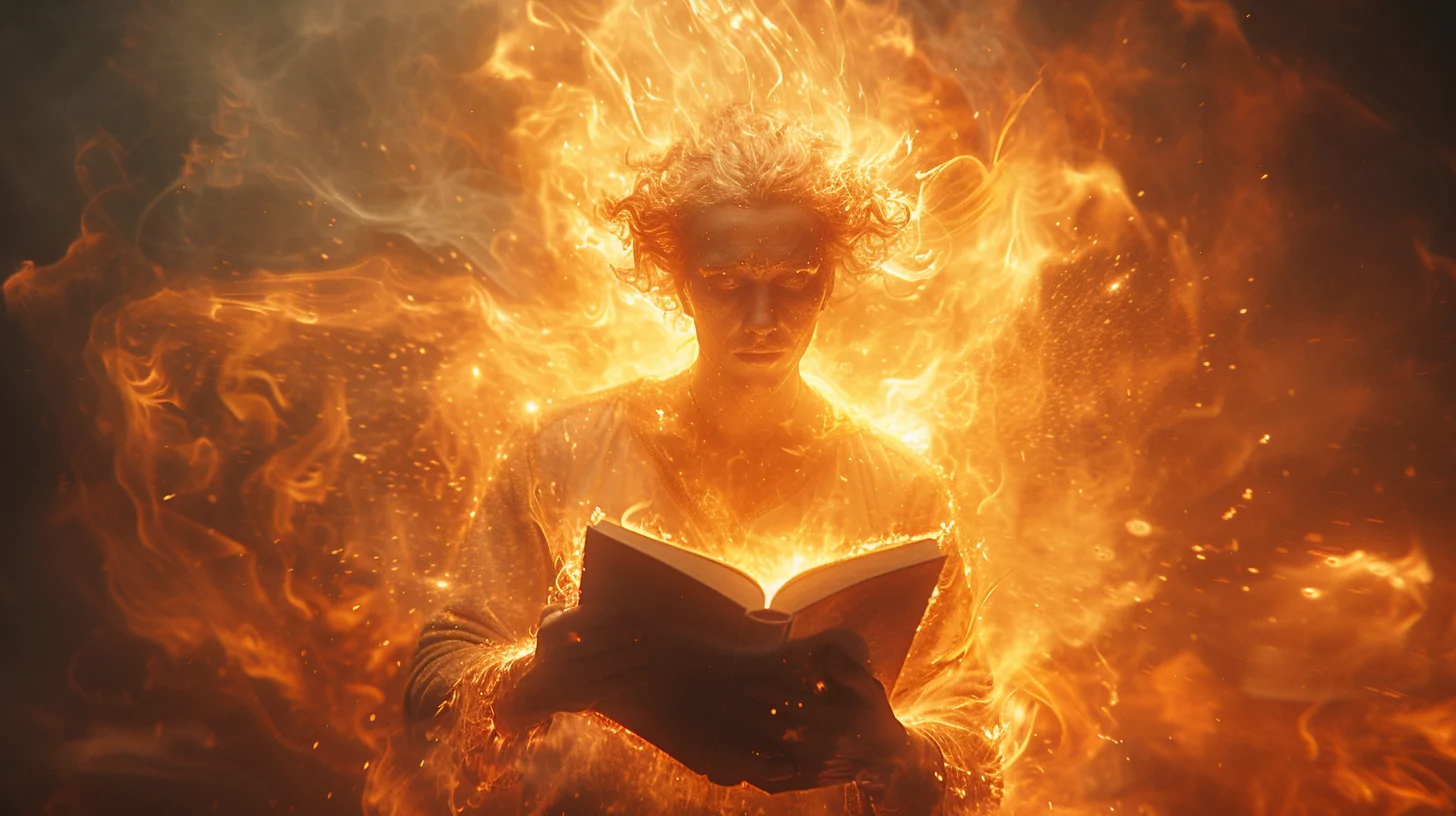
This lesson explores the symbolism of fire in the Bible, representing the word of God. The main points covered are: Physical characteristics of fire – it is hot, consumes, burns, and can either purify or destroy. God compares His word to fire because it has similar properties – it judges and consumes sin, but also refines and purifies those who accept it. Old Testament prophecies foretold a coming day when God’s fiery word would judge the arrogant like burning stubble, but heal the righteous (Malachi 4:1-2). Jesus fulfilled this at His first coming, separating the “wheat” from the “chaff” – gathering believers but judging hypocrites with His words (Matthew 3:11-12). The fire baptism represents being purified by God’s word, as Isaiah was cleansed by a burning coal (Isaiah 6:6-7). There are two types of figurative fire – God’s fire of truth that refines, and Satan’s fire of lies that destroys (Revelation 9:17-18). The key lesson is to embrace God’s refining fire of truth through His word, rather than face judgment from rejecting it. When God’s word ignites in our hearts, it purifies us of sin through spiritual rebirth.
Secret of Heaven: Figurative Fire
What does the fire mean?
The fire represents the word of God.
Let’s examine why this imagery is used today through looking at scripture, so that we can understand the meaning and how God’s word refines us.
Figurative Fire
Main Reference
“I have come to bring fire on the earth, and how I wish it were already kindled!
Jesus speaks figuratively here, saying “I wish [the] fire were already kindled.” He has come to bring spiritual fire and light to the world. This does not mean literal arson or setting fires to buildings. When Jesus drove out merchants and money changers from the temple, he was filled with righteous anger at how they defiled a holy place of worship – “How dare you do this in my Father’s house!” However, he did not literally set the temple ablaze.
By saying he wishes the fire were already kindled, Jesus indicates the fire of faith, understanding, and devotion was not already burning brightly among people. As the Messiah, he had come to spiritually ignite people’s hearts and minds with God’s truth and love. This fire is not a physical blaze, but the light of spiritual awakening and purification Jesus wants to spread through his teachings and the Holy Spirit. His mission is to spiritually transform lives, not cause physical destruction. He is the catalyst for this change (revival). We must look beyond the surface figurative of fire to understand Jesus’ deeper meaning – the fire of spiritual revolution he came to ignite within humanity.
To understand what Jesus means by ‘fire,’ we should consider its symbolic qualities. Let’s first consider its physical characteristics.
1. Physical Characteristics of Fire
I spoke to the prophets, gave them many visions, and told parables through them (Romans 1:20, Hosea 12:10). These passages talk about the importance of prophecy and parables, and how God uses creation to explain Himself.
What are the characteristics of fire? What does fire do?
1. It gets hot. Because fire gets hot, it burns and consumes. A fire in a controlled setting gives life. It provides light, heat, and warmth. It cooks our food and creates our tools. It makes things pure. But in an uncontrolled setting, fire decimates everything. It destroys.
2. So fire does two things when it burns: it purifies and refines, or it destroys. That is the characteristic of fire.
So now, to understand how this applies spiritually and why God compares His word to fire…
2. Spiritual Meaning of (True) Fire
“Is not my word like fire,” declares the Lord, “and like a hammer that breaks a rock in pieces?
So what did God say Is not my word, like fire. And like a hammer. That breaks a rock to Pieces. Not the only time God says this. He actually said it a few chapters before.
Therefore this is what the Lord God Almighty says:
“Because the people have spoken these words, I will make my words in your mouth a fire and these people the wood it consumes.
So God here, Once again, the book of Jeremiah similar to the book of Isaiah, Was written during a time where God is not happy with the Israelites approximately 600 years.
Before Jesus was born. And so, God is prophesying about the things that will happen in the future. With the chosen people because these people have spoken these words, I will make my words in your mouth. Jeremiah A fire. And these people. The word it consumes people, the wood, it concerns.
So when God carries out, this judgment, it will not be done by physical fire, but by spiritual fire, And its effects of burning being hot consuming judging. Will be done. Spiritually internally with the people. So let’s understand about this fire judgment. As this is a common term that Christians talk about often fire judgment.
And we’ll also talk about fire baptism as well today and really come to a clear understanding of what these things are. So, let’s go to the Book of Malachi and we’ll see an Old Testament prophecy about fire. Judgment.
3. Fire Judgement
Old Testament Prophecy
“Surely the day is coming; it will burn like a furnace. All the arrogant and every evildoer will be stubble, and the day that is coming will set them on fire,” says the Lord Almighty. “Not a root or a branch will be left to them. 2 But for you who revere my name, the sun of righteousness will rise with healing in its rays. And you will go out and frolic like well-fed calves.
What we see here in this passage is prophecy. There are telltale signs indicating that this is a prophetic text. Did anyone notice the clear marker of prophecy here? What was the telltale sign?
The opening phrase “the day is coming” signals that we are reading a prophetic passage, so this should be understood as symbolic, figurative language like a parable. Let’s examine the imagery presented here. It says “the day is coming” that will burn like a furnace.
So what will be the two contrasting results of this burning? First, what does the fire do according to verse 1? It says the arrogant evildoers will be judged – they will be set on fire and turned to ashes and stubble, completely burned up and destroyed.
But then in verse 2, the same fire has the opposite effect on the second group of people – those who revere God’s name. What does it say happens to them? They are refined and healed by the fire.
So we see the arrogant being judged and destroyed, while the righteous are purified. This is the key contrast presented in the parable. If this is Old Testament prophecy, this foreshadows the final judgment when God’s fiery judgment will have two divergent results for humanity – either purification or destruction. How do you see it being fulfilled?
First Coming Fulfilment
His winnowing fork is in his hand, and he will clear his threshing floor, gathering his wheat into the barn and burning up the chaff with unquenchable fire.”
John the Baptist says that Jesus will gather up the wheat and take it into his barn. But what happens to the opposite – the chaff? The chaff will be taken and burned with unquenchable fire.
The chaff represents those who are judged. Chaff is seedless crop, the part that gets separated from the good wheat that contains the seeds. Farmers gather the wheat and chaff into a basin. When it’s windy, they throw everything into the air. The heavy wheat falls back into the basin because it has seeds, but the light chaff blows away because it has no seeds.
So how important is it for us to have God’s seed – His Word – within us? It’s so important. We need to stay grounded in His Word, like wheat with heavy seeds. Chaff has no seed and blows away. When God lifts and tests us, will we stand firm like wheat or blow away like worthless chaff?
Let’s be those who stay firmly rooted in God’s Word so that we do not blow away. So who is it that Jesus says will be rebuked with unquenchable fire? It is those represented as the light and seedless chaff, lacking God’s Word in their lives.
“You snakes! You brood of vipers! How will you escape being condemned to hell?
“You snakes, you brood of vipers. How will you escape being condemned to hell? Imagine hearing those words. What would happen within you? Jesus spoke similar words when judging the Pharisees, Sadducees, Scribes and teachers of the law who were hypocrites.
They spoke falsehoods to the people and misled them. They were the ones that Jesus condemned. Let us not be those who are condemned by the words of Jesus: “You snakes! You brood of vipers! How will you escape being sentenced to hell?”
To the hypocrites he said: “On the outside you appear righteous, but on the inside you are full of hypocrisy and wickedness. You make people twice as much a child of hell as yourselves.”
Jesus lit them ablaze with his fiery words of judgment. Let us heed his warnings and not follow in the footsteps of the condemned Pharisees and Sadducees who misled the people.
Reminder:
Let’s review what we have covered so far. The Spirits of Heaven are figurative fire. The fire represents the word of God. Fire has a few key traits. It is hot and consumes – it burns. In a controlled setting, fire is useful for heating, cooking, etc.
However, an uncontrolled fire destroys everything – it judges and consumes. God compares His word to fire because it has similar traits. God’s word judges those who are sinful. And God says “My word I will give to you, the one I trust to deliver my word faithfully.”
At the time of the Old Testament, there was a prophecy in Malachi 4:1. It said that the coming day of the Lord will burn like a furnace. The arrogant will be set ablaze by that fire. But those who revere God’s name will be healed.
So how was this fulfilled at the time of the first coming of Jesus? When Jesus came, he separated people. He brought the wheat into his barn by speaking his word of promise to them. And the chaff were burned with unquenchable fire. Jesus essentially told the same parable in Matthew 13:3-8 – the parable of the sower.
So how did Jesus carry out that judgment? He judged those who gave false words at the time of the first coming and corrupted God’s chosen people. He judged them by exposing who they were so people would no longer follow them willingly.
Now let’s see how the second coming is described in terms of fire.
3. New Testament Prophecy
The first angel sounded his trumpet, and there came hail and fire mixed with blood, and it was hurled down on the earth. A third of the earth was burned up, a third of the trees were burned up, and all the green grass was burned up.
We observe a mixture of hail and fire, accompanied by blood. Let’s consider what hail is in a physical sense. Hail consists of balls of ice that descend from the sky. Although ice and fire do not physically mix, this description must be interpreted figuratively.
When hail and fire, mixed with blood, were cast down upon the earth, the result was that all the trees and grass were incinerated.
We should ponder the figurative meaning of trees and grass, which tree presents inner being (person) being born again through the seed of the word. (Jeremiah 5:14) According to 1 Peter 1:22-25, people are like grass, suggesting that this event cannot be taken literally. Moreover, the claim that the earth is ‘burned up’ seems to contradict other biblical passages, such as Ecclesiastes 1:4, which states that the earth endures forever despite the passing of generations.
To resolve this apparent contradiction, we must understand the passage correctly. Often, it is misinterpreted as alluding to nuclear warfare or catastrophic events that devastate the planet. However, this contradicts God’s intention of restoration.
Therefore, we conclude that the imagery is not physical but symbolic, representing a spiritual or figurative judgment upon human hearts. This judgment is enacted through the Word of God. This concept aligns closely with Jesus’ teachings.
There is a judge for the one who rejects me and does not accept my words; the very words I have spoken will condemn them at the last day.
Jesus’s words will judge at the last day like a fire, according to his statements. Just as he judged the Pharisees and Sadducees with his words while on earth, he will do the same for all those who ultimately reject his words. However, for those who accept his words, the opposite happens
– his words bring refinement.
So let us now talk about those who do not reject his words and what happens for them.
4. Fire Baptism
What does this mean? Higher baptism. Let’s go back to the Old Testament to understand this concept further. We’ll look at a clear and insightful example from the Book of Isaiah.
6 Then one of the seraphim flew to me with a live coal in his hand, which he had taken with tongs from the altar. 7 With it he touched my mouth and said, “See, this has touched your lips; your guilt is taken away and your sin atoned for.”
A seraphim is similar to an angel. This particular seraphim was holding a burning hot live coal. The seraphim placed the live coal on the mouth of Isaiah. This seems to be a literal event, not symbolic.
This would have been an intensely painful moment for Isaiah. However, Isaiah survives this encounter. What happens next to Isaiah? Verse 7 says “With it he touched my mouth and said, “See, this has touched your lips; your guilt is taken away and your sin atoned for.”
The coal refined Isaiah, taking away guilt and atoning for sins. The seraphim intentionally put the coal on Isaiah’s mouth for a purpose – Isaiah is now prepared to speak the words he has been given, having been purified and refined. He has undergone a baptism by fire, a purifying experience. Now, he has a mission to fulfill with the message he has received.
This foreshadows what John the Baptist meant in Matthew 3:11.
“I baptize you with water for repentance. But after me comes one who is more powerful than I, whose sandals I am not worthy to carry. He will baptize you with the Holy Spirit and fire.
You will be baptized with the Holy Spirit and fire. At first, it might seem like the fire is just another name for the Holy Spirit. But here’s what we need to get: The Spirit and the Word always go hand in hand. They can’t be split up (see 1 Corinthians 2:6-16). Where you find the Spirit, you’ll find the Word. They are one and the same.
When we talk about being baptized with fire and the Spirit, we’re really talking about being baptized with the Word that comes with the Spirit. They’re not two different things. This lines up with what Jesus said in John 15:3, “You are already clean because of the word I have spoken to you.” His words have the power to cleanse and make pure those who embrace them. But for those who turn away from His words, there’s a different result: judgment.
The very same words result in two different outcomes, based on whether one hears Jesus or not.
Whether you are refined by the fire or judged by it is up to you, as it always has been. God always provides a choice (Deuteronomy 30:19). I set before you life and death, blessings and curses. Choose life. But you are free to choose death if you wish. It is your choice. Choose life.
Do not be foolish like Satan, who thought “I can do this myself. I’m a created being, but I’ve got this.” He didn’t end well. His goal and duty now is to make others do the same – to try and rely on themselves rather than God.
Let God’s fire and message refine and improve you, not judge you. Satan wants to destroy everything with fire. To understand his kind of fire, we can look at an example from Leviticus in the Old Testament.
5. Satan’s fire
Aaron’s sons Nadab and Abihu took their censers, put fire in them and added incense; and they offered unauthorized fire before the Lord, contrary to his command. 2 So fire came out from the presence of the Lord and consumed them, and they died before the Lord.
Aaron’s sons offered unauthorized fire to God. And what was the result of this unauthorized offering? Death. God did not ask for it or specify that type of offering. So how is our life of faith? Are we offering God unauthorized offerings, doing things we think will please Him but instead are displeasing? The God today is the same God that judged Nadab and Abihu. He has not changed.
Let us thank God that there is no God of the Old Testament and a different God of the New Testament. There is no distinction – He is the same God who carried out judgment then, and will do the same now if we offer unauthorized offerings. Let us not do that by any means. We cannot afford to displease God in that way.
Imagine Aaron’s devastation when his sons died. That must have been extremely painful for him. This happened to many great prophets and leaders God used – their children were often not as devoted as they were. A sad and frustrating experience indeed.
Let us be more passionate than the generation before us. We can do better because God is doing amazing things in our time, opening up deeper understanding of His Word before our eyes. Let us set an example for the generations after us through our devotion. We can do it!
As we know, there are two types of fire – God’s holy fire, and the destructive fire of Satan. Satan’s fire brings judgment, as we see examples of at the Second Coming described in Revelation.
17 The horses and riders I saw in my vision looked like this: Their breastplates were fiery red, dark blue, and yellow as sulfur. The heads of the horses resembled the heads of lions, and out of their mouths came fire, smoke and sulfur. 18 A third of mankind was killed by the three plagues of fire, smoke and sulfur that came out of their mouths.
A third of mankind was killed by the fire, smoke, and sulfur that came out of their mouths.
As we continue to study, we will gain a deeper understanding. But for now, this provides another clue – another key that unlocks part of the meaning. Beings resembling horses appear at the time of the Second Coming. Not literal horses, but bringing a deceptive message that leads to the death of a third of humanity.
We will unpack this imagery further as we go. In summary, here are the two types of figurative fire mentioned:
6. Two types of Fire
There is God’s fire, which is God’s word of truth, and there is Satan’s fire – Satan’s words of lies, unauthorized. Satan offers this false fire in a way that makes it look like God’s true fire, so that people will embrace the lies and face judgment.
Jesus wished that a certain fire had already been kindled. What fire was this referring to?
“I have come to bring fire on the earth, and how I wish it were already kindled!
I’ve come to bring fire on the earth and how I wish it were already kindled.” Jesus came to bring the word to people. This was a teaching that was not yet known or understood. That is why those who heard him were so surprised, as noted in Mark 1:27 – “What is this? A new teaching with authority!” Yes, it was a new teaching. But only a few were refined by Jesus’s teaching. The rest judged. Let us seek to be refined.
They asked each other, “Were not our hearts burning within us while he talked with us on the road and opened the Scriptures to us?”
In the story from Luke 24, two disciples who were not among the Twelve were walking on the road to Emmaus when they encountered Jesus. However, their eyes were kept from recognizing him. As they walked together, Jesus explained the scriptures that pointed to him as the Messiah. Later, when Jesus broke bread with the disciples, their eyes were opened and they recognized him, though he immediately disappeared from their sight. The two disciples then said to each other, “Were not our hearts burning within us while he talked with us on the road and opened the Scriptures to us?”
This story illustrates how spending time in God’s word should set our hearts on fire. As we read and understand the fulfillment of Old Testament prophecies in Jesus Christ, we too should feel our hearts burning with faith and insight. Let’s pursue that same transforming revelation as we study the Bible.
Memorization
John 12:48
There is a judge for the one who rejects me and does not accept my words; the very words I have spoken will condemn them at the last day.
Therefore this is what the Lord God Almighty says:
“Because the people have spoken these words, I will make my words in your mouth a fire and these people the wood it consumes.
Instructor Review
SUMMARY
Figurative fire represents the word. Our reference verse was Luke 12:49, which we understand refers to Jesus bringing the fire of his Father’s word. Fire is hot, consumes, burns, and can either refine or destroy. God compared his word to fire because it both refines and destroys. This was the fire prophesied to come in Malachi 4:1-2 that will burn like a furnace, destroying the arrogant and evildoers. But those who fear and revere God’s name will be healed. The same fire yields two results.
In Matthew 3:11-12, we see that Jesus brings fire and separates two groups of people – the wheat is brought into the barn while the chaff, those without the word, go to the unquenchable fire. Jesus carried out this judgment by exposing the Pharisees, Sadducees, scribes and teachers of the law for who they really were with his words.
In New Testament prophecies about the second coming, we see judgments by fire – hail and fire mixed with blood that burns the trees, grass, and horses with a strange appearance that breed fire, smoke, and sulfur. But while Satan’s fire brings judgment, Jesus promised his words would also judge. Jesus’ words also refine, similar to the prophecy of Isaiah receiving the hot coal that cleansed him. Jesus did this same baptism by fire, giving people a new word from above. The spirit and word are an inseparable package deal, coming together (1 Corinthians 2:6-16).
God’s fire is the fire of truth that refines. Satan’s fire is the fire of lies that destroys. Let’s be refined by God’s fire of truth.
Review with the Evangelist
Review
Title of Lesson: Secrets of Heaven – Figurative Fire
What are some physical characteristics of fire? Fire is hot. It consumes and burns things. Burning can either purify or destroy.
What is the spiritual meaning of fire? In Jeremiah 5:14, God’s word is compared to fire that consumes the people who are like wood. We learned that fire represents judgment in the Old Testament.
In Malachi 4:1-2, it was prophesied that a day is coming that will burn like a furnace. The arrogant evildoers will be burnt up like stubble set on fire. But those who revere God’s name will be spiritually healed and purified.
When was this prophecy fulfilled? It was fulfilled when Jesus came in his first coming. Jesus gathered the righteous like wheat into the barn, but the chaffs were burnt in unquenchable fire, like he judged the Pharisees with his words.
Jesus also prophesied about his second coming in Revelation 8:7, mentioning hail, fire and blood burning the earth. Is this literal physical fire? No, because Ecclesiastes 1:4 says the earth remains forever. Revelation contains symbolic parables that we must understand properly.
We also learned about the fire baptism. Jesus said his followers are cleansed by his word in John 15:3. Those who accepted his word were cleansed, while those who rejected it faced judgment.
There are two types of figurative fire with different results: 1) God’s fire represents his word and truth that consumes sin and purifies. 2) Satan’s fire represents lies that destroy one’s inner being. So fire can give life or take life, depending on who uses it.
Our words also have power like fire. We must be careful how we use them, especially when sharing God’s word. Our hope is to be refined and purified by God’s fire at Jesus’ second coming rather than face judgment. When God’s fiery word ignites in our hearts, it cleanses us thoroughly of all sin and wickedness through spiritual rebirth. Let God’s transforming word ignite in our hearts.
Review in Small Group
Review
We talked about the figurative secrets of Heaven – fire. Our hope is to be refined and purified by the fire instead of being judged at the second coming. What is this fire and how can it purify and refine us? Besides that, how can the fire also be used to judge at the second coming?
To answer these questions, we first look at what fire signifies. Our main reference was Luke 12:49, where Jesus said he came to bring fire to the earth and wishes it were already kindled. This refers to the Word of God that Jesus brought and shared with people during his first coming.
To further grasp the meaning of fire, we should also review the physical characteristics of fire from our experience and knowledge – that it is hot, gives light, consumes what it touches, and can burn to either refine or destroy. We are familiar with this, and God uses his creation to explain his work (Romans 1:20). This gives us an idea of what fire is and what it can do.
What about its spiritual meaning? As stated in Jeremiah 23:29, God’s Word is like fire and like a hammer that breaks rock. We now see the connection between fire and God’s Word – that his Word can set our hearts burning and give life, and it can also be used to judge. Like a hammer that shatters rock, as we read in Malachi 4:1-2, the arrogant and evildoers will be set on fire and turned to stubble. Even Nadab and Abihu, Aaron’s sons, were not spared because of their unauthorized fire. This shows what God is capable of doing. Instead of doubting or losing faith, we should revere him and live by his Word.
We are more accustomed to water baptism. However, there is also a fire baptism. In Isaiah 6:6-7, an angel came down with a live coal from the altar, touched the prophet’s lips with tongs, and his guilt was taken away and his sins atoned for.
But as we know, good and evil both exist. So God’s fire is the Word of Truth, while Satan’s fire is the Word of Lies (Revelations 9:17-18). This passage describes horses breathing out fire, smoke and sulfur to kill people, explaining that while God’s fire purifies and gives eternal life, Satan’s fire brings death. This is like how the good wheat is kept and the worthless chaff burned, or the good fish kept and the bad thrown away. These parables show two sides.
I pray that we continue to choose the Lord’s good and truthful Word above all else, and keep this lesson and more to come rooted in our hearts and minds, strengthening our faith. God bless.
Let’s Us Discern
Analysis of SCJ Lesson 23: “Secrets of Heaven – Figurative Fire”
A Refutation Using “Testing Shincheonji’s Claims: Two Lenses, One Story”
Introduction: When Warmth Becomes a Weapon
Imagine you’re camping on a cold winter night. A stranger approaches your campsite carrying a torch. “I see you’re cold,” he says kindly. “Let me share my fire with you.” Grateful, you welcome him. He begins teaching you about fire—how it provides warmth, light, and protection. He explains that fire can purify metals, cook food, and keep predators away. Everything he says is true and helpful.
But then his teaching takes a subtle turn. “Not all fire is the same,” he warns. “Most people think any fire will do, but they’re wrong. There’s true fire that gives life, and false fire that only destroys. The fire you’ve been using? That’s unauthorized fire. It might feel warm, but it’s actually dangerous. Only my fire—the fire I’ve been given from the true source—can really protect you.”
Confused, you look at your campfire. It seems perfectly fine. It’s warm, it’s cooking your food, it’s keeping you safe. But the stranger’s words create doubt. He sounds so knowledgeable, so certain. He quotes survival manuals and tells stories of people who used the “wrong” fire and suffered for it. Gradually, you begin to question your own fire. Maybe he’s right. Maybe you need his fire instead.
By morning, you’ve extinguished your own campfire and become dependent on his torch. You don’t realize until much later that your original fire was perfectly adequate—and that his “special fire” was simply a tool to make you dependent on him.
This is what happens in SCJ Lesson 23.
The lesson appears to be a solid biblical teaching about God’s Word as fire—a common and legitimate biblical metaphor. Instructor Nate walks students through passages from Jeremiah, Malachi, Matthew, and Revelation, explaining how God’s Word both refines and judges. He encourages students to be refined rather than judged, to embrace God’s truth rather than Satan’s lies. Everything sounds orthodox, biblical, and spiritually enriching.
But beneath the surface, something else is happening. The lesson is constructing a framework that will eventually position SCJ’s interpretation as the only “authorized fire”—the only legitimate understanding of God’s Word that can truly refine believers. By teaching that there are two types of fire (God’s truth vs. Satan’s lies) and that most people unknowingly embrace the wrong fire, the lesson creates anxiety that only SCJ’s system can resolve.
This lesson sits at position 23 in the Introductory (Parables) Level—strategically placed after students have learned about “sealed” Scripture, symbolic interpretation, and the need for special revelation. Students are now being taught that even sincere Christians might be offering “unauthorized fire” to God without realizing it. The solution, they’ll eventually learn, is accepting SCJ’s “opened” understanding as the only authorized fire.
By the time students realize where this teaching leads, they’ve already extinguished their original faith and become dependent on SCJ’s torch. Let’s examine how this lesson uses legitimate biblical teaching to build an illegitimate theological trap, and how the principles in “Testing Shincheonji’s Claims: Two Lenses, One Story” expose the manipulation.
Part 1: What SCJ Teaches in This Lesson
The Surface Teaching (What Students Hear)
The lesson presents a straightforward symbolic interpretation of fire in Scripture:
Physical Characteristics of Fire:
- Fire is hot and consumes
- Fire can either refine/purify or destroy
- In controlled settings, fire gives life (warmth, light, cooking)
- In uncontrolled settings, fire destroys everything
Spiritual Meaning of Fire:
- Fire = God’s Word (Jeremiah 23:29, 5:14)
- God’s Word, like fire, has dual effects: it refines the righteous and judges the wicked
Old Testament Prophecy (Malachi 4:1-2):
- A day is coming that will burn like a furnace
- The arrogant and evildoers will be burned up like stubble
- Those who revere God’s name will be healed and refined
First Coming Fulfillment (Matthew 3:12, 23:33):
- Jesus separated wheat from chaff
- Jesus judged the Pharisees with his fiery words
- Some were refined by Jesus’ teaching; others were judged
Fire Baptism vs. Fire Judgment:
- Fire Baptism = Being refined by God’s Word (Isaiah 6:6-7, Matthew 3:11)
- Fire Judgment = Being condemned by rejecting God’s Word (John 12:48)
Two Types of Fire:
- God’s Fire = Word of Truth (refines and gives life)
- Satan’s Fire = Word of Lies, “unauthorized fire” (destroys and brings death)
New Testament Prophecy (Revelation 8:7, 9:17-18):
- At the Second Coming, fire will again separate people
- Hail and fire mixed with blood will burn the earth (symbolic, not literal)
- Horses breathing fire, smoke, and sulfur will kill a third of mankind
The Subtext (What’s Really Being Established)
Beneath this seemingly biblical teaching, several problematic foundations are being laid:
1. Creating Binary Categories: The lesson establishes a stark binary: God’s fire (truth) vs. Satan’s fire (lies). While this sounds biblical, it’s preparing students to accept that any teaching outside SCJ is “Satan’s fire”—even if it comes from sincere Christians who love Jesus.
2. The “Unauthorized Fire” Trap: By introducing the concept of “unauthorized fire” (from Leviticus 10:1-2), the lesson creates profound anxiety: What if my worship, my prayers, my understanding of Scripture is unauthorized? This fear will later be resolved by accepting SCJ’s interpretation as the only “authorized” understanding.
3. Redefining “Refinement”: The lesson teaches that being “refined by fire” means accepting the correct interpretation of God’s Word. This will eventually mean accepting SCJ’s specific teachings about Revelation, Lee Man-hee, and the organization’s role in salvation.
4. Preparation for Exclusivity: The emphasis on Jesus judging the Pharisees with his words is preparing students to accept that SCJ will similarly “judge” mainstream Christianity by exposing its “false teachings.” Students are being primed to see themselves as the refined wheat and other Christians as the judged chaff.
5. Symbolic Interpretation Dependency: By teaching that Revelation’s fire imagery is symbolic (not literal), the lesson reinforces that students need SCJ’s interpretation to understand what the symbols mean. Students can’t simply read Revelation themselves—they need the instructor’s “fire” to illuminate the text.
Part 2: Analysis Through “Testing Shincheonji’s Claims: Two Lenses, One Story”
Chapter 11-13: Information Control and Verification Problems
Chapter 11 of “Testing Shincheonji’s Claims: Two Lenses, One Story” examines isolation strategies disguised as protection. This lesson demonstrates a sophisticated form of information control: it doesn’t explicitly tell students to avoid other teachers (yet), but it creates categories that will later be used to dismiss all non-SCJ teaching as “Satan’s fire.”
The Information Control in This Lesson:
The instructor teaches: “Let us thank God that there is no God of the Old Testament and a different God of the New Testament. There is no distinction—He is the same God who carried out judgment then, and will do the same now if we offer unauthorized offerings.”
This sounds like orthodox teaching about God’s unchanging nature. But notice what’s happening psychologically:
- Fear is being cultivated: Students are warned that offering “unauthorized fire” leads to death (Nadab and Abihu’s story)
- Uncertainty is created: How do students know if their worship is “authorized”?
- The instructor is positioned as the resolver: By teaching these “secrets of heaven,” he’s implicitly claiming to know what’s authorized vs. unauthorized
Chapter 13 of “Testing Shincheonji’s Claims” addresses the verification problem: How can students verify whether their worship is “authorized” or not? The lesson provides no objective criteria—only the instructor’s interpretation.
Biblical Response:
The New Testament is remarkably clear about what makes worship acceptable to God:
1. Worship through Christ is authorized:
- John 14:6: “I am the way and the truth and the life. No one comes to the Father except through me.”
- Hebrews 10:19-22: “Therefore, brothers and sisters, since we have confidence to enter the Most Holy Place by the blood of Jesus… let us draw near to God with a sincere heart.”
The “authorization” for worship is Christ’s sacrifice, not correct interpretation of symbols.
2. God looks at the heart, not interpretive sophistication:
- 1 Samuel 16:7: “The Lord does not look at the things people look at. People look at the outward appearance, but the Lord looks at the heart.”
- Psalm 51:16-17: “You do not delight in sacrifice, or I would bring it; you do not take pleasure in burnt offerings. My sacrifice, O God, is a broken spirit; a broken and contrite heart you, God, will not despise.”
3. The Nadab and Abihu story is about priestly duties, not interpretation: The lesson uses Leviticus 10:1-2 to create anxiety about “unauthorized” worship. But context matters:
- Leviticus 10:1: “Aaron’s sons Nadab and Abihu took their censers, put fire in them and added incense; and they offered unauthorized fire before the Lord, contrary to his command.”
Nadab and Abihu were priests with specific ceremonial duties under the Old Covenant. They violated explicit instructions about priestly service. This passage is not about whether ordinary believers have the “correct interpretation” of Scripture. Under the New Covenant, all believers are priests (1 Peter 2:9) with direct access to God through Christ.
Using this Old Testament passage to create anxiety about whether modern Christians’ worship is “authorized” is a misapplication of Scripture that ignores the radical change brought by Christ’s finished work.
4. The Spirit guides believers into truth:
- John 16:13: “But when he, the Spirit of truth, comes, he will guide you into all the truth.”
- 1 John 2:27: “As for you, the anointing you received from him remains in you, and you do not need anyone to teach you. But as his anointing teaches you about all things and as that anointing is real, not counterfeit—just as it has taught you, remain in him.”
Believers have the Holy Spirit to guide them. While teachers are valuable (Ephesians 4:11), believers aren’t dependent on one organization’s interpretation to know if their worship is acceptable.
Chapter 18-20: Testing Authority and Creative Fulfillment
Chapter 18 of “Testing Shincheonji’s Claims” examines how to test claims of spiritual authority. This lesson makes implicit authority claims by positioning the instructor as the revealer of “secrets of heaven” regarding fire symbolism.
The Authority Problem:
The instructor states: “To understand what Jesus means by ‘fire,’ we should consider its symbolic qualities. Let’s first consider its physical characteristics.”
This sounds reasonable—using physical characteristics to understand spiritual symbolism (Romans 1:20). But the lesson then provides specific interpretations as if they were the only correct understanding, without explaining how students can verify these interpretations.
Chapter 19 discusses unfalsifiable claims. The lesson’s framework creates an unfalsifiable system:
- If you accept the teaching → You’re being refined by God’s fire
- If you question the teaching → You might be resisting refinement (like the Pharisees who rejected Jesus)
- If you seek alternative interpretations → You might be embracing “Satan’s fire” of lies
Chapter 20 warns about “creative fulfillment”—adding interpretive layers to Scripture that support predetermined conclusions. This lesson demonstrates that technique.
Biblical Response:
1. Jesus’ use of fire imagery was clear in context:
When Jesus said, “I have come to bring fire on the earth” (Luke 12:49), the context shows He was talking about division and judgment:
- Luke 12:51-53: “Do you think I came to bring peace on earth? No, I tell you, but division. From now on there will be five in one family divided against each other, three against two and two against three.”
Jesus was prophesying that His message would divide families and communities—some would accept Him, others would reject Him. The “fire” was the testing and division His message would bring.
The lesson isn’t wrong to connect this to God’s Word (Jesus is the Word incarnate, John 1:1), but it adds layers of interpretation about “refined vs. judged” that go beyond what the text actually says.
2. Malachi 4:1-2 was fulfilled in Christ’s first coming:
The lesson correctly identifies Malachi 4 as prophecy fulfilled at Jesus’ first coming. But it then suggests a second fulfillment at the Second Coming, creating a pattern where Old Testament prophecies have multiple fulfillments that require SCJ’s interpretation to understand.
The New Testament itself explains how Malachi’s prophecy was fulfilled:
- Malachi 4:5-6: “See, I will send the prophet Elijah to you before that great and dreadful day of the Lord comes. He will turn the hearts of the parents to their children, and the hearts of the children to their parents.”
- Matthew 11:13-14: Jesus said, “For all the Prophets and the Law prophesied until John. And if you are willing to accept it, he is the Elijah who was to come.”
- Matthew 17:10-13: The disciples asked, “Why then do the teachers of the law say that Elijah must come first?” Jesus replied, “To be sure, Elijah comes and will restore all things. But I tell you, Elijah has already come, and they did not recognize him… Then the disciples understood that he was talking to them about John the Baptist.”
The “fire” prophecy of Malachi was fulfilled when John the Baptist and Jesus came. John baptized with water for repentance; Jesus baptized with the Holy Spirit and fire (Matthew 3:11)—meaning His message would refine some and judge others.
The lesson’s suggestion that this prophecy has a second, future fulfillment at the Second Coming is adding to Scripture rather than interpreting what’s there.
3. Revelation’s fire imagery has specific contextual meanings:
The lesson references Revelation 8:7 and 9:17-18 as prophecies about the Second Coming. But it provides no methodology for determining what these symbols mean—students are simply told they’re symbolic and must wait for later lessons to understand them fully.
This creates dependency: students can’t understand Revelation themselves; they need SCJ’s interpretation.
Biblical Response to Revelation’s Fire Imagery:
Chapter 26 of “Testing Shincheonji’s Claims” is titled “Reading Revelation Like a First-Century Christian.” It explains that Revelation was written to seven actual churches in Asia Minor (Revelation 1:4, 11) who were facing real persecution from the Roman Empire.
The fire imagery in Revelation draws from Old Testament judgment imagery (particularly the Exodus plagues and prophetic judgments) to describe God’s judgment on the persecutors of His people. The original readers would have understood this as encouragement that God would judge their oppressors, not as a coded message about events 2,000 years in their future requiring special interpretation.
For example:
- Revelation 8:7 (hail and fire mixed with blood): Echoes the seventh plague in Egypt (Exodus 9:23-25)
- Revelation 9:17-18 (horses breathing fire, smoke, sulfur): Draws from prophetic imagery of invading armies (Joel 2:4-5, Nahum 3:2-3)
These images communicated to first-century readers: “God will judge those who persecute you, just as He judged Egypt and other enemies of His people throughout history.”
The lesson’s approach—treating these as coded symbols requiring special revelation to decode—misses the pastoral purpose of Revelation: to encourage persecuted believers that God sees their suffering and will bring justice.
Chapter 21-23: God’s Character and Sovereignty
Chapter 21 of “Testing Shincheonji’s Claims” is titled “The Heart of God: When Love Refuses to Let Go.” It examines whether God’s character is primarily about conditional acceptance (you must get the interpretation right) or unconditional love (God pursues you even when you’re wrong).
The Character Problem in This Lesson:
The lesson emphasizes God’s judgment and the danger of “unauthorized fire” more than God’s grace and patience. Students are told:
“Let us thank God that there is no God of the Old Testament and a different God of the New Testament. There is no distinction—He is the same God who carried out judgment then, and will do the same now if we offer unauthorized offerings.”
While it’s true that God is unchanging, the emphasis here creates fear rather than confidence. Students are left wondering: Am I offering unauthorized fire without knowing it?
Chapter 22 (“When Satan Tried to Hijack God’s Plan and Failed Every Time”) and Chapter 23 (“The God Who Waits”) examine God’s sovereignty and timing. These chapters show that God’s plan cannot be thwarted by human misunderstanding or imperfect worship—God is powerful enough to accomplish His purposes even when His people don’t understand everything perfectly.
Biblical Response:
1. God is patient with our imperfect understanding:
- 2 Peter 3:9: “The Lord is not slow in keeping his promise, as some understand slowness. Instead he is patient with you, not wanting anyone to perish, but everyone to come to repentance.”
- Romans 2:4: “Or do you show contempt for the riches of his kindness, forbearance and patience, not realizing that God’s kindness is intended to lead you to repentance?”
God’s character is primarily defined by patience and kindness, not by waiting to judge those who don’t have perfect interpretive understanding.
2. Jesus welcomed imperfect worshipers:
- The Samaritan woman (John 4): Her theology was confused (Jews vs. Samaritans worshiping in different places), but Jesus didn’t condemn her for “unauthorized worship.” He offered her living water.
- The Canaanite woman (Matthew 15:21-28): She had pagan background and imperfect understanding, but Jesus commended her faith.
- The thief on the cross (Luke 23:39-43): He had no theological training, no correct interpretation of prophecy, no time to learn doctrine—just simple faith: “Jesus, remember me when you come into your kingdom.” Jesus’ response: “Today you will be with me in paradise.”
If correct interpretive understanding were necessary for acceptable worship, none of these people would have been welcomed by Jesus.
3. The New Covenant changes everything:
The lesson uses Old Covenant examples (Nadab and Abihu, Malachi’s prophecy) to create anxiety about New Covenant worship. But the entire point of the New Covenant is that Christ’s sacrifice has made us acceptable to God:
- Hebrews 10:10: “And by that will, we have been made holy through the sacrifice of the body of Jesus Christ once for all.”
- Hebrews 10:14: “For by one sacrifice he has made perfect forever those who are being made holy.”
- Colossians 2:13-14: “When you were dead in your sins and in the uncircumcision of your flesh, God made you alive with Christ. He forgave us all our sins, having canceled the charge of our legal indebtedness, which stood against us and condemned us; he has taken it away, nailing it to the cross.”
Under the New Covenant, our acceptance before God is based on Christ’s work, not on our interpretive accuracy. We can approach God with confidence (Hebrews 4:16), not fear that our worship might be “unauthorized.”
Chapter 24-26: The Unified Biblical Narrative
Chapter 24 of “Testing Shincheonji’s Claims” (“The Scarlet Thread – Part 1”) warns against studying the Bible in fragments without seeing the unified narrative. This lesson demonstrates that fragmentation by pulling fire imagery from multiple contexts without showing how it all points to Christ.
The Fragmentation Problem:
The lesson jumps between:
- Old Testament ceremonial law (Leviticus 10)
- Old Testament prophecy (Malachi 4, Isaiah 6)
- Jesus’ teaching (Luke 12, Matthew 3, 23)
- Apocalyptic imagery (Revelation 8, 9)
Each passage is examined in isolation to support the “two types of fire” framework, but the lesson never shows how these passages fit into the Bible’s overarching story of redemption through Christ.
Chapter 25 (“The Scarlet Thread – Part 2”) examines how the New Testament fulfills Old Testament prophecy in Christ. The lesson mentions this briefly (Malachi fulfilled in Jesus’ first coming) but then adds layers of additional “fulfillment” at the Second Coming that will require SCJ’s interpretation.
Chapter 26 (“Reading Revelation Like a First-Century Christian”) explains that Revelation’s imagery was meaningful to its original audience, not a coded message requiring 21st-century special revelation.
Biblical Response:
1. The Bible’s unified message about fire and judgment:
When we read the Bible as a unified story, the “fire” theme has a clear progression:
Old Testament: Fire represents God’s holy presence and judgment
- Exodus 3:2: God appears to Moses in a burning bush
- Exodus 19:18: God descends on Mount Sinai in fire
- Leviticus 9:24: Fire from the Lord consumes the burnt offering
- 2 Kings 1:10: Fire from heaven consumes the king’s messengers
Prophetic Promise: A refining fire is coming
- Malachi 3:2-3: “But who can endure the day of his coming? Who can stand when he appears? For he will be like a refiner’s fire… He will sit as a refiner and purifier of silver.”
- Isaiah 4:4: “The Lord will wash away the filth of the women of Zion; he will cleanse the bloodstains from Jerusalem by a spirit of judgment and a spirit of fire.”
New Testament Fulfillment: Jesus brings the refining fire
- Matthew 3:11: “He will baptize you with the Holy Spirit and fire.”
- Acts 2:3: “They saw what seemed to be tongues of fire that separated and came to rest on each of them.”
- 1 Corinthians 3:13-15: “Their work will be shown for what it is, because the Day will bring it to light. It will be revealed with fire, and the fire will test the quality of each person’s work.”
Final Judgment: Fire will judge at Christ’s return
- 2 Thessalonians 1:7-8: “This will happen when the Lord Jesus is revealed from heaven in blazing fire with his powerful angels. He will punish those who do not know God and do not obey the gospel of our Lord Jesus.”
- 2 Peter 3:10: “But the day of the Lord will come like a thief. The heavens will disappear with a roar; the elements will be destroyed by fire, and the earth and everything done in it will be laid bare.”
The Unified Message:
- God’s holiness is like fire—it both purifies those who draw near in faith and consumes those who rebel
- Christ brings the refining fire of the Holy Spirit to purify believers
- At His return, Christ will bring final judgment
This is the Bible’s unified teaching about fire. The lesson isn’t wrong about fire representing God’s Word or about fire having dual effects (refining vs. judging). But it fragments these passages to build SCJ’s interpretive framework rather than showing how they all point to Christ’s work of redemption and judgment.
2. The Holy Spirit is the fire of Pentecost:
The lesson mentions Matthew 3:11 (“He will baptize you with the Holy Spirit and fire”) but doesn’t explain what this means. The New Testament does:
- Acts 2:3-4: “They saw what seemed to be tongues of fire that separated and came to rest on each of them. All of them were filled with the Holy Spirit and began to speak in other tongues as the Spirit enabled them.”
The “fire baptism” Jesus promised was the coming of the Holy Spirit at Pentecost. This fire:
- Purified the disciples (Acts 15:8-9: “God… showed that he accepted them by giving the Holy Spirit to them, just as he did to us. He did not discriminate between us and them, for he purified their hearts by faith.”)
- Empowered them for witness (Acts 1:8: “But you will receive power when the Holy Spirit comes on you; and you will be my witnesses”)
- United them as one body (1 Corinthians 12:13: “For we were all baptized by one Spirit so as to form one body”)
The “fire baptism” isn’t about accepting SCJ’s interpretation. It’s about receiving the Holy Spirit, which happened at Pentecost and continues to happen when people believe in Christ (Ephesians 1:13-14).
Part 3: The Psychological Progression
The Indoctrination Process at Lesson 23
By Lesson 23, students have been in the Parables course for approximately 8-11 weeks (assuming 2-3 lessons per week). Let’s examine what’s happened psychologically:
1. Accumulated Investment: Students have now invested significant time, completed multiple tests, built relationships, and worked hard to understand complex symbolic interpretations. The sunk cost fallacy makes it increasingly difficult to walk away—they’ve invested too much to quit now.
2. Normalized Symbolic Interpretation: By Lesson 23, students have accepted that:
- The Bible is written in symbols and parables
- These symbols require special interpretation
- The instructor has access to correct interpretations
- Understanding these interpretations is essential for spiritual maturity
This foundation makes the “two types of fire” teaching seem natural rather than questionable.
3. Fear-Based Motivation: The lesson introduces profound anxiety: What if my worship is unauthorized? What if I’m unknowingly offering Satan’s fire instead of God’s fire?
This fear creates urgency. Students who might have been casually interested in Bible study now feel their spiritual safety is at stake. They need to keep learning to ensure they’re on the right side.
4. Binary Thinking: The lesson reinforces black-and-white categories:
- God’s fire vs. Satan’s fire
- Refined vs. judged
- Wheat vs. chaff
- Authorized vs. unauthorized
This binary thinking will later be applied to organizations: SCJ vs. mainstream Christianity, true believers vs. deceived Christians, those with opened understanding vs. those still in darkness.
5. Identification with the “Refined” Group: Students are encouraged to see themselves as those being refined by God’s fire, not judged. This creates positive identity: I’m part of the group that accepts God’s truth. I’m being purified, not destroyed.
This identity investment makes it harder to question the teaching later—questioning would mean identifying with the “judged” group rather than the “refined” group.
6. Preparation for Persecution Complex: The lesson’s emphasis on Jesus judging the Pharisees prepares students to expect opposition. When family members or pastors later express concern about SCJ, students will interpret this as “persecution” similar to what Jesus faced—confirmation that they’re on the right path.
Biblical Response: How Jesus Actually Taught
The contrast with Jesus’ teaching method is instructive:
Jesus created confidence, not anxiety:
- Matthew 11:28-30: “Come to me, all you who are weary and burdened, and I will give you rest. Take my yoke upon you and learn from me, for I am gentle and humble in heart, and you will find rest for your souls. For my yoke is easy and my burden is light.”
Jesus’ teaching brought rest, not fear of offering “unauthorized fire.”
Jesus welcomed questions and doubts:
- John 20:24-29: Thomas doubted the resurrection. Jesus didn’t condemn him or suggest his doubt was “unauthorized.” He provided evidence and said, “Stop doubting and believe.”
Jesus pointed to Himself, not to an interpretive system:
- John 5:39-40: “You study the Scriptures diligently because you think that in them you have eternal life. These are the very Scriptures that testify about me, yet you refuse to come to me to have life.”
The goal of biblical study is to know Christ, not to master a symbolic interpretation system.
Jesus’ “fire” was His message about the Kingdom:
- Luke 12:49-50: “I have come to bring fire on the earth, and how I wish it were already kindled! But I have a baptism to undergo, and what constraint I am under until it is completed!”
Jesus was speaking about His coming death and resurrection, which would ignite the spread of the gospel. The “fire” was the message of the Kingdom that would spread rapidly after Pentecost (Acts 2:41: “Those who accepted his message were baptized, and about three thousand were added to their number that day”).
Part 4: Distinguishing Biblical Truth from SCJ Framework
What’s Biblical in This Lesson?
It’s important to acknowledge what’s actually true and biblical:
1. God’s Word is compared to fire in Scripture:
- Jeremiah 23:29: “Is not my word like fire,” declares the Lord
- Jeremiah 5:14: “I will make my words in your mouth a fire”
This is legitimate biblical metaphor.
2. Fire has dual effects—refining and judging:
- Malachi 3:2-3: Refining fire purifies
- Malachi 4:1: Judgment fire destroys the wicked
This is biblically accurate.
3. Jesus’ words both comfort and challenge:
- John 15:3: “You are already clean because of the word I have spoken to you.”
- John 12:48: “There is a judge for the one who rejects me and does not accept my words; the very words I have spoken will condemn them at the last day.”
Jesus’ message does have dual effects depending on response.
4. The Holy Spirit came as “tongues of fire”:
- Acts 2:3: “They saw what seemed to be tongues of fire that separated and came to rest on each of them.”
The fire baptism Jesus promised was fulfilled at Pentecost.
5. There will be final judgment:
- 2 Thessalonians 1:7-8: Jesus will return “in blazing fire” to judge
- Revelation contains imagery of judgment
This is orthodox Christian teaching.
What’s Uniquely SCJ?
The problematic elements are subtle but significant:
1. The “unauthorized fire” anxiety:
- Biblical: Nadab and Abihu violated specific priestly duties under Old Covenant ceremonial law
- SCJ: Creates anxiety that ordinary believers’ worship might be “unauthorized” without correct interpretation
2. The suggestion that most Christians have “Satan’s fire”:
- Biblical: False teaching exists and should be discerned (1 John 4:1)
- SCJ: Prepares students to view all non-SCJ teaching as “Satan’s fire of lies”
3. The emphasis on needing special interpretation:
- Biblical: Scripture is clear enough for ordinary believers (Psalm 119:130, 2 Timothy 3:15-17)
- SCJ: Fire symbolism requires SCJ’s “secrets of heaven” interpretation
4. The multiple-fulfillment framework:
- Biblical: Prophecies are fulfilled in Christ (Luke 24:44)
- SCJ: Old Testament prophecies have multiple fulfillments requiring SCJ’s interpretation to understand
5. The binary categorization:
- Biblical: There is truth and error, but discernment is needed (1 Thessalonians 5:21)
- SCJ: Creates rigid categories (God’s fire vs. Satan’s fire) that will later map onto SCJ vs. everyone else
6. Revelation as coded message:
- Biblical: Revelation was written to encourage seven actual churches facing persecution (Revelation 1:4, 11)
- SCJ: Revelation is a coded message about the Second Coming requiring special interpretation
The Blurred Lines
The genius of this lesson is how it blurs biblical truth with SCJ framework:
Example 1: Fire Baptism
- Biblical truth: Jesus baptizes with the Holy Spirit and fire (Matthew 3:11)
- Biblical fulfillment: Pentecost (Acts 2:3-4)
- SCJ addition: Fire baptism means being refined by accepting correct interpretation
- Result: Students accept SCJ’s addition because it’s packaged with biblical truth
Example 2: Refining vs. Judging
- Biblical truth: God’s Word refines believers and judges unbelievers
- Biblical application: Those who trust Christ are refined; those who reject Him are judged
- SCJ addition: Being refined means accepting SCJ’s interpretation; being judged means rejecting it
- Result: Students fear being in the “judged” category and accept SCJ’s framework
Example 3: Unauthorized Fire
- Biblical truth: Nadab and Abihu offered unauthorized fire and died (Leviticus 10:1-2)
- Biblical context: Specific violation of priestly duties under Old Covenant
- SCJ addition: Modern believers must ensure their worship is “authorized” by having correct interpretation
- Result: Students become anxious about whether their faith is acceptable to God
Part 5: The Larger Pattern
How This Lesson Fits SCJ’s Overall Strategy
This lesson is part of a carefully designed progression:
Lessons 1-10: Foundation
- Bible is “sealed” and requires special interpretation
- Symbols and parables hide truth from the proud
- The instructor has access to correct interpretations
Lessons 11-20: Building Blocks
- Specific symbols are defined (seed, tree, field, harvest, etc.)
- Students learn SCJ’s symbolic “dictionary”
- Each lesson adds another piece to the interpretive framework
Lessons 21-30: Application and Anxiety
- Lesson 23 (Fire): Creates anxiety about “unauthorized” worship
- Lesson 24 (Censer): Teaches that prayers without “the Word” don’t rise to God
- Later lessons will continue building urgency and dependency
Intermediate Level: Revelation of the System
- Students learn the “betrayal, destruction, salvation” pattern
- Christianity is presented as “destroyed” and needing restoration
- SCJ is positioned as the “salvation”
Advanced Level: Full Disclosure
- Lee Man-hee is revealed as the “promised pastor”
- SCJ is presented as the physical fulfillment of Revelation
- Students who have accepted the entire framework now accept the conclusion
Lesson 23’s Role: This lesson is laying groundwork for later claims:
- That mainstream Christianity offers “Satan’s fire” (false teaching)
- That SCJ has “God’s fire” (true interpretation)
- That accepting SCJ’s teaching is the “fire baptism” that refines believers
- That rejecting SCJ’s teaching means facing “fire judgment”
Students don’t see this yet at Lesson 23, but the foundation is being laid.
The Testimony Pattern
Chapter 14 of “Testing Shincheonji’s Claims” shares testimonies from former members. A common theme regarding the fire/judgment teaching:
“I became terrified that my faith wasn’t good enough. I thought, ‘What if I’ve been offering unauthorized fire to God all these years? What if my prayers don’t rise to Him because I don’t have the right understanding?’ This fear kept me in SCJ even when I had doubts—I was too afraid to leave and risk God’s judgment.”
This lesson creates that fear. The “unauthorized fire” concept becomes a psychological trap that keeps students from leaving even when they recognize problems with SCJ’s teaching.
Part 6: Practical Application and Warning Signs
For Current Students: Questions to Ask
If you’re currently taking this course, here are critical questions to consider:
1. About the “unauthorized fire” concept:
- Does the New Testament ever tell believers to fear that their worship is “unauthorized”?
- If Christ’s sacrifice makes us acceptable to God (Hebrews 10:19-22), how can our worship be “unauthorized”?
- Is this teaching creating confidence in Christ or anxiety about interpretation?
2. About the two types of fire:
- Who determines which teaching is “God’s fire” vs. “Satan’s fire”?
- How can I verify these claims independently?
- Why am I being taught to categorize all teaching as either completely true or completely false?
3. About Revelation’s fire imagery:
- Why am I told these symbols require special interpretation when the original readers understood them?
- How do I know the instructor’s interpretation is correct?
- Why can’t I simply read Revelation in its historical context?
4. About refinement:
- Does being “refined by fire” mean accepting a specific interpretation, or does it mean growing in Christlikeness through trials (1 Peter 1:6-7)?
- Am I being refined to be more like Christ, or to accept an organization’s teaching?
- Is this teaching producing fruit of the Spirit (Galatians 5:22-23) or anxiety and fear?
5. About the progression:
- Where is this teaching leading?
- What will I be expected to believe in later levels?
- Why is the organization’s identity still hidden if the teaching is true?
For Family and Friends: Warning Signs
If someone you love is taking this course, watch for these signs:
1. Fear-based language:
- Talks about “unauthorized” worship or “Satan’s fire”
- Expresses anxiety about whether their faith is acceptable to God
- Seems fearful of judgment despite professing faith in Christ
2. Binary thinking:
- Categorizes all teaching as either completely true or completely false
- Shows increasing black-and-white thinking about spiritual matters
- Loses ability to appreciate nuance or complexity
3. Preparation for separation:
- Hints that most Christians are deceived
- Suggests that mainstream churches offer false teaching
- Begins distancing from previous Christian community
4. Interpretive dependency:
- Can’t read Scripture without applying symbolic interpretation
- Needs to consult study materials or instructor to understand passages
- Has lost confidence in simply reading the Bible
5. Persecution complex developing:
- Anticipates opposition as confirmation of truth
- Interprets concern as “persecution”
- Sees questioning as spiritual attack
For Pastors and Counselors
Chapter 15 of “Testing Shincheonji’s Claims” shares insights from pastors who have helped people leave SCJ. Key recommendations for addressing the “fire” teaching:
1. Affirm what’s true: Don’t dismiss the biblical metaphor of fire. Acknowledge that God’s Word does refine and judge. But then clarify:
- Refinement comes through trials and the Holy Spirit’s work (1 Peter 1:6-7, 2 Corinthians 3:18)
- Judgment is based on response to Christ, not interpretive accuracy (John 3:18, 36)
2. Address the fear: The “unauthorized fire” teaching creates profound anxiety. Help the person see:
- Under the New Covenant, Christ’s sacrifice authorizes our worship (Hebrews 10:19-22)
- God looks at the heart, not interpretive sophistication (1 Samuel 16:7)
- Perfect love drives out fear (1 John 4:18)
3. Examine the fruit: Ask: “Is this teaching producing freedom and joy, or fear and anxiety?” Jesus said we’d know false teaching by its fruit (Matthew 7:15-20). Teaching that creates fear of “unauthorized worship” doesn’t produce the fruit of the Spirit.
4. Point to Christ’s sufficiency: The core issue is whether Christ’s work is sufficient or whether we need correct interpretation to be acceptable to God. Keep bringing the conversation back to:
- Colossians 2:10: “You have been given fullness in Christ”
- Romans 8:1: “Therefore, there is now no condemnation for those who are in Christ Jesus”
- Hebrews 10:14: “By one sacrifice he has made perfect forever those who are being made holy”
5. Provide resources: Direct people to closerlookinitiative.com/shincheonji-examination for detailed refutation of SCJ’s specific claims, including their interpretation of Revelation’s fire imagery and judgment prophecies.
Part 7: The Biblical Alternative
The True Gospel of Fire and Refinement
The biblical teaching about fire and refinement is far more beautiful and liberating than SCJ’s system:
1. Refinement is about character, not interpretation:
- 1 Peter 1:6-7: “In all this you greatly rejoice, though now for a little while you may have had to suffer grief in all kinds of trials. These have come so that the proven genuineness of your faith—of greater worth than gold, which perishes even though refined by fire—may result in praise, glory and honor when Jesus Christ is revealed.”
God refines our faith through trials, not through accepting correct symbolic interpretations. The “fire” that refines us is the testing of our faith through life’s challenges.
2. The Holy Spirit is the refining fire:
- 2 Corinthians 3:18: “And we all, who with unveiled faces contemplate the Lord’s glory, are being transformed into his image with ever-increasing glory, which comes from the Lord, who is the Spirit.”
The Spirit transforms us into Christ’s likeness. This is the “fire baptism”—not accepting an organization’s interpretation, but being filled with the Holy Spirit who produces Christ’s character in us.
3. God’s Word refines through application, not interpretation:
- Hebrews 4:12: “For the word of God is alive and active. Sharper than any double-edged sword, it penetrates even to dividing soul and spirit, joints and marrow; it judges the thoughts and attitudes of the heart.”
God’s Word refines us by exposing our hearts and calling us to repentance and obedience. The “fire” of God’s Word isn’t about mastering symbolic interpretation—it’s about allowing Scripture to search our hearts and transform our lives.
4. Judgment is based on response to Christ, not interpretive accuracy:
- John 3:18: “Whoever believes in him is not condemned, but whoever does not believe stands condemned already because they have not believed in the name of God’s one and only Son.”
The dividing line isn’t correct interpretation vs. incorrect interpretation. It’s belief in Christ vs. unbelief.
- Romans 10:9-10: “If you declare with your mouth, ‘Jesus is Lord,’ and believe in your heart that God raised him from the dead, you will be saved. For it is with your heart that you believe and are justified, and it is with your mouth that you profess your faith and are saved.”
Salvation comes through faith in Christ, not through mastering symbolic interpretation.
5. We can approach God with confidence:
- Hebrews 4:16: “Let us then approach God’s throne of grace with confidence, so that we may receive mercy and find grace to help us in our time of need.”
Under the New Covenant, we don’t need to fear that our worship is “unauthorized.” Christ has authorized our access through His blood. We can come boldly, not anxiously.
- Romans 8:15-16: “The Spirit you received does not make you slaves, so that you live in fear again; rather, the Spirit you received brought about your adoption to sonship. And by him we cry, ‘Abba, Father.’ The Spirit himself testifies with our spirit that we are God’s children.”
The Holy Spirit produces confidence and intimacy with God, not fear of offering “unauthorized fire.”
How to Actually Study Fire Imagery in Scripture
Instead of SCJ’s approach (fragmenting passages to build a symbolic system), here’s how to study biblical fire imagery in context:
1. Recognize that symbols have contextual meanings:
Fire represents different things in different contexts:
- God’s presence: Exodus 3:2 (burning bush), Exodus 19:18 (Sinai)
- God’s holiness: Leviticus 9:24 (consuming sacrifice)
- Judgment: Malachi 4:1 (burning the wicked)
- Purification: Malachi 3:2-3 (refining silver)
- The Holy Spirit: Acts 2:3 (tongues of fire)
- Testing: 1 Corinthians 3:13 (fire testing our work)
- Final judgment: 2 Peter 3:10 (elements destroyed by fire)
The meaning depends on context, not a universal symbolic “dictionary.”
2. Let Scripture interpret Scripture:
When Jesus said “I have come to bring fire” (Luke 12:49), don’t immediately jump to symbolic interpretation. Read the context:
- Luke 12:51-53: Jesus explains He means division—families will be divided over Him
- Luke 12:49-50: Jesus connects this to His coming baptism (death and resurrection)
The “fire” is the testing and division His message brings. Some will accept Him; others will reject Him. This interpretation comes from the text itself, not from external symbolic framework.
3. Understand the historical context:
When Revelation uses fire imagery (8:7, 9:17-18), recognize:
- The original readers were facing persecution from Rome
- The imagery draws from Old Testament judgment prophecies
- The purpose was to encourage believers that God would judge their persecutors
- The symbols would have been meaningful to first-century readers
Don’t treat Revelation as a coded message requiring 21st-century special revelation. Read it as a letter to real churches facing real persecution.
4. Focus on the main point:
The Bible’s main message about fire is:
- God is holy (fire represents His holiness)
- God judges sin (fire represents judgment)
- God purifies His people (fire represents refinement)
- The Holy Spirit empowers believers (fire represents the Spirit)
- Christ will return in judgment (fire represents final judgment)
All of this points to Christ—His holiness, His judgment of sin, His work of purifying believers through the Spirit, and His return. The goal of studying fire imagery is to know Christ better, not to master a symbolic interpretation system.
Conclusion: The Path Forward
For Those Currently in SCJ’s Course
If you’re reading this while taking SCJ’s Bible study, you’re at a critical juncture. The “fire” teaching has likely created anxiety: What if my worship is unauthorized? What if I’m unknowingly embracing Satan’s fire instead of God’s fire?
But consider this: The gospel produces confidence, not anxiety.
- Romans 5:1-2: “Therefore, since we have been justified through faith, we have peace with God through our Lord Jesus Christ, through whom we have gained access by faith into this grace in which we now stand.”
- Ephesians 3:12: “In him and through faith in him we may approach God with freedom and confidence.”
If teaching creates fear that your worship might be “unauthorized” despite faith in Christ, that teaching contradicts the gospel. Christ’s sacrifice has authorized your access to God. You don’t need a special interpretation to make your worship acceptable—you need Christ, and if you have Christ, you have everything you need.
Chapter 27 of “Testing Shincheonji’s Claims” (“Your Investigation Begins”) provides practical steps:
- Test the teaching against Scripture in context: Read the passages this lesson cites in their full context. Do they actually teach what the lesson claims?
- Examine the fruit: Is this teaching producing freedom, joy, and confidence in Christ? Or anxiety, fear, and dependency on an organization?
- Seek outside perspectives: Talk to your pastor or mature Christian friends about what you’re learning. If the teaching is true, it will withstand scrutiny.
- Visit closerlookinitiative.com/shincheonji-examination: This comprehensive resource provides detailed biblical refutation of SCJ’s specific claims.
- Ask for transparency: Request to know the organization’s full identity and what you’ll be taught in later levels. If the teaching is true, there’s no reason to hide it.
For Those Who Have Left
Chapter 28 of “Testing Shincheonji’s Claims” (“Hope and Help”) offers guidance for former members. Key points regarding the “fire” teaching:
1. The fear was false: Your worship was never “unauthorized.” If you trusted in Christ, you had full access to God through His blood (Hebrews 10:19-22). The anxiety SCJ created was manipulation, not biblical truth.
2. God never rejected you: Even while you were in SCJ, God saw your heart. He knew you were seeking Him sincerely, even if you were misled about how to do so. He never rejected you for having imperfect understanding.
3. You can trust Scripture again: SCJ’s symbolic interpretation system may have made you afraid to read the Bible without their framework. But Scripture is clear enough for ordinary believers to understand (Psalm 119:130). You can read and understand God’s Word without needing SCJ’s “secrets of heaven.”
4. Refinement is ongoing: The “fire” that refines you is the Holy Spirit’s work in your life, not acceptance of correct interpretation. God is still refining you—through trials, through His Word, through His Spirit—and this process will continue until you see Christ face to face (Philippians 1:6).
For the Christian Community
The existence of teachings like SCJ’s “fire” lesson should motivate us to:
1. Teach the gospel of grace clearly: People join groups like SCJ partly because they’re seeking assurance of salvation. We must clearly teach that salvation and acceptance before God come through faith in Christ alone, not through interpretive accuracy.
2. Create confidence, not anxiety: Our teaching should produce confidence in Christ’s finished work, not anxiety about whether we’re doing enough or understanding correctly.
3. Emphasize the Holy Spirit’s role: The “fire baptism” is the Holy Spirit’s indwelling and empowering work. We need to teach believers to depend on the Spirit’s guidance, not on human interpretive systems.
4. Model healthy biblical interpretation: Teach people to read Scripture in context, to let Scripture interpret Scripture, and to focus on the Bible’s main message (Christ) rather than getting lost in symbolic speculation.
5. Respond with grace: Those caught in or leaving SCJ need compassion, not condemnation. They were seeking to serve God faithfully; they were simply misled about how to do so.
Final Thoughts
This lesson—Lesson 23 on figurative fire—appears to be solid biblical teaching about God’s Word as refining and judging fire. But beneath the surface, it’s constructing a framework that will eventually lead students to believe:
- That mainstream Christianity offers “Satan’s fire” (false teaching)
- That SCJ has “God’s fire” (true interpretation)
- That leaving SCJ means facing God’s judgment
- That their spiritual safety depends on accepting SCJ’s interpretation
The principles in “Testing Shincheonji’s Claims: Two Lenses, One Story” help us see through the deception:
- Chapter 11-13: Recognize how fear and anxiety are used to control
- Chapter 18-20: Test authority claims and watch for creative fulfillment
- Chapter 21-23: Remember God’s character—He’s patient and gracious, not waiting to judge those with imperfect understanding
- Chapter 24-26: Keep the Bible’s unified message centered on Christ
- Chapter 27-28: Know that investigation is possible and healing is available
The true gospel is better than SCJ’s counterfeit:
- Refinement through the Spirit, not through interpretation
- Confidence through Christ, not anxiety about “unauthorized” worship
- Access through grace, not through correct symbolic understanding
- Judgment based on faith, not on interpretive accuracy
- Freedom in Christ, not dependency on an organization
May those reading this find freedom in Christ, who said, “If the Son sets you free, you will be free indeed” (John 8:36)—not through mastering a symbolic system, but through simple faith in Him.
Additional Resources
For more detailed refutation of Shincheonji’s specific doctrines and claims:
Visit: closerlookinitiative.com/shincheonji-examination
This comprehensive resource provides:
- Detailed analysis of SCJ’s Revelation interpretation
- Biblical refutation of the “two types of fire” framework
- Examination of SCJ’s claims about Lee Man-hee as the “one who overcomes”
- Testimonies from former members about the “fire” teaching
- Guidance for families and counselors
- Resources for healthy biblical interpretation
The examination is thorough, biblically grounded, and presented with grace—exactly what’s needed to counter SCJ’s sophisticated but deceptive system.
“It is for freedom that Christ has set us free. Stand firm, then, and do not let yourselves be burdened again by a yoke of slavery.” — Galatians 5:1
“So if the Son sets you free, you will be free indeed.” — John 8:36
“Now the Lord is the Spirit, and where the Spirit of the Lord is, there is freedom.” — 2 Corinthians 3:17
Outline
Unpacking Figurative Fire
I. Introduction
- Defining Figurative Fire: This section introduces the core concept of the lesson – the idea that fire, as presented in scripture, is not literal but symbolic, representing the Word of God.
- The Power of God’s Word: It emphasizes that the Word of God, like fire, has the dual capacity to refine and purify or destroy, depending on the individual’s response to it.
II. Understanding Fire: Physical and Spiritual Dimensions
- Physical Characteristics of Fire: This part explores the tangible qualities of fire – its heat, its consuming nature, its ability to both refine and destroy – as a foundation for understanding its spiritual significance.
- Spiritual Significance of Fire: This section delves into the symbolic meaning of fire in the Bible, drawing on verses from Jeremiah and other prophets to establish the connection between fire and God’s Word, particularly its judgment aspect.
III. Fire Judgment: Old and New Testament Perspectives
- Old Testament Prophecy: This section examines the prophetic pronouncements in Malachi about the “Day of the Lord” that will burn like a furnace, separating the righteous who will be healed from the wicked who will be consumed.
- First Coming Fulfillment: This part analyzes how the Old Testament prophecy of fire judgment was partially fulfilled during Jesus’s earthly ministry, where he separated the true believers (wheat) from those who rejected him (chaff).
- New Testament Prophecy: This section explores the apocalyptic imagery of fire in the Book of Revelation, emphasizing that the descriptions of fire and destruction should be understood symbolically, representing a spiritual judgment on humanity.
- Jesus’s Words as Judgment: This part focuses on Jesus’s own pronouncements about his words serving as a judge on the last day, highlighting the enduring power of his teachings and their role in determining eternal destinies.
IV. Fire Baptism: Purification and Refinement
- Isaiah’s Encounter: This section examines the account of the prophet Isaiah being purified by a burning coal from the altar, symbolizing the cleansing and empowering effect of God’s Word.
- John the Baptist’s Prophecy: This part connects Isaiah’s experience to John the Baptist’s prophecy about Jesus baptizing with the Holy Spirit and fire, suggesting a powerful transformation through the Word of God.
- Spirit and Word as One: This section emphasizes the inseparable connection between the Holy Spirit and the Word of God, asserting that being baptized with fire is synonymous with being immersed in God’s truth.
- Choice and Consequences: This part underscores the importance of individual choice in responding to God’s Word, emphasizing that the same fire can either refine or judge depending on one’s willingness to embrace it.
V. Two Types of Fire: God’s Truth and Satan’s Lies
- Unauthorized Fire: This section explores the story of Nadab and Abihu, Aaron’s sons, who offered unauthorized fire to God, resulting in their death. It highlights the dangers of attempting to serve God on our own terms rather than following his instructions.
- Satan’s Counterfeit Fire: This part contrasts God’s holy fire with Satan’s destructive fire, which is depicted in Revelation as fire, smoke, and sulfur emanating from deceptive beings that lead to the death of many.
- Discernment and Choice: This section reiterates the crucial need for discernment to distinguish between God’s life-giving truth and Satan’s deceptive lies, urging readers to choose wisely and embrace the Word of God for purification and eternal life.
VI. Conclusion and Review
- Refinement, Not Judgment: This concluding section summarizes the key points of the lesson, reminding readers that the goal is to be refined and purified by God’s fire, not judged by it.
- Embrace God’s Word: It calls for continued study and application of God’s Word, emphasizing its transformative power to cleanse and renew those who wholeheartedly embrace its teachings.
- Living in the Light of Truth: The lesson ends with a call to action, urging readers to allow God’s Word to ignite their hearts and guide their lives, leading them to a deeper understanding of God and a closer walk with Him.
A Study Guide
Decoding the Figurative Fire: A Study Guide
Quiz
Instructions: Answer the following questions in 2-3 sentences each.
- What does the figurative fire represent in the context of these excerpts? Explain with a supporting verse.
- According to the excerpts, how does the concept of fire relate to God’s Word?
- Explain the analogy of wheat and chaff used in Matthew 3:12 to illustrate the impact of God’s judgment.
- Describe the two contrasting outcomes of the “fire” mentioned in Malachi 4:1-2.
- What does the “fire baptism” symbolize, and how is it connected to the Holy Spirit?
- Using the example of Isaiah 6:6-7, explain how fire can be an instrument of purification.
- What is meant by “unauthorized fire” as demonstrated in Leviticus 10:1-2?
- How does the burning hearts imagery in Luke 24:32 relate to the theme of fire?
- According to the excerpts, what distinguishes God’s fire from Satan’s fire?
- Based on the excerpts, how can we ensure we are refined by God’s fire rather than judged by it?
Answer Key
- The figurative fire represents the Word of God. This is supported by Jeremiah 23:29: “Is not my word like fire,” declares the Lord, “and like a hammer that breaks a rock in pieces?”
- Fire, like God’s Word, possesses the qualities of heat, consumption, and the ability to both refine and destroy. God’s Word can ignite hearts with faith and understanding, but it can also bring judgment upon those who reject it.
- The wheat represents those who have internalized God’s Word, while the chaff represents those without it. During judgment, the wheat is preserved, while the chaff, being light and worthless, is burned away. This highlights the importance of grounding ourselves in God’s Word.
- The fire in Malachi 4:1-2 will bring judgment upon the arrogant and evildoers, consuming them like stubble. However, for those who revere God’s name, the fire will act as a source of healing and purification.
- The fire baptism symbolizes being immersed in God’s Word through the Holy Spirit. The Holy Spirit and the Word are inseparable; where the Spirit is present, the Word is also present, working to cleanse and transform believers.
- In Isaiah 6:6-7, the angel uses a live coal to purify Isaiah’s lips, symbolizing the cleansing power of God’s Word. This act prepares Isaiah to speak God’s message with cleansed and sanctified lips.
- “Unauthorized fire” refers to actions or offerings made without God’s guidance or approval. Nadab and Abihu’s offering was unauthorized, leading to their death, emphasizing the importance of aligning our actions with God’s will.
- The burning hearts of the disciples in Luke 24:32 represent the powerful impact of encountering God’s Word. Just as fire can ignite and transform, so too can God’s Word illuminate and inspire those who engage with it.
- God’s fire represents His Word of truth, which refines and purifies, ultimately leading to life. Satan’s fire represents lies and deception, bringing destruction and death. This distinction highlights the importance of discerning true teachings from false ones.
- We can ensure refinement by God’s fire by actively engaging with His Word, allowing it to illuminate our hearts and guide our actions. By seeking truth and embracing God’s teachings, we position ourselves to be cleansed and transformed rather than judged.
Additional Questions
1. What is the true meaning of figurative fire and how many types of fire are there?
– Fire = The Word consumes and judges (Jeremiah 5:14)
– God’s Fire: Truth (Luke 24:32) = Life
– Satan’s Fire: Lies (Unauthorized) = Death
2. Who brought God’s fire at the time of First Coming?
– Jesus (Luke 12:29)
3. What are the difference between Fire baptism and Fire Judgement?
– Fire Baptism – Baptism of the word that refines us
– Fire Judgement – Word that judges us (Malachi 4:1-2)
Glossary of Key Terms
Figurative Fire: A symbolic representation of God’s Word and its power to both purify and judge.
Word of God: The divine revelation of God’s will and truth, often equated with Scripture.
Refinement: The process of being cleansed and purified through the transformative power of God’s Word.
Judgment: The act of God evaluating individuals or groups based on their alignment with His will and truth.
Fire Baptism: Symbolic immersion in the Word of God through the Holy Spirit, leading to cleansing and spiritual transformation.
Unauthorized Fire: Actions or offerings made without God’s approval, representing disobedience and potential judgment.
Wheat and Chaff: An analogy used to illustrate the separation of the righteous (wheat) from the unrighteous (chaff) during God’s judgment.
God’s Fire: Represents truth, purification, and life.
Satan’s Fire: Represents lies, deception, and destruction.
Breakdown
Timeline of Events:
This lesson doesn’t present a chronological timeline of events in a narrative sense. Instead, it uses Biblical examples from various points in time to illustrate the metaphorical concept of “fire” as it relates to God’s word. Here’s a breakdown of the examples used and their approximate placement in Biblical history:
Old Testament:
- Nadab and Abihu Offering Unauthorized Fire (Leviticus 10:1-2): This event occurs shortly after the Israelites receive the Law from God on Mount Sinai, estimated around 1440 BC.
- Isaiah’s Lips Touched by a Live Coal (Isaiah 6:6-7): This vision happens during Isaiah’s call to be a prophet, around 740 BC.
- Jeremiah’s Prophecies about God’s Word as Fire (Jeremiah 5:14, 23:29): Jeremiah prophesies during a time of turmoil and impending judgment for Judah, approximately 627-586 BC.
- Malachi’s Prophecy of the Coming Day of the Lord as Fire (Malachi 4:1-2): Malachi delivers his message around 430 BC, foretelling a future day of judgment and purification.
New Testament:
- John the Baptist Foretells Baptism with the Holy Spirit and Fire (Matthew 3:11): This statement occurs during John’s ministry, around 27 AD, as he prepares the way for Jesus.
- Jesus’ Ministry, Teachings, and Judgments: The source draws on various events and sayings from Jesus’ ministry (approx. 27-30 AD) to illustrate the power of his words as both refining and judging.
- Disciples’ Hearts Burning on the Road to Emmaus (Luke 24:32): This event takes place shortly after Jesus’ resurrection, around 30 AD.
- John’s Vision of Judgment with Fire in Revelation (Revelation 8:7, 9:17-18): The Book of Revelation, written by John, contains visions of future events, including judgments depicted with fire imagery.
Key Point: The source emphasizes that these examples, while drawn from different historical periods, all point to the consistent nature of God’s word as a powerful force that can both purify and destroy.
Cast of Characters:
Principle Figures:
- God: The ultimate source of the “fire” – His word. He is portrayed as a righteous judge who both refines and judges through His word.
- Jesus Christ: The Messiah, who brings God’s word to humanity. His words are both life-giving and judging, depending on how they are received.
- Satan: The adversary, who offers a counterfeit “fire” of lies and deception, leading to destruction.
Other Biblical Figures:
- Nadab and Abihu: Sons of Aaron (Moses’ brother), who offer “unauthorized fire” to God and are consumed as judgment.
- Isaiah: Prophet who experiences a vision of his lips being touched by a live coal, symbolizing purification and preparation for his prophetic ministry.
- Jeremiah: Prophet who proclaims God’s word as a fire that will consume those who disobey.
- Malachi: Prophet who foretells a future “day of the Lord” that will burn like a furnace, judging the wicked and refining the righteous.
- John the Baptist: Prophet who prepares the way for Jesus and foretells baptism with the Holy Spirit and fire.
- Pharisees, Sadducees, Scribes, and Teachers of the Law: Religious leaders of Jesus’ time who are criticized for hypocrisy and their rejection of Jesus’ message.
- Two Disciples on the Road to Emmaus: Unidentified followers of Jesus whose hearts burn within them as Jesus explains the Scriptures.
Important Note: The lesson focuses primarily on the symbolic meaning of fire, using these Biblical figures to illustrate different aspects of God’s word. It does not provide extensive biographical details for each person.
Overview
Overview: The Figurative Meaning of Fire in the Bible
Main Theme: This lesson explores the multifaceted symbolism of fire in the Bible, focusing on its representation of God’s word and its dual capacity to purify and destroy.
Key Ideas and Facts:
- Fire as God’s Word: The core teaching emphasizes that fire is a metaphor for God’s word.
- Quote: “The fire represents the word of God.”
- This is supported by scriptural references like Jeremiah 23:29, ““Is not my word like fire,” declares the Lord, “and like a hammer that breaks a rock in pieces?”
- Dual Nature of Fire: Fire’s inherent duality is highlighted: it can both refine and destroy.
- Quote: “So fire does two things when it burns: it purifies and refines, or it destroys. That is the characteristic of fire.”
- This is applied to God’s word, which can bring judgment upon the wicked while also purifying and healing the righteous.
- Fire Judgment: The concept of fire judgment is discussed in both the Old and New Testaments.
- Old Testament Prophecy: Malachi 4:1-2 foretells a day of judgment where the arrogant will be burned, but those who revere God will be healed.
- First Coming Fulfillment: This prophecy is linked to Jesus’s ministry, where he separates the righteous from the unrighteous, gathering the “wheat” and burning the “chaff” (Matthew 3:12).
- New Testament Prophecy: Revelation 8:7 depicts fire judgment in symbolic terms, emphasizing its spiritual nature as opposed to literal destruction.
- Quote: “Therefore, we conclude that the imagery is not physical but symbolic, representing a spiritual or figurative judgment upon human hearts.”
- Fire Baptism: A contrasting concept to fire judgment is fire baptism, which represents purification and empowerment through the Holy Spirit and God’s word.
- Quote: “When we talk about being baptized with fire and the Spirit, we’re really talking about being baptized with the Word that comes with the Spirit. They’re not two different things.”
- This is illustrated by the story of Isaiah, whose lips are touched with a live coal, cleansing him and preparing him to speak God’s word (Isaiah 6:6-7).
- Satan’s Fire: A distinction is made between God’s holy fire and the destructive fire of Satan.
- Quote: “There is God’s fire, which is God’s word of truth, and there is Satan’s fire – Satan’s words of lies, unauthorized.”
- Satan’s fire represents deceit and leads to judgment, as depicted in Revelation 9:17-18, where horses with fiery breath kill a third of mankind.
- Choice and Transformation: Ultimately, the response to God’s word determines whether one is refined or judged.
- Quote: “Whether you are refined by the fire or judged by it is up to you, as it always has been. God always provides a choice.”
- The document emphasizes the transformative power of God’s word to cleanse and ignite hearts, as seen in the story of the disciples on the road to Emmaus (Luke 24:32).
Conclusion: Understanding the figurative meaning of fire in the Bible is crucial for comprehending God’s judgment, purification, and the transformative power of his word. The choice to embrace or reject God’s word ultimately determines whether one experiences its refining fire or faces its destructive judgment.
Q&A
Fire in the Bible: Q&A
What does fire symbolize in the Bible?
Fire in the Bible symbolizes God’s word. It possesses qualities similar to fire, such as being powerful, transformative, and capable of both purifying and destroying. God’s word can bring light, warmth, and refinement to those who embrace it, just as a controlled fire is beneficial. However, it can also judge and consume those who reject it, similar to an uncontrolled fire.
What is the difference between God’s fire and Satan’s fire?
God’s fire is the fire of truth, represented by His word. It refines, purifies, and brings life to those who accept it. Satan’s fire is the fire of lies, deception, and destruction. It leads to judgment, spiritual death, and separation from God.
What is fire judgment?
Fire judgment is the consequence of rejecting God’s word and choosing to live in sin and rebellion. It is a spiritual destruction and separation from God, symbolized by fire. This judgment is described in both the Old and New Testaments and will culminate at the final judgment.
What is fire baptism?
Fire baptism refers to the purifying and empowering work of the Holy Spirit, who brings the word of God to cleanse and transform believers. It is not a separate baptism from the baptism of the Holy Spirit but emphasizes the transformative power of God’s word working in conjunction with the Spirit. This baptism prepares believers to live a life devoted to God and share His truth with others.
How does fire relate to the Second Coming of Jesus?
Prophecies in the New Testament, particularly in the book of Revelation, describe the Second Coming of Jesus being accompanied by imagery of fire. This fire symbolizes God’s judgment upon the wicked and those who have rejected His word. It also represents the ultimate purification and refinement of believers who have remained faithful to Him.
What does the story of Nadab and Abihu teach us about fire?
The story of Nadab and Abihu, Aaron’s sons who offered unauthorized fire before the Lord, demonstrates the seriousness of approaching God with reverence and obedience. Their actions resulted in their death, highlighting the importance of adhering to God’s instructions and not offering Him “strange fire” or worship that is not aligned with His will.
How did Jesus bring fire to the earth?
Jesus brought fire to the earth by bringing the word of God, His teachings, and the truth of the gospel. His words challenged the status quo, exposed hypocrisy, and offered a new way of life centered on love, forgiveness, and obedience to God. Those who embraced his words were refined and transformed, while those who rejected them faced judgment.
How can we ensure that we are refined by God’s fire and not judged by it?
We can ensure that we are refined by God’s fire and not judged by it by embracing His word, allowing it to penetrate our hearts, and living in obedience to His teachings. This involves studying the Scriptures, seeking to understand God’s will, and allowing the Holy Spirit to transform our thoughts and actions. Choosing to walk in the light of God’s truth will lead to purification and a deeper relationship with Him.